
Published: June 2025 | Last updated: May 2026 | Editorial review and quality control: Martina N.
Can chlamydia cause infertility, and could those “UTI” symptoms actually be it?
Yes. Untreated chlamydia can spread to the fallopian tubes and cause pelvic inflammatory disease (PID); the CDC reports about 1 in 8 women with PID have difficulty getting pregnant. Suspect chlamydia when a urine culture grows no bacteria, symptoms return after antibiotics, or discharge appears. Antibiotics cure the infection but cannot reverse scarring.
Chlamydia has a reputation as a “mild” infection. The reality is more complicated. It is one of the most commonly reported bacterial sexually transmitted infections in the United States, and most cases cause no noticeable symptoms (CDC, About Chlamydia). That silence is exactly what makes the infection dangerous to fertility. The bacterium can spread quietly from the cervix or urethra into the upper reproductive tract, where inflammation and scarring slowly close off the pathways that eggs and sperm need to meet. Antibiotics clear the infection, but they do not reverse damage that has already formed.
There is a second pattern worth knowing about. When chlamydia does cause symptoms in women, those symptoms often look almost exactly like a urinary tract infection: burning during urination, pelvic pressure, urgency, a dull lower-belly ache. The standard short-course UTI antibiotic does not reliably kill chlamydia, so the infection can keep climbing into the uterus and fallopian tubes while the urinary symptoms come and go. By the time someone is trying to conceive a year or two later, the damage may already be done.
This guide walks through how chlamydia damages reproductive tissue in women and men, why so many cases get missed at the clinic, what the public-health literature says about long-term outcomes, and what at-home testing can rule in or rule out before another round of guesswork starts.
This article is published by <a href="https://www.stdrapidtestkits.com/combo-std-home-test-kits">stdrapidtestkits.com</a>, which sells at-home STI testing kits. We recommend products based on fit-for-purpose for the reader's concern. Where the article discusses lab-grade testing, that refers to clinic-administered NAAT testing, which uses different technology than at-home rapid kits.
Key Takeaways
- Chlamydia usually causes no symptoms, and when symptoms do appear they often resemble a urinary tract infection. That overlap is one of the most common reasons fertility damage develops before anyone tests.
- Antibiotics clear the bacterium, but they cannot reverse scarring already in the fallopian tubes or epididymis. Annual screening matters more than waiting for symptoms.
Why a “mild” infection is more dangerous than it looks
Chlamydia is caused by the bacterium Chlamydia trachomatis. In its early stage it lives in the cervix (in women) or the urethra (in men), where it causes either no symptoms or low-grade ones such as unusual discharge, mild pelvic discomfort, or slight burning when urinating. Many people attribute those vague signals to a yeast infection or a minor urinary tract problem and do not test.
The trouble starts when the infection moves upward. In women, the bacterium can ascend through the cervix into the uterus and fallopian tubes. There it triggers pelvic inflammatory disease, which the CDC defines as an infection of the upper female reproductive organs. PID can cause permanent damage even when the symptoms feel mild or pass quickly (CDC, About Pelvic Inflammatory Disease). In men, the bacterium can travel from the urethra to the tubes attached to the testicles (clinically called the epididymis), causing pain, fever, and inflammation (CDC, About Chlamydia; MedlinePlus, Chlamydia Infections). The reproductive consequences in either anatomy are driven by inflammation, scarring, and the way scar tissue narrows or blocks the channels reproduction depends on.
Chlamydia trachomatis is an intracellular bacterium: it lives inside human cells. That biology explains both why it spreads silently (cervical and urethral inflammation rarely produces obvious symptoms) and why short-course UTI antibiotics miss it (they cannot reach inside cells the way doxycycline can).
The silence problem: most infections cause no symptoms
Most people with chlamydia have no noticeable symptoms (NHS, Chlamydia overview). When symptoms do appear, they are often subtle: changes in vaginal or penile discharge, light spotting between periods, mild lower-abdominal aching, slight burning during urination. None of these scream “sexually transmitted infection,” and most people attribute them to other causes.
The asymptomatic period is also when fertility damage typically accumulates. While the immune system fights the bacterium internally, the resulting inflammation can scar the delicate lining of the fallopian tubes or epididymis. By the time someone notices true pelvic pain or a fertility issue, the scarring is often already in place. The bacterium does not have to still be present for its consequences to be permanent.
The CDC's STI Treatment Guidelines specifically recommend yearly chlamydia screening for sexually active women under 25, and for older women with new or multiple partners, precisely because most infections show no signs. Waiting for a symptom to prompt a test is the most common reason chlamydia is diagnosed only after fertility has already been affected (<a href="https://www.cdc.gov/std/treatment-guidelines/" target="_blank" rel="noopener noreferrer">CDC, STI Treatment Guidelines</a>).
When the “UTI diagnosis” turns out to be chlamydia
Urinary tract infections are common. In women, they are one of the top reasons for an outpatient antibiotic prescription, and most are caused by E. coli or other gut bacteria that have entered the urethra. A standard short course of nitrofurantoin or trimethoprim usually clears the infection within a few days, and the patient moves on with their life.
When those urinary symptoms keep coming back, especially when a urine culture grows no bacteria, the pattern should raise a flag. That pattern is sometimes called urethral syndrome or abacterial cystitis. It is also one of the most common ways chlamydia presents in women who do not yet realize they have an STI.
Both infections inflame the same anatomical territory, which is why confusion persists. The urethra sits next to the vaginal opening, and chlamydia commonly inflames the cervix and urethra together in women. The result is a symptom set that overlaps almost completely with a bladder infection. A typical urgent-care visit for “burning when I pee” lasts a few minutes; the clinician asks about onset and recent sexual activity, runs a urine dipstick, and writes a prescription. STI screening is rarely added unless the patient asks for it directly, partly because of time pressure and partly because of how the visit is coded. The cost of that assumption is borne by the patient, who may go through two or three antibiotic courses before anyone tests for an STI.
UTI vs. Chlamydia: Where the Symptoms Overlap
| Symptom / Feature | Typical of UTI | Typical of Chlamydia |
|---|---|---|
| Burning during urination | Very common | Also common |
| Frequent or urgent need to urinate | Very common | Less common |
| Cloudy or visibly bloody urine | Often present | Rare |
| Unusual vaginal discharge | Uncommon | Common |
| Pain or bleeding during sex | Rare | Frequently reported |
| Lower back or deep pelvic pain | Mild to moderate | Often severe (may signal PID) |
| Bacteria growing on urine culture | Yes (usually E. coli) | No |
None of these differences are diagnostic on their own. They are clues that should prompt testing rather than another empirical antibiotic course.
Red flags that your “UTI” may actually be chlamydia
If you have had two or more “UTIs” in the past year and the symptoms have either kept returning or never fully cleared, it is reasonable to ask the clinic directly: “Can we run a chlamydia and gonorrhea test from a vaginal swab or urine sample, in addition to the urine culture?” That single sentence has rescued many people from another antibiotic round that was never going to work. The checklist below summarizes the patterns most worth flagging.
Patterns that should prompt an STI test, not another antibiotic
Any one of these is reason enough to ask for a chlamydia and gonorrhea test before the next antibiotic course.
- The urine culture did not grow bacteria, but you were still prescribed antibiotics for a “UTI” Common
- Urinary symptoms returned within 4 to 6 weeks of finishing antibiotics Common
- New or unusual vaginal discharge appeared alongside the urinary symptoms Common
- Sex has become painful, or there is light bleeding afterwards Less common
- You or a recent partner had a possible STI exposure since your last screen Common
- Two or more “UTIs” in the past 12 months with partial relief at best Less common
Why standard UTI antibiotics do not treat chlamydia
Chlamydia trachomatis is an intracellular bacterium. It survives inside the body's own cells, and its cell-wall structure is different from the gut bacteria that cause most UTIs. The first-line antibiotics for an uncomplicated UTI (nitrofurantoin, trimethoprim-sulfamethoxazole, fosfomycin) do not reliably penetrate or kill chlamydia.
The CDC's first-line treatment for chlamydia is a 7-day course of doxycycline (100 mg orally, twice daily), with azithromycin 1 g as an alternative regimen and the preferred choice during pregnancy, when doxycycline is contraindicated (CDC, STI Treatment Guidelines). These regimens are not interchangeable with the short-course UTI regimens.
This is why a “UTI” that gets a short course of nitrofurantoin and partly improves but then comes back is suspicious. The urinary symptoms may have eased because the inflammation calmed down a little, but the underlying chlamydia infection was never killed. Each repeat course of the wrong antibiotic is another month the infection has to spread upward toward the fallopian tubes.
Standard short-course UTI antibiotics (nitrofurantoin, trimethoprim, fosfomycin) do not reliably kill Chlamydia trachomatis, because the bacterium hides inside human cells and has a different cell-wall structure. Chlamydia needs a 7-day course of doxycycline, or azithromycin in pregnancy. Treating chlamydia as a UTI is one of the most common ways the infection goes unchecked for months.
How chlamydia damages female fertility
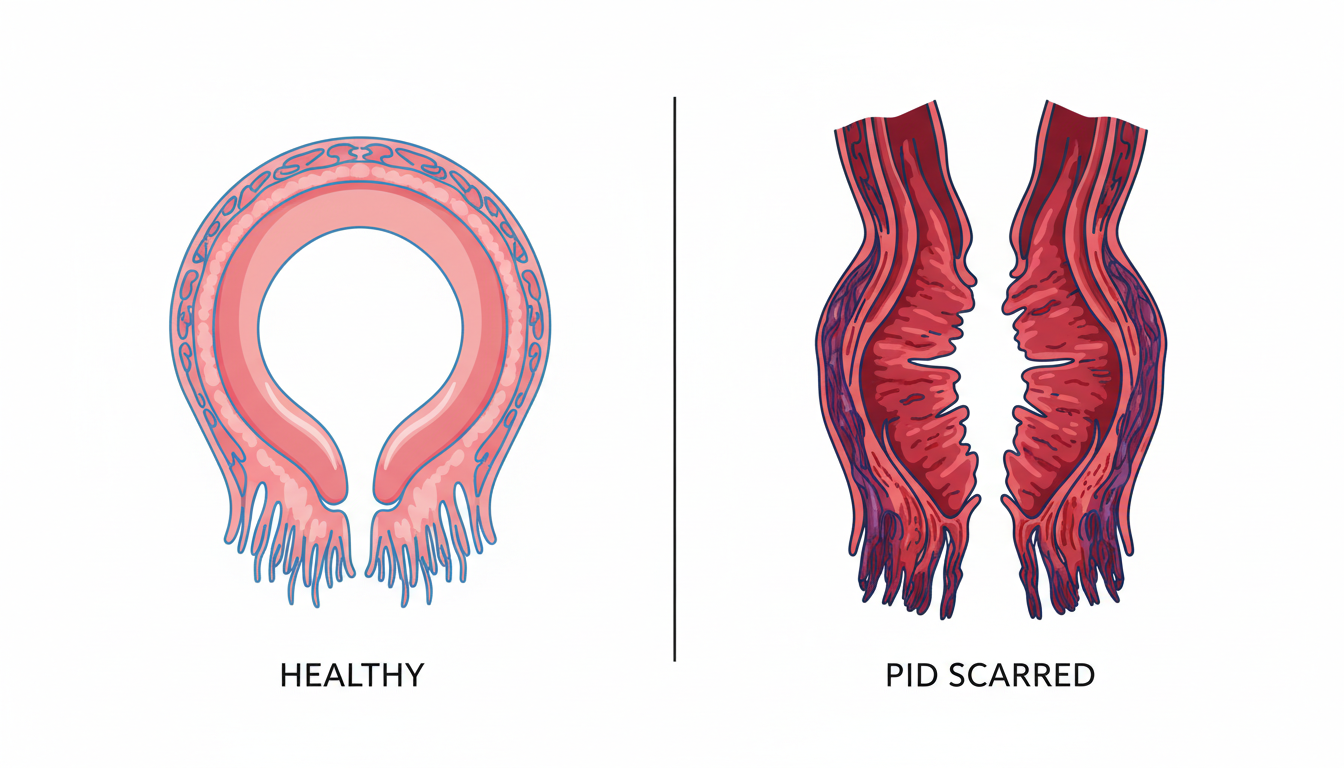
The damage pathway is well documented. Chlamydia infects the cervix; if untreated, it ascends to the uterus and fallopian tubes; the resulting PID inflames and scars those tubes. The fallopian tubes are narrow (the lumen is just a few millimeters wide), and even mild scarring can block the path the egg and sperm need to take. When the tubes are partially blocked, the risk of ectopic pregnancy rises sharply, because a fertilized egg can become trapped on the way to the uterus. Ectopic pregnancies are non-viable and can be life-threatening (CDC, About Pelvic Inflammatory Disease).
The CDC reports that about 1 in 8 women with a history of PID have difficulty getting pregnant (CDC, About PID). The risk grows with each subsequent episode of PID, and chlamydia is one of the most common causes. Tubal-factor infertility, where damaged tubes prevent conception, accounts for a substantial share of the cases that fertility clinics see worldwide. The damage is also cumulative: a single treated infection followed by a second untreated one is more harmful than either episode alone.
Some cohort studies have reported lower IVF success rates in women with prior chlamydia exposure, although findings vary by assay and population. A past chlamydia infection is therefore worth mentioning to a fertility specialist even after successful treatment, since it can shape which workup tests they prioritize, including imaging like a hysterosalpingogram to look for tubal involvement.
How chlamydia damages male fertility
The conversation about chlamydia and infertility usually focuses on women, although men can also be affected. Untreated chlamydia in the male urethra can move backwards along the genital tract and infect the epididymis, the coiled tube behind each testicle where sperm mature and are stored. According to MedlinePlus, the infection there can cause pain, fever, and, rarely, infertility (MedlinePlus, Chlamydia Infections). The CDC describes the same complication as “a fever and pain in the tubes attached to the testicles” (CDC, About Chlamydia), and the NHS notes that the resulting inflammation can leave scarring that partially obstructs sperm transit (NHS, Chlamydia complications). Clinicians refer to this complication as epididymitis.
Beyond outright blockage, chronic genital-tract inflammation has been associated with reduced sperm motility, lower sperm count, and possible damage to sperm DNA in some studies. Reviews of the male-fertility literature note that chlamydia is one of several STIs that can contribute to subfertility, although the effect size for any single infection is generally smaller than the comparable female-fertility risk from PID. Many men with epididymal involvement do not have severe symptoms, which is why male partners of women with diagnosed chlamydia are routinely advised to test even if they feel completely fine.
For men, a single round of antibiotics caught early is straightforward treatment. The same infection ignored for months is harder to walk back, particularly if it has reached the epididymis or prostate. Testing partners and treating both people in a couple at the same time is also how reinfection (and the cumulative damage that comes with it) is avoided.
If a partner is diagnosed with chlamydia, the male partner should test even when no symptoms are present. Epididymal involvement is often silent, and treating both people in a couple at the same time is how reinfection cycles are broken.
If you have already had recurring “UTIs” that won't quit
This is where many readers actually land. The pattern is familiar: a few rounds of antibiotics in the past year, partial relief, persistent vague pelvic discomfort, sometimes pain during sex. None of the steps below require a dramatic conversation. They just require asking for the right test to be run, once, instead of treating the same recurring symptom on autopilot for another year.
Practical next steps when UTIs keep coming back
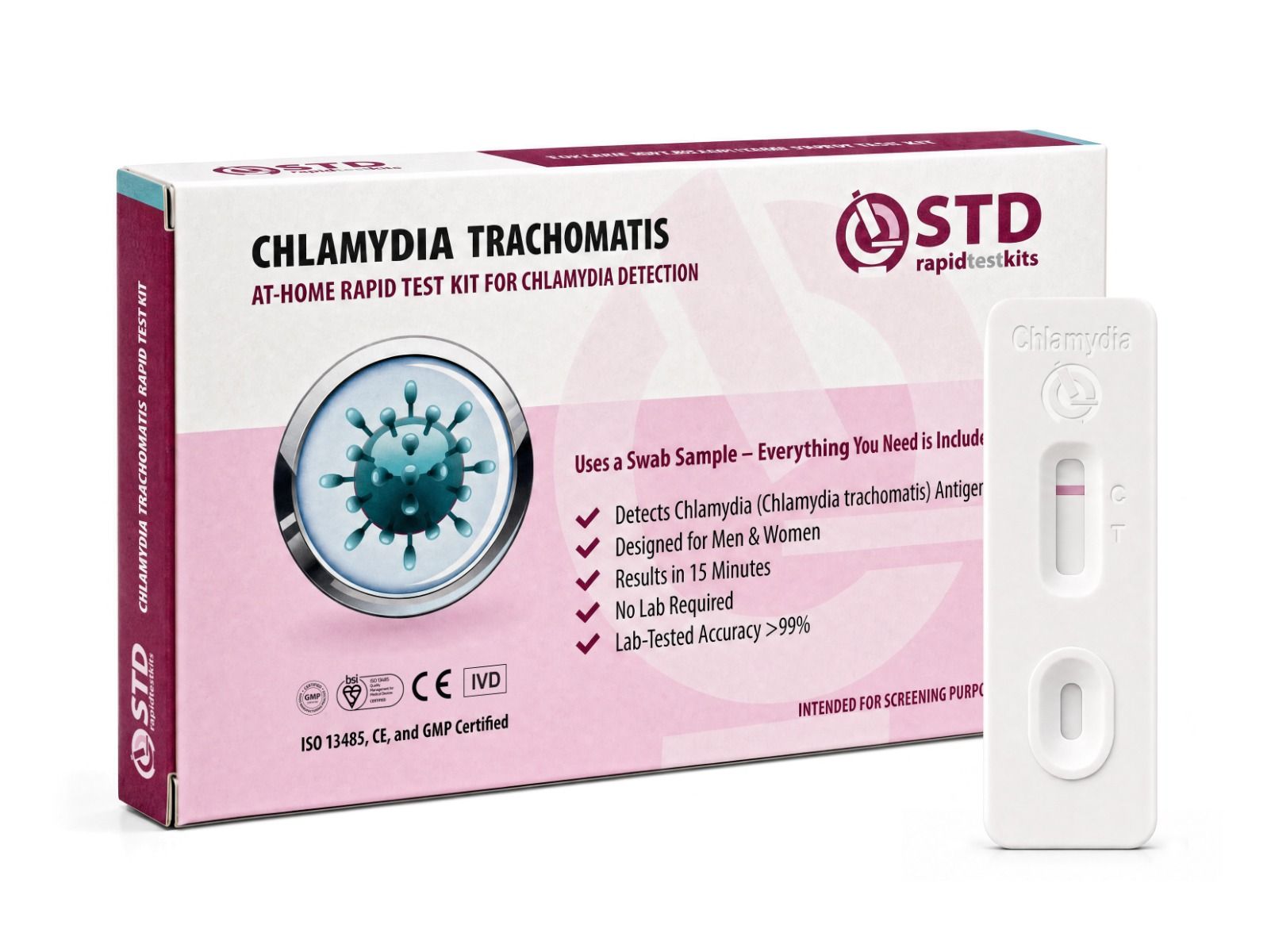
- Get a comprehensive STI test. Chlamydia, gonorrhea, and trichomoniasis can all mimic UTI symptoms. An at-home chlamydia rapid test or a clinic NAAT will rule them in or out within days.
- Ask the clinic for an actual urine culture next time, not just a dipstick, so there is data on whether bacteria are really there.
- If you are also having trouble conceiving, request a pelvic ultrasound or a hysterosalpingogram (HSG) to look for tubal scarring.
- Consider a reproductive endocrinologist sooner rather than later if a fertility evaluation is warranted, especially if you are over 35.
Chlamydia, ovulation, and egg quality
Older articles tend to frame chlamydia infertility purely in terms of blocked tubes. Some research has explored whether chronic pelvic inflammation may also affect the ovarian environment and egg quality, although the supporting evidence is less consistent than the well-documented tubal-scarring pathway. Cohort studies have reported reduced IVF success in women with prior chlamydia exposure, though the size and mechanism of the effect vary across studies.
The practical implication for someone trying to conceive: a past chlamydia infection is worth mentioning to a fertility specialist even after successful treatment, because it can shape which workup tests they prioritize. Routine screening also helps guard against these lower-grade ovarian and tubal effects beyond the more visible scarring from PID.
| Body system | Where infection sits | Fertility-relevant damage | Reversible? |
|---|---|---|---|
| Female cervix | Surface of cervix | Local inflammation; rarely fertility-affecting on its own | Yes, fully treatable |
| Female fallopian tubes | Upper genital tract (PID) | Scarring, partial or total blockage, ectopic pregnancy risk | No, scarring is permanent |
| Female ovary or pelvic cavity | Surrounding pelvic tissue | Adhesions, possible egg-quality effects | Partial; adhesions can sometimes be surgically released |
| Male urethra | Distal urethra | Local symptoms; rarely fertility-affecting on its own | Yes, fully treatable |
| Male epididymis | Behind testicle | Inflammation, possible obstruction, reduced sperm transit | Variable; mild cases recover, severe scarring may not |
Why so many people are diagnosed only after fertility issues
Several factors explain why the diagnosis usually comes late. The lack of symptoms removes the prompt that drives someone to a clinic. Stigma keeps people from asking for an STI screen, particularly in long-term relationships where the topic feels uncomfortable to raise. Primary-care visits often skip a sexual-health screen unless the patient brings it up, so a routine physical can come and go without any chlamydia test being run. And as the previous section described, “UTI-like” chlamydia symptoms get treated as UTIs while the underlying infection keeps climbing.
No exact timeline applies to every person, but the population-level picture runs roughly as follows. Within the first month of infection, antibiotic cure rates are essentially 100 percent and long-term reproductive damage is rare. From one to three months, urethral or cervical inflammation may persist and the risk of upward spread begins to rise. From three to six months, PID risk increases meaningfully and some scarring of the upper tract may begin. Beyond six to twelve months, the chance of tubal scarring, chronic pelvic pain, and ectopic pregnancy in any future pregnancy rises further. After twelve months untreated, the risk of long-term subfertility from tubal damage is greatest.
Many cases are first identified during fertility evaluations, often years after the original exposure. By that point, tubal scarring may already be visible on a hysterosalpingogram, and the original infection may have long since cleared on its own. People who test routinely, even without symptoms, sometimes catch chlamydia within weeks or months of exposure, and a short course of antibiotics at that point reliably clears the infection before any tubal or epididymal damage develops.
Rough timeline of untreated chlamydia
- Within 1 month: antibiotic cure rate is essentially 100 percent and long-term reproductive damage is rare.
- 3 to 6 months in: PID risk rises meaningfully and tubal scarring can begin in some people.
- 12+ months untreated: highest risk of long-term subfertility from cumulative tubal damage.
Beyond infertility: other risks worth knowing
Fertility outcomes get the most attention, although chlamydia carries other long-term risks worth knowing about. Untreated infection is associated with chronic pelvic pain, recurrent PID episodes, and a higher risk of ectopic pregnancy in future conceptions. In pregnancy, undiagnosed chlamydia can be passed to the baby during vaginal delivery, where it can cause an eye infection (conjunctivitis) or a lung infection (pneumonia) in the newborn (NHS, Chlamydia complications).
There is also a documented link with HIV. The WHO notes that active STIs such as herpes, gonorrhea, and syphilis raise HIV acquisition risk by disrupting mucosal barriers and recruiting immune cells that HIV preferentially infects (WHO, STI fact sheet). The same biological mechanism applies to chlamydia-related inflammation, which is one reason any active STI matters for HIV risk during exposure.
Undiagnosed chlamydia in pregnancy can be passed to the baby during vaginal delivery, where it can cause an eye infection (conjunctivitis) or a lung infection (pneumonia) in the newborn (<a href="https://www.nhs.uk/conditions/chlamydia/complications/" target="_blank" rel="noopener noreferrer">NHS, Chlamydia complications</a>). Routine prenatal screening at the first prenatal visit catches almost all of these cases before delivery, which is why universal first-trimester screening is part of standard prenatal care.
The numbers in context
Chlamydia is one of the most commonly reported bacterial STIs in the United States and globally; the WHO identifies chlamydia and gonorrhea as major causes of pelvic inflammatory disease and infertility in women (WHO, STI fact sheet). Reported diagnoses substantially undercount true incidence because so many infections never reach a clinic, and the infection is most common in adolescents and young adults.
Approximately 1 in 8 women with a history of PID experience difficulty getting pregnant, per the CDC. PID is itself common in women with untreated chlamydia, although estimates of the conversion rate vary across studies. The picture in men is harder to summarize because male chlamydia complications are studied less, although reviews consistently identify chlamydia as a contributor to male-factor subfertility.
Cumulative population-level damage from chlamydia is substantial, and because individual risk is genuinely unpredictable, routine screening is the safer strategy for anyone who is sexually active.
The CDC's About Chlamydia page states plainly: “In women, untreated chlamydia can cause pelvic inflammatory disease (PID).” It lists complications of PID that include scar tissue blocking the fallopian tubes and infertility (<a href="https://www.cdc.gov/chlamydia/about/index.html" target="_blank" rel="noopener noreferrer">CDC, About Chlamydia</a>). MedlinePlus echoes the same warning, noting that PID “can cause permanent damage to your reproductive system” and lead to long-term pelvic pain, infertility, and ectopic pregnancy (<a href="https://medlineplus.gov/chlamydiainfections.html" target="_blank" rel="noopener noreferrer">MedlinePlus, Chlamydia Infections</a>).
How at-home rapid testing works
At-home chlamydia kits use lateral-flow rapid technology and a self-collected swab. They are designed for screening: a quick read on whether the bacterium's antigens are present in a sample. They give a private, fast first read; they are not a substitute for the molecular NAAT testing that clinics use as the diagnostic gold standard. A positive at-home result is a strong signal to confirm with a clinic NAAT before starting antibiotics, partly because confirmation is good practice and partly because clinic visits also cover partner-notification and treatment logistics.
For people who would otherwise skip testing (because of cost, distance, or stigma), an at-home rapid removes the practical barrier. It is also useful in the specific scenario of recurring “UTIs” that have not responded to standard antibiotics: a swab kit can rule chlamydia in or out at home before the next clinic visit. A negative result during the very early window period (before the body is producing detectable antigen) can be a false negative, so retesting is recommended if symptoms persist.

If you test positive: what happens next
A positive chlamydia test is straightforwardly treatable and rarely a fertility verdict on its own. The CDC's current treatment recommendation for uncomplicated genital chlamydia is doxycycline 100 mg orally, twice a day, for seven days, with azithromycin as an alternative in specific situations like pregnancy (CDC, STI Treatment Guidelines). Most cases are fully cleared by completing the course as prescribed.
Partner notification, retesting at three months, and watching for complications are where the real effort goes after a positive result. The realistic post-positive timeline looks like this:
| Timepoint | What to do | Why it matters |
|---|---|---|
| Day 0 | Confirm the result with a clinician NAAT and start the prescribed antibiotic (usually doxycycline 100 mg twice daily for 7 days) | Cures the infection and stops further upward spread |
| Days 1 to 7 | No sex during treatment; quietly notify recent partners so they can test and treat | Prevents reinfection and onward transmission |
| Weeks 3 to 4 | Watch for symptoms suggesting PID: lower abdominal pain, fever, abnormal bleeding | Catches complications early when they are still treatable |
| Month 3 | Repeat the chlamydia test (a “test of reinfection,” not a test of cure). The first year after a diagnosis carries higher reinfection risk. | Reinfection from an untreated partner is the most common cause of a positive retest |
| If trying to conceive | Discuss a basic fertility workup with a clinician, including HSG or saline sonohysterogram if indicated | Identifies any tubal damage early enough to plan around it |
Common misconceptions, set straight
“If I had chlamydia, I would know.” Most people would not. The infection is asymptomatic in most carriers, and even when symptoms appear they are often subtle enough to be missed or attributed to a UTI.
“Only women need to worry about chlamydia and infertility.” Female outcomes are more common and better studied, although men can develop epididymal inflammation and lower sperm quality from untreated infection. Both partners benefit from screening.
“Chlamydia only spreads through penetrative sex.” Oral and anal sex can also transmit the bacterium, and shared sex toys can carry it between partners. Barrier methods reduce risk substantially although they do not eliminate it.
“Once it is treated, the damage goes away.” Antibiotics clear the bacterium, which stops further damage. Existing scarring in the fallopian tubes or epididymis does not regress with treatment, which is why earlier detection matters.
“A negative urine culture means I do not have an infection.” A urine culture rules out the usual UTI bacteria; it does not test for chlamydia or gonorrhea. Those need a swab or a dedicated NAAT.
Standard urine cultures only check for the gut bacteria that cause typical UTIs, so chlamydia slips through. If urinary symptoms keep returning while cultures come back clean, ask specifically for a chlamydia swab test or a dedicated NAAT before agreeing to another round of antibiotics.
Your next steps at a glance
Have you had recurring UTI symptoms that did not fully clear with antibiotics, or that returned within weeks of finishing them?
Yes: Ask your clinic for a chlamydia and gonorrhea test from a swab or urine sample before the next antibiotic course, or use an at-home rapid swab kit to rule chlamydia in or out.
Did a chlamydia test come back positive?
Yes: Confirm the result with a clinic NAAT and complete the full 7-day course of doxycycline as prescribed. Notify recent partners so they can test and treat, avoid sex for the 7 days after starting treatment, and plan a retest at three months.
Are you concerned that months of untreated infection may already have affected your fertility?
Yes: Ask a clinician about a hysterosalpingogram (HSG) or pelvic ultrasound to evaluate for tubal scarring, and mention your chlamydia history at any fertility workup.
No: Keep an annual chlamydia screen in your routine, especially with any new partner, so a future infection gets caught early.
A quick decision path for the three most common situations the article addresses. Guidance only; a clinician can advise on the specifics of your case.
Frequently asked questions
- Could my UTI symptoms actually be chlamydia?
- Often, yes. Both inflame the lower urinary tract, so burning during urination, pelvic pressure, and frequent urgency overlap almost completely. The clearer distinguishing features are vaginal discharge, pain during sex, or a urine culture that does not grow bacteria. If a UTI keeps coming back after antibiotics, or a culture has never grown anything, ask for a chlamydia test before the next antibiotic course.
- Can chlamydia cause infertility after just one infection?
- Yes, it can. A single untreated infection that progresses to PID can leave permanent tubal scarring. The CDC reports that about 1 in 8 women with a history of PID have difficulty getting pregnant. Early treatment reliably prevents this outcome in most people, which is why testing promptly matters even without symptoms.
- How fast can chlamydia start damaging fertility?
- There is no exact timeline. Most damage comes from pelvic inflammatory disease (PID), which can develop within weeks in some people and not at all in others. The general clinical picture is that the longer chlamydia goes untreated, the higher the chance of tubal scarring. Treatment within the first few months is associated with very low risk of long-term reproductive damage.
- How long can chlamydia stay in the body without symptoms?
- Months to years, in some cases. The bacterium can persist asymptomatically until the immune system clears it or until it triggers complications. Many people are diagnosed only during routine screening or fertility evaluation, long after the original exposure.
- Is the damage from chlamydia reversible?
- The infection itself is reversible: antibiotics cure it in nearly all cases. The scarring it can leave behind in the fallopian tubes, epididymis, or pelvic tissue is generally permanent. That gap between curing the bacterium and reversing its damage is the reason early testing matters more than late treatment.
- Should I test even if I feel completely fine?
- Yes, if you are sexually active. The CDC recommends annual chlamydia screening for all sexually active women under 25, and for older women with new or multiple partners. Men should be tested if they have had a recent new partner, share a partner with someone diagnosed, or are in a higher-risk group such as men who have sex with men.
- Could my partner's fertility be affected too?
- Yes. Untreated chlamydia in men can cause epididymitis (inflammation of the tubes behind the testicle) and is associated with reductions in sperm quality in some studies. Most male infections are silent. If one partner tests positive, both should be treated, even if the other has no symptoms.
- Are at-home STI tests accurate enough to act on?
- At-home rapid swab kits for chlamydia and gonorrhea perform well for screening purposes when used correctly and after the recommended window period. A positive result should still be confirmed with a clinic NAAT before treatment, but it is reliable enough to start planning immediately. A negative result during the very early window period can miss an infection, so retesting is recommended if symptoms persist.
- U.S. Centers for Disease Control and Prevention. About Chlamydia: overview of symptoms, asymptomatic carriage, untreated chlamydia leading to PID, fever and pain in the tubes attached to the testicles as a male complication, and the difficulty-conceiving outcome.
- U.S. Centers for Disease Control and Prevention. About Pelvic Inflammatory Disease: causes, complications, ectopic pregnancy risk, and the 1-in-8 difficulty-conceiving figure following PID.
- U.S. Centers for Disease Control and Prevention. STI Treatment Guidelines: screening recommendations for chlamydia (including annual screening for sexually active women under 25), first-line doxycycline regimen, and azithromycin alternative in pregnancy.
- World Health Organization. Sexually transmitted infections (STIs) fact sheet: global burden, chlamydia and gonorrhea as major causes of PID and infertility in women, and the link between active STIs (herpes, gonorrhea, syphilis) and HIV acquisition risk.
- U.K. National Health Service. Chlamydia overview: symptoms in men and women, testing, and treatment guidance.
- U.K. National Health Service. Chlamydia complications: testicular infection in men, PID and ectopic pregnancy in women, and neonatal conjunctivitis and pneumonia from delivery.
- MedlinePlus (U.S. National Library of Medicine, NIH). Chlamydia Infections: asymptomatic infection, spread to uterus and fallopian tubes leading to PID with risk of permanent damage including infertility and ectopic pregnancy, and infection of the epididymis in men with risk of pain, fever, and rare infertility.
