Published: July 2025 | Last updated: May 2026 | Editorial review and quality control: Martina N.
Can acute Hepatitis B feel like the flu?
Yes. In the first one to two weeks, acute Hepatitis B can feel identical to the flu: fever, fatigue, body aches, nausea, low appetite. The liver-specific giveaways (dark urine, pale stools, jaundice, right-side pressure) come later. If symptoms outlast day 10 to 14, an at-home HBsAg blood test, reliable from about week 4, settles it.
You wake up exhausted, your muscles feel heavy, and a queasy weight is sitting in your stomach. The easy assumption is the flu, the bug going around the office. Most of the time you would be right. But a small share of people who feel this way are in the first weeks of acute Hepatitis B, when the virus is replicating in liver cells and the immune system is mounting a generic response that looks just like a viral cold.
Acute Hepatitis B is the short-term illness in the first six months after exposure to the Hepatitis B virus. According to the CDC, signs and symptoms appear an average of 90 days after exposure, with a range of 60 to 150 days, and the early picture is the picture of a bad flu: fatigue, low-grade fever, joint and muscle aches, nausea, loss of appetite. The liver-specific signs (dark urine, clay-colored stools, yellow eyes) usually arrive later, if they arrive at all. About one in two people with Hepatitis B do not know they are infected (CDC, About Hepatitis B).
This article is published by stdrapidtestkits.com, which sells at-home blood tests for Hepatitis B and other STIs. We recommend products based on what fits the reader's concern, not commercial benefit.
Key Takeaways
- Acute Hepatitis B looks like the flu for the first one to two weeks; the liver-specific signs (dark urine, jaundice, right-upper abdominal pain) often arrive later or never. Per the CDC, only 30 to 50 percent of people aged 5 and older with acute Hep B develop noticeable symptoms at all.
- Hepatitis B's incubation averages 90 days (range 60 to 150). An at-home rapid blood test detects the surface antigen (HBsAg) typically 4 to 10 weeks after exposure, so by the time symptoms appear the test is generally meaningful.
How acute Hepatitis B mimics the flu
Most healthy adults who pick up the Hepatitis B virus go through what clinicians call a prodrome phase, the period before any liver-specific signs appear. The prodrome can last from a few days to several weeks. During it, the body mounts a non-specific immune response: interferon and cytokine release, mild fever, malaise, achy muscles. That cocktail produces the same feel regardless of which virus is doing the invading, which is why influenza, COVID, mono, a stomach bug, and acute Hepatitis B can all feel like variants of the same miserable week.
What separates them is which tissue each virus targets next. Influenza is a respiratory virus; it works through the airway lining, which is why cough, sore throat, congestion, and ear pressure are textbook flu symptoms. Hepatitis B is bloodborne; it travels to the liver and replicates inside hepatocytes, the liver's working cells, for weeks before the immune response generates symptoms most people notice. By the time you feel sick, the virus has often been replicating quietly for two to four months.
The seasonal flu runs through the prodrome and clears within 5 to 7 days for most healthy adults. Acute Hepatitis B does not. Per the CDC's clinical-signs reference, symptoms of acute Hep B can last anywhere from 6 weeks up to 6 months. A flu that has not improved by day 10 to 14, or one that briefly improves and then comes back with new symptoms, deserves a second look.
The other quiet difference is fever shape. Influenza tends to spike sharply and high, often above 101°F, then resolve within a few days. Acute Hep B fevers tend to creep up gradually, sit in the low-grade range of about 99°F to 101°F, and persist longer.
The symptoms that point at the liver, not the airway
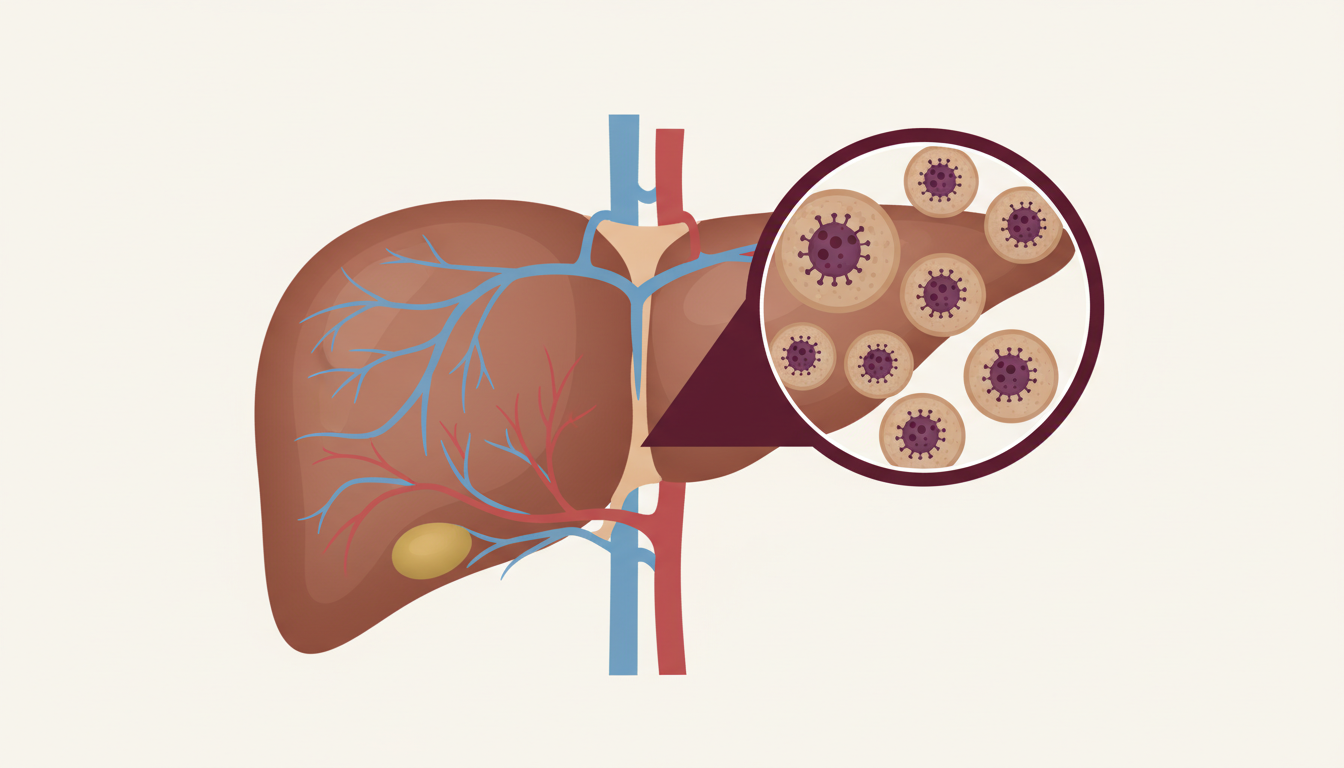
Once Hepatitis B has been replicating in the liver for a few weeks, the organ starts struggling to do its normal jobs: filtering bilirubin, producing bile, processing proteins. That dysfunction is what produces the signs clinicians watch for as confirmation that something more than a viral cold is happening.
The features that separate acute Hepatitis B from influenza are the ones a respiratory bug never produces. They all trace back to a liver that is starting to struggle, and any single one of them appearing alongside flu-like symptoms should change the working diagnosis. The MedlinePlus hepatitis B overview lists the same liver-specific signs, from dark urine to jaundice.
Liver-specific signs that point away from the flu
None of these belong to the flu. Even one of them showing up alongside flu-like symptoms is a reason to test rather than wait another week. Having one does not confirm Hepatitis B; only a test can do that.
- Dark urine the color of cola or strong tea, from bilirubin spilling into the blood. Often the first odd symptom readers notice. Common
- Clay-colored or pale stools, the visible flip side of the same problem, reflecting that bile is not reaching the gut. Common
- Right-upper abdominal pressure or tenderness where the liver sits, often described as bloating or a heaviness that worsens after eating. Common
- Loss of appetite that drags on for more than a few days, often with a new aversion to fatty or rich foods. Common
- Bone-deep fatigue that is still draining you past day 10 of illness, rather than easing with rest. Common
- Yellowing of the whites of the eyes or skin (jaundice). It often shows in the eyes first, so others may notice it before you do. Less common
- Itchy skin with no visible rash, caused by bile salts building up in the bloodstream. Rare
Flu versus acute Hepatitis B, side by side
Side by side, the two illnesses share their opening act and split in the second. The flu peaks fast and fades on schedule; Hepatitis B builds slowly and adds liver signs the flu never shows. The table lays the two pictures next to each other.
Seasonal flu vs acute Hepatitis B
| Symptom or feature | Seasonal flu | Acute Hepatitis B |
|---|---|---|
| Onset after exposure | 1 to 4 days | 60 to 150 days (average about 90) |
| Symptom duration | 5 to 7 days | 6 weeks to 6 months |
| Fever | Sudden, often above 101°F | Low-grade, gradual onset |
| Fatigue | Resolves with rest | Bone-deep, lasts weeks |
| Sore throat or runny nose | Common | Uncommon |
| Nausea or loss of appetite | Sometimes | Often, prolonged |
| Dark urine | No | Yes, later stage |
| Clay-colored stools | No | Yes, later stage |
| Jaundice (yellow skin or eyes) | Never | Yes, in a minority of symptomatic adults |
| Right-upper abdominal pain | No | Yes |
The two illnesses share their opening week, then diverge: the flu fades while Hepatitis B builds and adds liver-specific signs.
Why the diagnosis often gets missed
A patient with body aches, low fever, and a sore throat in October walks into urgent care, gets a rapid flu swab, and leaves with a recommendation for fluids and rest. That is the right call the overwhelming majority of times. The few people who actually have early acute Hepatitis B can leave reassured and keep spreading the virus to household and sexual contacts for weeks, because the prodrome phase is contagious and there are no liver-specific signs yet to prompt liver enzyme tests or HBsAg screening.
A second wrinkle complicates the picture. Per the CDC's clinical guidance, only roughly 30 to 50 percent of people aged 5 and older with acute Hep B develop noticeable symptoms at all. The rest clear or chronicize the infection without ever feeling distinctly ill, which is part of why screening matters even when you feel fine.
Timing makes it worse. A week of feeling lousy in winter rarely prompts anyone to connect it to an exposure from the previous autumn, and the early symptoms are not distinctive enough to bridge that gap, especially when a recent flu in the household offers a tidier explanation. Hepatitis B is rarely on a clinician's differential during flu season unless a risk factor or a liver-specific sign turns up.
Stigma compounds the problem. Many readers carry an outdated mental model that Hep B affects only people who inject drugs or have a high-risk sexual history. The reality is far broader: per the WHO, an estimated 254 million people worldwide were living with chronic Hepatitis B in 2022, most of them acquiring it at birth, in childhood, through household contact, or via medical or cosmetic procedures with inadequate sterilization.
Hepatitis B is rarely on the differential during flu season unless you raise it. If you have had a possible exposure in the past few months (a new sexual partner, a tattoo or piercing, dental or medical work abroad, a shared razor, or a household member with hepatitis), say so directly and ask whether an HBsAg test makes sense. That one sentence is often what moves the workup from a flu swab to the test that answers the question.
How Hepatitis B actually spreads
Hepatitis B transmits through blood and body fluids that carry blood: semen, vaginal secretions, and saliva when bleeding gums or open sores are present. The WHO identifies the main routes as mother to child during birth and early childhood, sexual contact with an infected partner, unsafe injections (drug use or contaminated medical equipment), and exposure to sharp instruments. The NHS adds shared needles, needlestick injuries, and unsterilized tattoo or piercing equipment.
The non-sex routes are the ones that surprise people. You can pick up Hep B from:
- A razor shared with a household member who carries the virus.
- A piercing or tattoo done with reused or improperly cleaned needles.
- A toothbrush shared with someone whose gums bleed.
- Medical or dental procedures in a country or facility with limited sterilization standards.
- An accidental needlestick in a healthcare or first-responder setting.
People in close-quarters living situations sometimes acquire Hep B through accumulated micro-exposures rather than any single high-risk event. One point bears repeating: someone can be infectious with no symptoms at all. That asymptomatic carrier rate is part of why screening guidance has expanded. The CDC now recommends universal Hepatitis B screening for all adults at least once in their lifetime, regardless of stated risk factors.
Per the <a href="https://www.cdc.gov/hepatitis-b/hcp/clinical-overview/index.html" target="_blank" rel="noopener noreferrer">CDC</a>, the Hepatitis B virus is infectious for at least seven days on surfaces. A razor, toothbrush, or grooming tool with even a microscopic amount of dried blood on it can transmit the virus a week after the last person used it. Practical implication: do not share razors, toothbrushes, nail clippers, or earring posts with anyone whose Hep B status is unknown to you, even when no blood is visible.
Window periods: when an at-home test will actually catch it
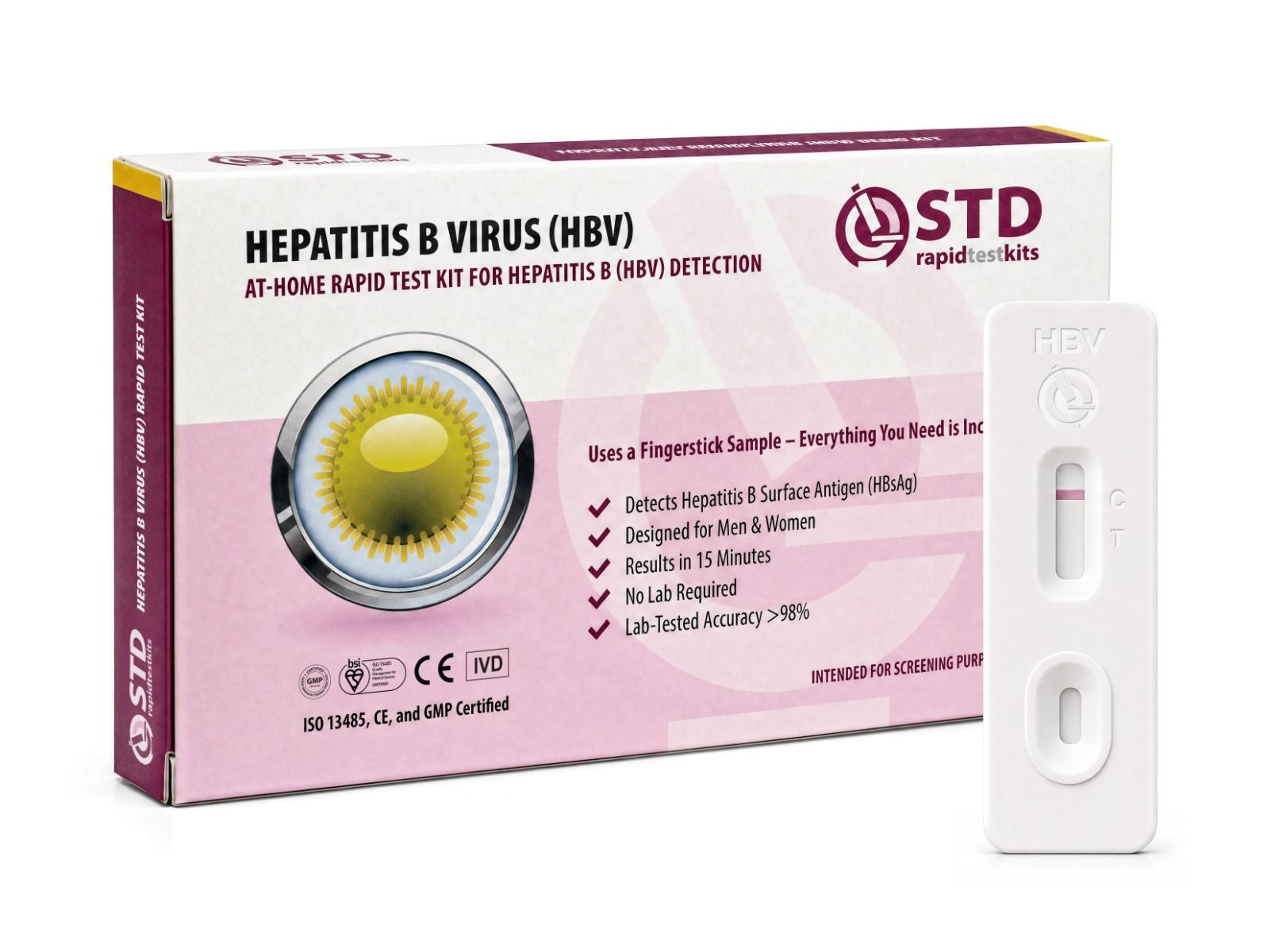
Most at-home Hepatitis B tests look for the surface antigen (HBsAg), the protein on the outer coat of the virus. HBsAg appears in the blood typically 4 to 10 weeks after exposure, sometimes earlier. By the time prodromal symptoms show up, around day 90 on average, HBsAg has been detectable for weeks, so a negative result in someone with active symptoms is generally meaningful. A privately run at-home Hepatitis B test screens for HBsAg and returns a result in about 15 minutes.
Three timing scenarios cover most readers:
- Scenario one: symptoms started under five days ago, no clear exposure event, no liver-specific signs (no jaundice, no dark urine, no abdominal pressure). Watch and wait. If a high fever and body aches resolve within seven to ten days, you almost certainly had flu or another respiratory virus.
- Scenario two: it has been four to twelve weeks since a possible exposure (unprotected sex, a shared needle or razor, a piercing or tattoo at a non-sterile setting, dental work abroad) and you are now feeling generally unwell. This is the prime testing window. HBsAg is reliably detectable from about week four onward, the immune response is generating symptoms, and a positive result catches the infection before it has a chance to chronicize. Testing earlier than four weeks risks a false negative, because the antigen has not yet reached detectable levels.
- Scenario three: it has been more than three months and you are still tired, jaundiced, or otherwise unwell. You are overdue. The acute window may have passed, which means a single antigen test cannot tell you whether the infection cleared or became chronic. Plan on a clinic-administered panel that includes HBsAg, anti-HBc, and anti-HBs to map exactly where you are.
Set those windows against the other infections that can mimic acute Hep B in the first weeks:
| Infection | At-home rapid test target | Typical detection window | Negative becomes reliable at |
|---|---|---|---|
| Hepatitis B | HBsAg (surface antigen) | 4 to 10 weeks | 12 weeks |
| Hepatitis C | HCV antibody | 8 to 11 weeks (most by 6 months) | 6 months |
| HIV (4th-gen Ag/Ab) | p24 antigen plus HIV-1/2 antibodies | 18 to 45 days | 90 days |
| Syphilis | Treponemal antibody | 3 to 6 weeks | 90 days |
One important caveat about test technology
The windows in the table above apply to rapid lateral-flow immunoassays, the technology used in at-home kits. Laboratory nucleic-acid tests (NAAT or PCR) detect earlier in some cases by amplifying viral DNA or RNA directly. Our at-home Hepatitis B kit is a lateral-flow blood test, not a NAAT. Rapid tests give a fast, private screening result; lab NAAT gives the highest analytical sensitivity and the staging information needed to plan treatment.
Rapid lateral-flow (at-home): detects the HBsAg protein on the surface of the virus. Result in about 15 minutes. Cannot distinguish acute from chronic infection on its own, and cannot give a viral-load number.
Lab NAAT or PCR: amplifies and measures HBV DNA directly. Detects earlier in some cases, during the very early window before HBsAg rises, and gives the viral-load and acute-versus-chronic information needed to plan treatment. Turnaround is typically a few days. A positive rapid result is worth confirming with this kind of lab test.
The three Hepatitis B markers and what each one answers
Three antigens and antibodies do most of the work in clinical Hep B testing. The first is what most at-home rapid kits look for; the other two require a lab panel. Together they answer different questions about active infection, past infection, and immunity.
If the question is whether you have an active infection right now, an HBsAg test answers it. If the question is whether vaccination or a past infection left you protected, an anti-HBs titer answers it.
What each Hepatitis B marker tells you
- HBsAg (surface antigen): present during active infection, acute or chronic. The most useful single marker for catching ongoing infection, and the one at-home rapid kits look for.
- Anti-HBc (core antibody): present during and after infection. It separates someone who has ever had Hepatitis B from someone who has only been vaccinated. Lab panel only.
- Anti-HBs (surface antibody): present after vaccination, or after a naturally cleared infection. This is the marker for immunity. Lab panel only.
Other infections that look like the flu in their first weeks
Acute Hepatitis B is not the only sexually transmitted infection whose first weeks resemble influenza. If your timing makes sense for one, it usually makes sense for several, and the screening decision is rarely Hep B versus nothing. The realistic question is which test or panel covers the windows that match your exposure event.
- Acute HIV (acute retroviral syndrome). Two to four weeks after exposure, some people develop fever, sore throat, swollen lymph nodes, and a maculopapular rash. It is often called mononucleosis-like and is mistaken for the flu, mono, or strep. A 4th-generation HIV test detects infection from about day 18 to 45.
- Secondary syphilis. Primary syphilis is the painless ulcer (chancre) at the exposure site. The secondary stage, 4 to 10 weeks later, brings flu-like symptoms with a body rash that often involves the palms and soles. Without the rash, secondary syphilis is sometimes misread as a viral exanthem.
- Acute Hepatitis C. A minority of people with new Hep C develop a flu-like illness in the first 2 to 12 weeks. Most are completely asymptomatic. The window for at-home antibody testing is around 8 to 11 weeks.
- A first-ever herpes outbreak (HSV-1 or HSV-2). A new herpes infection often opens with fever, swollen lymph nodes, and feeling generally awful for several days before any blisters appear. The flu-like phase is the immune system's first response to a brand-new virus.
If you had a known exposure event in the prior three months and you are now feeling viral, a multi-infection panel often makes more sense than testing for Hep B alone.
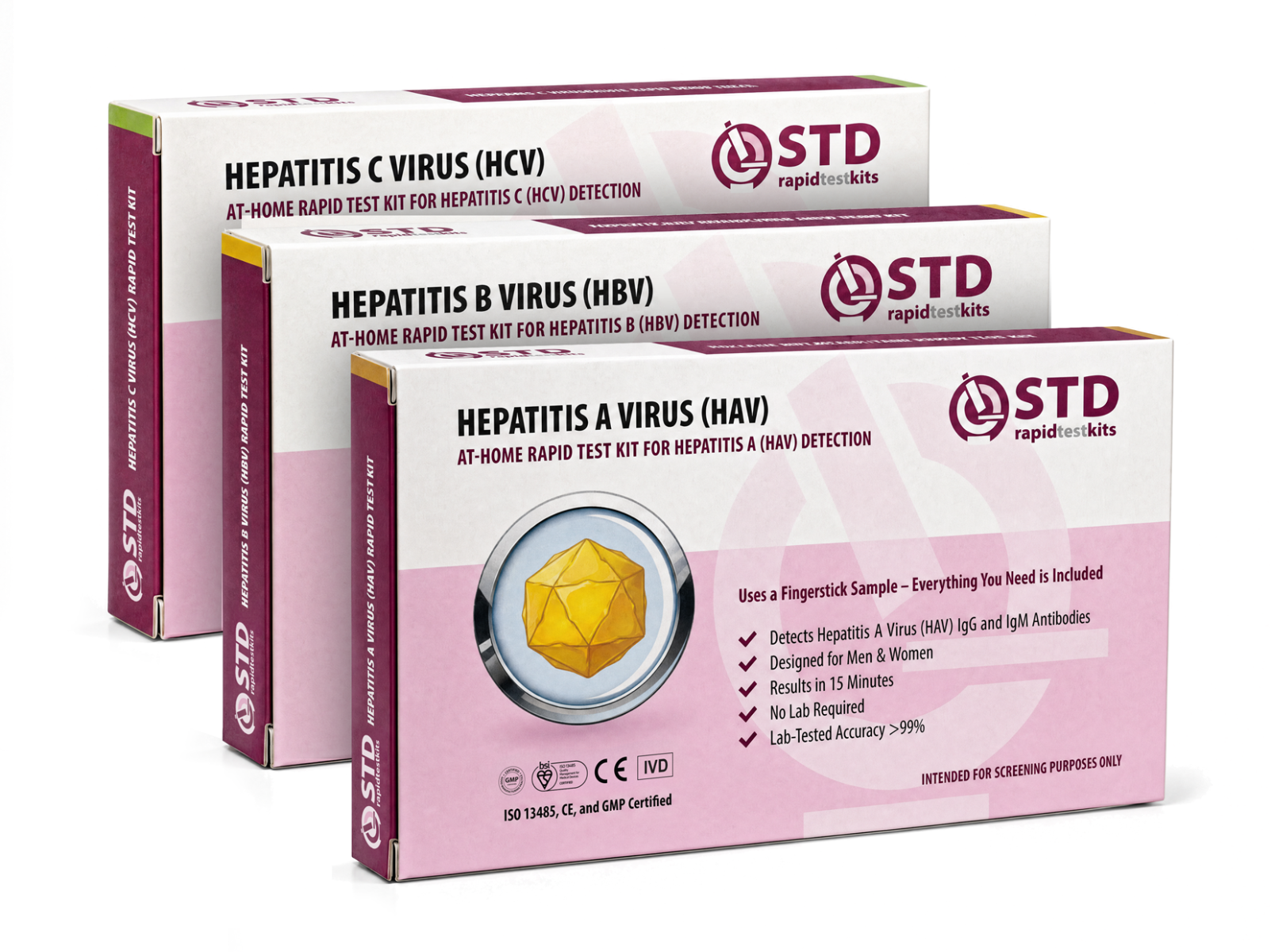
CDC recommends screening all adults aged 18 years and older for hepatitis B virus infection at least once during their lifetime using a triple panel test (HBsAg, anti-HBs, and total anti-HBc).
When testing for Hepatitis B specifically makes sense
Reasons to test for Hep B at home or in a clinic include:
- Flu-like symptoms lasting more than 10 to 14 days, especially with appetite loss, dark urine, or right-upper abdominal discomfort.
- A known sexual exposure to someone with Hep B or unknown Hep B status, particularly if condoms were not used.
- Sharing of injection equipment, even once, even years ago.
- A piercing, tattoo, or medical or dental procedure done in a country or facility with uncertain sterilization standards.
- Birth in a country with high Hep B prevalence (East Asia, sub-Saharan Africa, parts of Eastern Europe and the Pacific).
- A household member with chronic Hepatitis B.
- No documented Hep B vaccination as a child, no booster in the last several decades, plus a recent risk event.
- Pregnancy. Universal screening is standard prenatal care, but earlier home testing is reasonable for anyone who wants the result before a first prenatal visit.
Per the CDC's 2023 guidance update, all adults 18 and over should be screened for Hepatitis B at least once in their lifetime regardless of risk factor. An at-home rapid test fits the common case well: routine screening, no symptoms, and a preference for privacy, a flat upfront price, and a fast result without a clinic visit, a copay, or an insurance claim a policyholder might later see on an explanation of benefits. Retesting at 30 to 90 days after a negative result is appropriate when symptoms persist or worsen, since early-window tests can return false negatives.
What to do if a home test comes back positive
The headline first: this is workable. Per the WHO, fewer than 5 percent of adult-acquired Hepatitis B infections progress to chronic infection. The other 95-plus percent of healthy adults clear the virus within six months and develop lifelong immunity afterward. A positive home result starts a manageable process, not a life sentence. A few things start today regardless: stop sharing razors and toothbrushes, use condoms with sexual partners, and book a confirmatory clinic test.
The fuller set of next steps:
- Confirm at a clinic. The full panel includes HBsAg, anti-HBc IgM (to flag a recent acute infection), anti-HBs, HBeAg or anti-HBe (infectivity markers), HBV DNA viral load, and liver function tests (ALT and AST). This is what distinguishes acute from chronic and tells the clinician how active the virus is.
- Avoid alcohol entirely while the liver is inflamed. Alcohol is the single biggest amplifier of Hep B-related liver damage.
- Be careful with acetaminophen and certain herbal supplements. Anything that loads the liver with extra processing work matters more during active hepatitis.
- Do not donate blood, plasma, organs, or sperm until cleared.
- Notify recent sexual partners and household members who may have shared razors or toothbrushes. They can be tested and offered post-exposure vaccination if not already immune; the Hep B vaccine has post-exposure value when given within days.
- Schedule follow-up testing at three and six months. If HBsAg has cleared, the infection was acute and resolved. If HBsAg persists past six months, the infection is chronic and warrants ongoing hepatology follow-up.
Most acute cases are managed with rest, hydration, and avoidance of liver stressors. Antiviral therapy is usually reserved for severe acute infection or for chronic infection. For chronic infection (HBsAg-positive beyond six months), some people benefit from antivirals such as tenofovir or entecavir, which suppress the virus long-term but are not usually curative; many never need medication, only regular monitoring. For people with chronic Hep B plus added risk factors such as cirrhosis, a family history of liver cancer, or older age, liver-cancer surveillance with an ultrasound and an AFP blood test about every six months is part of standard follow-up.
While you wait for a clinic appointment, four protective changes matter most: stop sharing razors, toothbrushes, and nail clippers immediately; use condoms for any sexual contact; clean any blood spills with a 1:10 bleach solution; and tell the people you live with that they should be tested. Post-exposure prophylaxis (Hepatitis B immune globulin plus the first vaccine dose) is most effective within 24 hours of a known exposure and still useful up to 7 days, so notifying contacts quickly gives them a real prevention window.
If you were vaccinated as a child
The Hepatitis B vaccine is one of the most effective vaccines in routine use. The WHO notes that a complete series offers nearly 100 percent protection in healthy people who finish it, and that protection is generally long-lasting. It works as prevention only; getting vaccinated after an infection is already underway will not treat it. Most people born after the early 1990s in the United States received the vaccine as part of routine childhood immunization.
Routine boosters are not currently recommended for the general population. A documented vaccination history substantially lowers the chance of acquiring Hep B in the first place, but it does not make testing pointless after a high-risk exposure: vaccine breakthrough infections are rare, but documented.
Two post-exposure situations matter. After a known exposure (a partner just diagnosed, an unvaccinated healthcare worker after a needlestick injury, a baby born to a Hep B-positive parent), post-exposure prophylaxis combining Hepatitis B immune globulin (HBIG) with the first dose of vaccine can prevent infection if started within 24 hours and ideally within 7 days. After that window, prophylaxis still has some value, but the protection drops.
If you do not know your vaccine status, ask a clinician for an anti-HBs titer. It is a single blood draw that tells you whether you are protected, and it answers a different question than the at-home HBsAg test does.
Routine boosters are not recommended for the general population, but they may be considered for three groups: healthcare workers and first responders with ongoing occupational blood exposure; household and sexual contacts of someone with chronic Hepatitis B; and dialysis patients or people with significant immune suppression, whose antibody response can fade faster. A clinician can check anti-HBs titers to decide whether a booster is warranted in your specific case.
Why testing earlier rather than later matters
The strongest argument for testing during the prodrome phase, rather than waiting for jaundice or persistent symptoms, is contagion. The Hepatitis B virus is most transmissible in the late incubation and prodrome phases, exactly the phases when the patient feels fluey and assumes nothing serious is going on. Every week between symptom onset and diagnosis is a week of potential transmission to sexual partners, household members, or anyone sharing personal grooming items.
Home testing shifts the timeline for contact tracing, behavior change, and partner notification without replacing clinical care for confirmed cases. The faster the diagnosis, the smaller the chain of secondary infections, and the sooner the people you live with or sleep with can either be tested themselves or offered post-exposure vaccination during the narrow days-long window when it works best.
Should I test for Hepatitis B right now?
Symptoms started in the last few days, with no jaundice, dark urine, or right-side pressure, and no exposure you can point to?
Yes: Most likely a respiratory virus. Rest and hydrate. If a high fever and body aches clear within 7 to 10 days, it was almost certainly the flu or a similar bug.
Has it been about 4 to 12 weeks since a possible exposure, and you still feel generally unwell, or has any liver-specific sign appeared?
Yes: This is the prime testing window. An at-home HBsAg rapid blood test is reliable from roughly week 4. Test now, before the infection has a chance to become chronic.
Did a home test read positive, or has it been more than three months and you are still unwell?
Yes: Book a clinic panel within days (HBsAg, anti-HBc, anti-HBs, HBV DNA viral load, and liver enzymes), notify recent sexual partners and household contacts so they can test or get post-exposure vaccination, and avoid alcohol and other liver stressors until you are cleared.
No: If symptoms drag past two weeks, or a recent-exposure test came back negative, retest at 6 to 8 weeks or ask a clinic for a multi-infection panel.
Guidance only. A clinician can advise based on your specific exposure and symptoms.
Frequently asked questions
- Can Hepatitis B really feel exactly like the flu in the first weeks?
- Yes. The prodrome phase, before any liver-specific signs appear, is dominated by fever, fatigue, joint and muscle aches, nausea, and loss of appetite. Without a blood test, it cannot be reliably distinguished from influenza in the first one to two weeks of symptoms. The split usually shows up between days 7 and 10: flu fades on schedule, Hep B does not.
- How long after exposure can I reliably test for Hepatitis B?
- A negative result 12 weeks after exposure is generally considered reliable. The surface antigen (HBsAg) usually becomes detectable around 4 to 10 weeks, but a test taken within the first month after exposure may still be too early. A follow-up at 12 weeks gives the definitive answer.
- My flu cleared up, but I had a risky exposure a few months ago. Should I still test?
- Yes, if the exposure was within the past six months. Some people with acute Hepatitis B feel briefly worse, recover, and keep carrying the virus without realizing it. Fewer than 5 percent of healthy adults who acquire Hep B (per the WHO) progress to a chronic infection that can stay quiet for years. A single HBsAg test now, or a clinic panel that adds anti-HBc, gives a real answer instead of a hopeful guess.
- Does the at-home Hep B test tell me whether I am chronically infected?
- No. The home test detects HBsAg, the surface antigen present during any active Hepatitis B infection. It does not on its own distinguish acute from chronic. A clinic follow-up panel that includes anti-HBc IgM (the marker that flags a recent acute infection) and anti-HBs (the antibody that appears after recovery or vaccination) is what makes that distinction.
- Can I get Hepatitis B without sex or drug use?
- Yes. Shared razors and toothbrushes, unsterilized tattoo or piercing equipment, household contact with someone who has chronic Hep B, accidental needlesticks, and medical or dental procedures in low-sterilization settings can all transmit Hepatitis B. Per the CDC, the virus is infectious on surfaces outside the body for at least seven days.
- Is the childhood Hep B vaccine still effective decades later?
- The three-dose series is highly effective and produces a lasting antibody response in most people. Antibodies can wane after 30 or more years, but immunological memory typically persists. Routine boosters are not recommended for the general population, though they may be considered after a known exposure or for people in high-risk roles.
- My home test is negative but I still feel awful. What now?
- Check the timing of the suspected exposure. If it was within the last three to four weeks, HBsAg may not have appeared in the blood yet and the test could simply be too early; retest at 6 to 8 weeks. The symptoms could also point elsewhere, since HIV, Hep C, syphilis, and a first-time herpes outbreak can all produce flu-like illness. If symptoms persist past two weeks, a multi-infection panel or a clinic visit is the sensible next step.
- If I test positive at home, who needs to know?
- Recent sexual partners and any household members who may have shared razors or toothbrushes. They can be tested and, if not immune, offered post-exposure prophylaxis, which is most effective within 24 hours of exposure and useful up to 7 days. Confirm the positive at a clinic before broader notification, since false positives are uncommon but not impossible.
- U.S. Centers for Disease Control and Prevention. About Hepatitis B: symptoms, transmission routes, and the finding that about 1 in 2 people with Hepatitis B do not know they are infected.
- U.S. Centers for Disease Control and Prevention. Clinical Signs and Symptoms of Acute Hepatitis B: incubation period of 60 to 150 days (average 90), symptom list, the 30 to 50 percent symptomatic rate in people aged 5 and older, and symptom duration of 6 weeks to 6 months.
- World Health Organization. Hepatitis B Fact Sheet: 254 million people living with chronic Hepatitis B in 2022, transmission routes, vaccine protection, and the under-5-percent chronicity rate for adult-acquired infection.
- UK National Health Service. Hepatitis B: symptom list, transmission routes, prevention, and vaccination guidance.
- U.S. National Library of Medicine, MedlinePlus. Hepatitis B overview, symptoms (including dark urine and jaundice), transmission, and testing guidance.
- U.S. Centers for Disease Control and Prevention. Clinical Overview of Hepatitis B: states the virus is infectious for at least 7 days on surfaces, and covers transmission and prevention for healthcare professionals.
