Published: October 2025 | Last updated: May 2026 | Editorial review and quality control: Martina N.
Vaginal discharge, smell, and sensitivity shift constantly across a normal menstrual cycle. Estrogen rises, progesterone follows, and the vaginal environment responds in real time. What feels like a signal that something is wrong is often your body doing exactly what it is designed to do.
That biology gets confusing fast when worry kicks in. After a new partner, a missed condom, or a late-night scroll through health forums, every familiar shift starts to feel suspicious. Pattern recognition, not constant monitoring, is how you tell cyclical changes apart from infection. Hormones repeat on a schedule. Infections do not.
Key Takeaways
- Hormonal changes repeat with your cycle. Infections do not follow that rhythm; they linger, intensify, or feel unfamiliar.
- Persistent, worsening, or never-before-felt symptoms deserve testing, even when timing seems to align with your period.
What Your Cycle Actually Does Each Month
Your vaginal environment is not static. Estrogen and progesterone shift hour by hour across your cycle, and those shifts move discharge, pH, and skin sensitivity in predictable directions.
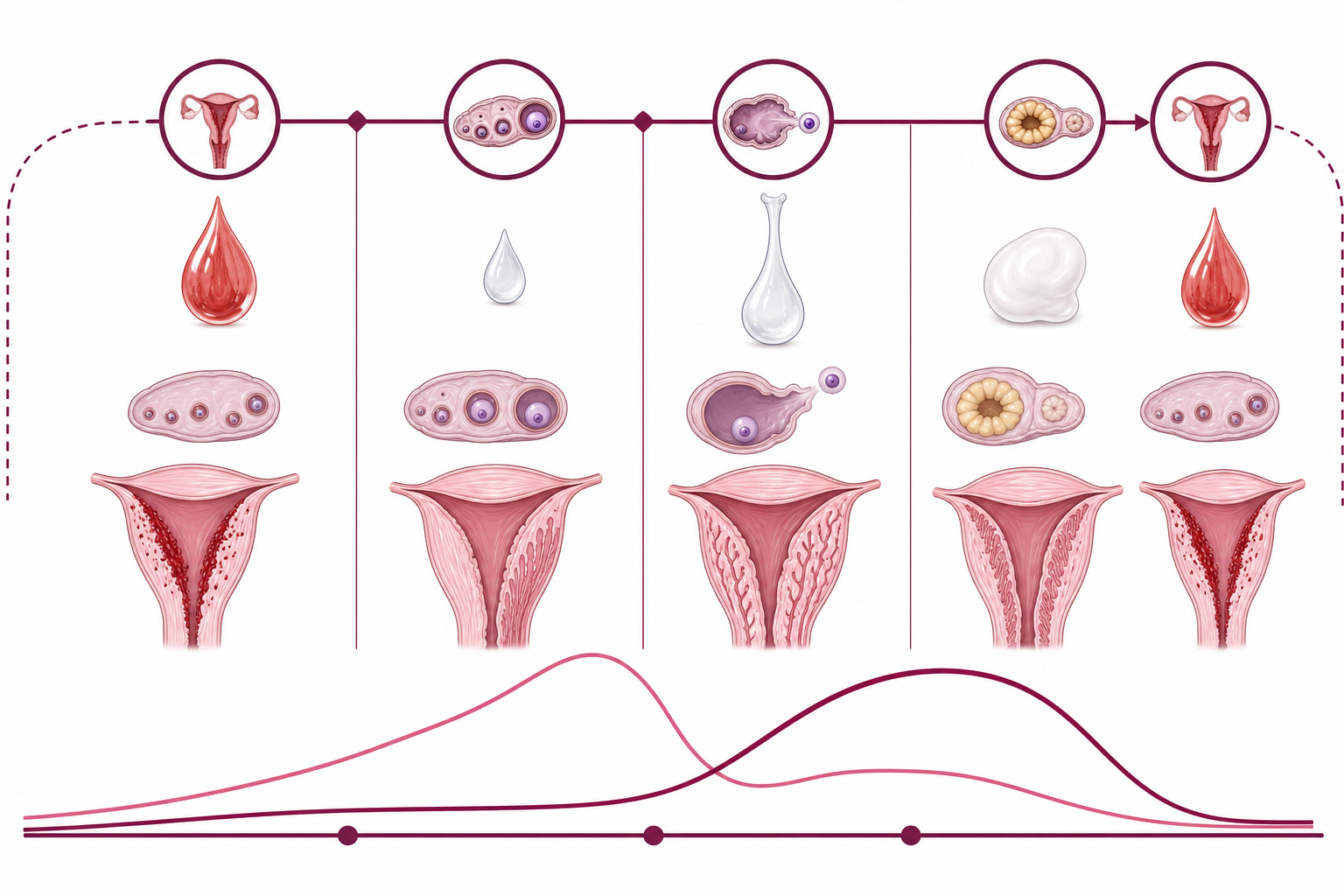
Estrogen peaks around ovulation. Discharge becomes clearer, more elastic, and noticeably wetter, sometimes described as egg-white in texture. This change is so reliable that fertility awareness methods use it as a signpost. After ovulation, progesterone rises and discharge thickens, dries, or turns cloudy. In the days before your period, hormone levels drop sharply, and many people notice mild itching, brief burning, or a slight smell shift in that window.
Underneath those visible changes, the vaginal pH is moving too. According to NHS and ACOG clinical guidance, a healthy vagina sits between roughly 3.8 and 4.5 pH, kept acidic by lactobacillus bacteria. That acidity is what holds yeast and harmful bacteria in check. Around your period, blood (which is closer to pH 7.4) raises vaginal pH temporarily. Sex does the same, briefly. Hormonal birth control, antibiotics, and even stress shift the microbiome too.
Per patient-education guidance from the American College of Obstetricians and Gynecologists, vaginal flora and discharge patterns fluctuate with hormones, sexual activity, and life events. Mild variation is expected biology, not pathology.
Cycle Snapshot
- Healthy vaginal pH sits roughly 3.8 to 4.5, rising toward 7.4 during menstruation and briefly after sex.
- Discharge moves through three predictable stages each cycle: clear and stretchy around ovulation, thicker and cloudier before your period, mixed with blood during it.
- Hormonal birth control, antibiotics, and stress can all shift the microbiome independently of infection.
How Hormonal Shifts Mimic Infection Signs
Discharge changes, smell shifts, and itching cause the most confusion, because all three appear in healthy cycles and in real infections. The overlap is what makes self-diagnosis frustrating.
Discharge is the biggest source of false alarms. Stretchy, clear ovulation mucus can look dramatic if you are not expecting it. Thick, white pre-period discharge can resemble a mild yeast infection. A faint tangy or musky smell can shift naturally with pH changes after sex or before your period.
Itching has the same problem. Mild itching in the few days before your period happens because estrogen drops and external tissues get briefly drier. Friction during sex, especially around ovulation when arousal patterns change, can produce short-lived burning. Real sensations, yes; not automatic signs of infection.
| Feature | Hormonal Changes | Possible Infection |
|---|---|---|
| Timing | Follows a predictable monthly pattern | Appears suddenly, no cycle pattern |
| Discharge | Changes predictably (clear → thick) | Unusual color: green, gray, yellow, frothy |
| Smell | Mild or slightly different | Strong, fishy, or foul odor that persists |
| Itching or burning | Mild, brief, resolves in 1–3 days | Persistent or worsening over days |
How do I tell hormonal symptoms from an STD?
Hormonal symptoms repeat at predictable points in your cycle, stay mild, and resolve on their own within 1 to 3 days. Infection symptoms tend to appear without a cycle pattern, persist beyond 3 to 5 days, intensify over time, or include strong odor, unusual discharge colors (green, gray, yellow), pain during urination, or pelvic pain. If a symptom breaks your usual cycle rhythm or worsens over time, an at-home rapid STI test gives you a clearer answer than waiting another month.
When It’s Your Cycle vs When It’s Something Else
Hormonal symptoms arrive on schedule and clear within days. Infection symptoms linger, escalate, or appear without a cycle pattern. Timing, intensity, and character together separate one from the other.
A symptom that lands on the same cycle day each month and clears within 48 to 72 hours leans heavily toward hormonal. A symptom that arrives unannounced, sticks around past a week, or shifts in character (the smell gets stronger, the discharge changes color, pain develops) leans heavily toward something that needs attention.
Three Filters for Sorting Cycle from Infection
- Timing: same cycle day each month points to hormones; no pattern points to infection.
- Intensity: mild and brief points to hormones; persistent or escalating points to infection.
- Character: familiar to past cycles points to hormones; new color, strong odor, or pain points to infection.
Discharge, Smell, and Itching: The Gray Zone
Discharge gets the most search traffic and the most panic. Clear, stretchy, slippery discharge in the middle of your cycle is almost always ovulation. Thick, white, or pasty discharge in the days before your period is also typical. Even a slightly metallic, musky, or tangy smell can be normal because pH shifts with hormones.
What pulls a symptom out of the normal range is character, not occurrence. Green, gray, yellow, or unusually frothy discharge is not a hormonal pattern. A strong fishy odor that lingers all day, especially after sex, points toward bacterial vaginosis. A cottage-cheese consistency with intense external itching suggests a yeast infection. None of those align with cycle timing.
The NHS guide on vaginal discharge lists color, smell character, and consistency as the most reliable warning signs. The simple sense that something feels different from yesterday is far less diagnostic. Brown spotting near your period is hormonal. Bright red bleeding between periods is not.
Itching follows similar rules. Mild, brief external itching before your period is common. Intense, all-day itching with discharge changes is not, and it typically points to yeast, BV, or trichomoniasis.
After-Sex Symptoms Most People Misread
Sex itself temporarily changes your internal environment. Semen has a higher pH (around 7.2 to 8.0) than vaginal fluid, which shifts your microbiome for several hours. Friction can irritate sensitive tissue, especially with low lubrication or right around ovulation when tissues are already extra responsive. Combined, these effects can produce short-lived burning, increased discharge, or a different smell that has nothing to do with infection.
The duration rule applies here too. If symptoms fade within 24 to 48 hours after sex and your baseline returns to normal, your body absorbed a temporary pH and friction reset. If burning continues for days, if there is pain during urination, or if a strong odor sticks around, that is a different story and worth a test.
One specific pattern to know: bacterial vaginosis often flares right after sex because semen disrupts the acidic vaginal pH that keeps protective lactobacilli dominant. If you notice a strong fishy odor reliably after sex, BV is a more likely cause than an STD, though both can occur together.
A fishy odor that appears reliably after sex and not at other times is more often bacterial vaginosis than an STD, though both can coexist. A rapid swab test separates them and avoids treating one when the other is the actual cause.
BV, Yeast, and Trich: The Conditions Most Often Confused with Cycle Symptoms
Three vaginal conditions account for most cases where someone suspects an STD and tests negative. Bacterial vaginosis, yeast infection, and trichomoniasis each have distinct patterns worth knowing.
Bacterial vaginosis (BV) shows up as thin, gray or white discharge with a strong fishy odor that often gets worse after sex. Itching is usually mild or absent. BV is not a sexually transmitted infection. Sexual activity still disrupts the vaginal microbiome and makes recurrence more likely, so the two often co-occur. The characteristic odor is the most reliable distinguishing feature.
Yeast infections present differently: thick, white, cottage-cheese discharge with intense external itching and burning, with no strong odor. Yeast infections are extremely common; most people with vaginas experience at least one in their lifetime (a figure cited in ACOG patient education materials), often after antibiotics, hormonal birth control changes, or pregnancy shift the microbiome.
Trichomoniasis is the one that genuinely is a sexually transmitted infection. It causes frothy yellow or green discharge with a strong odor, itching, and sometimes painful urination. Trich is curable with a single dose of antibiotics, though it requires a positive test to identify because its symptoms overlap with BV. It is also frequently missed in practice, since routine at-home screening for it is less common than for chlamydia or gonorrhea.
| Condition | Discharge | Odor | Itching |
|---|---|---|---|
| Bacterial vaginosis | Thin, gray or white | Strong fishy, worse after sex | Mild or none |
| Yeast infection | Thick, white, cottage-cheese | None or mildly yeasty | Intense external itching |
| Trichomoniasis | Frothy yellow or green | Strong, sometimes foul | Yes, often with burning |
The Pattern Hiding in Plain Sight: Repetition
One symptom is confusing. Two is a coincidence. Three months in a row at the same cycle point is a pattern, and patterns are the strongest evidence you have that something is hormonal rather than infectious.
Bacterial vaginosis, yeast infections, chlamydia, gonorrhea, and trichomoniasis do not politely wait for day 21 of your cycle to reappear. They persist or worsen on their own schedule. So when something fades on its own, resets to baseline, and returns next month right on cue, your hormones are almost certainly the driver.
This is why even casual cycle tracking pays off. You do not need a precise app or charting routine. Just noting which week of your cycle a symptom arrives makes the pattern obvious within two or three months. Once the pattern is visible, the noise of one-off worry quiets down, and the genuine outliers (the new sensations, the ones that break the rhythm) become much easier to spot.
Pattern vs Outlier
- Same symptom, same cycle day, three months in a row: almost certainly hormonal.
- A symptom that breaks the rhythm, escalates, or arrives with new features belongs in the test category.
When the Pattern Breaks: Red Flags That Need Attention
Severe pain, strong fishy odors, green or gray discharge, burning urination, and bleeding between periods all fall outside what hormone fluctuations produce. When any of those show up, your cycle is no longer the most likely explanation.
Specific red flags worth knowing by name:
- Strong fishy odor, especially after sex: most often bacterial vaginosis, treatable with antibiotics.
- Frothy green or yellow discharge: commonly trichomoniasis, requires testing and treatment.
- Pain or burning during urination: chlamydia, gonorrhea, or a urinary tract infection are likely culprits.
- Bleeding between periods or after sex: chlamydia and cervicitis are common causes; deserves prompt evaluation.
- Pelvic pain that is not menstrual cramping: can signal pelvic inflammatory disease (PID), an untreated chlamydia or gonorrhea complication that can affect fertility if delayed.
- New blisters, sores, or ulcers: herpes outbreaks have a different look and feel from cyclical irritation.
PID deserves more than a bullet, because it is the most consequential outcome on this list. It typically develops from untreated chlamydia or gonorrhea and can be symptom-free for weeks before causing noticeable pelvic pain. Early antibiotic treatment, ideally within days of diagnosis, substantially reduces the risk of lasting damage to the fallopian tubes and protects future fertility. If pelvic pain persists beyond a normal cycle, testing and prompt treatment matter more than waiting to see whether it resolves on its own.
Any symptom that has lasted more than 5 to 7 days without improvement also belongs in the test category, regardless of where it falls in your cycle.
Strong fishy odor, green or gray discharge, painful urination, pelvic pain, bleeding between periods, or new sores are not hormonal patterns. A rapid at-home test or a clinic visit gives you a clear answer faster than another cycle of guessing.
The vaginal microbiome and discharge patterns naturally fluctuate with the menstrual cycle, but persistent or unusual symptoms warrant medical evaluation to rule out infection.
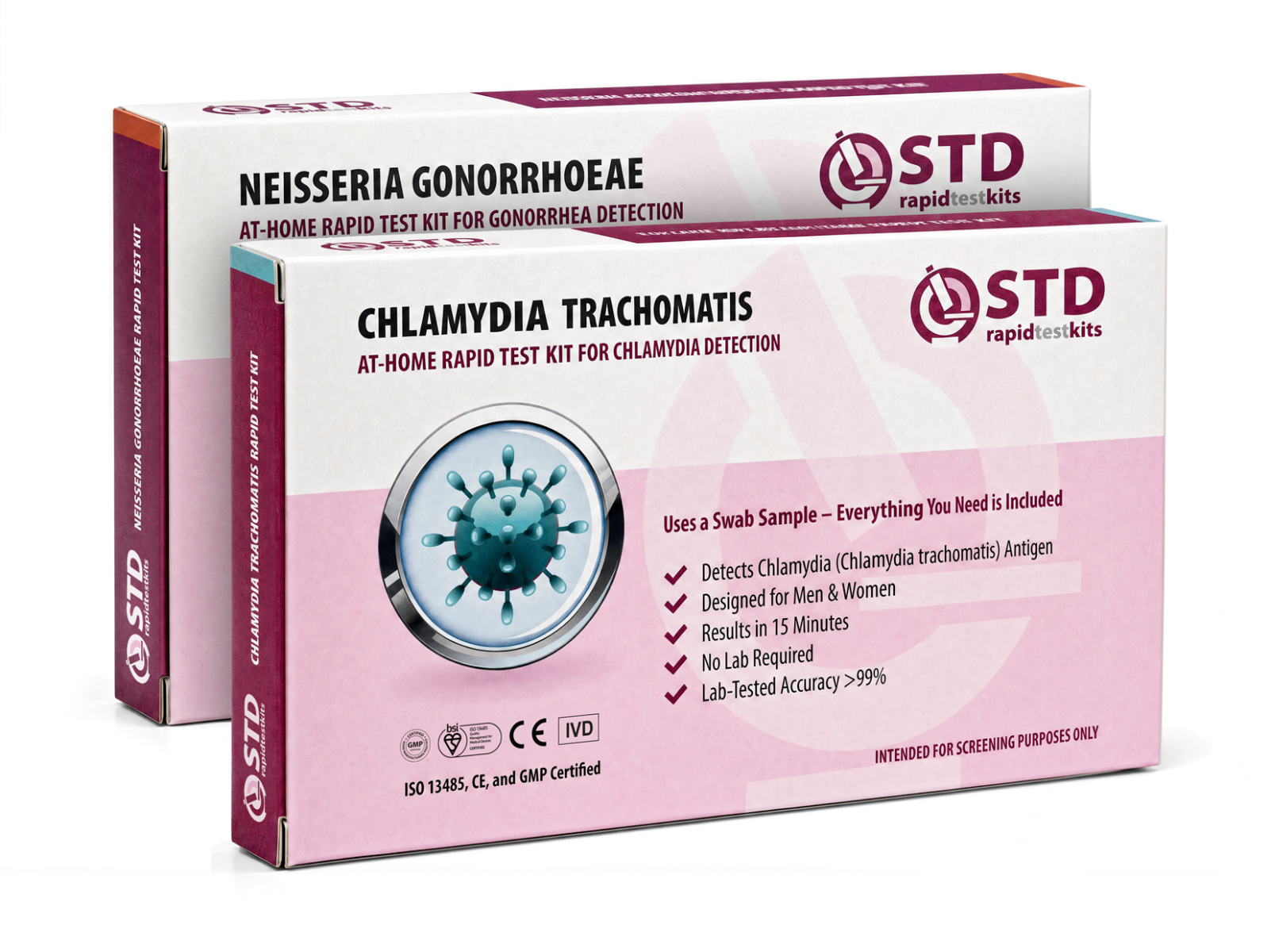
stdrapidtestkits.com sells at-home rapid STI test kits. The products linked below are recommended based on fit for the symptoms covered in this article, not on commercial benefit.
How to Decide: Wait, Watch, or Test
Three quick filters resolve most uncertainty:
Timing. Does this match a familiar phase of your cycle, like the week before your period or right around ovulation? If yes, watch it for a few days.
Duration. Has it persisted more than 3 to 5 days without improvement? If yes, consider testing.
Character. Is the smell unusually strong, the discharge an unusual color, or is there pain involved? If yes, test sooner rather than later.
| Situation | Best move |
|---|---|
| Matches your usual cycle pattern and feels familiar | Watch and monitor for 2–3 days |
| Mild symptoms that fade within 48 hours | No action needed; note for cycle tracking |
| Recurs at the same cycle point three months running | Likely hormonal; track but no test needed |
| New or unusual character: color, smell, pain | Get an at-home test or clinic appointment |
| Persistent or worsening past 5 days | Test as soon as possible |
Why Anxiety Distorts Your Body Reading
Stress shifts hormones, which can amplify discharge changes, sensitivity, and how strongly you notice normal sensations. The result is heightened symptom perception, not a new or worsening infection.
There is a perception loop too. Once anxiety draws your attention to a symptom, you check more often, notice every small variation, and interpret normal changes as evidence of something wrong. Pattern recognition cuts through this. The same fluctuation, viewed from outside the worry frame, usually fits a familiar cycle position. The discharge you noticed today probably looked similar last month, and the month before that, when you were not watching for it.
If you have checked yourself more than twice today, that is the anxiety loop talking. Give the symptom a 48-hour window before re-evaluating. If it is still there, then test. Most hormonal sensations fade in that window; most infection symptoms do not.
The Bottom Line: Trust Patterns, Test When They Break
Your cycle is rhythmic, not random. Discharge, smell, and sensitivity shift on a hormonal schedule that becomes obvious once you are paying attention. Once you know your own pattern, outliers stand out by themselves: the unfamiliar smell, the discharge color you have never seen before, the symptom that does not fade on its own.
If a symptom matches your usual pattern, give it a few days. If it fades, your body did its job. If it lingers, worsens, or arrives with red-flag features (unusual color, strong odor, pain, bleeding), that is your signal to get a test rather than spend another week guessing.
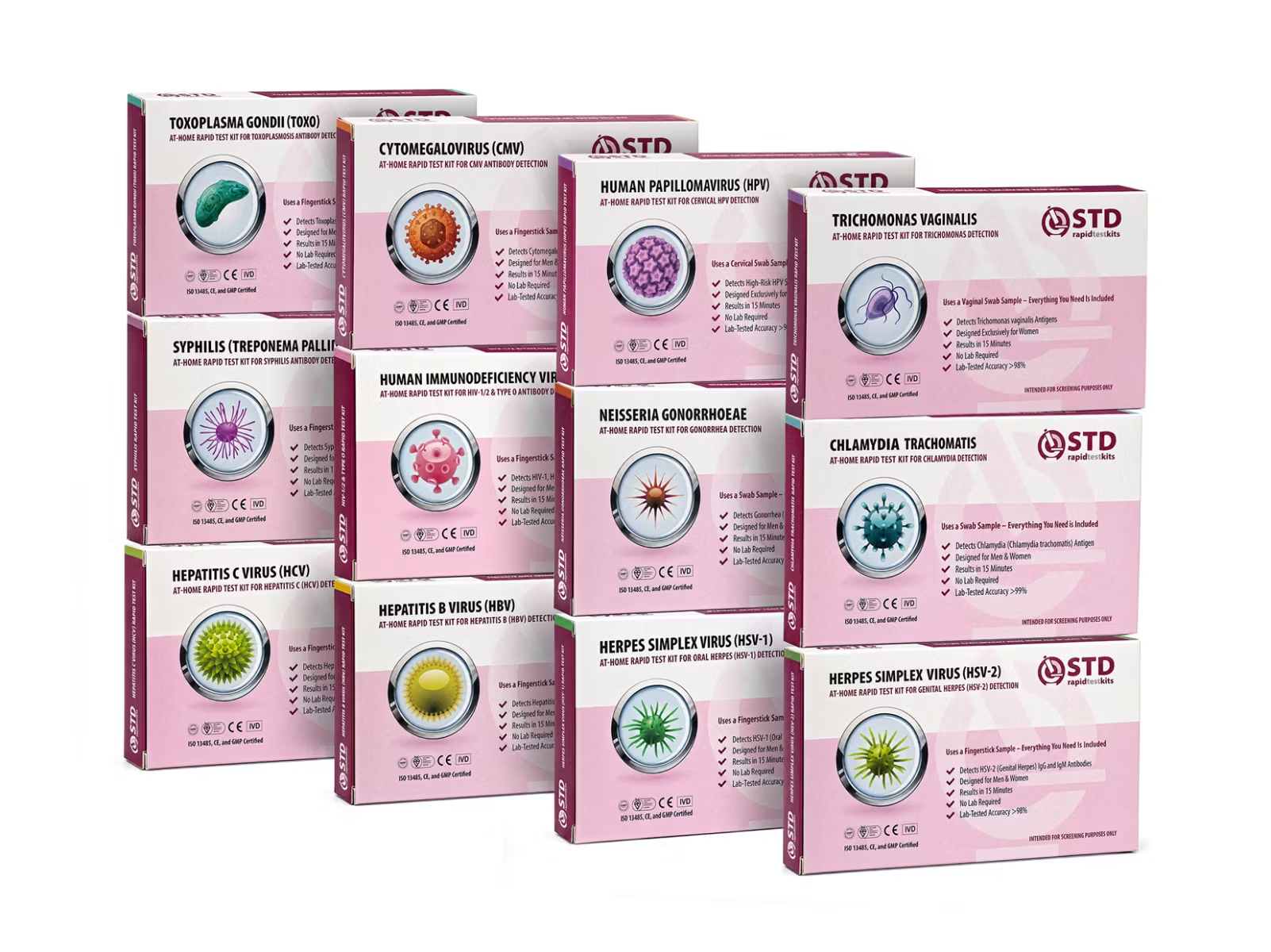
Testing is the fastest way out of uncertainty. The CDC recommends routine STI screening for sexually active people regardless of symptoms, plus same-cycle testing when something feels off. At-home rapid lateral-flow tests give you a result within about 15 minutes for chlamydia, gonorrhea, HIV, syphilis, and several other common infections, faster than scheduling a clinic visit and often more private.
FAQs
- Can hormones really feel like an STD?
- Yes. Estrogen and progesterone shifts can change discharge volume, smell, and skin sensitivity, sometimes within a single day. The difference is hormonal symptoms tend to be mild, brief, and patterned. Infection symptoms tend to persist, worsen, or come with unusual features like strong odor or off-color discharge.
- Why does my discharge look so different week to week?
- Because your hormones run a predictable schedule. Around ovulation, estrogen peaks and discharge becomes clear, stretchy, and wet. Before your period, progesterone rises and discharge thickens or dries. Weekly variation is normal; sudden character changes like color shifts or a strong persistent odor are not.
- Is itching before my period normal?
- Mild, brief itching in the few days before your period is common because estrogen drops and tissues get drier. If it clears within a couple of days and repeats predictably each month, it is almost certainly hormonal. If it spreads, intensifies, or comes with thick discharge, consider a yeast infection or other cause.
- What kind of smell change is a red flag?
- A subtle shift, especially before your period or after sex, is usually hormonal. A strong fishy odor that lasts all day, gets worse over time, or flares reliably after sex can point to bacterial vaginosis. Any persistent unusual smell deserves a test rather than another week of waiting.
- Why do I feel off after sex even when nothing went wrong?
- Semen temporarily raises vaginal pH, friction irritates sensitive tissue, and arousal-related microbiome shifts can last several hours. Mild burning, increased discharge, or a different smell that resolves within 24 to 48 hours is a normal reset rather than a sign of infection.
- If a symptom comes and goes, can I rule out an STD?
- Not entirely. Most STIs persist or worsen, though some, like early herpes outbreaks, can resolve on their own and recur. If a recurring symptom does not fit your cycle pattern, does not match prior episodes, or feels qualitatively different, testing is the cleanest way to know.
- Should I just test if I keep going back and forth?
- Yes. Sitting in uncertainty for weeks is not a reliable diagnostic strategy. An at-home rapid test gives you a clear answer within about 15 minutes for chlamydia, gonorrhea, HIV, syphilis, and several other common STIs, faster than scheduling a clinic visit and often more private.
- Can stress make my symptoms feel worse?
- Stress cannot cause infection; it amplifies how alarming normal cyclical changes feel. Disrupted hormone balance affects discharge, sensitivity, and how strongly you perceive sensations, which can turn ordinary fluctuations into something that feels three times louder than usual.
How we sourced this article: This guide draws on current clinical guidance from the CDC, WHO, NHS, and ACOG on vaginal health, the menstrual cycle, vaginitis, and sexually transmitted infections. We summarized public-health and peer-reviewed clinical literature into plain language so readers can recognize the difference between normal cyclical changes and signs that warrant testing. This article is published by stdrapidtestkits.com, which sells at-home STI testing kits; we recommend products based on fit for the reader’s concern, not commercial benefit.
- U.S. Centers for Disease Control and Prevention. Sexually Transmitted Infections overview, including screening recommendations for chlamydia, gonorrhea, and trichomoniasis.
- NHS. Vaginal discharge: what is normal and when to see a doctor; characteristic color, smell, and consistency warning signs.
- American College of Obstetricians and Gynecologists. Patient education resources on vaginitis, vaginal flora, and how the vaginal microbiome and pH shift across the cycle.
- World Health Organization. Sexually transmitted infections fact sheet, including global prevalence and symptom overview.
- NHS. Thrush in men and women: symptoms, causes, and how vaginal yeast infections differ from bacterial vaginosis and STIs.
- NHS. Bacterial vaginosis: causes, symptoms, and how it differs from yeast infections and STIs.
