Published: November 2025 | Last updated: May 2026 | Editorial review and quality control: Martina N.
The urge to test the morning after a risky encounter is real, and so is the temptation to treat the first negative result as the final word. It rarely is. HIV does not show up in your blood the moment you are exposed. The virus has to replicate enough to leave detectable traces, either as viral RNA, the p24 antigen, or antibodies, and that takes time the test cannot see past.
This guide is for the person who tested on day three and felt relief, then doubt. It is for the person who was told "you're negative" but cannot shake the feeling something is off. We will walk through how each test type detects HIV, what the realistic window period is for each, when retesting actually changes the answer, and how to handle the gap between tests without spiraling.
Key Takeaways
- Even the most sensitive HIV test (a nucleic acid test) cannot reliably detect HIV before about 10 days after exposure, and most rapid antibody home tests need 23 to 90 days to be accurate.
- A negative test taken inside the window period is not a final answer. Retest at the window-end interval for your test type, and treat the 90-day mark as the conventional all-clear for most people.
What Happens When You Test Too Early for HIV
HIV does not become detectable the moment you are exposed. The virus first has to replicate, often in lymphoid tissue, before it shows up in blood at concentrations a test can find. Different markers appear at different times. Viral RNA shows up first, usually around 10 days after exposure. The p24 antigen, a protein on the virus surface, follows around day 18. The antibodies your immune system produces in response to HIV typically take 23 to 90 days to reach detectable levels (HIV.gov testing overview).
If you test before whatever marker the test is looking for has reached detectable levels, you can get a false negative. The result reads "negative" because there is nothing yet for the test to grab onto, not because the virus is absent. False negatives in this situation are not a defect of the test. They are a feature of the timeline.
Testing early does not mean you did something wrong. It means you wanted answers. The right next step is to know which test gives a trustworthy result at which point, and to schedule a follow-up if you are still inside that window.
An early negative result is not the same as an actual negative. It only tells you the test found nothing detectable at that moment. A follow-up at the window-end interval for the test you used is the only way to close the loop.
How Different HIV Tests Detect the Virus
Three test types are in common use, and each looks for something different inside the body. Knowing which test you took is the first step to interpreting your result.
A nucleic acid test (NAT, sometimes called HIV RNA or viral load) directly measures HIV genetic material in the blood. It is the earliest and most sensitive test, but it is expensive and usually ordered only after a recent high-risk exposure or symptoms of acute infection. Most clinics do not run a NAT as a first-line screen.
A fourth-generation antigen/antibody combination test, performed in a lab on a venous blood sample, looks for both p24 antigen and HIV antibodies. This is the standard CDC-recommended screening test in clinical settings, and it shortens the window period meaningfully compared to antibody-only tests.
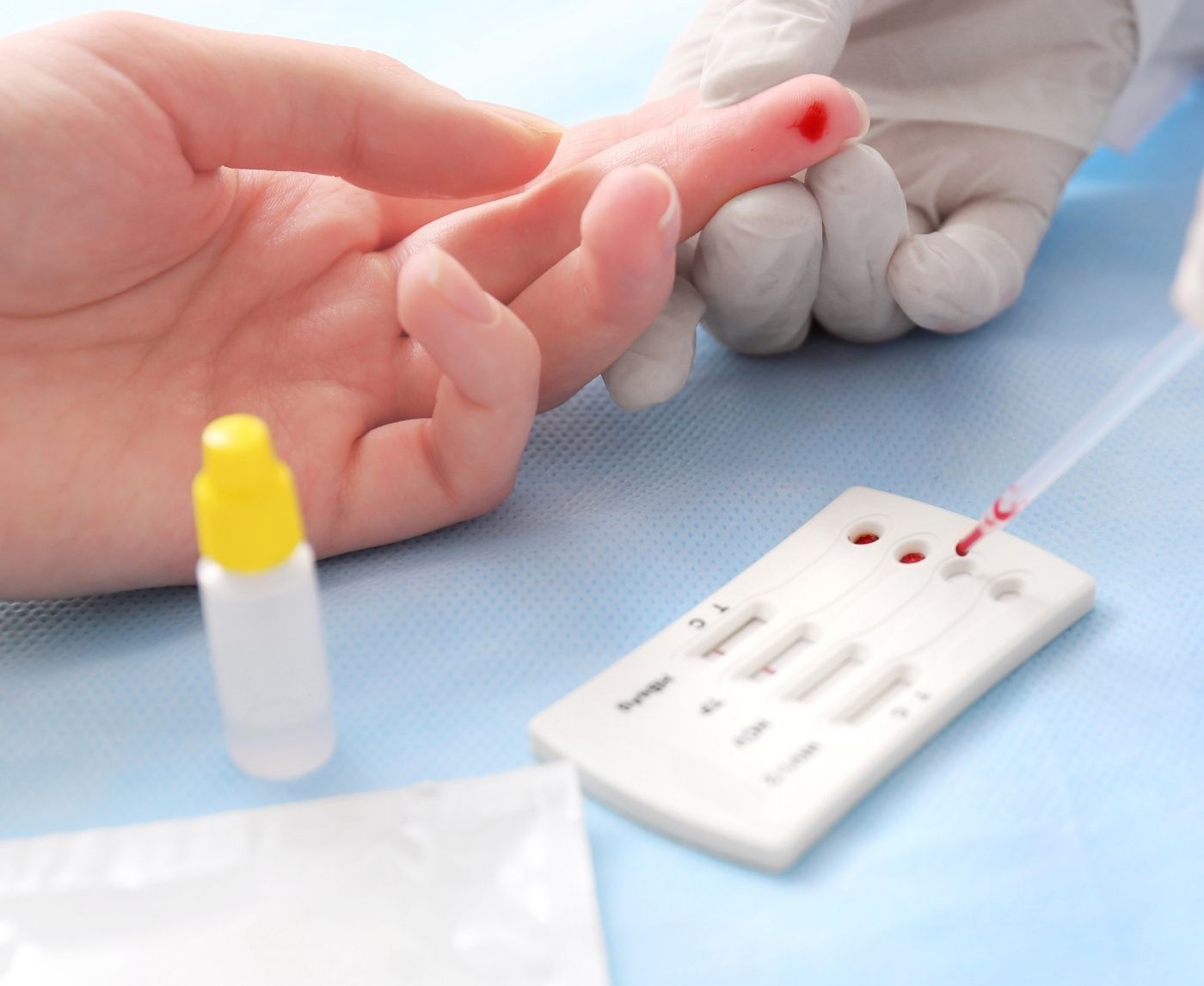
An antibody-only test, including most rapid fingerstick and oral-fluid tests sold for home use, looks for antibodies your body has produced against HIV. These are inexpensive, give results in 15 to 20 minutes, and are accurate once enough time has passed, but they take longer to turn positive after exposure than the lab-based options (NIH HIVinfo on HIV testing).
| HIV Test Type | What It Detects | Earliest Detection | Reliable Window |
|---|---|---|---|
| Nucleic Acid Test (NAT) | HIV genetic material (RNA) | About 10 days | 10 to 33 days post-exposure |
| Antigen/Antibody Lab Test (4th gen) | p24 antigen and HIV antibodies | About 18 days | 18 to 45 days post-exposure |
| Antigen/Antibody Rapid Fingerstick | p24 antigen and HIV antibodies | About 18 days | 18 to 90 days post-exposure |
| Antibody-Only Rapid (oral or fingerstick) | HIV antibodies | About 23 days | 23 to 90 days post-exposure |
The HIV Window Period Explained
The window period is the gap between exposure and the moment a particular test can reliably detect HIV. It is not the same as the incubation period, which is the time before symptoms appear. The window period is biological and test-specific. The incubation period is symptomatic and individual.
Different tests close their window at different times. The CDC publishes the ranges below as guidance for clinicians and the public (HIV.gov testing overview):
- Nucleic acid test: detects HIV roughly 10 to 33 days after exposure.
- Antigen/antibody lab test (4th generation): detects HIV roughly 18 to 45 days after exposure.
- Antigen/antibody rapid fingerstick: detects HIV roughly 18 to 90 days after exposure.
- Antibody-only test (oral fluid or fingerstick): detects HIV roughly 23 to 90 days after exposure.
The wide ranges reflect biological variation. Most people seroconvert (develop detectable antibodies) within the first part of each range, but some take longer, especially if they have a weakened immune system or are taking post-exposure prophylaxis (PEP). The 90-day mark is the conventional all-clear because it covers nearly everyone who would seroconvert at all.
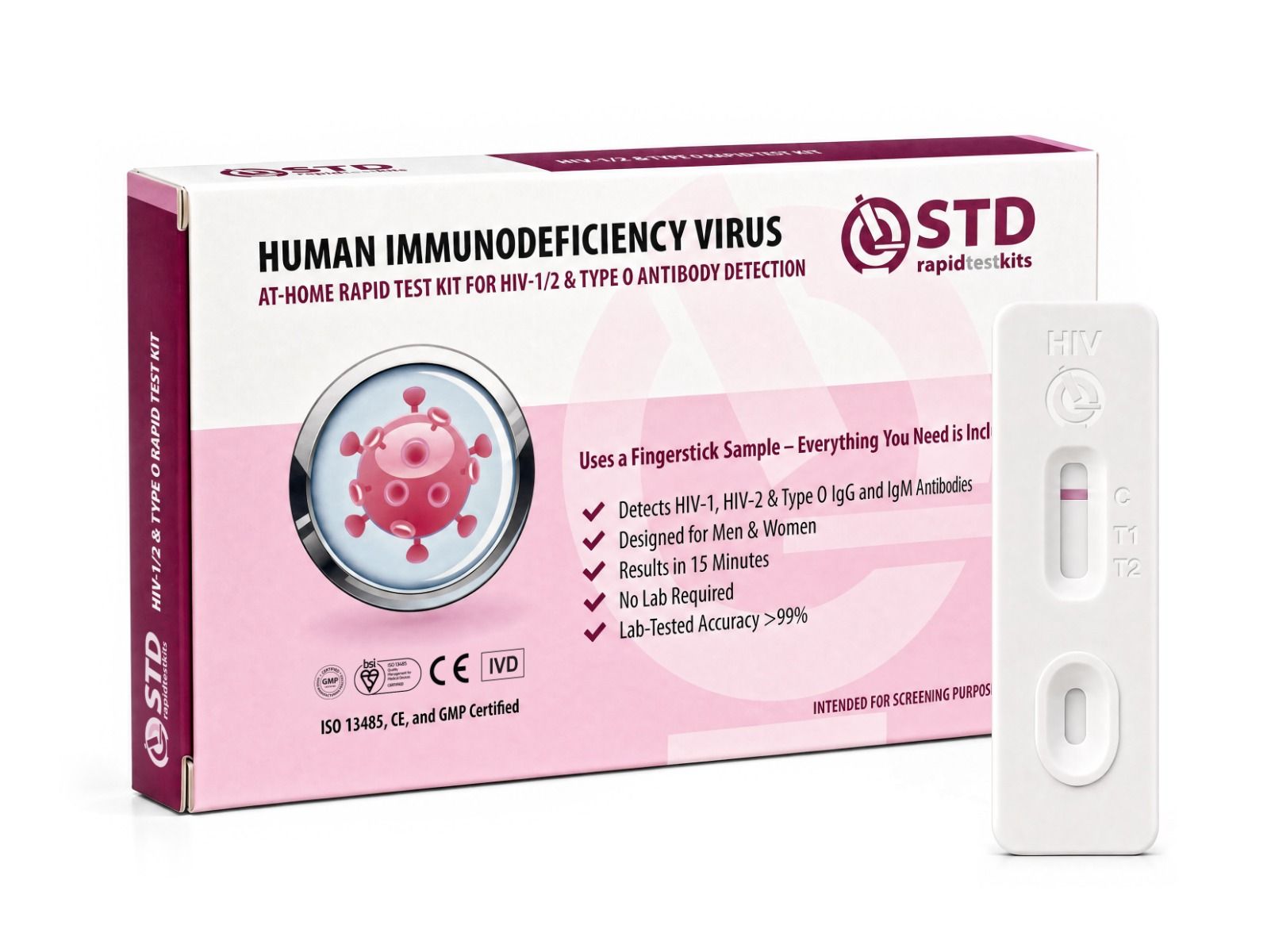
For transparency: stdrapidtestkits.com sells at-home rapid HIV tests, and one of those kits is featured later in this article. We recommend products based on fit for the reader's testing window, not on commercial preference.
| Days Since Exposure | Risk of False Negative | Test Reliability |
|---|---|---|
| 0 to 9 days | Extremely high | Too early for every test type |
| 10 to 17 days | High | NAT may detect; others likely still negative |
| 18 to 44 days | Moderate | 4th-gen lab tests increasingly reliable; rapid antibody tests still inside their window |
| 45 to 89 days | Low | Most tests reliable; 90-day retest still recommended for high-risk exposures |
| 90 days and beyond | Very low | Conventional all-clear for most exposure scenarios |
How soon can I trust an HIV test result?
It depends on which test you took. A nucleic acid test can detect HIV around 10 days after exposure. A fourth-generation lab antigen/antibody test reaches reliable detection by about 45 days. Rapid antibody tests, including most home kits, are reliable by 90 days. If your first test was negative inside the window for that test type, retest at the recommended interval rather than treating the early result as the answer.
Choosing the Right Test for Your Timeline
If you have already tested once, the choice for the next test depends on how long it has been since the exposure and which test you used the first time.
If it has been fewer than 10 days, no test will reliably catch a new infection. You can still test to establish a baseline, but plan a follow-up. The most useful first test in this window is a clinic-ordered NAT, especially after a high-risk exposure such as a known HIV-positive partner without viral suppression, condomless receptive anal sex, or shared needles.
If it has been 14 to 28 days, a fourth-generation lab antigen/antibody test is the best single option. It catches both early p24 antigen and emerging antibodies. A retest at 90 days is still recommended to close the loop for high-risk exposures.
If it has been 45 days or more, most antigen/antibody tests are reliable, including at-home fingerstick options. If at 90 days you are negative and you have had no new exposures, you can treat the result as conclusive for most situations (HIV.gov on HIV testing and the window period).
Some people retest using different test types for added reassurance. That is reasonable, but spacing tests by detection window matters more than stacking them in the first few weeks.
No HIV test can detect HIV immediately after exposure. The time between when a person gets HIV and when a test can accurately detect HIV is called the window period.
When to Retest, Three Common Scenarios
Three patterns cover most readers who arrive here after testing too early. The table below maps each first-test situation to the recommended next step and the point at which a result becomes conclusive.
If you are taking PEP, the timeline shifts. PEP can suppress early viral replication and antibody production, which extends your effective window period. Most clinicians recommend retesting at the end of the 28-day PEP course and again 1 to 3 months after the last dose.
| Scenario | Test Used | Days Post-Exposure | Recommended Next Test | When the Result Is Conclusive |
|---|---|---|---|---|
| A | Nucleic acid test (NAT) | 10 days | 4th-gen Ag/Ab at 30 to 45 days | 90 days post-exposure for high-risk situations |
| B | Rapid antibody test | 20 days | Repeat at 45 days, then again at 90 days | 90 days post-exposure |
| C | 4th-gen lab antigen/antibody | 48 days | Optional 90-day retest for high-risk or PEP | 90 days post-exposure for most exposures |
Why Symptoms Are Not a Reliable Indicator
One reason people test too early is symptoms: a sore throat, night sweats, a rash, or fatigue that feels heavier than usual. The body feels different and the mind fills in the worst possible cause.
Acute HIV symptoms, when they occur, typically appear 2 to 4 weeks after exposure and resemble the flu: fever, swollen lymph nodes, sore throat, headache, muscle aches, and sometimes a maculopapular rash on the trunk. Many people have no symptoms at all. Others experience these symptoms for unrelated reasons, including stress, poor sleep, allergies, or another viral infection (HIV.gov on symptoms of HIV).
Symptoms are unreliable in both directions: their absence cannot confirm a negative result, and their presence cannot confirm infection. The only signal that gives a usable answer is a test taken at the right time for the test type. Symptom-watching during the window period tends to amplify anxiety without changing the underlying risk picture.
Coping With the Wait Between Tests
The hardest part is often the time between the early test and the follow-up. If you are counting days, a few practical anchors help more than another round of search-engine reading.
Limiting how often you check for symptoms helps more than it sounds like it would. Anxiety reliably produces fatigue, throat tension, sleep disruption, and gut symptoms that overlap with what acute viral illnesses (including HIV) feel like, and the more you scan your body, the more the body finds. Picking a retest date now and putting it on the calendar turns an open-ended worry into a scheduled appointment, which is the single most useful thing you can do during this stretch. If a partner is involved, testing together shifts the experience from private anxiety to shared action; many people carry HIV without knowing because they have not tested in years, and widening the conversation can do more good than narrowing it to one exposure. Anonymous symptom forums are worth avoiding for this kind of question, since they over-represent worst-case outcomes and rarely include the much larger group of people who tested negative at 90 days and never thought about it again.
A named date on a calendar converts an open-ended wait into a finite one. Pick the test type that matches the window-end interval for your situation, set a reminder for the morning of that date, and step away from the search engine until then.
What If You Test Positive After Waiting
This is the question people are most afraid to think about, and the answer has changed dramatically over the last 20 years. A positive HIV test today opens a treatment pathway that, in most cases, leads to a near-normal life expectancy and an undetectable viral load.
If a home test reads positive, the next step is confirmatory testing through a lab or healthcare provider. Confirmation is standard procedure for any reactive HIV screening test, regardless of where it was taken. Many people are connected to care within days, often through telehealth if in-person visits feel overwhelming (HIV.gov on HIV testing and care).
Modern antiretroviral therapy is highly effective. With consistent medication, most people reach an undetectable viral load within months. Undetectable means the virus cannot be transmitted sexually. This principle, known as U=U (Undetectable equals Untransmittable), has reshaped both health outcomes and the social experience of an HIV diagnosis.
A positive result is not the end of work, dating, travel, or parenthood. It is the start of a treatment plan that, when followed, makes HIV a managed chronic condition rather than the catastrophe earlier generations feared.
People who take HIV medicine as prescribed and get and keep an undetectable viral load have effectively no risk of sexually transmitting HIV to their HIV-negative partners.
Privacy and At-Home Testing
For some readers, the testing experience matters as much as the result. A clinic visit can feel like exposure: explaining the situation to a receptionist, sitting in a waiting room, picking up paperwork. At-home rapid tests skip those steps and reduce the friction that keeps people from testing at all.
Home antibody tests use a fingerstick blood drop or oral swab and produce a result in 15 to 20 minutes. They are most useful once you are inside the reliable detection window for antibody tests, generally 45 days and beyond, with the conservative all-clear at 90 days. Inside that window the home test gives you the same answer a clinic antibody test would give, in your own space, without an audience.
Home rapid antibody tests are lateral-flow immunoassays, not laboratory NAATs. They are excellent screening tools at the right point in the timeline, but a positive home test still needs lab confirmation, and a negative home test taken inside the window period is not the final word.
If your concern includes more than HIV (a single risky encounter often involves several STI exposures at once), a multi-infection home kit can cover the most common ones with a single round of self-testing.
FAQs
- Can I test negative for HIV and still have it?
- Yes, if your test was taken inside the window period for that test type. Anything taken fewer than 90 days after exposure (or fewer than 45 days for a 4th-generation lab test) is a snapshot, not a verdict. Retest at the window-end interval for the test you used to get a result you can act on.
- How soon is too soon to test for HIV?
- Anything before about 10 days post-exposure is too soon for every test type. A NAT may begin to detect HIV at day 10. A fourth-generation antigen/antibody lab test starts around day 18. Antibody-only tests, including most rapid home kits, start around day 23 and reach maximum reliability by day 90.
- Is a 30-day HIV test result good enough?
- It depends on which test you used. A 30-day fourth-generation lab antigen/antibody test is reasonably reliable for most exposures, but the CDC still recommends a 90-day retest for high-risk exposures or anyone taking PEP. A 30-day rapid antibody test is too early to be conclusive.
- I took a rapid antibody test at home and it was negative. Am I clear?
- If your exposure was 90 or more days ago, the home rapid antibody test result is reliable for the antibody window. If the exposure was more recent than 90 days, retest once you reach the 90-day mark. Inside the window, the home test result is informative but not the final answer.
- What does a false negative actually mean?
- A false negative means the test reported negative even though HIV was present, usually because the marker the test looks for (antibodies, p24 antigen, or viral RNA) had not yet reached detectable levels. The test is functioning correctly; the timing is wrong.
- Do PEP or PrEP change my testing timeline?
- Yes. Both can suppress early viral replication and antibody production, which extends the effective window period. Most clinicians recommend retesting at the end of a 28-day PEP course and again 1 to 3 months after the last dose. PrEP users follow the regular screening intervals set by their prescribing provider.
- I feel fine after exposure. Do I really need to test?
- Yes. Many people who acquire HIV notice nothing in the first few weeks, and some have no symptoms for years. The only signal that gives a usable answer is a test taken at the appropriate time for the test type you are using.
- Can stress and anxiety mimic HIV symptoms?
- Anxiety reliably produces fatigue, sleep disruption, throat tension, sweating, and gut symptoms that overlap heavily with the flu-like presentation of acute HIV infection. The overlap is part of why symptom-watching during the window period rarely settles anything. A timed test does.
- HIV.gov. HIV testing overview, including the definition of the window period and the numerical detection ranges for nucleic acid, antigen/antibody, and antibody-only tests.
- U.S. Centers for Disease Control and Prevention. Clinical testing guidance for HIV, used as a general reference for confirmatory testing pathways and PEP follow-up testing.
- World Health Organization. HIV/AIDS fact sheet covering global testing standards, prevention, and current treatment guidance.
- HIV.gov. Symptoms of HIV, used for the 2 to 4 week acute symptom timeline and the typical flu-like presentation.
- National Institutes of Health, HIVinfo. Patient-facing fact sheet on HIV testing, including timing and test-type comparisons.
- MedlinePlus, U.S. National Library of Medicine. HIV screening test summary covering antigen, antibody, and nucleic acid tests for non-clinician readers.
