HIV Test at 2 Weeks: Too Early or Good Enough?
Two weeks after a possible HIV exposure feels like the natural moment to test. For most home rapid antibody kits, it is still too early to trust a negative result. This guide walks through what each kind of HIV test can detect at day 14, when to retest, and the post-exposure options that only work in the first 72 hours.
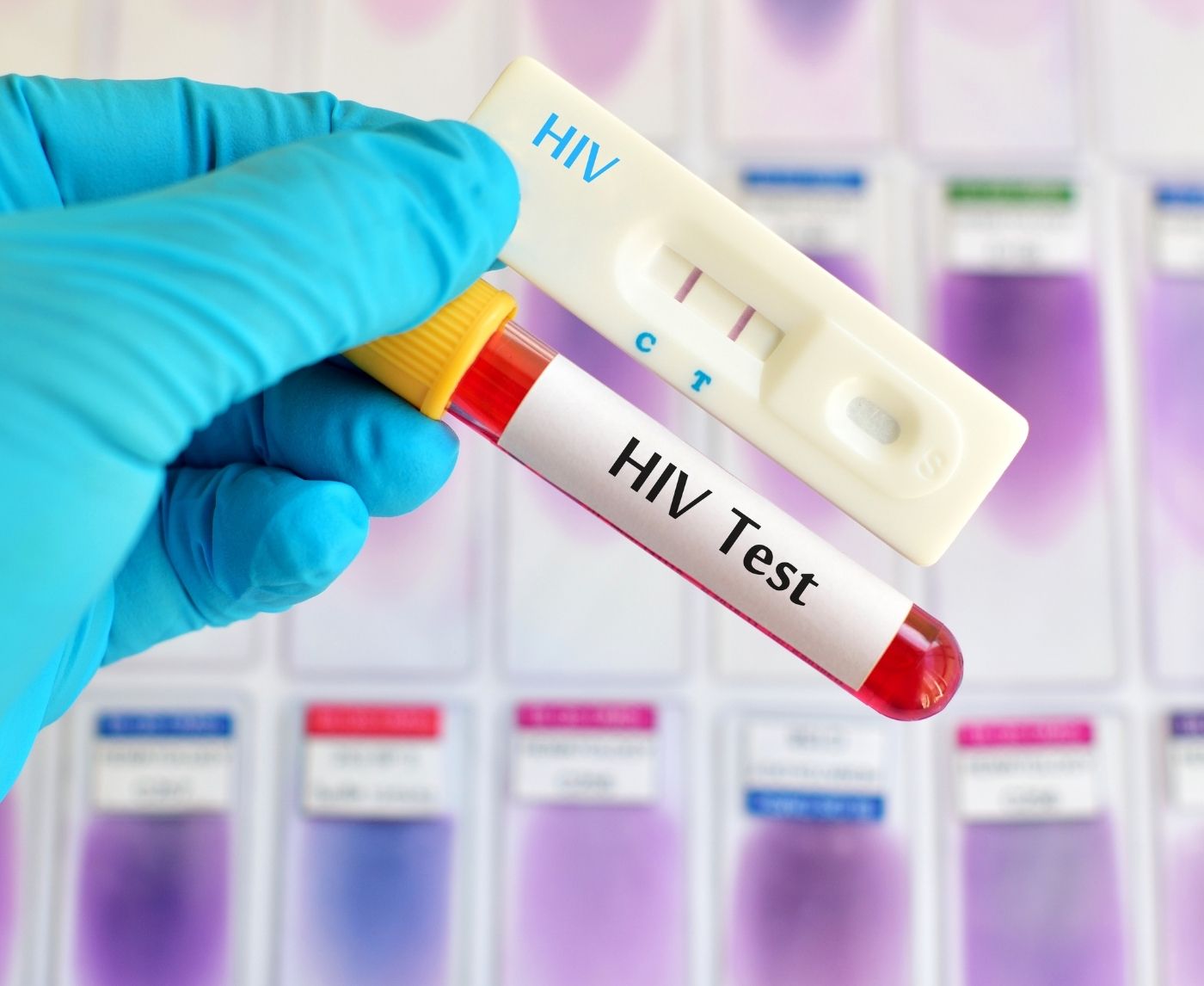



- A negative HIV antibody test at 14 days does not rule out infection. Antibody tests are designed to detect HIV roughly 23 to 90 days after exposure, per CDC guidance.
- Match the test to the timing: a clinic-based HIV RNA (NAT) test can detect infection from around 10 to 33 days, while a definitive negative on a rapid antibody test typically requires retesting at 90 days.
Published: December 2025 | Last updated: May 2026 | Editorial review and quality control: Martina N.
Two weeks after a possible HIV exposure feels like the natural moment to test. The anxiety has built up enough to push you toward an answer, and the calendar seems long enough for something to show. Whether 14 days is actually enough depends entirely on which test you take, and most home rapid antibody tests are still too early to trust a negative result at that point.
This guide walks through what each kind of HIV test can and cannot detect at 14 days, why a negative result that early is a checkpoint and not a final answer, when to retest for the certainty you came looking for, and the post-exposure options that only work in the first 72 hours.
Key Takeaways
- A negative HIV antibody test at 14 days does not rule out infection. Antibody tests are designed to detect HIV roughly 23 to 90 days after exposure, per CDC guidance.
- Match the test to the timing: a clinic-based HIV RNA (NAT) test can detect infection from around 10 to 33 days, while a definitive negative on a rapid antibody test typically requires retesting at 90 days.
Why Two Weeks Feels Like the Right Moment
Day 14 is when many people start searching for HIV testing for two reasons. First, it is roughly when acute HIV symptoms appear in those who develop them: low-grade fever, sore throat, swollen lymph nodes, rash, fatigue, body aches. Second, it is the point at which the waiting starts to feel intolerable.
The biology does not bend to that pressure. Most rapid HIV tests, including every FDA-cleared at-home cassette currently sold direct to consumers, look for HIV antibodies. Antibodies are proteins your immune system produces in response to the virus, and they take weeks to build to a detectable level. CDC testing guidance reports that most people develop detectable antibodies between 23 and 90 days after exposure. At day 14, your body is often still in the middle of that immune ramp.
That is why a negative rapid antibody test at two weeks tells you something useful but not the full story. It says no antibodies were detected at that moment. It does not say you are uninfected. The test is not lying or broken; it is just being asked to find something that may not be present yet.
At two weeks, your immune system is still building the antibodies most home tests look for. A negative result at this point is preliminary, not final. The test ran correctly; the body simply has not produced enough of what the test is designed to detect.
How the Three Main HIV Tests Work at 14 Days
HIV diagnostics fall into three categories, each with its own window period. The window period is the time between possible exposure and the moment a test reliably detects infection. Testing inside that gap can produce a false negative even when HIV is present.
The University of Washington HIV Diagnostic Testing module and CDC guidance both lay out the typical detection windows. Nucleic acid tests (NAT, also called RNA or NAAT tests) detect HIV's genetic material directly and can pick up infection from about 10 to 33 days post-exposure. Fourth-generation antigen/antibody combo lab tests detect both p24 antigen and antibodies, with reliable detection from about 18 to 45 days. Rapid antibody tests, including most at-home cassettes, detect from about 23 to 90 days depending on the specimen and brand.
Two weeks falls inside or before the early end of all three. The implications differ for each, summarized below.
| Test Type | Detects | Earliest Reliable Detection | Where You Get It |
|---|---|---|---|
| Rapid antibody test | HIV-1 and HIV-2 antibodies | 23 to 90 days | Home cassettes, clinics, community centers |
| Fourth-generation Ag/Ab combo | p24 antigen plus antibodies | 18 to 45 days | Clinic blood draw, mail-in lab kits |
| NAT (RNA / NAAT) | HIV genetic material directly | 10 to 33 days | Sexual health clinics, urgent care, emergency departments |
What "Accuracy" Really Means at 14 Days
Test accuracy is shorthand for two distinct measures. Sensitivity is how well a test catches actual infections (true positives among the infected). Specificity is how well it avoids false alarms (true negatives among the uninfected). FDA-approved rapid HIV antibody tests are highly sensitive and highly specific in performance studies, but those numbers apply to people tested after the window period closes, not before it.
Inside the window, sensitivity collapses. The test is not measurably worse at day 14 than at day 90 in the lab; the body simply has not produced enough antibodies for the test chemistry to bind to. The cassette runs cleanly, the control line shows up, and the result reads negative because there is genuinely nothing to detect at that visible threshold yet. There is no warning, no asterisk, no alert that you tested too early.
The same logic explains why early tests can occasionally show a faint or equivocal line, particularly with fourth-generation Ag/Ab tests at the early edge of their window. Faint does not mean false. Faint means treat the result as a preliminary positive until a confirmatory clinic test is run.
If you tested with a home antibody cassette at two weeks, treat the result as a preliminary checkpoint. Plan to retest at 4 to 6 weeks with a lab Ag/Ab combo and again at 12 weeks (any test type) for a definitive negative. If the exposure was high-risk and recent, see a clinic for a NAT test now. If your exposure was within the past 72 hours, jump to the PEP section below before reading further; that window closes fast.
At-Home vs Clinic Testing at the 14-Day Mark
Where you test changes which tests are available to you. At-home rapid kits are antibody-based and use a fingerstick blood drop or oral fluid swab. Clinic visits give you access to the more sensitive options: a fourth-generation Ag/Ab combo (lab blood draw) and, for known high-risk exposures, an HIV RNA / NAT test. Mail-in lab kits sit between these; they typically use a fingerstick or saliva sample sent to a lab that runs Ag/Ab combo or antibody-only chemistry.
For a 14-day test specifically, the order of usefulness is roughly: clinic NAT (best), clinic or mail-in Ag/Ab combo (acceptable at the early edge of its window), home rapid antibody (limited). If your priority at day 14 is the closest thing to a real answer, a clinic NAT is the most useful single result you can get. If your priority is privacy and you are using a home test as a screening checkpoint with a planned retest, a home rapid antibody cassette is reasonable for that purpose. The mistake is treating either result as a stopping point when it is actually the first reading on a curve.
| Method | Test type used | Useful at day 14? | Privacy |
|---|---|---|---|
| Clinic NAT visit | HIV RNA / NAAT | Yes; the most reliable single test at 14 days | Moderate (clinic record) |
| Clinic 4th-gen Ag/Ab | Antigen + antibody (lab) | Marginal; right at the early edge of window | Moderate |
| Mail-in lab kit | Antigen + antibody or antibody only | Marginal; same window as clinic combo | High |
| At-home rapid antibody | Antibody only (fingerstick or oral) | Limited; usually too early | Very high |
The Retest Schedule That Actually Closes the Window
The CDC, NHS, and WHO converge on a similar retesting cadence after a possible HIV exposure. The core idea is staggered testing: test at the earliest reasonable window for the most sensitive tool you have access to, then again later when the window for that test class is fully closed.
A practical schedule looks like this:
- Day 10 to 14, clinic NAT (high-risk exposure): The earliest reliable positive detection. Available at sexual health clinics, urgent care, and many primary care offices. Often paired with PEP discussion if within 72 hours of exposure.
- Day 14 to 21, home rapid antibody: Useful as a baseline check, but a negative is preliminary. Plan to retest.
- Day 30 to 45, fourth-generation Ag/Ab combo (lab): A negative here is highly reliable for non-NAT testing. Per CDC guidance, most people develop detectable antibodies and antigens within this window.
- Day 90, any test type: A negative test 12 weeks after the last possible exposure is considered definitive for both rapid antibody and Ag/Ab combo testing. This is the closing-the-window result.
Retesting on this cadence is not anxious overkill. It is the protocol public health authorities use to close the window correctly, and the 90-day mark is when most people can stop testing for that specific exposure event.
What If I Have No Symptoms? Does That Mean I'm Fine?
No. Acute HIV is asymptomatic in a meaningful share of cases, and when symptoms do appear they are nonspecific. The CDC notes that some people develop a flu-like acute retroviral syndrome 2 to 4 weeks after infection: fever, sore throat, swollen lymph nodes, rash, headache, body aches, fatigue, sometimes mouth ulcers. Others feel nothing for months.
This is the trap of relying on symptoms to decide whether to test. The same symptom cluster, whether present or absent, is produced by influenza, mononucleosis, COVID, strep throat, and secondary syphilis; it cannot tell you whether HIV is present. The only reliable signal at this stage is the right test at the right time.
The decision to test should be driven by exposure risk and the calendar, not by how you feel. If a known exposure occurred and 14 days have passed, test. If 14 days have passed and you have flu-like symptoms with no other obvious explanation, get a clinic NAT if available. If you feel completely fine after a known high-risk exposure, still test, on the same retest schedule.
Acute HIV symptoms typically emerge 2 to 4 weeks after infection, but a meaningful share of people experience no recognizable symptoms at all during early infection. Use exposure timing, not how you feel, to decide when to test.
If It's Been Less Than 72 Hours: Consider PEP Before You Test
Before talking about retesting, there is a separate question for anyone whose exposure was within the last three days. Post-exposure prophylaxis (PEP) is a 28-day course of HIV antiretrovirals taken to prevent infection from establishing after a high-risk exposure. CDC guidance is that PEP must be started within 72 hours of exposure; the earlier within that window, the better. After 72 hours, PEP is generally not effective.
PEP is appropriate when the exposure has a meaningful HIV risk: condomless sex with a partner whose HIV status is positive (or unknown and from a higher-prevalence group), needle-sharing, sexual assault, or occupational needlestick injury. It is available at urgent care clinics, emergency departments, sexual health clinics, and many primary care offices. Most insurance plans cover it; uninsured access is widely available through patient assistance programs.
PEP and HIV testing connect at several points. If you start PEP, you will also be tested for HIV at baseline (the start of PEP), at 4 to 6 weeks, and at 12 weeks per current CDC recommendations. Starting PEP does not end the testing cadence, and a confirmed negative HIV test does not rule out the need for PEP if your exposure is recent.
The bottom line: if your exposure happened in the last 72 hours, a clinic visit beats a home test, and starting PEP is more time-sensitive than confirming a negative.
STD Rapid Test Kits sells the at-home rapid tests referenced in this article; we recommend products based on fit-for-purpose for the reader's concern.
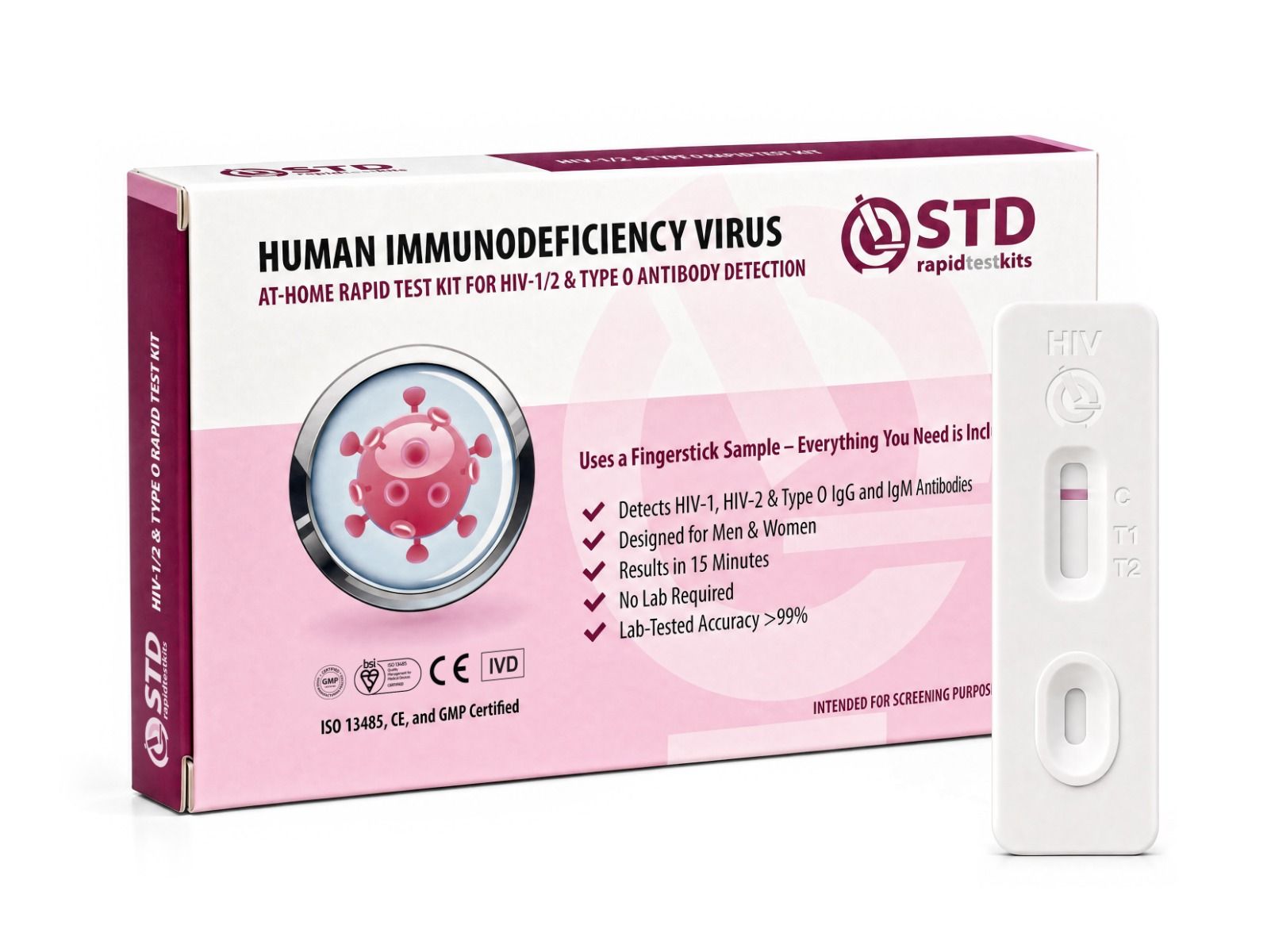
No HIV test can detect HIV immediately after infection.
If Your Test Is Positive at 2 Weeks (or Later)
A positive home rapid HIV test is a preliminary positive, not a confirmed diagnosis. Rapid antibody and combo tests are highly specific (false positives are rare but possible), so any positive result needs lab confirmation before treatment decisions. The path forward is straightforward.
Get a confirmatory test. A reactive home test should be followed by a clinic-based fourth-generation Ag/Ab combo and, in most U.S. testing algorithms, an HIV-1/HIV-2 differentiation assay (such as Geenius) plus an HIV RNA / NAT test. Sexual health clinics, primary care offices, and the CDC's GetTested locator can connect you to confirmatory testing the same week.
Get linked to care. Modern HIV treatment is one daily pill (combination antiretroviral therapy) for the vast majority of people. Treatment starts as soon as practical after diagnosis, and within months most people on therapy reach an undetectable viral load.
Understand U=U. An undetectable viral load means HIV cannot be sexually transmitted to partners. This is the U=U principle (undetectable equals untransmittable), confirmed by multiple large studies and endorsed by the CDC, WHO, and NIH. A diagnosis is not a sentence; it is the start of a manageable chronic condition with a normal life expectancy when treatment is started early and maintained.
Free or low-cost HIV care is available in every U.S. state through Ryan White-funded clinics, and most public health departments offer same-week confirmatory testing.
A reactive home HIV test is a preliminary result, not a confirmed diagnosis. Lab confirmation (a fourth-generation Ag/Ab combo and, typically, a differentiation assay or NAT) is required before any treatment decision is made. Schedule that follow-up the same week.
Why Many People Test for More Than HIV
HIV is rarely the only concern after a possible exposure. Chlamydia, gonorrhea, and syphilis are far more prevalent than HIV in the U.S. and have their own (different) window periods: chlamydia and gonorrhea typically detectable from 1 to 2 weeks, syphilis from 3 to 12 weeks. Hepatitis B and C are also worth screening for after any blood-contact exposure.
Multi-infection panels handle this in one workflow. They are useful when the exposure was sexual contact with a partner of unknown status, when symptoms span multiple categories (genital plus systemic), or when you want a baseline screen across the most common STIs at once. The trade-off: each infection inside the panel still has its own window, so a single test at 14 days may need follow-up retests for the longer-window infections (HIV at 90 days, syphilis at 12 weeks).
Privacy, Discretion, and How Home Testing Actually Works
The reason most people choose an at-home kit is privacy. No appointment, no waiting room, no insurance claim, no questions from a receptionist. STD Rapid Test Kits ships in plain mailers with no markings indicating contents. Most U.S. orders arrive within 1 to 3 business days.
The trade-off you accept for that privacy is the limit of what an at-home test can do. Home rapid tests are antibody screens; they cannot replace a clinic NAT for early high-risk exposures, and a positive home result still requires lab confirmation. Used as a screening tool with a planned 90-day retest (and a clinic referral if positive), a home kit covers the majority of typical post-exposure scenarios. Used as a one-and-done test at day 14, it can give you a negative that is not yet earned.
Our at-home rapid kits are lateral-flow immunoassays, not lab NAATs. The two technologies are complementary: a home kit screens; a lab NAAT confirms. Use them together.
At-home rapid antibody test: use as a screening checkpoint when privacy matters and you can plan a 90-day retest. Reasonable for most non-emergency post-exposure scenarios.
Clinic NAT visit: use when the exposure was high-risk and you want the most reliable result available at 14 days. Also the right choice if your exposure was within the past 72 hours (so a PEP conversation can happen at the same visit).
The Bottom Line on Day 14
A negative HIV rapid test at two weeks is a useful checkpoint and a poor stopping point. The biology of how antibodies build means the test is being asked to find something that often is not yet present. The right response to a negative day-14 antibody test is not relief; it is a calendar reminder to retest at 4 to 6 weeks (lab Ag/Ab combo) and again at 90 days for a definitive answer.
If your exposure was high-risk and recent, the better day-14 option is a clinic NAT, and the better day-1 option is a conversation about PEP. The home rapid antibody test is the right tool for a screening checkpoint with a planned follow-up, not for ruling HIV out at the earliest possible moment.
Frequently Asked Questions
- How accurate is an HIV rapid test at 2 weeks?
- Rapid antibody tests are designed to detect HIV antibodies, which usually become detectable between 23 and 90 days post-exposure per CDC guidance. At 14 days, your body often has not produced enough antibodies for the test to register as positive even when HIV is present. A negative rapid test at two weeks is a useful checkpoint, not a final answer.
- What is the HIV window period?
- The window period is the time between exposure to HIV and the moment a test reliably detects infection. It varies by test type. NAT tests detect HIV from about 10 to 33 days. Fourth-generation Ag/Ab combo tests detect from 18 to 45 days. Rapid antibody tests, including most home cassettes, detect from 23 to 90 days. Testing inside the window can return a false negative.
- Which HIV test is most accurate at 14 days?
- A clinic-based HIV RNA / NAT test. It looks for HIV's genetic material directly, not your body's antibody response, and can pick up infection from about 10 to 33 days post-exposure. Sexual health clinics, urgent care centers, and emergency departments commonly offer it for known high-risk exposures. NAT testing is not currently available in at-home rapid kits.
- If my 2-week HIV test is negative, when should I retest?
- The standard schedule after a possible exposure: retest at 4 to 6 weeks with a fourth-generation Ag/Ab combo lab test (this closes most of the window for that test class), and retest at 12 weeks with any test type for a definitive negative. If the exposure was high-risk, ask a clinic about a NAT test now, and discuss PEP if it has been less than 72 hours since exposure.
- Can a home HIV test give a faint positive line? What does it mean?
- Faint or equivocal lines should be treated as a preliminary positive until a confirmatory clinic test is run. Most home tests are calibrated so that any visible test line, faint or strong, indicates a reactive result. A reactive home test should be followed by a clinic-based fourth-generation Ag/Ab combo and, in most U.S. testing algorithms, a confirmatory differentiation assay or NAT test.
- Should I take PEP and a 2-week test at the same time?
- PEP and HIV testing are separate workflows. If your exposure was within the last 72 hours, the priority is starting PEP, not waiting to test. PEP is a 28-day course of antiretrovirals taken to prevent HIV from establishing after a high-risk exposure, and the CDC recommends starting it as early in the 72-hour window as possible. Testing happens at baseline, 4 to 6 weeks, and 12 weeks alongside PEP.
- Do at-home HIV tests check for HIV-1 and HIV-2?
- Most FDA-approved at-home HIV rapid tests detect both HIV-1 and HIV-2 antibodies. Check the test instructions or product page for confirmation. The vast majority of HIV cases in the U.S. are HIV-1; HIV-2 is more common in West Africa and is rarer overall. A test that detects both covers nearly all real-world cases.
- When can I stop testing for HIV after an exposure?
- Per CDC guidance, a negative HIV test at 12 weeks (90 days) after the last possible exposure is considered definitive for both rapid antibody and Ag/Ab combo testing. After that point, retesting for that specific exposure is not necessary. Routine HIV screening continues to be recommended at intervals based on ongoing risk factors.
How we sourced this article. This guide synthesizes current public-health and clinical guidance from the CDC, WHO, NIH, and the University of Washington's HIV Diagnostic Testing module, alongside Cleveland Clinic patient-education resources. We do not include first-person clinical anecdotes; the editorial team summarizes the published consensus on HIV testing windows and post-exposure care.
- U.S. Centers for Disease Control and Prevention. Getting Tested for HIV (window periods, test types, retesting cadence).
- World Health Organization. HIV/AIDS Fact Sheet (overview of testing approaches, U=U, treatment access).
- NIH HIVinfo. HIV Testing Fact Sheet (test types, when to test, what results mean).
- University of Washington. HIV Diagnostic Testing core concept (window periods for NAT, Ag/Ab combo, antibody tests).
- Cleveland Clinic. HIV Testing: What to Expect and When to Retest.
- U.S. Centers for Disease Control and Prevention. GetTested locator (clinic finder for confirmatory and free/low-cost testing).