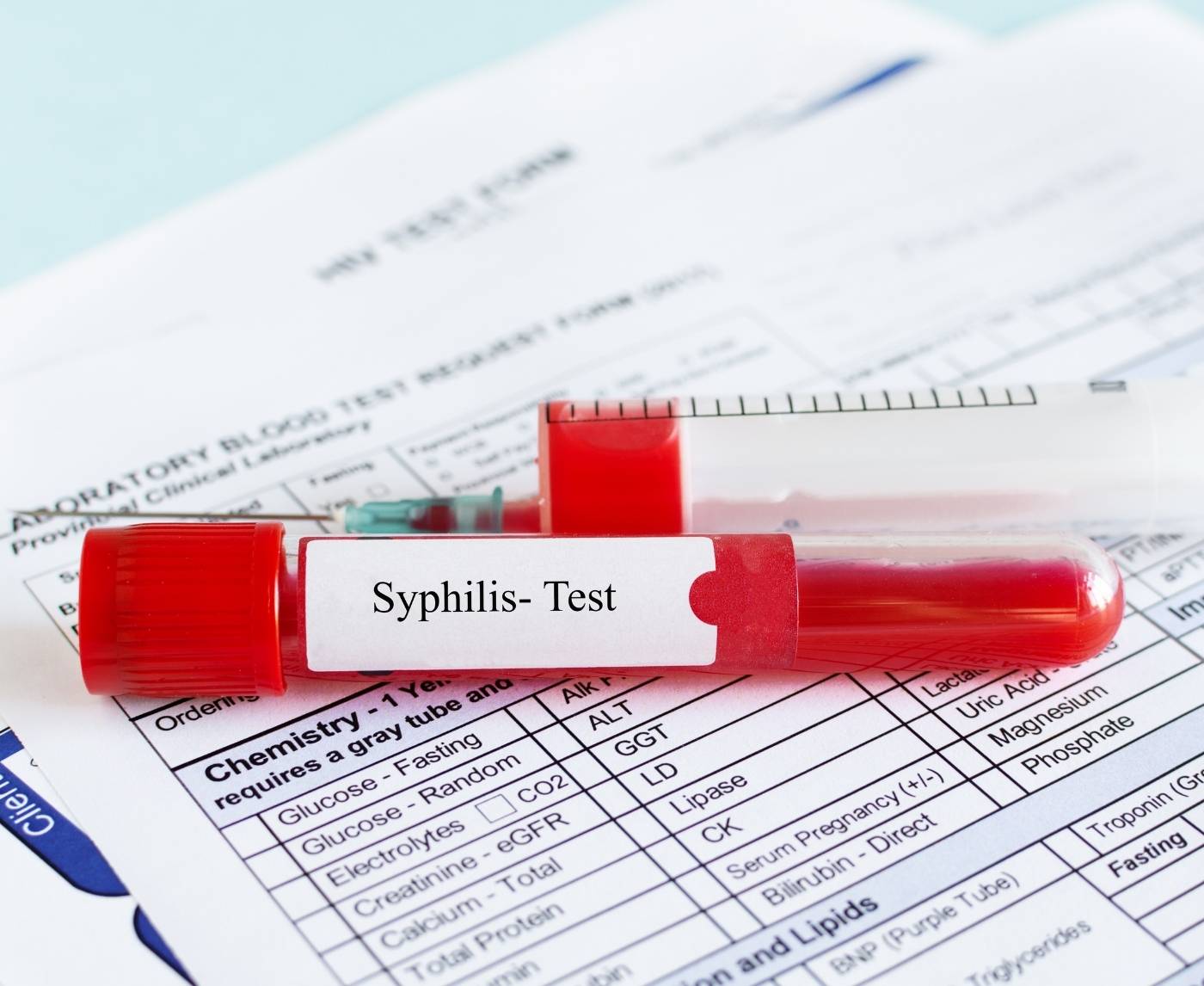
Published: October 2025 | Last updated: May 2026 | Editorial review and quality control: Martina N.
A positive syphilis test result lands hard. The first reaction is usually a rush of questions: what does this mean, what happens now, who needs to know. The reassuring fact, the one worth holding onto while the rest gets sorted out, is that syphilis is curable. Treatment is short. The medication has been in clinical use for more than seventy years and remains highly effective against the bacterium that causes the infection.
This guide walks through what actually happens after a positive result: the standard treatment protocol from the CDC, what the penicillin injection feels like, how long until the infection clears, how follow-up blood tests confirm cure, and what to do if the positive result came from an at-home rapid test. The information here draws from the CDC's 2021 STI Treatment Guidelines, the World Health Organization's syphilis fact sheet, and NHS guidance.
Key Takeaways
- Early-stage syphilis (primary, secondary, or early latent) is cured with a single intramuscular injection of benzathine penicillin G, per the CDC's STI Treatment Guidelines.
- Cure is confirmed by follow-up blood tests at 6 and 12 months, looking for a fourfold decline in non-treponemal antibody titers (RPR or VDRL).
The standard treatment protocol
The CDC's STI Treatment Guidelines name benzathine penicillin G as the recommended treatment for all stages of syphilis. The dosing depends on which stage the infection has reached when treatment begins.
For primary, secondary, and early latent syphilis (defined as infection acquired within the past year), the regimen is a single intramuscular injection of 2.4 million units. For late latent syphilis, or syphilis of unknown duration, the regimen extends to three intramuscular injections of 2.4 million units, given one week apart for three weeks. Tertiary syphilis without neurological involvement follows the same three-dose schedule. Neurosyphilis requires aqueous crystalline penicillin G given intravenously, typically as a hospital admission.
The reason for the longer schedule in later-stage infection is bacterial replication speed. Treponema pallidum, the spirochete that causes syphilis, divides slowly. Sustained antibiotic exposure across multiple weeks ensures the medication reaches bacteria during their active division phase, when penicillin is most effective.
| Stage of Syphilis | Recommended Treatment | Doses | Follow-Up Schedule |
|---|---|---|---|
| Primary | Benzathine penicillin G, 2.4 MU IM | 1 | RPR or VDRL at 6 and 12 months |
| Secondary | Benzathine penicillin G, 2.4 MU IM | 1 | RPR or VDRL at 6 and 12 months |
| Early latent (under 1 year) | Benzathine penicillin G, 2.4 MU IM | 1 | RPR or VDRL at 6 and 12 months |
| Late latent or unknown duration | Benzathine penicillin G, 2.4 MU IM weekly | 3 | RPR or VDRL at 6, 12, and 24 months |
| Neurosyphilis | Aqueous crystalline penicillin G IV | 10 to 14 days | CSF and serology follow-up |
What the penicillin injection actually feels like
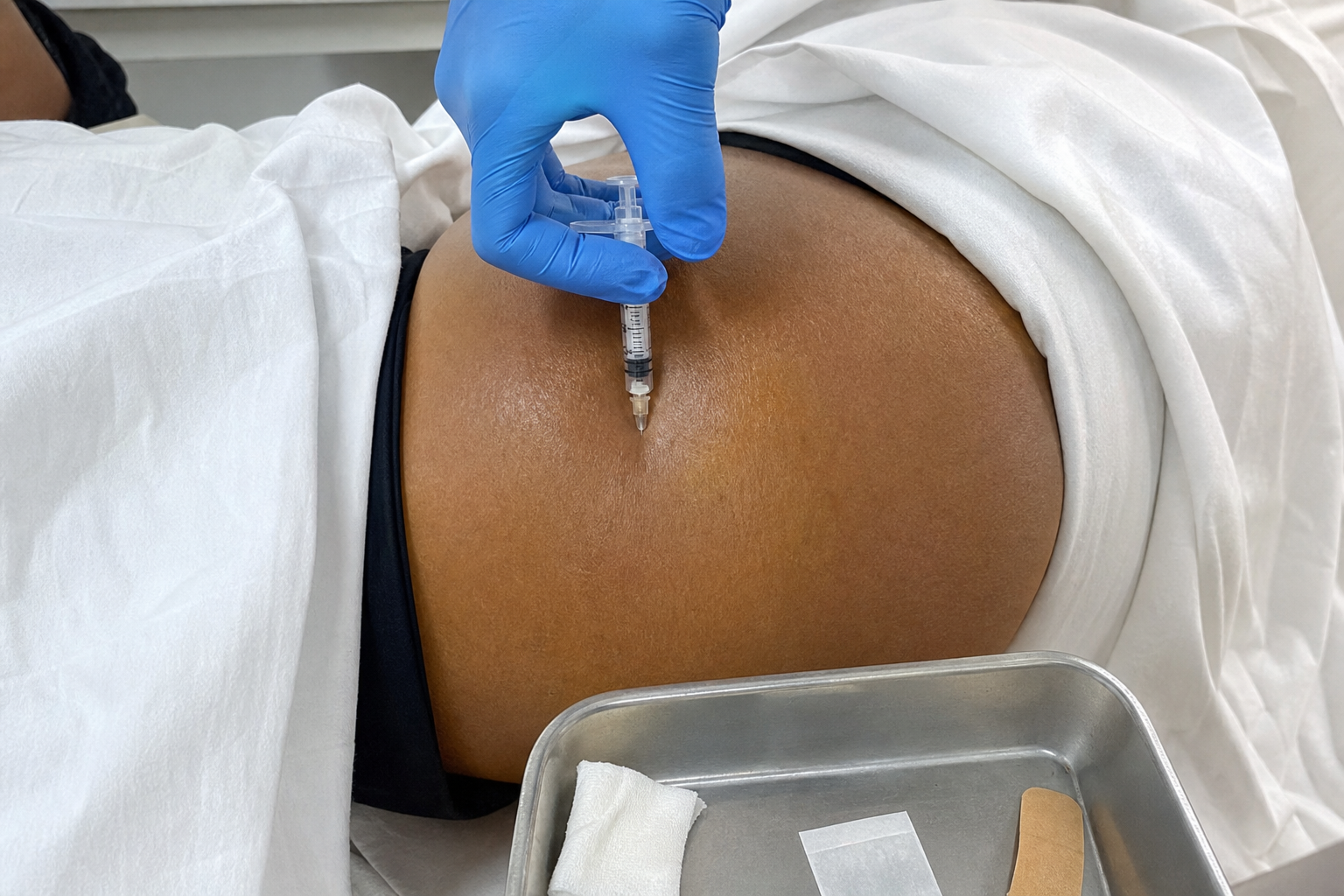
The injection goes into a large muscle, most commonly the upper outer quadrant of the buttock or the lateral side of the hip. Patients lie on their side. A nurse or clinician cleans the site with an alcohol prep pad. The medication is more viscous than most vaccines because it is suspended in oil to slow absorption, which is part of how a single dose maintains effective drug levels for weeks. That viscosity is why the medication is pushed in slowly.
Most patients report pressure during the injection rather than a sharp sting. Afterward, the muscle aches for one to two days. Common comparisons include soreness after a deep tissue massage or the day after a heavy leg workout. The ache stays local and predictable, and tends to peak around day one before easing. Walking helps. Ice on the site for 10 to 15 minutes can ease soreness in the first few hours.
The procedure does not involve a long needle into a sensitive area, a multi-hour visit, or any specialty equipment. The injection itself takes under a minute. The whole appointment, including a brief observation period to watch for allergic reaction, usually runs 15 to 30 minutes.
The Jarisch-Herxheimer reaction (the part nobody warns you about)
Within the first 24 hours after the injection, some people develop a brief flu-like reaction: fever, chills, muscle aches, headache, sometimes a faster heart rate. This response is called the Jarisch-Herxheimer reaction. It happens when large numbers of dying spirochetes release inflammatory products into the bloodstream all at once. The reaction reflects bacterial die-off rather than an immune response to the antibiotic itself, and clinicians treat it as a sign the medication is working (CDC STI Treatment Guidelines, 2021).
The reaction usually starts two to eight hours after the shot, peaks within the first day, and resolves on its own within 24 to 48 hours. It is more common with early-stage syphilis than late-stage. Acetaminophen or ibuprofen can ease the symptoms while the body clears the inflammatory load. Hydration and rest help. If a fever spikes very high, symptoms last more than 48 hours, or any allergic-type signs appear (hives, lip or tongue swelling, breathing difficulty), the right move is to contact a clinician or seek same-day care.
A fever or chills appearing within hours of the injection most likely reflect the Jarisch-Herxheimer reaction, an inflammatory response to dying bacteria. Allergic reactions involve hives, lip or tongue swelling, wheezing, or breathing difficulty, and they typically appear within minutes rather than hours. When in doubt, call the prescribing clinician or seek same-day care.
How long until it's gone? The recovery timeline
Antibiotics start killing Treponema pallidum within hours. Visible recovery takes longer. A primary chancre (the painless ulcer of early syphilis) usually heals within two to six weeks of treatment, sometimes faster. The widespread skin rash of secondary syphilis often takes several weeks to fully fade. Mucous patches, condyloma lata (flat wart-like growths around the genitals or anus), and other secondary manifestations resolve over a few weeks.
Blood titers tell the more accurate cure story. They decline gradually across months, with measurable changes at the 6-month and 12-month check-ins. The expected pattern depends on the stage treated and on individual immune response, which is why follow-up testing is scheduled at fixed intervals rather than left to a symptom check.
| Time After Injection | What Is Happening Internally | What You Might Notice |
|---|---|---|
| First 24 hours | Antibiotic distributes; bacteria begin dying; possible Jarisch-Herxheimer reaction | Brief fever, chills, fatigue, muscle ache |
| 1 to 2 weeks | Inflammation declines; lesions heal | Chancre crusts over and resolves; secondary rash fades |
| 1 to 3 months | Bacterial load eliminated; immune system continues clearing | No visible symptoms; injection-site soreness gone |
| 6 months | Non-treponemal titers (RPR or VDRL) declining | First follow-up blood test |
| 12 months | Titers should show a fourfold decline from baseline | Second follow-up blood test confirms cure |
When are you no longer contagious?
After appropriate treatment, and once any visible lesions have healed, the risk of transmitting syphilis drops sharply. The CDC recommends abstaining from sexual contact for at least 7 days after a single-dose treatment, and until any chancre or rash has fully resolved (CDC STI Treatment Guidelines). For the three-dose schedule used in late latent infection, the abstinence period covers the full course plus at least 7 days after the final injection.
Syphilis transmits primarily through direct skin or mucous-membrane contact with active lesions. Chancres and the rash of secondary syphilis carry the bacterium. Latent syphilis, with no symptoms, is generally not transmitted sexually, though it can still cross the placenta during pregnancy and can be transmitted by blood transfusion in rare cases. The 7-day rule covers the period during which bacterial load drops dramatically and lesions heal.
If a partner is also being treated, they follow the same abstinence window. For partners on the three-dose late-latent schedule, the combined waiting period covers all three weeks of injections plus an additional seven days after the final dose.
Transmission depends on whether visible lesions are present, not just on antibody status. A chancre or secondary rash is highly infectious through skin-to-skin or mucous-membrane contact. Once those heal, sexual transmission risk falls sharply. The placenta is the main exception: syphilis can still cross to a fetus during pregnancy even in the latent (symptom-free) phase, which is why prenatal screening is performed even when no lesions are visible.
Follow-up blood tests: confirming cure
The injection ends the acute treatment. The follow-up lab work confirms cure. Syphilis monitoring uses non-treponemal tests, most commonly the rapid plasma reagin (RPR) or the Venereal Disease Research Laboratory (VDRL) test. These tests measure antibody activity and are reported as a titer ratio (1:8, 1:16, 1:32, and so on). A higher ratio means a higher antibody level.
What clinicians look for after treatment is a fourfold decline in titers (CDC STI Treatment Guidelines, 2021). For example, a titer that started at 1:32 should drop to 1:8 or lower. For primary and secondary syphilis, the fourfold decline usually happens within 6 to 12 months. For late latent syphilis, the decline can take 12 to 24 months and is generally slower.
Some people develop a serofast state, in which titers stabilize at a low level (often 1:4 or 1:8) and never fully disappear. These stable low titers reflect long-lived immune memory after a resolved infection and do not require retreatment as long as the titer is stable and other clinical signs are absent. Treponemal-specific tests (TP-PA, EIA, FTA-ABS) typically remain reactive for life after any past syphilis infection, treated or untreated, which is why titer trends matter more than presence-or-absence on a single antibody test.
| Stage Treated | First Follow-Up | Second Follow-Up | Expected Titer Change |
|---|---|---|---|
| Primary or secondary | 6 months | 12 months | Fourfold decline (e.g., 1:32 to 1:8) |
| Early latent | 6 months | 12 months | Fourfold decline |
| Late latent or unknown duration | 6, 12, and 24 months | Annually if not resolved | Gradual decline; serofast state possible |
Reinfection vs. treatment failure
Properly treated syphilis does not return on its own. Benzathine penicillin G is the first-line treatment recommended by both the CDC and the World Health Organization, with a properly completed regimen clearing the infection in the large majority of cases (CDC STI Treatment Guidelines, 2021; WHO syphilis fact sheet). When someone tests positive again months later, the explanation is usually reinfection.
Reinfection follows new exposure. A partner who was infected at the same time but never tested can transmit the bacterium back. A new partner can be a source. Unprotected sex during the abstinence window can also restart the cycle. Each scenario represents reinfection through a fresh exposure rather than failure of the original antibiotic course.
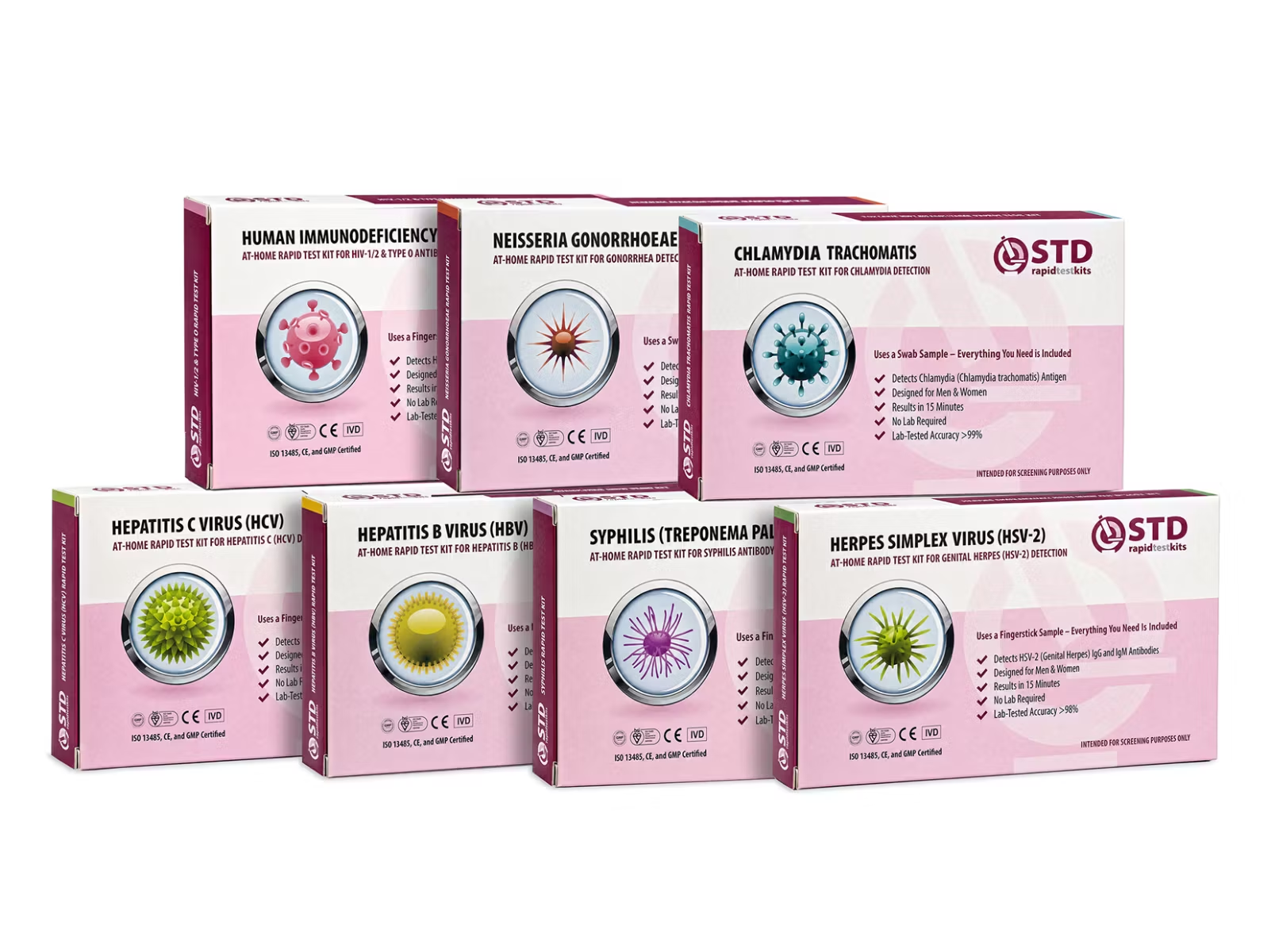
Partner testing closes the loop. The CDC recommends that all sexual partners from the past 90 days for primary syphilis, the past 6 months for secondary syphilis, or the past 12 months for early latent syphilis be notified, tested, and presumptively treated even if their initial tests are negative. Local health departments offer anonymous partner notification in most U.S. states. As a note on the product mentions below, stdrapidtestkits.com sells the at-home rapid tests referenced in this article, and we recommend products based on fit for the reader's concern. When both partners get tested and treated together, the chance of a reinfection cycle drops to near zero.
What if you're allergic to penicillin?
A true penicillin allergy is less common than self-reported allergy. Many childhood records of "penicillin allergy" turn out to be non-allergic rashes from a viral illness or unrelated drug reactions. Allergy testing can distinguish a real IgE-mediated allergy from a historical mislabel.
For non-pregnant adults with primary, secondary, or early latent syphilis, the CDC's 2021 STI Treatment Guidelines list doxycycline (100 mg orally twice daily for 14 days) and tetracycline (500 mg orally four times daily for 14 days) as alternative regimens. For late latent syphilis, the doxycycline course extends to 28 days. Ceftriaxone is sometimes used in specific clinical contexts.
Pregnancy is the major exception. Penicillin is the only treatment proven to cross the placenta and protect the fetus from congenital syphilis. If a pregnant patient has a true penicillin allergy, the CDC recommends inpatient desensitization followed by penicillin treatment. Desensitization is a stepwise oral or intravenous protocol done under medical supervision, and it has been used safely for decades.
Alternative regimens for true penicillin allergy
- Doxycycline 100 mg orally twice daily for 14 days (28 days for late latent syphilis).
- Tetracycline 500 mg orally four times daily for 14 days.
- Pregnancy is the major exception: penicillin desensitization is recommended, since doxycycline and tetracycline are not safe alternatives during pregnancy.
Pregnancy and syphilis: same cure, higher stakes
Untreated syphilis in pregnancy can cause miscarriage, stillbirth, neonatal death, or congenital syphilis, a condition that can affect a newborn's bones, brain, eyes, hearing, and other organs (WHO syphilis fact sheet). The earlier in pregnancy treatment begins, the better the outcomes. Treatment before 24 weeks gestation is most effective at preventing fetal complications.
Pregnant patients receive benzathine penicillin G with stage-based dosing. Many providers give a second dose one week after the first for primary, secondary, or early latent syphilis during pregnancy, even when non-pregnant patients with the same stage receive a single dose. The rationale is the higher consequence of any residual bacterial load and the relatively small risk of an extra dose. Late latent syphilis in pregnancy follows the standard three-dose weekly schedule.
Follow-up serology is more frequent during pregnancy. Most providers test at the time of treatment, monthly through pregnancy in higher-risk cases, and again at delivery. The newborn is examined for congenital signs and tested at birth, often with both serology and physical exam.
The CDC recommends syphilis screening at the first prenatal visit for all pregnant patients, with repeat testing at 28 weeks and at delivery for those at higher risk (recent positive test, partner with syphilis, residence in a high-prevalence area, or substance use). Treatment within 30 days of delivery is considered adequate for the parent but may not fully prevent congenital infection in the newborn, which is why earlier-pregnancy treatment matters.
What you risk by delaying treatment
Early syphilis symptoms (a single painless chancre, a widespread rash, swollen lymph nodes, mild fever) often resolve on their own without treatment. Those self-resolving symptoms mask continued bacterial activity inside the body. The infection moves into latent stages where there are no visible signs at all.
Untreated syphilis can progress to tertiary syphilis years or decades later, affecting the cardiovascular system (aortic aneurysm, aortic regurgitation), the central nervous system (meningovascular syphilis, which is inflammation of brain blood vessels; general paresis, a form of progressive dementia; and tabes dorsalis, spinal-cord degeneration causing coordination loss), and other organs (NHS syphilis information). Tertiary disease is far less common in countries with accessible testing and antibiotics, precisely because most infections get caught and treated early.
The longer the delay, the more complex the treatment becomes. Late latent syphilis requires three injections instead of one. Tertiary involvement or neurosyphilis can demand 10 to 14 days of intravenous penicillin G under hospital admission, with cerebrospinal fluid testing and longer serology follow-up as part of the protocol.
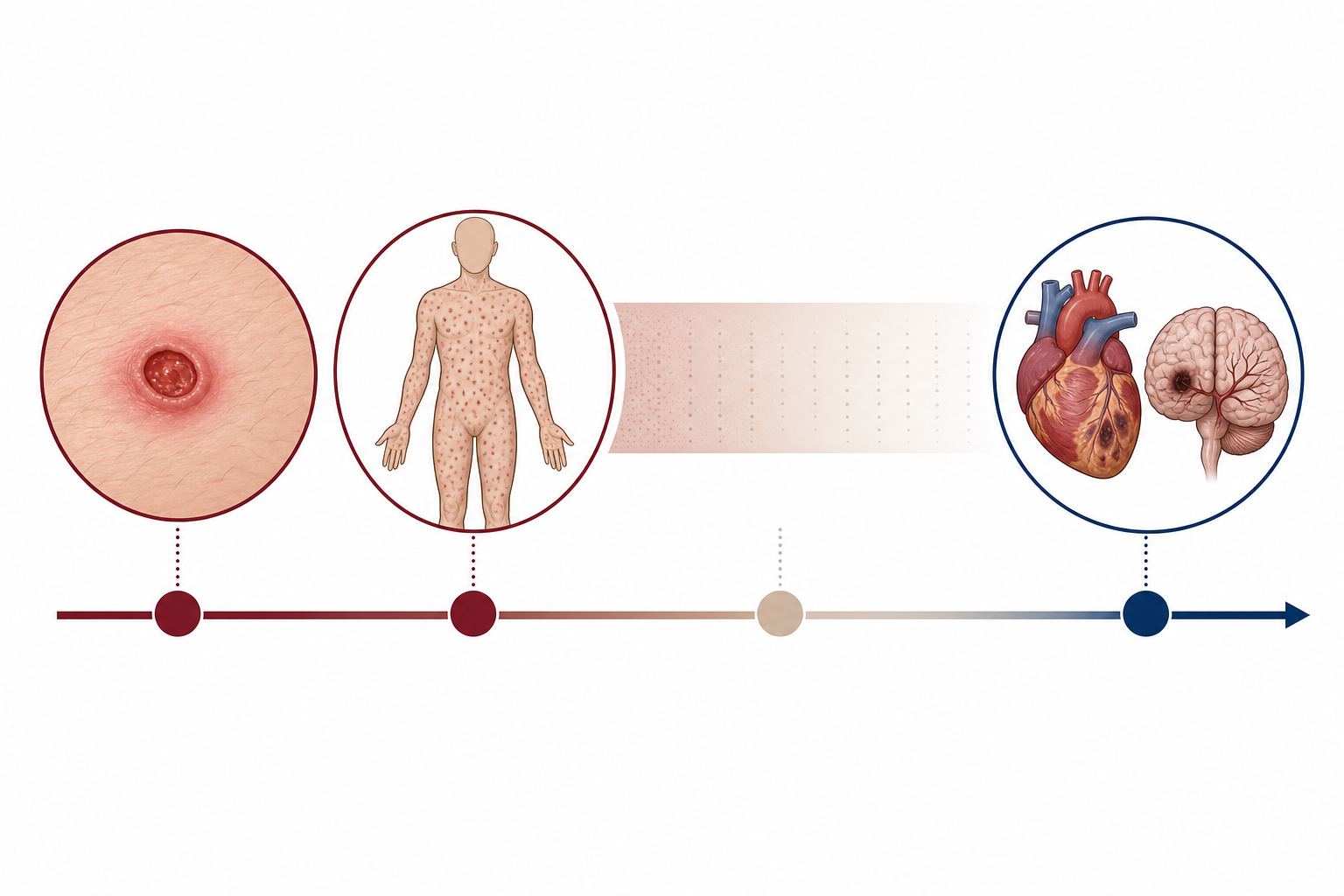
Even when early symptoms fade on their own, the bacteria continue dividing through latent phases that produce no visible signs at all. The stretch of timeline between secondary syphilis and tertiary complications can span years or decades, which is part of why screening still matters for adults who recall a possible exposure long in the past.
If you tested at home: the confirmatory step
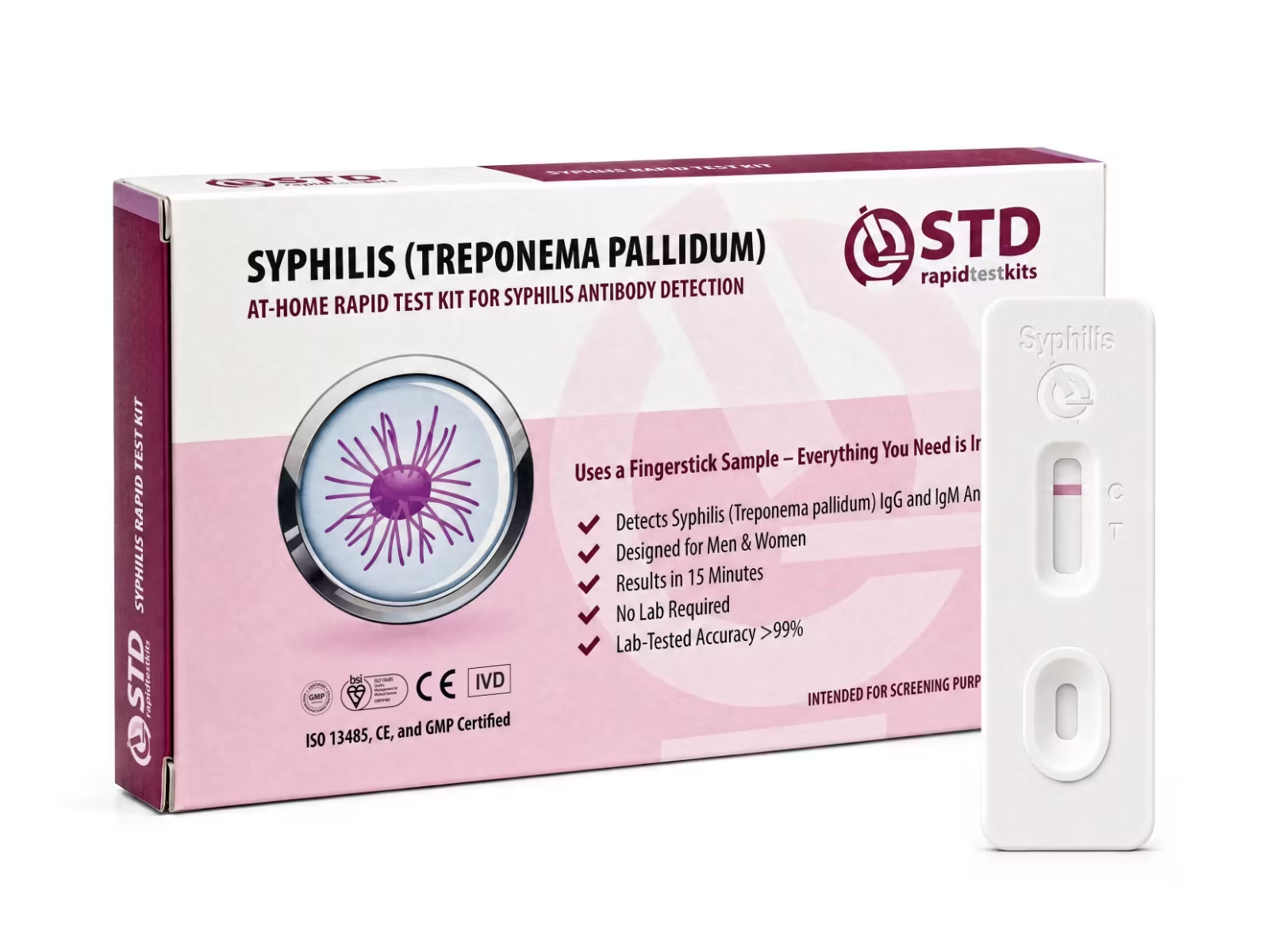
At-home rapid syphilis tests use lateral-flow immunoassay chemistry to detect treponemal antibodies in a small fingerstick blood sample. A positive home result means the immune system has produced antibodies against Treponema pallidum at some point. It does not distinguish active infection from past treated infection, and it does not provide a titer.
The confirmatory step is two-part lab testing: a treponemal-specific test (TP-PA, EIA, or FTA-ABS) plus a non-treponemal titer (RPR or VDRL). The combination tells the clinician both whether antibodies are present and how active the infection is. Most clinics can run both from a single blood draw, with results back within a few days. Treatment is generally not initiated on a rapid-test result alone, except in specific emergency or low-resource settings.
If your at-home result is positive, the next call is to a primary care provider, a sexual health clinic, or a local health department. Confirmatory testing is routine, treatment is straightforward, and partner notification can usually be handled with clinic support if you want it.
A positive at-home rapid result is followed at the clinic by two complementary blood tests, usually drawn from the same sample. The treponemal-specific test (TP-PA, EIA, or FTA-ABS) confirms antibodies against Treponema pallidum. The non-treponemal test (RPR or VDRL) reports a titer ratio that shows how active the infection is and gives the baseline number for tracking cure. Results typically return within a few days.
Frequently asked questions
- How much does the penicillin injection actually hurt?
- The procedure itself takes under a minute, and the main after-effect is a deep muscle ache that peaks around day one and clears by day two. Most people find the pressure from the thick oil-based formulation more noticeable than a sharp sting. Walking and brief ice on the injection site usually handle the rest of the soreness.
- How quickly does the antibiotic start working?
- Bacterial killing starts within hours of the injection, but visible signs clear on a slower schedule. A chancre typically resolves within 2 to 6 weeks, and a secondary-syphilis rash can take several weeks to fully fade. Blood titer numbers continue declining over the next 6 to 12 months, which is the window for the first confirmatory follow-up test.
- When can I have sex again?
- The CDC recommends abstaining from sexual contact for at least 7 days after a single-dose treatment and until any visible lesions have fully healed. For the three-dose schedule used in late latent infection, abstain through the full course plus 7 days after the final injection. Any sexual partners should also be tested and, if needed, treated before resuming intimacy.
- Will I always test positive for syphilis on a blood test?
- Treponemal-specific antibody tests (TP-PA, EIA, FTA-ABS) typically remain reactive for life after any past syphilis infection, treated or untreated. That is a normal immune memory pattern and does not indicate active infection. What clinicians track is the non-treponemal titer (RPR or VDRL), which should drop fourfold or more after successful treatment.
- Can syphilis come back on its own after treatment?
- Properly treated syphilis does not return on its own. What can happen is reinfection from new exposure. This is why partner testing and treatment are part of the standard protocol. With both partners treated, the chance of a reinfection cycle drops to near zero.
- Do I have to tell past partners?
- The CDC recommends notifying all sexual partners from the past 90 days for primary syphilis, the past 6 months for secondary syphilis, or the past 12 months for early latent syphilis. Local health departments in most U.S. states offer anonymous partner notification, where a public health worker can reach out on your behalf without naming you. Partner notification is the most effective way to break reinfection chains.
- I tested positive at home. Do I still need to see a doctor?
- Yes. Rapid at-home tests are useful screening tools, but a positive result needs confirmatory lab testing (treponemal-specific test plus non-treponemal titer) and prescription antibiotics. Confirmation usually takes a few days, treatment is a single appointment for early-stage infection, and most clinics can handle the whole sequence quickly and privately.
This guide summarizes current treatment guidance from public-health bodies and clinical sources, including the U.S. Centers for Disease Control and Prevention's 2021 STI Treatment Guidelines, the World Health Organization's syphilis fact sheet, and the UK National Health Service. It is an editorial summary for at-home health decisions and is not a substitute for individual clinical advice from a licensed provider.
- U.S. Centers for Disease Control and Prevention. STI Treatment Guidelines, 2021: Syphilis. Stage-specific benzathine penicillin G regimens, alternative regimens for penicillin-allergic non-pregnant adults, partner notification windows, follow-up titer expectations, and the Jarisch-Herxheimer reaction.
- U.S. Centers for Disease Control and Prevention. STI Treatment Guidelines, 2021 (root). Alternative regimen dosing and special-considerations subsections for pregnant patients and partner management.
- World Health Organization. Syphilis fact sheet. Global epidemiology, congenital syphilis risk, and the role of penicillin as first-line treatment across pregnancy and non-pregnancy.
- UK National Health Service. Syphilis: symptoms, diagnosis, treatment, and complications of untreated infection including tertiary cardiovascular and neurological involvement.
- U.S. Centers for Disease Control and Prevention. Syphilis fact sheet and patient resources, including general overview of stages, testing, and prevention.
