Published: October 2025 | Last updated: May 2026 | Editorial review and quality control: Martina N.
After an STI diagnosis, cancer fear can stick around long after the infection itself is treated. A friend gets a diagnosis, a social media clip mentions cervical cancer, a small symptom returns, and the worry climbs back. Most of that fear is doing more work than the underlying biology justifies. Only a handful of sexually transmitted infections have any real connection to cancer, and even those follow timelines that screening usually catches well before something becomes irreversible.
This article maps the actual risk pathways, names the infections that matter, and walks through retesting intervals that match current public-health guidance. The goal is straightforward: replace open-ended dread with a schedule you can act on, and a clear picture of when a clinic visit beats another home test.
Key Takeaways
- Only persistent high-risk HPV strains carry meaningful cancer risk, and roughly 90% of new HPV infections clear naturally within 1 to 2 years.
- Herpes does not cause cancer. Retesting HSV is useful only for confirming a new outbreak or upgrading to a type-specific antibody result.
Which STIs Are Linked to Cancer, and Which Are Not
Most sexually transmitted infections do not cause cancer. A small number do, in specific ways, and naming them clearly helps separate genuine risk from inherited cultural panic.
HPV (human papillomavirus) is the only common STI with a well-documented cancer pathway. Over 100 HPV strains exist, but a dozen or so high-risk types can drive cellular changes that may eventually become cervical, anal, oropharyngeal, vaginal, vulvar, or penile cancer. According to the CDC HPV information hub, HPV is responsible for nearly all cervical cancers and roughly 70% of oropharyngeal (throat) cancers in the United States.
Herpes (HSV-1 and HSV-2) sits in a different category. Both can be painful, recurring, and socially heavy, but neither is considered cancer-causing. Older mid-twentieth-century research explored a possible HSV-2 link to cervical cancer, and later studies clarified that HPV was the real driver in those cases. Herpes shows up in cancer conversations mainly because of visual similarity to other genital findings, not because of malignant potential.
Chlamydia and gonorrhea can damage reproductive organs if untreated for years, and some research suggests chronic pelvic inflammation may indirectly raise the risk of certain cancers through ongoing tissue irritation. The evidence is too modest to call these infections direct cancer drivers. The bigger reasons to treat them quickly are fertility protection and avoiding pelvic inflammatory disease.
HIV does not cause cancer directly. Uncontrolled HIV weakens the immune system enough that the body has trouble clearing HPV and other oncogenic viruses, so people living with HIV have higher rates of HPV-related cancers. Modern antiretroviral therapy reduces that risk substantially when started early.
Hepatitis B and Hepatitis C can cause liver cancer over decades of untreated chronic infection. Both deserve testing because modern antivirals can cure or fully suppress them.
| STI | Cancer Pathway | Retesting Note |
|---|---|---|
| HPV (high-risk strains) | Direct: cervical, anal, oropharyngeal, vulvar, penile | Retest 12 months after a positive high-risk result; clinic follow-up if Pap is abnormal |
| Herpes (HSV-1, HSV-2) | None | Retest only on a new lesion or to upgrade to a type-specific antibody result |
| Chlamydia | Indirect via chronic inflammation (weak evidence) | Retest 3 months after treatment to catch reinfection |
| Gonorrhea | Same as chlamydia (weak evidence) | Retest 3 months after treatment |
| HIV | Indirect via reduced immune clearance of HPV | Annual screen as baseline; window-period logic for acute infection |
| Hepatitis B / Hepatitis C | Direct: liver cancer over decades of untreated chronic infection | Test at exposure; treat chronic infection promptly |
Why HPV Persistence Matters More Than HPV Detection
A positive HPV result is a snapshot, not a diagnosis. The cancer risk does not come from being HPV-positive once. It comes from staying positive with the same high-risk strain for years.
Roughly 90% of new HPV infections clear on their own within two years, especially in people under 30 with healthy immune function, according to CDC guidance on genital HPV infection. The body usually handles HPV the same way it handles other transient viruses: detect, clear, move on. Persistence happens when that clearance does not occur and the same strain keeps testing positive year after year. That is the situation in which cellular changes start to accumulate.
Because persistence is measured in years rather than months, the ASCCP 2019 risk-based management guidelines (updated 2020) recommend retesting at 12-month intervals after a high-risk HPV result with normal cytology. Colposcopy is reserved for cases where specific cellular changes appear on cytology. A retest done a few weeks later is too soon to tell whether the body is doing its job; the lab will likely see the same virus on a slightly different day.
The broader population screening cadence is wider than that post-positive surveillance interval. Under the USPSTF cervical cancer screening recommendation, HPV testing is recommended every 5 years for adults aged 30 to 65 with normal prior results. A single positive HPV test does not mean the worst-case pathway is unfolding, and missing the 12-month follow-up is the more consequential error, because that is exactly when undetected persistence would matter.
A single positive high-risk HPV result means the virus is detectable now. It does not mean cancer is forming. The clinically meaningful question is whether the same strain still tests positive 12 months later, not whether it tested positive once.
Where HPV Vaccination Fits the Picture
For anyone reading this who has not yet been vaccinated, HPV vaccination is the single most effective tool for lowering future cancer risk. The current vaccine (Gardasil 9) protects against nine HPV strains, including the major high-risk types 16 and 18 that drive most cervical and oropharyngeal cancers.
According to current ACIP guidance summarized by the CDC HPV information hub, routine vaccination is recommended through age 26, with shared clinical decision-making available through age 45 for adults who were not previously vaccinated. Catch-up vaccination after a previous HPV diagnosis still adds protection against the other strains in the Gardasil 9 panel that the body may not have already encountered.
Vaccination does not change retesting intervals for someone with a previous abnormal result; surveillance still follows the standard timeline.
Retesting Timelines That Match Current Guidelines
The right retesting interval depends on which infection was diagnosed, what the first test showed, and your overall risk profile. Below is a compact summary of the most common scenarios.
For HPV co-testing (Pap with HPV typing), the standard intervals are:
- Negative co-test in a person aged 30 to 65: retest every 5 years if using HPV testing, every 3 years if Pap-only.
- Positive high-risk HPV with normal cytology: retest in 12 months.
- Positive high-risk HPV with abnormal cytology (ASC-US, meaning atypical squamous cells of undetermined significance, which is the mildest abnormal Pap category, or higher): referral for colposcopy, a magnified in-clinic visual exam of the cervix, not a simple repeat test.
- After treatment for cervical dysplasia: retest at 6 and 12 months, then annual surveillance.
For bacterial STIs (chlamydia, gonorrhea, syphilis), retest at 3 months after treatment. The most common reason for an apparent recurrence is reinfection from an untreated partner, not treatment failure.
For herpes, there is no surveillance retest because the virus stays in the body permanently. Retest only when a new outbreak appears and you want to confirm the cause, or when the original test occurred during the window period and may have been falsely negative.
For HIV, retest at 45 days after exposure using a fourth-generation antigen-antibody test. Earlier results during the acute infection window can miss seroconversion in some cases.
| Situation | Recommended Retest | Reason |
|---|---|---|
| High-risk HPV positive, normal Pap | 12 months | Allow time to detect persistence vs natural clearance |
| Treated chlamydia or gonorrhea | 3 months post-treatment | Reinfection from an untreated partner is the main reason for an apparent recurrence |
| New partner after a clean panel 6+ months ago | At your next annual screen | Catches new exposures without overshooting |
| New genital lesion after a prior herpes diagnosis | As soon as the lesion is visible | PCR swab during outbreak is more accurate than antibody testing |
| Recent HIV exposure | 45 days for a 4th-generation antigen-antibody test | Earlier than that misses seroconversion in some cases |
At-Home HPV Screening Between Pap Visits
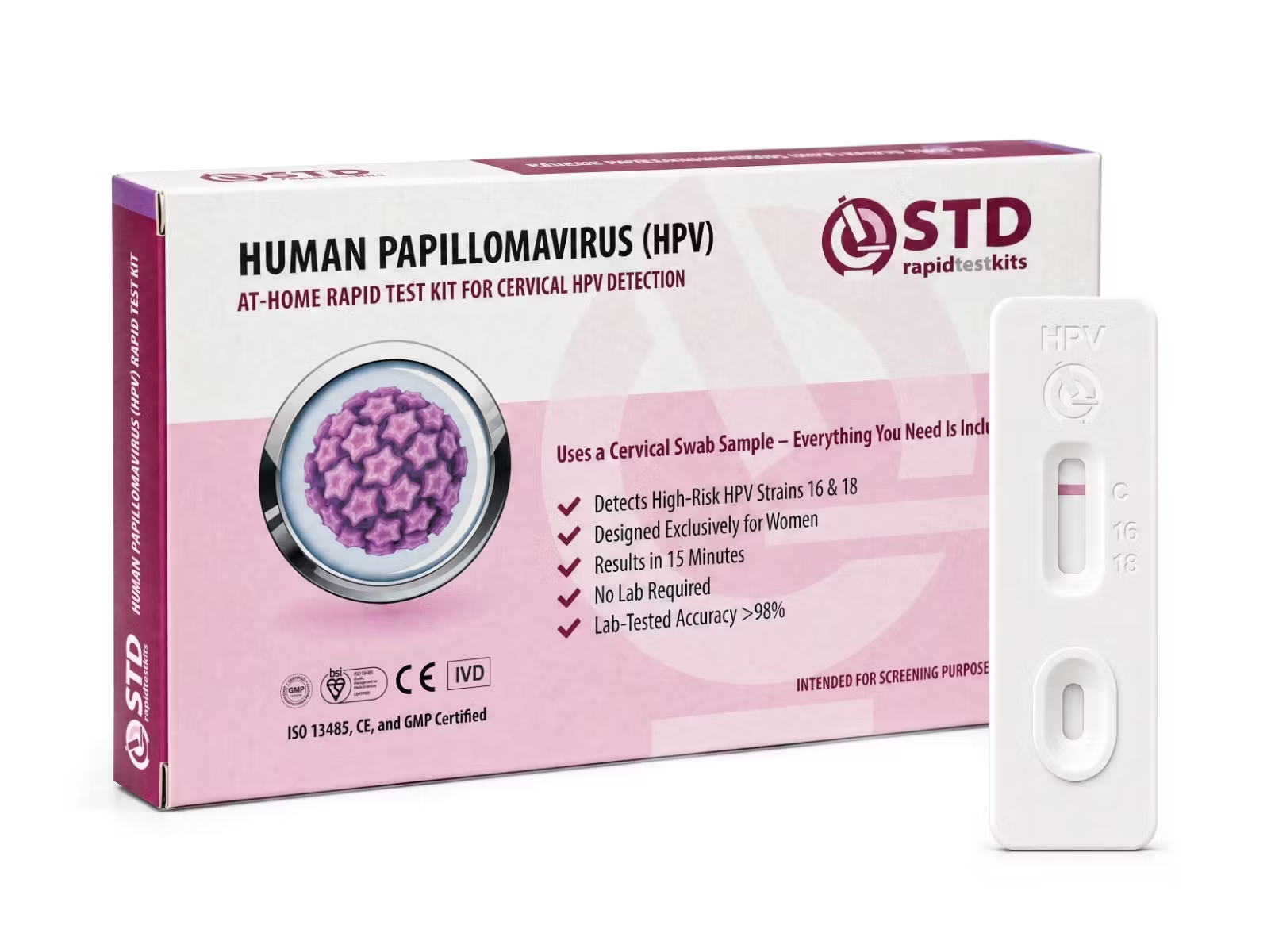
stdrapidtestkits.com offers the at-home HPV self-swab below as a screening option for women between scheduled clinical Pap appointments. We recommend products based on fit-for-purpose for the reader's concern, not commercial benefit.
The Emotional Side of Retesting
The strict medical answer for retesting will not always match the answer your nervous system needs. After an STI diagnosis, especially one with stigma attached, anxiety can return even when the lab work does not require any follow-up.
Health anxiety after a diagnosis is among the most reported emotional responses in patient surveys of post-STI experience, and it does not disappear simply because the bacterial infection cleared or the viral antibody titers stabilized.
Several common patterns push people to retest outside the medical schedule:
- New relationship. A previous negative panel feels too old once a new partner enters the picture, even when no exposure event has occurred.
- Symptom doubt. A bump, an itch, or a tingle that appeared and faded leaves a residue of uncertainty that the previous panel did not address.
- Cancer panic. A friend's diagnosis, a news headline, or a forum post about cervical cancer can reactivate the worry around an old positive HPV result. Sleep gets harder until the result is checked again.
None of these triggers are irrational. They are the predictable emotional output of a culture that loads STIs with shame. Retesting in these situations is reasonable, especially when the worry is interfering with sleep, sex, or relationships.
A repeat panel can confirm your status today. It does not substitute for the 12-month surveillance interval if persistence of high-risk HPV is the actual question. The two answer different questions on different timescales.
Herpes Anxiety Specifically
Herpes is stigmatized far out of proportion to its actual health impact, so it deserves its own paragraph in any cancer-fear article.
In immunocompetent people, herpes does not cause cancer, does not damage internal organs, and does not shorten lifespan. What it does is trigger occasional outbreaks that respond well to antiviral medication, and create real social and emotional friction because of how it is portrayed in media. The cancer pathway readers may have heard about is, on close reading, almost always an HPV pathway that was once misattributed to HSV-2 in older research.
Retesting for herpes has a narrow set of useful purposes:
- Confirming a new lesion is or is not a herpes recurrence, rather than something else like yeast irritation, an ingrown hair, contact dermatitis, or a syphilis chancre.
- Getting type-specific antibody testing when the first test was not type-specific. HSV-1 and HSV-2 carry different counseling implications.
- Establishing baseline antibody status before beginning a new sexual relationship and having the disclosure conversation.
Antibody panels stay positive once positive because the virus stays in the body, so a routine herpes retest with no new symptom, no exposure change, and no counseling reason rarely produces useful new information.
Herpes antibody tests stay positive for life because the virus persists in the body permanently. A routine retest with no new lesion, no new exposure, and no new counseling question rarely produces actionable new information that would change management.
Talking to a Partner About Retesting
Most retesting decisions involve at least one conversation that has nothing to do with the lab. Bringing up a retest for HPV, or a redo of an STI panel, with a current or new partner can feel charged, even when the reason is purely precautionary.
A few framings tend to work without escalating tension:
- "I am due for my annual screen, and I would like us to get on the same schedule."
- "I tested positive for X a couple of years ago, and I want to confirm it cleared before we stop using condoms."
- "My doctor recommended a follow-up because of a previous result. It is not a new exposure; it is routine surveillance."
These framings position the test as scheduled maintenance, which is what surveillance retesting actually is on the clinical record.
You do not owe a full medical dossier to a new partner. A short factual sentence, paired with a follow-up plan, usually carries more credibility than either over-explaining or under-explaining. A partner who reacts to routine surveillance as if it were a confession is signaling something about their relationship to the topic.
What Providers Sometimes Skip Past
Even attentive clinicians can be brief when explaining surveillance timelines, partly because they have these conversations every day and forget how disorienting they sound the first time. A few specific questions worth bringing to your visit:
- "Is this a Pap with HPV typing, or just a Pap?" Co-testing produces more diagnostic information than cytology alone.
- "If my HPV is positive, which strain is it?" HPV strains 16 and 18 carry higher long-term cancer risk than other high-risk strains, and that affects follow-up intensity.
- "When exactly should I come back, and what would prompt an earlier visit?" A vague "in a year" leaves room for the date to drift.
- "Is colposcopy needed now, or repeat testing first?" The threshold varies by lab result severity and individual risk factors.
Bringing notes is normal. Bringing a written list of questions on your phone is normal. Most clinicians prefer a prepared patient because the visit moves faster and the chart ends up more accurate.
If your HPV test was positive, ask specifically which strain came back. Types 16 and 18 carry meaningfully higher long-term cancer risk than the other high-risk strains and often justify tighter follow-up intervals than the standard 12-month recheck.
The Realistic Cancer Timeline for High-Risk HPV
For high-risk HPV that does persist, the path from initial infection to invasive cancer often takes years, even decades, according to CDC guidance on genital HPV infection. During that long window, multiple cycles of routine screening can catch precancerous changes early. Cervical cancer mortality has dropped sharply since the introduction of cytology screening, and it continues to drop as HPV co-testing becomes the dominant screening method.
The American Cancer Society overview of cervical cancer describes the disease as one of the most successfully treatable cancers when caught early, and data summarized in the USPSTF cervical cancer screening recommendation show that routine screening substantially reduces cervical-cancer mortality. That is part of why a single missed Pap rarely turns into a tragedy when the underlying screening cadence resumes.
The groups at meaningfully higher risk for HPV-driven cancer are predictable: long-term untreated persistence, immune compromise from HIV or transplant medications, and decades without any screening at all.
Most HPV infections caused by any HPV type go away within 1 to 2 years and do not cause cancer.
When a Clinic Visit Beats a Home Test
At-home rapid tests work well for blood-based screens (HIV, syphilis, hepatitis), for swab-based bacterial panels (chlamydia, gonorrhea), and for the HPV self-swab in women. They are not a substitute for cervical cytology when a provider has flagged abnormal cells, and they are not a substitute for clinician-administered PCR when a new lesion needs to be identified.
A few quick decision rules:
- Recent exposure with no specific clinical recommendation. A home rapid panel is reasonable for confirming status.
- Previous abnormal Pap or persistent HPV. Clinic visit; colposcopy and biopsy can only happen there.
- New genital lesion you cannot identify. Clinic visit with PCR swab. A rapid antibody panel cannot tell you whether the lesion is herpes, syphilis, or something else entirely.
- Routine annual STI maintenance with no known exposure. A home rapid panel covers this well, especially when in-person clinics are hard to access.
A note on scope: our at-home HPV self-swab kit is validated for female anatomy only, and we do not currently offer a male-compatible at-home HPV screen. Men concerned about oral or anal HPV-related cancers should ask a clinician about exam-based screening, especially if HIV or other immune-compromising conditions are part of the picture.

Bottom Line on Cancer Fear After an STI
If an old STI diagnosis keeps bringing cancer worry back to the surface, more frequent testing is rarely the right move. What helps is the right test at the right interval, plus a clear sense of what each result can and cannot tell you.
HPV is the one infection where surveillance timing genuinely matters for cancer risk, and even there, the timeline runs in years rather than weeks. Herpes, chlamydia, gonorrhea, and trichomoniasis are not on the same pathway. Stay on the surveillance schedule your provider recommends; ASCCP management guidance often returns a previously-positive person to routine population screening after several consecutive negative co-tests.
Your Next Steps
- Schedule annual HPV co-testing (Pap with HPV typing) if you have ever had a positive high-risk HPV result; do not let the 12-month checkpoint drift.
- Retest for chlamydia or gonorrhea three months after completing treatment to catch reinfection from an untreated partner.
- See a clinician for any new unidentified genital lesion rather than relying on a home antibody panel, which cannot distinguish lesion types.
- If you have not been vaccinated and are within the ACIP-recommended age range, talk to a clinician about HPV vaccination as cancer prevention.
FAQs
- Does a positive HPV result mean I will get cancer?
- Not necessarily. A single positive result shows the virus is detectable today, but the cancer question turns on whether the same high-risk strain still tests positive at your 12-month follow-up. The large majority of infections clear before that checkpoint; the smaller group with persistent high-risk HPV is the one that needs ongoing surveillance, and even there cancer typically develops over many years.
- Someone online told me herpes can cause cancer. Is that true?
- No. Both HSV-1 and HSV-2 can be painful and recurring, but neither causes cancer. Older research occasionally explored a possible HSV-2 link to cervical cancer; subsequent studies clarified that HPV was the actual cause in those cases. The myth persists in part because both viruses affect similar anatomy and get conflated in casual conversation.
- How long after treated chlamydia or gonorrhea should I retest?
- Roughly 3 months. The most common reason for an apparent recurrence is reinfection from a partner who was not treated at the same time, rather than treatment failure of the original course. A 3-month retest catches reinfection without being so early that residual genetic material trips a false positive on a NAAT-based lab test.
- I had a positive HPV result two years ago and never followed up. Am I behind?
- You are not behind in a way that cannot be fixed. Cervical changes from persistent high-risk HPV typically progress over years to decades, which is why screening intervals are measured in years and why catching up now usually puts you back on the surveillance grid. Schedule a Pap with HPV typing. If it is normal, you are back on track. If it is abnormal, you will be referred for colposcopy, which can treat precancer well before it becomes cancer.
- Can men get HPV cancer screening at home?
- Not currently. Our at-home HPV self-swab is validated for female anatomy only, and there is no widely available at-home HPV screen for male reproductive anatomy. Men concerned about HPV-related oral or anal cancers should ask a clinician about exam-based screening, especially when other risk factors like HIV, immune suppression, or a history of higher-risk partners are present.
- Is repeating an STI test too often a problem?
- Generally no. The main downsides of frequent retesting are emotional (more chances to spiral on equivocal results) and financial, rather than medical. Antibody tests for herpes and HPV occasionally produce equivocal or false-positive results that need confirmation. If retesting helps you sleep without leading to unnecessary procedures, the retest is doing useful work.
- My new partner tested positive for HPV. What should I do?
- First, recognize that HPV is the most common sexually transmitted infection, and most adults will encounter it at some point. Schedule a Pap with HPV typing if you have a cervix, or talk to a clinician about exam-based screening if you do not. A partner's HPV positivity is rarely a sign of bad behavior; it usually reflects how widely the virus circulates in the adult sexually active population.
- Can I test for HPV entirely at home?
- Partially. Our at-home self-swab covers HPV detection for women using a vaginal swab and is a useful screening tool between scheduled clinical Pap appointments. It is not a replacement for cervical cytology when a provider has flagged abnormal cells, because cytology evaluates cell-level changes that a viral detection test cannot.
- U.S. Centers for Disease Control and Prevention. About Genital HPV Infection: background on HPV prevalence, natural clearance, and the multi-year cancer pathway.
- U.S. Centers for Disease Control and Prevention. HPV information hub: vaccine recommendations, age eligibility, cancer-prevention overview, and the 70% oropharyngeal cancer attribution figure.
- American Cancer Society. Cervical Cancer overview: early-detection and treatability messaging used in the body to characterize cervical cancer outcomes when screening is consistent.
- U.S. Preventive Services Task Force. Cervical Cancer Screening Recommendation: recommended intervals for HPV testing and co-testing in adults aged 30 to 65, and population-level mortality-reduction data supporting screening's preventive impact.
