
Published: August 2025 | Last updated: April 2026 | Editorial review and quality control: Martina N.
Finding a new sore on your genitals is one of the most quietly terrifying experiences a person can have. The mind jumps straight to the worst case before the eyes have finished cataloguing what is actually there. The good news, and it is real news, is that genital sores fall into a small set of recognizable patterns. Most are caused by a handful of named conditions, and most of those are either curable, manageable, or self-resolving. The first job is to look carefully. The second is to test, because pattern alone is a clue, not a diagnosis.
What can a genital sore tell me, and what should I do about it?
Most genital sores fall into one of four patterns: clustered painful blisters (commonly herpes simplex), a single painless round ulcer (commonly the syphilis chancre), a ragged painful ulcer (less common, sometimes chancroid), or a red papule with a hair or razor irritation (non-infectious). Visual pattern narrows the list, but only testing confirms. For an active lesion right now, a clinic swab or PCR gives the fastest answer. For confirmation weeks after a lesion heals, an at-home blood antibody test for herpes or syphilis is reliable once the window period has passed.
Key Takeaways
- Genital sores follow a few recognizable patterns. Clustered blisters lean herpes, a single painless ulcer leans syphilis, and most non-infectious causes (ingrown hairs, friction, contact dermatitis) heal cleanly in two to five days.
- Pattern alone is not a diagnosis. For an active lesion, a clinic swab is the most direct test. At-home blood antibody tests confirm long-term status once the window period has passed (about three to six weeks for syphilis, and most reliable from twelve weeks for herpes).
What That Sore Might Actually Be
Not every genital lesion behaves the same way, and the differences matter. Looking carefully at shape, count, pain level, and what the surrounding skin is doing can rule a few possibilities in or out before you ever swab anything.
The most common causes of a sore in the genital area are:
- Herpes simplex virus (HSV-1 or HSV-2): clusters of small painful blisters that often burst, weep, and crust. Typically tender or burning, not just itchy. Frequently preceded by a tingling or shooting nerve sensation a day or two before anything is visible (CDC genital herpes overview).
- Primary syphilis: a single, firm, painless ulcer with a clean rolled border called a chancre. Often appears at the original site of contact (genitals, anus, lips, or mouth) about three weeks after exposure, and heals on its own in three to six weeks even without treatment, while the infection continues internally (CDC syphilis fact sheets).
- Chancroid: rare in the United States and most high-income countries, more often seen in parts of Africa and the Caribbean. Causes one or several painful, soft-edged ulcers and tender swollen lymph nodes in the groin (CDC chancroid treatment guidelines).
- Friction or skin irritation: redness, raw spots, or shallow open areas from rough sex without enough lubrication, tight clothing, or shaving. Usually heals in a few days with no other symptoms.
- Ingrown hairs and folliculitis: single tender red bumps with a visible hair, often in shaved or waxed areas. Sometimes pus-filled.
- Contact dermatitis: redness, burning, or fragile broken skin caused by reaction to soaps, detergents, condoms (latex or fragrance), lubricants, or spermicides.
- Yeast infections and bacterial vaginosis: typically cause itching, burning, and abnormal discharge rather than discrete sores, but the inflamed skin can be misread as a lesion.
Two important notes. First, asymptomatic shedding means herpes can be transmitted even when there are no visible sores at all. Second, some sores show up days or weeks after exposure, so the timeline of "who and when" matters as much as the appearance.
Even experienced clinicians can mistake an early herpes outbreak for irritation, or a healing chancre for an old shaving cut. If a sore is new, painful, recurring, or sticking around past five days, do not rely on visual matching alone. Test, or have a provider examine and swab the lesion directly while it is still active.
How Fast STI Symptoms Show Up After Sex
Replaying every move from the past month is a familiar response to finding a sore. Incubation periods vary widely between infections, which is why timing alone cannot rule something in or out, only narrow the field. The table below summarizes typical first-symptom windows for the conditions most likely to cause genital sores or related symptoms after exposure.
| Condition | Time from exposure to first symptom | Sore pattern | Source |
|---|---|---|---|
| Herpes (HSV-1 or HSV-2), first outbreak | 2 to 12 days (average around 4) | Clustered painful blisters | CDC |
| Syphilis, primary chancre | 10 to 90 days (average around 21) | Single painless firm ulcer | CDC |
| Chancroid | 4 to 10 days | Painful ragged-edged ulcer with tender groin nodes | CDC |
| Chlamydia | 1 to 3 weeks | Rarely visible sores; discharge or burning more common | WHO |
| Gonorrhea | 1 to 14 days | Rarely visible sores; discharge or pelvic pain more common | WHO |
| HPV (genital warts) | Weeks to months | Soft cauliflower-like growths, not open sores | CDC |
Herpes: What It Looks and Feels Like
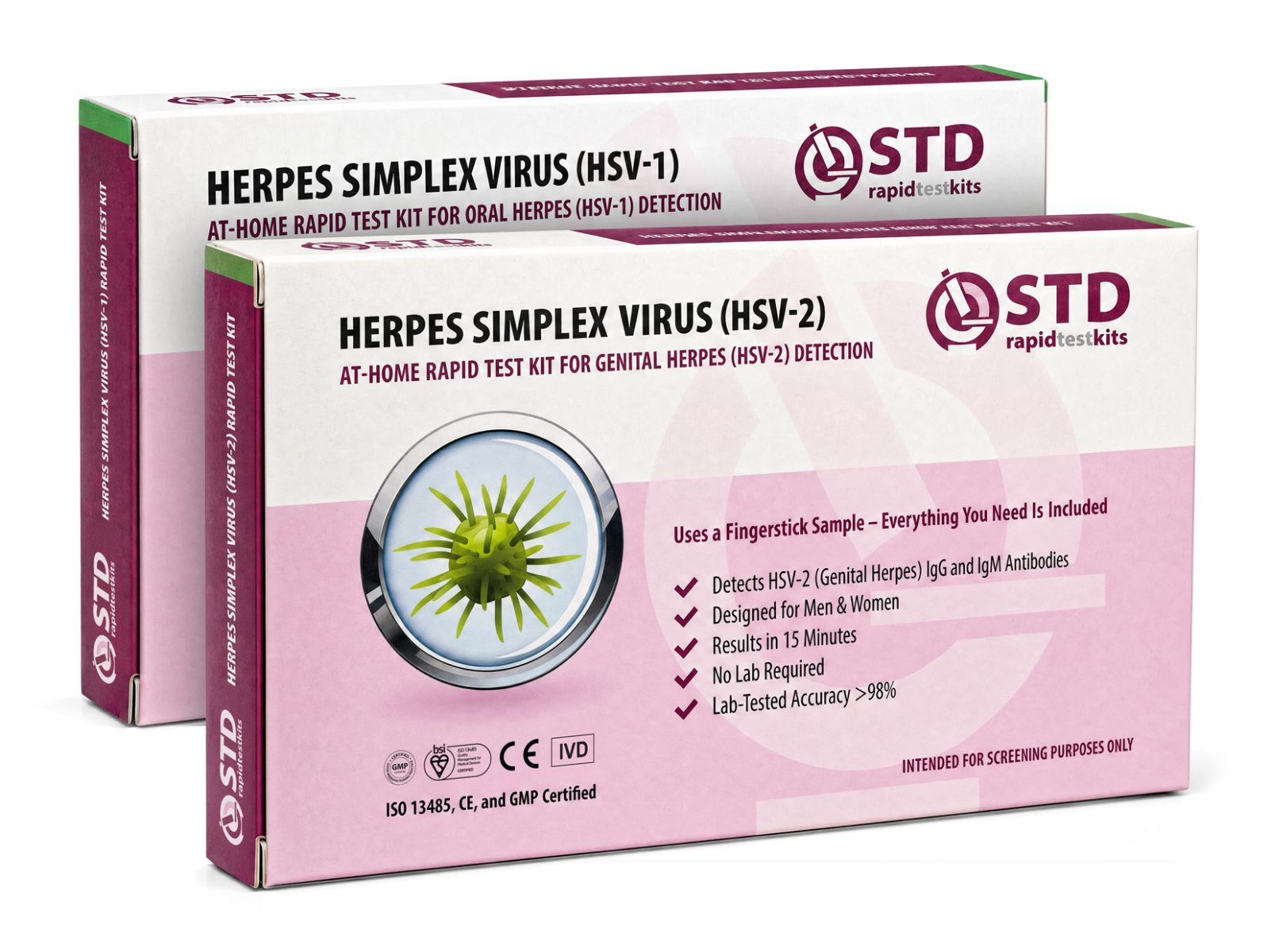
Herpes is the single most common cause of recurring blister-type genital sores worldwide. The virus comes in two flavors. HSV-1 is the strain best known for cold sores around the mouth, but it now causes a substantial share of new genital herpes cases through oral contact. HSV-2 is the strain most strongly associated with recurrent genital outbreaks. Once either type takes hold, it stays in the body for life, hiding in nerve roots between flare-ups.
The first outbreak tends to be the worst. People often describe it as a brutal flu mixed with a razor burn that will not quit. Common features include:
- Clustered tiny blisters on or near the genitals, anus, buttocks, or upper inner thighs.
- Tingling, burning, or shooting nerve pain a day or two before the blisters appear, sometimes called a prodrome, meaning a warning phase that arrives before the sore itself is visible.
- Swollen tender lymph nodes in the groin.
- Flu-like symptoms, including low fever, body aches, and fatigue, especially in a true first infection.
- Painful urination if blisters are near the urethra or vulva.
Recurrent outbreaks are usually milder and shorter, often two to ten days, and often follow a personal trigger pattern (stress, illness, hormonal cycle, sun exposure to lips for HSV-1, or local friction). The CDC estimates roughly 572,000 new genital herpes infections in the United States each year, and most people who carry the virus do not know they have it. Asymptomatic viral shedding, which is when the virus is contagious but no sore is visible, is a major reason transmission happens within long-term partnerships.
Antiviral medications such as acyclovir, valacyclovir, and famciclovir do not cure herpes, but they shorten outbreaks, reduce their frequency, and lower (though do not eliminate) transmission risk to partners. Daily suppressive therapy is an option for people with frequent recurrences or partners who are not infected.
Syphilis and the Painless-Ulcer Pattern
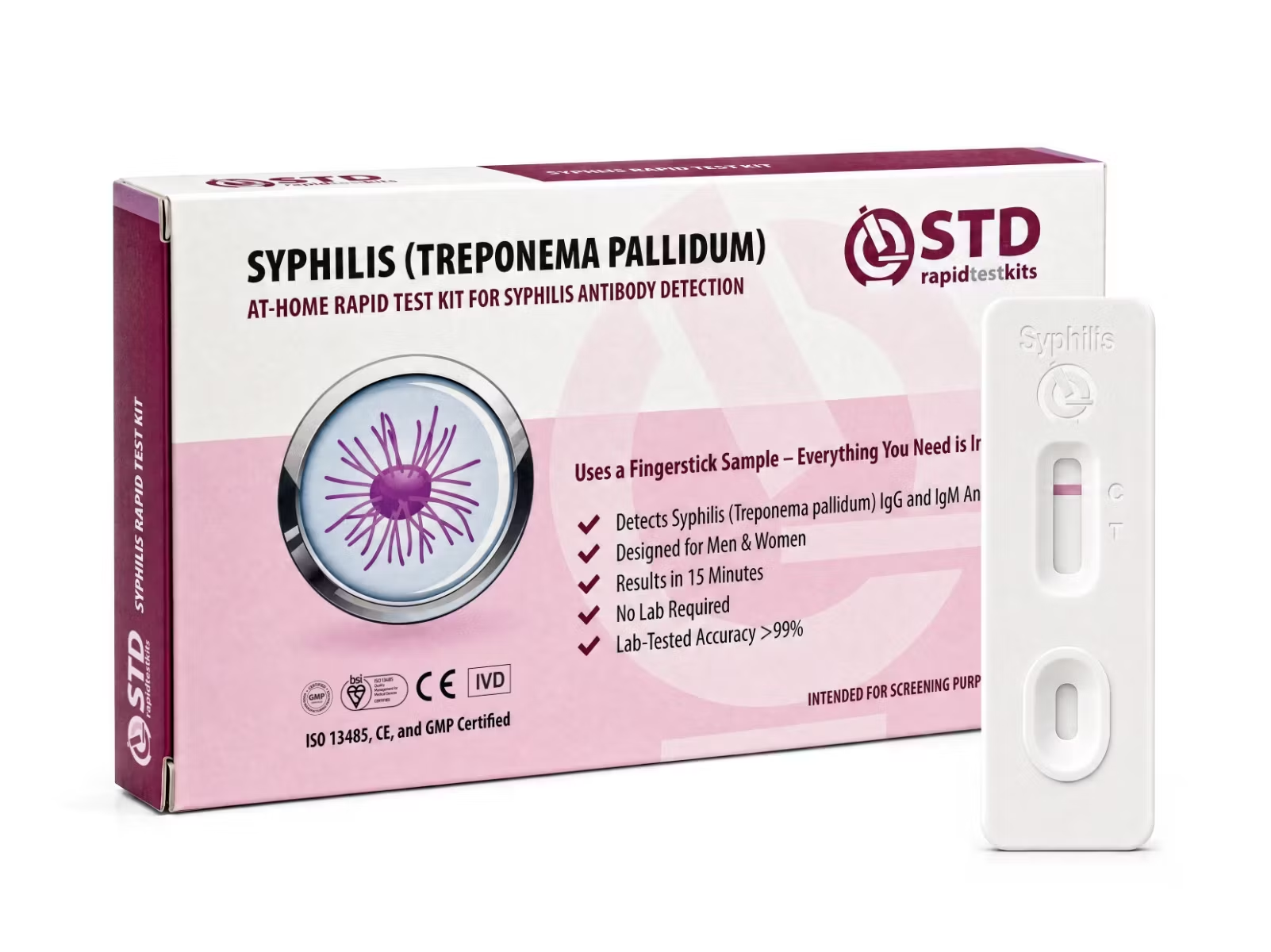
A single painless ulcer is the cardinal sign of primary syphilis, and it is also the easiest sign to dismiss. Because it does not hurt and heals on its own within three to six weeks, many people assume it cleared up. The infection has not. It has moved deeper. Untreated syphilis progresses through four stages, each with its own pattern (CDC syphilis fact sheets):
- Primary: a single firm painless chancre at the site of exposure, appearing on average twenty-one days after contact (range ten to ninety days).
- Secondary: begins weeks to months after the chancre heals. Features a non-itchy rash that often involves the palms and soles, mucous patches in the mouth or genitals, swollen glands, sore throat, fatigue, muscle aches, headaches, and patchy hair loss.
- Latent: no symptoms. The infection is detectable only on a blood test and may persist for years.
- Tertiary: rare with modern testing, but devastating. Can damage the heart, blood vessels, brain, eyes, nerves, and bones a decade or more after the original infection.
The two pieces of good news: syphilis is fully curable with antibiotics (a single intramuscular injection of long-acting penicillin G is the standard for most early cases), and a basic blood test reliably catches it. Caught at any stage before tertiary, treatment stops disease progression. The blood-test window for syphilis is shorter than for herpes; rapid antibody tests typically become reliable about three to six weeks after exposure, once the immune system has produced detectable treponemal antibodies. If an early test is negative but the exposure was recent, repeat testing several weeks later is the standard recommendation.
Chancroid and Other Less Common Causes
Chancroid, caused by the bacterium Haemophilus ducreyi, is rare in many high-income countries but should still be on the differential list for a painful ragged-edged genital ulcer, particularly in someone with travel history or exposure in regions where the infection still circulates. Classic features are one or several deep painful ulcers with soft, undermined borders and tender swollen lymph nodes in the groin, sometimes with overlying skin breakdown.
Chancroid responds well to antibiotics. The CDC's treatment guidelines list four equally effective single-course regimens: a single dose of azithromycin (a macrolide), a single intramuscular dose of ceftriaxone, three days of oral ciprofloxacin, or seven days of oral erythromycin. Symptoms typically begin to improve within three to seven days of starting treatment.
A few other ulcer-causing conditions are worth knowing about:
- Lymphogranuloma venereum (LGV): caused by specific strains of Chlamydia trachomatis. Begins as a small painless sore that heals quickly, followed by markedly swollen tender lymph nodes that can break down and drain.
- Granuloma inguinale (donovanosis): rare worldwide. Slowly enlarging painless ulcers with a beefy red base.
- Behçet's disease: a non-infectious inflammatory condition that causes recurrent painful genital and oral ulcers, often alongside eye inflammation.
Most of these are uncommon, but the practical takeaway is consistent: any genital ulcer that is painful, lasting more than five days, or worsening should be evaluated by a clinician who can swab the lesion while it is active.
Get same-day clinical evaluation when the ulcer is painful and growing rather than shrinking, when the lymph nodes in your groin are swollen and tender, when you have recently travelled to a region where chancroid is still prevalent, or when more than one ulcer has appeared in quick succession. A clinic swab while the lesion is active is faster and more sensitive than waiting for an at-home antibody test to turn positive.
When It Is Not an STI (But Still Hurts)
Plenty of genital sores have nothing to do with an infection at all. These tend to share a few features: they appear in skin that has had a recent mechanical or chemical insult, they are usually solitary or scattered rather than clustered, and they heal cleanly within a few days. The most common non-infectious causes are:
- Friction injury: from sex without enough lubrication, prolonged contact, tight clothing, or vigorous exercise. The skin shows raw, shallow open patches with no blistering.
- Ingrown hairs and folliculitis: single red papules with a visible trapped hair, often in recently shaved or waxed areas. May contain a small amount of pus.
- Contact dermatitis: reaction to a new soap, detergent, lubricant, condom material, or spermicide. Typically presents as redness, itching, and fragile broken skin in the exposed area, sometimes with small fluid-filled bumps that can be confused with herpes.
- Yeast infections and bacterial vaginosis: usually cause itching, burning, and discharge rather than discrete sores, but the inflamed tissue can develop superficial breaks that look ulcer-like.
- Hidradenitis suppurativa: recurring painful nodules and abscesses in the groin and armpits, an inflammatory skin disease that is sometimes mistaken for a stubborn STI.
The pattern that pushes a sore back into the "probably needs testing" column: it lasts more than five days, it recurs in the same place, it is accompanied by fever, swollen groin nodes, or new flu-like symptoms, or it appeared in a window consistent with a recent unprotected exposure.
If the sore is still there after five days, has not visibly shrunk, or is now accompanied by swollen groin nodes, fever, or flu-like symptoms, treat it as infectious until proven otherwise. Most non-infectious causes (friction, ingrown hairs, contact dermatitis) heal cleanly inside that five-day window; anything that lingers longer earns a swab or a blood test.
How to Care for a Sore at Home
While you are deciding whether to test or see a clinician, the goal is to keep the area clean, comfortable, and undisturbed. A few rules cover most situations:
- Keep the area clean and dry. Plain warm water, or water with a gentle unscented soap, is enough. Pat (do not rub) dry with a clean towel.
- Skip the harsh stuff. Hydrogen peroxide, rubbing alcohol, antiseptic wipes, and over-the-counter ointments not labelled for genital skin can make matters worse.
- Do not pick or pop. Breaking a blister increases the risk of secondary bacterial infection and prolongs healing.
- Wear loose breathable underwear. Cotton, with extra space, beats damp synthetics.
- Cool compresses help. A clean cloth wrapped around an ice pack, applied for ten to fifteen minutes at a time, reduces itching and pain.
- Pause sex. No partnered sexual activity, including oral, until you have a diagnosis and the lesion is fully healed. Condoms reduce but do not eliminate herpes and syphilis transmission, especially when sores are present.
- Consider antivirals if herpes is likely. Starting acyclovir, valacyclovir, or famciclovir within the first seventy-two hours of an outbreak shortens its course, especially for first episodes.
Pain is severe enough to limit walking or sitting, urination is becoming difficult or painful, the lesion is enlarging quickly or spreading, you have a new fever, you are pregnant, or you are immunocompromised (for example on chemotherapy, on long-term steroids, or living with poorly controlled HIV). Do not wait for an at-home blood antibody result in those situations. Direct swab and clinical examination are faster and more sensitive while the lesion is still active.
The Emotional Side: Shame, Disclosure, and What Actually Helps
The thoughts that arrive within minutes of spotting a sore are familiar and painful: "What if no one wants me now?" "How did I miss this?" "Will I have to tell every future partner?" These reactions are normal. They are also not facts.
A few things worth holding onto. STIs are extraordinarily common; the World Health Organization estimates more than one million new curable STI infections occur worldwide every day. Most people with herpes do not know they carry it, which means most transmission happens between partners who both genuinely believed they were clear. A diagnosis is not evidence of irresponsibility. It is evidence of being a person who has had sex.
Disclosure is also less catastrophic than the dread suggests. Many partners react with practical questions, not rejection, especially when you can give them a clear picture: which infection, what the actual transmission risk is on antiviral therapy, and what protective steps the two of you can take. Partners who walk away over a manageable, common, treatable condition were never going to be the right fit for the kind of trust intimacy actually requires.
If shame is the biggest barrier between you and a test, that is the strongest reason to test. Silence does not protect you, and it does not protect a partner.
Most people who have genital herpes do not know it, because they have either no symptoms or only mild symptoms that they confuse with another skin condition.
What to Do Next
The right next step depends on what you are seeing and when you were exposed:
- Active lesion right now, recent exposure (less than the relevant window period): the most direct path is a clinic visit while the sore is still wet or open. A swab can be sent for herpes PCR or chancroid culture, and a clinician can examine for the syphilis chancre. At-home blood antibody tests will be unreliable this early because antibodies have not yet developed.
- Active lesion right now, exposure was more than six to twelve weeks ago: a clinic swab is still the most direct test for the lesion itself. An at-home blood antibody test for syphilis (three to six week window) or herpes (most reliable from twelve weeks) is a reasonable parallel step to confirm long-term status.
- Sore has fully healed, you want clarity on what it was: at-home blood antibody testing is a legitimate option once the relevant window period has passed. A reactive result should always be confirmed with a clinic blood draw before any treatment.
- You are unsure what was on the table during a recent encounter: a multi-infection panel covers more ground in a single shipment, including the bloodborne infections (HIV, syphilis, hepatitis B, hepatitis C) that do not usually cause genital sores but matter after any unprotected exposure.
Whatever route you pick, the worst option is no testing at all. STIs that are caught early are generally easier to treat, less likely to cause long-term harm, and far less likely to be passed on.
Our at-home kits are rapid lateral-flow immunoassays, the same paper-strip chemistry used in pharmacy COVID-19 self-tests. Lab-based NAAT (nucleic acid amplification testing) and PCR remain the analytical gold standards for many STIs, particularly chlamydia, gonorrhea, and active herpes lesions. The two are complementary, not equivalent. At-home rapid tests give private, fast screening; a positive result is always worth confirming with a lab method before any treatment decision. This article is published by stdrapidtestkits.com, which sells the kits described above; we recommend products based on fit-for-purpose for the reader's concern, not on commercial benefit.
Frequently Asked Questions
- How quickly can a genital sore appear after sex?
- It depends on the cause. Friction sores can appear within hours. Herpes typically takes 2 to 12 days from exposure (average around 4 days for a first outbreak). Syphilis chancres typically appear 10 to 90 days after exposure (average around 21 days). Chancroid takes 4 to 10 days.
- Are all genital sores caused by STIs?
- No. Friction injury, ingrown hairs, contact dermatitis (reaction to soap, condom material, or detergent), yeast infections, and inflammatory skin conditions like hidradenitis suppurativa all cause sores or sore-like lesions. Most non-infectious causes heal in two to five days.
- What does a herpes sore look like compared with a syphilis sore?
- Herpes typically presents as multiple small fluid-filled blisters clustered together, painful or burning, often preceded by tingling. The primary syphilis chancre is usually a single round firm ulcer with a clean rolled border, and it is famously painless. Chancres heal on their own; herpes blisters tend to recur.
- Can I test for herpes at home?
- Yes, with a fingerstick blood antibody test, but timing matters. Antibodies usually take eight to twelve weeks to develop after a new infection, with twelve weeks being the point at which the result is most reliable. Testing too soon gives unreliable results. For an active lesion, a clinic swab or PCR done while the sore is open is more direct.
- How long do herpes sores last?
- A first outbreak typically lasts two to four weeks from prodrome to fully healed. Recurrent outbreaks are usually milder and shorter, often two to ten days. Antiviral medication started within the first 72 hours can shorten the course meaningfully.
- Is one sore enough to suspect herpes?
- Possibly, especially if it is a small blister or a cluster, painful, and accompanied by tingling, swollen lymph nodes, or flu-like symptoms. A single painless round ulcer with a firm border is more suspicious for syphilis. Either way, testing is the only way to confirm.
- Should I have sex while waiting for results?
- No. Pause partnered sexual activity, including oral sex, until you have a diagnosis and any visible lesion has fully healed. Condoms reduce but do not eliminate transmission of herpes and syphilis, particularly when sores are present.
- Do I need to see a doctor, or is a home test enough?
- For an active lesion, a clinician can swab and culture or PCR the sore directly while it is open, which is faster and more sensitive than waiting for antibodies to develop. Home blood antibody tests are most useful weeks after the lesion heals, to confirm long-term status. See a clinician promptly if pain is severe, urination is difficult, the sore is enlarging, you have fever, or you are pregnant.
- U.S. Centers for Disease Control and Prevention. Genital Herpes overview, used for the current annual new-infection figure (about 572,000 cases per year in the United States) and for asymptomatic viral shedding.
- U.S. Centers for Disease Control and Prevention. Syphilis Fact Sheets, used for the description of the primary chancre, the four-stage progression (primary, secondary, latent, tertiary), and the typical 10 to 90 day incubation window with an average around 21 days.
- U.S. Centers for Disease Control and Prevention. STI Treatment Guidelines: Chancroid, used for the ulcer pattern and the four equivalent antibiotic regimens (single-dose azithromycin, intramuscular ceftriaxone, three days of oral ciprofloxacin, or seven days of oral erythromycin).
- World Health Organization. Sexually transmitted infections fact sheet, used for the global new-infection volume (more than one million new curable STIs per day worldwide).
- UK National Health Service. Genital herpes overview, used for symptom description and self-care guidance.
