
Published: September 2025 | Last updated: May 2026 | Editorial review and quality control: Martina N.
The headline numbers on sexually transmitted infections in the United States can feel abstract. More than 2 million combined cases of chlamydia, gonorrhea, and syphilis are reported in the U.S. in recent years, according to the CDC's annual STI surveillance data. The number that matters more, though, is who those cases land on. Young people, Black and Hispanic Americans, LGBTQ+ adults, and people living in rural counties consistently show higher STD rates than the national average. The reasons aren't behavioral. They are structural: clinics close, sex education varies wildly by zip code, and the cost of a 30-minute appointment can outweigh a week of groceries.
This piece looks at where the gaps are, why they exist, and what is closing them in 2026. The aim is precision, not blame: locating where the healthcare system is failing so that prevention resources can follow, and showing readers the practical levers available at both the individual and policy level.
Key takeaways
- STD rates differ across U.S. communities because of access, education, and stigma, not because of differences in behavior.
- Telemedicine, at-home rapid testing, and policy investments in Title X, Medicaid, and comprehensive sex education are the levers that measurably close the gap.
Why some communities carry a heavier STD burden
Access explains more about U.S. STD rates than behavior does, consistently, across every analysis from the CDC, the WHO, and the HHS Office of Minority Health. The CDC's own STI health-equity framework makes the point plainly: where clinics close, where sex education is underfunded, where insurance coverage is patchy, and where a positive test triggers more stigma than support, infection rates climb. The same biological infection that resolves with a single antibiotic in one zip code can lead to pelvic inflammatory disease and infertility three counties over.
That's the framing this article works from. Communities aren't more or less responsible for STDs; they are better or worse served by the systems that prevent, detect, and treat them. The factors below repeat in every analysis from the CDC, the WHO, and the HHS Office of Minority Health.
Income and insurance
Routine STD screening is a recommended preventive service, but the practical math varies. An uninsured adult walking into a private clinic for a basic panel can be looking at $150 to $300 out of pocket. For a household budgeting paycheck to paycheck, that's enough to skip the visit. CDC surveillance data consistently shows higher rates of chlamydia, gonorrhea, and syphilis in counties with lower median income and higher rates of uninsurance.
The downstream cost of delayed testing is what makes this an urgent reader issue rather than an abstract one. Untreated chlamydia and gonorrhea are among the leading preventable causes of pelvic inflammatory disease (PID) and tubal-factor infertility in women, per CDC clinical guidance, and the longer an infection goes undiagnosed, the higher the risk of permanent reproductive harm. Untreated STDs also increase HIV transmission risk during exposure events, because genital inflammation makes both acquiring and transmitting HIV biologically easier, so early screening pulls double duty as both an STI-specific and an HIV-prevention intervention.
Education and information
Comprehensive, medically accurate sex education varies enormously by state and district. Some students get a full curriculum covering contraception, consent, and STD prevention. Others get a single abstinence-only assembly. The resulting information gap shows up in testing rates: students who learn how STDs are transmitted, what symptoms can look like, and where to get tested are more likely to seek care as adults.
Stigma and trust
Stigma keeps people away from clinics in two ways. Internally, it makes the conversation with a provider feel shameful, even when the provider is well-trained and non-judgmental. Externally, in communities where past medical abuses are remembered (the Tuskegee syphilis study being the historical reference point most commonly cited), generalized distrust of the healthcare system is rational and earned. Either way, the result is the same: fewer screenings, later treatment, worse outcomes.
Naming the communities with the highest STD rates is not a way to attribute blame. The point is to identify where the healthcare system is failing the worst, so that targeted prevention and screening can meet readers where they are. Every recommendation here applies regardless of which community a reader belongs to.
Which communities are most affected
National averages hide the gaps. Drill into the CDC's surveillance data and the same patterns appear year after year.
Black and Hispanic adults
Per the CDC's STI health-equity framework, U.S. surveillance data consistently shows higher rates of STIs among some racial and ethnic minority groups, including Black and Hispanic Americans. The framework attributes the gap not to behavior but to social conditions, including poverty, gaps in employment and educational access, and patchy healthcare coverage that disproportionately affect minority communities. Research consistently shows similar rates of sexual behavior across racial groups in the U.S.; what differs is whether testing, treatment, and information are within reach.
Young adults 15 to 24
People aged 15 to 24 account for roughly half of all new STD cases in the U.S., despite making up a much smaller share of the sexually active population, per CDC STI surveillance data. The drivers are familiar: inconsistent sex education, gaps in insurance coverage during the transition from a parent's plan to their own, and the developmental reality that adolescents weigh long-term health consequences differently than adults do.
LGBTQ+ adults
Men who have sex with men carry a disproportionately high burden of HIV and syphilis in U.S. data. Per the CDC's HIV statistics for gay and bisexual men, 71% of the 31,800 estimated new HIV infections in the U.S. in 2022 were among gay and bisexual men, a population that is a single-digit share of the U.S. adult total. The drivers include biological factors (some routes of sex transmit certain infections more efficiently than others), network effects in smaller sexual networks, and barriers to LGBTQ-affirming care, especially outside of major metros. Trans women in particular face very high rates of HIV in some surveillance samples, again driven primarily by access gaps and not by behavior.
Rural residents
Rural counties have fewer providers per capita, fewer dedicated STD clinics, and longer travel times. Pre-pandemic data already showed a slow rise in STD rates in rural America, and the closure of rural health departments and federally qualified clinics during budget pressures has not helped. A 90-mile drive to the nearest sexual-health clinic is a real barrier when gas is $4 a gallon and the visit costs a day's pay.
Research shows that there are higher rates of sexually transmitted infections among some racial or ethnic minority groups compared to whites.
The structural barriers that keep people from getting tested
Even people who want to test often can't. The reasons stack on top of each other.
Cost
The Affordable Care Act made screening for HIV, chlamydia, and gonorrhea a covered preventive service for most insurance plans, but coverage gaps remain (especially for the uninsured and for tests outside the basic ACA-mandated set). A walk-in private clinic visit for a full panel can run several hundred dollars out of pocket.
Geography and time
Even where free or sliding-scale clinics exist, they often run limited hours. A clinic open Monday through Friday from 9 to 5 is functionally inaccessible to a shift worker. A clinic 50 miles away is inaccessible to someone without a car. The CDC's locator tool can find nearby options, but the locator can't shorten a 90-mile drive.
Stigma at the front desk
Patient-experience research consistently finds that people, especially young women and LGBTQ+ adults, report feeling judged at sexual-health visits. The judgment can be subtle (a tone of voice, an unnecessary follow-up question), but it's enough to delay or prevent future visits. Provider training has improved over the past decade. The unevenness is still real.
Privacy
In a small town, the parking lot of the county health department is visible to everyone driving by. For an unmarried adult, a closeted LGBTQ+ person, or a teen whose parents don't know they're sexually active, that visibility itself is a barrier.
None of these barriers are about willingness. They are about the friction between someone deciding "I should get tested" and actually doing it. Lowering that friction is what closes the gap.

How at-home testing is reshaping access
At-home rapid tests complement clinical care rather than replacing it. The kit lowers the friction described above. A reader who is anxious, broke, or three hours from the nearest clinic can order a sealed kit, collect their own sample, and read a result at home in roughly 15 minutes without a parking lot, a front-desk conversation, or a wait.
What rapid lateral-flow home tests do well:
- Privacy. The kit arrives in plain packaging, the result is read at home, and nothing goes on an insurance claim or a chart unless the user chooses to share it.
- Speed. Most rapid tests give a result in 15 to 30 minutes. That compares to several days for lab-processed nucleic acid amplification tests (NAATs), which are the lab gold standard used in clinics.
- Cost. A single-infection rapid kit is usually less than the out-of-pocket cost of an uninsured clinic visit. A combination kit covering multiple infections is similarly competitive.
What they do not replace:
- Confirmatory lab testing for any positive result. Home rapid tests are lateral-flow immunoassays. They are screening tools. A positive result is meaningful and should be confirmed with a lab NAAT.
- Treatment. A home test detects the infection but does not treat it. Treatment requires a prescription, which usually means either a clinic visit or a telemedicine consultation.
- Window-period awareness. Every infection has a window during which a test will return a false negative. The user has to know to retest after the window closes (roughly 2 weeks for chlamydia and gonorrhea swab tests, 12 weeks or more for HIV antibody tests, 3 months for syphilis antibody tests).
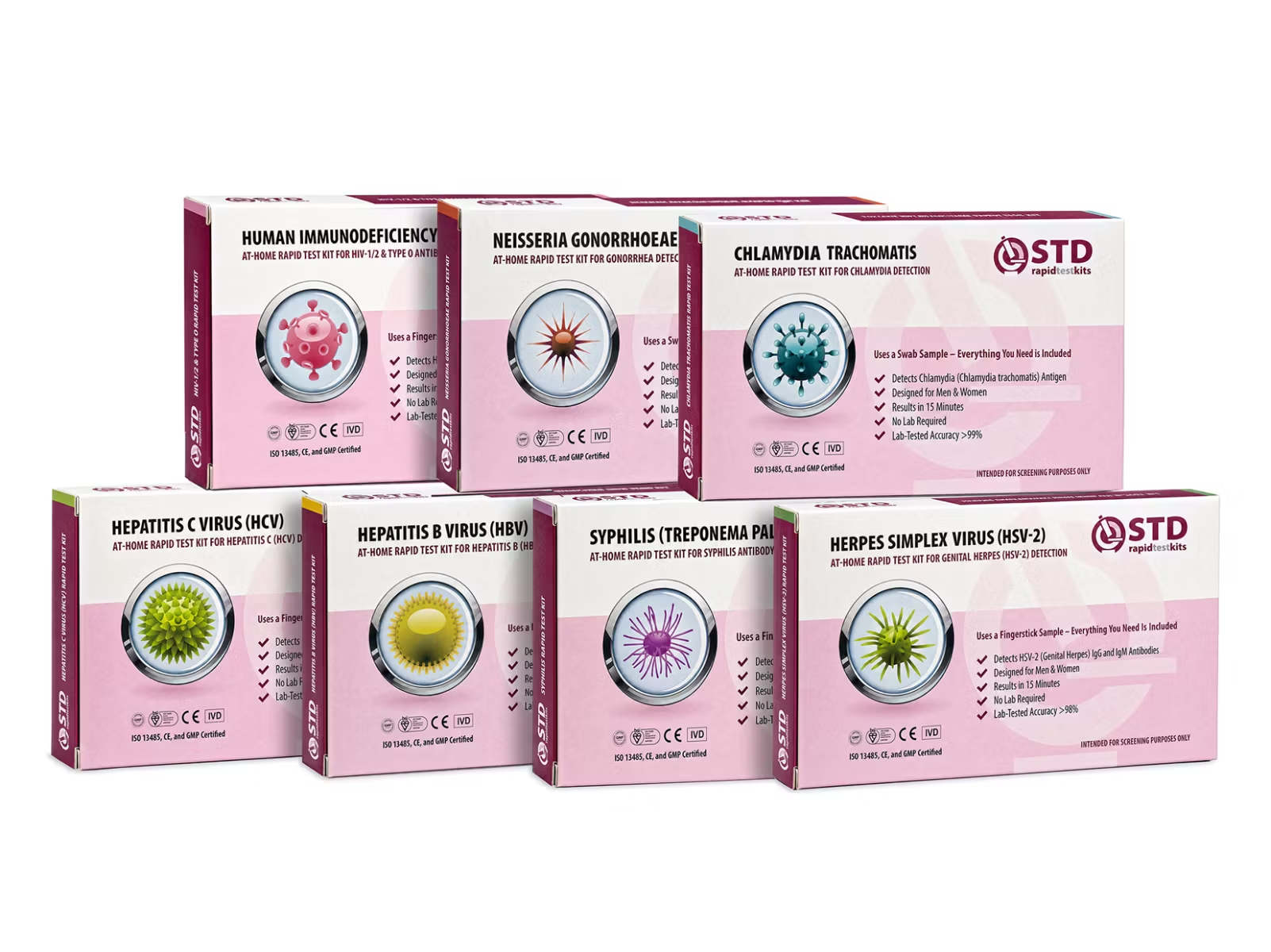
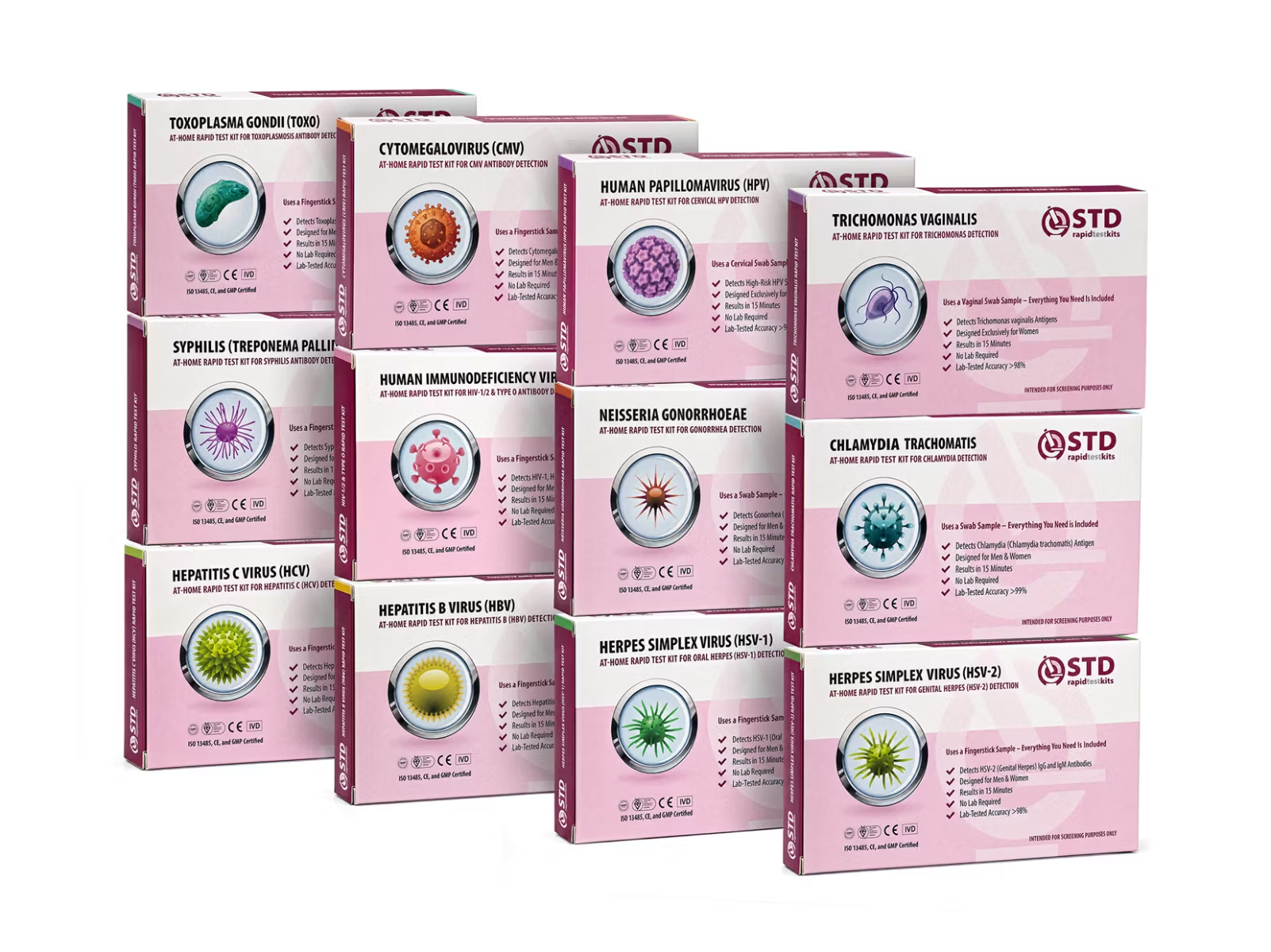
Used with that context, at-home testing meaningfully lowers the activation energy required to know your status. For readers who face the barriers above, a sealed kit arriving by mail and a 15-minute result at home is often the only realistic path to knowing their status before symptoms force a clinic visit. Note: this site sells rapid at-home STD test kits, and the panel referenced below is one option from our own catalog rather than a neutral product recommendation.
Where policy is making a difference
Individual-level solutions like kit ordering and telemedicine consults don't fix the structural side. Policy does. The levers that have measurably moved the needle on STD disparities over the past decade include the following.
Expanded Medicaid coverage
States that expanded Medicaid under the Affordable Care Act show better STD screening rates among low-income adults than non-expansion states. The mechanism is straightforward: more people with coverage means more people willing to walk into a clinic.
Title X family planning grants
Title X-funded clinics, administered by the HHS Office of Population Affairs, serve millions of low-income patients a year and provide a large share of free or sliding-scale STD screening in the U.S. Funding for the program has been politically volatile over the past several years, with measurable downstream effects on access wherever clinic networks contract.
School-based health centers
Schools that host clinics on-site, especially in high-poverty districts, reach students who would not otherwise access reproductive or sexual healthcare. The downside is political: school-based health is contentious in many districts, and centers close as quickly as they open.
Comprehensive sex education mandates
State-level sex-ed policy varies by orders of magnitude. States with comprehensive, medically accurate curricula show lower teen STD rates than abstinence-only states, controlling for other factors. The CDC and the Society for Adolescent Health and Medicine both endorse comprehensive sex education as a disparities-reducing intervention.
Telehealth permanence
The pandemic-era expansion of telehealth, including reimbursement parity for video visits, made it easier for rural and low-income patients to get an STD consultation without travel. Several of those expansions have become permanent in most states. The combination of telehealth consultation and at-home testing is, for many readers, the most accessible path to care that has ever existed.

What you can do today
Closing structural gaps takes years. Closing your own gap takes an afternoon. A handful of practical steps:
Know your testing schedule
The CDC recommends annual chlamydia and gonorrhea screening for sexually active women under 25 and for older women with new or multiple partners. Sexually active gay and bisexual men should test at least annually for HIV, syphilis, chlamydia, and gonorrhea, and more often (every 3 to 6 months) if they have multiple or anonymous partners. Anyone with a new partner or possible exposure should test, regardless of category.
Pick the route that lowers your friction
If a free clinic visit is easy for you, take it. If it isn't, telehealth and at-home rapid tests exist for a reason. The point is to test, not to test in a specific setting.
Tell partners
Partner notification is uncomfortable and it cuts transmission. Most jurisdictions offer anonymous partner-notification services through the local health department for people who don't want to make the call themselves.
Support comprehensive sex ed locally
School board races are where sex-ed curricula are decided. Showing up to a single meeting carries disproportionate weight, because most board races have very low turnout.
Share the information
The single largest predictor of whether a person gets tested is whether someone they trust suggests it. Normalizing testing in a friend group, a family, or a workplace shifts behavior more than any public-health campaign.

The bottom line on STD disparities
The U.S. communities with the highest STD rates share a common profile: less access to testing, more stigma around it, less funding for prevention education, and the longest distances to the nearest clinic. Closing the gap is structural work, but the structural work doesn't have to wait for individual readers to take care of themselves and the people around them.
At-home testing, telehealth, school-based clinics, comprehensive sex education, and Medicaid coverage are all moving in the same direction. None of them alone closes the gap. Together they meaningfully narrow it, and they do so faster when more people use them, ask for them, and tell their friends about them.
FAQs
- Why do STD rates differ so much from one community to another?
- Cost is often the first lever. An uninsured adult can face $150 to $300 out of pocket for a basic STI panel at a private clinic, which is enough for many people to skip testing entirely. Layered on top: historical reasons some communities distrust the medical system (the Tuskegee syphilis study remains the most-cited example), variable quality of local sex education, and stigma that makes a clinic visit feel costly even when it's free. Sexual activity rates across U.S. demographic groups are similar in research surveys; what differs is access to testing, treatment, and information.
- Are STDs really more common in rural areas?
- Rural STD rates have risen faster than urban rates over the last decade, even though absolute numbers are still higher in metros. The driver is access: a rural county may have a single clinic 90 miles from the population center, no specialist providers, and limited hours. Telehealth and at-home testing close part of the gap, but the underlying rural healthcare shortage is the larger issue.
- Does the stigma around STD testing actually move the numbers?
- Yes, measurably. Patient surveys consistently find that people delay testing because they expect to feel judged or because they fear social consequences if word gets out. Studies of normalization efforts (school-based, workplace, peer-led) show measurable increases in testing rates when the social cost of asking is lowered. Privacy-first options like at-home kits exist for exactly this reason.
- How does income level affect STD outcomes?
- Lower income correlates with lower screening rates and worse outcomes, including more cases of pelvic inflammatory disease, more late-stage syphilis, and more vertical transmission of HIV from parent to infant. The mechanism is downstream of cost: people skip testing when they can't afford it, infections progress undetected, and complications become more serious and more expensive to treat.
- Is at-home STD testing as accurate as lab testing?
- Timing matters more than the test format. Every infection has a window period during which any test (home or lab) will return a false negative: roughly 2 weeks for chlamydia and gonorrhea swab tests, 12 weeks or more for HIV antibody tests, and 3 months for syphilis antibody tests. A negative result taken inside that window can't be trusted. Outside the window, at-home rapid lateral-flow tests are reliable screening tools with high sensitivity and specificity. Lab nucleic acid amplification tests (NAATs) remain the diagnostic gold standard, and any positive home result should be confirmed at a clinic before treatment.
- What government programs help with affordable STD testing?
- Title X, administered by the HHS Office of Population Affairs, funds family planning and STD services for millions of low-income patients each year. Medicaid covers STD screening for enrolled adults in most states. Many state and local health departments run free testing clinics, and the CDC's GetTested.org tool lists nearby options. Eligibility varies by program, but most low-income adults qualify for at least one.
- Are LGBTQ+ adults at higher STD risk?
- Men who have sex with men carry a higher burden of syphilis and HIV in U.S. data (the CDC reports 71% of new U.S. HIV infections in 2022 occurred in gay and bisexual men), and trans women face very high HIV rates in some surveillance samples. The drivers are a combination of biological transmission efficiency, sexual network structure, and barriers to LGBTQ-affirming care. LGBTQ-friendly clinics, PrEP access, and regular testing close most of the gap when they're available.
- How can I help reduce STD disparities in my community?
- The highest-leverage individual actions are talking openly about testing with friends and partners, supporting school-board candidates who back comprehensive sex education, donating to or volunteering with local Title X-funded clinics, and using your purchasing power to support at-home and telehealth options that expand access to the people who currently struggle most to get to a clinic.
- U.S. Centers for Disease Control and Prevention. Annual STI Surveillance data on chlamydia, gonorrhea, syphilis, and congenital syphilis case counts and demographic distributions.
- U.S. Centers for Disease Control and Prevention. STI Health Equity Project, describing the structural drivers of disparities in STI rates among racial and ethnic minority groups and the recommended prevention strategies.
- U.S. Centers for Disease Control and Prevention. About Sexually Transmitted Infections: definitions, transmission, prevention, and signposting to population-specific resources.
- U.S. Centers for Disease Control and Prevention. HIV Surveillance: facts and statistics by transmission category and by race/ethnicity, including the 2022 estimated new-infection breakdown.
- U.S. Centers for Disease Control and Prevention. HIV among gay and bisexual men: 2022 estimated-incidence figures and demographic breakdown supporting the 71% MSM share of new infections cited in this article.
- World Health Organization. Sexually Transmitted Infections (STIs) fact sheet, covering global incidence, transmission, and prevention recommendations.
