
Published: October 2025 | Last updated: April 2026 | Editorial review and quality control: Martina N.
How risky sex with a sex worker actually is depends on the numbers, not the profession. The transmission probability for any encounter turns on which infection you are worried about, what protection was used, and whether either party has an untreated STI that boosts susceptibility. The worker's job description is rarely the variable that moves the needle.
The public-health data on this is more nuanced than the stigma suggests. In settings where workers have routine testing access, free condoms, and supportive health services, their STI rates often track close to or below the general sexually active population. Where rates are elevated, the driver is usually external: criminalization, unstable housing, healthcare access barriers, or coercion that prevents condom negotiation. This article walks through the real numbers, which infections to consider first, and what to do if you have already had an encounter and want a clear plan.
Is sex with a sex worker high-risk for STIs?
Not automatically. With consistent condom use, the per-encounter HIV risk for vaginal sex sits in the 1-in-1,000 range or lower; bacterial STIs like chlamydia, gonorrhea, and syphilis carry higher per-encounter probability if condoms fail or are not used. The actual risk depends on protection used, the specific act (vaginal, anal, oral), and whether either party has another untreated infection. Encounters in regulated environments where workers test routinely tend to carry lower risk than much of the unprotected sex people have outside of commercial contexts.
Key Takeaways
- Per-encounter HIV risk from receptive vaginal sex with an HIV-positive untreated partner is roughly 8 per 10,000 exposures (CDC); consistent condom use cuts that further by roughly an order of magnitude, and a partner on suppressive antiretroviral therapy with an undetectable viral load is functionally non-infectious.
- After an unprotected encounter the practical timeline is: PEP within 72 hours if HIV is a concern, swab testing for chlamydia and gonorrhea from day 7 to 14, syphilis serology from week 3, and HIV antigen/antibody testing from 4 to 6 weeks with a confirmatory retest at 12 weeks.
STIs and sex work: what current data actually shows
'Sex worker STI rates' is a question with several different answers depending on the country, the legal status of sex work, and the worker's access to testing. Globally, the WHO estimates that female sex workers are roughly 30 times more likely to be living with HIV than other women of reproductive age (WHO HIV and sex workers programme). That headline figure is dominated by the unregulated and criminalized settings where most sex work happens worldwide, where workers often cannot insist on condoms without risking violence, cannot access testing without legal exposure, and cannot report assault.
The picture changes substantially in regulated settings. In licensed brothels in parts of Nevada, Germany, the Netherlands, and New Zealand, where workers test on a routine schedule and condom use is industry norm, STI rates are typically much closer to those of the general sexually active population. The WHO recommends comprehensive prevention packages (peer outreach, free testing, condom distribution, and PrEP access) for exactly this reason, and modeling cited in that guidance suggests decriminalization could prevent a substantial fraction of new HIV infections in this population over a decade.
For a reader weighing personal risk, the practical lesson is that 'is sex work risky?' is the wrong framing. The useful question is 'what kind of sex am I planning to have, with what protection, and with someone whose recent test status I do or do not know?' That question applies equally to commercial and non-commercial encounters.
The WHO's headline statistic that female sex workers are 30 times more likely than other women to be living with HIV reflects the global average, dominated by criminalized and unregulated settings. In legal, regulated settings with routine testing and reliable condom access, that gap shrinks dramatically and in some studies disappears entirely. The driver of the 30x figure is structural (laws, access, safety) rather than occupational.
Per-encounter STI risk: the actual numbers
Here is where the math matters more than intuition. The same sex act with the same protection level carries the same probabilities whether the partner is a sex worker, a one-night stand, or a long-term partner whose recent test status you have not verified. The table below summarizes the rough per-encounter probability for the most common infections relevant to sex-worker encounters. HIV figures are drawn from CDC HIV transmission risk estimates; per-act estimates for chlamydia, gonorrhea, and syphilis come from CDC clinical guidance on bacterial STIs and published epidemiological reviews summarized on the CDC STI page. The WHO STI fact sheet is useful background for global prevalence and prevention but does not publish per-encounter probabilities.
Two patterns show up. First, bacterial infections (chlamydia, gonorrhea, syphilis) transmit far more efficiently per encounter than the headline-grabbing viral ones (HIV, HSV). Second, condoms substantially reduce risk for every infection, with diminishing returns for infections that can affect skin areas a condom does not cover (HPV, syphilis chancres outside the genital area, herpes lesions on adjacent skin). For HIV specifically, the partner's treatment status is the dominant variable: a partner with sustained viral suppression on antiretroviral therapy is functionally non-infectious. Public-health communications call this the U=U principle, undetectable equals untransmittable.
| Infection | Approximate per-encounter risk (untreated infectious partner, no condom) | Notes |
|---|---|---|
| HIV (receptive vaginal sex) | About 8 per 10,000 (0.08%) | Reduced roughly 80% by correct condom use; effectively zero if partner on suppressive ART (U=U). |
| HIV (receptive anal sex) | About 138 per 10,000 (1.4%) | Highest per-act HIV risk of common sex acts; PrEP and condoms both highly effective. |
| HIV (insertive vaginal or anal) | About 4 to 11 per 10,000 | Lower than receptive but non-zero; condoms and ART suppression apply. |
| HIV (oral sex) | Below 1 per 10,000 | Low but non-zero; raised by oral lesions, bleeding gums, recent dental work. |
| Chlamydia | Roughly 30 to 50% per encounter | Often asymptomatic; lab NAAT is the analytical gold standard for confirmation. |
| Gonorrhea | Roughly 50 to 70% female-to-male per encounter | Can also infect throat and rectum; rising drug resistance in some regions. |
| Syphilis (primary or secondary stage) | Roughly 30% per encounter | Direct contact with chancre or rash; condoms partial only if sore is outside covered area. |
| Genital herpes (HSV-2) | 0.05 to 0.15% per act in couples where one partner has HSV-2 and the other does not | Risk rises with viral shedding episodes and visible lesions. |
| HPV | Lifetime exposure near-universal in sexually active adults | Most infections clear; vaccination through age 26 is routine, shared decision-making to age 45. |
| Trichomoniasis | Common, often asymptomatic in men | Treatable with single-dose oral antibiotic; women-specific home swab test available. |
When risk really does climb
Several factors raise the per-encounter probability above the baseline numbers in the table. Risk modifiers matter more than partner identity, and every one of these applies equally to non-commercial encounters:
- No condom or condom failure. The single biggest risk modifier. Slippage and breakage rates are low with correct use, but escalate with oil-based lubricants, expired condoms, or incorrect sizing.
- Untreated co-infections. Having a separate untreated STI (genital herpes, syphilis, gonorrhea) significantly raises HIV susceptibility because of inflammation, mucosal disruption, and increased target cells at the site of exposure (CDC STI co-infection guidance).
- Anal sex. Receptive anal carries the highest per-act HIV risk of any sex act because the rectal mucosa is thinner and more easily abraded than vaginal tissue. Risk is mitigated substantially by condoms and by PrEP.
- Substance use. Alcohol and drugs reduce the likelihood of consistent condom use and increase the chance of risk-elevating behaviors.
- Visible sores or genital lesions. Open lesions raise transmission risk for several STIs sharply. If either party has visible sores, postpone the encounter and seek evaluation.
- Bleeding gums plus oral sex. Oral sex is generally lower-risk than penetrative acts, but inflammation in the mouth (recent dental work, gum disease, ulcers) raises the floor for HIV and other blood-borne infections.
- Coercion or violence. When workers cannot negotiate condom use safely, both parties' risk climbs. This is also the public-health argument for decriminalization: workers who can refuse unprotected sex without legal exposure get sick less often.
Notice what does not appear on this list: the worker's profession on its own.
What to do after a sex-worker encounter: the testing timeline
If an encounter has already happened and you are weighing a test plan, the practical timeline below covers most cases. Two principles apply: act quickly when there is a window-period intervention available (PEP for HIV), and respect the testing window for each infection so the result you eventually get is reliable.
Within 72 hours: post-exposure prophylaxis (PEP) consideration. If the encounter was unprotected anal or vaginal sex with a partner whose HIV status you do not know, PEP can substantially reduce the chance of seroconversion. PEP is a 28-day course of antiretrovirals and must start within 72 hours of exposure, with sooner being better. A clinic, urgent care, or emergency department can prescribe it (CDC HIV PEP guidance).
Day 7 to 14: chlamydia and gonorrhea testing. Bacterial STIs detect reliably starting around 1 to 2 weeks post-exposure. Lab-based NAAT is the most analytically sensitive method. Self-collected vaginal or penile swab tests run at home use lateral-flow chemistry on the same sample type and offer screening utility, with confirmation at a clinic recommended for any positive result.
Week 3 to 6: HIV and syphilis screening. Fourth-generation HIV antigen/antibody tests can reliably detect infection from roughly 18 to 45 days post-exposure (CDC HIV testing windows). Rapid antibody-only tests have a longer window, up to 90 days, but are still useful as a first-pass screen. Syphilis serology becomes reliably positive at roughly 3 to 6 weeks. Repeat HIV testing at the 12-week mark for definitive ruling-out is the conservative option.
Week 12: definitive HIV result. By 12 weeks any HIV antibody test is reliable. Routine HSV-2 antibody screening is not recommended for asymptomatic adults, but can be considered if there is a specific clinical concern.
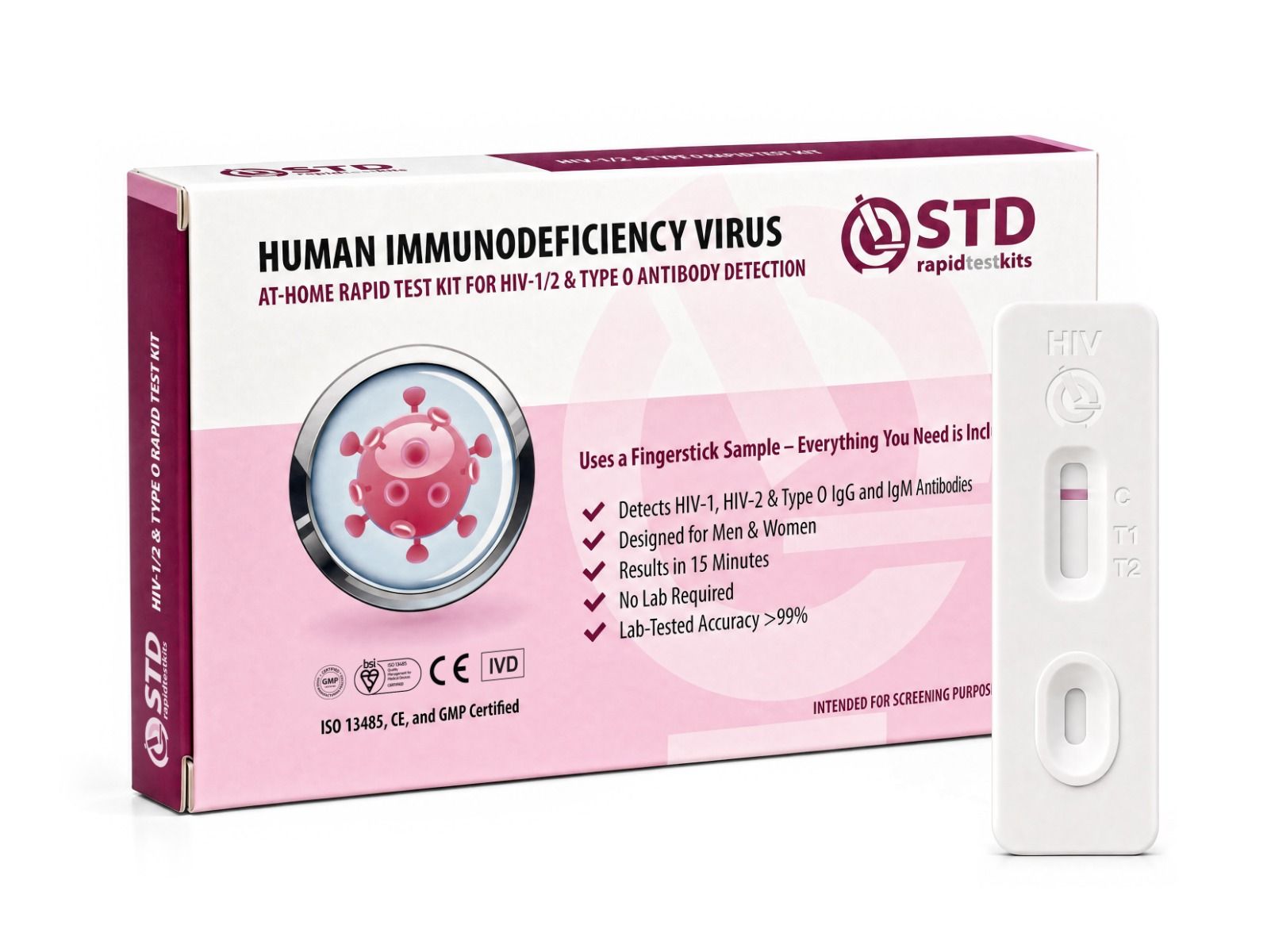
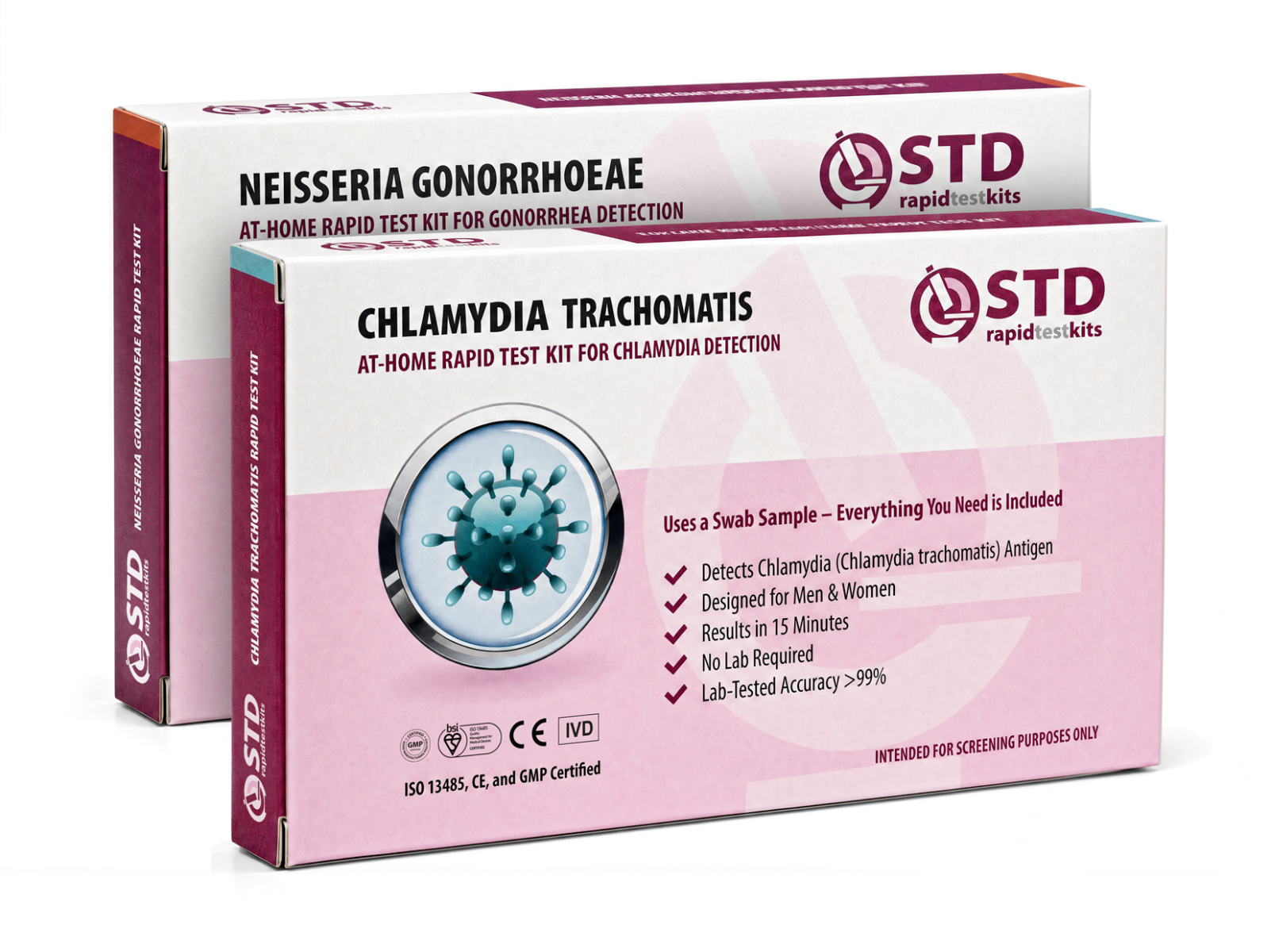
One technical note on at-home testing. The kits sold under brands like ours are rapid lateral-flow immunoassays, not laboratory NAAT or PCR. They use the same swab or blood sample type as a lab and produce a result at home in roughly 15 minutes. They are well-suited to screening between clinic visits, post-encounter peace of mind, and routine self-monitoring. A positive result on a home test is worth confirming at a clinic. Lab NAAT remains the analytical gold standard, particularly for asymptomatic infections; the two methods are complementary, not equivalent.
This article is published by stdrapidtestkits.com, which sells at-home STI testing kits. We recommend products based on fit-for-purpose for the reader's concern, not commercial benefit. Where a clinic visit is the right tool for the job (pharyngeal NAAT, rectal NAAT, PEP prescription), we say so plainly.
Throat and rectal exposure: where at-home tests do not reach
A practical caveat for readers whose encounter included unprotected oral or receptive anal sex. The standard at-home rapid kits available on this site are validated for genital sample collection: self-collected vaginal or penile swabs for chlamydia, gonorrhea, and herpes; fingerprick blood for HIV, syphilis, and the hepatitis viruses. They are not validated for pharyngeal (throat) swab samples or rectal swab samples.
If the encounter involved unprotected oral sex and you want a throat-specific gonorrhea or chlamydia test, see a clinic. Pharyngeal NAAT testing is widely available at sexual health clinics and is the only reliable way to detect a throat infection. The same applies for receptive anal sex and rectal NAAT. We will not pretend a self-collected vaginal or penile swab kit substitutes for a clinic throat or rectal test; it does not. Our at-home panel is the right tool for genital and bloodwork screening on the same encounter, and it works well alongside a clinic visit when pharyngeal or rectal testing is also indicated.
Note also that our trichomoniasis and HPV at-home swabs are validated for vaginal self-collection only. There is no male-compatible at-home trich or HPV kit on the site; men needing those tests should see a clinic. The HIV, syphilis, hepatitis, chlamydia, gonorrhea, and herpes kits are all any-gender.
Covered by our at-home rapid kits (any-gender unless noted): HIV, syphilis, hepatitis B, hepatitis C, chlamydia, gonorrhea, herpes (HSV-1 and HSV-2). Trichomoniasis and HPV swabs are validated for vaginal self-collection only.
Needs a clinic visit: pharyngeal (throat) NAAT after unprotected oral sex, rectal NAAT after receptive anal sex, PEP prescription within 72 hours of a higher-risk HIV exposure, and confirmation of any positive home result.
How sex workers protect themselves (and what clients can borrow from that)
One of the more counterintuitive findings in the public-health literature is that, in regulated settings, sex workers often have lower STI rates than the general population of sexually active adults. The reason is structural: their job depends on staying healthy, so they have built systems around staying healthy. Several of those systems are usable by anyone:
- Routine testing schedules. Workers in regulated settings are typically tested every 1 to 3 months. Anyone with multiple partners can adopt a similar cadence; the CDC's STI screening recommendations call for at least annual screening for all sexually active adults under 25 and for people with new or multiple partners regardless of age.
- Consistent condom use as the default. Survey data from sex-worker health programs routinely report condom use rates above 90 percent with clients, considerably higher than typical general-population rates.
- PrEP uptake where indicated. Pre-exposure prophylaxis (daily or on-demand antiretrovirals) reduces HIV acquisition risk substantially when taken as prescribed. Clients in higher-risk patterns of behavior are also candidates and should ask a clinician about it.
- Peer outreach and education. Worker-led programs share practical risk information faster and more accurately than top-down public-health messaging.
- Negotiation as a habit. Discussing protection, recent test status, and boundaries before sex is built into the workflow for most workers. It reduces ambiguity and the chance of risk-elevating decisions in the moment.
Latex condoms, when used consistently and correctly, are highly effective in preventing the sexual transmission of HIV. They also reduce the risk of other STIs, including those transmitted by genital secretions such as gonorrhea, chlamydia, and trichomoniasis.
FAQs
- Can I catch HIV from a single protected encounter with a sex worker?
- The probability is very low. With a correctly used condom, per-encounter HIV transmission risk drops by roughly 80 percent from the unprotected baseline; a single protected vaginal encounter sits well below 1 per 10,000 exposures even with an HIV-positive partner not on treatment. If the partner is on suppressive antiretroviral therapy with an undetectable viral load, the transmission risk is effectively zero (the U=U principle). For peace of mind, testing at 4 to 6 weeks with a fourth-generation HIV antigen/antibody test, then again at 12 weeks, is the standard plan.
- How accurate are at-home STI tests for post-encounter screening?
- Home rapid tests use lateral-flow immunoassay chemistry. Sensitivity and specificity vary by infection and by kit, but well-designed rapid tests typically report sensitivity in the mid-to-high 90s and specificity above 99 percent once the testing window has passed. They are best used as a screening tool. Any positive result is worth confirming with clinic-based NAAT (for bacterial STIs) or a confirmatory laboratory test (for HIV). Check each product page for the specific performance figures.
- When should I test after a possible exposure?
- The clock matters more than the calendar. If the exposure was within the last 72 hours and could carry HIV risk, get PEP sorted today; nothing else is more time-sensitive. After that window, the testing schedule by infection is chlamydia and gonorrhea at 2 weeks, syphilis at 3 weeks, HIV at 6 weeks, with a confirmatory retest at 12 weeks. If symptoms develop sooner (sores, discharge, painful urination, fever), see a clinician right away rather than waiting on a window.
- Should I take PEP after an encounter?
- PEP is worth considering if the encounter was unprotected anal or vaginal sex with a partner whose HIV status is unknown or known to be HIV-positive without treatment. The course must begin within 72 hours and runs for 28 days. A clinic, urgent care, or emergency department can prescribe it. PEP is not a substitute for routine prevention; daily PrEP is the better long-term option for people in higher-risk patterns of behavior.
- Does oral sex carry STI risk?
- Yes, but it is generally lower-risk than vaginal or anal sex. Gonorrhea, chlamydia, syphilis, herpes, and HPV can all transmit through oral contact. HIV transmission via oral sex is uncommon and is typically associated with bleeding gums, dental work, or oral lesions in the receptive partner. Dental dams and condoms reduce risk. Note: our at-home swab kits are validated for genital sample collection, not pharyngeal (throat) sampling. For a throat swab, see a clinic.
- What if the condom broke during the encounter?
- Treat it as an unprotected exposure. If within 72 hours and the partner's HIV status is unknown or positive, contact a clinic about PEP today. Plan to test at the windows above (chlamydia and gonorrhea at 7 to 14 days, syphilis at 3 weeks, HIV at 4 to 6 weeks then 12 weeks). If symptoms develop in the meantime, see a clinician sooner; do not wait for the testing window.
- Are sex workers tested regularly?
- Many are, particularly in regulated settings where routine screening (often monthly or quarterly) is standard. In criminalized settings testing access is harder. The reader-side question this answers is not 'is the worker safe?' but 'is the encounter I am about to have safe?' That depends on protection used and on what either party already has, which is why post-encounter testing matters regardless of who the partner is.
- I had unprotected sex with a sex worker. What should I do right now?
- PEP today if it has been less than 72 hours, full stop; a clinic, urgent care, or ER can prescribe. Then follow the testing timeline above. Use protection with any other partner until you have cleared all the relevant tests. The single biggest mistake here is waiting too long for PEP because you wanted to think it over; sooner is meaningfully better than later within that 72-hour window.

- U.S. Centers for Disease Control and Prevention. HIV transmission risk per exposure type, condom effectiveness, ART suppression and the U=U principle, and PEP eligibility and timing.
- U.S. Centers for Disease Control and Prevention. Sexually transmitted infections: screening recommendations, treatment guidelines, per-act transmission estimates for bacterial STIs, and co-infection susceptibility guidance.
- World Health Organization. Sexually transmitted infections fact sheet covering global prevalence, transmission, symptoms, and prevention.
- World Health Organization. HIV and sex workers programme guidance on structural drivers of HIV/STI risk and evidence for comprehensive prevention programmes, including the 30x relative HIV prevalence figure.
- U.K. National Health Service. Sexually transmitted infections (STIs) overview, common infections, testing pathways, and timelines.
- World Health Organization. Health topics: sexually transmitted infections, including incidence and screening guidance.
