
Published: October 2025 | Last updated: April 2026 | Editorial review and quality control: Martina N.
Condoms get treated like a settled question: everyone says use them, almost no one explains how well they actually work or where their protection runs out. The honest answer matters because most people who use condoms inconsistently do so because they have not seen the per-infection numbers and assume the protection is either total or pointless. Neither framing is correct. This guide walks through what major public health bodies say about condom effectiveness for each common STI, where the gaps are, what to layer alongside condoms so the gaps stay covered, and how to think about routine testing as a sexually active adult.
How well do condoms actually prevent STIs?
Used consistently and correctly, latex or polyurethane condoms cut HIV transmission risk by an estimated 80 to 95 percent and substantially lower the risk of chlamydia, gonorrhea, and trichomoniasis (cohort study estimates summarised by <a href="https://www.cdc.gov/condom-use/index.html" target="_blank" rel="noopener">CDC</a> and <a href="https://www.who.int/teams/global-hiv-hepatitis-and-stis-programmes/stis/prevention/condoms" target="_blank" rel="noopener">WHO</a> guidance). Protection against infections that spread through skin-to-skin contact, including HPV, herpes, and syphilis, is meaningful but partial because condoms only cover part of the genital skin involved. Even careful condom users still need periodic STI testing, HPV vaccination where age-appropriate, and PrEP if their personal risk is elevated.
Key Takeaways
- Consistent and correct condom use cuts HIV risk by an estimated 80 to 95 percent and substantially reduces chlamydia and gonorrhea transmission, but offers only partial protection (around 30 to 70 percent) against herpes, HPV, and syphilis because those spread skin-to-skin from areas a condom does not cover.
- Condoms work alongside, not instead of, regular STI testing, HPV and Hepatitis B vaccination, and PrEP for people with elevated HIV risk. Even careful condom users need periodic screening because skin-to-skin infections and asymptomatic carriage routinely slip past barrier protection.
How condoms prevent STI transmission
Condoms work as a physical barrier. The latex (or polyurethane, or polyisoprene) film keeps bodily fluids on one side from reaching mucous membranes on the other. That matters for STIs because most sexually transmitted pathogens travel in semen, pre-ejaculate, vaginal fluid, or blood, and they need direct contact with mucosal tissue to establish infection.
The pore size of intact medical-grade latex is small enough to block sperm, bacteria, and viruses, including HIV, HPV, and HSV particles. Laboratory permeability studies referenced in WHO condom guidance confirm that intact latex is not porous to viral particles.
What condoms cover, and what they do not, decides their effectiveness profile. The barrier mechanism only protects the area it covers. Almost everything else in this guide (per-infection effectiveness rates, edge cases, layered prevention) is a consequence of that one mechanical limitation.
Fluid-borne infections (HIV, gonorrhea, chlamydia, hepatitis B, trichomoniasis) require contact between infectious fluid and mucosa. Condoms intercept that contact. Effectiveness is high when condoms are used every time and correctly.
Skin-to-skin infections (HPV, herpes, syphilis chancres) can transmit from any infected skin surface, including the base of the penis, the scrotum, the vulva, the perineum, or the pubic area, that the condom does not cover. Effectiveness is lower but still meaningful, because condoms reduce overall surface area and viral-load exposure.
Effectiveness by STI: what the evidence shows
Effectiveness varies by infection. Quoting a single number ("99 percent effective") is misleading because it lumps together infections with very different transmission routes. The breakdown below pulls from CDC condom-use guidance, WHO published guidance, and NHS contraception guidance on consistent and correct condom use, plus the cohort-study ranges those bodies summarise.
| Infection | Risk reduction (consistent + correct use) | Why this number |
|---|---|---|
| HIV | Roughly 80 to 95 percent | Travels in semen, vaginal fluid, blood. Mucosal contact required. Latex blocks the virus. |
| Chlamydia | Substantial reduction | Bacterial, transmits through fluid contact. Strongly reduced by consistent barrier use. |
| Gonorrhea | Substantial reduction | Same fluid-contact transmission route as chlamydia. |
| Hepatitis B | High when used consistently | Blood and fluid borne. Vaccination is the primary prevention tool; condoms are adjunct. |
| Trichomoniasis | Moderate to high | Protozoan, transmits through vaginal and penile fluid contact. |
| HPV | Around 70 percent reduction | Skin to skin from any infected genital area. Condoms reduce, do not eliminate, exposure. |
| Genital herpes (HSV-2) | Around 30 to 50 percent reduction | Skin to skin, including during asymptomatic viral shedding. |
| Syphilis (primary) | Reduces but does not eliminate risk | Chancres can occur on any genital skin surface, including parts not covered by a condom. |
Correct use: where most condom failures come from
The gap between perfect-use and typical-use effectiveness is almost entirely driven by application errors, not material breakage. Self-reported condom-use studies consistently identify the same top failure points:
- Late application. Putting the condom on after some genital contact has already happened. Pre-ejaculate carries HIV, chlamydia, and gonorrhea; pre-application contact also exposes skin to herpes and HPV.
- Early removal. Taking the condom off before sex is fully complete.
- Oil-based lubricants with latex. Vegetable oil, baby oil, lotion, coconut oil, and Vaseline degrade latex within minutes and substantially increase breakage. Only water-based or silicone-based lubricants are safe with latex.
- Storage damage. Wallets, glove boxes, hot cars, sunny windowsills. Heat and friction degrade the material before the printed expiration date.
- Reusing. Condoms are single-use. Reapplying one after withdrawal compromises the latex and any spermicide coating.
- Wrong size. Too tight increases breakage; too loose increases slippage. Trying different sizes is worth the friction it takes.
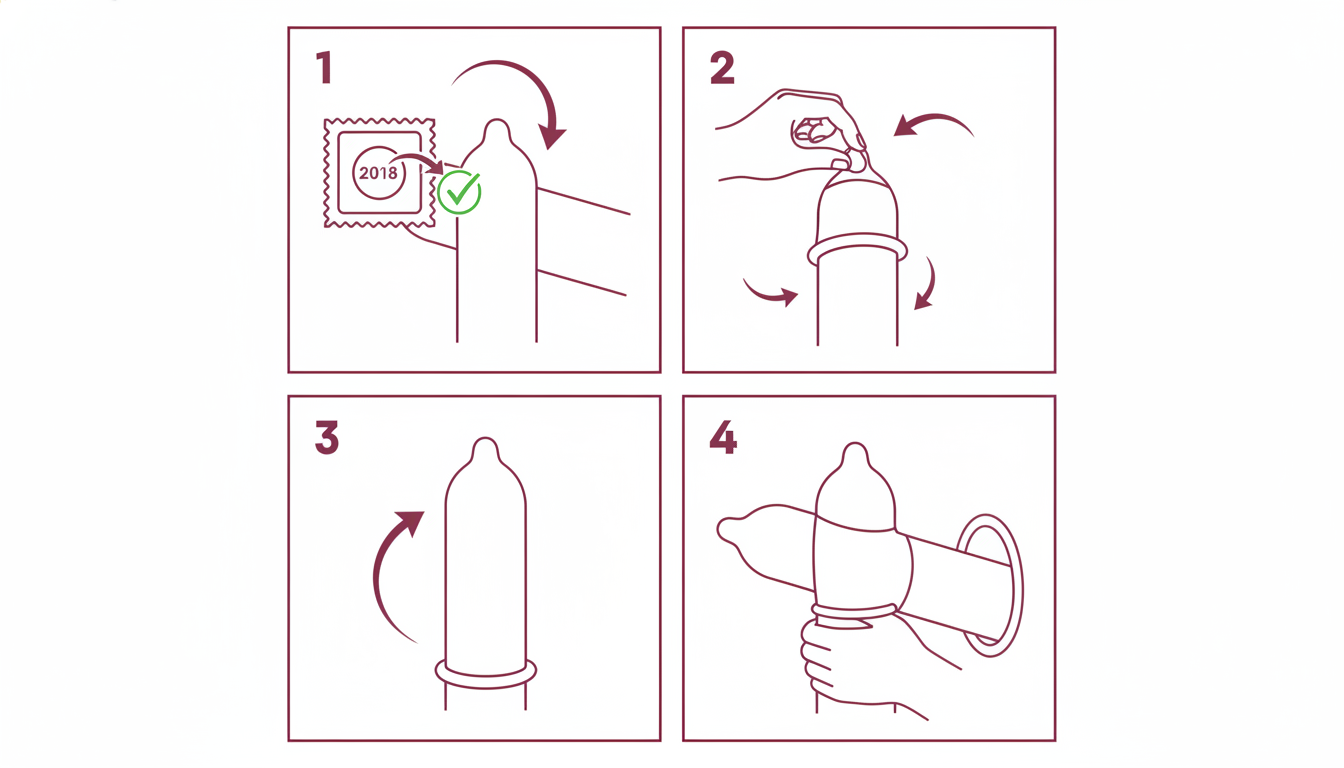
The basic correct-use sequence:
- Check the expiration date and confirm the package is undamaged.
- Open the wrapper carefully (no teeth, no scissors).
- Pinch the tip to leave space for ejaculate, place on the head of the erect penis, and roll down to the base.
- Use water-based or silicone-based lubricant if needed.
- After ejaculation, hold the base of the condom while withdrawing (before the erection subsides), then remove and discard.
- Wash hands before any further genital contact.
Internal ("female") condoms follow a different application pattern: the closed end is inserted up to several hours before sex, with the open ring sitting outside the vaginal or anal opening. They are made of polyurethane or nitrile (no latex), so any lubricant type works.
What condoms cannot fully protect against
The mechanical limit ("only protects the area it covers") shows up most clearly with three infections: HPV, herpes, and syphilis.
HPV. Human papillomavirus is extraordinarily common; most sexually active adults will encounter at least one HPV strain in their lifetime. The virus lives in genital skin, including the base of the penis, the scrotum, the vulva, the perineum, and the inguinal area. Condoms reduce HPV transmission risk by an estimated 70 percent in cohort studies, but cannot eliminate it because uncovered skin remains in contact during sex. The HPV vaccine (Gardasil 9) closes most of this gap and is recommended through age 26 routinely, with shared clinical decision-making through age 45.
Herpes (HSV-2). Genital herpes spreads from infected skin, with or without visible lesions. Asymptomatic viral shedding is common in the years after initial infection. Condoms reduce HSV-2 transmission by an estimated 30 to 50 percent. Suppressive antiviral therapy (such as daily valacyclovir) taken by the infected partner adds significant additional protection.
Syphilis. The primary lesion of syphilis (the chancre) can appear anywhere in the genital area, including the scrotum, mons pubis, or perineum. A condom that covers only the penile shaft will not block contact with a chancre on uncovered skin. Condoms reduce syphilis risk substantially but do not eliminate it.
Condoms still meaningfully reduce risk for these three infections; they just do not eliminate it. The vaccination, suppressive therapy, and PrEP options below close most of the remaining gap.
The often-quoted 99 percent figure conflates two different things: pregnancy prevention with perfect use (around 98 percent) and HIV transmission risk reduction with consistent use (80 to 95 percent). Effectiveness against herpes, HPV, and syphilis is meaningfully lower because those spread skin to skin. Use the per-infection numbers in the table above when thinking about your own risk, not a blanket figure.
Layered prevention: what to add alongside condoms
The CDC and WHO both frame condom use as a foundational tool inside a broader prevention stack. The full stack includes vaccination, biomedical prevention (PrEP, PEP), regular testing, and partner communication.
HPV vaccination. The 9-valent HPV vaccine covers the strains responsible for the majority of cervical, anal, and oropharyngeal cancers and most cases of genital warts. Per CDC ACIP guidance: routine vaccination through age 26, with shared clinical decision-making through age 45 for adults who did not get vaccinated earlier.
Hepatitis B vaccination. Universal infant vaccination has been standard in the U.S. since the early 1990s, and adult catch-up vaccination is recommended for anyone not previously vaccinated. Sexual transmission of Hepatitis B is essentially preventable in vaccinated adults.
PrEP for HIV. Pre-exposure prophylaxis (daily oral tenofovir-based regimens or injectable cabotegravir) reduces the risk of getting HIV from sex by about 99 percent when taken as prescribed, per CDC PrEP clinical guidance. PrEP is recommended for people in serodiscordant relationships, anyone with multiple recent sexual partners and inconsistent condom use, people who inject drugs, and anyone whose personal risk warrants it.
PEP after a known exposure. Post-exposure prophylaxis is a 28-day antiretroviral regimen started within 72 hours of a possible HIV exposure. Earlier is better; the 72-hour mark is the outer limit. PEP is also indicated after sexual assault and after some occupational exposures.
Routine STI testing. Even consistent condom users have residual risk from skin-to-skin infections, oral exposure routes, and the occasional condom failure. CDC STI screening recommendations include annual chlamydia and gonorrhea screening for sexually active women under 25, HIV screening at least once for everyone aged 13 to 64, and more frequent testing (every 3 to 6 months) for higher-risk groups.
Partner communication. Knowing each other's recent test results before a new sexual relationship begins is the simplest, cheapest layer of prevention available. "When were you last tested, and what did the panel cover?" is a complete conversation.
Foundation: consistent and correct condom use for every act, with mutual partner communication about recent test results.
Vaccination layer: HPV vaccination through age 26 (decision-making through age 45), Hepatitis B vaccination if not already immunised.
Biomedical layer: PrEP for anyone with elevated HIV risk; PEP within 72 hours of a known possible exposure.
Surveillance layer: annual or every-3-to-6-month STI screening calibrated to personal risk profile, plus prompt testing after any exposure event or new symptoms.
Common condom myths that quietly undercut protection
The myths below are not abstract. Each one corresponds to a measurable real-world drop in protection.
Myth: Two condoms is safer than one. Wearing two condoms simultaneously ("double-bagging") increases friction between the two layers and substantially raises breakage risk. One properly fitted condom is the correct configuration. The same applies to wearing an external (penile) and internal (vaginal or anal) condom together.
Myth: Pulling out before climax replaces the need for a condom. Pre-ejaculate carries HIV, chlamydia, gonorrhea, and other pathogens. Withdrawal before ejaculation reduces pregnancy risk modestly but does not meaningfully reduce STI transmission risk.
Myth: Condoms reduce sensation so much that effectiveness does not matter. Modern thin-latex condoms transmit substantially more sensation than condoms from even ten years ago. Polyurethane and polyisoprene options exist for people with latex sensitivity. Trying different brands and sizes addresses the comfort issue without trading away the protection.
Myth: Condoms are only for vaginal sex. Anal and oral sex transmit STIs efficiently and condoms reduce risk for both. Dental dams (or a cut-open condom or a non-microwavable plastic film square) provide a barrier for oral-vaginal and oral-anal contact.
Myth: "I'll know if my partner has something." Most STIs are asymptomatic for substantial portions of their natural history. Chlamydia is asymptomatic in around 70 percent of infected women and 50 percent of infected men. HPV produces no symptoms in most people. Visible-symptom screening is not a real prevention strategy.
Natural-membrane (lambskin) condoms have small pores that block sperm but allow viruses, including HIV and HSV, to pass through. They are effective for pregnancy prevention only. For STI prevention, use latex, polyurethane, or polyisoprene exclusively. If you have a latex allergy, polyurethane and polyisoprene are the right alternatives, not lambskin.
Internal condoms: a different option, similar effectiveness profile
The internal condom (sometimes called the female condom, though it can be used for receptive anal sex by anyone) is a polyurethane or nitrile pouch with a soft inner ring and a flat outer ring. The inner ring sits at the cervix or rectum; the outer ring rests outside the vaginal or anal opening.
FDA labeling and WHO guidance both treat the internal condom as broadly comparable to the external condom for STI and HIV prevention when used consistently and correctly. Typical-use pregnancy effectiveness is slightly lower (around 79 percent) than external condoms, again driven by inconsistent use rather than by the method itself.
Insertion timing: can be inserted up to 8 hours before sex.
Lubricant compatibility: works with any lubricant type (no oil-based restriction, since there is no latex involved).
Coverage: provides slightly more coverage of the vulva or perineum, which may modestly improve protection against skin-to-skin infections.
Independence from erection: stays in place regardless of erection state, useful for partners who want control over barrier placement.
When a condom breaks: the next 72 hours matter
Condom breakage, while uncommon in real-world use, does occur. When it happens, the response window for biomedical prevention starts immediately.
The first hour:
- Stop and replace the condom before continuing.
- If pregnancy prevention is relevant, emergency contraception is most effective taken within 72 hours, and most effective of all within the first 24 hours. Levonorgestrel options (Plan B and generics) are available over the counter; ulipristal acetate (Ella) and copper IUD insertion are clinic-administered options.
The first 72 hours:
- If there is any chance of HIV exposure (partner status unknown, partner known positive, partner with multiple recent partners), seek PEP. PEP is a 28-day antiretroviral regimen that can prevent HIV seroconversion when started within 72 hours of exposure. Earlier is better, and effectiveness drops sharply after 72 hours.
- Urgent care, sexual health clinics, and hospital emergency departments can prescribe PEP. Many state and city health departments operate free or low-cost PEP programs.
The first few weeks:
- Bacterial STIs (chlamydia, gonorrhea) become detectable within 1 to 2 weeks of exposure.
- HIV antigen-antibody (4th generation) tests detect most infections by day 18 to 45.
- Syphilis tests reach reliable sensitivity by 3 to 6 weeks.
- HSV-2 antibody tests reach reliable sensitivity around 12 weeks post-exposure for most assays; some manufacturers recommend waiting up to 16 weeks for maximum confidence.
Test for the infections that match the exposure type, on the windows that match each infection's biology. The reverse pattern (testing too early and getting a falsely reassuring negative) is one of the most common mistakes after a known exposure event.
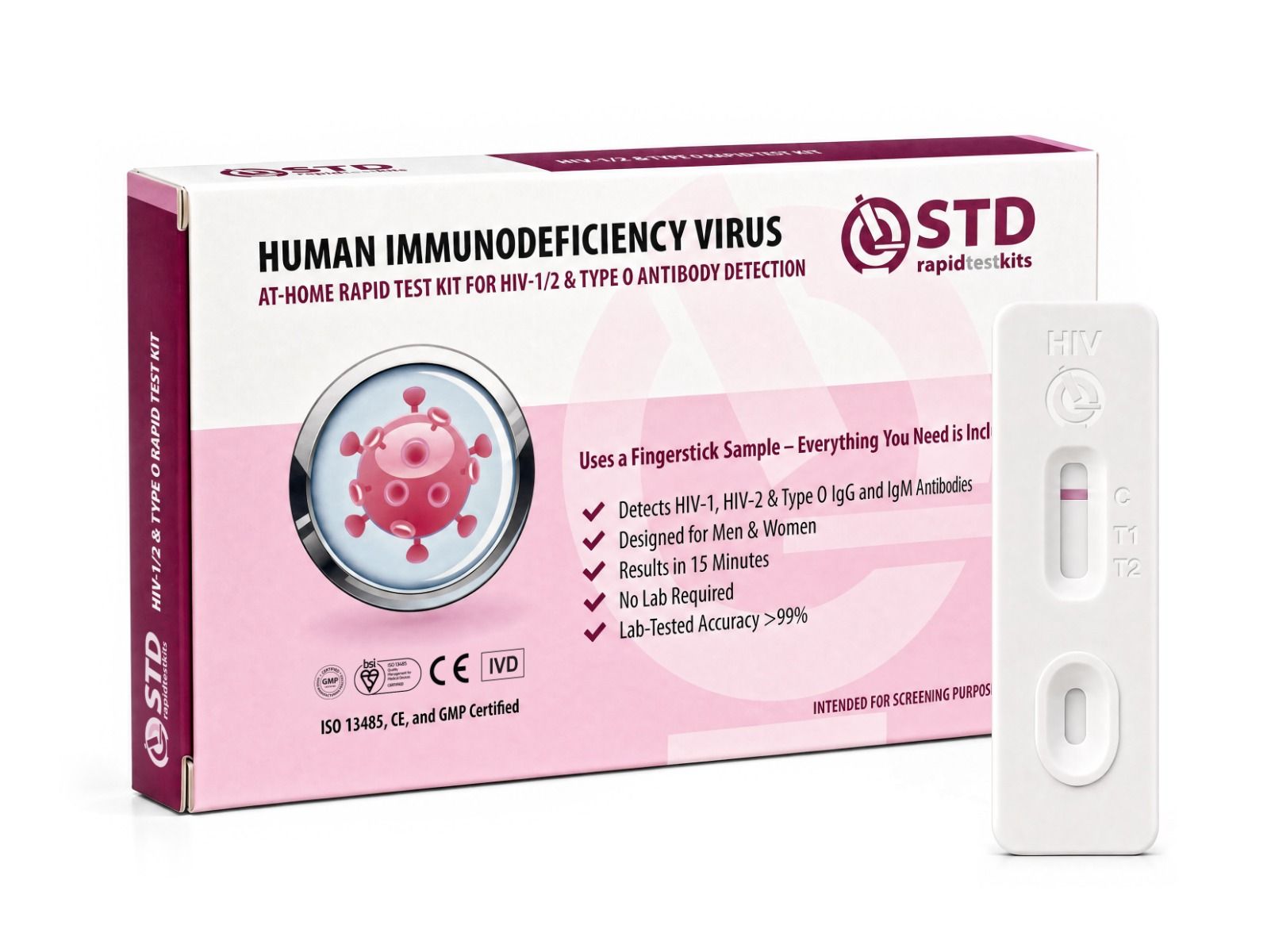
This article is published by stdrapidtestkits.com, which sells at-home STI testing kits. We recommend products based on fit-for-purpose for the reader's concern, not commercial benefit. The kits referenced in the rest of this article are options on our site that match the testing scenarios described.
Why condom users still need routine testing
Three structural reasons condoms alone do not replace screening:
Skin-to-skin gaps. HPV, herpes, and syphilis can transmit despite consistent condom use. Periodic screening catches some of these earlier than waiting for symptoms.
Asymptomatic infections. Chlamydia is asymptomatic in roughly 70 percent of infected women and 50 percent of infected men. Pharyngeal and rectal gonorrhea are typically asymptomatic. HIV is asymptomatic in most cases until late-stage disease. Feeling fine is not evidence of being uninfected.
Use gaps. Even committed condom users miss occasional acts (a forgotten condom, a longer-term relationship where condom use lapses, oral sex without a barrier). The cumulative residual risk over months or years is non-zero.
CDC STI screening recommendations for sexually active adults:
- Annual chlamydia and gonorrhea screening for all sexually active women under 25.
- HIV screening at least once for everyone aged 13 to 64; annually for higher-risk groups.
- Every 3 to 6 months for: men who have sex with men, people with multiple recent partners, people in serodiscordant relationships, people who inject drugs.
- At each pregnancy: HIV, syphilis, hepatitis B, and chlamydia screening at the first prenatal visit.
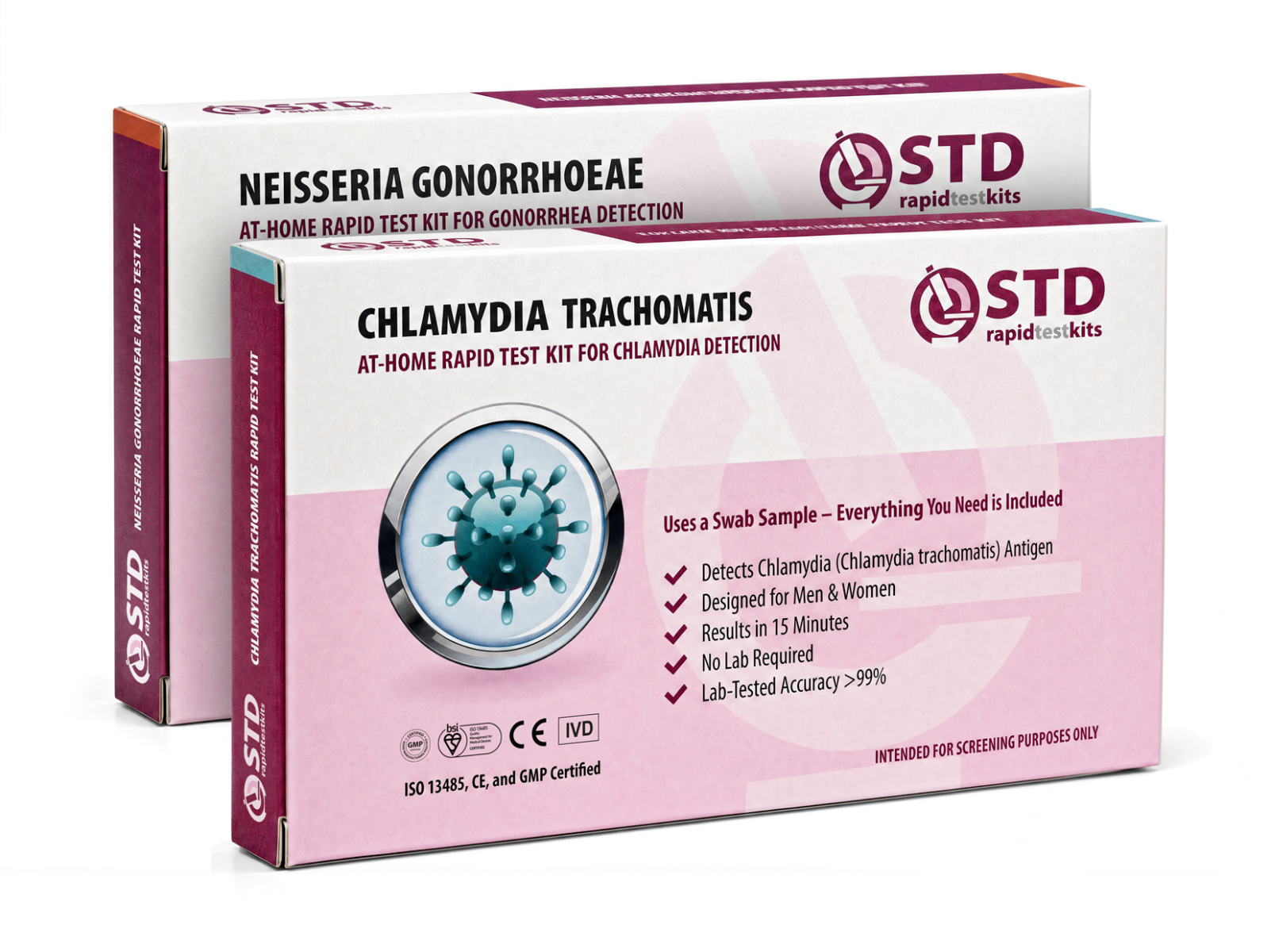
For the bacterial STIs that condoms protect against best (chlamydia, gonorrhea), an at-home rapid swab kit is a low-friction way to fold testing into a routine. Lateral-flow chemistry screens at home; a positive result is worth confirming with a clinic-administered NAAT, which has higher analytical sensitivity.
When used correctly, condoms are highly effective in preventing the sexual transmission of HIV and reduce the risk of other sexually transmitted infections.
How to think about which test to choose
Match the test to the exposure type and to each infection's window period. A few rules of thumb:
- Recent unprotected vaginal or anal sex with a new partner: chlamydia and gonorrhea swab at 2 weeks, HIV antigen-antibody at 45 days, syphilis at 6 weeks, and a fuller panel at 90 days for confidence on the longer-window infections.
- Symptoms (discharge, painful urination, lesions, sores): see a clinician within days. Symptoms warrant clinical evaluation, not at-home screening alone.
- Routine annual check, no specific concern: a 6-in-1 or broader combo panel covers most common screening bases efficiently. HSV-2 antibody testing is not part of standard sexual health screens because asymptomatic seropositivity is common and a positive result without symptoms can carry psychological burden disproportionate to its clinical relevance.
- After a condom break with unknown partner status: follow the 72-hour PEP path first; testing follows on the appropriate windows.
Anyone sexually active outside of a long-term mutually monogamous tested-negative relationship benefits from periodic screening, regardless of how careful their condom use is. Condoms shift the screening interval that makes sense for any given person; they do not eliminate the need.
Frequently asked questions
- How effective are condoms at preventing STIs overall?
- Condoms work best for fluid-borne infections and offer only partial protection for skin-to-skin ones. For HPV, herpes, and syphilis, where transmission can come from any infected genital skin (including areas a condom does not cover), risk reduction is meaningful but partial: roughly 70 percent for HPV and 30 to 50 percent for HSV-2 in cohort studies. For HIV, chlamydia, gonorrhea, hepatitis B, and trichomoniasis, where transmission requires fluid-mucosa contact, consistent and correct use is highly effective; HIV risk reduction is estimated at 80 to 95 percent.
- Do condoms protect against herpes and HPV?
- Partially. Condoms reduce HSV-2 transmission by an estimated 30 to 50 percent and HPV transmission by roughly 70 percent. The remaining gap exists because both infections spread from any infected genital skin, including areas the condom does not cover. The HPV vaccine closes most of the HPV gap; antiviral suppressive therapy taken by the infected partner closes a meaningful portion of the herpes gap.
- Are latex or non-latex condoms better for STI prevention?
- Latex, polyurethane, and polyisoprene all provide STI protection. Lambskin (natural-membrane) condoms do NOT, because their pores are large enough to allow viruses including HIV through. If latex allergy is a concern, polyurethane or polyisoprene are the right alternatives. Avoid lambskin when STI protection matters.
- What lubricants are safe with latex condoms?
- Water-based and silicone-based lubricants only. Oil-based lubricants (vegetable oil, baby oil, mineral oil, lotion, Vaseline, coconut oil) degrade latex within minutes and dramatically increase breakage risk. Polyurethane and polyisoprene condoms tolerate any lubricant type, including oil-based.
- Are internal (female) condoms as effective as external condoms?
- For HIV and STI prevention, the WHO and FDA treat them as broadly comparable when used consistently and correctly. For pregnancy prevention, typical-use effectiveness is slightly lower (around 79 percent) versus around 87 percent for external condoms, again driven by use consistency. The internal condom is a useful option for receptive partners who want control over barrier placement.
- What should I do if a condom breaks during sex?
- Stop and replace it. Within 72 hours, evaluate two biomedical-prevention paths: emergency contraception if pregnancy prevention is relevant (most effective within 24 hours, available over the counter), and PEP if there is any chance of HIV exposure (most effective when started as soon as possible after exposure, with the 72-hour mark as the outer limit). Sexual health clinics, urgent care, and emergency departments can prescribe PEP. Test for the relevant STIs on each infection's appropriate window.
- Can I get an STI even with consistent condom use?
- Yes, with substantially reduced probability. Skin-to-skin infections (HPV, herpes, syphilis) can transmit despite condom use because condoms cannot cover every relevant skin surface. Oral exposure routes are also generally not protected by penile condoms. Even fluid-borne infections occasionally transmit due to condom failure or inconsistent use within an otherwise consistent pattern. This is the structural reason periodic screening is recommended for sexually active adults regardless of barrier use.
- Do I still need STI testing if I always use condoms?
- Yes. CDC routine screening guidance applies to all sexually active adults, with frequency adjusted by personal risk profile. Condoms shift the screening interval that makes sense for any given person, but they do not eliminate the need. At-home rapid kits are a low-friction option for periodic screening; clinical NAAT testing is the gold standard for confirming positive results.
- U.S. Centers for Disease Control and Prevention. Condom Use Resources, including effectiveness summaries and correct-use guidance.
- World Health Organization. Global HIV, Hepatitis and STIs Programmes, Condoms section, including consistent-use effectiveness ranges and barrier mechanism overview.
- U.S. Centers for Disease Control and Prevention. STI Screening Recommendations, including chlamydia and gonorrhea screening intervals and population-specific testing frequencies.
- U.S. Centers for Disease Control and Prevention. HIV Nexus Clinical Guidance: Pre-Exposure Prophylaxis (PrEP), including the 'about 99 percent' effectiveness figure for sexual transmission when taken as prescribed.
- U.S. Centers for Disease Control and Prevention. HPV Vaccination, including ACIP guidance on routine and catch-up vaccination ages.
- U.K. National Health Service. Condoms (contraception methods guide), including correct-use guidance and effectiveness statistics.
- World Health Organization. Sexually Transmitted Infections Fact Sheet, including global incidence and screening recommendations.
