
Published: September 2025 | Last updated: April 2026 | Editorial review and quality control: Martina N.
Throat gonorrhea, sometimes called pharyngeal or oropharyngeal gonorrhea, is an infection of the throat tissue caused by Neisseria gonorrhoeae, the same bacterium responsible for genital and rectal gonorrhea. It spreads through oral sex with a partner who has gonorrhea at any site, and in the large majority of cases it produces no symptoms at all.
Most people who carry it find out only when a partner is diagnosed first, or when a clinician specifically swabs the throat during a routine screen. Standard urine-based STI panels do not detect it, and a clean genital test does not rule it out. If your concern is exposure during oral sex, this guide explains how the infection works, how it gets diagnosed, what current CDC-recommended treatment looks like, and exactly where at-home rapid kits help and where they do not.
Can you get gonorrhea from oral sex?
Yes. Throat gonorrhea spreads when a partner with genital or rectal gonorrhea infects your mouth and throat during oral sex. The infection is asymptomatic in roughly 70 to 90 percent of cases, so the only reliable way to find it is a clinic-administered pharyngeal swab tested with NAAT (nucleic acid amplification testing). Current CDC-recommended treatment is a single 500 mg intramuscular injection of ceftriaxone, followed by a test of cure 7 to 14 days later because pharyngeal infections are harder to clear than genital ones.
Key Takeaways
- Throat gonorrhea spreads through oral sex and is usually symptom-free, which is why standard urine-based STI panels routinely miss it.
- Diagnosis requires a pharyngeal NAAT swab ordered through a clinic. Treatment is a single ceftriaxone injection plus a follow-up test of cure two weeks later.
What pharyngeal gonorrhea is
Pharyngeal gonorrhea is an infection of the back of the throat (the oropharynx) by Neisseria gonorrhoeae, a Gram-negative bacterium that prefers the warm, moist mucous membranes of the human body. Genital, rectal, and pharyngeal gonorrhea are all the same organism. The difference is which mucous membrane it has colonized.
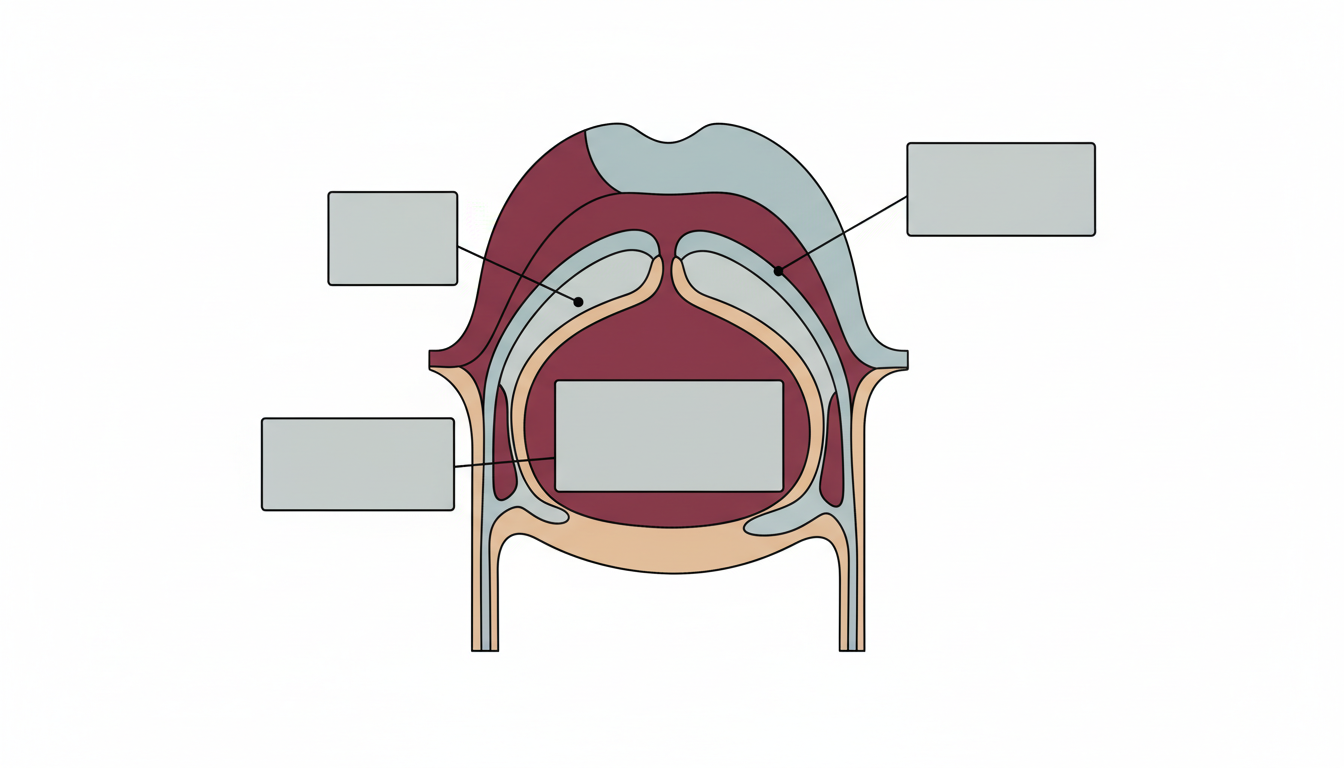
The bacterium attaches preferentially to columnar and transitional epithelial cells. The tonsils, the soft palate, and the posterior pharyngeal wall all carry tissue that N. gonorrhoeae can latch onto, particularly during oral sex when a relatively large dose of bacteria gets deposited deep in the throat. Once attached, the bacterium can persist in the tissue for weeks or months without provoking the inflammatory response that produces obvious symptoms.
Two consequences follow from that biology. First, throat gonorrhea is hard to feel: the local immune response is often muted, so there is no swelling, pus, or fever signaling something is wrong. Second, pharyngeal gonorrhea is harder to clear with antibiotics than a genital infection. The drug has to reach effective concentrations in tonsillar tissue, which is challenging for some commonly used oral antibiotics. That is part of why current CDC guidance for the throat site is intramuscular ceftriaxone rather than a pill.
Pharyngeal gonorrhea is the same Neisseria gonorrhoeae that causes genital and rectal gonorrhea. The throat's muted local immune response is the reason an infection there rarely announces itself, and why antibiotics that work fast in the urethra need extra confirmation when the infection sits in tonsillar tissue.
How transmission works during oral sex
Pharyngeal infection happens when the throat comes into direct contact with infected genital or rectal mucosa, or with semen or vaginal fluids that carry N. gonorrhoeae. The most efficient routes are:
- Performing oral sex on a penis where the urethra is infected (penis-to-mouth transmission, sometimes called fellatio-acquired pharyngeal infection).
- Performing oral sex on a vulva where the cervix or urethra is infected.
- Performing oral-anal contact (rimming) with a partner whose rectum is infected.
Most pharyngeal infections happen in the receiving direction, throat-from-genitals. Pharyngeal-to-genital and pharyngeal-to-pharyngeal (deep kissing) transmission are both documented in clinical literature, with kissing-route transmission much rarer than the genital-to-throat route. Studies have measured detectable bacterial load in the saliva of people with active pharyngeal infection, which is why cluster outbreaks among groups with overlapping partners can include people whose only sexual contact was deep kissing.
Risk goes up with the number of recent oral-sex partners, with not using barriers, and with a partner who has untreated genital gonorrhea (often itself asymptomatic). Risk goes down with consistent condom or dental-dam use during oral sex, and with regular screening that explicitly includes the throat in people who are sexually active with multiple partners.
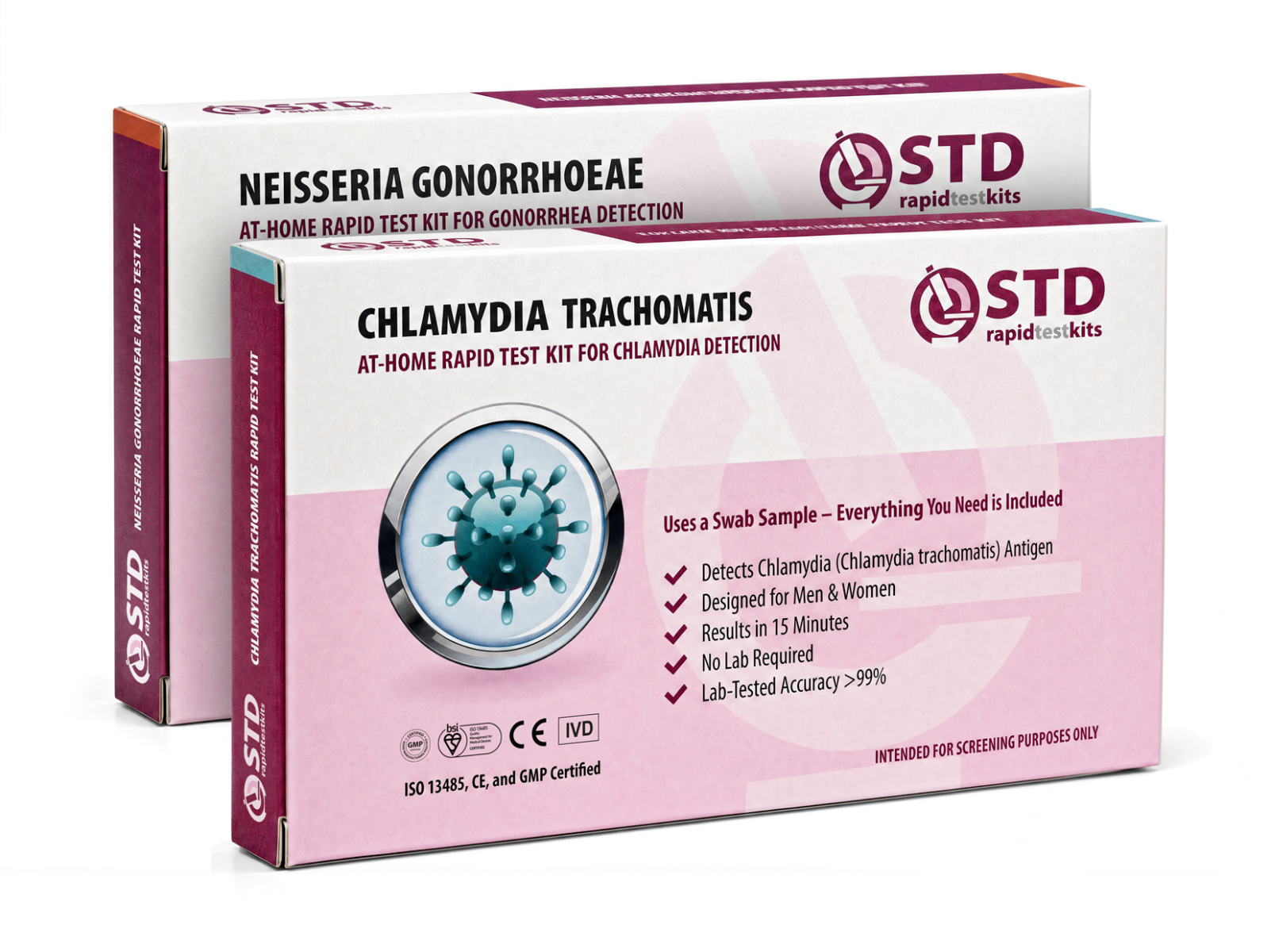
Direct testing for throat gonorrhea requires a pharyngeal swab processed by a clinical laboratory using NAAT. At-home rapid kits, including the ones we sell, are designed for genital self-swab samples or fingerstick blood, not throat samples. If your concern is specifically a throat infection from oral exposure, see a clinic for a pharyngeal NAAT swab. Our genital and combination kits screen for the genital and bloodborne infections you may also have been exposed to during the same encounter. They do not substitute for a throat swab.
Why most throat gonorrhea has no symptoms
Most pharyngeal gonorrhea infections (the published range across multiple screening studies is roughly 70 to 90 percent) are completely asymptomatic, consistent with the CDC's general note that gonorrhea often produces no symptoms (CDC: About Gonorrhea). Biology drives the difference: the throat does not generate the same dense inflammatory response that produces the classic discharge-and-burning picture of genital gonorrhea. The bacterium colonizes the tissue, replicates, and continues to be shed in saliva and oropharyngeal secretions, while the local immune response often does not produce heat, redness, or pus that you would notice in your throat.
When symptoms do appear, they tend to be mild and easy to write off as a routine cold or strep:
- A scratchy or sore throat that lasts longer than a viral cold would.
- Mild discomfort when swallowing.
- Tender or slightly swollen lymph nodes under the jaw.
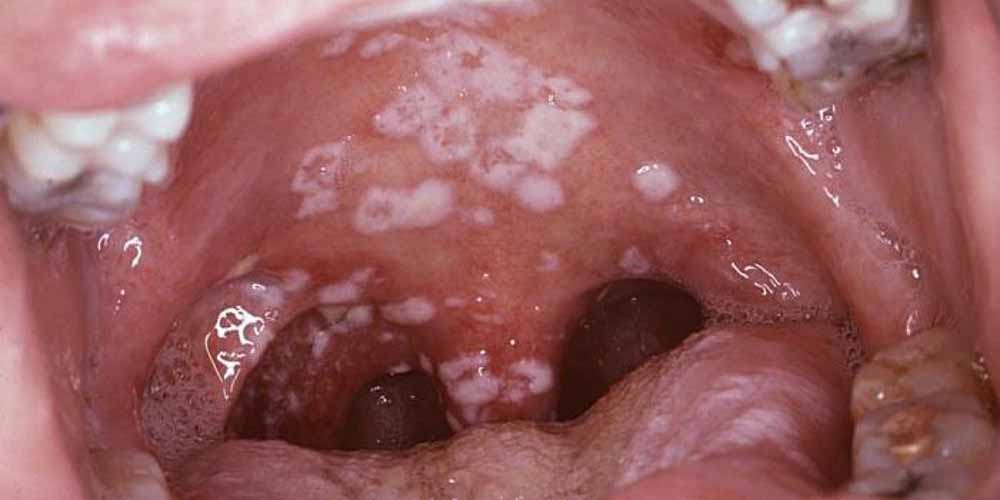
- Occasionally, white or yellow patches on the tonsils that can be mistaken for strep throat or a yeast infection.
Because the symptom picture (when present) overlaps so closely with viral pharyngitis and strep throat, even people who feel something often do not connect it to a recent oral-sex exposure. You cannot rule out throat gonorrhea based on how you feel. If you have had unprotected oral exposure with a new or untested partner, the only way to know is to test.
How common is throat gonorrhea?
Gonorrhea overall is the second most commonly reported notifiable STI in the United States. Recent CDC surveillance shows annual reported case counts ranging from approximately 543,000 in 2024 to a peak of 710,151 in 2021, with 601,319 reported in 2023 (CDC: STI Surveillance Annual Data). Actual incidence is higher than the reported figure because a substantial fraction of infections, especially pharyngeal and rectal ones, are never detected.
Among men who have sex with men who attend STI clinics, screening studies that swab the throat in addition to the urethra and rectum routinely find that pharyngeal infections account for a substantial share of all positive gonorrhea results, sometimes more than urethral infection alone. Among heterosexual women, pharyngeal infection is less commonly screened for, but emerging data suggest the prevalence is higher than clinicians historically assumed. Pharyngeal gonorrhea is not a niche concern restricted to one population; it is a routine, under-detected infection across anyone who has unprotected oral sex.
Antibiotic-resistant gonorrhea is a growing public-health concern (CDC: Drug-Resistant Gonorrhea). Pharyngeal infections are one of the anatomic sites linked to the resistance trend; researchers have proposed that the throat may act as a reservoir where N. gonorrhoeae can exchange resistance genes with related Neisseria species living in the oropharynx, although the precise contribution of that mechanism remains under investigation. The CDC has tightened first-line treatment recommendations and emphasized test-of-cure for pharyngeal cases as a result.
Most people who have gonorrhea of the throat do not have symptoms. When symptoms do occur, they can include a sore throat. People who get oral gonorrhea by performing oral sex on a partner with an infected penis, vagina, or anus typically do not know they have it.
Throat gonorrhea vs strep throat: how to tell them apart
The two infections cause overlapping symptoms when symptoms appear, but they are caused by completely different bacteria, are tested differently, and require different treatments. You cannot tell them apart from feel alone, and a negative rapid strep test does not rule out throat gonorrhea. The table below shows the meaningful clinical differences.
| Feature | Throat Gonorrhea | Strep Throat |
|---|---|---|
| Cause | Neisseria gonorrhoeae (sexually transmitted bacterium) | Group A Streptococcus (respiratory bacterium) |
| Typical symptoms | Usually none. Sometimes mild sore throat or scratchiness. | Sudden severe sore throat, fever, swollen red tonsils, painful swallowing |
| Time from exposure to symptoms | Days to weeks if symptoms appear at all | 2 to 5 days from exposure |
| Transmission route | Oral sex with an infected partner | Respiratory droplets and close non-sexual contact |
| Diagnostic test | Pharyngeal NAAT swab in clinic | Rapid strep test or throat culture |
| Standard treatment | Single ceftriaxone 500 mg intramuscular injection | Oral penicillin or amoxicillin for 10 days |
| Self-resolves untreated? | Sometimes, but can persist and remain transmissible for months | Usually resolves in 7 to 10 days even without antibiotics |
How throat gonorrhea is tested
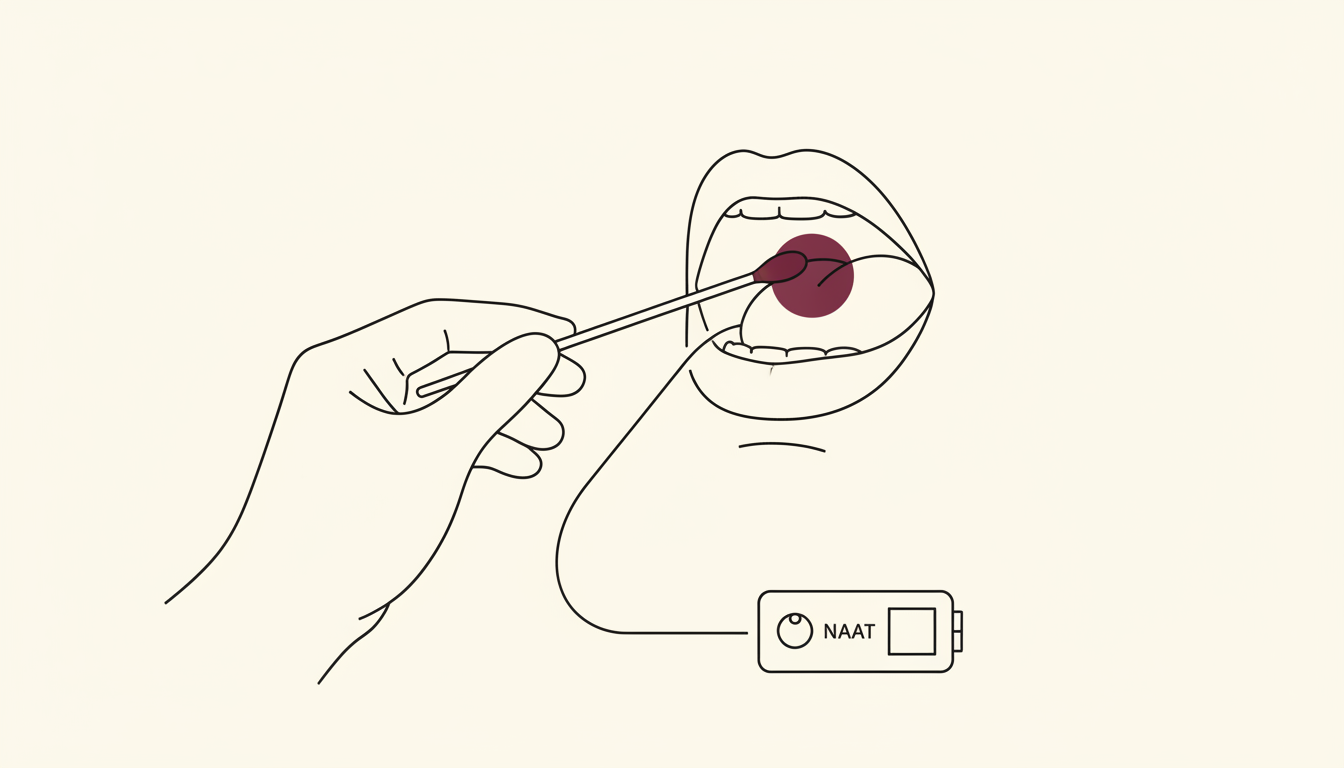
The gold-standard test for pharyngeal gonorrhea is a NAAT (nucleic acid amplification test) run on a swab taken from the back of the throat. NAAT detects bacterial DNA directly and is the most sensitive test available for any anatomic site of gonorrhea infection. A clinician swabs the tonsillar pillars and the posterior pharyngeal wall, the swab goes to a lab, and results typically come back in 1 to 3 days.
What standard STI screens usually miss: most routine STI panels run urine NAAT for gonorrhea and chlamydia, which detects only urethral and (in women) cervical infection. If you have had oral exposure and you ask for the standard STI test, you may walk out with a clean result that does not rule out a throat infection. Tell the clinician you had oral exposure and explicitly request a pharyngeal swab. Many clinics will add it without question once asked.
Window period: NAAT can detect N. gonorrhoeae within a few days of exposure, but the most reliable result is at 1 to 2 weeks post-exposure, which is when bacterial load in the throat is high enough to detect consistently. Testing at 24 to 48 hours after exposure is too early.
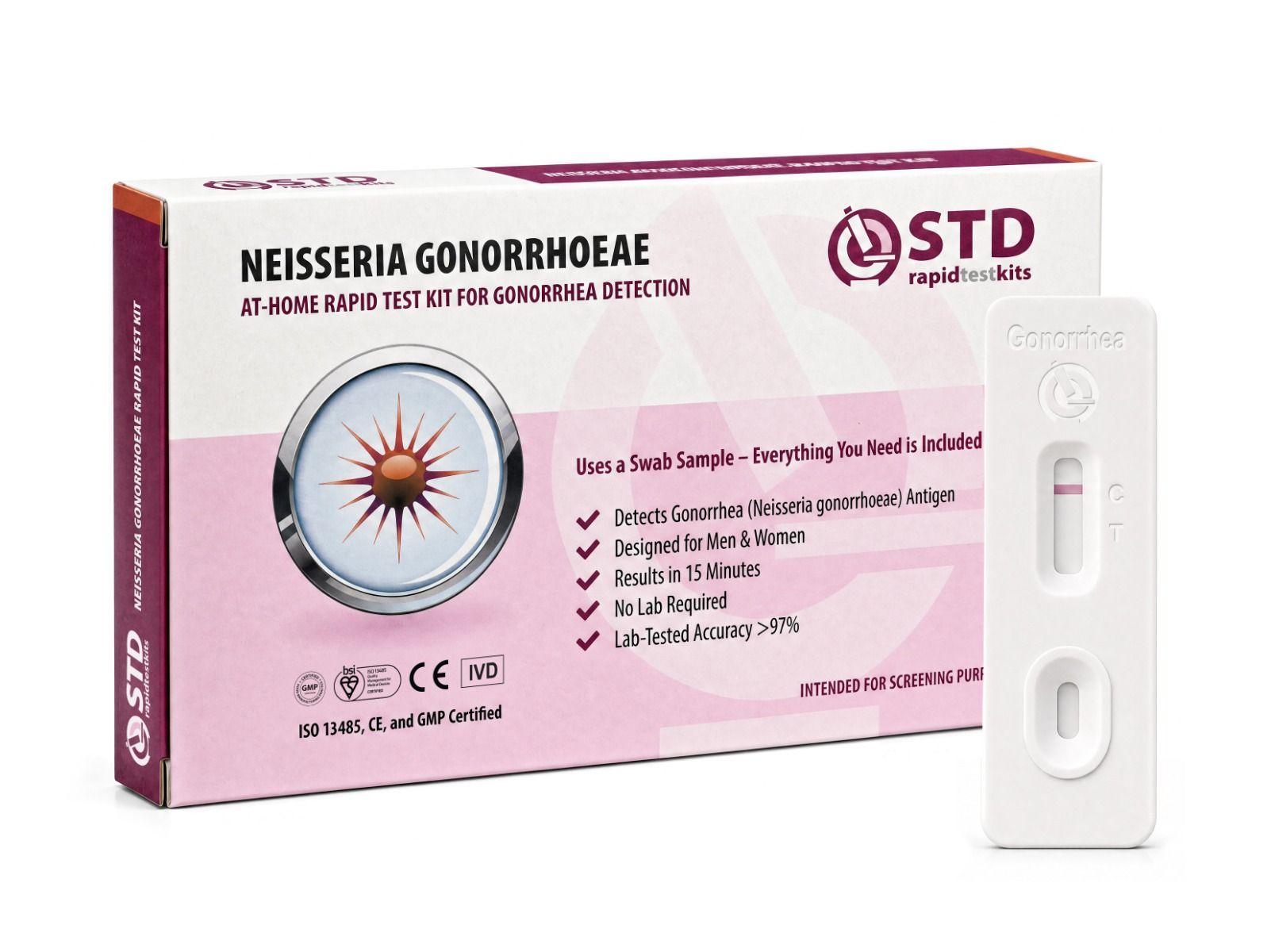
What at-home kits cover and do not cover: at-home rapid tests, including the ones we sell, use either a self-collected genital swab (for chlamydia, gonorrhea, trichomoniasis, HPV) or a fingerstick blood drop (for HIV, syphilis, hepatitis, herpes antibodies). None of them are validated on pharyngeal samples. If your concern is specifically a throat infection, the at-home rapid kit is not the right tool. The at-home kit fits the genital and bloodborne infections you may have been exposed to during the same encounter, and screening for those is still useful, just not as a substitute for the throat swab.
What treatment looks like (and why it is not the old protocol)
The CDC updated its gonorrhea treatment guidelines in late 2020 to recommend a single 500 mg intramuscular injection of ceftriaxone for uncomplicated gonorrhea at any anatomic site, including the throat (1 g for patients weighing 150 kg or more). The previous dual-therapy protocol that combined ceftriaxone with azithromycin is no longer recommended for most cases (CDC: 2021 STI Treatment Guidelines, gonococcal infections in adults). The change reflects rising azithromycin resistance and improved evidence that ceftriaxone monotherapy at the higher dose is sufficient.
Pharyngeal infection has one important addition to the treatment plan: a test of cure. Because antibiotics do not penetrate tonsillar tissue as well as they penetrate genital mucosa, the CDC recommends a follow-up NAAT pharyngeal swab 7 to 14 days after treatment to confirm the infection is gone. Genital gonorrhea generally does not require a routine test of cure with the current ceftriaxone regimen, though pharyngeal cases do.
If you are allergic to cephalosporins, the alternative regimens are limited and require specialist input. Do not self-substitute oral antibiotics that you have at home. Many of them, including azithromycin and several older agents, no longer reliably clear pharyngeal gonorrhea; they may produce a cleared feeling without clearing the infection, while accelerating resistance.
What if it goes untreated? The most common outcome is silent persistence and continued transmission to partners. Less commonly, untreated gonorrhea (at any anatomic site) can spread into the bloodstream and cause disseminated gonococcal infection, which produces skin lesions, joint pain, and rarely heart-valve infection. In women with concurrent genital infection, untreated gonorrhea can ascend the reproductive tract and cause pelvic inflammatory disease and fertility complications. None of these are common from a throat-only infection, and all are preventable with one ceftriaxone injection.
Pharyngeal gonorrhea treatment at a glance
- First-line treatment: a single 500 mg ceftriaxone intramuscular injection (1 g if you weigh 150 kg or more).
- Test of cure: return to clinic 7 to 14 days after treatment for a follow-up pharyngeal NAAT swab.
- Do not self-substitute oral antibiotics from home. Azithromycin and older oral agents no longer reliably clear throat infection.
- If you are allergic to cephalosporins, the alternative regimens are limited and require specialist input.
How to lower your risk
Throat gonorrhea is preventable, and the prevention toolkit is the same as for genital STIs with one or two extras specific to oral sex:
- Barriers during oral sex. Condoms during fellatio and dental dams during oral-vulva or oral-anal contact reduce transmission of N. gonorrhoeae meaningfully. Uptake is low in practice (most people skip them during oral sex), and they are still the single most effective intervention against pharyngeal infection.
- Regular screening with throat coverage. If you are sexually active with multiple partners, the CDC recommends annual STI screening at minimum. If you have oral exposure, ask explicitly for the pharyngeal swab to be added. It is rarely included by default in mixed-gender clinic settings.
- Partner notification and treatment. The single biggest driver of reinfection is an untreated partner. If you test positive, all sexual partners from the past 60 days should be notified and treated, even if they have no symptoms. Many clinics offer expedited partner therapy, where treatment is provided to the partner without an in-person visit.
- Antiseptic mouthwash. Some randomized data show modest reductions in pharyngeal gonorrhea load with daily antiseptic mouthwash use, and the effect is not large enough to replace barriers or screening. Consider it a possible adjunct, not a primary prevention strategy.
What does not help: gargling with salt water, taking immune-boosting supplements, or assuming that a clean genital STI test means you are also clear at the throat. None of those rule out a pharyngeal infection.
Barriers during oral sex (the single most effective intervention). Throat-inclusive screening at your usual STI test interval. Partner notification within 60 days of a positive result. Antiseptic mouthwash is a possible adjunct based on modest randomized data, not a primary prevention tool. Salt-water gargling and immune-boost supplements do not work for this.
When to see a clinician versus testing at home first
For an active sore throat following a recent oral-sex exposure, see a clinician for a pharyngeal NAAT swab and, if needed, a rapid strep test. At-home rapid kits will not answer the throat question.
For broader screening after an exposure (no symptoms, and you want a status check across the genital and bloodborne infections you may have been exposed to during the same encounter), an at-home combination kit is a reasonable starting point. Throat coverage still requires a clinic NAAT swab; the kit screens the genital sites simultaneously exposed during the same encounter, plus HIV and syphilis depending on which combination you choose.
For a partner who tested positive for gonorrhea: see a clinician for treatment, even if you have no symptoms and even if your at-home test is negative. The at-home test is not validated to rule out pharyngeal infection, and the standard of care for known exposure is presumptive treatment.
FAQs
- Can throat gonorrhea spread through kissing?
- Deep kissing transmission is documented in clinical literature, and it is much less common than the genital-to-throat route. Most pharyngeal infections come from oral sex on an infected genital or rectal site. The bacterial load in saliva of someone with active pharyngeal infection is meaningful, though lower than the load deposited in the throat during oral sex.
- Can throat gonorrhea cure itself without treatment?
- Sometimes, eventually. A fraction of pharyngeal infections do clear spontaneously over weeks or months as the immune system catches up. Many others persist and remain transmissible. Because you cannot tell from symptoms which bucket you fall into, the safe assumption is that an untreated infection is still spreadable, and the recommendation is to test and treat rather than wait it out.
- How long after oral sex should I test?
- Give it 1 to 2 weeks from exposure for the pharyngeal NAAT to return a reliable result. Bacterial load before that point is often too low to detect consistently. If you already know a partner tested positive, skip the wait and see a clinician for presumptive treatment.
- Will my regular STI panel catch a throat infection?
- Not by default. Most routine STI screens run urine NAAT and a blood panel; neither covers the throat. You have to specifically request a pharyngeal swab. Many clinics will add it once you ask. If you had oral exposure and your panel did not include a throat swab, you have not screened for throat gonorrhea, regardless of what the result page says.
- Does a sore throat after oral sex always mean I have an STI?
- No. The most common cause of a sore throat after a recent sexual encounter is the same as any other sore throat: a viral upper respiratory infection. Pharyngeal gonorrhea is statistically much less common than viral pharyngitis or strep. That said, if your sore throat lasts more than 5 to 7 days, gets worse instead of better, or appeared specifically after a higher-risk oral exposure, see a clinician for both a rapid strep test and a pharyngeal NAAT.
- Can I retest at home after treatment to confirm it cleared?
- For pharyngeal infection, no. The CDC recommends a clinic-administered NAAT pharyngeal swab as the test of cure 7 to 14 days after treatment. At-home rapid kits are not validated for pharyngeal samples. Returning to the clinic for the test of cure is the correct next step after pharyngeal treatment.
- Is throat gonorrhea dangerous if I never get treatment?
- Throat-only gonorrhea rarely causes serious systemic illness on its own. The persistent risk is ongoing transmission to partners, plus a documented contribution to antibiotic resistance. The bigger danger applies when there is concurrent genital infection: untreated gonorrhea can cause pelvic inflammatory disease and fertility complications in women, and rarely disseminates into the bloodstream with skin and joint involvement. A single ceftriaxone injection prevents all of that.
- How is throat gonorrhea different from oral chlamydia?
- Oral chlamydia is also an under-recognized infection of the throat caused by a different bacterium, Chlamydia trachomatis. It is generally less common than pharyngeal gonorrhea, even more frequently asymptomatic, and tested for the same way (pharyngeal NAAT). Treatment is different: typically oral doxycycline rather than intramuscular ceftriaxone. If you are getting tested for one, ask the clinician to swab for both at the same time.
- U.S. Centers for Disease Control and Prevention. Sexually Transmitted Infections Surveillance, Annual Data. Source for U.S. annual gonorrhea reported case counts (2020 to 2024).
- U.S. Centers for Disease Control and Prevention. 2021 Sexually Transmitted Infections Treatment Guidelines, Gonococcal Infections Among Adults and Adolescents. Source for the current 500 mg ceftriaxone monotherapy regimen and the pharyngeal test-of-cure recommendation.
- U.S. Centers for Disease Control and Prevention. About Gonorrhea. Background on transmission, anatomic sites of infection, and the asymptomatic nature of many cases.
- U.S. Centers for Disease Control and Prevention. Drug-Resistant Gonorrhea (Health Care Providers). Background on antibiotic resistance trends in N. gonorrhoeae, including the role of pharyngeal infection.
- World Health Organization. Sexually Transmitted Infections fact sheet. Global incidence and prevention guidance.
- NHS. Gonorrhoea overview. UK public-health summary of symptoms, diagnosis, and treatment (UK spelling).
