Hepatitis C Transmission: How Does Hepatitis C Spread?
Hepatitis C is a bloodborne virus, and that single fact explains every confirmed transmission route. This guide walks through how HCV spreads in the US today, who is most at risk under current CDC surveillance, why most people who carry the virus don't know it, and when (and how) to test. Updated for 2026.
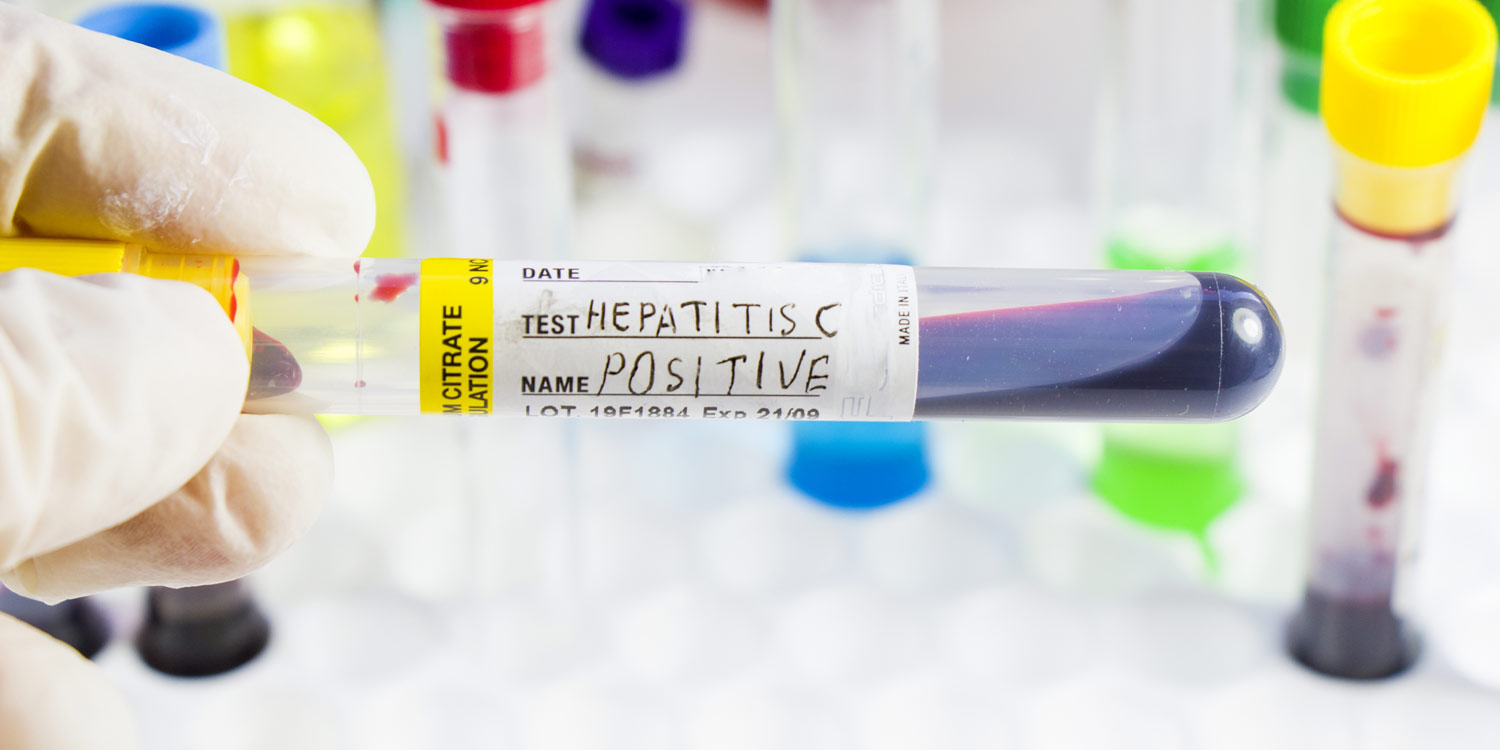



- Hepatitis C only spreads when infected blood enters another person's bloodstream. Casual contact, kissing, food sharing, and respiratory droplets do not transmit it.
- The CDC recommends every adult age 18 and older be tested for hepatitis C at least once in their lifetime, plus during every pregnancy. Modern direct-acting antiviral (DAA) medication cures more than 95% of cases.
Published: October 2025 | Last updated: April 2026 | Editorial review and quality control: Martina N.
How does Hepatitis C spread?
Hepatitis C (HCV) is bloodborne. It transmits when blood from someone with the infection enters another person's bloodstream. The leading route in the United States today is sharing equipment used to inject drugs (needles, syringes, cookers, cottons), which accounted for 43% of acute cases with known risk information in 2023 per <a href="https://www.cdc.gov/hepatitis-c/about/index.html">CDC surveillance</a>. Other established routes include receiving a blood transfusion or organ transplant before universal donor screening began in 1992, mother-to-baby transmission during pregnancy or delivery (about 6% of exposed infants), unsterile tattoo or piercing procedures, sharing personal items that carry trace blood (razors, toothbrushes, glucose-monitor lancets), and certain forms of sexual contact involving blood. HCV does not spread through casual contact, sharing meals, hugging, kissing, sneezing, or routine breastfeeding.
Key Takeaways
- Hepatitis C only spreads when infected blood enters another person's bloodstream. Casual contact, kissing, food sharing, and respiratory droplets do not transmit it.
- The CDC recommends every adult age 18 and older be tested for hepatitis C at least once in their lifetime, plus during every pregnancy. Modern direct-acting antiviral (DAA) medication cures more than 95% of cases.
Hepatitis C is a virus that lives in blood. To spread from one person to another, infected blood has to enter your bloodstream, even in microscopic amounts. That single rule explains every legitimate transmission route, and it also rules out the everyday situations people commonly worry about: kissing, hugging, sharing food, sneezing, mosquito bites.
This guide walks through how HCV spreads in 2026 according to current CDC and WHO surveillance, who is most at risk in the United States today, why most people who carry the virus don't know it, and when (and how) to test. The picture has shifted significantly from the 1980s and 1990s, when transfusion-acquired infection was the leading concern. The dominant US transmission route today is something different, and the screening recommendations have changed to match.
Why HCV is classified as a bloodborne virus
The hepatitis C virus replicates in liver cells and circulates in the bloodstream. The CDC's basic guidance is direct: HCV spreads when blood from a person with the infection, even microscopic amounts, enters the body of someone who is not infected. Outside the body, the virus is reasonably hardy. Studies cited in CDC infection-control guidance show HCV can remain infectious on surfaces at room temperature for at least 3 weeks, which matters for shared injection equipment and unsterilized tattoo or piercing tools.
What this rule excludes is the more useful list. HCV is not airborne. It is not present in saliva, sweat, or tears in quantities that enable transmission. It is not spread by mosquitoes or other insect bites. Public-health agencies including the WHO, the NHS, and the CDC converge on the same conclusion: there is no documented transmission through hugging, kissing, holding hands, sharing food or water, coughing, sneezing, or any form of casual social contact.
The corollary is that every confirmed transmission route involves a plausible blood-to-blood pathway, even when the pathway is invisible. The sections that follow rank these pathways by how often they drive new US infections in the current decade.
The leading route in the US today: injection drug use
Among acute hepatitis C cases reported to CDC in 2023 with known risk-factor information, 43% involved injection drug use. That figure has been climbing for more than a decade, tracking the broader opioid epidemic. The age group with the highest acute infection rates is now adults 20 to 39, a major shift from the historical pattern that concentrated cases in older Americans exposed before 1992.
Even a single shared needle, syringe, or piece of injection equipment can carry enough residual blood to transmit HCV. Cookers, cottons, water containers, and tourniquets can all act as vehicles when reused or shared. Because HCV survives on surfaces for weeks under typical conditions, equipment used by someone with HCV can remain infectious long after it has visibly dried.
The public-health response emphasizes harm reduction (sterile syringe access, syringe-services programs, naloxone distribution) alongside testing and connection to direct-acting antiviral (DAA) treatment. For anyone who has injected drugs at any point, current or past, CDC recommends a hepatitis C antibody test followed by a confirmatory NAT (nucleic acid test) if the antibody is reactive. Past injection use counts as a one-time exposure category for testing eligibility: a single risk event in 2008 still qualifies someone for screening today.
- 43% of acute HCV cases with known risk information in 2023 involved injection drug use, per CDC surveillance.
- Adults 20 to 39 now carry the highest US acute infection rates, reversing the historical baby-boomer-cohort pattern.
- 3 weeks plus: how long HCV can remain infectious on contaminated equipment at room temperature.
- Sterile-syringe services, naloxone distribution, and immediate connection to DAA treatment are the three legs of the current public-health response.
Pre-1992 blood transfusions, organ transplants, and clotting factors
Reliable HCV antibody testing of donated blood, plasma, and organs began in the United States in 1992. Before that date the US blood supply was not systematically screened for hepatitis C (the virus was only identified in 1989), and a meaningful share of recipients of transfusions and transplants in the 1970s and 1980s acquired HCV from medical exposure. People who received clotting-factor concentrates produced before 1987 carry an even higher historical risk because pooled-plasma manufacturing concentrated the virus across many donors.
This history explains why CDC and other agencies emphasized that the so-called baby boomer cohort (people born between 1945 and 1965) carried a disproportionate share of US chronic HCV infections for decades. Most of those infections trace to medical exposures, transfusions, and earlier injection drug use during the era before universal donor screening.
For US-born adults today, transfusion-acquired HCV is uncommon. The current US blood supply is screened with both serologic and nucleic-acid testing, and the residual transfusion-transmission risk for HCV is estimated at less than one in two million units. The historical risk persists for people who received transfusions or transplants abroad in countries where donor screening protocols vary.
Before 1992: US blood, plasma, and organ donations were not screened for HCV. Anyone who received a transfusion or transplant before then is a CDC screening candidate, regardless of current age or symptoms.
Before 1987: clotting-factor concentrates carried an even higher risk because pooled-plasma manufacturing concentrated viral particles across many donors. Hemophilia patients treated in this era have a disproportionately high baseline HCV prevalence.
Perinatal (mother-to-baby) transmission
HCV can pass from a pregnant person with active infection to the infant during pregnancy or at delivery. The pooled vertical transmission rate is approximately 5.8% (95% CI 4.2 to 7.8%) among HIV-negative birthing parents, with more recent CDC analyses citing rates up to 7%. Co-infection with HIV roughly doubles the rate, and high HCV viral load at delivery also raises it.
The CDC's 2023 testing recommendation for perinatally exposed infants is to perform HCV RNA nucleic-acid testing between ages 2 and 6 months, when well-child visit attendance is highest, rather than waiting until 18 months for antibody testing. Earlier identification matters because curative direct-acting antiviral therapy is now approved for children aged 3 and older.
Practical implications for pregnant readers: if you test positive for HCV during pregnancy, your obstetric team should arrange infant follow-up testing on the schedule above. There is no current evidence that elective cesarean delivery reduces vertical transmission risk, and breastfeeding is not contraindicated unless nipples are cracked or bleeding (in which case temporary pumping-and-discarding is advised until healing is complete).
- 5.8% baseline vertical transmission rate (95% CI 4.2 to 7.8%) among HIV-negative birthing parents with active HCV.
- Roughly double when the birthing parent is co-infected with HIV.
- Test infants at 2 to 6 months with HCV RNA (NAT), aligned with routine well-child visits, instead of waiting until 18 months for antibody testing.
- Curative DAA therapy is approved for children age 3 and older, so earlier identification opens earlier treatment.
Sexual transmission: low risk overall, higher in specific contexts
Hepatitis C is transmitted sexually less efficiently than HIV or hepatitis B because semen and vaginal fluid carry far lower viral loads than blood. For long-term monogamous heterosexual couples where one partner has HCV, the per-year transmission risk is estimated at well under 1% in the absence of other risk factors. CDC guidance for those couples does not routinely recommend barrier use specifically to prevent HCV.
The risk profile changes meaningfully in three contexts. Receptive anal sex without a condom carries a higher per-act risk because of the potential for mucosal trauma and blood exposure. Sex during menstruation, sex with multiple partners, and concurrent presence of another STI (especially syphilis or HIV) all elevate transmission probability. Outbreaks of acute HCV among men who have sex with men, particularly those living with HIV, have been documented across multiple US and European cities since the mid-2000s.
The practical translation: people in mutually monogamous heterosexual partnerships rarely need to change sexual practices around HCV. People with multiple partners, anyone in a relationship with a partner whose HCV status is unknown, and anyone with HIV co-infection should test for HCV at least annually and consider barrier methods.
- Receptive anal sex without a condom. Potential for mucosal trauma and blood exposure raises per-act risk.
- Sex during menstruation when one partner has active HCV.
- Multiple sexual partners, especially in networks where HCV prevalence is elevated.
- Concurrent STI, particularly syphilis or HIV, which can compromise mucosal barriers.
- HIV co-infection. Documented HCV outbreaks among men who have sex with men since the mid-2000s have concentrated in this population.
If any of these apply, annual HCV screening and barrier-method use are reasonable additions to your routine.
Tattoos, piercings, and procedures abroad
In licensed and regulated tattoo or piercing studios in the US, EU, UK, and most of Canada, single-use sterile needles and proper instrument sterilization make HCV transmission rare. CDC notes that there are no documented cases of HCV transmission from professional tattoo studios in the US. The risk shifts in unregulated settings: prison tattoos, home setups, and studios in jurisdictions without sterilization standards have all been linked to HCV transmission clusters.
The NHS specifically flags having medical or dental treatment in a country with poor infection control as a leading transmission route in the modern era. This includes procedures involving injections, dialysis, dental work, and surgery in healthcare systems where single-use disposables are reused or sterilization is incomplete. Travelers who underwent non-emergency medical or dental procedures abroad in the past year are reasonable candidates for HCV testing on return, especially if any procedure involved needles or instruments.
- Single-use sterile needle packets are opened in front of you, every time.
- A fresh ink cap is poured per client and discarded after the session.
- Reusable equipment (tubes, grips) is autoclaved between clients, with autoclave logs visible on request.
- Surfaces are barrier-wrapped and changed between clients.
- Avoid ear-piercing guns. Most cannot be heat-sterilized between uses, and several jurisdictions have moved to ban them.
- Be wary of tattoos in unregulated settings (home setups, prison, studios in jurisdictions without enforcement). Documented HCV transmission clusters have been traced to these contexts.
Sharing personal items and accidental needle sticks
Razors, toothbrushes, nail clippers, glucose-monitoring lancets, and any other item that could plausibly carry trace blood are flagged in NHS guidance on HCV transmission for households where someone has hepatitis C. The transmission risk from any single shared item is low, but the cumulative population-level risk is high enough that public-health agencies treat these items as not-for-sharing whenever an HCV-positive household member is involved.
Healthcare workers face occupational HCV exposure through accidental needle-stick injuries. The estimated transmission rate from a single needle-stick exposure to HCV-positive blood is approximately 1.8% (range 0 to 7%), substantially higher than the equivalent risk for HIV but lower than for hepatitis B. Post-exposure protocols for healthcare workers involve baseline antibody testing, repeat testing at 4 to 6 weeks (NAT) and at 12 to 24 weeks (antibody), and prompt treatment if seroconversion occurs. There is no effective post-exposure prophylaxis for HCV at present (unlike HIV); the strategy is early detection and curative DAA treatment if needed.
What does NOT spread Hepatitis C
Major public-health agencies have studied transmission patterns extensively and consistently confirm that HCV is not transmitted by everyday social contact. The list below covers the major exclusions per CDC, WHO, and NHS guidance.
- Hugging, kissing, holding hands, or other affectionate physical contact
- Sharing meals, eating utensils, drinking glasses, or food preparation
- Coughing, sneezing, or any respiratory-droplet exposure
- Mosquito or other insect bites
- Public toilet seats or shared bathroom surfaces
- Swimming pools, hot tubs, or shared bath water
- Breast milk in the absence of cracked or bleeding nipples
- Saliva, tears, or sweat in routine contact
If you are caring for or living with someone who has HCV, the only adjustments needed are around plausibly blood-contaminated items (razors, toothbrushes, lancets) and careful wound care.
Symptoms timeline: when (and whether) symptoms appear
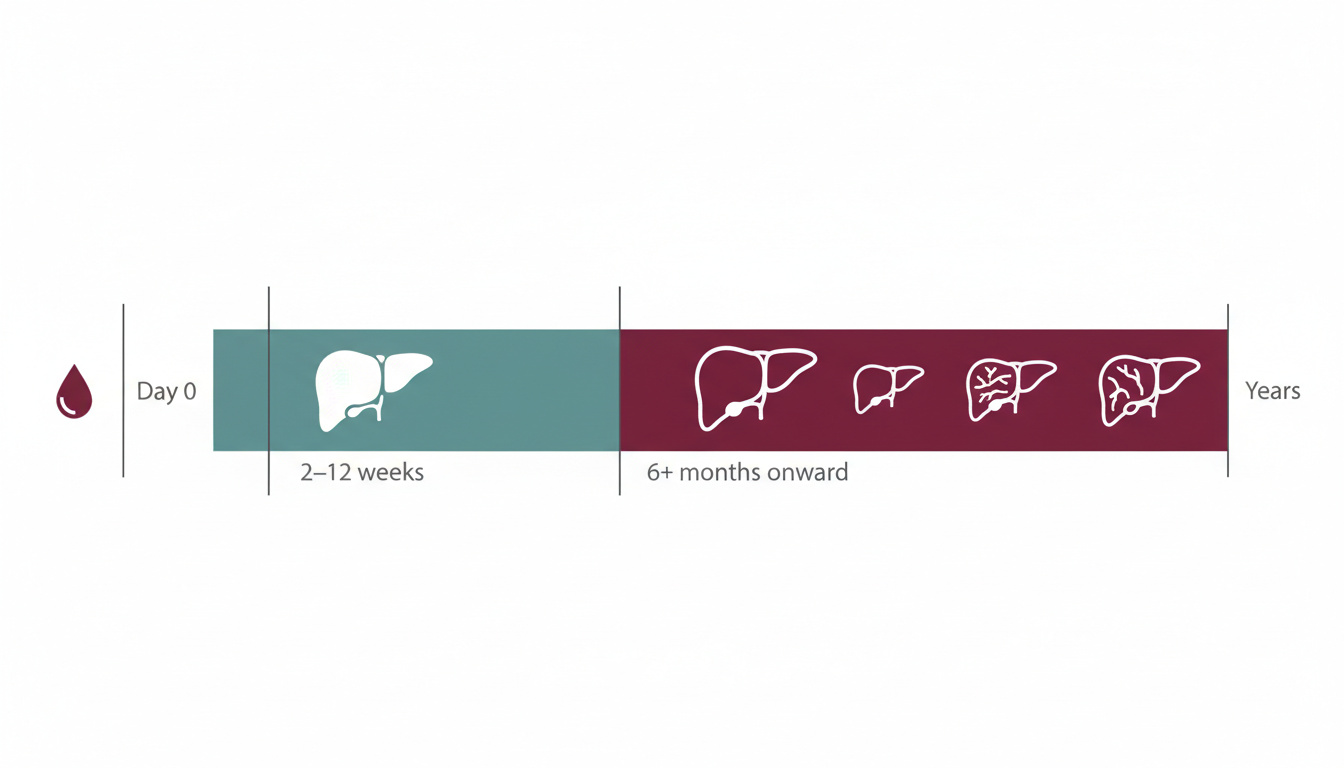
If acute hepatitis C produces noticeable symptoms, those symptoms typically begin 2 to 12 weeks after the exposure event per CDC. The catch is that most people with new HCV infections never develop a recognizable acute illness. CDC surveillance suggests fewer than one in three people with acute HCV experience symptoms identifiable enough to prompt medical attention.
When acute symptoms do occur, the CDC's clinical list includes:
- Yellowing of the skin or whites of the eyes (jaundice)
- Dark-colored urine and clay-colored stools
- Persistent fatigue, fever, joint pain
- Loss of appetite, nausea, vomiting, abdominal pain
Acute symptoms typically resolve within a few weeks even without treatment. That apparent resolution is misleading. More than half of people whose acute symptoms clear still go on to develop chronic infection, because their immune system did not actually clear the virus from the bloodstream.
Waiting for symptoms is the wrong strategy. The vast majority of chronic HCV cases worldwide are diagnosed years or decades after the original exposure, often during routine screening rather than because anything felt wrong.
Long-term consequences if HCV becomes chronic
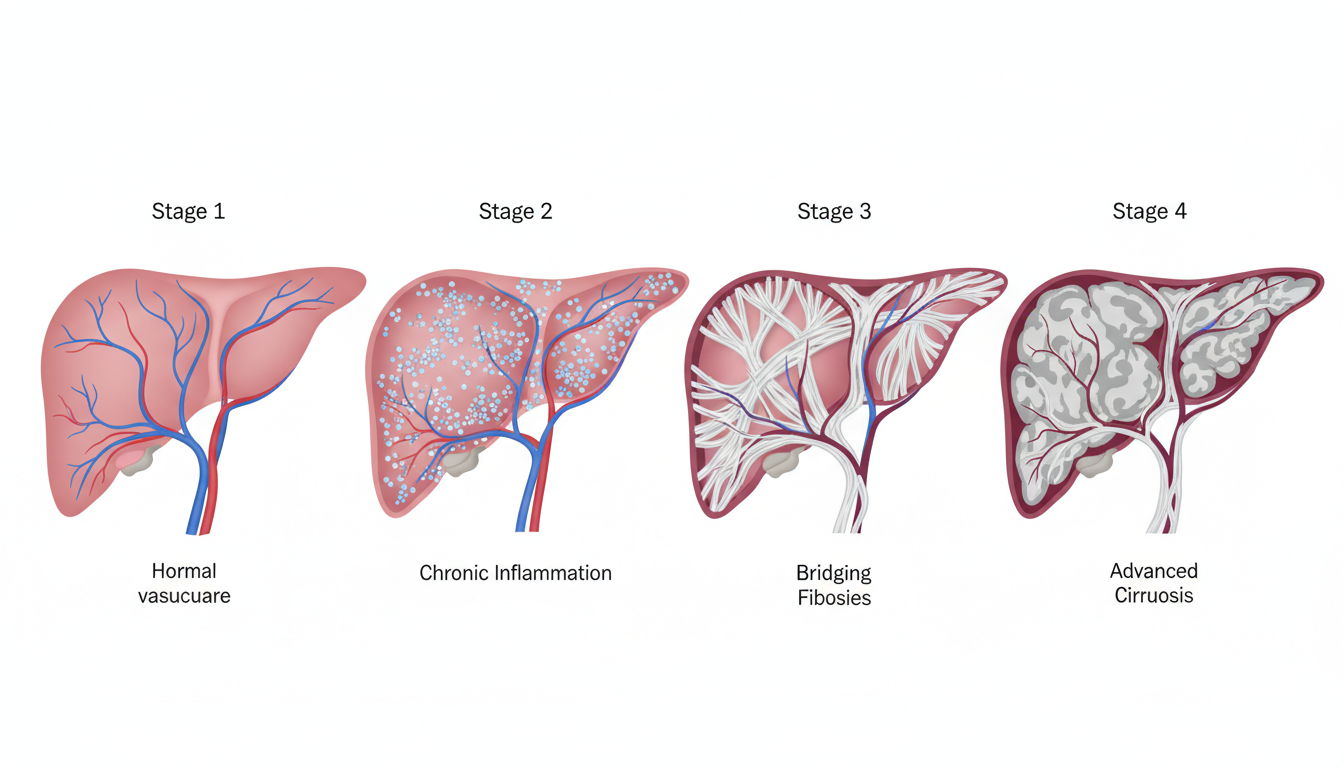
More than half of acute HCV infections progress to chronic hepatitis C without treatment per CDC. Of those chronic infections, an estimated 5% to 25% develop cirrhosis over 10 to 20 years if the infection remains untreated. Cirrhosis itself raises the risk of two further outcomes:
- Hepatocellular carcinoma (liver cancer). Chronic HCV is one of the leading causes of liver cancer worldwide, particularly in patients who have already progressed to cirrhosis. The annual incidence of liver cancer in HCV-related cirrhosis is approximately 1 to 4% per year.
- Decompensated cirrhosis and liver failure. Symptoms include accumulation of abdominal fluid (ascites), confusion (hepatic encephalopathy), variceal bleeding, and severe fatigue. Liver transplantation is the standard intervention when liver function deteriorates beyond medical management.
Globally, the WHO attributes approximately 242,000 deaths in 2022 to hepatitis C, mostly from cirrhosis and hepatocellular carcinoma.
Direct-acting antiviral medication can cure more than 95% of HCV cases in 8 to 12 weeks of oral treatment, largely eliminating long-term complication risk for patients who have not yet developed cirrhosis. The obstacle now is reaching the people who carry the virus without knowing it. Of an estimated 50 million people living with chronic HCV worldwide in 2022, only about 12.5 million had been treated.
Hepatitis C is spread when blood from an HCV-infected person, even microscopic amounts, enters the body of someone who is not infected.
When and how to get tested
The CDC's universal screening recommendation covers two populations:
- All adults 18 years and older, at least once in their lifetime.
- Pregnant individuals, during every pregnancy, as part of routine prenatal care.
Beyond universal screening, additional risk-based testing is recommended for people with any past or current injection drug use, recipients of blood, organs, or clotting factors before 1992 (or before 1987 for clotting factors), people on long-term hemodialysis, healthcare workers after needle-stick exposure, infants born to HCV-positive birthing parents, people living with HIV, and people with persistently elevated liver enzymes of unclear cause.
The standard testing pathway is a two-step sequence. Step one is an HCV antibody test, which detects whether the immune system has ever responded to the virus. A reactive antibody result triggers step two: an HCV RNA (NAT) test, which determines whether the virus is still present in the bloodstream. People who have cleared past infection (spontaneously or via successful treatment) remain antibody-positive but RNA-negative.
The antibody window period (the time between exposure and a reliably detectable antibody test) is typically 8 to 11 weeks, with most people seroconverting by 12 weeks. RNA-based laboratory tests can detect HCV as early as 1 to 2 weeks post-exposure but are not generally used for routine screening.
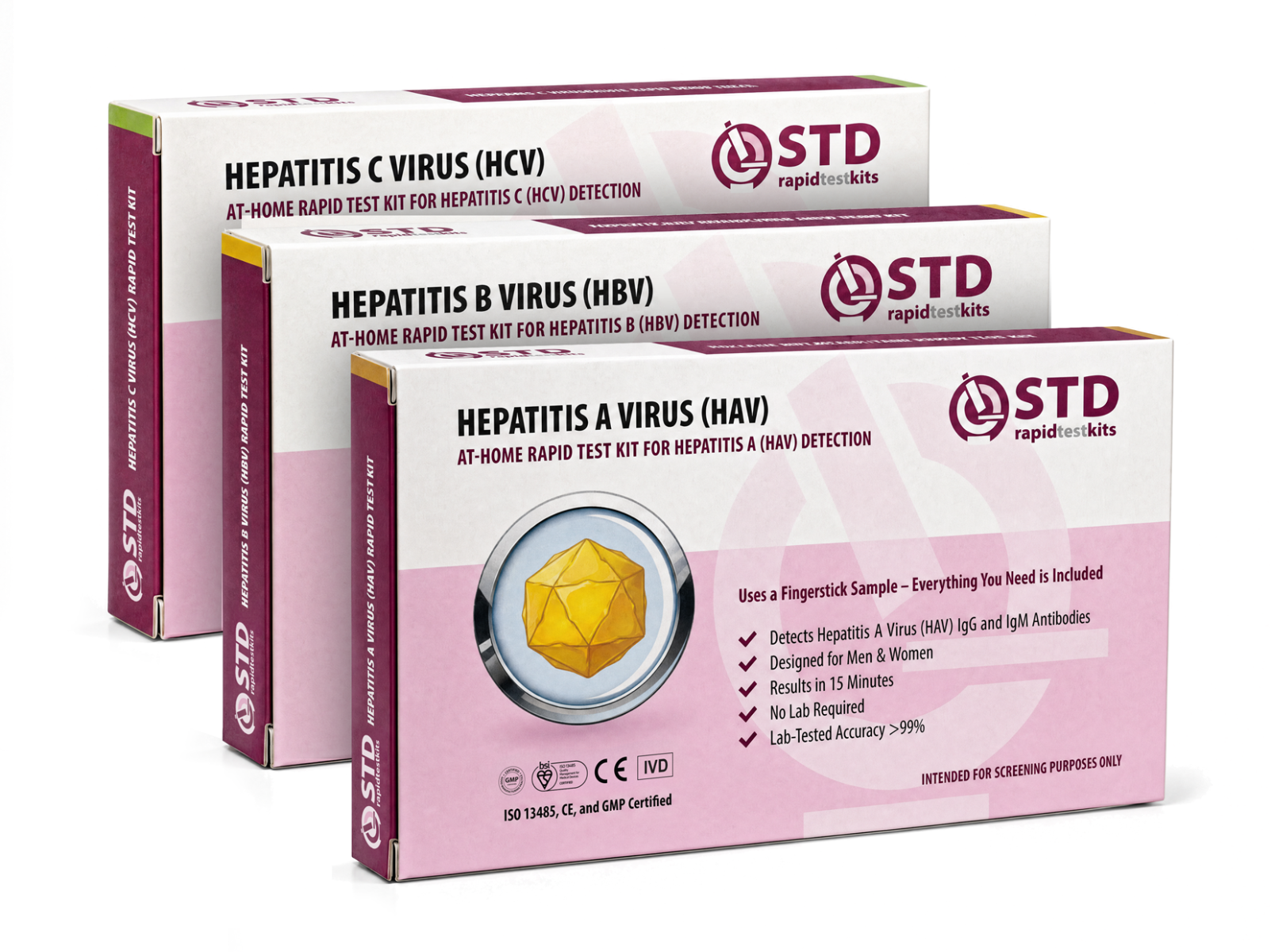
This article is published by stdrapidtestkits.com, which sells at-home rapid hepatitis C tests. The testing guidance above reflects current CDC recommendations, not commercial preference. Where the article suggests a clinic visit or laboratory follow-up, that reflects the strongest available evidence regardless of what we sell.
If your risk overlaps with hepatitis B, screen for both
Hepatitis B and hepatitis C share most of their major transmission routes. Both are bloodborne, both can spread through unsterile medical or tattoo procedures, both have sexual-transmission components, and both can pass from a pregnant person to the infant. Anyone whose risk profile prompts an HCV test (past injection drug use, transfusion before 1992, healthcare-worker needle-stick, sexual contact with a partner of unknown bloodborne-virus status) is also a reasonable candidate for an HBV screen.
The main practical difference is that hepatitis B has an effective preventive vaccine, while hepatitis C does not. People who have not been vaccinated against hepatitis B and who carry any of the shared risk factors should consider both vaccination and screening.
Frequently asked questions
- Can hepatitis C spread through saliva or kissing?
- No. Hepatitis C is not present in saliva, tears, or sweat at levels that enable transmission. Kissing and sharing drinks or utensils with someone who has HCV does not pose a transmission risk in the absence of bleeding gums or open mouth wounds in both partners. The CDC, NHS, and WHO all explicitly confirm there is no documented saliva-mediated transmission.
- Is there a vaccine for hepatitis C?
- No. Unlike hepatitis A and hepatitis B, there is currently no licensed vaccine for hepatitis C, despite decades of research. The virus mutates rapidly, which has made conventional vaccine design difficult. The current public-health strategy relies on transmission prevention, universal adult screening, and curative direct-acting antiviral (DAA) treatment for people who test positive.
- How long does HCV survive on surfaces outside the body?
- Studies cited in CDC infection-control guidance show HCV can remain viable on surfaces at room temperature for at least 3 weeks, and possibly longer under some conditions. This is why shared injection equipment, even if visibly clean, can still transmit HCV days or weeks after last use. Standard household disinfectants (a 1:10 bleach solution) reliably inactivate the virus.
- Can I get hepatitis C from a tattoo or piercing?
- In licensed studios in the US, EU, UK, and Canada that follow single-use needle and proper sterilization protocols, the risk is very low. CDC reports no documented HCV transmission from professional studios in the US. Risk is meaningfully higher in unregulated settings (prison tattoos, home setups) and in jurisdictions without enforcement of sterilization standards. Always verify that fresh single-use needle packets are opened in front of you.
- Does hepatitis C spread through breastfeeding?
- There is no evidence that HCV is transmitted through breast milk in routine breastfeeding. CDC and WHO both consider breastfeeding compatible with HCV-positive status, with one exception: if nipples are cracked or bleeding, temporary pumping-and-discarding is recommended until healing is complete. Outside of that situation, breastfeeding is encouraged.
- How accurate is an at-home hepatitis C test?
- Rapid lateral-flow antibody tests for HCV report accuracy in the high 90s when used after the antibody window period of 8 to 12 weeks post-exposure. Our at-home rapid test is a fingerstick blood antibody assay with 98.5% claimed accuracy. A reactive at-home result should always be confirmed with a laboratory HCV RNA test to determine whether infection is current or already cleared, because antibody-positive results persist after spontaneous clearance or successful treatment.
- If I was cured of hepatitis C with DAA treatment, can I be reinfected?
- Yes. Direct-acting antiviral cure does not produce protective immunity. People who have cleared HCV (spontaneously or with treatment) remain antibody-positive but can acquire a new HCV infection through any of the transmission routes described in this article. CDC recommends repeat HCV RNA testing at least annually for people who remain in higher-risk situations after cure.
- U.S. Centers for Disease Control and Prevention. Hepatitis C Basics. Source for transmission mechanism, symptom timing (2 to 12 weeks), and 2023 acute-case attribution to injection drug use (43%).
- U.S. Centers for Disease Control and Prevention. Hepatitis C Testing. Source for universal adult screening recommendation (all adults 18 and older, every pregnancy).
- U.S. Centers for Disease Control and Prevention. Clinical Overview of Hepatitis C. Source for US prevalence (2.4 to 4 million infected, 2017 to 2020), acute-to-chronic progression rate (more than half), and cirrhosis progression rate (5% to 25% over 10 to 20 years).
- U.S. Centers for Disease Control and Prevention. CDC Recommendations for Hepatitis C Testing Among Perinatally Exposed Infants and Children, MMWR Recommendations and Reports 72(4), November 2023. Source for vertical transmission rate (5.8%, 95% CI 4.2 to 7.8%) and infant testing schedule.
- World Health Organization. Hepatitis C fact sheet. Source for global prevalence (50 million chronic infections, 1 million new per year), 2022 mortality (242,000 deaths), DAA cure rate (>95%), and treatment-coverage gap (12.5 million treated of 50 million).
- National Health Service (UK). Causes of hepatitis C. Source for routes of transmission, including the specific flag on medical or dental treatment in countries with poor infection control and household-item precautions (razors, toothbrushes).
- U.S. Centers for Disease Control and Prevention. Hepatitis C Surveillance landing page. Source for current US acute-case demographics, 2023 risk-factor distribution, and updated annual surveillance reports.