Does the Hepatitis B Vaccine Work for People With HIV? What Trials Show
Hepatitis B vaccines protect most adults, but HIV can weaken the immune response, and some people finish a full series without becoming protected. Here is what recent trials in people with HIV found, which vaccine schedules are used, why a blood test after the last dose matters, and what happens next if that test shows you need more doses.
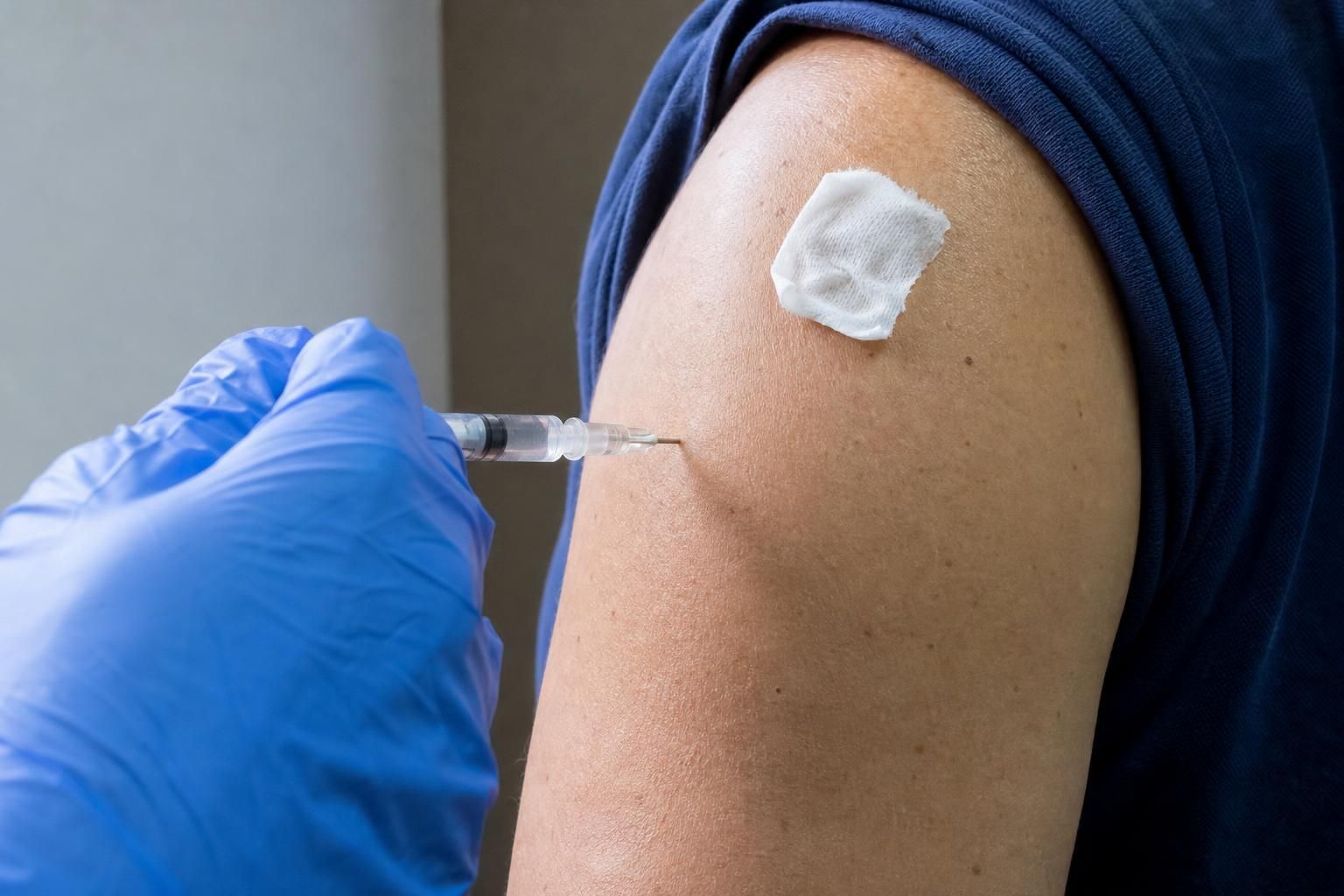



- If you have HIV, finishing the hepatitis B series does not prove you are protected. An antibody level of at least 10 mIU/mL on a blood test after the last dose does.
- If that level comes back low, revaccination works for most people. In a large 2025 trial of people with HIV who had failed an earlier series, most reached a protective antibody level after Heplisav-B.
Published: October 2026 | Last updated: October 2026 | Editorial review and quality control: Martina N.
Does the hepatitis B vaccine work if you have HIV?
Yes, for most people, though HIV can weaken the response. <a href="https://www.cdc.gov/hepatitis/hcp/populations-settings/hiv.html">CDC advises</a> an antibody blood test 1–2 months after the final dose. A 2025 trial enrolled people with HIV on treatment who had not responded before. Two doses of Heplisav-B brought 93% to an antibody level of at least 10 mIU/mL, and a three-dose trial regimen brought 99% to that level.
People with HIV are told to get vaccinated against hepatitis B, and most who do end up protected. The catch is that the vaccine does not take as reliably as it does in people without HIV, and nobody can tell by looking whether it worked. You only know from a blood test after the series.
The question came back into the news on October 13, 2026, when Healio reported on a meta-analysis presented as a poster at the American College of Gastroenterology meeting. It suggested that two doses of the newer HepB-CpG vaccine may not be enough for some people with HIV who did not respond to an earlier series, and that a third dose is worth considering.
This article covers the narrow question that our overview of STD vaccines only touches on: how well hepatitis B vaccines work when you have HIV, which schedules are used, how the response is checked, and what happens if you are a non-responder. If you want the basics of the infection itself, start with how hepatitis B spreads and how to prevent it.
Why HIV weakens the response to the vaccine
A hepatitis B vaccine contains a piece of the virus's surface protein. Your immune system has to notice it, build B cells that make antibodies against it, and keep enough of those antibodies circulating to block a real infection. HIV damages the CD4 helper cells that coordinate that work, so the response can be smaller, slower or absent.
The vaccine's own prescribing information covers this in general terms. The Heplisav-B label states that "immunocompromised persons, including individuals receiving immunosuppressant therapy, may have a diminished immune response to HEPLISAV-B." That statement is about immunocompromised people in general, not HIV specifically. For comparison, the NHS says 90% of adults in general have good protection after vaccination.
For people with HIV, CDC adds a step that most adults skip: checking afterward that the vaccine did its job.
The vaccines and schedules in use
Three hepatitis B vaccines are used for adults in the U.S. They differ in their adjuvant, the ingredient that makes the immune system react more strongly, and in how many doses they need. Older vaccines such as Engerix-B and Recombivax HB use an aluminum adjuvant, often shortened to HepB-alum. Heplisav-B uses a CpG adjuvant, a short piece of DNA that wakes up a different part of the immune system, and is called HepB-CpG.
Whichever brand you get, the schedule your clinic uses depends on your age, your health and what you have already received. Your HIV clinician may also set a different dose or schedule, because guidance for immunocompromised adults can differ from the routine adult schedule.
Adult Hepatitis B Vaccine Schedules at a Glance
- Heplisav-B (HepB-CpG): two doses one month apart (0 and 1 month), approved for adults 18 and older, per the FDA label.
- Engerix-B and Recombivax HB (HepB-alum): three doses for adults 20 and older; adults on hemodialysis get four Engerix-B doses or a dialysis formulation of Recombivax HB, per CDC.
- PreHevbrio: recalled by its manufacturer in November 2024. CDC says that if the first dose was PreHevbrio or the brand is unknown, two Heplisav-B doses can serve as doses 2 and 3. If PreHevbrio was given as doses 1 and 2, a different manufacturer's vaccine should complete the 3-dose schedule.
The blood test that tells you whether it worked
For people with HIV, the CDC recommends post-vaccination serologic testing 1–2 months after the series is complete. The test measures anti-HBs, the antibody against the hepatitis B surface protein. CDC's 2018 ACIP recommendations define a vaccine responder as someone with an anti-HBs level of at least 10 mIU/mL in that 1–2-month window.
Timing matters. Antibody levels rise after the last dose and then drift down over months and years. A test taken too early may not show the full response. A test taken years later may come back low even in someone who did respond, which makes the result harder to interpret.
This is a clinic lab test. This site sells at-home STI tests, including a hepatitis B rapid test. That kit is a preliminary screen read as a line on a cassette. It does not give an anti-HBs level in mIU/mL, so it cannot tell you whether your vaccine worked. If you have HIV, your clinic's lab work covers both the hepatitis B tests before vaccination and the antibody check afterward.
Two-Dose Heplisav-B Series and the Antibody Check
- Month 0 Dose 1
First Heplisav-B injection
- Month 1 Dose 2
Second and final dose under the label schedule
- Month 2 Antibody check opens
Anti-HBs blood test can be drawn
- Month 3 Antibody check closes
A low result means non-response and a talk about revaccination
With a three-dose vaccine, the check follows the third dose instead.
What the BEe-HIVe trial found in past non-responders
The strongest evidence comes from a trial run by the AIDS Clinical Trials Group, called A5379 or BEe-HIVe. Its main results were published in JAMA in 2025. It enrolled 561 adults with HIV at 41 sites in 10 countries. All were taking antiretroviral therapy, and all had already been vaccinated against hepatitis B without becoming protected.
Participants were randomly assigned to one of three revaccination plans: two doses of HepB-CpG at weeks 0 and 4, three doses of HepB-CpG at weeks 0, 4 and 24, or three doses of an aluminum-adjuvanted vaccine. In this trial, both HepB-CpG plans brought more people to an antibody level of at least 10 mIU/mL than the older vaccine did. The three-dose HepB-CpG plan is a trial regimen; the licensed Heplisav-B schedule is two doses.
The trial team then followed everyone to week 72. Their end-of-study report found that protection held up best after HepB-CpG, and that people whose antibody level started very high (above 1000 mIU/mL) were all still protected at the end. No new safety problems turned up.
Revaccination Results in People With HIV Who Had Not Responded Before
| Measure | HepB-CpG, 2 doses | HepB-CpG, 3 doses (trial regimen) | HepB-alum, 3 doses |
|---|---|---|---|
| Reached anti-HBs ≥10 mIU/mL at primary check | 93.1% | 99.4% | 80.6% |
| When the primary check was done | Week 12 (8 weeks after dose 2) | Week 28 (4 weeks after dose 3) | Week 28 (4 weeks after dose 3) |
| Still ≥10 mIU/mL at week 72 | 86.1% | 97.2% | 57.5% |
BEe-HIVe (ACTG A5379), 561 adults with HIV on antiretroviral therapy. An antibody level of at least 10 mIU/mL is the accepted marker of protection. Primary results: JAMA 2025;333(4); week-72 results: JAMA 2025;334(10).
People with HIV vaccinated for the first time
BEe-HIVe also included a smaller group of people with HIV who had never had a hepatitis B vaccine. They received three doses of HepB-CpG, and the results, published in Clinical Infectious Diseases in 2023, were striking. Every one of the 68 participants in the main analysis reached a protective antibody level after the third dose. Before that third dose, 94.4% were already protected at week 12.
This group was small, had no comparison arm and received a three-dose schedule that differs from the label. Still, it suggests that a first series given while HIV is treated works for nearly everyone.
All 68 participants achieved HBV seroprotective titers after the 3-dose series in the primary analysis.
What the October 2026 poster adds
The ACG meeting poster presented a systematic review and meta-analysis of published studies, covering 493 people with HIV. It compared two doses of HepB-CpG with three doses of an aluminum-adjuvanted vaccine. According to Healio, the meta-analysis did not find two doses of HepB-CpG statistically superior to three doses of the older vaccine. The presenter, Mexan Mapouka, MD, MPH, described HepB-CpG as the preferred revaccination choice for people with HIV who did not respond to an earlier series, and suggested considering a third dose.
On that comparison the two sources differ. BEe-HIVe did find two HepB-CpG doses better than three alum doses; the meta-analysis did not. Both point toward a third HepB-CpG dose: the three-dose HepB-CpG arm gave the highest protection in BEe-HIVe, and the presenter suggested considering one. This is a meta-analysis of existing studies, presented as a conference poster, not new trial data. Treat it as a reason to ask your clinician about your own result, not as a new guideline. As of October 2026, the decision on how many doses to give a non-responder rests with the HIV clinician, following the HHS antiretroviral guidelines for adults and adolescents, which CDC says include revaccination recommendations for hepatitis B vaccine non-responders.
Why protection matters more when you have HIV
Hepatitis B and HIV spread in some of the same ways, through sex and shared needles, so many people with HIV have been exposed to both. According to the CDC, people with HIV who also have hepatitis B face a higher risk of liver-related disease and death.
FAQs
- Can I switch brands partway through the series?
- Only in specific cases. CDC's guidance covers a series started with PreHevbrio, which has since been recalled, or with an unknown brand; the schedule list above gives the details. Mixing in other situations is a decision for your clinician.
- Is Heplisav-B safe for people with HIV?
- In the BEe-HIVe trial, which gave HepB-CpG to hundreds of adults with HIV and followed them for 72 weeks, investigators reported no new safety issues. Common vaccine side effects such as a sore arm still apply.
- Will I need a booster years later?
- There is no settled booster schedule for people with HIV. The 72-week follow-up described above found that participants whose antibody level started above 1000 mIU/mL were all still protected at the end. Ask your clinician whether and when to recheck your own level.
This article summarizes current guidance from the U.S. Centers for Disease Control and Prevention (CDC), the U.S. National Institutes of Health (NIH), JAMA and healio.com and the other sources listed below. Each specific figure or recommendation links to the page that states it, and every page used is listed under Sources with what it supports. It is general health information written by our editorial staff, not a diagnosis or a treatment plan; how we choose topics and use sources is described in our editorial policy.
- U.S. Centers for Disease Control and Prevention. Viral hepatitis and people with HIV: vaccination recommendation, post-vaccination testing 1–2 months after the series, HHS revaccination guidance for non-responders, higher risk of liver-related disease and death with coinfection, and HBV-active HIV treatment for coinfection (January 2025).
- U.S. Centers for Disease Control and Prevention. Hepatitis B vaccine administration: adult age recommendations, dose counts by vaccine, PreHevbrio recall and completing a series with Heplisav-B (September 2025).
- Schillie S, et al. Prevention of Hepatitis B Virus Infection in the United States: ACIP Recommendations, 2018. MMWR Recomm Rep 67(1). Definition of a vaccine responder as anti-HBs ≥10 mIU/mL 1–2 months after the series.
- Dynavax Technologies. HEPLISAV-B prescribing information (DailyMed): two-dose schedule at 0 and 1 month for adults 18 and older; diminished response in immunocompromised persons.
- Marks KM, et al. HepB-CpG vs HepB-Alum Vaccine in People With HIV and Prior Vaccine Nonresponse: The BEe-HIVe Randomized Clinical Trial. JAMA. 2025;333(4):295-306. Seroprotection by revaccination arm.
- Marks KM, et al. HepB-CpG Vaccine in People With HIV and Prior Nonresponse to HBV Vaccine: The BEe-HIVe Trial End-of-Study Results. JAMA. 2025;334(10):910-912. Week-72 durability and safety.
- ACTG A5379 study team. Immunogenicity and Safety of HBV Vaccine With a TLR9 Agonist Adjuvant in HBV Vaccine-Naive People With HIV. Clinical Infectious Diseases. 2023;77(3):414-418. 100% seroprotection after three HepB-CpG doses.
- Healio. Third dose of HepB-CpG may boost immunity for people with HIV (October 13, 2026). Report on a systematic review and meta-analysis presented as a poster at the ACG Annual Scientific Meeting.
- NHS. Hepatitis B vaccine: about 90% of adults have good protection after vaccination.