
Published: October 2025 | Last updated: May 2026 | Editorial review and quality control: Martina N.
You came home from the party, took a shower, slept it off. And now there is a low hum of worry sitting in your chest. Maybe nothing feels wrong. Maybe something does. Either way, you want to know what to do next, without anyone making it weird.
This guide is for anyone who hooked up at a play party, a kink event, a swinger weekend, a threesome that turned into a fivesome, or a Friday that escalated. It does not assume you regret what happened. It assumes you are an adult, you took some risks, and now you want a clean read on what to test for, when to test, and what the results actually mean.
The short version: most people in your situation need a panel that covers eight infections, two of them by swab and the rest by blood. Timing depends on which infection. Some show up within a week. Others can take up to three months to confirm. The longer version, with the why behind each call, is what follows.
Key Takeaways
- Most STIs do not cause symptoms in the first few weeks. A negative test at day three means little; day fourteen to twenty-one is when most rapid screens become reliable. Syphilis typically needs six to twelve weeks for full confirmation, and HIV antibody-only rapid tests can need up to ninety days (lab fourth-generation antigen/antibody tests are reliable from day forty-five).
- At-home rapid panels cover HIV, syphilis, hepatitis, herpes antibody, and genital chlamydia, gonorrhea, and trichomoniasis. We do not sell pharyngeal or rectal swab tests; for oral or anal exposures, plan one clinic visit alongside whatever you do at home.
What Counts as an STD Test (and What a Standard Panel Misses)
Not every clinic and not every kit covers the same set. The phrase “standard panel” usually means chlamydia, gonorrhea, syphilis, and HIV. After group sex that is often not enough.
The CDC recommends adding herpes screening when there are visible sores or a known exposure, hepatitis B and C when bodily fluids were exchanged or skin was broken, and trichomoniasis for vaginal play (CDC STI Treatment Guidelines, 2021). Throat and rectal swabs are recommended after oral or anal exposure, because urine-only screening misses most pharyngeal and rectal gonorrhea and chlamydia.
Sample type matters here. Chlamydia, gonorrhea, trichomoniasis, and HPV are screened with a swab. HIV, syphilis, hepatitis B and C, and herpes antibody panels are blood tests, run from a fingerstick at home or a venipuncture at a clinic. Mixing those up is the most common ordering mistake people make: a fingerstick blood test cannot tell you whether you have a chlamydia infection in your throat, and a vaginal swab will not detect HIV.
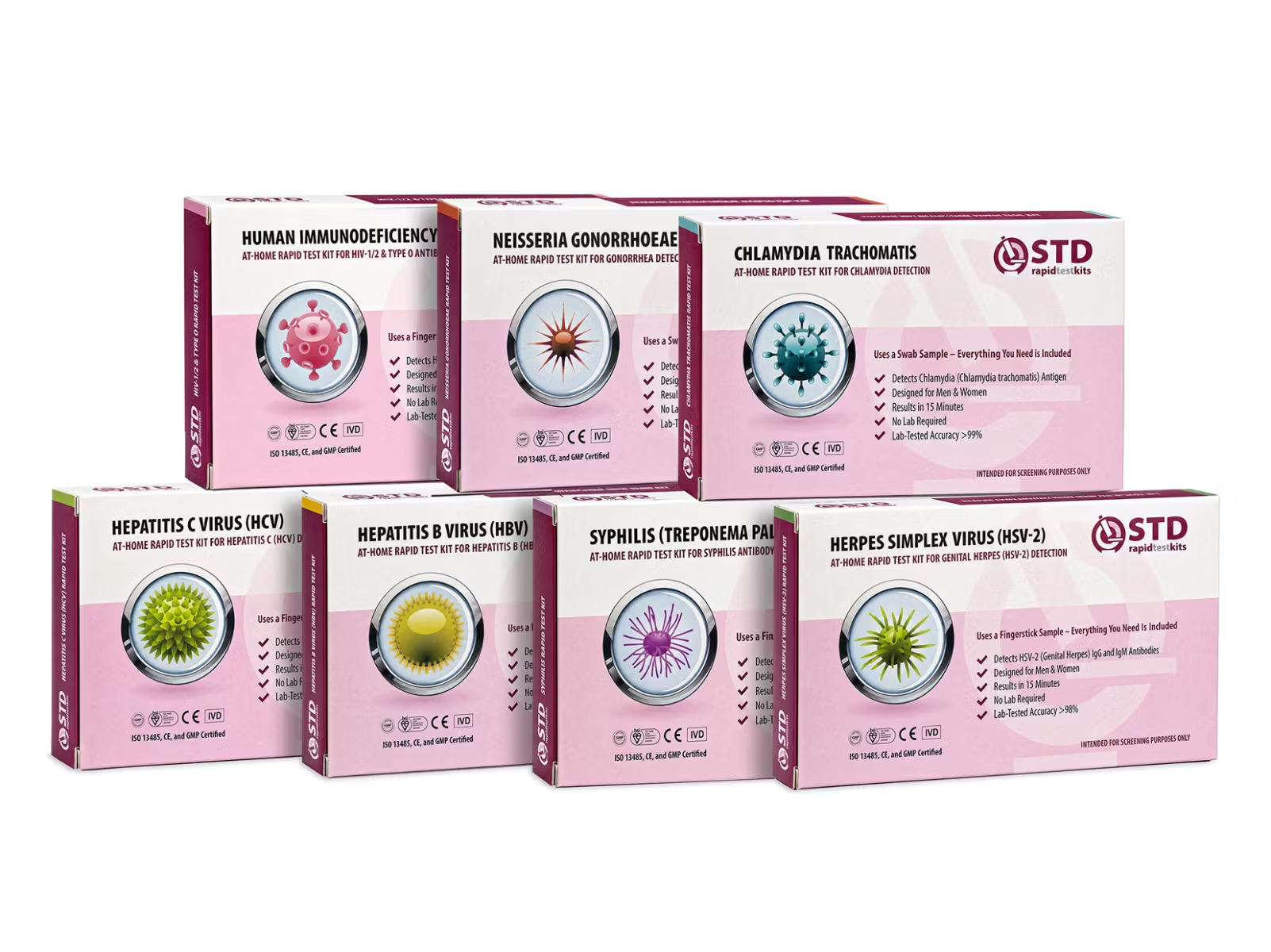
stdrapidtestkits.com sells genital swab kits and fingerstick blood kits. We do not sell urine, pharyngeal, or rectal swab tests. If your concern is throat or rectal exposure, the right move is a clinic visit. The kits in this guide cover the genital and bloodwork side of the same exposure event.
| Test type | What it checks | Sample | Best use case |
|---|---|---|---|
| At-home rapid kit | HIV, syphilis, hepatitis B and C, herpes antibody; chlamydia, gonorrhea, trichomoniasis by swab | Fingerstick blood, vaginal or penile swab | Quick reassurance, privacy, no waiting room |
| Mail-in lab kit | Same panel plus throat and rectal swab options at some providers | Self-collected swabs and dried blood spot | When you need pharyngeal or rectal screening at home |
| Clinic visit | NAAT, PCR, and antibody/antigen testing on every site | Swabs from each exposure site, blood, urine | Symptoms, positive at-home result, oral or anal exposure |
When to Test: The Window Period Is the Whole Game
Here is the part most people get wrong. You can take a test the morning after, feel relieved by a negative, and then find out a month later that the result was a false read. The reason is the window period: the gap between exposure and the moment a test can reliably detect an infection. Test inside the window and a negative tells you almost nothing. Test outside it and the negative is solid.
Windows vary by infection because tests look for different things. Nucleic acid amplification tests (NAATs) detect bacterial DNA, which appears within days. Antibody tests detect your immune response, which can take weeks to build. Fourth-generation HIV antigen/antibody tests sit between the two, looking for both viral protein and antibody. The CDC distinguishes between earliest possible detection and reliable detection windows for each test class (CDC HIV Testing; STI Treatment Guidelines).
The table below uses CDC and assay-validated detection windows. Treat the “best time to test” column as the point at which a single negative becomes meaningful. Anything earlier than that is screening, and a negative is not yet a clean read.
| Infection (test type) | Earliest detection | Best time for a reliable single negative |
|---|---|---|
| Chlamydia (NAAT) | 5 to 7 days | 14 days post-exposure |
| Gonorrhea (NAAT) | 5 to 7 days | 14 days post-exposure |
| Trichomoniasis (NAAT) | 5 to 7 days | 2 to 3 weeks |
| HIV (lab 4th gen antigen/antibody) | 18 to 45 days | 45 days, retest at 90 days for high-risk exposures |
| HIV (rapid antibody) | 23 to 90 days | 90 days post-exposure |
| Syphilis (RPR plus treponemal) | 3 to 6 weeks | 6 to 12 weeks |
| Hepatitis B (HBsAg) | 3 to 6 weeks | 6 to 9 weeks |
| Hepatitis C (antibody) | 8 to 11 weeks (HCV RNA earlier from week 2) | 8 to 12 weeks |
| Herpes HSV-2 (IgG antibody) | 3 to 6 weeks | 12 to 16 weeks for full seroconversion |
Rapid vs Lab vs Clinic: Match the Tool to the Question
The best test is the one you will actually take. Beyond that, the three options answer slightly different questions, and stacking them gives you the most coverage with the least friction.
A rapid at-home test is a fast snapshot. Fingerstick HIV, syphilis, hepatitis, and herpes blood antibody tests can be done in fifteen to twenty minutes on your kitchen counter. Self-collected genital swabs ship to a lab or read at home depending on the kit. They are accurate when used inside the window period and when you follow the timer instructions. They are screening tools; lab NAAT remains the gold-standard confirmatory technology.
A clinic visit catches what home tests cannot. Throat and rectal NAAT swabs, full HIV viral load if you are inside the early window, and a provider-administered exam for any unexplained sore are all clinic territory. If your exposure included oral, rimming, or anal play, plan a clinic visit even if your at-home rapid comes back negative; that result speaks to systemic infection, not local infection at those sites.
For most people who hooked up at a party, a workable sequence is: at-home rapid for early reassurance at week two, clinic visit for site-specific screening at week four, and a final retest of HIV and syphilis at twelve weeks if any exposure was high-risk (anal receptive without condoms, known partner with HIV not on PrEP or sustained antiretroviral therapy).
“Everyone Got Tested Before” Does Not Mean What You Think
Here is the awkward truth. A partner saying “I just tested” is not the same as a partner being uninfected at the moment they touched you. Tests are a snapshot. Between that snapshot and your encounter, anything could have happened, and a lot of partners assume their last screening covered more than it did.
Three things to ask, ideally before play starts and at minimum after: when was the test, which infections did the panel cover, and which sample types were collected. A test from “two weeks ago” that was a urine-only chlamydia and gonorrhea screen tells you nothing about herpes, syphilis, hepatitis, or pharyngeal gonorrhea. The CDC's STI screening guidance recommends pharyngeal and rectal NAAT for people who report oral or anal exposure, because urethral and urine specimens miss most of those infections (CDC STI Treatment Guidelines, 2021).
This is not about distrust. It is about the limits of any single test. The same applies to your own results. If your panel last month did not include herpes antibody and hepatitis C, your “all clear” covered fewer infections than you thought.
- When was the test? Even a recent screen cannot account for exposures that happened after it.
- Which infections did the panel cover? Many “standard” panels skip herpes, hepatitis C, and trichomoniasis.
- Which sample types were collected? Urine-only screens miss most pharyngeal and rectal gonorrhea and chlamydia.
“I Feel Fine, Do I Still Need to Test?”
Yes. Most STIs do not cause obvious symptoms in the first few weeks, and several stay silent for months or years. Chlamydia often causes no symptoms even when the infection is active and capable of damaging the reproductive tract (CDC Chlamydia). Trichomoniasis is silent in most carriers. Early HIV infection can present as a flu-like illness or no illness at all. Syphilis primary chancres can be painless and located inside the body where you will not see them.
What feeling fine tells you is that your immune system is not currently fighting a visible infection. It does not tell you whether bacteria are colonizing your urethra or whether HIV antibodies are quietly developing. Those answers come from tests, not from how you feel.
The point of testing is not to confirm what you already know. It is to catch the infections that were going to stay silent until they caused damage: pelvic inflammatory disease and infertility from untreated chlamydia, neurosyphilis from untreated syphilis, liver damage from untreated hepatitis. The treatment window for each of those is measured in weeks.
PrEP only covers HIV. It does not protect against chlamydia, gonorrhea, syphilis, herpes, hepatitis, HPV, or trichomoniasis. After group sex you still need a full panel. PrEP guidelines actually recommend a routine STI screen every three to six months for the same reason.
Testing After Oral, Kink, or No-Penetration Play
Plenty of people walk away from a party thinking “no penetration, no risk.” That is wrong, and pharyngeal-infection data shows it. A meaningful share of oral gonorrhea and chlamydia infections are detected only on throat swabs, in people who never had genital symptoms. Oral, rimming, mutual genital contact, fingering, and shared toys all carry transmission risk for at least one common infection.
Specific risks by activity:
- Oral sex (giving): pharyngeal gonorrhea, pharyngeal chlamydia, syphilis, HSV-1.
- Oral sex (receiving): HSV-1 transmission to genitals, syphilis from oral chancres, gonorrhea less commonly.
- Rimming: hepatitis A and B, shigella, rectal gonorrhea or chlamydia in the giver, HSV.
- Shared insertable toys: chlamydia, gonorrhea, trichomoniasis, HPV, hepatitis B and C if blood is involved.
- Fisting and rough play: hepatitis B and C, HIV (with mucosal trauma), all of the above with bleeding.
If your encounter included oral or any anal contact, plan a clinic visit for site-specific NAAT swabs in addition to whatever you do at home. Throat-swab and rectal-swab NAATs are not in our product line; clinics, sexual-health centers, and many telehealth networks can collect them, often free or low-cost.
Herpes: The Test People Most Often Skip
Herpes is one of the most common viral STIs in the world, and one of the least screened. CDC NCHS surveillance data show that 47.8 percent of U.S. adults aged 14 to 49 carry HSV-1, and 11.9 percent carry HSV-2 (NCHS Data Brief No. 304, 2018). Most do not know they carry it.
Why does the test get skipped? Three reasons. First, antibody tests are imperfect: they detect IgG seroconversion, which can take twelve to sixteen weeks to fully develop. Second, the CDC does not recommend routine HSV screening for the general population, only for people with symptoms or specific risk factors, which leaves it off most “standard panels.” Third, stigma. Both clinicians and patients sometimes avoid the test because the diagnosis carries unfair social weight.
None of that is a reason for you to skip it after group sex, especially if oral was involved. HSV-1 transmits to genitals during oral sex even when the giver has only intermittent cold sores. The most useful clinical pattern: if you develop a cluster of painful vesicles or shallow ulcers in the genital or anal area three to twenty days after exposure, swab the lesion at a clinic that day. Lesion PCR is far more accurate than antibody testing for an active outbreak. With no lesion but a screening question, schedule the IgG antibody test for twelve to sixteen weeks out.
An estimated 13% of people aged 15 to 49 years worldwide have HSV-2 infection, the main cause of genital herpes.
Talking to Partners Without Shame
After group sex, depending on how things went, you might owe one person a heads-up, several people, or nobody at all. The math is the same either way. Do you have information about your status that someone else needs to make a health decision?
If you tested positive, yes. The respectful and often legally required move is to notify partners from the relevant exposure window so they can test and treat. Many U.S. jurisdictions and U.K. trusts run anonymous partner-notification services through the local health department or sexual-health clinic. You do not have to do it yourself; a clinician can pass the information along without naming you (NHS STIs).
If you are testing but not yet positive, a brief courtesy message goes a long way: “Hey, I had a recent group encounter and I am running my routine panel just to be safe. Wanted to flag it in case you want to do the same.” That is it. No apology, no detail, no drama. It models the behavior most people wish more of their partners had.
If your encounter was casual and you have no positive result, the obligation thins to your own next test.
If You Test Positive: The Three Steps That Actually Matter
The first thirty seconds after a positive result are the worst. The next thirty hours are usually fine, because every one of these infections has a known treatment path, and most are curable with antibiotics or manageable with antivirals.
Step one. Confirm. At-home rapid tests can produce false positives, and the standard of care for any positive screening test is a confirmatory lab test. Take a photo of the result, then call a clinic or telehealth provider for the next-tier test (NAAT for chlamydia or gonorrhea, RPR plus treponemal for syphilis, viral load for HIV, lab antibody plus reflex for hepatitis or herpes). For a recent hepatitis C exposure, request HCV RNA rather than antibody if you are inside the first six months (CDC Hepatitis C Testing).
Step two. Treat. Chlamydia, gonorrhea, syphilis, and trichomoniasis are bacterial or protozoal and curable with a single course of antibiotics in most cases. Hepatitis C is now curable with a roughly twelve-week course of direct-acting antivirals for most people. Hepatitis B and herpes are managed long-term but the medications are well-tolerated. HIV with modern antiretroviral therapy is a chronic condition with a near-normal lifespan, and an undetectable viral load means untransmittable to sexual partners.
Step three. Notify. Reach back to anyone who needs to know, or use a confidential partner-notification service. This is the part that hurts most and matters most. The people you played with deserve the same chance to test and treat that you got.

FAQs
- How soon after group sex can I test?
- You can test the morning after if you want peace of mind, but treat the result with care. Bacterial NAAT for chlamydia and gonorrhea starts being reliable around day five to seven, with a single negative becoming meaningful at day fourteen. HIV antigen/antibody tests typically need three to six weeks, syphilis around six to twelve weeks, and herpes IgG antibody screening up to twelve to sixteen weeks. If you test early, plan a retest at the right window.
- What does a standard panel miss?
- Most standard clinic panels cover chlamydia, gonorrhea, syphilis, and HIV by urine plus blood. They commonly miss pharyngeal and rectal infections (oral and anal swabs are not included by default), herpes (not routinely screened), hepatitis C (not on every panel), and trichomoniasis. After group sex, ask explicitly for an expanded panel or use a kit that covers all eight common infections.
- Does using condoms mean I do not need to test?
- Condoms reduce risk for fluid-borne infections like HIV, gonorrhea, chlamydia, and hepatitis. They reduce but do not eliminate risk for skin-to-skin infections like herpes, syphilis chancres, and HPV, because lesions can occur on areas the condom does not cover. They also do not protect during oral sex without a barrier, rimming, or shared toys. Test even if condoms were used.
- What if there was no penetration, only oral and touching?
- Still test. Oral sex transmits gonorrhea, chlamydia, syphilis, HSV-1, and less commonly HIV. Pharyngeal gonorrhea is often asymptomatic and only caught on a throat swab. If you only did oral or mutual touch, the priority panel is HIV, syphilis, gonorrhea, chlamydia, and herpes. Add a clinic throat swab if oral was extensive.
- How accurate are at-home rapid tests?
- Rapid lateral-flow tests are screening tools, not lab-grade NAAT. For HIV and syphilis, current at-home rapid tests report sensitivity in the mid-90s to high-90s percent range when used inside the right window period, with high specificity. For chlamydia and gonorrhea swab kits, accuracy depends on whether the kit reads at home or ships to a lab; lab-processed self-swabs perform comparably to clinic NAAT. Any positive at-home result should be confirmed with a clinic or lab test before treatment.
- Should I retest even if my first test was negative?
- Often yes. If your first test was within two weeks of exposure, plan a second test at six to twelve weeks for HIV and syphilis. If herpes screening matters to you, retest IgG antibodies at twelve to sixteen weeks. Hepatitis C antibody is most reliable from eight to eleven weeks, with HCV RNA available from around week two for higher-risk exposures.
- Can I do all of this without going to a clinic?
- For genital and bloodwork screening: yes, at-home kits cover the main panel. For pharyngeal or rectal screening, or any visible lesion that needs swabbing: no, one clinic visit is needed. Running both in parallel gives the most complete picture with minimum friction.
- U.S. Centers for Disease Control and Prevention. Sexually Transmitted Infections Treatment Guidelines, 2021, including window-period and screening recommendations for chlamydia, gonorrhea, syphilis, and trichomoniasis, plus pharyngeal and rectal NAAT screening rationale.
- U.S. Centers for Disease Control and Prevention. HIV testing technologies and testing-window recommendations for rapid antibody, lab antigen/antibody, and NAT.
- U.S. Centers for Disease Control and Prevention. Chlamydia overview, including the asymptomatic-infection pattern and reproductive-tract complications cited in this article.
- World Health Organization. Sexually transmitted infections fact sheet, including the cited HSV-2 global prevalence figure.
- U.K. National Health Service. Sexually transmitted infections (STIs) overview, symptoms, testing routes, and partner-notification services.
- U.S. National Center for Health Statistics. Data Brief No. 304: Prevalence of Herpes Simplex Virus Type 1 and Type 2 in Persons Aged 14-49, United States, 2015-2016, including the 47.8% HSV-1 and 11.9% HSV-2 prevalence figures.
- U.S. Centers for Disease Control and Prevention. Hepatitis C testing recommendations, including HCV RNA testing for exposures within the past six months.
