





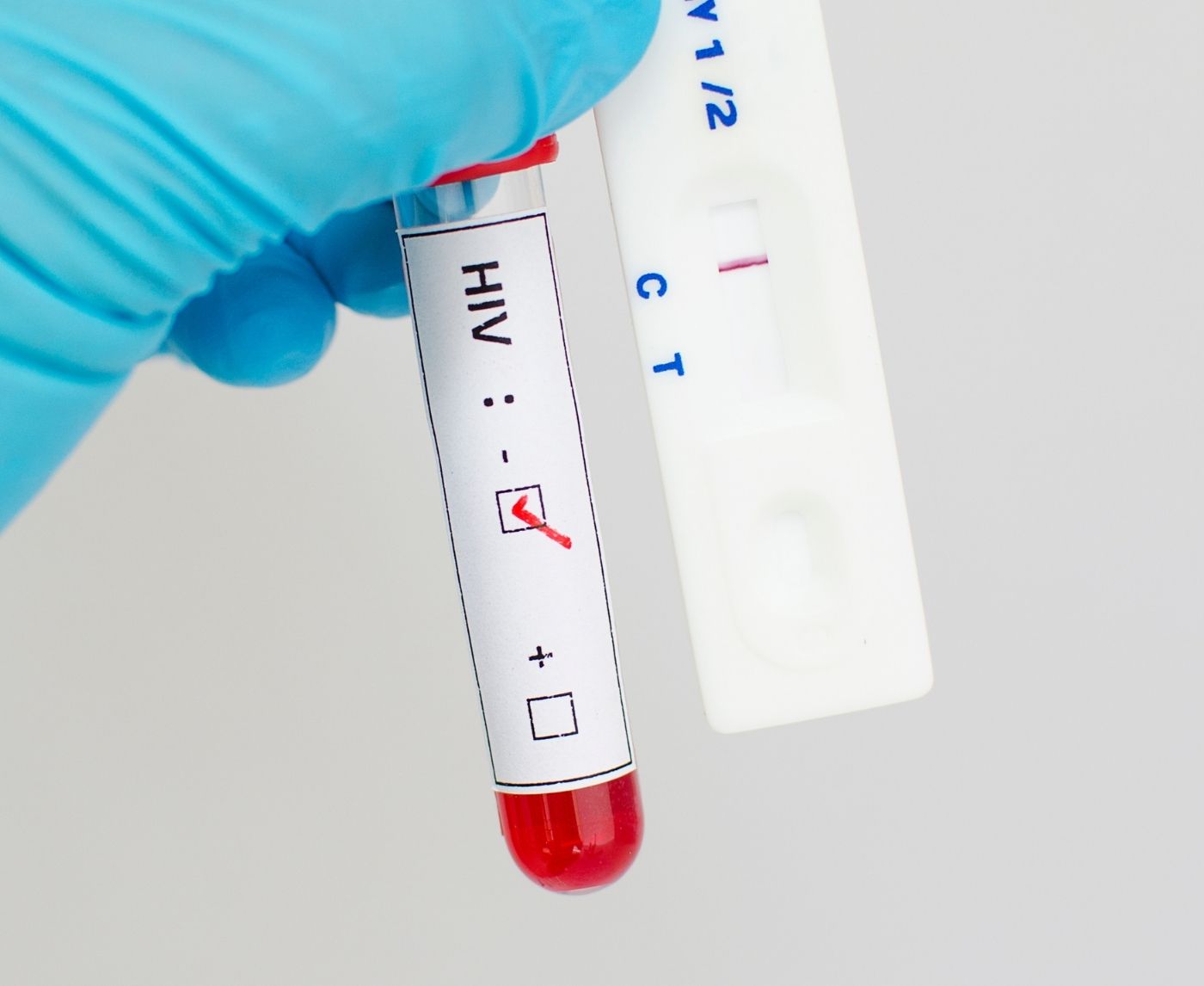

Quick Answer: A “Not Detected” STD result means the test didn’t find signs of infection, at the time you took it. But if you tested too early or used the wrong type of test, it might miss a real infection. Retesting after the window period is often essential.
This Article Is for Anyone Still Wondering After “Not Detected”
If you’ve ever walked away from an STD test result thinking, “Wait… so am I in the clear or not?”, you’re not alone. This article is for the people who test out of fear, curiosity, or responsibility, and still walk away with more questions than answers. Maybe you were scared after a condom broke, or you felt a tingle that didn’t feel normal. Maybe your last partner wasn’t as monogamous as they claimed. Maybe you just wanted to be sure.
Whatever brought you here, let’s be clear: testing is an act of care, not guilt. But it’s also not a magic shield. Knowing what “Not Detected” actually means, and what it doesn’t, can help you take your next steps without panic, shame, or delay. We’ll walk through timing, accuracy, symptoms, and when to retest so that you can read your results with real clarity, not false comfort.
What Does “Not Detected” Actually Mean on an STD Test?
Let’s start with the label itself. “Not Detected” is a lab-based term that means the test didn’t find enough evidence of a specific infection to produce a positive result. It's not a diagnosis, it’s a measurement at a moment in time. It doesn’t say you’ve never been exposed. It doesn’t say you’re completely clear. It only says that based on this test, at this time, using this sample, the lab did not detect that infection.
Some at-home tests use “Negative” instead of “Not Detected,” but the interpretation is the same. It simply means the target (say, chlamydia DNA or HIV antibodies) wasn’t found in detectable quantities. And that’s where the trouble starts, because detection depends on a few critical factors that most people never get told.
The Window Period Problem: When Testing Too Soon Fools You
Here’s what most kits (and even some clinics) don’t emphasize loudly enough: if you test during the window period, the time between exposure and when an infection becomes detectable, you can get a “Not Detected” result even if you’re infected. The infection is there. But the test can’t pick it up yet.
Take gonorrhea as an example. It usually becomes detectable within 5–7 days of exposure, but that can vary. HIV antibody tests might not pick up an infection for up to six weeks. Even the fastest PCR-based or antigen/antibody combo tests have detection limits that change based on your immune system, the test’s sensitivity, and how your body responds to the pathogen.
Let’s compare timing across different STDs in plain terms:
| STD | Earliest Detection | Best Time to Test | Retest Needed? |
|---|---|---|---|
| Chlamydia | 5–7 days | 14+ days | Yes, if early |
| Gonorrhea | 3–7 days | 10–14 days | Yes, if tested early |
| HIV | 10–33 days (NAAT) | 3–12 weeks (Ag/Ab) | Yes, always confirm |
| Herpes | 7–14 days (PCR) | 21+ days for antibodies | Yes, especially with symptoms |
| Syphilis | 3–6 weeks | 6–12 weeks | Yes, if risk remains |
Table 1. Approximate detection windows for common STDs. Actual timing may vary depending on test type and individual immune response.
One Reddit user wrote, “I tested negative at 5 days post-exposure, then had a sore throat and retested at 3 weeks, it came back positive for gonorrhea in my throat. I would’ve kept hooking up thinking I was fine.”
That’s why “Not Detected” should never be taken as a final answer if the timing’s off. A second test, especially 2–3 weeks after exposure, isn’t being paranoid. It’s being accurate.

People are also reading: Sexual Health After Coming Out: A Toolkit for LGBTQ+ Teens Without Family Support
Case Study: “My Results Said Negative. Then the Symptoms Started.”
Dani, 29, had been celibate for nearly a year after a rough breakup. When she finally started dating again, she wanted to be safe. She tested using an at-home multi-STD rapid test kit three days after a new partner stayed over. The result? All negative. But by day nine, she noticed spotting. By day twelve, burning during urination.
“I thought maybe it was just a yeast infection or stress,” she said. “But the pain got worse, not better. I retested at a clinic and they said I had chlamydia. I was shocked, I thought the first test meant I was fine.”
Dani’s story is painfully common. The false sense of safety from a too-early “Not Detected” result often delays real care. By the time she got antibiotics, she’d already passed the infection to someone else, someone who hadn’t tested yet either.
Testing early isn’t the problem. It’s not following up that causes harm.
Not All STD Tests Are Created Equal
Another layer of confusion comes from the fact that not all STD tests work the same way. A “Not Detected” result from a rapid antigen test doesn’t mean the same thing as a negative result from a PCR test sent to a lab. And yet, most people never learn the difference.
Rapid tests, especially the kind sold over-the-counter or used at home, are designed for speed and convenience. They typically detect proteins (antigens) or antibodies your body produces in response to an infection. While some can detect an active STD in as little as 10–15 minutes, they also have limits. Many require a higher concentration of the pathogen to trigger a positive result. That means they might miss low-level infections, especially early on.
Lab-based PCR (nucleic acid amplification tests) are more sensitive and can detect tiny traces of an STD’s genetic material. But even these tests are only as good as their timing, and the sample quality. A poorly swabbed throat, or a urine sample collected too soon, can still lead to a “Not Detected” result even when infection is present.
| Test Type | Detection Method | Speed | Best For | Limitations |
|---|---|---|---|---|
| At-Home Rapid Test | Antigen/Antibody | 10–20 mins | Quick reassurance after window period | May miss early or low-level infections |
| Mail-In Lab Kit | PCR or NAAT | 2–5 days | High accuracy with discreet access | Sample timing & quality critical |
| Clinic-Based Test | PCR or Antibody | 1–3 days (varies) | Persistent symptoms or high-risk exposure | May require in-person visit & follow-up |
Table 2. Key differences between test types and their limitations. Understanding the method can help you interpret a “Not Detected” result more accurately.
The test you choose matters. The time you choose it matters more.
Check Your STD Status in Minutes
Test at Home with Remedium7-in-1 STD Test Kit
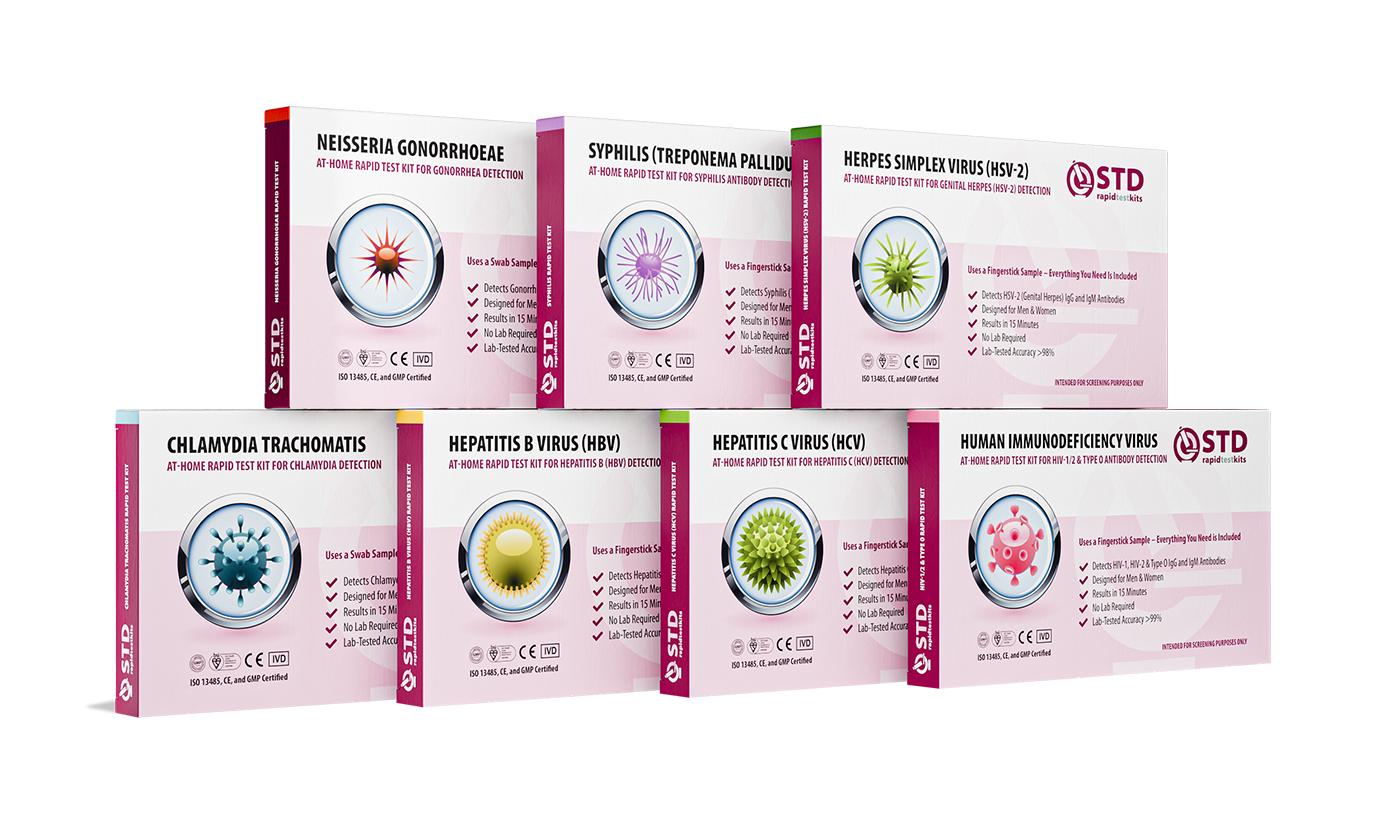
 For Men & Women
 Results in Minutes
 No Lab Needed
 Private & Discreet
Order Now $129.00 $343.00
For all 7 tests
Why Symptoms After a “Negative” Test Still Matter
What happens when you feel something’s off, but your test says otherwise? This is one of the most emotionally disorienting experiences for anyone navigating sexual health. You did the “right” thing. You got tested. And yet, something’s still wrong.
Here’s the thing: symptoms don’t lie. But they’re not always specific either. A burning sensation, unusual discharge, pelvic pressure, or skin irritation could point to any number of infections, or even non-STD causes like bacterial vaginosis or a UTI. But if you’re experiencing those signs after a risky encounter or new partner, an STD still needs to be on your radar.
And if your test came back “Not Detected,” that doesn’t close the case. It just means it’s time to consider:
- Was the test taken during the window period?
- Was the test type appropriate for the suspected STD?
- Was the sample site (oral, vaginal, rectal) aligned with the exposure?
- Are you having new or evolving symptoms?
When in doubt, testing again using the right tool, at the right time, isn’t a waste. It’s a smart, stigma-free move. You can order a discreet kit like this Combo STD Home Test Kit to cover the most common infections in one go.
Retesting: When “Not Detected” Isn’t the End
Let's be honest: one test doesn't always give you the whole picture. Even medical professionals recommend retesting under certain conditions. That’s not an admission of failure, it’s how STD detection actually works when done responsibly.
You should strongly consider retesting if:
- You tested less than two weeks after exposure (except for certain PCR-based HIV or chlamydia tests).
- You’re having ongoing symptoms, especially if they’re worsening.
- You used a rapid test as your only method, especially one that checks only for antibodies.
- You had a high-risk encounter (e.g., unprotected sex, anonymous partner, known exposure).
- You’ve had sex with someone who recently tested positive, even if your test is negative.
Here’s what the CDC and sexual health clinics often recommend: test once at least 14 days after exposure, then again at 4 to 6 weeks. Some infections like syphilis or HIV may require a follow-up at 3 months post-exposure, even if earlier tests were negative.
That kind of spacing helps account for immune system variation and test sensitivity. And if you’ve taken antibiotics for another condition in the meantime? That can partially treat or suppress some infections without getting rid of them, which makes it harder to understand test results. Retesting gives you more confidence and clarity.
Call-to-Action: Your Body, Your Clarity
If you’re sitting with a “Not Detected” result and still feeling anxious, listen to your gut, but check your facts too. Peace of mind is one test away, especially when you understand the timing. Rapid STD Test Kits makes that easy, private, and accurate.
Order a discreet combo test kit today and retest with confidence. You deserve answers, not assumptions.
When “User Error” Changes Everything
In a perfect world, STD testing would be as simple as spitting in a tube, reading a label, and moving on. But in real life? Things get messy. Swabs don’t go deep enough. Urine samples are collected at the wrong time of day. Instructions get skimmed. And sometimes, especially when you’re anxious, you misread the test altogether.
Marcus, 24, ordered a rapid test kit after feeling a burning sensation post-hookup. “I was so nervous I rushed the whole thing,” he admitted. “I peed like two hours before doing the test, so I barely had enough to fill the vial. The result showed a weird faint line and I just assumed it was negative. But then I started Googling, and realized I had no idea how to interpret it.”
Faint lines, unclear directions, and panic-driven shortcuts are all common reasons for false reassurance. Rapid tests are powerful tools, but only if used exactly as directed. That includes timing your urine sample (usually the first urine of the day is best), using the full dropper amount, and waiting the correct number of minutes before reading the result. Reading it too soon, or too late, can lead to false negatives or ghost lines that don’t mean what you think.
If your test didn’t feel clear or the result looked borderline? Don’t sit with uncertainty. Retest. Or send a sample to a lab to double-check. Clarity beats guessing, every time.
People are also reading: The Great Syphilis Comeback: Why This STD Is Surging in 2025
How Anxiety Can Trick You Into Trusting the Wrong Result
There’s a strange relief that comes with a “Not Detected” result, even when your body is telling you something else. It’s tempting to take that piece of paper, that test strip, that email from a lab and think: “Okay. It’s over.”
But relief isn’t always accuracy. And anxiety can cut both ways. It can push you to test too early. It can convince you not to test again. Or it can paralyze you with shame, especially if symptoms return and you feel like you “should’ve known.”
Trisha, 33, described it like this: “I felt fine the moment I read ‘Negative.’ But when I got BV symptoms again, I didn’t want to believe it could be something else. I avoided getting tested again for weeks because I didn’t want to face the idea that the first test was wrong, or that I was wrong.”
Let’s be clear: retesting is not an admission of guilt. It’s a commitment to your health. Bodies change. Infections progress. Results shift. Testing more than once, especially after exposure or symptom changes, is not overkill. It’s smart self-protection. And it’s normal.
Still Unsure? Here’s What to Do Next
If you're reading this thinking, “I still don’t know if I’m safe,” here’s your moment of clarity. Let’s walk through the scenarios and what to do next, no shame, just guidance.
If you tested less than 7 days after being exposed, you should test again after 14 days for common STDs like chlamydia, gonorrhea, and trichomoniasis. If you can, use a PCR-based test or a mail-in kit with high sensitivity.
If you tested 2–3 weeks after exposure and still have symptoms: You’re in the peak accuracy window. If it was a rapid test, follow up with a lab-based test. If it was already lab-based, consider getting re-evaluated by a clinician to rule out less common or harder-to-detect infections.
If your result was unclear, faint, or confusing: Don’t guess. Retest now using a different brand or method. When in doubt, choose a lab-based test or consult a local clinic for confirmation.
If you tested “Not Detected” and your partner just tested positive: Test again immediately and then again in 2–3 weeks, depending on the STD. Some infections don’t show up right away and may require more than one test to confirm your status.
Still unsure? The most proactive move is to use a reliable multi-STD test that covers the most common infections in one go. You can find one right here, delivered discreetly and ready when you are.
Check Your STD Status in Minutes
Test at Home with Remedium7-in-1 STD Test Kit
For Men & WomenResults in MinutesNo Lab NeededPrivate & DiscreetOrder Now $129.00 $343.00
For all 7 tests
Protecting Partners Without Losing Your Privacy
Let’s talk about the emotional side of all this. Getting tested, especially when the results aren’t crystal clear, can feel isolating. But you’re not alone. Thousands of people every day deal with confusing results and symptoms that don’t match what a piece of paper says. What matters now is how you move forward.
If you have a current partner, or even a one-time encounter, you deserve to share clarity, not just hope. That doesn’t mean you need to disclose every test or every doubt. But it does mean letting them know when you’re waiting on a result, or planning to retest, especially if symptoms develop.
Most people don’t react with anger, they react with curiosity, concern, and often gratitude. Framing it as “I just want us both to feel safe and informed” can go a long way. If you're not ready for that conversation, consider anonymous notification services available through some clinics or public health departments.
And remember: your privacy is always yours to protect. At-home tests like the ones from STD Rapid Test Kits are packaged discreetly, billed anonymously, and never report to insurance or databases. You decide what happens next, not your test, not the system, not the stigma.
FAQs
1. Can I still have an STD even if my result says “Not Detected”?
Yep, and it’s more common than people think. “Not Detected” just means the test didn’t pick up the infection at the time you tested. If it was too soon after exposure, or the test wasn’t sensitive enough, it could easily miss something. Think of it like trying to catch a whisper in a noisy room. The infection might be there, but the test didn’t hear it yet.
2. Is “Not Detected” the same as “Negative”?
Functionally, yes. It’s lab lingo versus everyday talk. “Not Detected” is more common with rapid or molecular tests, but both phrases mean the same thing: the test didn’t find what it was looking for. Just don’t mistake that for a lifetime clean bill of health, it’s a snapshot, not a memoir.
3. Why does my body feel off if the test says I’m fine?
Because your body knows things before your test does. You might be in the window period, or dealing with something that wasn't tested, like BV, a UTI, or a yeast imbalance. Or you might’ve taken the right test at the wrong time. Symptoms aren’t drama, they’re data. If they stick around, test again or check in with a provider.
4. How long should I wait before retesting?
It depends on what you’re testing for, but for most STDs, 14 days post-exposure is the sweet spot. Earlier tests can be useful, but only if you’re planning to follow up. For HIV and syphilis, a second test at 6–12 weeks is often recommended. It’s not paranoia. It’s just good science.
5. Do faint lines mean I’m positive?
Possibly. Most rapid tests consider any visible line, even a whisper of pink, as a positive. But we’ve seen it all: smudges, ghost lines, dots. If it’s unclear, assume nothing. Retest or confirm with a lab. Your peace of mind is worth more than squinting at plastic.
6. Could my test be wrong because I messed up the sample?
Totally possible. Maybe you didn’t swab deep enough, or your urine sample was too diluted. Maybe you read the cassette 45 minutes later while distracted on TikTok. Hey, it happens. That’s why repeat testing is part of responsible care, not overkill.
7. Do I need to test all the places I’ve had sex?
Yes, and this part gets missed all the time. If you had oral sex, test the throat. If there was anal contact, test there too. You wouldn’t test your knee for strep throat, right? Same logic. Sample site matters.
8. Could antibiotics mess with my test results?
Definitely. Taking antibiotics (even for something else) before you test can suppress bacterial growth just enough to dodge detection, without fully curing the infection. That’s why doctors ask if you’ve been treated recently. Be honest. The tests work better when they know the full story.
9. I tested “Not Detected” but my partner just tested positive. Now what?
First: breathe. Second: retest. Some infections take time to appear on tests, especially if you were exposed recently. Get a follow-up test in 2–3 weeks, and consider a full panel to rule everything out. It’s not about blame, it’s about protecting everyone involved, including you.
10. Is it overkill to test again “just in case”?
Not even close. It’s called being thorough. Whether it’s new symptoms, new partners, or just gut instinct, retesting is smart, safe, and stigma-free. Better to confirm than to carry doubt. At-home kits make it easy, and you never need anyone’s permission to protect your health.
You Deserve Real Answers, Not Guesswork
If you’ve made it this far, you already care about your health, deeply. Whether your test said “Not Detected” or “Negative,” what matters most is what you do next. Retesting isn’t overkill. It's clarity. It’s protection, for you and for your partners. The extra step is worth it for your peace of mind.
Don’t wait and wonder, get the clarity you deserve. This home test kit checks for the most common STDs quickly and without drawing attention to itself.
How We Sourced This Article: We combined current guidance from leading medical organizations with peer-reviewed research and lived-experience reporting to make this guide practical, compassionate, and accurate.
Sources
2. NHS – STI Symptoms and Testing
3. Planned Parenthood – Get Tested
4. STD testing: What's right for you?
6. Screening for Genital Herpes | CDC
7. Getting Tested for STIs | CDC
8. STI Screening Recommendations | CDC
9. Getting test results (window period and retesting)
10. STD/STI Testing: What To Expect | Cleveland Clinic
11. STI Screening and Treatment Guidelines Comparison | NCBI Bookshelf
About the Author
Dr. F. David, MD is a board-certified infectious disease specialist focused on STI prevention, diagnosis, and treatment. He blends clinical precision with a no-nonsense, sex-positive approach and is committed to expanding access for readers in both urban and off-grid settings.
Reviewed by: Angela Montes, RN, MSN | Last medically reviewed: January 2026
This article is only for information and should not be used instead of medical advice.


