

Published: November 2025 | Last updated: April 2026 | Editorial review and quality control: Martina N.
Syphilis kills slowly when nobody is looking. The first sign is a painless sore that disappears on its own within weeks. The second is a rash that mimics the flu. The third is silence, sometimes for decades. The fourth is the part that ends up in textbooks: blindness, dementia, ruptured aneurysms, neurosyphilis. The whole sequence is preventable with a single antibiotic injection caught early enough, which is why the testing piece matters more than any other part of this story.
The article ahead walks through each of the four stages in clinical terms, what tests detect the infection at each phase, what the treatment actually looks like, and what happens if it goes untreated. No fear, no shame, just the information you would want a calm friend to hand you.
What are the 4 stages of syphilis?
Primary syphilis (a single painless ulcer called a chancre, 10 to 90 days after exposure), secondary syphilis (a non-itchy rash on palms or soles plus flu-like symptoms, 6 weeks to 6 months later), latent syphilis (no symptoms but the bacteria persist for months to years), and tertiary syphilis (organ, nerve, and heart damage 10 to 30 years after untreated infection). Primary, secondary, and early latent syphilis are fully curable with a single injection of long-acting penicillin; late latent syphilis requires three weekly doses of the same antibiotic. Tertiary disease is treatable, but organ damage already done cannot be reversed.
Key Takeaways
- Primary syphilis sores are painless and heal on their own, which is why most cases are missed entirely until the rash, the silent latent years, or late-stage organ damage takes hold.
- A single injection of long-acting penicillin cures syphilis in the primary, secondary, and early latent stages; rapid antibody blood tests reliably detect the infection from about 3 to 6 weeks after exposure onward.
Why syphilis is rising even though it is fully curable
Syphilis is at its highest level in the United States since the 1950s, with primary and secondary cases up sharply across the past decade and congenital syphilis (passed from a pregnant person to a baby) climbing in tandem (CDC, About Syphilis). The cure has not changed in 80 years: a single intramuscular injection of long-acting benzathine penicillin G clears early infection in nearly every case (CDC, Primary and Secondary Syphilis Treatment).
The reason cases climb anyway is structural, not biological. The first stage is a sore that does not hurt. The second stage looks like the flu with a rash. The third stage shows no symptoms at all. By the time anything dramatic happens, the bacteria have had a multi-decade head start.
Three things together make screening matter more than vigilance: a long window where the infection is contagious without obvious symptoms, sores that frequently appear in places the person cannot see (inside the rectum, vagina, mouth, or oropharynx), and rashes that get blamed on detergent, viral illness, or stress. If there is any chance of exposure, get tested. Do not wait for a symptom to make the decision for you.
Three features of syphilis explain why so many infections are missed without testing: the primary chancre is painless and heals on its own, the secondary rash mimics common viral illness, and the latent stage is fully asymptomatic for months to years. None of these stages produces a symptom dramatic enough to reliably trigger a clinic visit, which is why the CDC recommends testing on a calendar rather than on a feeling.
Stage 1: Primary syphilis and the painless chancre
Primary syphilis begins with a single sore, called a chancre, at the spot where the bacterium Treponema pallidum entered the body. The chancre typically appears 10 to 90 days after exposure, with a median of about 21 to 25 days (StatPearls, Syphilis). It is round, firm, and crucially does not hurt. That painless quality is the diagnostic giveaway and the reason it gets ignored.
The sore can show up anywhere skin or mucous membrane made contact during exposure. Common sites include the vulva, vaginal canal, cervix, penis, scrotum, anus, rectum, lips, tongue, and oropharynx. Sores inside the rectum, vagina, or mouth often cannot be seen by the person who has them, which removes the most obvious trigger to seek care.
Without treatment, the chancre heals by itself in three to six weeks. Skin closing over, however, is not the same as infection clearing. The bacteria have already entered the bloodstream and lymphatic system. The sore disappearing is not the body winning. It is the infection moving on.
This is also when transmission risk is high. Direct contact with the chancre during oral, vaginal, or anal sex can pass the bacterium to a partner. Condoms reduce risk substantially but do not eliminate it, because the chancre can sit on skin a condom does not cover (the base of the penis, the scrotum, the perianal area, the lips).
Stage 2: Secondary syphilis and the great imitator phase
Secondary syphilis is the systemic phase. Roughly 6 weeks to 6 months after exposure, the bacteria have spread through the blood and lymphatic system, and the body's immune response produces visible signs across multiple organs at once.
The most recognizable sign is a non-itchy maculopapular rash that classically appears on the palms of the hands and the soles of the feet. The lesions are reddish to copper-colored, round, and flat or slightly raised. The NHS describes this rash as small, blotchy, and not usually itchy (NHS, Syphilis); the palmar and plantar distribution is unusual enough that infectious-disease specialists treat it as a strong syphilis signal until proven otherwise.
Other secondary-stage signs commonly include low-grade fever, fatigue, generalized swollen lymph nodes, sore throat, headache, muscle aches, and patchy hair loss. Moist gray plaques called condyloma lata can appear in warm body folds (groin, perianal area, under breasts) and are highly contagious. Mucous patches show up on the lips, tongue, or genitals.
The reason this stage is called the great imitator is that the combination of rash plus systemic flu-like symptoms looks indistinguishable from a viral infection, an autoimmune flare, or a drug reaction. Without testing, it almost always gets misdiagnosed.
Like the primary chancre, secondary symptoms resolve without treatment within weeks. The bacteria do not.
Most rashes do not appear on the palms and soles. When they do, the differential narrows quickly: secondary syphilis, hand-foot-and-mouth disease, Rocky Mountain spotted fever, and a small handful of drug reactions. A copper-colored, non-itchy rash with palmar and plantar involvement, especially after a recent sexual exposure or a previous painless ulcer, warrants a syphilis blood test that day.
Stage 3: Latent syphilis and the silent years
Latent syphilis is the stage with no outward symptoms. The bacteria persist in the body, the blood antibody tests stay positive, and the person is, on the inside, still infected. From the outside, nothing is visible.
The CDC divides latent syphilis into two phases for treatment-decision purposes (CDC, Latent Syphilis Treatment). Early latent means the infection was acquired within the past 12 months and is treated with a single dose of long-acting penicillin. Late latent (or latent of unknown duration) means the infection is older than 12 months or the timeline cannot be established, and is treated with three weekly doses of the same antibiotic. The longer course is needed because the bacteria are slower-replicating later in infection, so the drug needs sustained tissue levels to clear them completely.
Most people in the latent phase do not know they have syphilis. Diagnosis at this stage is overwhelmingly incidental: a routine prenatal screen, a blood-donation screen, an immigration medical exam, a panel ordered for an unrelated reason. The first time many people learn they were ever exposed is the moment a screening lab calls back positive.
This is also where the slow damage starts. While there are no symptoms during latency, the bacteria continue to infiltrate the cardiovascular, neurological, and ocular systems. Historical cohorts of untreated patients suggest that roughly 25 to 40 percent eventually develop tertiary disease over the following decades, with the rest never progressing past latency (StatPearls, Syphilis).
Early latent syphilis (acquired within the past 12 months) is treated with a single 2.4 million unit injection of benzathine penicillin G, identical to the primary and secondary regimen. Late latent syphilis, or latent of unknown duration, requires three injections of 2.4 million units each, given a week apart. Both regimens are followed up with non-treponemal RPR titer testing at 6, 12, and 24 months to verify cure.
Stage 4: Tertiary syphilis and irreversible damage
Tertiary syphilis appears 10 to 30 years after the initial exposure in a minority of untreated cases. By this point the bacteria have caused structural damage that antibiotic treatment can stop but cannot reverse. The classic late presentations fall into three categories.
Cardiovascular syphilis primarily affects the ascending aorta. Inflammation of the aortic wall (syphilitic aortitis) can lead to aortic aneurysms, aortic regurgitation, and coronary artery narrowing. Aneurysms can rupture without prior warning.
Neurosyphilis can occur at any point during infection (it is not exclusive to tertiary disease), but late-stage neurosyphilis is the form that causes general paresis, a progressive dementia with personality change, slurred speech, and memory loss, and tabes dorsalis, a degeneration of the dorsal columns of the spinal cord causing loss of coordination, sharp lightning-like pains, and a characteristic broad-based ataxic gait (StatPearls, Syphilis).
Ocular and otic syphilis can cause uveitis, optic neuritis, progressive vision loss, and sensorineural hearing loss. The CDC has issued specific clinical alerts about ocular syphilis because cases are rising and the diagnosis is frequently delayed (CDC, About Syphilis).
Gummas (soft, tumor-like growths in skin, bone, or organs) and other late lesions are now rare in places with antibiotic access but still appear in untreated populations. The deeper point: tertiary disease is what every CDC and WHO screening recommendation is designed to prevent.
Cardiovascular: aortic aneurysm, aortic regurgitation, coronary artery narrowing. Aneurysms can rupture silently.
Neurological: general paresis (progressive dementia with personality change), tabes dorsalis (loss of coordination, sharp lightning pains, ataxic gait), seizures, stroke.
Ocular and otic: uveitis, optic neuritis, progressive vision loss, sensorineural hearing loss.
How syphilis testing actually works at each stage
Syphilis is detected on blood tests that look for antibodies, not for the bacterium itself. Two test families are used together, and they answer different questions.
Treponemal tests (TP-PA, FTA-ABS, EIA, CIA, and rapid lateral-flow strips like the at-home fingerstick test) detect antibodies specifically targeted at Treponema pallidum. They become positive within about 3 to 6 weeks of exposure and then stay positive for life, even after successful treatment. A treponemal-positive result tells you a person has been infected with syphilis at some point. It does not tell you whether the infection is currently active.
Non-treponemal tests (RPR and VDRL) measure antibodies against substances released by syphilis-damaged cells. They reflect current disease activity. Titers (the strength of the positive result) drop after successful treatment, which is how clinicians confirm that penicillin has worked. They can also turn falsely positive in pregnancy, autoimmune disease, and a handful of other conditions, which is why a positive result on either test family is always confirmed against the other (CDC, Latent Syphilis Treatment).
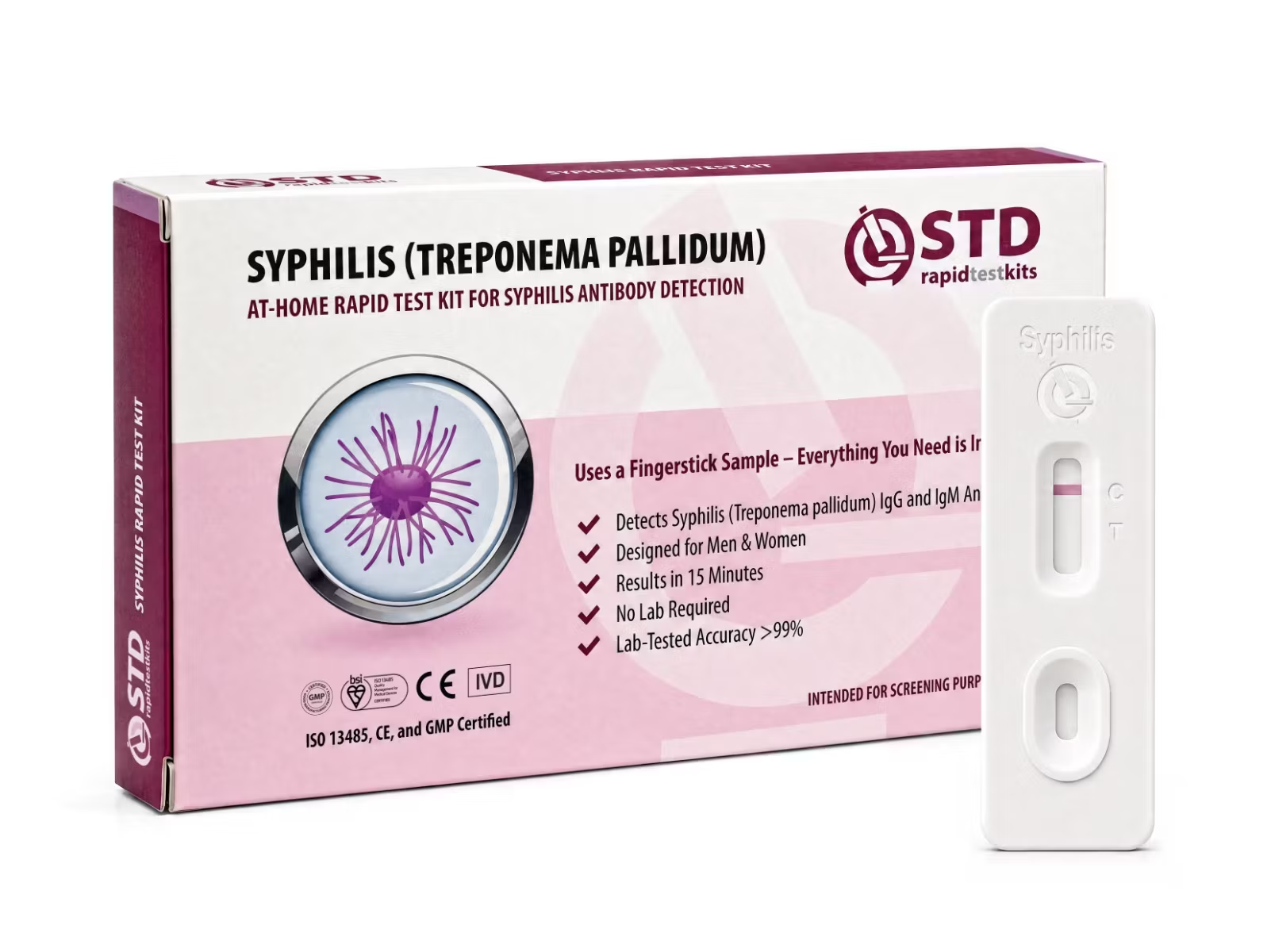
For people testing themselves at home with a fingerstick rapid test, the practical implications are: test from about 3 to 6 weeks after suspected exposure for the most reliable result, and confirm any positive result with a clinician who can run the second test family and stage the infection. STD Rapid Test Kits offers an at-home rapid lateral-flow syphilis test that uses a fingerstick blood sample and returns a result in about 15 minutes, alongside multi-test panels for readers concerned about more than one infection.
| Test type | What it detects | Best timing | Limits |
|---|---|---|---|
| Rapid treponemal antibody (fingerstick at home) | Antibodies against Treponema pallidum | From about 3 to 6 weeks post-exposure onward | Stays positive for life; cannot distinguish current vs past infection |
| RPR or VDRL (non-treponemal, lab) | Active disease activity | Confirms a positive antibody screen and monitors response to treatment | Can turn falsely positive in pregnancy and some autoimmune conditions |
| TP-PA or FTA-ABS (confirmatory treponemal, lab) | Specific syphilis antibodies | Confirms a positive screen | Stays positive after cure |
| CSF analysis (spinal tap) | Neurosyphilis | When neurological or ocular symptoms appear | Reserved for confirmed cases with central nervous system signs |
Treatment: what one shot of penicillin actually does
The standard treatment for syphilis has not changed in 80 years. A single intramuscular injection of long-acting benzathine penicillin G, 2.4 million units, clears primary, secondary, and early latent syphilis in the large majority of cases (CDC, Primary and Secondary Syphilis Treatment). Late latent syphilis or latent syphilis of unknown duration is treated with three weekly injections of 2.4 million units each, totalling 7.2 million units, to compensate for slower bacterial replication (CDC, Latent Syphilis Treatment).
Treatment for neurosyphilis or ocular syphilis is more intensive. Aqueous crystalline penicillin G is given intravenously for 10 to 14 days, often as an inpatient. The penicillin formulation matters because the long-acting benzathine version does not reach high enough concentrations across the blood-brain barrier to clear central nervous system infection.
People allergic to penicillin have alternatives (doxycycline for non-pregnant adults with early syphilis, ceftriaxone in some cases) but penicillin is so much more effective in pregnancy and neurosyphilis that the standard of care for most allergic patients is allergy desensitization rather than substitution.
Within hours of the first penicillin dose, some people develop fever, chills, headache, muscle aches, and a temporary worsening of the rash. This is the Jarisch-Herxheimer reaction. It is not an allergic response to penicillin. It is the body reacting to a sudden mass of dying bacteria releasing endotoxins. The reaction resolves within 24 hours.
Pregnancy and congenital syphilis
Untreated syphilis in pregnancy passes to the fetus through the placenta and causes one of the most preventable tragedies in modern medicine. Congenital syphilis can result in miscarriage, stillbirth, neonatal death, or severe lifelong disability including deformed bones, blindness, deafness, severe anemia, and meningitis (CDC, About Congenital Syphilis).
U.S. congenital syphilis cases have risen sharply over the past decade, driven primarily by gaps in prenatal screening and treatment access (CDC, About Syphilis). The CDC recommends that every pregnant person be screened for syphilis at the first prenatal visit, with repeat screening in the third trimester and at delivery for those at higher risk or living in higher-prevalence areas.
Treatment with penicillin during pregnancy is highly effective at preventing congenital infection if it is started early enough. Treatment in the last 30 days before delivery is less reliable because the fetus may already be infected.
CDC prenatal syphilis screening schedule
- First prenatal visit: every pregnant person screened, regardless of risk profile.
- Third trimester (around 28 weeks): repeat screen for those at higher risk or living in higher-prevalence areas.
- At delivery: repeat screen for those at higher risk or those who missed the third-trimester screen.
Can syphilis come back after treatment?
The bacterium is killed by penicillin. The body does not develop lasting immunity. Both of those things are true at the same time, which makes the question more layered than it sounds.
If treatment cleared the infection, the syphilis episode is over. But the immune system does not learn syphilis the way it learns chickenpox. A person who was treated and cured can be reinfected through new exposure. The body's response will be the same as the first time, including a fresh chancre and the systemic spread that follows.
This is why retesting matters after treatment. The CDC recommends follow-up RPR titer measurements at 6, 12, and 24 months after treatment to confirm the titer has dropped at least fourfold (CDC, Latent Syphilis Treatment). A titer that fails to drop, or one that climbs again later, suggests treatment failure or reinfection.
Treponemal antibody tests stay positive for life, so any future syphilis screen on someone with a treatment history will register as positive on the antibody side. Diagnosis of a new infection in this case relies on the non-treponemal RPR titer rising compared to the post-treatment baseline, which is one of several reasons to keep records of past treatment results.
Cure is confirmed by a fourfold drop in the non-treponemal RPR titer (for example, from 1:32 down to 1:8) within 6 to 12 months of treatment. The treponemal antibody test stays positive for life and does not confirm cure on its own. If the RPR climbs back up after dropping, it usually signals a new infection rather than treatment failure, because penicillin-resistant strains of Treponema pallidum have not been documented.
Who should test, and how often
The CDC's screening recommendations are organized by risk profile rather than by age. At minimum, screening is advised at least annually for sexually active gay, bisexual, and other men who have sex with men; at the prenatal-visit pattern noted above for pregnant people; and after any new partner or possible exposure event for everyone else.
People living with HIV should screen at every routine HIV care visit (typically every 3 to 6 months). People in higher-prevalence geographic areas, people exchanging sex for goods or money, and people with a partner recently diagnosed with syphilis should test as soon as exposure is suspected and again 3 months later to capture any seroconversion that fell outside the first window.
The general principle: screen on a calendar, not on a symptom. The whole point of testing is to catch syphilis before it produces a symptom dramatic enough to make someone think to test. By the time symptoms get loud, damage has often started. The NHS makes the same point in plainer language for the general public (NHS, Syphilis): if you have had unprotected sex with a new or casual partner, test, even if you feel completely well.
Tertiary syphilis is very serious and would occur 10–30 years after your infection began. In tertiary syphilis, the disease damages your internal organs and can result in death.
Frequently asked questions
- How long after exposure does a syphilis test become positive?
- Treponemal antibody tests, including rapid at-home fingerstick tests, become reliably positive about 3 to 6 weeks after exposure. Testing earlier than that risks a false negative because the body has not produced enough antibody yet for the test to detect. If a recent exposure is the concern, it is reasonable to test now to establish a baseline and again at 6 weeks to confirm.
- Can syphilis be cured with antibiotics?
- Yes. A single intramuscular injection of long-acting benzathine penicillin G clears primary, secondary, and early latent syphilis in the large majority of cases. Late latent syphilis is cured with three weekly doses. Neurosyphilis requires intravenous penicillin for 10 to 14 days. Damage caused before treatment cannot be undone, but the active infection is fully treatable at every stage.
- Is syphilis really painless in the first stage?
- Yes, that is the defining feature of the primary chancre. The sore is firm and round but does not cause pain or itch, which is why it is missed so often. Painful sores in the same area are more likely to be herpes (HSV-1 or HSV-2). A painless ulcer that heals on its own is the highest-suspicion finding for primary syphilis and is worth a blood test even after the sore disappears.
- Can you catch syphilis from oral sex?
- Yes. The bacterium spreads through direct contact with an infectious sore, including sores on or in the mouth, genitals, or anus. Oral transmission is well-documented and the chancre may appear on the lip, tongue, or oropharynx. Condoms and dental dams reduce risk substantially but do not eliminate it because sores can sit on uncovered skin (the base of the penis, the scrotum, the perianal area, the lips).
- What does the secondary syphilis rash look like?
- Reddish to copper-colored, round, flat or slightly raised lesions distributed across the trunk, palms, and soles. The palmar and plantar pattern is unusual for most rashes and is the most distinctive sign of secondary syphilis. The rash typically does not itch and resolves on its own within weeks even without treatment, while the underlying infection persists and progresses.
- Will a positive syphilis test stay positive forever?
- Treponemal antibody tests (including most rapid at-home tests) typically stay positive for life, even after successful cure. Non-treponemal tests like RPR or VDRL drop after treatment and are used to confirm cure and to detect reinfection. A history of syphilis means future antibody screens will register positive; the question of active infection is answered by the RPR titer.
- Can syphilis come back after I have been treated?
- Yes, reinfection is fully possible. Penicillin clears the bacterium, but the immune system does not retain lasting protection, so any new exposure restarts the cycle from a fresh primary chancre. Post-treatment titer monitoring at 6, 12, and 24 months confirms cure and catches any rebound rise in the RPR titer.
- Should I get tested if I do not have any symptoms?
- Yes. Latent syphilis has no symptoms by definition and can persist undetected for years; the CDC recommends annual screening for higher-risk groups regardless of how you feel, and every-prenatal-visit screening for pregnant people. Symptoms are not a reliable trigger for testing because they are absent in most stages of the infection.
- U.S. Centers for Disease Control and Prevention. About Syphilis: stages, transmission, screening, and surveillance overview, including the 10 to 30 year window for tertiary disease.
- U.S. Centers for Disease Control and Prevention. Primary and Secondary Syphilis Treatment Guidelines: single-dose 2.4 million unit benzathine penicillin G regimen for primary, secondary, and early latent stages.
- U.S. Centers for Disease Control and Prevention. Latent Syphilis Treatment Guidelines: early latent versus late latent dosing, RPR titer follow-up at 6, 12, and 24 months to confirm cure.
- U.S. Centers for Disease Control and Prevention. About Congenital Syphilis: outcomes in untreated pregnancy including miscarriage, stillbirth, deformed bones, blindness, deafness, severe anemia, and meningitis.
- World Health Organization. Syphilis fact sheet: global epidemiology, transmission routes, congenital syphilis, and clinical staging overview.
- U.K. National Health Service. Syphilis: symptoms by stage, including the not-usually-itchy palmar and plantar rash, testing, and treatment in plain language for the general public.
- Tudor ME, Al Aboud AM, Leslie SW, Gossman W. Syphilis. StatPearls (NCBI Bookshelf): clinical staging, named neurosyphilis syndromes (tabes dorsalis, general paresis), incubation period of 10 to 90 days with median of 21 to 25 days, and tertiary progression rates from historical untreated cohorts.
