Published: December 2025 | Last updated: May 2026 | Editorial review and quality control: Martina N.
A fishy smell after sex. Thick white discharge with itching that interrupts the day. A frothy yellow-green tinge that was not there last week. The body sends signals about its bacterial balance, its fungal balance, and any new infections all on the same channel, and the messages tend to overlap.
The question almost everyone asks first is whether this is bacterial vaginosis (BV), a yeast infection, or a sexually transmitted disease (STD). Smell, discharge, and itching patterns can usually narrow the field, but they cannot confirm a diagnosis on their own. Knowing what each condition typically looks and feels like helps decide whether a pharmacy run is enough, or whether testing should be the next step.
Key Takeaways
- Fishy odor with thin, watery discharge usually points to BV (a bacterial imbalance, not an STD); thick white discharge with intense itching usually points to a yeast infection.
- Green or frothy discharge, pelvic pain, urinary burning, or unusual bleeding warrant STD testing, since chlamydia, gonorrhea, and trichomoniasis can mimic or coexist with BV and yeast.
Reading the Patterns: What Smell and Texture Usually Mean
Before assuming the worst, observe the symptoms without obsessing. Texture, odor, and the type of itching tell a more reliable story than a search-bar headline does. The table below summarizes what each condition typically looks like. Overlap is common, so treat this as a starting map rather than a final diagnosis.
| Feature | BV | Yeast Infection | Common STDs |
|---|---|---|---|
| Color | Thin gray or milky white | Thick white | Yellow, green, or cloudy |
| Texture | Watery or thin | Clumpy, “cottage cheese” | May be frothy or mucus-like |
| Odor | Strong fishy smell, worse after sex | Usually no strong odor | May have unpleasant smell |
| Itching | Mild or none | Common and often intense | Sometimes present |
Why a Fishy Smell Almost Always Points to BV
A fishy odor is the most distinctive signal of bacterial vaginosis. Anaerobic bacteria, mostly Gardnerella vaginalis and similar species, produce amines that create the characteristic smell. The odor often intensifies after sex because semen temporarily raises vaginal pH from its normal acidic range (around 3.8 to 4.5) into a more alkaline zone where those amines become more volatile. Many people notice it most the morning after intercourse.
BV is the most common vaginal condition in women ages 15 to 44 (CDC Bacterial Vaginosis fact sheet). Despite being associated with sexual activity, BV is not classified as a sexually transmitted infection. It happens when the protective Lactobacillus bacteria decrease and other species overgrow. New partners, douching, hormonal shifts, antibiotics, and even menstrual blood can disturb the balance.
Yeast infections behave differently. They are fungal (most often Candida albicans), and inflammation dominates rather than odor. Yeast typically produces redness, swelling, and an itch intense enough to make sleep difficult. Discharge tends to be thick, white, and clumpy (the often-described “cottage cheese” appearance) with little to no smell.
Healthy vaginal pH sits between roughly 3.8 and 4.5, kept acidic by Lactobacillus species. When that protective population drops and anaerobic bacteria overgrow, those bacteria produce amine byproducts (putrescine, cadaverine, trimethylamine). The amines are volatile at higher pH, which is why semen (pH around 7.2 to 8.0) makes the smell more noticeable after sex. The smell is not an infection passed during sex; it is chemistry reacting to a pH shift.
When Itching Takes Over the Story
If the dominant symptom is itching, particularly the kind that makes you shift in your seat at work and feel relieved only when you can scratch (which, frustratingly, makes it worse), yeast jumps to the top of the list. Yeast thrives after a course of antibiotics, during pregnancy, in poorly controlled diabetes, after high-estrogen contraceptive use, and in damp environments. Most women experience at least one yeast infection during their reproductive years, and recurrent cases are common (CDC: Genital/Vulvovaginal Candidiasis).
STDs can cause itching too, but the quality is usually different. The irritation with trichomoniasis often feels raw, especially during urination or sex, and the discharge is frothy and yellow-green rather than thick and white. Chlamydia and gonorrhea less commonly cause genital itching; they more often produce subtle pelvic discomfort, painful urination, or no symptoms at all.
There is also a curveball worth naming: coinfections are real. Someone can have a yeast infection and BV at the same time, and someone can have BV and an STD at the same time.
Yeast infection risk factors
- Recent course of antibiotics, which suppress the protective Lactobacillus bacteria.
- Pregnancy and other high-estrogen states (including some hormonal contraceptives).
- Poorly controlled diabetes or higher-than-usual blood sugar levels.
- Prolonged moisture from damp swimwear, tight synthetic clothing, or hot humid weather.
- Immune suppression from medications such as corticosteroids.
Symptom Timing: When Did This Start?
Timing offers clues the discharge itself cannot. Symptoms that show up within a few days of finishing antibiotics usually point to yeast, since the antibiotics suppressed the protective Lactobacillus bacteria and let Candida overgrow. Symptoms that appear within days or a week of new sexual activity, especially a new partner, raise the probability of BV or a bacterial STD.
Bacterial STDs follow rough timelines. Chlamydia and gonorrhea can produce symptoms within several weeks of exposure but very commonly produce none at all, with the CDC noting that most chlamydia infections in women have no symptoms (CDC chlamydia fact sheet). Trichomoniasis symptoms, when they appear, typically show up 5 to 28 days after exposure (CDC trichomoniasis fact sheet). BV can flare quickly after sex, but it can also appear after stress, a change of soap, hormonal shifts, or no obvious trigger at all.
If symptoms are already present, test now. The infection is detectable whether or not you have hit the formal window period. If you are testing because of a recent exposure but have no symptoms yet, waiting until the reliable window for that infection improves accuracy and reduces the chance of a false-negative result.
Red Flags That Shift the Story to STD Territory
Most uncomplicated BV and yeast infections feel localized. They are uncomfortable, but they do not make the rest of the body feel unwell. Once symptoms cross certain lines, the probability that an untreated bacterial STD is involved rises sharply, and the testing decision should move from “maybe” to “yes.”
Watch for pelvic or lower-abdominal pain that does not match menstrual cramping, bleeding between periods or after sex, painful urination not explained by a known UTI, deep pain during intercourse, and any visible sores, blisters, or new bumps. Bacterial STDs like chlamydia and gonorrhea can travel upward into the uterus and fallopian tubes if untreated, potentially causing pelvic inflammatory disease (PID), a leading preventable cause of infertility.
Trichomoniasis deserves its own attention here. It often gets mistaken for BV because of the odor, but it is a curable parasitic infection that needs antiparasitic treatment, not BV antibiotics. Untreated trichomoniasis also increases the risk of acquiring HIV if exposed: the parasite causes mucosal inflammation that lowers the physical barrier to HIV entry, and meta-analyses estimate it raises HIV-acquisition risk roughly 1.5 to 2 fold during exposure. The elevated risk is real but modest, and a single course of metronidazole or tinidazole clears the trichomoniasis and removes that elevated risk along with it.
Same-day medical care is warranted for fever above 100.4°F (38°C), severe pelvic or lower-abdominal pain, fainting, or bleeding that is not a period. Those are not “wait and see” symptoms; they suggest a possible upper-tract infection. BV and yeast cause discomfort, but they rarely make the rest of the body feel ill.
Can You Have More Than One Thing at Once?
Yes, and this is where self-diagnosis breaks down. A reader might treat what they assume is yeast, watch the itching ease slightly, then notice the odor remains. They double the antifungal dose. Meanwhile, BV continues untreated, and any partner reinfection cycle never gets addressed.
BV also raises susceptibility to certain STDs because the protective acidic environment of the vagina is disrupted, and a concurrent STD can coexist alongside BV and needs separate treatment. When symptoms persist or evolve rather than resolve, broader testing makes more sense than another round of the same over-the-counter cream.
If symptoms ease with treatment but do not fully resolve, or return within a few weeks, test for the other conditions rather than repeating the same treatment. Yeast can coexist with BV; BV can coexist with chlamydia, gonorrhea, or trichomoniasis. Each one has its own treatment, and they do not respond to each other's medications.
Testing: Where Pattern-Matching Stops and Knowing Starts
If symptoms are mild and match yeast's pattern clearly (thick white discharge, intense itching, no smell), a single over-the-counter antifungal course is a reasonable first attempt. If symptoms do not improve within three to seven days, return quickly, or include odor, pelvic pain, urinary burning, or green/frothy discharge, testing is the smarter move.
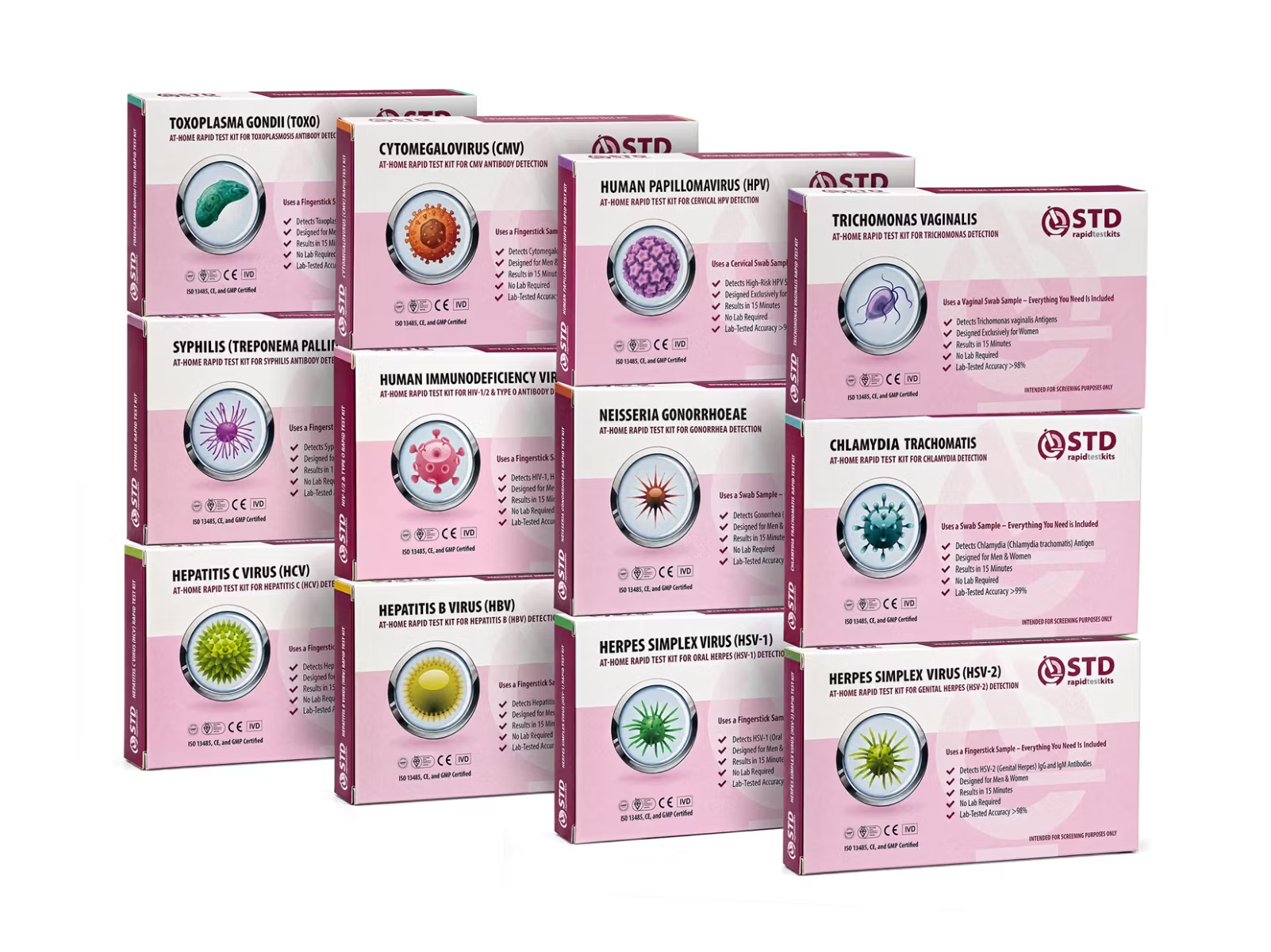
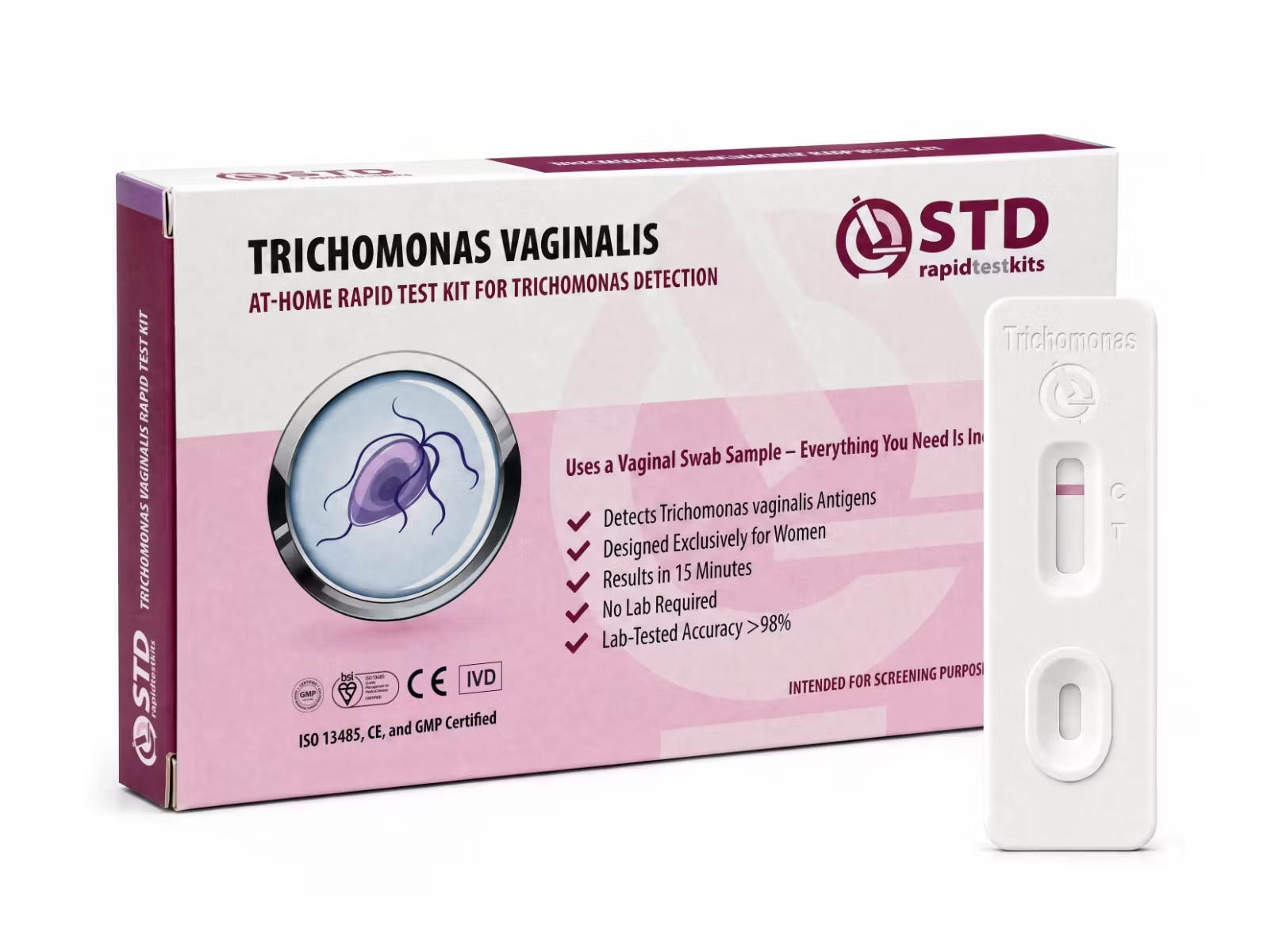
At-home rapid tests have changed the calculus for STD screening. A lateral-flow swab or fingerstick blood test can return results in roughly 15 minutes without a clinic appointment, with privacy as a bonus. A positive result is worth confirming with a lab NAAT through a clinician, since laboratory testing remains the analytical gold standard, but a private at-home screen is a useful first step when uncertainty is the bigger problem than waiting weeks for an appointment slot.
The decision table below distills the most useful questions to ask when symptoms are ambiguous. Disclosure: this site sells the at-home rapid tests linked in this article.
| Question | More Likely BV | More Likely Yeast | Consider STD Testing |
|---|---|---|---|
| Is odor the strongest symptom? | Yes | Usually no | Sometimes |
| Is itching severe? | Mild | Often intense | Mild to moderate |
| Is discharge green or frothy? | Rare | No | Possible with trichomoniasis |
| Is there pelvic pain or urinary burning? | Uncommon | Possible external burning | Common with chlamydia/gonorrhea |
When to Test, By Infection
The window between exposure and reliable detection differs by pathogen. The table below covers the three bacterial and protozoal infections most often confused with BV or yeast. If you are testing because of a recent exposure rather than current symptoms, waiting until the reliable window improves accuracy and reduces the chance of a false-negative result.
| Infection | Earliest Detection Window | Most Reliable Testing Time |
|---|---|---|
| Chlamydia | 7 days after exposure | 14 days after exposure |
| Gonorrhea | 7 days after exposure | 14 days after exposure |
| Trichomoniasis | 5–7 days after exposure | 2–4 weeks after exposure |
Does BV Mean a Partner Cheated?
No. BV is not an STD in the way that chlamydia, gonorrhea, or trichomoniasis are. It is a shift in the vaginal microbiome that can be triggered by a new partner, but also by douching, scented soaps, menstrual blood, hormonal changes, antibiotic courses, and sometimes nothing identifiable at all. New partners can change the bacterial balance simply because semen has a different pH and introduces unfamiliar bacterial species, not because either person is infected.
What is also true: BV can coexist with an STD, and recurrent BV (more than three episodes in a year) is sometimes the cue to broaden the testing net. Treating BV with antibiotics works, but if an underlying STD is also present and goes untreated, the BV symptoms can keep coming back.
Douching or vaginal washes (the single biggest disruptor of the protective bacterial mix). Scented soaps, bath oils, and feminine hygiene sprays. A recent course of antibiotics for an unrelated infection. Menstrual blood, which raises vaginal pH for several days. Hormonal shifts from pregnancy, perimenopause, or starting/stopping hormonal contraception. An IUD, especially in the first few months after insertion.
What Happens After Results
If testing confirms BV, a clinician typically prescribes metronidazole or clindamycin (oral or vaginal). Most acute episodes resolve within a week, though recurrence within months of treatment is common (CDC Bacterial Vaginosis). For yeast, fluconazole orally or an over-the-counter antifungal cream usually clears uncomplicated cases.
If testing returns positive for chlamydia, gonorrhea, or trichomoniasis, antibiotics or antiparasitic medication (most often a single-dose treatment) is effective. Partner notification matters: untreated partners frequently reinfect the index patient, and CDC guidance recommends partner testing and treatment to break that cycle. Most bacterial and protozoal STDs are fully curable; viral STDs such as herpes are managed rather than cured, but they cause a different symptom profile and rarely look like BV or yeast.
Bacterial vaginosis (BV) is the most common vaginal condition in women ages 15 to 44.
If You Take Nothing Else From This Guide
The three comparison tables above carry most of the practical summary work. When patterns blur, when symptoms recur, or when the first over-the-counter treatment did nothing, testing replaces guesswork with a treatment plan that fits the actual problem. Sexual-health symptoms come with extra anxiety, but the practical sequence stays the same: observe the pattern, match it to the most likely explanation, and test when the match is uncertain.
FAQs
- Does BV mean my partner cheated?
- No. BV is a shift in vaginal bacteria, not a pathogen passed exclusively through sex. New partners can shift the balance simply because semen has a different pH and introduces unfamiliar bacteria. Stress, douching, scented products, and antibiotics can all do the same. A fishy smell on its own is not evidence of infidelity; it is evidence that the vaginal microbiome has changed.
- If the itching is intense, is it always yeast?
- Usually, especially when the itching pairs with thick white discharge, redness, and no strong odor. STDs can cause itching, but trichomoniasis tends to feel more like raw irritation with frothy yellow-green discharge. Chlamydia and gonorrhea less often cause itching at all. If antifungal cream does not help within three to seven days, that is the signal to test rather than try a second course.
- What if it smells fishy but there is barely any itching?
- That pattern is classic BV. The smell often intensifies after sex because semen temporarily raises vaginal pH. It does not mean a new infection was caught; it usually means the existing bacterial mix has shifted. A clinician can confirm with a quick exam and prescribe metronidazole or clindamycin if needed.
- Should I panic about green discharge?
- Green or yellow-green discharge deserves attention even if it is not an emergency. Especially when frothy or bubbly, it can signal trichomoniasis or sometimes gonorrhea. Both are treatable, but waiting lets the infection spread or pass to a partner. Testing within a week is the right move, and rapid home tests for trichomoniasis return results in about 15 minutes.
- I treated for yeast and nothing changed. Now what?
- Time to pivot. If a full antifungal course did not improve symptoms within a few days, the original problem may not have been yeast. Repeating the same treatment often irritates the tissue without fixing the underlying issue. Testing for BV, trichomoniasis, chlamydia, and gonorrhea narrows the field quickly; a broad rapid panel can rule out the most common causes in one go.
- Can I have BV and an STD at the same time?
- Yes. BV does not protect against STDs, and an STD does not cancel BV. Having BV slightly increases STD susceptibility because the protective acidic environment is disrupted. When symptoms feel layered (odor plus pelvic discomfort, or discharge plus urinary burning), testing for both at once is more useful than treating one and waiting to see what is left.
- When does this need same-day medical care?
- Fever above 100.4°F (38°C), severe pelvic or lower-abdominal pain, fainting, or bleeding that is not a period are not “wait and see” symptoms. They signal a possible upper-tract infection (such as pelvic inflammatory disease) and need a clinician visit that day. BV and yeast on their own rarely make the whole body feel unwell.
- Why does this seem to happen after sex?
- Sex temporarily changes vaginal chemistry. Semen raises pH, friction can irritate tissue, and new partners introduce different bacterial species. None of that automatically equals infection. If symptoms resolve within a day or two, it was probably a temporary imbalance. If they persist or recur after each sexual encounter, BV or a sexually transmitted infection becomes more likely, and testing helps separate the two.
How We Sourced This Article: This guide pulls from current clinical guidance from the U.S. Centers for Disease Control and Prevention, the American College of Obstetricians and Gynecologists, the NHS, and the Mayo Clinic, alongside peer-reviewed clinical literature on bacterial vaginosis, vulvovaginal candidiasis, and common sexually transmitted infections. We compared symptom-pattern descriptions across these sources to map the differences readers most often want to understand before deciding whether to test.
- U.S. Centers for Disease Control and Prevention. Bacterial Vaginosis (BV) fact sheet: prevalence, symptoms, and treatment guidance for the most common vaginal condition in women ages 15 to 44.
- U.S. Centers for Disease Control and Prevention. Chlamydia fact sheet: symptoms, asymptomatic presentation, screening recommendations, and treatment.
- U.S. Centers for Disease Control and Prevention. Gonorrhea fact sheet: symptoms, complications, and testing guidance.
- U.S. Centers for Disease Control and Prevention. Trichomoniasis fact sheet: symptom timeline, discharge characteristics, and treatment guidance.
- U.S. Centers for Disease Control and Prevention. Vulvovaginal Candidiasis (genital yeast infection): risk factors, symptoms, and treatment guidance.
- Mayo Clinic. Vaginal yeast infection: symptoms, causes, and risk factors.
- NHS. Bacterial vaginosis: symptoms, causes, and treatment overview from the UK National Health Service.
