Published: September 2025 | Last updated: May 2026 | Editorial review and quality control: Martina N.
Walking into a dental appointment with a positive STD diagnosis can feel like carrying a secret nobody asked you about. Your mouth is about to be examined under bright light, and a small part of your brain starts running scenarios. Will they notice? Should you say something? Are you legally on the hook?
The short answer is that you almost never have to disclose. The longer answer depends on which infection you have, what procedure you're about to get, and whether anything visible is going on in your mouth. This guide walks through the medical, legal, and practical sides of telling your dentist (or not), drawing on current CDC guidance for dental infection control and oral STIs.
Key Takeaways
- No US law requires you to disclose an STD to your dentist. HIPAA protects your records, and every licensed dental office already applies the same infection-control protocols to every patient, regardless of known status.
- Disclosure is worth considering when you have an active oral lesion, are scheduled for oral surgery, or are on HIV treatment that may affect healing. For routine cleanings without symptoms, silence is medically fine.
Can a Dentist Actually See an STD?
Sometimes, but not reliably. During a routine cleaning or x-ray, dentists check your gums, tongue, cheeks, palate, and throat for tissue changes. Some oral STIs do leave visible signs: cold sores from HSV-1, painless ulcers from primary syphilis, white plaques from oral thrush in advanced HIV, or wart-like growths from certain HPV strains. Those signs overlap with dozens of harmless conditions, including canker sores, hot-food burns, allergic reactions, fungal overgrowth, and a sharp tortilla-chip injury you already forgot about.
Asymptomatic oral STIs are essentially invisible to a clinical exam. Pharyngeal gonorrhea and chlamydia are often asymptomatic; the CDC notes that getting these infections in the throat may not cause the same obvious signs as a genital infection (CDC, STI risk and oral sex). A dentist who notices something unusual will typically describe what they see, ask about your symptoms, and either monitor it or refer you to a primary-care provider or oral-medicine specialist. They will not announce a diagnosis from a visual exam alone.
Here's a rough guide to what various oral STIs can look like in the dental chair:
| STI | Oral Signs a Dentist Might See | Note |
|---|---|---|
| Herpes (HSV-1 / HSV-2) | Cold sores on lips, ulcers on gums or inner cheeks, inflammation | Often mistaken for canker sores or trauma |
| HPV | Wart-like growths or flat patches inside the mouth or throat | Usually painless; commonly missed unless obvious |
| Syphilis (primary) | Painless oral chancres, white mucous patches | Rare but clinically important to catch early |
| HIV (advanced or untreated) | Oral thrush, severe gingivitis, persistent ulcers | Symptoms overlap with many non-HIV conditions |
| Gonorrhea / Chlamydia (pharyngeal) | Throat redness, mild soreness; often no signs at all | Frequently no visible findings on routine exam |
Are You Legally Required to Disclose?
No US federal law requires you to tell your dentist you have an STD. HIPAA already protects your medical records, and disclosure is treated as a clinical-judgment matter rather than a legal one. That said, there are situations where telling your provider supports better care. If you're scheduled for oral surgery, laser treatment, biopsies, or any procedure involving mucosal tissue, mentioning that you have HIV or active herpes lets the dental team plan around healing time, antiviral coverage, or specific infection-control adjustments.
Some patients worry that staying quiet puts dental staff at risk. Every licensed dental office in the US follows what the CDC calls Standard Precautions: gloves, masks, eye protection, instrument sterilization, single-use needles, and surface disinfection are applied to every patient by default, on the assumption that any patient could be carrying a blood-borne pathogen (CDC dental infection-control guidance). Your known status doesn't change those protocols; the protocols exist because most infections are not known.
If you do disclose, you can ask that the information be added to your chart confidentially and shared only with clinical staff who need it for your care. You don't have to discuss it at the front desk or with anyone outside the treatment room.
What If You Have an Active Oral Outbreak?
Active outbreaks are the exception where disclosure (or just rescheduling) makes a real difference. An open cold sore on the lip, a fresh syphilitic chancre, or a painful HSV ulcer inside the mouth is a problem for two reasons. First, manipulating the area during a cleaning or filling can worsen pain, slow healing, and occasionally spread vesicles to surrounding tissue. Second, a misread lesion can lead to wasted appointments, unnecessary biopsies, or postponed work when the dentist isn't sure what they're looking at.
Oral-medicine specialists generally recommend delaying non-urgent dental work until visible lesions resolve, usually one to two weeks for an HSV outbreak. For genuine dental emergencies (abscess, severe pain, broken tooth), most clinics will still see you and simply work around the affected area. Many front-desk teams are trained to handle this discreetly: a quick phone call describing a sore inside your mouth is usually enough, and you don't have to label it as anything in particular.
If you're unsure whether a sore is herpes, a canker, or something else, take a photo, call ahead, and let the clinic decide whether to reschedule. That's a normal scheduling question, not a confession.
Are Dentists Trained to Recognize Oral STIs?
Some, but not deeply. Most dental schools include a module on oral manifestations of systemic disease, which covers the classic visual signs of HIV, syphilis, herpes, and HPV-related lesions. General dentists are usually good at spotting that something is unusual; they're typically not trained to confirm which STI is causing it. That falls to oral-medicine specialists, oral pathologists, or your primary-care doctor with appropriate testing.
Two things follow. If your dentist flags an unusual spot and you have a known STI diagnosis, telling them at that moment can speed up the workup and prevent an unnecessary biopsy. If you don't have a diagnosis but the dentist suggests one might be worth pursuing, treat that as a screening hint, not a verdict: confirmatory testing belongs in a clinic or with an at-home test kit, rather than in the dental chair.
| Condition | Dentist's Role | When Disclosure Helps |
|---|---|---|
| Herpes (HSV) | Identifies visible cold sores or oral ulcers | During active outbreaks, especially for procedures involving contact with affected tissue |
| HPV | May notice suspicious oral lesions during exam | If a lesion is active, growing, or scheduled for biopsy |
| HIV | May detect oral thrush, severe gingivitis, or persistent ulcers | Before major procedures, to coordinate healing timelines and medications |
| Syphilis | May detect chancres or mucous patches | During the visible-lesion phase, to support faster diagnosis |
How to Tell Your Dentist (If You Decide To)
If you decide to disclose, keep it short and clinical. No dramatic preamble, no apology. Three example scripts that work in real appointments:
“Just a heads-up, I have HSV-1 and sometimes get sores in my mouth. Nothing active today, but wanted you to have it on file.”
“I'm HIV-positive, on treatment, and undetectable. No oral symptoms, but I wanted to mention it before the extraction in case it affects healing.”
“I was recently diagnosed with syphilis and started treatment. I haven't noticed anything oral, but wanted to flag it.”
If saying it out loud feels harder than you expected, write it on your medical intake form or hand a note to the hygienist. The American Dental Association explicitly discourages refusing care based on HIV or other STI status without clear medical justification, and refusal of treatment on those grounds can carry legal consequences depending on state and federal disability protections. You should not be turned away.
If you want clarity before your appointment, an at-home combo kit can give you results within minutes. Home rapid kits use lateral-flow chemistry on a swab or fingerstick blood sample, not lab NAAT or PCR; they're useful for screening, and a positive should be confirmed with lab testing. Blood-based rapid tests for HIV, syphilis, and herpes antibodies generally need 4–12 weeks from exposure to produce reliable results. If your exposure is very recent, a clinic NAAT or PCR test will give a clearer answer.
Can You Actually Transmit an STI to Your Dentist?
Processing a new diagnosis takes time, especially when it involves what your body can transmit. Reassuringly, dental practices in the US operate under strict infection-control protocols designed specifically because most patients with blood-borne or sexually transmitted infections don't know they have one. Single-use needles, autoclaved handpieces and scalers, per-patient gloves and masks, and EPA-registered surface disinfection are all standard, applied regardless of whether a patient has disclosed an infection.
Occupational transmission of HIV from patients to dental healthcare workers is extensively documented in published literature as exceedingly rare, and most reported cases involved circumstances (deep needlestick injuries, blood splatter to eyes) that modern protocols largely prevent (CDC dental infection-control guidelines). HSV transmission from patient to dental staff is also very uncommon and is primarily a risk for unprotected direct contact with an active lesion, which is why gloves and rescheduling matter during active outbreaks.
If you're anxious, it's fine to ask how the office sterilizes instruments or manages infection control. Most teams will give you a clear, matter-of-fact answer.
| Equipment | Reuse Policy | Transmission Risk |
|---|---|---|
| Needles and syringes | Single-use only, sharps-container disposal | Extremely low with proper protocol |
| Handpieces (drills) | Autoclaved between patients | Negligible with standard sterilization |
| Scalers and scrapers | Autoclaved (high-heat sterilization) | Near zero when protocol is followed |
| Gloves, masks, eye protection | Single-use, changed per patient | Blocks nearly all fluid exposure |
What About HPV, Throat Cancer, and Oral Screenings?
HPV is the one infection where dental visits genuinely matter for prevention. Some dental offices include a visual oral-cancer screening as part of a routine checkup, looking for tissue changes that could signal oropharyngeal cancer. They're not testing you for HPV; they're checking for early warning signs of a cancer that, in roughly 60–70% of cases in the US, is now linked to HPV according to current CDC surveillance (CDC, HPV and oropharyngeal cancer).
HPV itself is exceptionally common. The CDC reports that most sexually active people will be infected with HPV at some point, and most infections clear on their own without ever causing symptoms (CDC, HPV). High-risk strains, however, can persist and progress to oropharyngeal cancer over years or decades, with cases rising more notably in men than women in the US over the past two decades. That's why dentists sometimes ask about smoking, alcohol use, and changes in your throat; those are risk factors, not judgments.

Should You Test for HPV Before Your Visit?
If you're worried about an oral HPV exposure specifically, it's worth knowing what home testing can and can't do. Home HPV kits use a self-collected vaginal swab to screen for high-risk HPV strains; they're validated for female anatomy only, and we don't currently sell a male-compatible home HPV test. Men concerned about oral HPV should see a clinic for an oral examination or pharyngeal evaluation if a tissue change is visible.
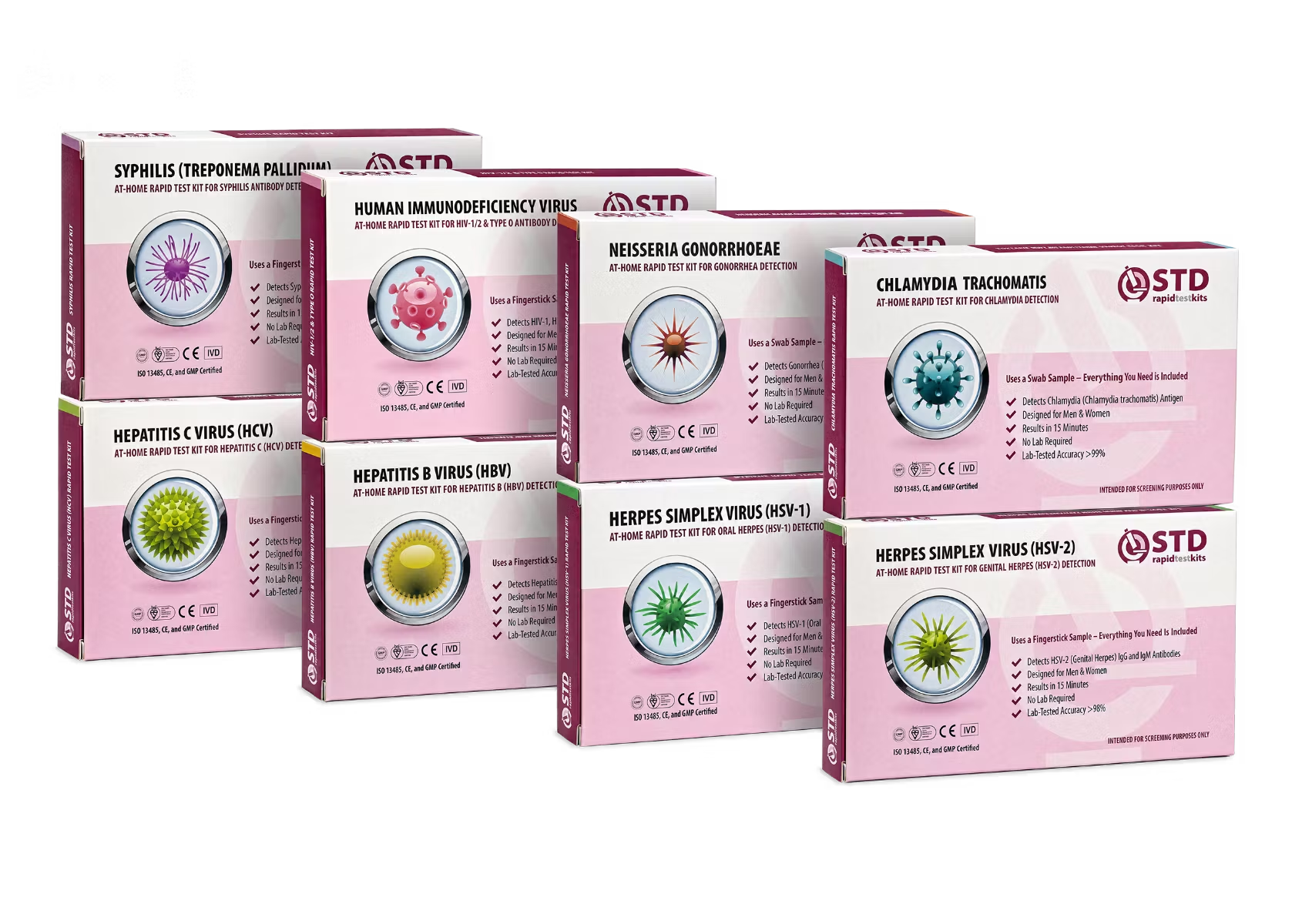
For broader peace of mind before a dental visit, especially after a new sexual partner or an unprotected oral exposure, a combo home panel that covers HIV, syphilis, herpes, chlamydia, gonorrhea, and hepatitis B and C is the more practical move. It gives you a baseline result for the infections most readers want clarity on before sitting in a clinical chair.
Stigma, Shame, and Skipping the Dentist
This topic hits a nerve because a dental chair is not a private space, and an STI diagnosis is a private fact. When those two collide under fluorescent light, the discomfort is real even when the medical stakes are low. Patients with stigmatized diagnoses often delay dental care for reasons that have nothing to do with clinical necessity; the appointment itself can feel like a moral test they didn't sign up for.
That delay has real consequences. Periodontal disease, untreated decay, and missed oral-cancer screenings are worse outcomes than any version of an honest conversation with a dental team. Many providers now train explicitly on trauma-informed and non-stigmatizing care, particularly for patients living with HIV or hepatitis. If your current dentist makes you feel judged for a diagnosis, switching practices is reasonable; you're not obligated to absorb someone else's discomfort to access basic care.
Your oral health matters regardless of what your sexual-health chart looks like. Whether you've had one partner or twenty, whether you're undetectable on HIV treatment or just managing occasional cold sores, you're entitled to clinical care that treats you as a whole patient. If disclosure helps you get that care, disclose. If it doesn't, your silence is a valid choice; the dental office's protocols already protect both of you.
The American Dental Association discourages refusing care based on HIV or STI status, and refusal may violate state and federal disability protections depending on jurisdiction.
Frequently Asked Questions
- Can my dentist tell I have an STD just by looking?
- Rarely. Even when tissue looks unusual, most dentists describe what they see rather than name a diagnosis. Asymptomatic infections (the majority of cases) are essentially invisible during a routine exam, and visible signs from HSV, HPV, syphilis, or thrush are easily confused with canker sores, allergic reactions, or minor trauma.
- Am I legally required to tell my dentist I have herpes or HIV?
- No US law requires it. HIPAA protects your records, and disclosure is a clinical-judgment matter rather than a legal one. You may choose to disclose before oral surgery or during an active outbreak, but the decision is entirely yours.
- I have an active cold sore. Should I cancel my appointment?
- For non-urgent work like a cleaning, yes, rescheduling is the standard recommendation. Manipulating the area can worsen pain and slow healing, and a sore can be misread as something requiring biopsy. For genuine emergencies, call ahead; clinics will usually still see you and work around the affected area.
- Could I accidentally infect my dentist?
- Extremely unlikely. Dental practices use Standard Precautions (single-use needles, autoclaved instruments, gloves, masks, eye protection, surface disinfection) on every patient. Occupational transmission of HIV or other STIs from patients to dental staff is documented as exceedingly rare in modern practice.
- What's the right way to bring up disclosure?
- Keep it brief and clinical: “I get oral herpes sometimes; nothing active today, but wanted you to know” works fine. You can also write it on your intake form or quietly tell the hygienist. A single sentence of relevant context is enough; you don't owe anyone a full medical history.
- Can I still get dental care if I'm HIV-positive?
- Yes, absolutely. Being HIV-positive doesn't disqualify you from cleanings, fillings, root canals, or extractions. If you're undetectable and stable, most providers won't need to do anything different. Some may want to coordinate medications or healing timelines before surgery. Refusing routine care based on HIV status alone is discouraged by the ADA and may be illegal under disability protections.
- Are general dentists trained to recognize STIs?
- Partially. Most dental schools cover oral manifestations of HIV, syphilis, HPV, and herpes. General dentists are usually good at spotting unusual tissue, but confirmation belongs to oral-medicine specialists, pathologists, or your primary-care doctor with appropriate testing.
- Should I just test at home before my next dental visit?
- If you've had a recent unprotected exposure or you're feeling unsure, a home STI kit can give you a baseline result in minutes, without a waiting room. A positive result on a home rapid test should be confirmed with lab testing, but a negative result on a properly timed test can be enough to walk into your appointment without anxiety.
How We Sourced This Article: Our article was constructed based on current advice from the most prominent public health and medical organizations, and then molded into simple language based on the situations that people actually experience. We reviewed CDC guidance on dental infection control, oral STI risk, HPV epidemiology, and HPV-related oropharyngeal cancer; American Dental Association principles on patient nondiscrimination; and WHO fact sheets on sexually transmitted infections. The seven sources highlighted below are the ones most relevant for readers wanting to verify specific claims.
- U.S. Centers for Disease Control and Prevention. Genital Herpes (HSV-1, HSV-2) fact sheet for the public.
- U.S. Centers for Disease Control and Prevention. STI risk and oral sex, including pharyngeal infection routes.
- U.S. Centers for Disease Control and Prevention. Dental infection control guidelines for healthcare personnel.
- U.S. Centers for Disease Control and Prevention. HPV and oropharyngeal cancer, including the share of cases linked to HPV.
- U.S. Centers for Disease Control and Prevention. Human papillomavirus (HPV) topic page: prevalence, transmission, and natural clearance.
- American Dental Association. Principles of ethics and code of professional conduct, including patient nondiscrimination guidance.
- World Health Organization. Sexually transmitted infections fact sheet (epidemiology and transmission overview).
