

Published: October 2025 | Last updated: April 2026 | Editorial review and quality control: Martina N.
Sexual health care has a quiet exclusion problem. People with physical, sensory, intellectual, or developmental disabilities want and need the same STI screening as everyone else, yet they hit barrier after barrier the moment they try to book a test. The U.S. Centers for Disease Control and Prevention puts adults with disabilities at more than 1 in 4 (28.7%) of the U.S. population (CDC Disability and Health), and the World Health Organization estimates 1.3 billion people worldwide live with significant disability (WHO disability fact sheet). That is not a small slice of patients to overlook.
This article walks through the specific barriers in STD clinics, the policy and design fixes that close them, and the role at-home testing plays when an in-person visit is genuinely out of reach. Citations point at the U.S. Department of Justice ADA standards, the CDC's STI screening recommendations, and WHO disability-inclusive health guidance.
What stops disabled people from getting STI tested, and what helps?
The biggest blocks are clinics that fail Americans with Disabilities Act standards (no height-adjustable exam tables, no Sign Language interpreters, no plain-language patient materials), providers who skip the sexual-history questions out of bias or training gaps, and transportation costs that hit harder when paratransit is the only option. Fixes that work: ADA-compliant exam suites, staff trained in disability-inclusive communication, accessible at-home testing for routine screening, and policy enforcement so existing legal protections actually mean something.
Key Takeaways
- More than 1 in 4 U.S. adults lives with a disability per CDC, and many face active barriers to STI testing despite needing the same screening as anyone else.
- ADA-compliant exam tables, accessible communication formats, and trained staff are the three changes that resolve most accessibility complaints in sexual health clinics.
Why STD testing access fails disabled patients
Healthcare ranks among the most studied sites of disability inequity, and sexual health is one of its weaker areas. The barriers cluster into four predictable categories: physical access to the clinic itself, the way information and communication get handled, provider attitudes and training, and the financial and logistical cost of just getting through the door.
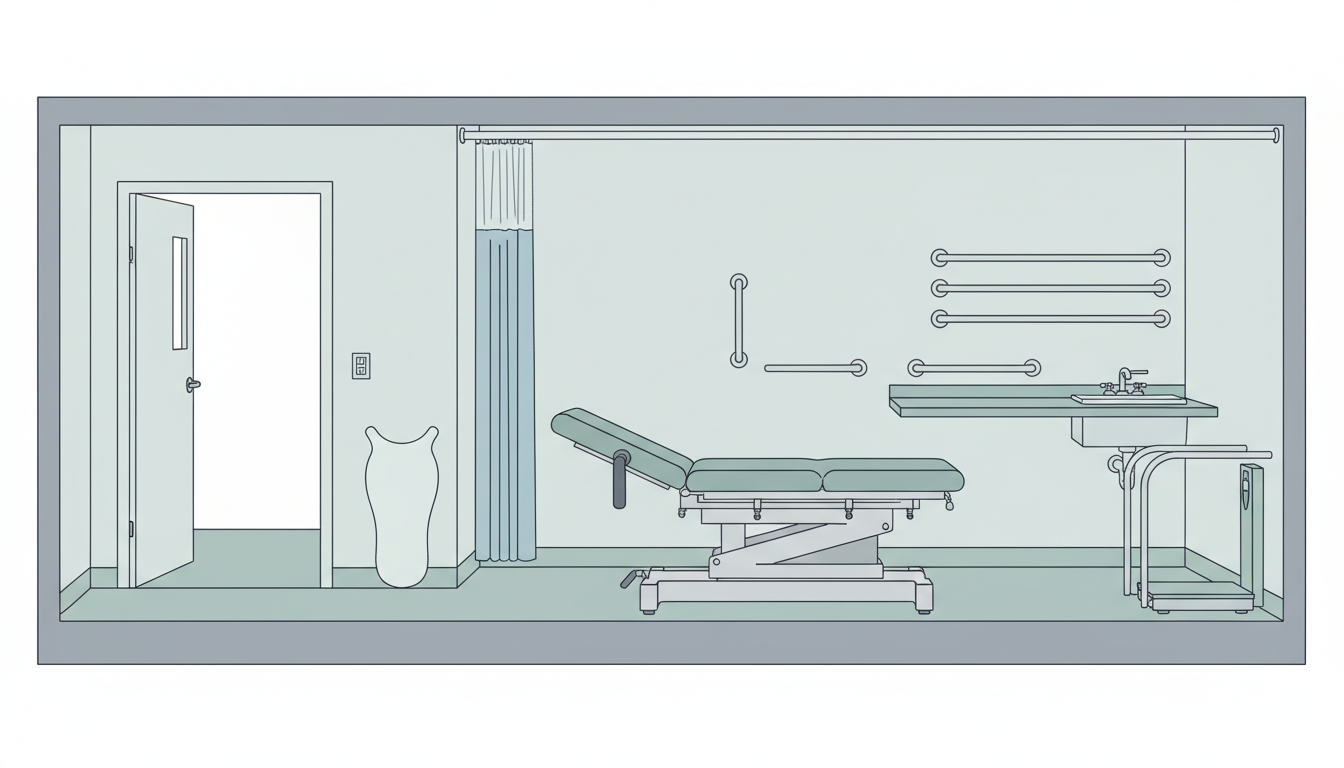
Physical layout. Many U.S. clinics still fail basic Americans with Disabilities Act requirements that have been on the books since 1990. Doorways too narrow for wheelchairs, exam tables fixed at heights wheelchair users cannot transfer onto, restrooms without grab bars or roll-in stalls, and waiting rooms with no clear seating for people who cannot stand for long. The U.S. Department of Justice's access to medical care for individuals with mobility disabilities guide spells out what compliance looks like in detail; the gap between that document and the average clinic floor plan is wider than most managers admit.
Communication. Patients who are deaf or hard of hearing routinely arrive to find no qualified American Sign Language interpreter, with handwritten notes substituted as if that were equivalent. Patients with low vision rarely receive paperwork in large print, Braille, or audio. Patients with intellectual or developmental disabilities are handed forms full of clinical jargon and expected to keep up. The result: incomplete consent, missed history-taking, and patients walking out without ever being properly screened.
Provider attitudes. The persistent assumption that disabled adults are not sexually active, or are not at risk, leads providers to skip the sexual history altogether. The CDC's STI Treatment Guidelines set recommended screening intervals applicable to all sexually active patients. In practice, surveys of clinicians repeatedly find that conversations about sex with disabled patients happen less often, in less detail, with fewer follow-up questions about partners, exposure, or testing history.
Cost and getting there. Disability and poverty correlate in the United States. Rideshare costs to a clinic, paratransit reservations, time off work to align with limited paratransit windows, and out-of-pocket fees for tests not covered by Medicaid or Medicare can pile up quickly. The presence of a paid caregiver in the exam room creates its own privacy problem, since many patients understandably do not want to discuss sexual partners or symptoms with someone who is also a household employee.
None of this is unique to STIs, but STIs concentrate the harm. An undiagnosed chlamydia infection in someone with mobility limitations who never made it to a follow-up appointment can quietly progress to pelvic inflammatory disease and infertility. An undiagnosed HIV in someone whose paratransit window collapsed three appointments in a row can advance for years before detection. The four categories above stack on each other, so a single visit can hit all four barriers at once.
Why these gaps cost more than convenience
The downstream cost of inaccessible sexual health care shows up in measurable population health gaps. Research on disability and reproductive health repeatedly finds that women with physical disabilities receive routine cervical cancer screening (Pap smears, which also surface HPV) at lower rates than women without disabilities. The CDC's Disability and Health program has documented persistent gaps in preventive care for adults with disabilities across multiple cancer-screening categories.
The pattern repeats for other infections:
- HIV. Pooled analyses have found that disabled adults, and disabled women in particular, report lower rates of HIV testing and lower self-reported HIV knowledge than non-disabled peers across multiple surveys. The same access gap appears in U.S. behavioral risk factor data.
- Chlamydia and gonorrhea. Routine annual screening is recommended for sexually active women under 25 and for many higher-risk groups under the CDC's STI guidelines. Among women with intellectual and developmental disabilities, screening uptake lags behind the general population even after controlling for insurance status.
- Syphilis. Rising case counts across the U.S. have highlighted screening gaps in vulnerable populations. Routine syphilis testing in pregnancy and among adults at risk is a CDC public-health priority, and the access barriers documented above translate directly into delayed diagnosis.
The harm is not abstract. Untreated chlamydia and gonorrhea are leading preventable causes of pelvic inflammatory disease and tubal infertility. Untreated syphilis can advance to neurological and cardiovascular complications. Untreated HIV progresses to AIDS-defining illness. These are the outcomes any routine screening program is designed to head off years before they appear.
Disabled adults have sex at roughly the same rates as non-disabled adults across most studies; the assumption otherwise is a clinician bias, not a clinical finding. Skipping the sexual-history questions on that basis is a missed screening, full stop.
What an inclusive STD clinic actually includes
Disability-friendly is a vague phrase. The concrete version is a checklist. A clinic that earns the label has worked through the Americans with Disabilities Act access standards and gone past them where good clinical care demands it. The pieces that make the largest difference for sexual health visits, in roughly the order patients notice them:
- Step-free entry, automatic doors, wide hallways, accessible parking with adequate clearance. No part of the visit should start with a logistics fight at the curb.
- Height-adjustable exam tables in every room used for pelvic exams or sexual-health screening. A single accessible room is not enough; if it is booked, the patient gets bumped or assessed on a non-accessible table.
- Trained staff who can assist with safe transfers, when consent has been given, using lifts or slide boards rather than improvised lifting.
- Sample-collection rooms with accessible toilets and grab bars, so urine collection or self-swab steps do not turn into a privacy negotiation in the hallway.
- Qualified American Sign Language interpreters, available in person or via approved video remote interpreting, with the slot taken at booking. Family members and ad-hoc interpreters are not appropriate for medical consent in most cases.
- Patient materials in plain language, large print, Braille, and audio, covering consent forms, what the test involves, what the results mean, and how follow-up will work.
- Staff training that addresses the asexuality myth directly. Patients with disabilities should be screened on the same evidence-based criteria as anyone else. The training should also cover disability etiquette: speak to the patient, not over them to a companion; ask before touching mobility equipment; allow extra time for cognitive processing.
- Privacy options for patients who arrive with a caregiver, including a clear, low-friction way to request that the caregiver step out for the sexual-history portion.
None of these is a stretch goal. They are the existing legal floor for ADA-covered items, plus standard inclusive-care practice. Most of the cost lands in capital projects (table replacements, doorway widening) and ongoing interpreter contracts, both of which are budget-line decisions clinic management already makes for other purposes.
| Visit element | Inaccessible default | Accessible alternative |
|---|---|---|
| Doorway and entry | Heavy manual door, narrow vestibule | Step-free entry, automatic doors, wide path |
| Exam table | Fixed-height standard table | Height-adjustable table with transfer support |
| Sign-in and consent forms | Standard print only | Plain language plus Braille, audio, and large print on request |
| Deaf patient communication | Handwritten notes or family member translating | Qualified ASL interpreter, in person or video remote |
| Sexual history taking | Skipped or rushed for disabled patients | Same evidence-based questions as any other patient |
| Sample collection room | Inaccessible restroom, narrow stalls | Roll-in stall, grab bars, height-adjustable sink |
| After visit | Verbal results only, no written summary | Written summary in patient's preferred format |
At-home testing as a partial workaround
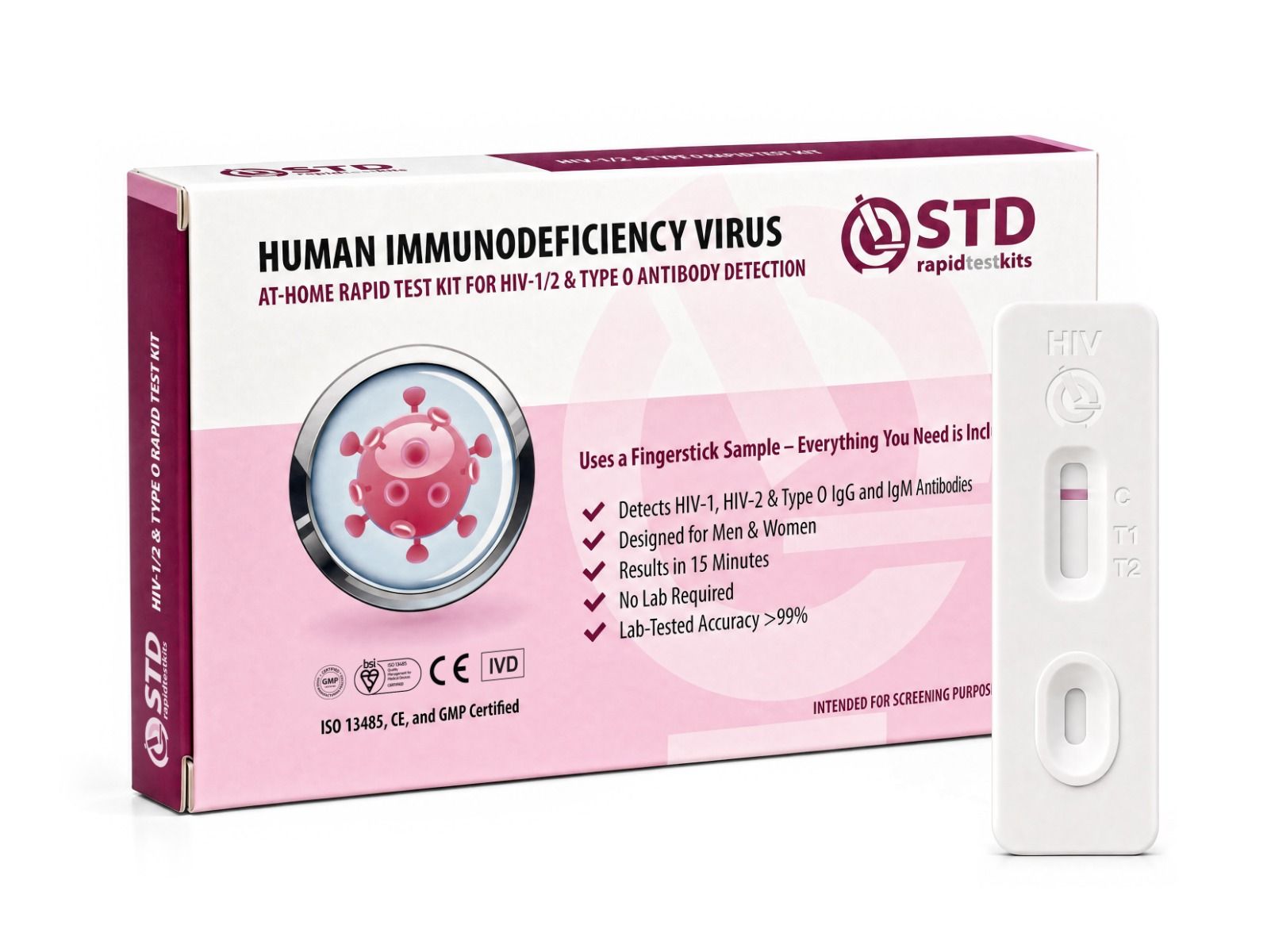
When the local clinic is genuinely inaccessible, when paratransit reservations keep falling through, or when caregiver presence makes a clinic visit feel unworkable, mailed at-home rapid tests fill a useful gap. They are not a complete replacement for in-person care; positive results still require clinical follow-up, and some samples (throat swabs, lab-grade molecular testing) still need a provider. But for routine antibody and antigen screening for the most common infections, the at-home option is meaningful.
What works well at home:
- Self-collected vaginal swabs for chlamydia, gonorrhea, trichomoniasis, and HPV when the kit is validated for self-collection.
- Fingerstick blood tests for HIV, syphilis, hepatitis B, hepatitis C, and herpes simplex virus antibodies.
- Combination panels that cover several infections at once, useful when a separate clinic visit per test is not realistic.
What still requires a clinic:
- Pharyngeal (throat) swabs and rectal swabs for chlamydia and gonorrhea, which are not currently available as at-home self-collection products.
- Confirmatory testing after a reactive at-home antibody result; the CDC's HIV testing guidance calls for a laboratory-based confirmatory test before any treatment decision.
- Syphilis staging, which can require a clinical exam to determine treatment course.
For accessibility specifically, at-home options solve four problems at once: the building access problem (the test ships to wherever the patient is), the interpreter problem (instructions can be reviewed on screen, in audio, or with help from a trusted person on a video call), the transportation problem, and the privacy problem with caregivers in clinical settings. Patients who use voice-control assistive technology, screen readers, or magnification can usually navigate the test instructions in formats that match those tools.
Not every at-home kit ships with accessibility features by default. Look for products that include audio walkthroughs, large-print quick-start guides, and customer support that handles screen-reader-friendly questions over chat or email. The category is improving, but availability still varies kit to kit.
The tests linked below are sold by this site. We recommend products based on fit-for-purpose for the reader's situation, not commercial benefit.
Models that are working: UK, Australia, U.S. examples
Several public health programs have demonstrated that disability-inclusive STI testing is workable, not aspirational. A few examples of what implementation looks like in practice:
United Kingdom: accessible HIV self-testing. The Terrence Higgins Trust, a major UK HIV charity, has run mailed HIV self-test campaigns that include easy-read instructions designed with input from people with intellectual disabilities, audio and Braille versions of the booklet, and phone or webchat support staffed by people trained in disability-inclusive communication. The model has been studied in collaboration with the UK Health Security Agency and is part of the broader move toward home HIV testing in England as a routine option.
Australia: Family Planning organizations and accessibility audits. State Family Planning groups in Australia, notably in Victoria and New South Wales, have run accessibility audits of sexual health clinics, retrofitted exam rooms with adjustable tables and patient lifts, and trained counselors with disability-sector experience. Australia's national disability strategy includes sexual and reproductive health as a measurable target, with dedicated funding lines that the U.S. equivalent does not yet have.
United States: Title X grantees and hospital systems. Some U.S. Title X family-planning grantees, including Planned Parenthood affiliates and federally qualified health centers, have moved further than baseline ADA compliance: dedicated accessible exam rooms, partnerships with local Centers for Independent Living, and patient navigators who specifically support disabled patients through visits. Other clinics in the same regions still fail the basics, so the patient experience is uneven from one zip code to the next.
What unites the working models is not budget. It is sustained leadership attention, partnership with disability advocacy organizations during program design (rather than as an afterthought), and the willingness to fix the boring infrastructure problems (door widths, exam table heights, interpreter contracts) before chasing more visible projects. The clinics that have done this work report stable or growing screening rates among disabled patients within two years.
Many of these gaps in health outcomes cannot be explained by the underlying health condition or impairment, but by avoidable, unfair and unjust factors.
Legal protections, and where they fall short
The Americans with Disabilities Act has covered medical facilities since 1990. Title III applies to private clinics; Title II applies to publicly run facilities. The U.S. Department of Justice's medical-care technical assistance documents, including the access to medical care for individuals with mobility disabilities guide, set out specific requirements for exam tables, transfers, and physical access. Section 504 of the Rehabilitation Act of 1973 covers federally funded providers, and Section 1557 of the Affordable Care Act prohibits discrimination on the basis of disability across most health programs.
So why are inaccessible clinics still common? Three reasons:
- Enforcement is largely complaint-driven. A patient has to file a Department of Justice or Office for Civil Rights complaint, navigate the process, and wait for resolution. Most patients with limited time and energy do not, and providers know it.
- The standards are sometimes ambiguous in practice. What counts as a sufficient number of accessible exam rooms, or a reasonable interpreter response time, gets litigated case by case rather than enforced uniformly.
- Renovation costs and grandfathering provisions allow older buildings to defer compliance. ADA requires readily achievable barrier removal in existing facilities, but readily achievable is interpreted narrowly. New construction must meet full standards; many existing clinics never get the funded retrofit they would need.
Patient advocacy groups including the National Disability Rights Network and Disability Rights Education and Defense Fund maintain resources for patients who want to file complaints or push for retrofits. State protection-and-advocacy systems, funded under federal disability-rights statutes, provide free legal assistance in every state and territory.
How to find or request accessible testing today
While the system catches up, individual patients and clinic staff can take specific steps that move the dial in single appointments.
If you are looking for a clinic visit:
- Call ahead and ask, in plain terms: Do you have a height-adjustable exam table available the day I am scheduled? Can you book an ASL interpreter? Do you have written materials in large print or Braille? If the answers are no, that is useful information for choosing a different provider.
- Use the federal Health Resources and Services Administration's findahealthcenter.hrsa.gov tool to locate federally qualified health centers near you. Many publish their accessibility features and offer sliding-scale fees.
- Ask whether the clinic uses a patient navigator program. Many federally qualified health centers do, and the navigator can coordinate transportation, interpreter scheduling, and accommodations in advance.
- If you are denied accommodations or sent home without a complete visit, document what happened and contact your state Disability Rights agency or the U.S. Department of Health and Human Services Office for Civil Rights. The complaint process is slow, but it is the lever that changes provider behavior over time.
If a clinic visit is not workable:
- Check whether your insurer covers at-home testing. Medicare and many Medicaid programs cover at-home HIV self-testing in some states; commercial insurers vary.
- Look for at-home kits that publish their accessibility features (audio instructions, large-print quick guides, screen-reader-friendly support channels).
- For positive at-home results, seek a confirmatory in-person or telehealth visit. Telehealth is broadly accessible and removes the building-access problem; pair it with a local lab partner for any follow-up blood draw.
For caregivers and clinic staff: the single most useful step is to make accessibility the default, not the exception. Adjust the exam table to wheelchair transfer height before the patient enters the room. Open with: I will speak directly with you; let me know if you would prefer your companion to step out for any part of the visit. Have the interpreter slot pre-booked rather than scrambled for at the last minute.
FAQs
- What is the most common barrier disabled patients hit at STD clinics?
- Physical access to the exam table is the single most-reported barrier in U.S. surveys: a fixed-height table that wheelchair users cannot transfer onto. Communication barriers (no interpreter, no accessible patient materials) and provider bias (skipping the sexual history) follow close behind.
- Are at-home STI tests genuinely accessible to people with disabilities?
- Many are, but not all. Useful features to look for: audio walkthrough instructions, large-print quick-start guide, screen-reader-friendly customer support, and self-collection methods that do not require fine motor control beyond what the patient already manages. For patients with severe motor or vision limitations, a trusted helper at home is sometimes still part of the workflow.
- How can I find a disability-friendly STD clinic near me?
- Three useful starting points: your state Center for Independent Living or Disability Rights agency (they often maintain accessible-provider lists), the federally qualified health center finder at findahealthcenter.hrsa.gov, and Planned Parenthood affiliates that publish their accessibility features. Calling ahead with specific questions about exam tables, interpreters, and accommodations is the most reliable filter.
- Does the ADA require sexual health clinics to be accessible?
- Yes, since 1990. Title III covers private clinics; Title II covers publicly run facilities. The U.S. Department of Justice publishes technical guidance on exam-table heights, transfer equipment, and patient communication, and Section 1557 of the Affordable Care Act adds anti-discrimination requirements for federally funded providers. Section 504 of the Rehabilitation Act offers a parallel protection for any program receiving federal financial assistance.
- Why do some doctors skip sexual history with disabled patients?
- The persistent assumption that disabled adults are not sexually active, combined with limited disability-inclusive training in U.S. medical and nursing schools, leads many providers to default to a shorter, less specific history. Surveys of clinicians repeatedly show this gap, and it is the gap that current disability-inclusive training programs aim to close.
- Can I file a complaint if a clinic refuses to accommodate me?
- Yes. For ADA complaints against private medical practices, file with the U.S. Department of Justice. For federally funded providers, file with the U.S. Department of Health and Human Services Office for Civil Rights. State Disability Rights agencies can also help. Document the date, time, what was requested, and what was refused; specifics help.
- Do telehealth visits count as accessible STI care?
- Telehealth removes the building-access problem and is broadly accessible to patients with mobility limitations. It does not replace sample collection; pair telehealth with at-home test kits or a local lab partner for the actual specimen. Make sure the platform supports captioning, screen readers, and Sign Language interpreters for the visit itself.
- Are disabled adults at higher risk for STIs?
- Risk depends on individual sexual activity, not disability status, but disabled adults face higher rates of sexual violence and have lower routine-screening uptake, which together produce higher rates of undiagnosed STIs in some populations. Routine, evidence-based screening at CDC-recommended intervals is the standard, the same as for any other patient.
Working toward inclusive STD testing
Closing the access gap is not a single project. It is sustained attention to the boring infrastructure, plus disability-inclusive training built into clinical education, plus enforcement of the legal protections that already exist, plus genuine partnership with disability advocacy groups during program design rather than after the fact. None of those pieces alone moves the dial; together they do.
The good news for individual patients: the at-home rapid testing category has grown, telehealth is now mainstream, and clinics that have done this work report measurable gains within two years. The harder news for the rest of the system: the failing clinics will keep failing until enforcement, funding, and management priority all line up.
Document what happened (date, time, what you requested, what was refused, who you spoke with). File an ADA complaint with the U.S. Department of Justice for private medical practices, or with the HHS Office for Civil Rights for federally funded providers. Your state's protection-and-advocacy system can provide free legal help. Complaints are how providers learn the standards apply to them.
- U.S. Centers for Disease Control and Prevention. Disability and Health: About. Background statistics on the share of U.S. adults living with a disability (more than 1 in 4, or 28.7%) and disparities in preventive care.
- World Health Organization. Disability and health fact sheet. Global prevalence of disability (1.3 billion people) and barriers to health services.
- U.S. Department of Justice. Access to Medical Care for Individuals with Mobility Disabilities (ADA technical assistance guide on exam tables, transfers, and accessible facility features).
- U.S. Centers for Disease Control and Prevention. Sexually Transmitted Infections Treatment Guidelines, including recommended screening intervals for sexually active patients.
- U.S. Centers for Disease Control and Prevention. HIV testing guidance, including confirmatory testing protocol after a reactive screening result.
- World Health Organization. Global report on health equity for persons with disabilities (2022). Source for the pull-quote on avoidable health-outcome gaps.
