

Published: November 2025 | Last updated: April 2026 | Editorial review and quality control: Martina N.
The diagnosis itself often arrives quietly: a Pap result with a few extra letters, a brief follow-up call, a pamphlet you do not read until the next morning. Most HPV infections clear on their own, and most never cause symptoms. The harder part is figuring out how the news fits into the next date, the new relationship, or the conversation you have been delaying.
This article pulls together what current public health guidance, peer-reviewed research, and people who have already had the talk all say works. The patterns are clearer than the silence around them suggests, and almost everyone reports the same thing afterward: the dread before disclosure was heavier than the actual response.
Can you date with HPV?
Yes. HPV is the most common sexually transmitted infection in the United States, and the U.S. Centers for Disease Control and Prevention notes that nearly every sexually active adult will get at least one strain at some point. Most people date, fall in love, and have ongoing sex lives after a diagnosis. Disclosure before genital skin-to-skin contact is the consensus ethical recommendation, and the conversation is usually shorter and calmer than people fear.
Key Takeaways
- About 9 in 10 HPV infections clear on their own within two years through normal immune response, according to the CDC.
- Disclosure conversations rarely end relationships in research and lived accounts; the discloser's anxiety almost always overshoots the partner's reaction.
Why HPV Looms Larger in Dating Than in Medicine
The math on HPV is almost reassuring. The CDC's Genital HPV fact sheet describes HPV as the most common sexually transmitted infection in the country, with most infections clearing on their own and the majority of people never knowing they had one. The National Cancer Institute notes that the immune system clears most HPV infections within one to two years. The HPV vaccine, originally licensed for adolescents, now covers people through age 26 routinely and through age 45 with shared clinical decision-making.
So if HPV is this common and this manageable, why does telling a partner feel like setting off an alarm? A few specific reasons surface again and again in research and in clinical counseling experience.
First, HPV is silent. There is no fever, no clear lesion timeline, no obvious moment that points to a particular partner. That ambiguity makes blame feel heavier rather than lighter, because the brain wants something to point at and finds nothing.
Second, routine HPV testing in people without a cervix does not exist in standard practice. There is no FDA-approved HPV screening test for partners without cervical anatomy, which means people with cervixes carry most of the diagnostic news and most of the disclosure stress. The information asymmetry is real, and it shapes who ends up doing the talking.
Third, sex education in much of the United States barely covered HPV before the vaccine arrived in 2006. Many adults still associate the virus with cervical cancer and warts and nothing else, with no concept of strain types, immune clearance, or how universally HPV circulates in sexually active populations. The listener often has no framework, so the discloser ends up running a quiet education session on top of an already vulnerable conversation.
The CDC describes HPV as the most common sexually transmitted infection in the United States. Nearly all sexually active people will be exposed to at least one strain at some point in their lives, and the vast majority will never know it because most infections clear on their own without symptoms.
When and How to Tell a New Partner
Disclosure timing is more flexible than the inner panic suggests. The American Sexual Health Association, the CDC, and clinicians who counsel people on sexual disclosure all converge on a similar principle: you do not need to disclose on a first date, and you almost certainly do not need to disclose at all if there is no physical intimacy on the table. The conversation belongs in the window before genital skin-to-skin contact, which is the route HPV transmits.
That window is wider than people realize. A few common options:
- Before the relationship turns physical, in a calm setting when you have time to talk. Most people prefer this in retrospect.
- Before unprotected sex, even if some physical intimacy has already happened. Less ideal, still ethical when handled clearly.
- During an exclusivity conversation, alongside any other sexual health topics that come up. The disclosure has a natural frame and is not just about you.
What the conversation actually contains matters more than when. A few elements show up in nearly every account where the talk went smoothly.
A short, calm summary works better than a long preamble. Something close to: I tested positive for HPV a while ago. My doctor said most cases clear on their own, and mine has been monitored. I wanted to mention it before we got physical because it feels respectful. That runs about forty words and does the job.
An invitation to ask questions matters next. The other person will probably have some, and most are predictable: does it mean I have it now, is it dangerous, can I get tested? Having calm answers ready, including the honest one that there is no routine test for partners without a cervix, prevents the conversation from spiraling into mutual confusion.
A signal that you have processed the diagnosis yourself helps most of all. People often respond to the discloser's emotional tone more than to the content. If you arrive calm, prepared, and matter-of-fact, that gives the listener permission to respond the same way.

What People Hear Back: Patterns From Real Disclosures
Research on HPV disclosure outcomes is thinner than research on other STIs, but the studies that do exist tell a consistent story. Reviews published in journals like Sexually Transmitted Infections and Sexual Health have repeatedly found that most HPV disclosures in established or developing relationships are met with neutral or supportive responses, and that the discloser's anxiety before the conversation almost always overshoots the partner's actual reaction. Online HPV-support communities tell the same story informally: the dread tends to be much heavier than the response.
That does not mean every disclosure goes well. A meaningful minority end in withdrawal, ghosting, or hurtful comments, and dating-app contexts produce these outcomes more often, particularly when disclosure happens early in a connection that has no emotional foundation yet. People in more committed relationships report negative reactions least often.
Certain responses come up so consistently in disclosure accounts that they are worth naming.
The they-already-had-it reveal. For people in their late twenties and older, the listener often pauses and says some version of I think I had something like that a few years ago. HPV is common enough that this is statistically unsurprising, and it tends to defuse the conversation entirely.
The thanks-for-telling-me reaction. Many partners process the news as a trust signal rather than a deal-breaker. The discloser was honest before sex. That, on its own, often deepens the connection rather than damaging it.
The educational-gap pause. Some partners genuinely do not know what HPV is. They may need a few minutes, or a few days, to look it up before responding fully. People often interpret a quiet or distant initial response as rejection when the listener is actually just processing unfamiliar information. Two weeks later, many of those partners come back ready to talk.
Rejection still happens, and the accounts of partners pulling away after disclosure are real. What survivors of those conversations consistently describe afterward is that the relationship that ended would likely have ended for some other reason eventually. A partner who cannot hold a calm conversation about a common, manageable virus is showing you something about their general capacity for difficult intimacy.
Most HPV infections will go away on their own and not cause any health problems. Most people with HPV never develop symptoms or health problems from it.
When HPV Surfaces in a Long-Term Relationship
The hardest version of this conversation is the one that starts with an abnormal Pap result after a decade of monogamy. The instinct to read the result as evidence of cheating is strong, and is almost always wrong.
HPV can stay below the detection threshold for years. The virus integrates into basal cells of the cervix, anus, throat, or genital skin and can persist at low levels for long stretches, then become detectable during periods of immune stress, illness, or hormonal change. Mayo Clinic's HPV overview notes that infections can persist for years before causing detectable changes. Someone who acquired HPV in their late teens or early twenties may test positive for the first time decades later without ever having been tested before. The result is a delayed diagnostic event, not a betrayal.
The honest answer to did one of us cheat? in most long-term relationships with a fresh HPV diagnosis is that there is no clinical way to tell, and statistically the answer is probably no. Couples who navigate this conversation well usually shift the frame quickly, from where did this come from to how do we handle screening, monitoring, and support from here forward. The medical guidance is straightforward; working through what the diagnosis means as a couple usually takes longer.
For partners with cervixes, the next steps are well established: continue regular Pap and HPV co-testing per the screening interval the clinician recommends, monitor for any changes over time, and address abnormal results with colposcopy or treatment as needed. For partners without a cervix, there is no equivalent screening test in standard care. The recommendation is usually to watch for any new growths, follow up with a clinician on concerning symptoms, and consider HPV vaccination if not previously vaccinated. The vaccine can still help against strains the immune system has not yet encountered.
Per Mayo Clinic and CDC guidance, HPV can stay below the detection threshold for years and reappear during periods of immune stress, illness, or hormonal change. A first-time positive result after a decade together is far more often a delayed diagnostic event than evidence of recent infidelity. Conversations that start there tend to land more accurately than ones that start with blame.
How HPV Lands at Different Relationship Stages
The disclosure calculation shifts depending on where the relationship sits. The table below summarizes how the conversation tends to play out across common stages, drawn from published research on HPV disclosure outcomes and from clinical counseling practice. The pattern that comes through is that HPV disclosure is rarely catastrophic in established relationships and is most stressful in early-stage casual or app-based contexts, where there is no emotional infrastructure yet to support a sensitive conversation.
| Relationship Stage | Disclosure Pattern | Most Common Reaction | Best Timing |
|---|---|---|---|
| First dates and talking stage | Often optional | Premature; can feel like over-disclosure | Wait until physical intimacy is realistically on the table |
| Casual or hookup | Frequently skipped, sometimes regretted | Highly variable; depends on the listener | Before any genital skin-to-skin contact |
| New exclusive relationship | Common and usually well-received | Neutral to supportive | Around the exclusivity conversation |
| Long-term or monogamous | Triggered by a test result | Initial shock, then a biology lesson | As soon as the diagnosis lands |
Facts That Make the Conversation Easier
Almost everyone who has had this conversation says the same thing afterward: knowing the basic facts cold made it shorter, calmer, and less emotionally charged. The listener picks up your tone. If your tone says this is a manageable virus we are dealing with together, they tend to follow that lead.
A few facts worth memorizing before the talk:
- About 90 percent of HPV infections clear on their own within two years through normal immune response.
- The strains that cause genital warts (mostly HPV 6 and 11) are different from the high-risk strains linked to cancer (mostly HPV 16, 18, and a handful of others).
- The current HPV vaccine, Gardasil 9, protects against nine of the most clinically significant strains, including the ones responsible for the majority of cervical, anal, throat, and penile cancers.
- HPV transmits through skin-to-skin genital contact, including areas that condoms do not cover, which is why barrier methods reduce but do not eliminate transmission risk.
- There is no routine HPV test for partners without a cervix, which is a gap in standard care, not a sign that risk is zero.
Quick Facts to Bring to the Conversation
- About 9 in 10 HPV infections clear within two years through normal immune response.
- Cancer-linked strains and wart-causing strains are different. The vaccine covers most of both.
- HPV transmits skin-to-skin, so condoms reduce but do not eliminate transmission.
- There is no routine HPV test for people without a cervix, which is a gap in screening, not zero risk.
- The vaccine still helps after a positive diagnosis by protecting against strains you have not yet encountered.
When a Partner's Reaction Isn't What You Hoped
Not every disclosure conversation lands well. The minority that do not can feel disproportionately painful because the vulnerability was high. A few responses are common enough to recognize and prepare for.
The cold withdrawal. The partner becomes distant, stops texting promptly, or stops initiating physical intimacy. Sometimes this is processing time. Sometimes it is a polite version of pulling away. The kindest response you can offer is space, with a clear opening: take whatever time you need. Happy to answer questions whenever you have them.
The hurtful comment. Some people respond with a stigmatizing remark before they have thought about it. I thought you were clean. How could you not have known. Comments like these often come from fear rather than malice, and they often do not represent the person's settled view. Some apologize within hours once the initial anxiety passes. Others do not. You are not obligated to absorb a hurtful response as a verdict on your worth.
The silent ghost. The partner stops responding entirely. This happens most often in early-stage dating contexts. It is real, it stings, and it almost never says anything meaningful about you specifically. People who ghost over an HPV disclosure tend to do so because they lacked the emotional infrastructure for a difficult conversation, full stop. The relationship was unlikely to survive the next inevitable stressor either.
What people who have done multiple disclosures consistently report is that the first one is the hardest. The second is easier. By the fifth, it lands more like sharing any other piece of personal medical history. The shame loses its grip with practice, not with denial.
Reviews of HPV disclosure outcomes in journals like Sexually Transmitted Infections and Sexual Health repeatedly find that most disclosures in developing or established relationships are met with neutral or supportive responses. The discloser's anxiety before the conversation almost always overshoots the partner's actual reaction. The exceptions cluster in early-stage app-based contexts where no emotional foundation exists yet, not in committed relationships.
Testing Before, During, or After the Conversation
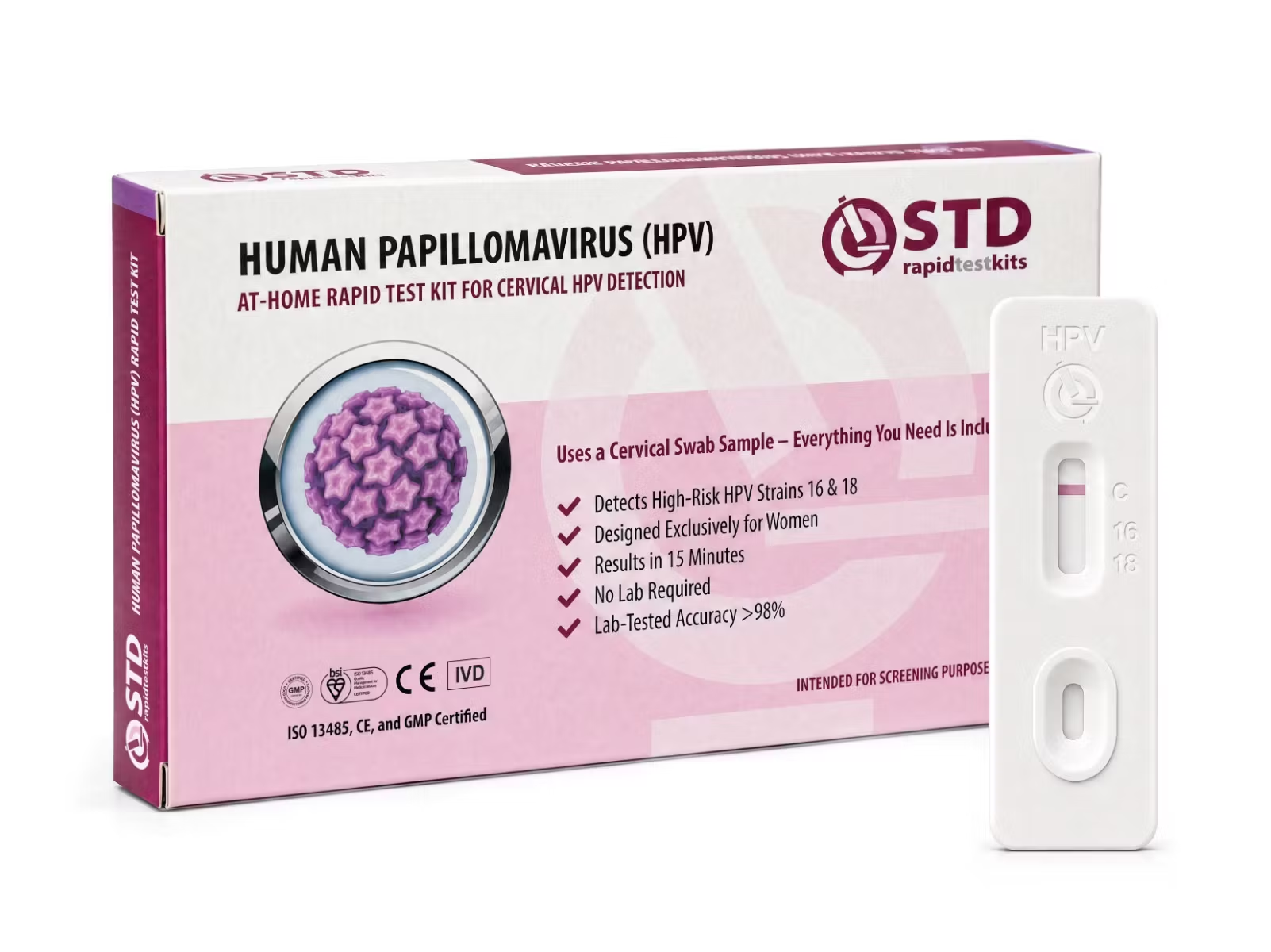
This site sells rapid at-home STI tests, and the products referenced in this article come from our own catalog; we recommend products that match the reader's actual concern, not the broadest possible upsell. Many people want to confirm their current HPV status before having the disclosure conversation, especially if the original diagnosis was years ago and the most recent test was inconclusive. For people with cervixes, that means Pap testing or HPV co-testing through a clinician, or, for some indications, an at-home self-collection HPV test.
Our at-home HPV rapid test is validated for vaginal self-collection in people with cervical anatomy. We do not currently offer a male-compatible HPV home test, because no FDA-approved HPV screening test exists for partners without a cervix. If a male reader is concerned about exposure, the right next step is a clinician visit for a physical exam and a conversation about vaccination, not a home test we do not sell.
For someone with cervical anatomy who wants a private check before talking to a partner, the home swab is straightforward. It is a rapid lateral-flow self-collection test, not a lab NAAT, so it complements rather than replaces routine Pap and co-testing through a clinician. If a result comes back positive, follow up with your provider for confirmation and next steps. The home test is most useful for taking some of the unknown out of the conversation you are about to have, not for replacing routine cervical cancer screening.
If You Want to Screen for More Than HPV
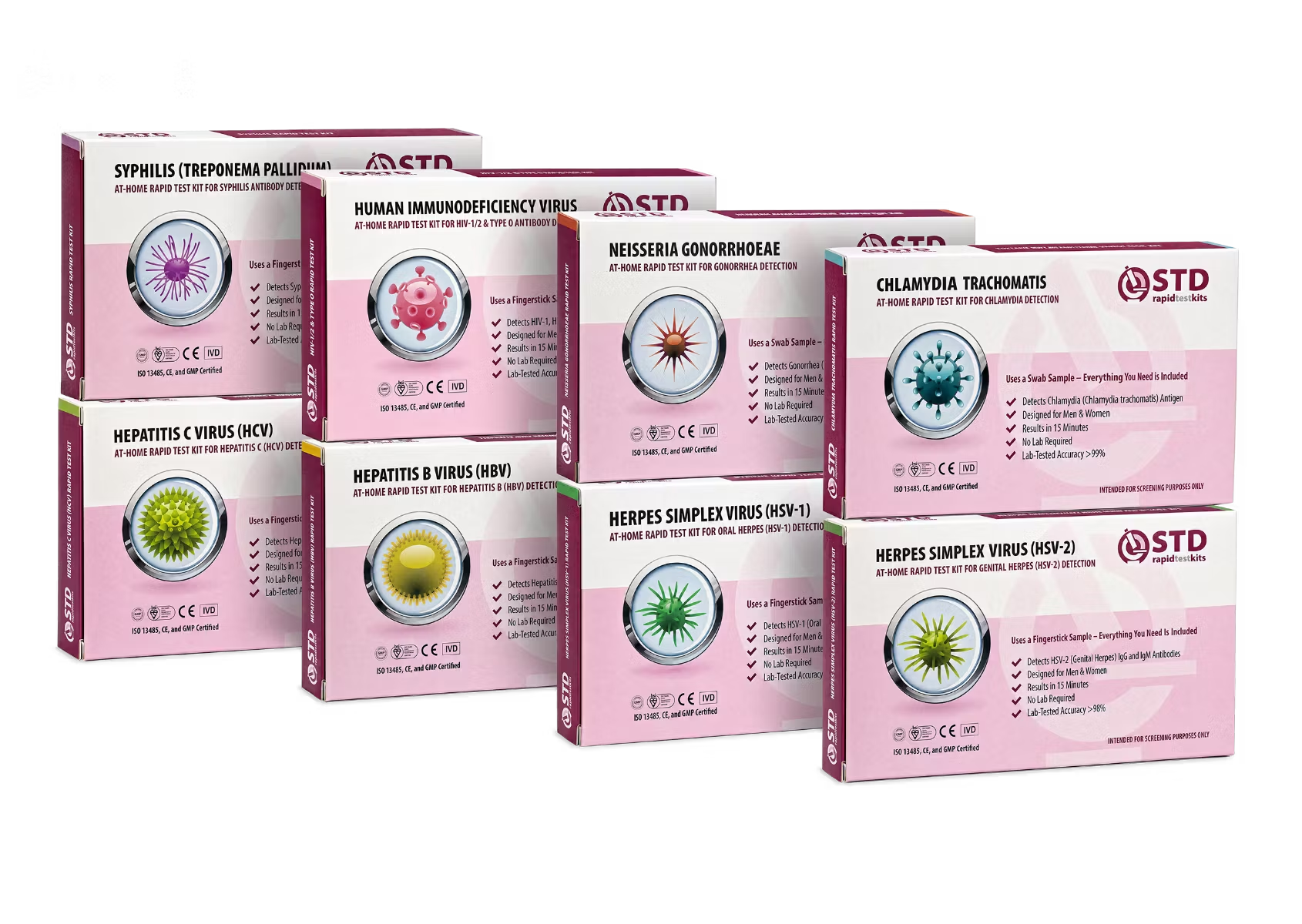
An HPV diagnosis often prompts people to look at the rest of their sexual health picture too. That is a reasonable response, especially if it has been a while since a full panel. The infections that travel together with HPV in many sexual networks include chlamydia, gonorrhea, syphilis, and the hepatitis viruses, and most of those are now testable at home.
A combination kit is usually the most practical option for someone who wants a one-time broad screen. It bundles common bacterial and viral STIs into a single panel using rapid lateral-flow technology. A positive result on any home rapid test should be confirmed with a clinical lab, since lab NAAT and antibody confirmation testing have higher analytical sensitivity than home rapid lateral-flow strips. Home kits are useful for screening, privacy, and speed; they complement rather than replace lab testing when something comes back positive.
The 8-in-1 kit, which covers eight of the most common sexually transmitted infections in a single bundle, is the version most people considering broader screening reach for. It is validated for both men and women, which makes it the right pick if a partner wants to test alongside you.
Common Questions About Dating With HPV
- Do I have to tell every partner I have HPV?
- Legally, in most jurisdictions, no. Ethically, the answer most clinicians and sexual health educators recommend is to disclose before any activity that can transmit the virus, which means before genital skin-to-skin contact. For casual encounters, this is a personal call shaped by your comfort level, the depth of the connection, and your own values. For relationships moving toward exclusivity or unprotected sex, disclosure is almost universally recommended. Disclosure is also a one-conversation event for most people, not a recurring obligation; once a partner knows, they have the information to make their own decisions.
- Can I still get the HPV vaccine after a positive test?
- Yes, and it can still help. The vaccine does not treat or clear an existing HPV strain, but it can protect you against the other strains it covers that you have not yet been exposed to. The current vaccine, Gardasil 9, protects against nine HPV types, and most positive tests reflect exposure to only one or two of them. The CDC recommends routine vaccination through age 26 and shared clinical decision-making for adults aged 27 to 45. A clinician can help you decide whether vaccination makes sense given your specific situation.
- Will HPV ever go away on its own?
- For most people, yes. The immune system clears most HPV strains within a year, and the majority of remaining cases resolve by the two-year mark. The clinically meaningful concern is not the first positive result but persistence: a high-risk strain that shows up on the same co-test more than a year later is the trigger for closer follow-up, including colposcopy if cervical changes are present. A single positive almost never requires immediate intervention; it usually warrants a repeat test on the next recommended interval. Your clinician will use the screening guidelines for your age and history to set the timing.
- Do condoms protect against HPV transmission?
- Partially. Condoms reduce HPV transmission risk substantially but not to zero. HPV travels through skin-to-skin contact, and the virus can be present on areas the condom does not cover, including the base of the penis, the scrotum, the vulva, and the surrounding skin. Consistent condom use, dental dams for oral contact, and HPV vaccination together provide the strongest available protection. Condoms also reduce risk for most other STIs, so consistent use stays a useful habit even when HPV is part of the picture.
- Does an HPV diagnosis mean a long-term partner cheated?
- Almost certainly not. HPV can stay below detectable levels for years and become detectable again during periods of immune stress. People often acquire the virus in their late teens or twenties and only test positive decades later. There is no clinical timeline that links a positive HPV result to a recent exposure; the virus simply does not work that way. A new HPV diagnosis in a long-term monogamous relationship is much more often a delayed detection of a long-present infection than evidence of recent infidelity.
- Can men get tested for HPV at home?
- Not in any standard, FDA-approved way. There is no routine HPV screening test for people without a cervix, at home or in a clinic. Anal HPV testing exists in specialty contexts, such as immunocompromised patients and some HIV clinic populations, but it is not part of routine sexual health screening. Men who are concerned about HPV exposure can focus on what is actionable: get vaccinated if they have not been, watch for any new genital growths, and see a clinician for any unexplained symptoms or visible warts.
- Will HPV affect fertility or pregnancy?
- For most people, no. HPV does not typically cause infertility, and most pregnancies in HPV-positive parents proceed without HPV-related complications. Rarely, very large genital warts can complicate vaginal delivery, and even more rarely, certain strains can be transmitted to a baby during birth. These outcomes are uncommon. If you are pregnant or planning a pregnancy and have an HPV diagnosis, your obstetric provider can flag the small number of situations that warrant additional monitoring or planning.
- What if a partner reacts badly to the disclosure?
- Some partners process the news poorly in the moment and come around once they have read about HPV and thought it through. Others stay distant, and a smaller subset say something hurtful or disappear entirely. None of those reactions are about your worth as a partner; they are about that person's capacity for difficult conversations. People who have done many disclosures often describe the experience as a filter that surfaces who can hold a sensitive conversation with care, and who cannot. The reaction is information about the listener, not a verdict on you.
- U.S. Centers for Disease Control and Prevention. Genital HPV Infection: Basic Fact Sheet. Source for HPV prevalence, transmission, and immune-clearance statistics referenced throughout the article.
- U.S. Centers for Disease Control and Prevention. Human Papillomavirus (HPV) overview. Source for HPV vaccine recommendations, age guidance, and cancer-linked strain information.
- National Cancer Institute. HPV and Cancer fact sheet. Source for HPV strain types, persistence, and the relationship between HPV and several cancers.
- Mayo Clinic. HPV infection: Symptoms and causes. Source for clinical course, latency, and symptom information referenced in long-term-relationship section.
- American Sexual Health Association. HPV and Relationships. Source for disclosure-counseling guidance and patterns in partner reactions.
- Planned Parenthood. HPV (Human Papillomavirus) information. General-audience reference on HPV transmission, prevention, and testing context.
