Published: November 2025 | Last updated: May 2026 | Editorial review and quality control: Martina N.
Ordering a home STI test should feel less stressful than booking a clinic visit. For most readers, it is. The friction usually shows up elsewhere: choosing a kit that matches the actual question you have, understanding the timing window between exposure and a reliable result, and knowing what to do if the line on the cassette is the one you were hoping not to see.
This guide walks through ordering a test online, using it at home, and reading the result with realistic expectations. It is written for someone who wants to skip the appointment, not for someone who already knows which lab panel they need. Sexually transmitted infections are common (the WHO estimates more than one million STIs are acquired worldwide every day), and many people who carry one feel nothing. Routine screening, done at the right interval, is one of the few low-cost interventions that consistently lowers transmission.
Key Takeaways
- Home STI kits work well for routine screening and post-exposure peace of mind, but only once the relevant window period has passed; they are screening tools, not diagnostic confirmation.
- A positive rapid result should be confirmed at a clinic with a lab test (NAAT for chlamydia and gonorrhea, antigen-antibody panel for HIV) before any treatment decision.
What an at-home STI test actually is
A home STI test is a sample you collect yourself and either process at home (rapid lateral-flow) or mail to a lab (NAAT panel). The two formats are not interchangeable.
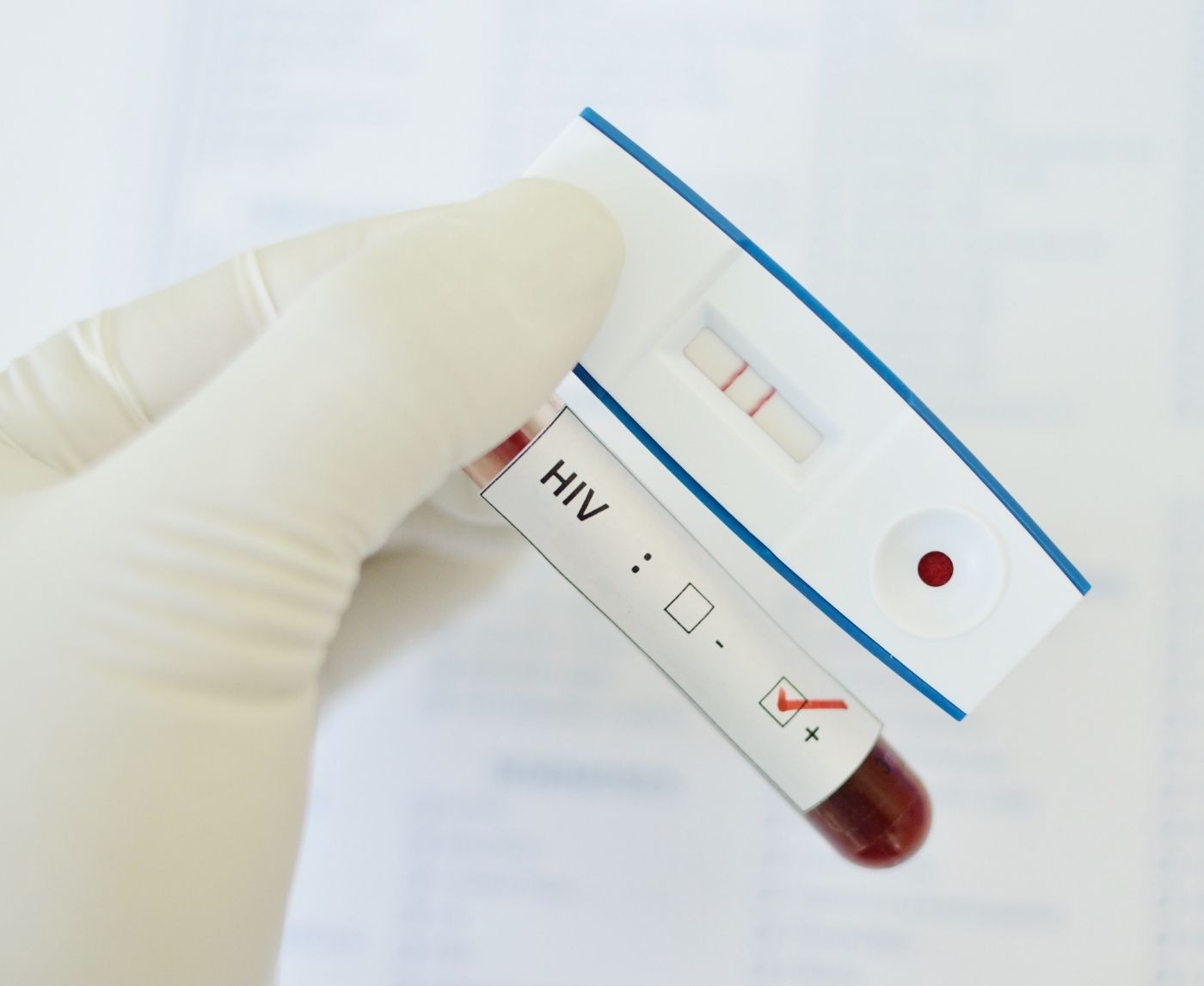
Rapid lateral-flow kits look like the cassettes used for pregnancy or COVID-19 tests: a small plastic device with a control line and one or more test lines. A drop of fingerstick blood or a swab sample, mixed with the included buffer, runs through the strip and shows a result within roughly 15 to 20 minutes.
Mail-in kits are different. You collect a sample (urine, swab, or blood spot card), ship it back in a prepaid envelope, and a clinical laboratory runs nucleic acid amplification testing on it. NAAT is the laboratory standard for several infections, including chlamydia and gonorrhea, per CDC STI screening guidance. Results land in a secure online account within a few business days.
The kits sold at stdrapidtestkits.com are rapid lateral-flow tests, not mail-in NAAT panels. That means faster turnaround at home and no lab processing fee, but lower analytical sensitivity than a NAAT, especially for asymptomatic infections where bacterial load is lower. Treat the rapid result as a screening signal: a negative is reassuring within the window period, and a positive is a starting point that deserves confirmation at a clinic. It is not a substitute for a clinical diagnosis.
| Attribute | Rapid lateral-flow (home) | Mail-in NAAT (lab) |
|---|---|---|
| Turnaround | 15 to 20 minutes at home | Two to five business days after lab receipt |
| Lab required | No | Yes |
| Sensitivity profile | Mid-to-high nineties in manufacturer validation | Higher analytical sensitivity, especially in asymptomatic infections |
| Best fit | Screening, peace of mind, partner conversations | Confirmation of a positive screen, clinic-grade diagnosis |
When an at-home test fits, and when it doesn't
Home testing fits three common situations well.
The first is routine screening for sexually active adults who feel fine and want to know their current status. The CDC recommends annual chlamydia and gonorrhea screening for all sexually active women under 25, and more frequent screening for men who have sex with men and people with multiple recent partners. A rapid kit makes that routine achievable without taking time off work.
The second is post-exposure reassurance, once the relevant window has passed. If a recent sexual encounter has been on your mind, a rapid test taken at the right time after exposure offers a meaningful screening answer. Each infection has its own window: roughly two to three weeks for chlamydia and gonorrhea, three to six weeks for syphilis, and longer for antibody-based tests like HSV-2.
The third is partner conversations. Walking into a new relationship with a recent screening result makes the question of when you were last tested easier on both sides.
Home testing fits less well when you already have symptoms. Active sores, unusual discharge, pelvic pain, burning during urination, or a new rash deserve a clinician's eye, a culture or swab, and a treatment plan in the same visit. A rapid antibody test cannot evaluate a lesion. It also cannot test pharyngeal or rectal sites, which require provider-collected swabs sent to a lab.
This article is published by stdrapidtestkits.com, which sells at-home rapid STI test kits. We recommend products based on fit for the reader's concern, not commercial benefit. If your situation calls for a clinic-based or lab-NAAT test, we say so plainly.
Picking the right kit for your situation
Three questions get you to the right product faster than any catalog scroll.
1. What sample type does the kit need? Rapid kits split into two formats.
- Self-swab tests for chlamydia, gonorrhea, trichomoniasis, and HPV. A self-collected vaginal or penile swab loads onto the cassette. Our trichomoniasis and HPV kits are validated for vaginal self-swab only; male readers who need those tests should see a clinic.
- Fingerstick blood tests for HIV, syphilis, hepatitis B, hepatitis C, HSV-1, and HSV-2. A small lancet pricks the fingertip, and a drop of blood mixes with the included buffer before running on the strip.
2. One infection or several? A single-infection kit answers a focused question (you know what you want to test for). A combo kit runs a panel from one sample collection, useful when you do not have a specific worry but want broad coverage. Available combinations range from two-in-one through ten-in-one, with the sample type varying by panel; the ten-in-one is validated for women only.
3. What window period applies? Each infection has a minimum interval between exposure and reliable detection. Testing too early produces a falsely reassuring negative. The CDC's HIV testing page notes that rapid antibody tests can detect HIV in most people by around three months post-exposure, while some lab assays detect earlier. For chlamydia and gonorrhea, roughly two weeks is a common minimum. Check the window for each infection you want to test for before ordering.
If the window has not passed yet and you want immediate reassurance, a clinic visit with a fourth-generation HIV assay or a NAAT for chlamydia and gonorrhea will close the analytical window sooner than a rapid antibody home test.
The actual ordering process, step by step
Most rapid-test vendors follow the same flow. Walking through it once removes the unknowns.
- Browse by infection or by panel size. The product page should tell you which infections the kit covers, the sample type required, and an indicative window period. If those three facts are missing, that is a yellow flag worth noting.
- Confirm the sample type matches your anatomy. Some swab-based panels are validated only for one anatomical site (our trichomoniasis and HPV kits, for example, are vaginal-swab only). The product page should state this clearly; if it does not, message the vendor before ordering.
- Add to cart and check shipping options. Reputable vendors ship in plain padded envelopes or unmarked boxes with no clinical wording on the exterior label. Express shipping is usually optional, and standard shipping arrives within a few business days domestically.
- Pay at checkout. The transaction typically appears on a card statement under a neutral merchant name, not a clinical descriptor. Vendors that handle billing discretion well will spell this out on the order-confirmation page.
- Order tracking. A reputable vendor sends a tracking number from a standard carrier. The carrier's surface label says nothing about what is inside.
If a site does not show shipping discretion details, does not list infections covered per kit, or does not say whether results read at home or in a lab, slow down. A legitimate home-use diagnostic vendor will publish the device's intended use, the sample type, the read window, and the manufacturer's validation summary. Missing any of those is reason to keep shopping.
What's the simplest way to order a home STI test online?
Pick a kit that matches both the infection you want to screen for and the sample type you can collect (self-swab or fingerstick blood). Order from a vendor that ships in unmarked packaging and provides clear instructions. Most rapid kits read in 15 to 20 minutes at home. Treat a negative as reassurance within the window period and a positive as a screening signal to confirm at a clinic before any treatment.
Setting up the kit at home
The mechanical part is short. Setup matters more than the test itself, because most home-test errors come from skipped or rushed steps. A few minutes of preparation saves the headache of an inconclusive line.
- Read the leaflet completely before opening anything. Every kit ships with a printed instruction sheet that lists timing windows for both sample collection and the result read. Reading at the wrong time (too early or too late) is the single most common reason for an ambiguous result.
- Set a timer. Rapid kits typically have a result window between 15 and 20 minutes. A faint line that appears after the read window has passed is no longer a valid result.
- Use the buffer included in the kit. Substitutions do not work. Saline, water, or another kit's buffer will distort the chemistry and produce a misleading result.
- Wash hands before and after handling the lancet or swab, both for sample integrity and ordinary hygiene.
- Take a photo of the result strip at the read window. Lines fade after the window passes; a photo gives you something to reference if you call your clinician later.
If the control line never appears, the test is invalid and the result is meaningless, regardless of what the test line shows. Discard the cassette safely and use a fresh kit, following each step carefully.
Rapid lateral-flow strips are only valid when read during the manufacturer's specified window, typically 15 to 20 minutes after the sample loads. A faint line that appears an hour later is not a positive; it is evaporation. If you missed the read window, discard the cassette and run a fresh kit rather than trying to interpret a stale strip.
What "accuracy" really means on a rapid kit
Vendor marketing pages often list accuracy figures in the high nineties. The numbers are real, but "accuracy" is an imprecise term that can mean sensitivity, specificity, or overall agreement. Two specific numbers are worth understanding.
- Sensitivity is the fraction of people who actually have the infection that the test correctly flags as positive. Higher sensitivity means fewer false negatives.
- Specificity is the fraction of people who do not have the infection that the test correctly flags as negative. Higher specificity means fewer false positives.
Rapid lateral-flow tests commonly report sensitivity in the mid-to-high nineties and specificity above 99% in manufacturer validation studies. Laboratory NAATs typically exceed both figures, especially for asymptomatic infections where the bacterial load is lower. This is the reason a positive home test is a screening signal worth confirming at a clinic, and the reason a negative home test taken inside the window period is not the final word.
The CDC's STI testing guidance describes lab NAAT as the screening test of choice for chlamydia and gonorrhea. Treat your rapid home result and a clinic NAAT as complementary, not interchangeable. Rapid kits buy you speed, privacy, and the ability to test without an appointment; lab NAAT closes the analytical gap that asymptomatic low-bacterial-load infections create.
Reading the result and what to do next
Lateral-flow strips show one control line (always) and one or more test lines (only if the analyte is detected). Three scenarios cover almost every read.
- Control line plus no test line: negative within the test's window period. If you tested before the window had passed, repeat the test at the right interval.
- Control line plus visible test line (even faint): presumptive positive. Take a photo at the read window for your records. Contact a clinician for confirmatory laboratory testing, ideally a NAAT for chlamydia or gonorrhea, or a confirmatory antigen-antibody assay for HIV. Do not start antibiotics or antivirals without confirmation.
- No control line: invalid result. Discard the cassette and use a fresh kit, reviewing each step before retesting.
A faint test line still counts as a positive, even if it is hard to read against the control. The line's color intensity does not indicate the severity of the infection; it reflects the analyte concentration in your sample. A positive rapid test is a screening signal, not a diagnosis: follow up with a clinician for a confirmatory laboratory test and, if confirmed, a treatment plan.
If the result is positive and your last sexual partner is reachable, the public-health step is to let them know they should also test. Many local clinics can handle partner notification anonymously if that is easier.
Rapid home tests cannot evaluate visible symptoms, test pharyngeal or rectal sites, replace prenatal screening, confirm a positive screen for treatment, or substitute for a clinician's assessment when something feels wrong. They are screening tools. If a symptom is worrying you, see a provider.
Privacy, shipping, and discreet packaging
Discretion is the single biggest reason readers choose home testing over a clinic visit. Reputable vendors design every customer-facing touchpoint with that in mind.
The outer shipping label says nothing about what is inside. There is no clinical descriptor, no medical branding, no return address that hints at a testing service. The carrier's surface tracking only shows a plain envelope or padded box. When the package arrives, neither a roommate nor a partner can tell from the exterior what was ordered.
Card statements use a neutral merchant name, not a clinical one. Some vendors publish the exact descriptor on the order-confirmation page so there is no surprise on a shared statement.
Account data is the other half of privacy. A trustworthy vendor encrypts your account, does not resell your purchase history, and does not share testing-related browsing with advertisers. Look for a published privacy policy that names the specific protections, not a generic "we value your privacy" paragraph.
If you live in a shared household and want additional reassurance, ask before ordering whether the vendor offers a held-at-pickup option from the carrier. Most do.

When to skip the home kit and see a clinician
A home rapid test is not always the right tool. A few situations call for a clinic-based test or an in-person visit instead.
- You have visible symptoms. Sores, unusual discharge, pelvic pain, painful urination, or a new rash deserve an in-person exam. A clinician can swab a lesion, send the swab for type-specific PCR, and start treatment in the same visit if appropriate.
- The exposure was very recent. If you are still inside the window period for the relevant infection, a rapid antibody test will likely return a falsely reassuring negative. A clinic visit can offer fourth-generation HIV testing or a NAAT that closes the analytical window sooner.
- You need pharyngeal or rectal screening. Home kits do not cover throat or rectal sites. The CDC recommends site-specific testing for men who have sex with men and other groups with relevant exposure histories, which requires a provider-collected swab sent to a lab.
- You are pregnant. Pregnancy adds infections to screen for (syphilis especially) and changes how some results are interpreted. Prenatal panels are typically covered by insurance and run through the lab.
- A previous home test was positive. Confirm at a clinic before any treatment decision; do not refill someone else's antibiotics.
For the many situations that do fit home testing, a broad-panel kit lets you cover several common infections from one ordering decision. The 8-in-1 below is the most popular any-gender option in our catalog.
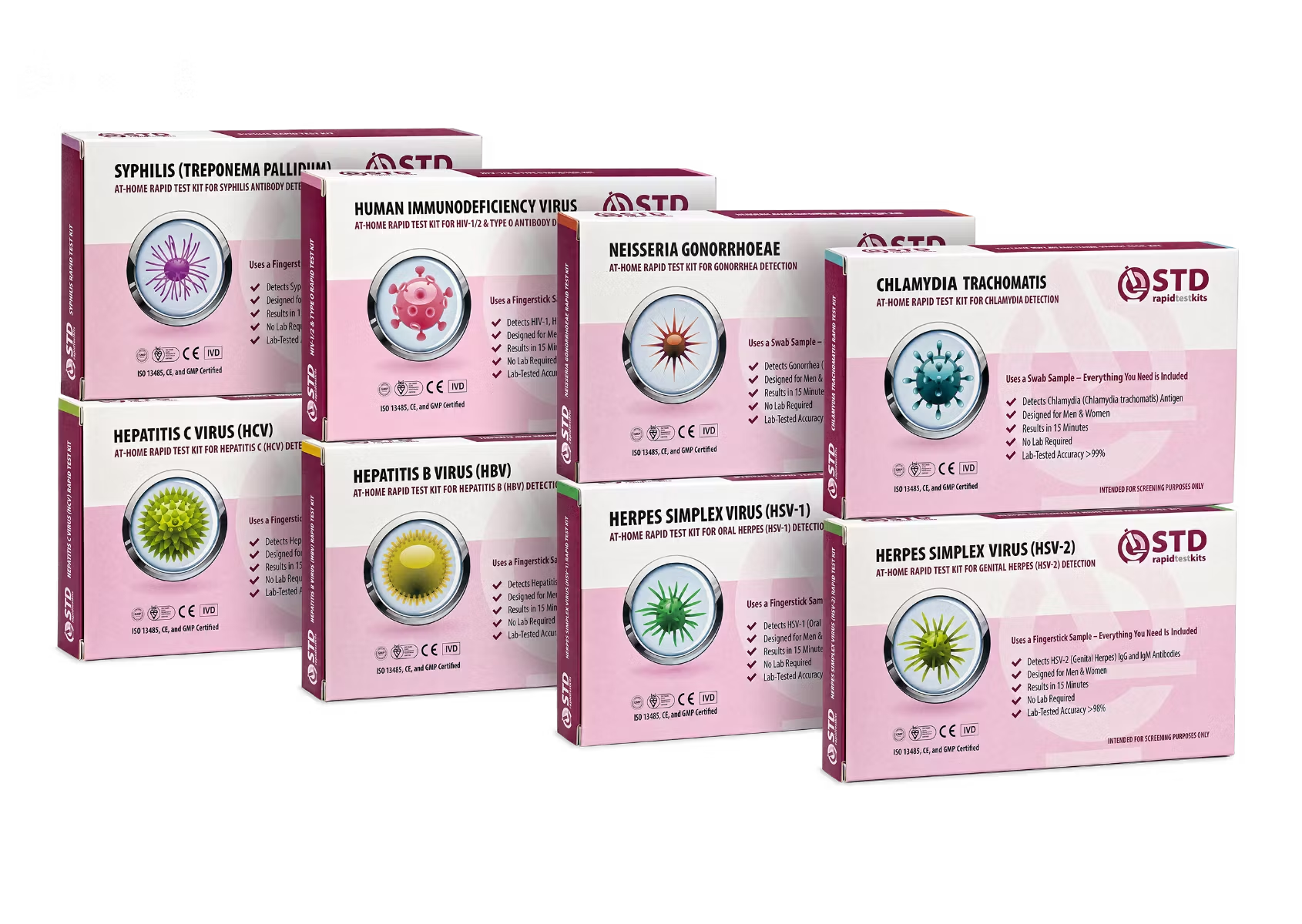
Anyone who is sexually active should consider getting screened for sexually transmitted infections. Routine screening is recommended for some groups, including all sexually active women under 25 years of age.
FAQs about ordering home STI tests
- How accurate are at-home rapid STI test kits?
- Manufacturer validation typically shows sensitivity around 95 to 99% and specificity above 99% for rapid lateral-flow STI kits. The practical consequence: a negative result is reassuring within the window period, and a positive result should be confirmed with a laboratory test before any treatment decision.
- How long do home STI test results take?
- Most rapid lateral-flow kits show a result within 15 to 20 minutes after the sample is applied to the cassette. Mail-in lab kits (a different format we do not sell) typically take two to five business days after the lab receives the sample.
- Do I have to fast before testing?
- No. Rapid STI tests use either a self-collected swab or a fingerstick blood drop. Neither requires fasting or any preparation other than washing hands.
- Is the packaging really discreet?
- Yes. Reputable vendors ship in plain unmarked envelopes or boxes with no clinical wording on the exterior label. The carrier's surface tracking shows only a generic package. Card statements typically appear under a neutral merchant name.
- What should I do if my home test is positive?
- Treat it as a screening signal, not a diagnosis. Take a photo of the result strip, contact a clinician for confirmatory laboratory testing, and avoid starting treatment without confirmation. If your last partner is reachable, let them know they should also test.
- Can I test for multiple infections at once?
- Yes. Combo kits run a panel from one sample collection set. Available combinations range from two-in-one (chlamydia plus gonorrhea, for example) through ten-in-one. The sample type and gender scope vary by combination; the product page lists both.
- Is there an age requirement to order?
- Most vendors require buyers to be 18 or older, though local laws vary by country and state. The vendor's order page should state the age requirement before checkout.
- Does a negative home test rule out infection completely?
- A negative is reliable only after the relevant window period has passed: roughly two weeks for chlamydia and gonorrhea, three to six weeks for syphilis, and around three months for antibody-based HIV tests. If you tested earlier than that, retest at the right interval before treating the negative as final.
- U.S. Centers for Disease Control and Prevention. STI testing recommendations, including who should be screened and the role of NAAT for chlamydia and gonorrhea.
- U.S. Centers for Disease Control and Prevention. HIV testing guidance and window period information for rapid antibody and fourth-generation assays.
- World Health Organization. Fact sheet on sexually transmitted infections, including the global daily incidence figure cited above.
- U.S. Centers for Disease Control and Prevention. STI landing page with prevention, testing, and reporting information.
- U.S. Centers for Disease Control and Prevention. HIV basics and overview page with context on testing options.
