Published: August 2025 | Last updated: May 2026 | Editorial review and quality control: Martina N.
A broken condom turns a moment of intimacy into a question of timing. The first instinct is usually to test the next morning, but that almost never gives a useful answer. Sexually transmitted infections each have their own window period: a stretch of days or weeks between exposure and when a test can actually detect anything. Test too early, and a negative result tells you nothing about what happened last night.
This guide walks through what to do in the first 72 hours, when each common infection becomes detectable, and how to build a testing plan that gives you real answers instead of false reassurance. It draws on current screening guidance from the CDC, NHS, and WHO.
Key Takeaways
- Most STIs cannot be detected the day after a condom fails. Chlamydia and gonorrhea become reliably detectable around 1 to 2 weeks; HIV antigen/antibody tests are most accurate by 45 days per CDC guidance.
- Within 72 hours, emergency contraception and HIV post-exposure prophylaxis (PEP) are time-critical decisions. Testing itself can wait until the relevant window opens.
The First 72 Hours After a Condom Fails
The first three days are about prevention and information gathering, not testing. There are three time-sensitive decisions worth thinking through right away.
Pregnancy prevention. Emergency contraception is most effective within 72 hours, and some forms work up to 120 hours. Levonorgestrel pills (Plan B and equivalents) and ulipristal acetate (ella) are both available without prescription in the U.S. The sooner the better; effectiveness drops with every day of delay.
HIV post-exposure prophylaxis. If the exposure was higher-risk, for example when the partner is HIV-positive with unsuppressed viral load, or status is unknown but transmission risk is elevated, PEP can prevent infection if started within 72 hours, ideally as soon as possible (per CDC PEP guidance). PEP is a 28-day course of antiretrovirals prescribed by a clinic, urgent care, or emergency department. It is not over the counter.
Information gathering. What kind of sex was it? Was there ejaculation? Do you know your partner's testing history or current STI status? These factors shape both the urgency and what to test for. Vaginal and anal sex generally carry higher transmission risk than oral sex, though oral exposure is not zero-risk.
If panic is the loudest thing happening, give it a minute. The biology of infection takes days to weeks, not hours.
- Emergency contraception: Most effective within 72 hours, some forms up to 120 hours. Available without prescription in the U.S.
- HIV PEP evaluation: Must start within 72 hours of exposure. Call a clinic, urgent care, or emergency department, do not wait for a routine appointment.
- Information gathering: Type of sex, ejaculation, partner STI history. This determines what tests you will need and when.
Why STD Tests Don't Work Immediately
Every diagnostic test has a window period. Some tests look for the pathogen itself (DNA or proteins); others look for antibodies your body makes in response to infection. Both take time.
For bacterial infections like chlamydia and gonorrhea, lab-based nucleic acid amplification tests (NAAT) typically become reliable around 1 to 2 weeks after exposure (CDC STI screening guidance). For HIV, a fourth-generation antigen/antibody test detects most infections by 45 days, with earliest detection commonly around 18 to 45 days depending on the assay (CDC HIV testing overview).
For syphilis, antibody tests are typically reliable by 3 to 6 weeks. For herpes (HSV-2 antibody), seroconversion can take 12 to 16 weeks, which is why early herpes testing often misses recent infections.
| Infection | Earliest Reliable Test | Most Accurate By |
|---|---|---|
| Chlamydia (NAAT) | 1 week | 2 weeks |
| Gonorrhea (NAAT) | 1 week | 2 weeks |
| Trichomoniasis | 1 week | 2 weeks |
| Syphilis (antibody) | 3 weeks | 6 weeks |
| HIV (4th-gen Ag/Ab, lab) | 18 days | 45 days |
| HIV (antibody-only rapid or self-test) | 23 days | 12 weeks |
| HSV-2 (antibody) | 4 weeks | 12 to 16 weeks |
| Hepatitis B (HBsAg) | 3 to 6 weeks | 9 weeks |
| Hepatitis C (antibody) | 8 to 11 weeks | 12 weeks |
Your Testing Plan, Week by Week
Rather than relying on one test, plan for a staged approach. Different infections become detectable at different speeds, so testing in waves catches more.
This is the same general framework most sexual health clinics use after a known exposure. It is not paranoia; it is the way the biology actually works.
| Time After Exposure | What to Do |
|---|---|
| 0 to 72 hours | Assess pregnancy risk. Get PEP consultation if HIV exposure is plausible. Emergency contraception works best within 72 hours. |
| 1 to 2 weeks | Test for chlamydia, gonorrhea, and trichomoniasis. |
| 3 to 6 weeks | Test for syphilis and consider an early HIV test (Ag/Ab). |
| 45 days | Reliable result for a fourth-generation HIV antigen/antibody lab test. If your test was an antibody-only rapid or self-test, retest at 12 weeks for confirmatory closure. |
| 6 to 12 weeks | Hepatitis B and C testing if exposure was higher-risk. |
| 12 to 16 weeks | HSV-2 antibody testing if relevant. Final HIV closure for antibody-only test technology. |
How soon after a broken condom should I test?
For chlamydia and gonorrhea, around 1 to 2 weeks. For syphilis, 3 to 6 weeks. For HIV with a modern fourth-generation antigen/antibody lab test, 45 days is the most accurate cut-point per CDC. Antibody-only rapid or self-tests need 12 weeks for full closure. Herpes antibody testing can take 12 to 16 weeks. Same-day testing only tells you what you already had before this exposure, not what changed because of it.

How Different Exposures Change the Risk
Not every condom failure carries the same risk. Clinicians weigh several things when assessing exposure: the type of sex, whether ejaculation occurred inside the partner, the partner's STI status if known, and the duration of contact.
The point of mapping this out is not to talk yourself out of testing if risk seems low. It is to understand that "broken condom" is a category, not a single event. A condom that tore at the very end of vaginal sex without ejaculation behaves differently from one that failed early during anal intercourse with an unknown-status partner.
| Exposure Scenario | Relative STI Risk | Recommended Action |
|---|---|---|
| Condom tore near the end of vaginal sex, no ejaculation | Lower | Standard testing windows. PEP usually not indicated. |
| Condom failed during vaginal sex with ejaculation | Moderate | Standard testing windows. PEP consultation if partner HIV status unknown or positive. |
| Condom failed during anal sex (receptive) | Higher for HIV and rectal STIs | Same-day PEP evaluation. Full testing timeline. Rectal swabs at a clinic if symptoms develop. |
| Condom broke during oral sex | Lower overall, not zero | Watch for throat or genital symptoms. Test if concerns persist. Pharyngeal swabs are clinic-only. |
Symptoms Worth Watching For (and Why You Can't Rely on Them)
Most STIs cause no symptoms in the first weeks, sometimes ever. That is why testing carries more weight than self-monitoring. When symptoms do appear, they vary by infection.
Chlamydia and gonorrhea can produce burning during urination, unusual discharge, pelvic pain, or testicular discomfort. The majority of cases are asymptomatic early on, particularly in women (CDC STI fact sheets).
Syphilis often begins with a single painless sore (chancre) at the site of exposure, typically about 3 weeks after infection. It heals on its own, which is why many people miss this stage.
Genital herpes (HSV-2) can produce clusters of small blisters or painful ulcers, usually in the genital area. A first outbreak is not guaranteed; many people seroconvert without noticing.
HIV sometimes causes flu-like symptoms 2 to 4 weeks after infection (fever, sore throat, swollen lymph nodes), but these are non-specific and easy to dismiss.
Absence of symptoms does not mean absence of infection. Testing on the right timeline is what closes that gap. If any of these symptoms appear before your scheduled test date, contact a clinic promptly rather than waiting for the window period to close, as some can be evaluated and treated based on clinical presentation alone.
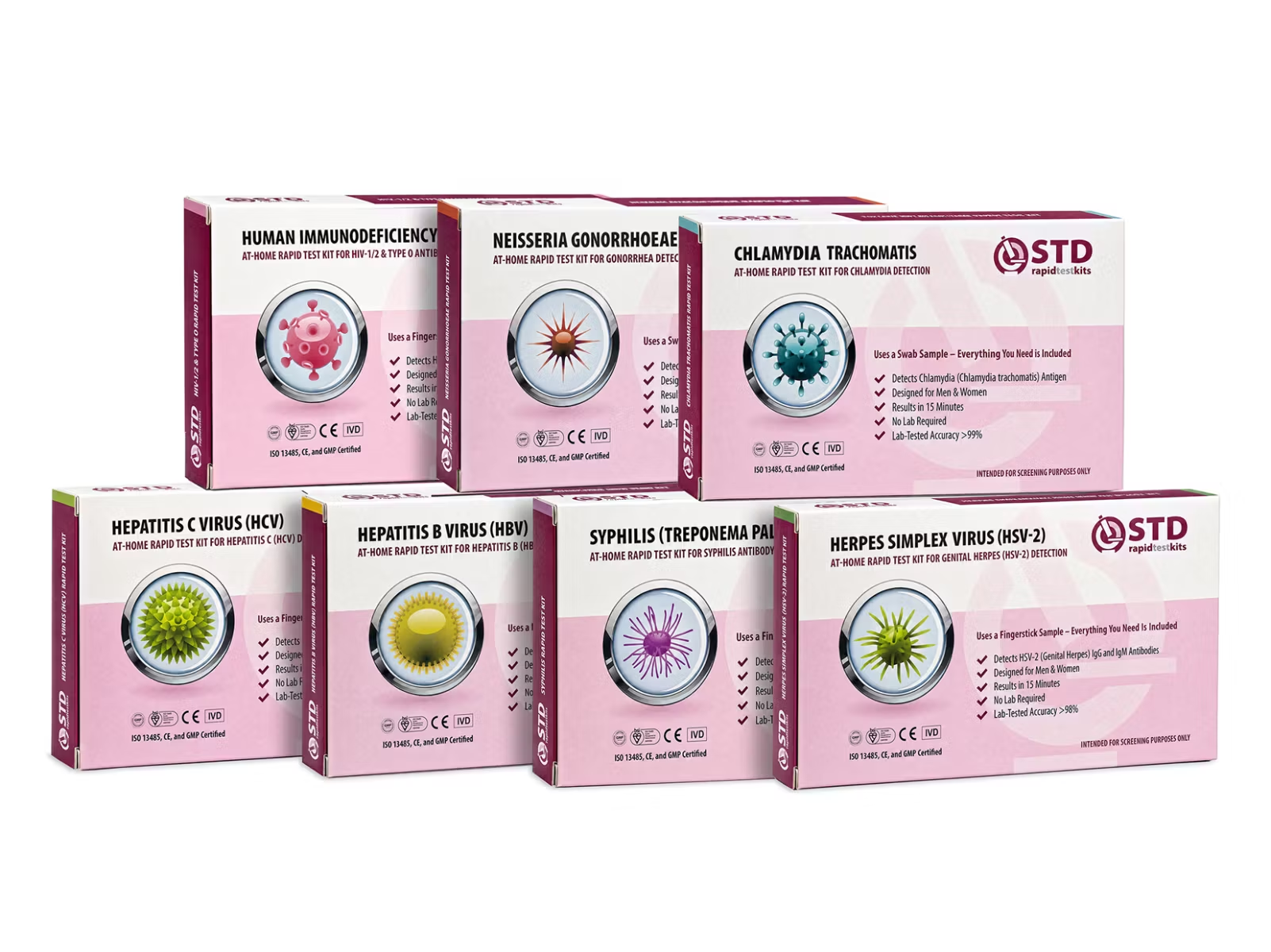
stdrapidtestkits.com sells the at-home rapid kits referenced below. We recommend products based on fit for the reader's concern, not commercial benefit.
Testing at Home vs. Testing at a Clinic
Both work when used at the right time. The key variable is timing, not location.
Clinic testing uses lab-processed methods (NAAT for bacterial STIs, fourth-generation antigen/antibody for HIV) with very high analytical sensitivity. Clinics can also start treatment the same day if results are positive, and they offer counseling and partner-notification support. If insurance, a sliding-scale clinic, or Planned Parenthood is accessible, this is the most thorough option.
At-home rapid tests use lateral-flow immunoassay chemistry, the same general technology as a home pregnancy test. They are convenient, private, and fast, with results in about 15 minutes. They are useful as a screening step; a positive result is worth confirming with a lab NAAT or follow-up blood draw. The two approaches are complementary, not equivalent in analytical sensitivity.
For pharyngeal (throat) or rectal exposures, a clinic-administered swab is the appropriate test. At-home rapid kits cover genital swabs and bloodwork, not throat or rectal sample collection.
| Attribute | At-home rapid kit | Clinic / lab |
|---|---|---|
| Test chemistry | Lateral-flow immunoassay | NAAT for bacterial STIs, 4th-gen Ag/Ab for HIV |
| Result speed | About 15 minutes at home | Hours to a few days |
| Analytical sensitivity | Screening quality | Higher, gold-standard for confirmation |
| Privacy | Fully private | Shared with clinic staff and records |
| Same-day treatment | Not available | Available for many bacterial STIs |
| Pharyngeal / rectal samples | Not covered | Available |
What Happens If a Test Comes Back Positive
Most STIs are highly treatable, and several are curable. The catastrophe people imagine in the first hours after a condom break is, in modern medicine, rarely the reality.
Bacterial infections (chlamydia, gonorrhea, syphilis, trichomoniasis) are cured with antibiotics. The earlier treatment starts, the simpler it tends to be. Early-stage syphilis can be treated with a single penicillin injection per CDC treatment guidelines.
Viral infections (HIV, herpes, HPV) are managed rather than cured, but treatment has changed outcomes dramatically. People with HIV who start antiretroviral therapy early and maintain viral suppression have life expectancies comparable to people without HIV, and people on suppressive therapy with undetectable viral load do not transmit HIV sexually (the U=U principle, supported by CDC). Suppressive therapy for herpes reduces both outbreak frequency and transmission risk.
A positive result is the start of a treatment plan. Most infections you can pick up from a broken condom are handled well by modern medicine, especially when caught early.
STIs are often asymptomatic. When symptoms occur, they can be non-specific.
Building a Simple Plan You Can Actually Follow
If anxiety is making it hard to decide, here is the short version, in order:
- Within 72 hours: Decide on emergency contraception and HIV PEP if either is relevant to your exposure. These are time-critical.
- At 1 to 2 weeks: Test for chlamydia, gonorrhea, and trichomoniasis.
- At 3 to 6 weeks: Test for syphilis and, if not already done, an early HIV antigen/antibody test.
- At 45 days: Reliable result for a fourth-generation HIV Ag/Ab lab test.
- At 12 weeks: Final HIV closure if you used an antibody-only rapid or self-test. HSV-2 antibody testing if relevant.
That is the entire framework. No more late-night searches, no symptom-watching spiral. Each step is a clear action with a specific window.
If your partner is reachable and willing, both of you testing is more useful than one. It also avoids the situation where one person is treated and gets reinfected from an untreated partner.
72 hours → emergency contraception, PEP evaluation. 1 to 2 weeks → chlamydia, gonorrhea, trichomoniasis. 3 to 6 weeks → syphilis, early HIV. 45 days → 4th-gen HIV lab test. 12 weeks → antibody-only HIV closure, HSV-2.
Frequently Asked Questions
- Do I need an STD test the day after the condom broke?
- Not for accuracy, no. Most infections need days to weeks before a test can detect them. A same-day test mostly tells you what was true before the exposure, which can still be useful as a baseline, but it will not pick up an infection that started last night.
- If the condom only tore at the very end, does that still count as exposure?
- Potentially, yes. Transmission depends on contact with infectious fluids or skin, not on how dramatic the failure was. A late tear can still create exposure, especially around ejaculation. It is not a guarantee of infection; it is a reason to follow the testing timeline.
- My partner says they are clean. Can I skip testing?
- It depends on what "clean" means. If they tested recently with negative results and have had no partners since, the risk may be very low. If their last test was a year ago, or never, testing is the only way to move from reassurance to certainty. Many people genuinely believe they are negative while carrying an asymptomatic infection.
- What STD shows up fastest on a test?
- Chlamydia and gonorrhea are the earliest. Modern NAAT testing can detect both around 1 to 2 weeks after exposure. Trichomoniasis is on a similar timeline. Viral infections like HIV and herpes typically need longer because the body must either build viral load or produce detectable antibodies.
- If I feel completely normal, am I probably fine?
- Not necessarily. A large share of STIs are asymptomatic, sometimes for years. Feeling normal is common even with an active infection, which is precisely why guideline-based testing exists. Routine screening is built around the assumption that symptoms are an unreliable signal.
- Should both partners get tested after a condom broke?
- Ideally, yes. When both partners test, you remove most of the guesswork about who may have been exposed to what. It also prevents the frustrating cycle where one person is treated for a curable infection and gets reinfected from an untreated partner.
- Does washing or peeing after sex lower STI risk?
- It is a popular myth with limited support. Urinating may reduce some urinary-tract bacteria, but it does not reliably prevent sexually transmitted infections, which often establish at mucosal surfaces. Once exposure happens, testing is the only way to confirm what did or did not transfer.
- Are at-home STI tests actually reliable?
- When used at the right time in the window period, modern lateral-flow rapid kits are useful for at-home screening. They are not analytically identical to lab NAAT or fourth-generation HIV testing, so a positive result is worth confirming with a clinic. The biggest reliability factor is timing: even the best lab test will miss an infection if it is run before the window opens.
How we sourced this article: This guide combines current public health recommendations on STI testing windows and post-exposure prophylaxis with the consensus guidance published by the CDC, NHS, and WHO. Window periods are drawn from CDC laboratory testing guidance and current STI screening recommendations. The goal was to translate technical testing guidance into a clear, practical timeline that someone can actually follow after a potential exposure.
- U.S. Centers for Disease Control and Prevention. STI screening recommendations and laboratory testing guidance, including window periods for chlamydia, gonorrhea, and syphilis.
- U.S. Centers for Disease Control and Prevention. HIV testing overview, including fourth-generation antigen/antibody window periods and confirmatory testing.
- U.S. Centers for Disease Control and Prevention. Post-exposure prophylaxis (PEP) overview, including the 72-hour initiation window and 28-day antiretroviral course.
- National Health Service (UK). Patient guidance on sexually transmitted infections, symptoms, testing, and clinical follow-up.
- World Health Organization. Fact sheet on sexually transmitted infections, including the asymptomatic-presentation statement quoted in the body.
- U.S. Centers for Disease Control and Prevention. Getting tested for STIs: where to test, who should test, and what to expect.
