

Published: September 2025 | Last updated: April 2026 | Editorial review and quality control: Martina N.
Testing positive for chlamydia ranks somewhere between an unwelcome interruption and a small earthquake in your week, even though the medical reality is far more manageable than the moment feels. Chlamydia is the most commonly reported bacterial sexually transmitted infection in the United States; the CDC recorded more than 1.6 million cases in 2023, and that figure only counts people who actually tested. Most cases clear completely with one short antibiotic course.
What follows is the calm, evidence-based playbook for the next two weeks: how to confirm the result, what your prescription will look like, who needs a heads-up and how to send it, when you can have sex again, and why retesting in three months is the step almost everyone skips. We've kept it specific so you can match each step to your own situation, whether you tested at home or in a clinic, whether you have one current partner or several recent ones, whether you're symptomatic or were caught by a routine screen.
What should I do right after testing positive for chlamydia?
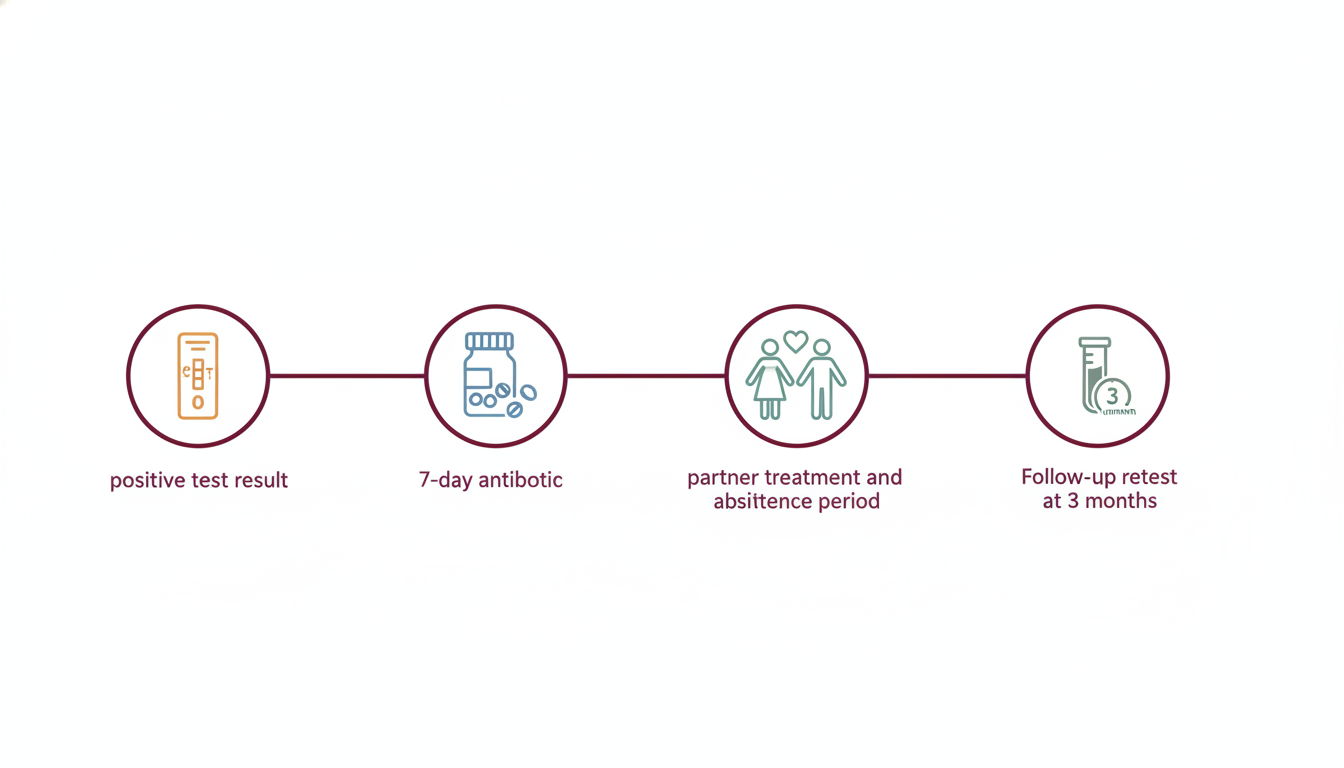
Within 24 to 48 hours, see a clinician (in-person or telehealth) to start a 7-day course of doxycycline (100 mg twice daily), the CDC's current first-line treatment. Abstain from all sex (oral, vaginal, anal) for the full 7 days of treatment AND until any partners have been treated. Notify every sex partner from the past 60 days so they can test and treat. Schedule a retest about 3 months after treatment to catch reinfection. Most chlamydia infections clear completely; the steps around treatment are what protect your partners and prevent it from coming back.
Key takeaways
- A positive chlamydia result is treatable. The CDC's first-line regimen is doxycycline 100 mg twice daily for 7 days. Finish every dose even if symptoms disappear.
- Treat partners from the past 60 days and retest in 3 months. Untreated partners cause most reinfections, and the CDC recommends a 3-month retest because repeat infection is common.
The first 24 hours: what to do, and what to skip
The hours right after a positive result are mostly emotional, not medical. Chlamydia is not an emergency in the same sense as appendicitis or a broken bone. You have time to think, time to call a provider during normal business hours, time to work out who needs a heads-up. What helps most in those first 24 hours is avoiding the moves that make tomorrow harder.
Skip the leftover antibiotics from a friend's medicine cabinet. The wrong drug or wrong dose can drive resistance, mask symptoms without curing the infection, or trigger an allergic reaction. Skip the 2 a.m. doom-scroll through anonymous forums; most stories you'll find there are outliers, often years out of date, and rarely match what your clinician will actually recommend. Skip the urge to confront an ex by text before you've had a few hours to think clearly. Skip cancelling other plans for the week. You can take doxycycline and live a normal week.
What helps: re-read the test instructions to confirm you read the result correctly. Write down the date, the test brand or lab name, and the type of test (rapid lateral-flow, mail-in NAAT, or clinic NAAT). Book a telehealth or clinic appointment for the next business day. If you have symptoms such as burning during urination, unusual discharge, pelvic pain, or testicular discomfort, note them. Your provider will ask. Beyond that, give yourself the same evening you'd give a friend who just got the same news.
Helpful moves: re-read the test instructions, note any symptoms (burning, discharge, pelvic pain, testicular discomfort), write down the test type and date, and book a telehealth or clinic appointment for the next business day.
Moves to skip: leftover antibiotics from a friend, 2 a.m. doom-scrolling through anonymous forums, panic-texting an ex before you have had time to think, and cancelling other plans for the week.
Confirm the result before you act on it
Before refilling a prescription or telling anyone, make sure the result is real. False positives are uncommon but not impossible, and at-home rapid tests have a narrower valid read window than people often remember. The original test may have sat past its read window, the line you're seeing might be an evaporation artifact, or the kit could have been stored in a hot car for a week. Any of those can turn a clear-cut negative into something that looks positive at first glance.
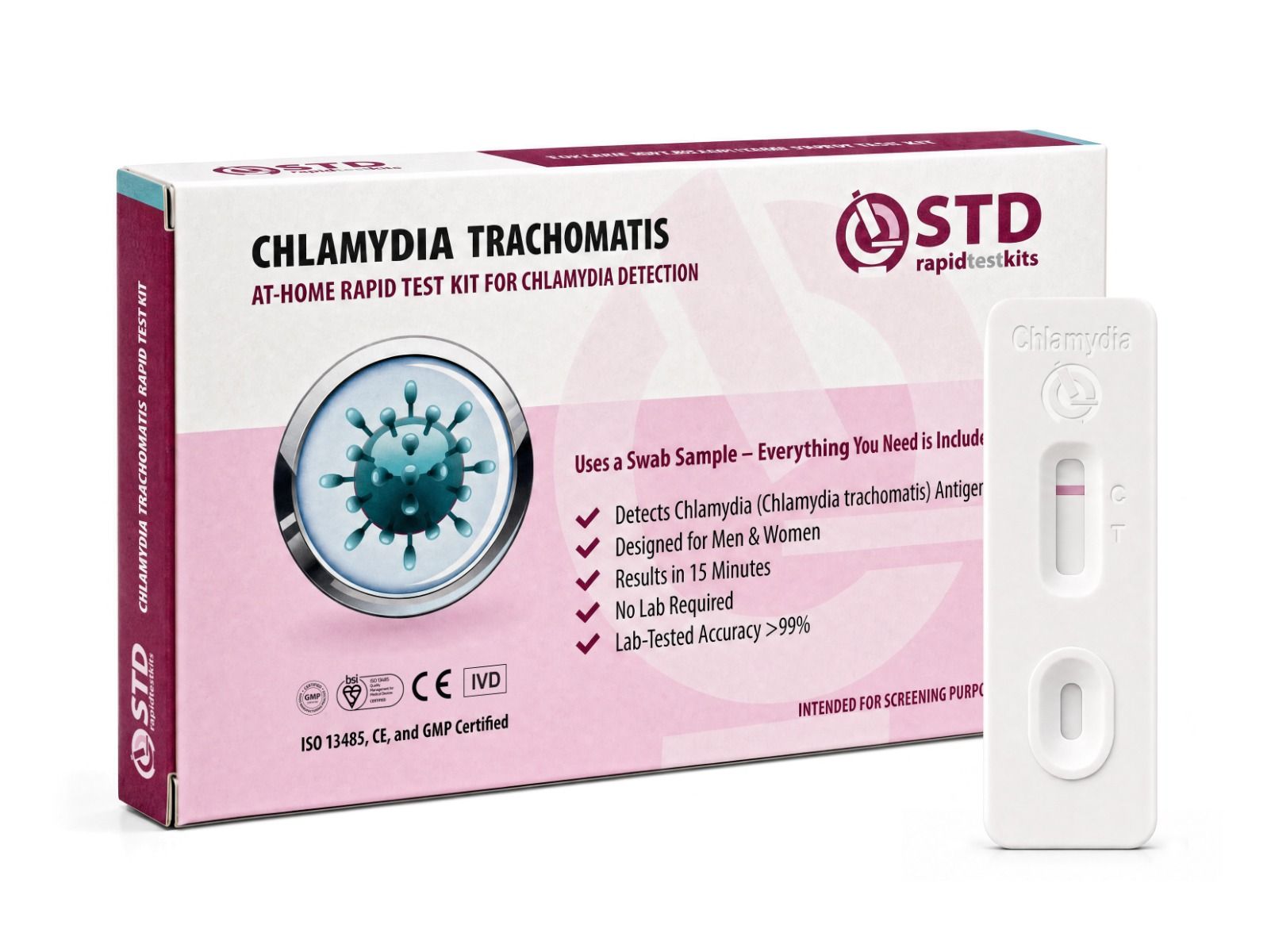
Look at the brand's instructions for the exact read window. Most rapid lateral-flow chlamydia kits are read between 10 and 20 minutes after sample application; results read after 30 minutes are not reliable. Check the lot expiry on the foil pouch. If the test came from a clinic or mail-in lab, confirm the test type. NAAT (nucleic acid amplification testing) is the laboratory gold standard for chlamydia per CDC guidance; a NAAT positive is almost always a true positive.
If anything about the result feels ambiguous, retest. There's no shame in confirming with a fresh rapid kit or a lab visit before starting antibiotics. Wasted hours of worry are easier to recover from than a week of doxycycline taken for no reason.
| Test type | Sample | Typical sensitivity | Common misread triggers |
|---|---|---|---|
| At-home rapid lateral-flow | Self-collected swab | Mid-to-high 80s to 90s percent (varies by brand) | Reading after the valid window, faint evaporation lines, expired or hot-stored kits |
| Mail-in lab NAAT | Self-collected swab or urine, shipped | Above 99 percent | Sample contamination, delayed shipping past stability window |
| Clinic NAAT | Clinician- or self-collected swab, or urine | Above 99 percent | Rare; sample handling errors |
Treatment basics: what your prescription will look like
The CDC's first-line treatment for uncomplicated chlamydia (genital, rectal, or pharyngeal) is doxycycline 100 mg taken orally twice daily for 7 days. A single 1 g oral dose of azithromycin is an alternative when doxycycline cannot be used, including pregnancy or documented intolerance. The agency moved doxycycline to first-line because it shows higher cure rates for rectal infection and modestly better overall efficacy in recent studies.
You'll usually feel symptom relief within two to three days. That feeling is not a green light to stop. Chlamydia is an intracellular pathogen, meaning it lives inside human cells, and incomplete treatment can leave a low-level infection that flares back later. Take every dose. Set a phone alarm if you need to. Avoid calcium-rich foods, dairy, iron supplements, or antacids in the 30 minutes before or 2 hours after each dose, because they bind the drug and cut absorption.
Side effects are usually mild: nausea, photosensitivity (use sunscreen and skip tanning beds for the week), and occasional stomach upset. Take each pill with a full glass of water and stay upright for 30 minutes afterward; the tablet can irritate the esophagus if it lingers. Severe reactions such as rash, difficulty breathing, or persistent vomiting are rare but warrant a call to your prescriber. And no, herbal teas, garlic, oregano oil, or any other DIY remedy will not treat chlamydia. The bacterium lives inside cells; it requires antibiotics that can reach it there.
Stopping doxycycline at day 4 because you feel fine is the single most common reason chlamydia comes back. The standard 7-day course is calibrated to clear intracellular bacteria, not just resolve symptoms. Skipped doses also drive antibiotic resistance, which makes the next person's treatment harder. If you miss a dose, take it as soon as you remember unless it's nearly time for the next one; never double up.
Telling partners: who to contact and how
Partner notification is the single most important step for preventing reinfection, and it's the step most people put off. The CDC's guidance is to notify any sex partner you've had in the past 60 days, or your most recent partner if your last sexual contact was more than 60 days ago. Notification means they should test and, if positive, treat. Some U.S. states and many clinics offer expedited partner therapy (EPT), in which your clinician prescribes treatment for your partner without seeing them in person. Ask whether EPT is available where you live; it can dramatically shorten the time-to-treatment loop for people who would otherwise put off a clinic visit.
You don't have to handle disclosure in person. You don't have to apologize. You don't have to explain how you think you got it or rehash old relationships. The message just needs to be specific enough that the other person can act on it. If you and your partner are monogamous and the diagnosis is unexpected, try not to spiral into accusation. Chlamydia can sit asymptomatic for months in either person, and a current diagnosis doesn't always pinpoint when or with whom transmission happened.
| Notification path | Best for | Sample wording |
|---|---|---|
| Direct text or call | Current or recent named partners | "Hey, I tested positive for chlamydia. You should get tested too. It's treatable with a week of antibiotics. Happy to share what I learned about getting it sorted." |
| Anonymous notification service (e.g., TellYourPartner.org) | Casual or one-time partners where you'd rather not identify yourself | "Someone you were recently sexually intimate with tested positive for chlamydia. Please get tested." |
| Clinic-facilitated notification | Situations where you don't feel safe contacting a partner directly | Public health staff or clinic notify the partner without naming you |
| Expedited partner therapy (EPT) | Confirmed current partner, where state and clinician allow | Clinician writes a prescription in the partner's name based on your diagnosis; partner gets treated without their own visit |
When to retest, and why it isn't optional
Finishing antibiotics feels like closure. The CDC says it isn't, quite. Their guidance recommends a routine retest about 3 months after treatment for everyone diagnosed with chlamydia, even people who feel fine and whose partner was treated. The reason is straightforward: reinfection is common, especially in people under 30 and in newer relationships. The 3-month retest catches the reinfections that happen because a partner wasn't actually treated, was reinfected from someone else in the meantime, or because a new partner brought a new exposure.
A test of cure (a separate test specifically to confirm the original infection cleared) isn't routinely recommended for non-pregnant adults on the standard doxycycline regimen, because cure rates are very high and a too-early NAAT can pick up dead bacterial DNA and look falsely positive. If a test of cure is needed (during pregnancy, with persistent symptoms, or after suspected non-adherence), wait at least 3 to 4 weeks after the last dose so any residual nucleic acid has cleared.
If your original test was an at-home rapid kit, consider that retest as a chance to confirm with a NAAT-grade lab test as well. Lateral-flow rapid tests are a useful screening tool; the lab NAAT is the higher-sensitivity gold standard. They are complementary, not equivalent.
Preventing reinfection between now and your retest
Chlamydia doesn't grant immunity. Clearing one infection doesn't protect you from the next exposure, and reinfection from an untreated partner is the most common scenario clinicians see. The prevention loop is shorter than people expect: treat yourself fully, treat your partner(s) fully, abstain for the full 7 days of treatment for both of you, and then resume normal life with consistent condom or barrier use during vaginal and anal sex.
Layered strategies work better than any one tactic. Condoms reduce but don't eliminate transmission risk; consistent use plus a regular testing cadence (every 3 to 6 months for sexually active people under 25 per CDC screening guidance, every 3 months in higher-exposure scenarios) is the realistic floor. There's no licensed chlamydia vaccine yet, though candidates are in trials. Until one arrives, the protective stack is testing plus treatment plus communication plus barriers, in roughly that order of impact.
When can you have sex again
Plan on resuming sex 7 days after starting treatment, AND only after any current sex partners have completed their own treatment. Both conditions matter. If you finish your week of doxycycline but your partner only started theirs three days ago, you're still in the abstinence window. The point is to break the back-and-forth transmission cycle, not just to clear your own infection.
For the doxycycline course specifically, you complete day 7 with the evening dose, and then you're cleared (assuming your partner is also cleared). For the single-dose azithromycin alternative, the 7-day clock starts from the day you took the dose. If you had any genital symptoms at diagnosis, also wait until those have fully resolved before resuming sex, because lingering inflammation is a sign your body is still healing.
Sex is back on the table only when (1) you have completed your full antibiotic course (7 days for doxycycline, or 7 days after a single azithromycin dose) AND (2) any current sex partners have completed their own treatment. Meeting just one of those conditions still leaves a transmission cycle open between you.
The emotional weight, and what to do with it
A week of pills, one or two difficult conversations, and a calendar reminder for the retest. That is the entire medical footprint of a chlamydia diagnosis. Stigma is often the harder part, and it drives people to avoid telling partners, to delay testing the next time, and to internalize a diagnosis as a verdict on their character rather than a routine bacterial infection. None of that helps anyone, least of all the next person they'll have sex with.
Most sexually active people will have at least one STI in their lifetime; chlamydia is the most commonly reported bacterial one in the U.S. specifically because so many people get it. A diagnosis is not a moral failing. It's a signal that the testing system worked: your infection got caught, you're treating it, and you're closing the transmission loop. That sequence is what responsible sexual health actually looks like in practice.
If the diagnosis hits hard emotionally, peer support helps. The American Sexual Health Association maintains a confidential STI helpline; sex-positive therapists exist in most major cities and via telehealth; and online communities like the r/STD subreddit (with the usual caveats about anonymous internet advice) at least confirm you're nowhere near the only person processing this in real time.
Chlamydia is the most frequently reported bacterial sexually transmitted infection in the United States. Annual screening is recommended for all sexually active women younger than 25, and for older women with risk factors such as new or multiple sex partners.
If you're pregnant or trying to conceive
Tell your obstetric provider about the positive result as soon as possible. Untreated chlamydia in pregnancy is associated with preterm delivery, low birth weight, and the bacterium can be passed to the newborn during vaginal birth, causing eye infection (neonatal conjunctivitis) or pneumonia. Doxycycline is not used in pregnancy because of its effect on developing teeth and bone; the standard alternative is a single 1 g oral dose of azithromycin, which is considered safe in pregnancy. CDC guidance also recommends a test of cure 3 to 4 weeks after treatment in pregnant patients, plus a routine retest 3 months later.
If you're trying to conceive but not currently pregnant, the standard 7-day doxycycline course is fine. Untreated chlamydia is one of the leading preventable causes of pelvic inflammatory disease (PID) and tubal-factor infertility, so prompt treatment now actively protects future fertility rather than threatening it.
Three differences from the standard regimen: (1) doxycycline is replaced with a single 1 g oral dose of azithromycin, which is considered safe in pregnancy; (2) a test of cure is recommended 3 to 4 weeks after treatment; (3) the routine 3-month retest still applies on top of that test of cure. Tell your obstetric provider as soon as you have the result so the regimen change can be ordered and timed against your prenatal schedule.
Common questions after a positive chlamydia test
- Can I have sex during treatment for chlamydia?
- No. Wait until you've completed the full 7-day course of doxycycline (or 7 days after a single azithromycin dose) AND any current sex partners have completed their own treatment. Resuming earlier risks reinfecting each other in a back-and-forth cycle, even if you both feel better.
- How long does chlamydia take to clear after starting antibiotics?
- Most people feel symptom relief within 2 to 3 days. The infection itself is generally cleared by the end of the 7-day doxycycline course, or 7 days after a single dose of azithromycin. Cure rates are very high (above 95 percent) when treatment is completed correctly, which is why a routine test of cure isn't recommended for most non-pregnant adults.
- Do I need a follow-up test after treatment?
- Set a calendar reminder for 3 months from the day you finish your antibiotics. That is your retest date per CDC guidance, regardless of whether you feel fine or whether your partner was treated. A test of cure (a different, sooner test confirming the original infection cleared) is only ordered in narrow situations: pregnancy, persistent symptoms, or suspected non-adherence; if you do need one, wait 3 to 4 weeks after your last dose so residual bacterial DNA doesn't trigger a false positive.
- What if my partner refuses to get tested or treated?
- Don't resume sex with them until they're treated. You can use anonymous partner notification services, or ask your clinician about expedited partner therapy (EPT), which lets you bring antibiotics to your partner without them needing their own clinic visit. EPT is permitted in most U.S. states for chlamydia. If a partner is hostile or unsafe, your local health department can also notify them on your behalf without naming you.
- Can I get chlamydia again after treatment?
- Yes. Clearing one infection doesn't grant immunity, and reinfection is common when a partner wasn't treated or when there's new exposure. That's why the 3-month retest exists, and why prevention (consistent condoms, regular testing, partner communication) still matters after treatment.
- I tested positive but my partner tested negative. How is that possible?
- Several reasonable explanations: the partner tested too soon after exposure (chlamydia takes 1 to 3 weeks to become detectable), the sample wasn't collected correctly, the test was a less sensitive rapid kit while yours was a NAAT, or the partner happens to be one of the rare people whose immune system cleared the infection on their own. Per CDC guidance, partners of people with confirmed chlamydia should be treated regardless of their own test result, because the cost of presumptive treatment is low and the cost of leaving an infection in the relationship is high.
- Will chlamydia go away on its own without antibiotics?
- Sometimes the immune system clears a small fraction of infections, but you cannot tell whether yours is one of those, and waiting it out risks serious complications: pelvic inflammatory disease, tubal-factor infertility, chronic pelvic pain, and increased HIV transmission risk during co-exposure. Treatment is short, cheap, and effective. There is no clinical reason to skip it.
- What does a faint positive line on a rapid chlamydia test mean?
- Within the brand's valid read window (typically 10 to 20 minutes), even a faint test line is generally read as positive. After the window closes (usually 30 minutes), faint lines can be evaporation artifacts and aren't reliable. If you're uncertain, retest with a fresh kit, or get a lab NAAT for definitive confirmation before starting treatment.
- U.S. Centers for Disease Control and Prevention. Chlamydial Infections: STI Treatment Guidelines. Doxycycline 100 mg twice daily for 7 days as first-line regimen; 60-day partner notification window; 3-month retest recommendation; expedited partner therapy guidance.
- U.S. Centers for Disease Control and Prevention. Retesting After Treatment to Detect Repeat Infections. Routine 3-month retest guidance for chlamydia and gonorrhea.
- U.S. Centers for Disease Control and Prevention. STI Annual Surveillance Statistics. Reported chlamydia case counts by year; 2023 total of 1,648,568 reported cases supports the '1.6 million cases' figure used in this article.
- World Health Organization. Chlamydia fact sheet. Global epidemiology, transmission, complications, treatment.
- NHS. Chlamydia condition page. Symptoms, testing, treatment, complications including pelvic inflammatory disease and infertility risk.
- Mayo Clinic. Chlamydia trachomatis: Diagnosis and Treatment. Antibiotic regimens, partner notification, pregnancy considerations.
