Published: August 2025 | Last updated: May 2026 | Editorial review and quality control: Martina N.
What are the symptoms and stages of syphilis, and when should I test?
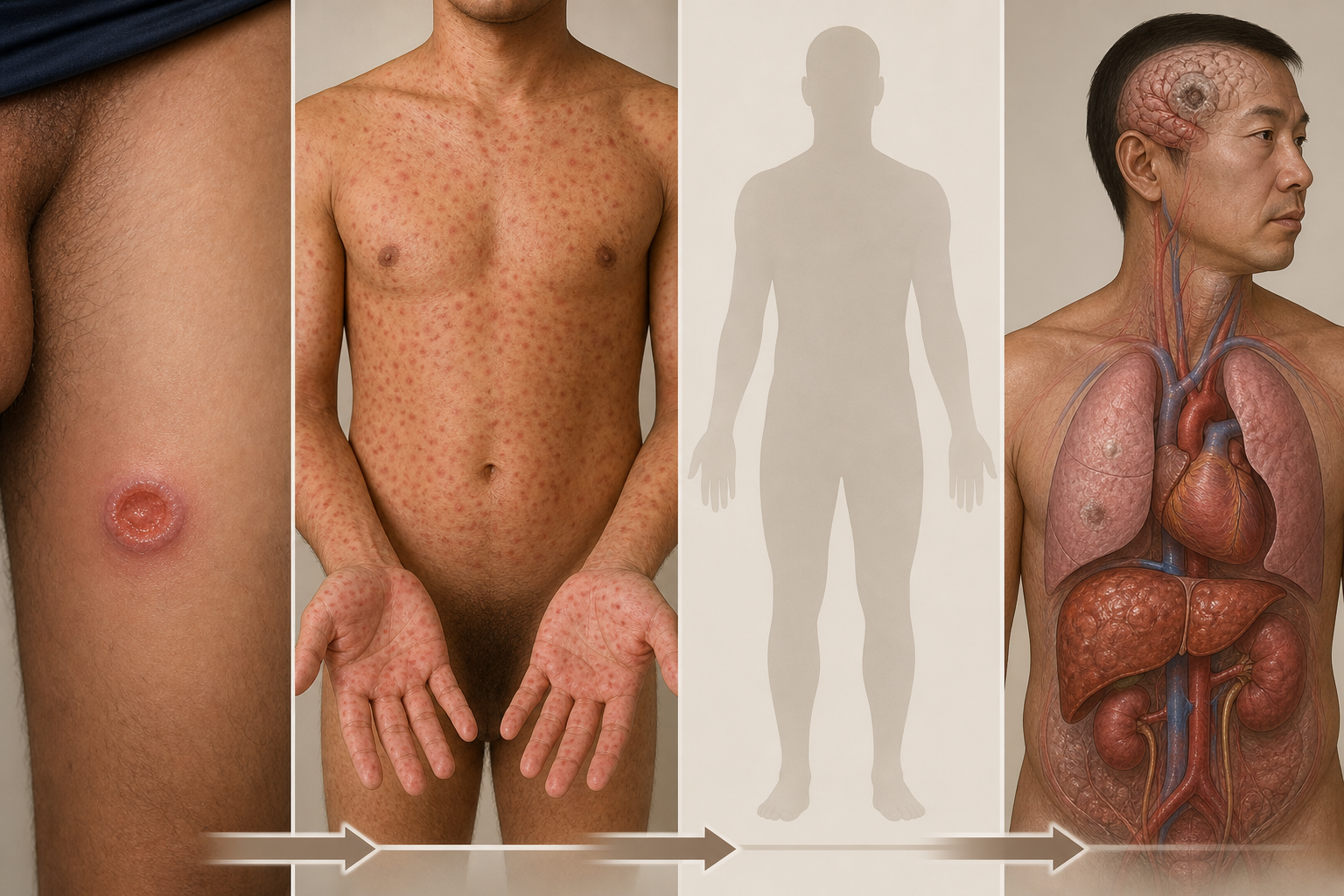
Syphilis moves through four stages: a single painless sore (chancre) about three weeks after exposure, then a non-itchy rash often on the palms and soles, a symptom-free latent phase, and rare late-stage organ damage. A blood test is most reliable 3 to 6 weeks after exposure, and penicillin cures the infection at every stage.
Syphilis is a bacterial infection that moves through four distinct stages over months or years if it is not treated. The good news is that syphilis is fully curable with antibiotics, especially when caught early. The harder news is that its early signs can look like nothing serious: a painless sore that disappears, a rash that does not itch, a week of feeling off that seems to pass. Each of these can be a stage of an active infection that keeps progressing in the background.
This guide walks through what each stage of syphilis looks like, when symptoms typically appear, how to tell a chancre apart from the most common look-alikes, what a standard blood test can detect, and how treatment works at every stage. Most readers come here because they have noticed something unusual or had an exposure that worries them. The aim is to give you concrete information you can act on, not a generic overview.
Key Takeaways
- Syphilis has four stages (primary, secondary, latent, tertiary) and the early stages are easy to miss because the chancre is painless and the rash does not itch.
- Penicillin cures syphilis at every stage, but tertiary damage to the heart, brain, and nerves is usually irreversible, so early testing is what keeps the infection curable.
How syphilis spreads
Syphilis is caused by a corkscrew-shaped bacterium called Treponema pallidum. It transmits through direct contact with a syphilis sore (called a chancre) during vaginal, anal, or oral sex, per the CDC overview of syphilis and the MedlinePlus syphilis summary. The bacterium can also pass from a pregnant person to their fetus through the placenta, causing congenital syphilis, which has its own section later in this article.
Three points are worth pinning down:
- The sore can be hidden. Primary chancres inside the vagina, the rectum, or the back of the throat often go unnoticed. Transmission can happen during sex that did not look unusual to either partner.
- Condoms reduce risk but do not eliminate it. The chancre can sit on skin a condom does not cover. Used consistently, condoms still cut transmission risk substantially during the primary and secondary stages, when the infection is most contagious.
- Casual contact does not spread syphilis. Toilet seats, doorknobs, shared towels, swimming pools, hot tubs, and eating utensils do not transmit Treponema pallidum, which dies quickly outside the body. The infection is sexual or vertical (parent to fetus), not casual.
Sharing needles can also transmit syphilis through bloodstream exposure, though this route accounts for a small share of cases compared with sexual transmission.
Active syphilis sores disrupt the mucosal barrier, which raises the risk of acquiring or transmitting HIV during the same sexual exposure. Anyone testing for syphilis after a possible exposure should consider HIV testing at the same time, especially if they are not on PrEP.
Stage 1: Primary syphilis (the chancre)
Primary syphilis appears as a sore at the site where the bacterium entered the body. The medical term is a chancre, pronounced “shang-ker”. According to the NHS overview of syphilis, it can take 3 weeks or more for the first symptoms of syphilis to appear after exposure, with most chancres developing in the first few weeks after contact.
What a chancre looks like
The classic primary lesion has a recognizable pattern:
- One sore in most cases, though some people develop multiple chancres (more common in people living with HIV).
- Round or oval shape, with a raised firm border that feels indurated (rubbery) to the touch, almost like a small button under the skin.
- Painless. This is the diagnostic giveaway. The sore does not hurt, does not itch, and usually does not bleed.
- Smooth ulcerated base, sometimes with a small amount of clear or yellowish fluid.
- Size typically 5 to 15 mm across, about the size of a pencil eraser.
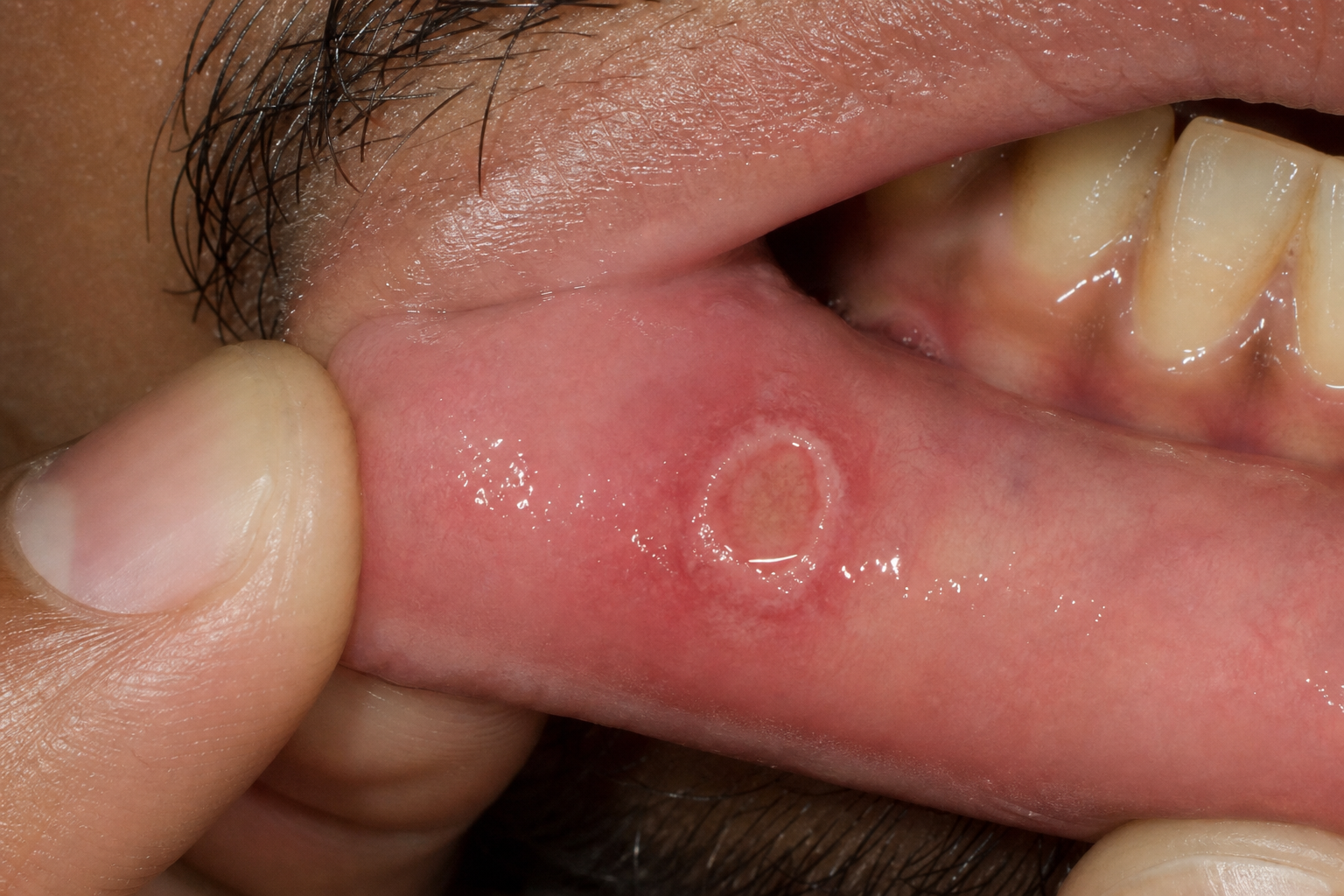
Where the chancre shows up depends entirely on where the bacterium made contact. Genital chancres are the most common: on the penis they usually sit on the shaft, glans, or foreskin, and are easily mistaken for friction or an ingrown hair, while in people with a vagina they appear on the labia, the cervix, or inside the vaginal canal. Oral chancres follow oral-genital contact and can sit on the lips, tongue, gums, tonsils, or the back of the throat, where they are routinely read as cold sores or canker sores. Anal and rectal chancres follow receptive anal sex and may cause only mild discomfort or nothing at all. A chancre on the cervix or deep in the rectum can progress entirely unnoticed, which is why a substantial share of primary syphilis goes undiagnosed until secondary-stage symptoms appear.
Why the chancre is misleading
The primary sore heals on its own in three to six weeks, even without any treatment, per the CDC's About Syphilis page. People often read that healing as the body fighting off whatever it was. The infection is still active. The bacteria have already entered the bloodstream and are spreading through the body. Without antibiotics, the infection then advances to the secondary stage.
Lymph nodes near the chancre often swell during this stage. The swelling is also typically painless and rubbery, and it can persist for weeks after the sore itself has resolved. A painless ulcer at a site of recent sexual contact, with or without a nearby swollen node, is reason to test even if the sore is already fading.
How to tell a chancre from other sores
The most common things people confuse with a chancre are pimples, cold sores from herpes simplex virus, canker sores (aphthous ulcers), and ingrown hairs. The differences are subtle but consistent. Pain level, texture, and how the sore evolves over a week are the most useful clues.
The single most reliable feature is the combination of a hard button-like base and the absence of pain. Pimples hurt when squeezed. Cold sores burn or tingle. Canker sores sting when food touches them. Ingrown hairs are tender. A chancre sits silently. If you can press on the lesion firmly without flinching, and the base feels rubbery rather than soft, that pattern alone deserves a syphilis test, even if the sore looks like something else at first glance.
| Feature | Syphilis chancre | Herpes lesion | Canker sore | Ingrown hair |
|---|---|---|---|---|
| Pain level | Usually painless | Often painful or burning | Painful when touched | Tender when pressed |
| Number of sores | Typically one | Cluster of small blisters | One to a few | Single bump |
| Texture | Firm rubbery base, raised edges | Fluid-filled blister, then crust | Soft floor with red halo | Raised bump with hair center |
| Surface | Smooth, sometimes weeping | Vesicles that rupture | Yellow-gray fibrinous floor | Skin-colored or red |
| Healing without treatment | 3 to 6 weeks (infection continues) | 1 to 2 weeks | 1 to 2 weeks | Resolves once hair clears |
Stage 2: Secondary syphilis (body-wide signs)
Secondary syphilis develops in the weeks to a few months after the chancre first appears, sometimes overlapping with the still-healing primary sore. The NHS syphilis page notes that later symptoms can appear up to 3 months after the initial sore. By this point the bacterium has reached the bloodstream and many tissues at once. Symptoms reflect that body-wide spread.
The classic secondary rash
The hallmark of secondary syphilis is a non-itchy rash with a distinctive distribution and color:
- Color: copper-red to brownish-pink on lighter skin; darker red-brown or purple-tinged on darker skin.
- Pattern: flat or slightly raised round to oval spots, typically 2 to 10 mm across.
- Location: most characteristic on the palms of the hands and the soles of the feet. The rash can also appear on the trunk, back, arms, and legs, and the CDC's About Syphilis page notes that this rash usually does not itch.
- Itch level: usually none. A non-itchy rash on the palms and soles is unusual enough that clinicians treat it as a highly characteristic sign of secondary syphilis until proven otherwise.
Other secondary signs
Beyond the rash, secondary syphilis often brings a constellation of body-wide signs:
- Mucous patches: shallow, painless, gray-white lesions inside the mouth, vagina, or anus. Highly infectious.
- Condylomata lata: large raised gray-white moist plaques in skin folds (groin, under the breasts, around the anus). Also highly infectious.
- Patchy hair loss: a moth-eaten pattern on the scalp, beard, or eyebrows.
- Flu-like symptoms: low-grade fever, sore throat, headache, muscle aches, fatigue, generalized swollen lymph nodes.
Secondary symptoms come and go in waves over weeks to months. Untreated, they eventually settle down on their own. The infection then enters its silent stage, but the bacterium has not gone anywhere.
Stage 3: Latent syphilis (the silent stage)
Latent syphilis is the period after secondary symptoms have resolved but before any tertiary complications have started. The infection is hidden, not gone. Blood tests still come back positive. The person feels well.
The CDC subdivides latency by how long the infection has been latent, per the CDC STI treatment guidelines for syphilis:
- Early latent: less than one year since infection, or since a documented negative test. The person can still transmit syphilis sexually during this window.
- Late latent: more than one year, or duration unknown. Sexual transmission is rare at this point, but mother-to-fetus transmission during pregnancy remains a serious risk.
Latency can last for years. Some people remain latent for the rest of their lives. Others progress to tertiary disease. The infection during latency continues to interact with the body even without producing symptoms; this is part of why neurosyphilis can sometimes appear during what looks clinically like a latent phase.
Treatment during latency still works. A longer course of penicillin clears the infection and prevents any tertiary damage from ever developing. The detail to remember: latent does not mean cured. A latent positive blood test deserves staging and treatment.
Early vs late latent syphilis
- Early latent (under 1 year since infection): no symptoms, but sexual transmission to a partner is still possible.
- Late latent (over 1 year, or duration unknown): no symptoms, sexual transmission is rare, but mother-to-fetus transmission during pregnancy remains a serious risk.
- Both stages are still treatable, and treatment prevents progression to tertiary syphilis.
Stage 4: Tertiary syphilis (long-term organ damage)
Tertiary syphilis develops in a minority of untreated people. Per the CDC STI treatment guidelines, late neurologic manifestations such as tabes dorsalis and general paresis can occur 10 to more than 30 years after the original infection. This stage is far less common in countries with routine testing and treatment access. It still happens.
What tertiary syphilis can affect
The damage is mechanical: chronic low-level inflammation in tissues the bacterium has been quietly colonizing.
- Cardiovascular syphilis: weakening of the aorta and the heart valves. Aortic aneurysms (ballooned segments of the body's largest artery) can rupture suddenly.
- Neurosyphilis: damage to the brain and spinal cord. Symptoms range from memory loss and personality changes to difficulty walking, tremors, and seizures. Neurosyphilis can appear at any stage, not only the tertiary stage, if the bacterium reaches the central nervous system early.
- Gummas: soft granuloma-like growths in the skin, bone, liver, or other organs. Rare in modern populations but characteristic when they do occur.
Ocular and otic syphilis
Syphilis can also damage the eyes and ears at any stage, with vision changes (blurred sight, floaters, sudden vision loss) or hearing changes (tinnitus, sudden hearing loss). The CDC has issued repeated clinical advisories on rising ocular syphilis cases, per CDC surveillance and clinical guidance. Any unexplained vision or hearing change in someone with a syphilis history is a medical urgency, not a wait-and-see symptom.
Tertiary damage is typically irreversible. Treatment at this stage stops the infection from advancing further but cannot undo damage already done. This is the central reason early testing matters: every stage before tertiary is fully recoverable; tertiary mostly is not.
The years-long silent stretch between secondary symptoms and tertiary disease is the part of the timeline that most often catches people out. Someone who had a rash they did not test, that faded, who then felt fine for a decade, can have an active bloodstream infection the whole time. A single blood test would have caught it at any point.
Congenital syphilis: passed during pregnancy
A pregnant person with untreated syphilis can pass the bacterium to the fetus through the placenta, or to the newborn during delivery. Congenital syphilis cases in the United States have risen sharply in recent years, per WHO syphilis guidance and CDC syphilis surveillance.
The outcomes without treatment are severe:
- Miscarriage, stillbirth, or neonatal death in a substantial share of pregnancies with untreated maternal syphilis.
- Newborn infection with bone deformities, anemia, jaundice, enlarged liver and spleen, rash, and developmental disabilities.
- Late congenital syphilis (signs appearing after age two) with deafness, blindness, characteristic dental and facial changes, and neurological problems.
Congenital syphilis is preventable. The CDC recommends syphilis screening at the first prenatal visit, and repeat testing in the third trimester and at delivery for anyone at increased risk. Treatment during pregnancy with benzathine penicillin G prevents transmission in most cases when given early enough, ideally more than 30 days before delivery.
Screening at the first prenatal visit and treatment with benzathine penicillin G more than 30 days before delivery prevents most cases of congenital syphilis. If you are pregnant or planning a pregnancy, syphilis testing is one of the highest-value early prenatal labs you can request.
How syphilis testing works
Syphilis is diagnosed primarily through blood tests, not by looking at sores. There are two main laboratory test families:
- Treponemal tests (TP-PA, FTA-ABS, EIA, CIA) detect antibodies against Treponema pallidum itself. Once positive, these tests usually stay positive for life, so they confirm whether someone has ever been infected.
- Non-treponemal tests (RPR, VDRL) detect antibodies against substances released by damaged cells during active infection. The titer rises during active disease and falls after successful treatment, so it tracks whether the infection is currently active.
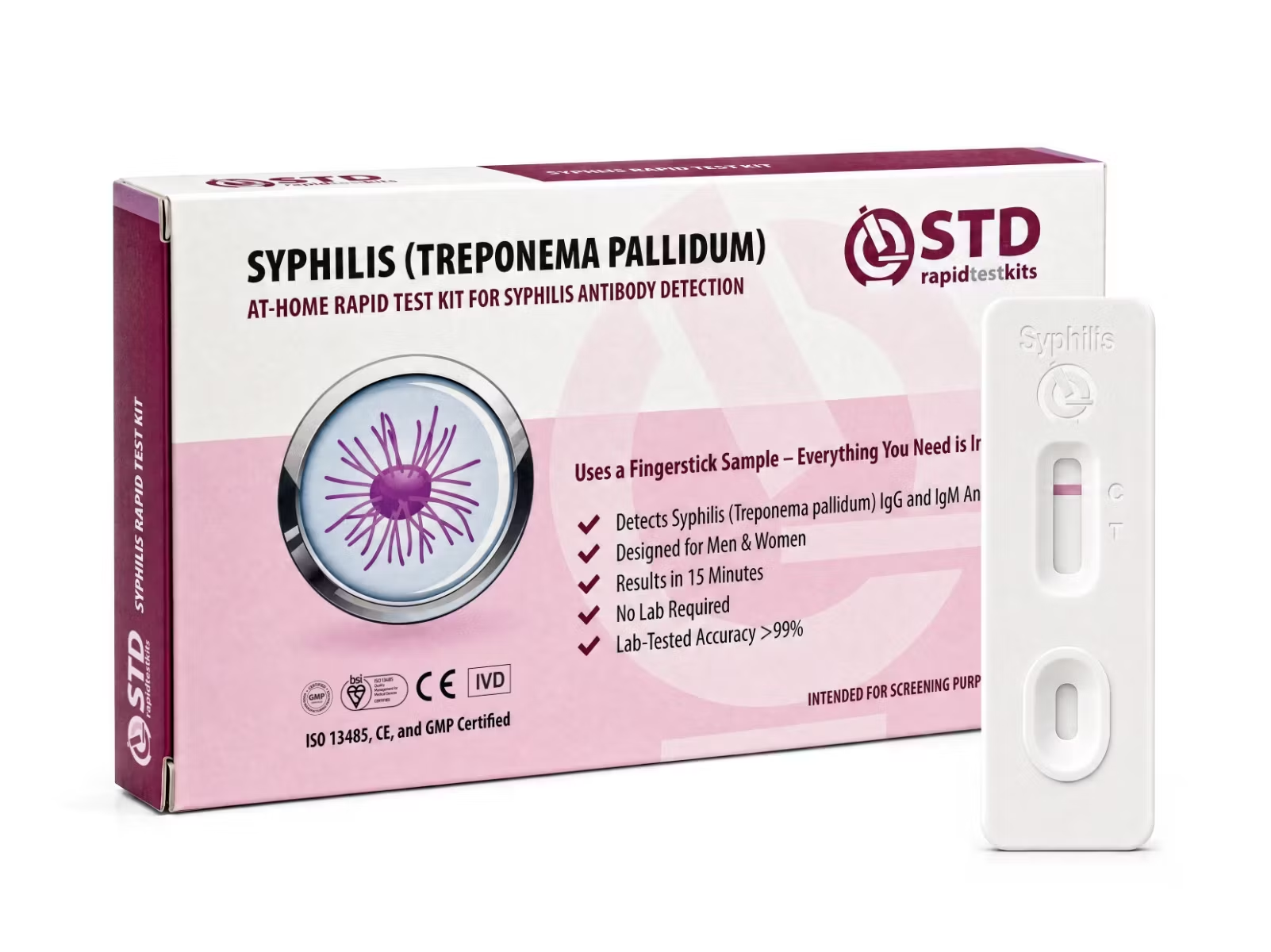
Clinical labs combine these tests in a reverse or traditional sequence to confirm a diagnosis and stage the infection. At-home rapid syphilis tests use a lateral-flow immunoassay strip that detects treponemal antibodies from a fingerstick blood sample. A positive at-home result tells you the antibodies are present; lab confirmation and clinical staging then follow. Lateral-flow rapid tests are not the same technology as a laboratory NAAT or PCR; rapid tests trade some analytical sensitivity for speed and privacy, while lab confirmation remains the standard for any positive screen result.
The window period
Syphilis antibodies are usually detectable within 3 to 6 weeks after exposure, though timing varies by test and by individual. Antibody-based tests can miss very early infections, so a negative test soon after a suspected exposure should be repeated at around 6 weeks and again at 12 weeks. Direct visualization of T. pallidum from a chancre under a dark-field microscope can confirm primary syphilis earlier, but that test is only available in specialized clinics.
If you are looking at a chancre that has already healed, you can still test. In some ways it is easier to detect syphilis after the chancre has resolved because the immune system has had more time to produce detectable antibodies. Anchor the test date to the estimated exposure, not to the day the sore appeared: 3 to 6 weeks past the exposure is the high-reliability window, and you can screen privately with an at-home rapid syphilis test before confirming any positive with a lab. This article is published by stdrapidtestkits.com, which sells the at-home rapid syphilis test referenced below; we recommend it because the test fits the use case described, not because of commercial benefit.
How syphilis is treated
Syphilis is one of the few sexually transmitted infections where a single well-established antibiotic (penicillin) reliably cures most cases. The specific regimen depends on the stage, per the CDC STI treatment guidelines for syphilis:
- Primary, secondary, and early latent: a single intramuscular injection of benzathine penicillin G.
- Late latent, latent of unknown duration, and tertiary (excluding neurosyphilis): three weekly intramuscular injections of benzathine penicillin G.
- Neurosyphilis, ocular syphilis, or otic syphilis: intravenous aqueous crystalline penicillin G for 10 to 14 days, given as an inpatient or supervised outpatient regimen.
- Congenital syphilis or syphilis during pregnancy: penicillin remains the only fully validated treatment. Pregnant people with a penicillin allergy are typically desensitized so they can still receive penicillin.
After treatment, follow-up blood tests at 6 and 12 months (longer for late stages) track the non-treponemal titer to confirm cure. A fourfold drop in titer (a change of two dilutions, for example from 1:16 down to 1:4) is the standard marker of successful treatment, per the CDC STI treatment guidelines. Treponemal antibodies often stay positive for life even after a successful cure, which is normal and not a sign the infection has returned.
Reinfection after treatment is common because syphilis leaves no lasting immunity, so any new exposure after a previous cure deserves a fresh test. Some clinicians also see a short-lived feverish reaction (the Jarisch-Herxheimer reaction) in the first 24 hours after the first penicillin dose; it usually resolves on its own and is not an allergy.
Syphilis is a sexually transmitted infection that can cause serious health problems without treatment. Infection develops in stages, and each stage can have different signs and symptoms.
Telling partners and getting them tested
A syphilis diagnosis is a shared event, not a personal failure, and the people who were in your life during the exposure window deserve the chance to test and treat. Per the CDC STI treatment guidelines, partner notification looks back over a defined window: for primary syphilis, sexual partners from the previous 3 months plus the duration of symptoms; for secondary syphilis, 6 months plus the duration of symptoms; and for early latent syphilis, the previous year.
You do not owe anyone a long explanation. A short, factual message is enough, and many public-health departments offer anonymous partner-notification services if a direct conversation feels impossible. A clinician can walk you through the local options.
"Hey, I tested for syphilis and wanted you to know so you can get tested too."
That is enough. No long apology, no detailed self-explanation. Just the facts and what they mean for the other person.
How to lower your risk
Prevention sits across three layers: barrier methods, partner awareness, and a sensible testing cadence.
- Condoms and dental dams, used consistently during vaginal, anal, and oral sex, reduce syphilis transmission risk substantially. Coverage is the catch. A chancre on uncovered skin can still transmit, so condoms reduce risk rather than eliminate it.
- Knowing partner status matters. Recent testing in both partners, with results shared honestly, is the single best informational filter. A new partner inside a sexual network with rising syphilis rates (which most U.S. urban networks currently are, per CDC surveillance) warrants a test before condomless sex.
- Routine STI screening for sexually active adults, especially with new or multiple partners, pregnant people, and men who have sex with men. The CDC recommends at least annual syphilis screening for these groups, with more frequent testing (every 3 to 6 months) for those at higher exposure risk.
- Doxy-PEP (a single dose of doxycycline taken within 72 hours after condomless sex) has been shown to reduce syphilis incidence in men who have sex with men and transgender women, per the CDC clinical guidance on doxy-PEP. Discuss with a clinician whether you are a candidate; doxy-PEP is not currently recommended for cisgender women in CDC guidance.
An HPV-style vaccination is not yet available for syphilis. Research is ongoing, but for now the prevention stack is barrier methods plus testing plus, for some groups, doxy-PEP.
Syphilis screening cadence
- At least annual screening for sexually active adults with new or multiple partners, pregnant people, and men who have sex with men.
- Every 3 to 6 months for higher-exposure-risk groups (multiple recent partners, condomless sex with new partners, recent STI diagnosis, or on PrEP).
- At the first prenatal visit for everyone who is pregnant, with repeat testing in the third trimester and at delivery for those at increased risk.
When should you test, and what to do today
Testing is worth prioritizing in any of the following situations:
- You have a new sore, rash, or set of flu-like symptoms after a sexual exposure. Test now; if negative and you are still inside the antibody window, test again at 6 weeks and again at 12 weeks.
- You had a known exposure to someone diagnosed with syphilis. The CDC recommends presumptive treatment in addition to testing, because by the time symptoms or antibody-positivity appear, the infection is already well established.
- You are pregnant, planning a pregnancy, or pregnant and reasonably worried about a recent exposure. Test at the first prenatal visit and again later in pregnancy if there is any new exposure risk.
If you think you have spotted a chancre
The first 24 hours after spotting a possible chancre are the highest-leverage moment in this whole story. A few practical steps: avoid sexual contact (including oral and anal) until you have a clear result, note the exposure dates, photograph the sore privately in case it heals before you see a clinician, and plan a test. The decision aid below maps those steps onto your own timeline.
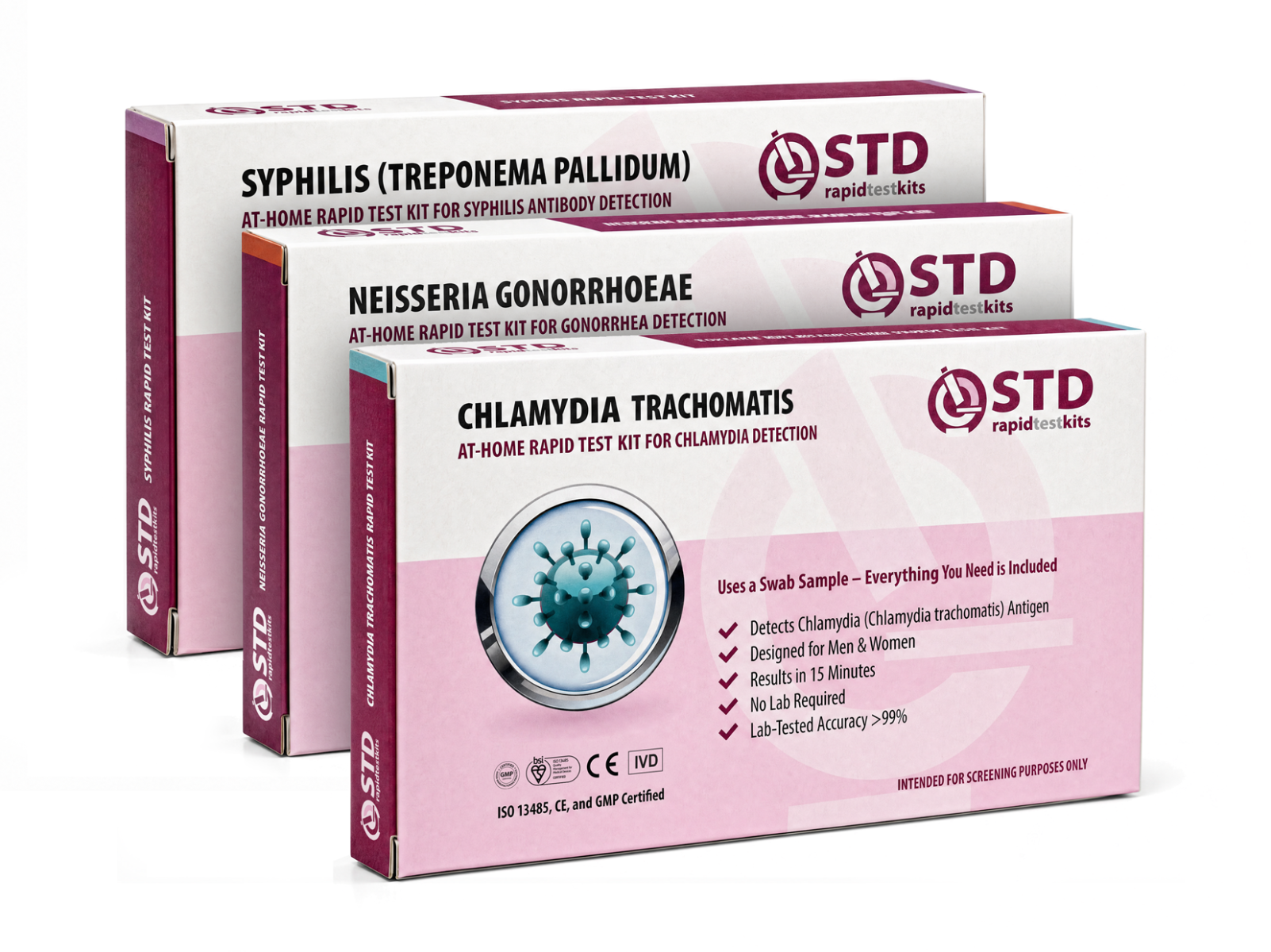
If you test positive, the next step is a confirmatory lab test through a clinic, GP, or sexual-health service, plus staging and treatment with penicillin, and notifying recent partners as described above. Many readers with a recent exposure are not worried only about syphilis; a combination of at-home STI test kits covering syphilis alongside the most common bacterial STIs is often the more useful starting point.
Should you test for syphilis now?
Has it been three weeks or more since the possible exposure?
Yes: Test now. A treponemal antibody blood test is reliable at this point. Avoid sexual contact until you have a clear result.
Did a new sore, a non-itchy rash, or flu-like symptoms appear after the exposure?
Yes: Test now regardless of timing. Photograph any sore privately in case it heals before your appointment, and write down the exposure and symptom dates for your clinician.
No: If you are under three weeks out with no symptoms, test now for a baseline, then repeat at six weeks and again at twelve weeks to be confident in a negative result.
Guidance only; a clinician can advise based on your specific situation.
FAQs
- How soon after exposure does syphilis show up on a blood test?
- A negative test at two weeks is not reassuring; at six weeks a negative result has moderate reliability; at twelve weeks it is considered definitive for most treponemal assays. Individual immune-response timing varies, so the 3-to-6-week window is a guide rather than a hard rule. If your test falls earlier, repeat it; if you are past the 12-week mark, a negative result can be trusted.
- Is a syphilis chancre always painless?
- Almost always, yes. The classic chancre does not sting, throb, or burn; it sits there quietly. That painlessness is exactly why so many people ignore it and why syphilis spreads. A small subset of chancres can be mildly tender, especially if they become secondarily infected with other bacteria, but the textbook presentation is painless.
- Can syphilis go away on its own?
- The visible symptoms of primary and secondary syphilis often resolve on their own, but the infection does not. Without antibiotic treatment, the bacterium persists in the body and can progress to tertiary syphilis years or decades later, causing irreversible damage to the heart, brain, and nerves.
- Can I catch syphilis from oral sex with no ejaculation?
- Yes. Syphilis transmits through direct contact with a chancre or an infectious mucosal surface, not through ejaculate specifically. Oral-genital contact is enough if a sore is present, even one neither partner saw. This is why oral chancres exist on the lips, tongue, gums, tonsils, or back of the throat, and why oral-only exposures still warrant testing if a sore appears.
- How accurate is an at-home syphilis test?
- At-home rapid syphilis tests use lateral-flow chemistry to detect treponemal antibodies, the same antibody target as confirmatory lab tests like TP-PA. A positive home test should be confirmed by a lab, and a negative home test inside the 3 to 6 week antibody window should be repeated. The home test is best understood as a screening tool, not a final diagnosis.
- If my chancre healed, do I still need treatment?
- Yes. And one practical point worth flagging: successful treatment leaves no lasting immunity. A new exposure after a previous cure requires a fresh test exactly as if you had never had syphilis before. Reinfection is clinically common in sexual networks with rising case rates, so a previous treatment does not protect you against a new infection.
- Will a positive syphilis test mean I am positive forever?
- Not exactly. After successful treatment, treponemal-test antibodies often remain detectable for life, a state clinicians call serofast. What changes is the non-treponemal antibody titer, which falls over months and is what clinicians track to confirm treatment worked. Your medical record will show the positive history, but the active infection has cleared once the titers drop appropriately.
- Can syphilis affect a pregnancy?
- Yes. Untreated syphilis can transfer from a pregnant person to the fetus, causing congenital syphilis with risks of miscarriage, stillbirth, neonatal infection, or long-term developmental problems. The CDC recommends syphilis screening at the first prenatal visit and, for higher-risk pregnancies, repeat testing in the third trimester and at delivery.
- U.S. Centers for Disease Control and Prevention. About Syphilis: the painless primary chancre, the typical 3-to-6-week chancre healing window, the non-itchy palms-and-soles secondary rash, and the four-stage progression.
- U.S. Centers for Disease Control and Prevention. STI Treatment Guidelines, Syphilis section. Reference for the early/late latent 1-year cutoff, penicillin G regimens by stage, the fourfold-drop-in-titer marker of cure, late neurologic manifestations occurring 10 to more than 30 years after infection, and partner-notification lookback windows.
- U.S. Centers for Disease Control and Prevention. Syphilis surveillance and clinical guidance, including the rise in congenital syphilis cases and clinical advisories on ocular syphilis.
- World Health Organization. Syphilis fact sheet. Global burden of syphilis, transmission routes including extragenital chancre sites, vertical (parent-to-fetus) transmission, and prevention guidance.
- National Health Service (UK). Syphilis. Reference for the '3 weeks or more' onset timing for first symptoms after exposure, later symptoms appearing up to 3 months after the initial sore, and the importance of early antibiotic treatment.
- National Library of Medicine (MedlinePlus). Syphilis. Plain-language overview of transmission via sexual contact and from parent to baby during pregnancy, and that early syphilis is curable with antibiotics.
- U.S. Centers for Disease Control and Prevention. Doxy-PEP clinical guidance for healthcare providers, covering doxycycline post-exposure prophylaxis for bacterial STI prevention (syphilis, chlamydia, gonorrhea) in MSM and transgender women.
