







Quick Answer: At-home syphilis test kits are accurate when used after the right window period (typically 3–6 weeks post-exposure). Most have 95–99% sensitivity and specificity, but timing, collection errors, and faint line misreads can affect reliability. Retesting is recommended if results are unclear or symptoms persist.
This Is for Anyone Who’s Ever Googled “STD Test at 2AM”
Let’s be real, most people who use at-home STD tests aren’t doing it in broad daylight with calm clarity. You’re doing it at night. You’re anxious, maybe ashamed, maybe pissed off. You might not have access to a nearby clinic, or maybe you’re just not ready to talk to a stranger about your sex life. Maybe your last partner ghosted you. Or maybe you’re with someone now, and you want to be sure you’re safe before things go further.
We wrote this for people in that exact moment, when your body or your gut tells you something’s off, but you need answers on your own terms. We'll cover how these kits work, what makes them accurate or not, and what to do if your result doesn't give you peace of mind. If you’re worried, confused, or just trying to be responsible, this guide’s got you.
What Makes a Syphilis Test "Accurate" in the First Place?
Let's go over this without using technical language. Most at-home syphilis tests look for antibodies, not the bacteria that cause the disease. Specifically, they detect treponemal antibodies, which the body produces after being infected with Treponema pallidum, the bacterium that causes syphilis. Some clinical tests also include non-treponemal antibodies, which fluctuate with disease activity and help track treatment, but those aren’t usually part of home kits.
The key stats you’ll see thrown around are sensitivity and specificity. Sensitivity tells you how good the test is at catching a true positive, so if you’re infected, will it actually detect it? Specificity tells you how good it is at ruling out a false positive, if you’re not infected, will it avoid crying wolf?
| Term | What It Means | Typical Range in Syphilis Rapid Tests |
|---|---|---|
| Sensitivity | Ability to correctly detect a person who has syphilis | 95–99% |
| Specificity | Ability to correctly rule out syphilis in someone uninfected | 95–98% |
| Accuracy | Overall reliability when used at the right time | 96–98% |
Table 1. Accuracy terms explained. These values reflect optimal usage conditions, not early testing or mishandling.
In a clinical setting, the first test for syphilis is usually a treponemal antibody test. If that test is positive, a second test is done to confirm the results. At-home tests look for antibodies, just like this first step, but they don't replace the lab-grade confirmation process. Still, for many users, that first step is enough to know when to follow up or breathe easier.
According to the CDC’s STD Treatment Guidelines, antibody-based syphilis tests become most reliable between three and twelve weeks after exposure, which is when your immune system produces enough antibodies to trigger a positive result.
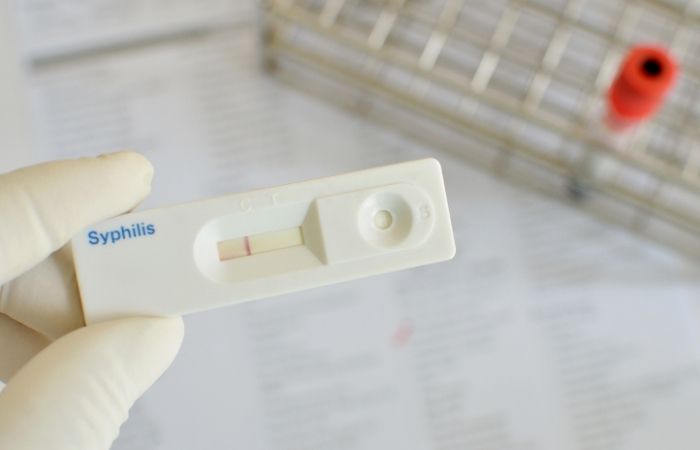
People are also reading: I Skipped the Clinic and Tested at Home in Hawaii, Here’s What Happened
The Window Period Is Everything, Here’s Why Your Timing Could Make or Break the Result
Let’s paint a picture. You hook up with someone new. No symptoms, no red flags. Just a good night. Three days later, you spiral on Reddit and order a test. You take it on day four, heart racing, and it comes back negative. You breathe. You move on. But three weeks later, you start feeling off, maybe a rash, maybe nothing you can name. You test again. This time, it’s positive.
That first negative result wasn’t wrong, it was just too early. That’s the danger of testing during the window period, the time after exposure when your body hasn’t yet produced enough antibodies to be detectable. It’s like trying to see a Polaroid before it develops. You can stare all you want, but the picture’s not there yet.
| Phase | Time Frame | What’s Happening | Test Accuracy |
|---|---|---|---|
| Exposure | Day 0 | Sexual contact with potential transmission | Too soon to test |
| Incubation | Day 1–21 | Syphilis bacteria replicates, but no antibodies yet | Low sensitivity |
| Early Immune Response | Week 3–6 | Antibodies begin to develop | Improving accuracy |
| Reliable Window | Week 6–12 | Most people show detectable antibody levels | High accuracy (95–99%) |
Table 2. Syphilis antibody test timing. Testing too early can give false reassurance.
If you're not sure when you were exposed, or if you're still seeing symptoms, you may need to retest even after a negative result. This isn’t paranoia. It’s smart testing strategy. Syphilis can hide in plain sight, especially in the early stages when symptoms might be a mild sore you miss entirely. That’s why knowing your timing matters just as much as knowing your result.
Check Your STD Status in Minutes
Test at Home with Remedium8-in-1 STD Test Kit
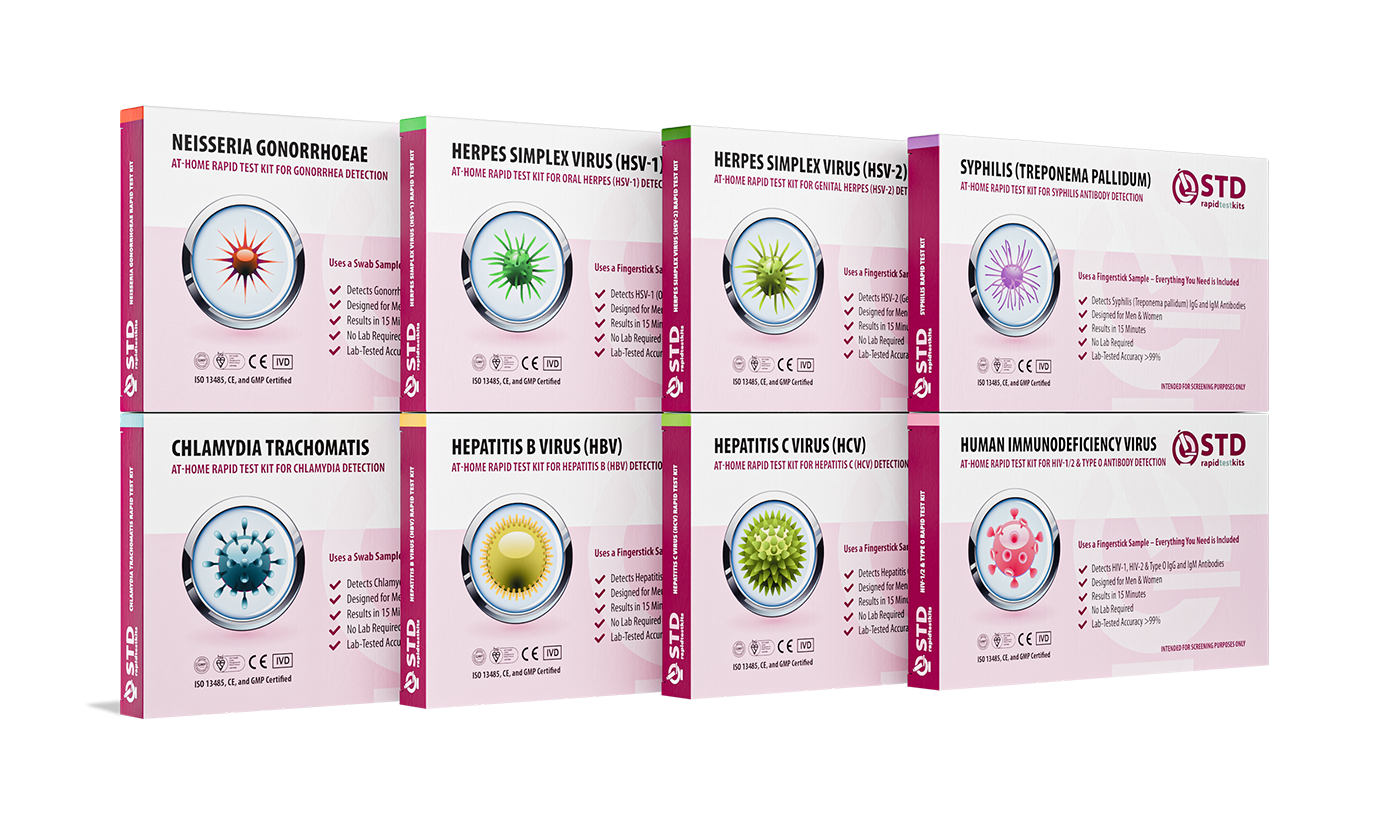
 For Men & Women
 Results in Minutes
 No Lab Needed
 Private & Discreet
Order Now $149.00 $392.00
For all 8 tests
Common Mistakes That Can Skew Your At-Home Syphilis Results
Let’s talk about what can go wrong, not because these kits don’t work, but because our lives aren’t clean labs. You might be testing in a bathroom stall, in the back of your car, or at 2AM in your kitchen. That matters. So do shaky hands, blurry instructions, or just the nerves that make you rush a crucial step.
Case in point: Jamal, 28, tested using a rapid kit after finding a suspicious sore. He read the result too soon, just two minutes in, when the test needed at least 10. The line was faint and unclear. He tossed it, assumed it was negative, and moved on. A week later, the sore worsened. A clinic test confirmed syphilis. Jamal didn’t mess up because he was careless, he messed up because he was scared and alone and no one told him that timing matters not just for when you test, but how long you wait for the result to develop.
Most at-home tests use a lateral flow method, the same tech as a COVID test or pregnancy test. You prick your finger, apply blood to the cassette, add a buffer, and wait. If antibodies are present, a line forms. If not, it doesn’t. But things like:
- Susing too little blood
- Kipping the buffer solution
- Miscounting the wait time
- Testing in a freezing or overheated room
- Re-reading the test hours later
…can all affect the outcome. None of this is meant to shame you. These tests are designed for privacy, not perfection. But knowing the risks lets you use them smarter. If your result is unclear, don't toss it and guess. Take a breath. Recheck instructions. Retest later if needed.
What That Faint Line Might Actually Mean
This is the part no one prepares you for. You expect a clear “yes” or “no”, a line or no line. But what if the line is ghost-pale? What if it shows up late? What if your eyes play tricks on you at 1AM under bathroom light?
María, 34, saw a faint line on her at-home test after a one-night stand. She panicked, assumed it was positive, and messaged every past partner in tears. Three days later, she got a lab test. Negative. Turns out, her kit had developed a faint evaporation line, common if you read it too far past the result window. She wasn’t wrong to test. She was just missing the info to interpret it correctly.
Here’s the hard truth: a faint line might mean you’re positive. It might also mean the buffer didn’t fully flow or the test sat too long. The CDC doesn’t specifically address home test faint lines, but clinical guidance suggests that even faint positive lines on treponemal tests should be taken seriously if within the test window. When in doubt, confirm with a lab test, especially if you have symptoms, ongoing risk, or previous exposure.
But before you spiral, remember: faint doesn’t mean doomed. It means follow-up. You’re not failing. You’re doing exactly what someone who cares about their health, and others’, should do.
When a Lab Test Might Be the Smarter Next Step
At-home tests offer privacy and speed, but not everything. If your result is unclear, or if you’ve tested during the window period, a follow-up lab test is your best move. These tests use more refined methods, like enzyme immunoassays (EIAs) or chemiluminescence, and can detect lower antibody levels with greater reliability. They also often include a second non-treponemal test to assess disease activity.
Clinical labs can:
- Distinguish past treated infections from active ones
- Rule out cross-reactions that cause false positives
- Run confirmatory testing on the same sample
Home kits can’t do those things, but that doesn’t make them useless. In fact, many people first discover a problem using a home test and then seek care. That’s valid. That’s how early detection works.
If your home result was positive, faint, or taken too early, a follow-up lab test closes the loop. And yes, you can still use telehealth or order a lab test online in most states, no waiting rooms, no judgment.
If your result was negative but your symptoms persist, or if your exposure risk was high, retest after the window period. Most people who retest aren’t being paranoid. They’re being smart.
Testing Again: When, Why, and What to Expect
Let’s say you tested on day 10 after a risky encounter and the result was negative. That might be true. Or it might just be too early. A good rule of thumb: if you’re under 21 days post-exposure, plan to test again around week 6–8. That’s when accuracy peaks. And if you treated syphilis recently, remember that treponemal antibodies can linger for life, so you’ll need a non-treponemal test (like RPR or VDRL) to monitor treatment success.
We see this play out all the time. Someone tests negative at first, feels reassured, and doesn’t follow up. Then a partner gets diagnosed, and they’re scrambling. Retesting is not overkill. It’s insurance. It says: I care about myself and the people I touch.
If your emotions are fried from all this, you’re not alone. Testing isn’t just clinical, it’s intimate. It’s about trust, history, shame, power. So if you need to test again, do it from a place of care, not fear. You’re allowed to check again. You’re allowed to need clarity more than once.
This combo test kit includes syphilis and other common STDs, so if you’re testing again, you can screen more broadly without extra steps.
People are aslo reading: Spring Break in Florida Is Wild, So Are Its STD Rates
What Privacy Looks Like When You’re Testing Alone
Privacy isn’t just about shipping boxes. It’s about what happens when you’re pacing your room, deciding whether to test. It’s about knowing your roommate won’t see a clinic receipt. About keeping control over who knows what, when, and why. That’s why at-home testing isn’t just convenient, it’s sometimes the only emotionally safe option people have.
Rafi, 24, lives in a conservative household. He couldn’t risk his family finding out he was testing for STDs. So he ordered a kit with discreet packaging, no branding, no clues, and had it shipped to a friend’s address. He tested in the bathroom during a weekend visit, messaged his partner from a place of certainty, and avoided a week of anxiety spiraling. The point? Privacy isn’t paranoia. It’s a form of care.
All kits from STD Rapid Test Kits ship in plain envelopes with no medical labeling. No one besides you knows what’s inside. Most arrive within 2–5 business days, depending on your location. And you don’t need insurance or a doctor’s note. Just an address, a browser, and a reason to know.
And when that result shows up, it’s yours to handle. No waiting room. No nurse reaction. Just you, a small cassette, and the ability to decide what comes next.
Check Your STD Status in Minutes
Test at Home with RemediumSyphilis Test Kit
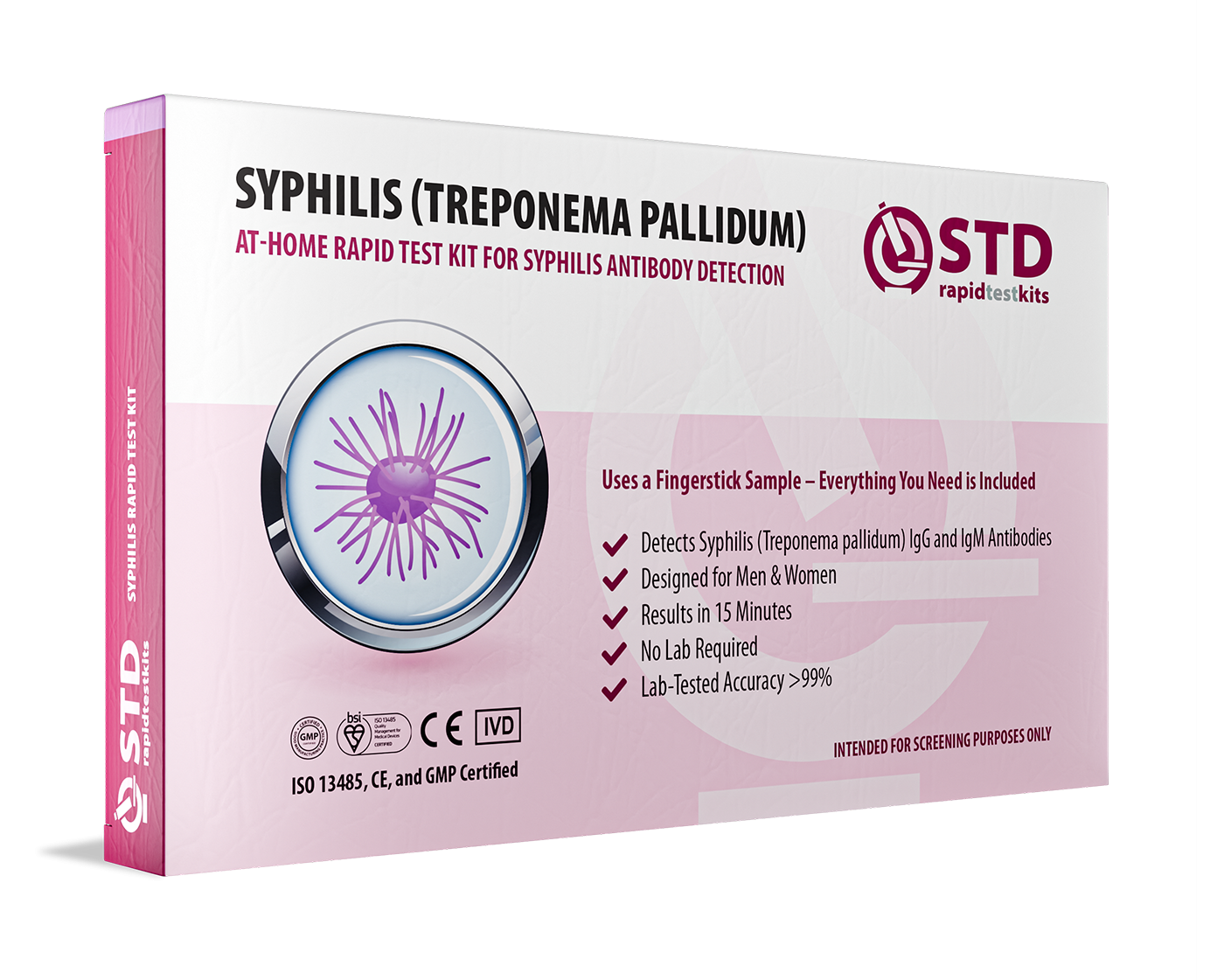 For Men & WomenResults in MinutesNo Lab NeededPrivate & Discreet
Order Now $33.99 $49.00
If You Test Positive: What That Means (and Doesn’t)
This is the moment many people fear. The line appears, and it’s not faint. It’s bold. Unmistakable. And suddenly, you’re not just holding a test, you’re holding a question you never wanted to ask: “What now?”
First, take a breath. Testing positive for syphilis isn’t a moral failure. It’s not a life sentence. It’s not even uncommon. The CDC reported over 203,000 new syphilis cases in the U.S. last year alone. Most of them were treatable. Many were caught early, often thanks to people like you who tested before symptoms worsened.
Here’s what you do next:
1. Confirm the result with a clinic or lab. Many providers offer rapid confirmation via blood draw.
2. Start treatment, usually a single injection of benzathine penicillin, or an oral antibiotic course if you're allergic.
3. Tell your partners, not because you owe them an explanation, but because it helps prevent reinfection and protects others.
You don’t need to know exactly where it came from. Syphilis can be passed during oral, vaginal, or anal sex, even if no one had visible symptoms. You might’ve had it for weeks without knowing. That doesn’t make you dirty. It makes you human.
If you’re struggling emotionally, you’re not alone. Many people experience a wave of shame, fear, or anger after diagnosis. You might want to hide. You might cry. You might feel nothing at all. That’s okay. Let yourself process it, and know that treatment works. You caught it. You’re handling it. That’s strength.
FAQs
1. Can a home syphilis test really be accurate?
Surprisingly, yes, when used at the right time. Most at-home kits detect syphilis antibodies with 95–99% accuracy if you test after the window period (around 3 to 6 weeks post-exposure). If you test too early, you might miss an infection that's still incubating. So don’t just test once and ghost the process. If something feels off, or you tested early, test again later.
2. What if the line on my test is barely there?
That dreaded faint line. It happens. It could mean you’re positive, or that the test developed past its time window. If you see any kind of line during the proper time frame (usually 10–15 minutes), take it seriously and confirm it. Think of it like a whisper instead of a shout. It’s still a message your body might be sending.
3. Can I get syphilis from oral sex even if I didn’t go all the way?
Absolutely. Syphilis loves mucous membranes, and oral contact is enough. You don’t need penetration to pass or catch it. We’ve seen people get syphilis from a single hookup that didn’t involve anything more than oral. That’s why it’s one of the STDs most likely to fly under the radar.
4. Why did my test say negative but I still have symptoms?
Could be a few things. Maybe you tested too soon. Maybe your symptoms are from something else entirely (looking at you, herpes or allergic reactions). Maybe the test was done right, but your body hasn’t made detectable antibodies yet. If your body is waving red flags, don’t ignore them just because the test said “nah.” Get checked again, this time with backup.
5. Do I need to tell my current partner if I tested positive at home?
Short answer: yes. Longer answer: you get to choose how. You don’t have to write a script or confess guilt, you’re not a villain. You’re someone who cares enough to prevent them from walking into the same infection. Text, talk, or use an anonymous notification service. Just don’t stay silent. Silence spreads STDs faster than sex does.
6. What if I tested positive before but now I’m testing again?
Once you’ve had syphilis, treponemal antibodies can stay in your system for life, even after treatment. That means a home test may always show positive. To check if your infection is still active or cured, you’ll need a follow-up lab test (usually RPR or VDRL). They track how active the infection is, not just whether it left a fingerprint behind.
7. Is it normal to feel ashamed or gross after testing?
Normal? Sadly, yes. Deserved? Not even a little. STDs don’t pick “bad” people. They happen to people who trust, experiment, love, make mistakes, or just exist in human bodies. Testing doesn’t make you dirty. It makes you aware. And shame doesn’t belong in a story about someone who’s taking control of their health.
8. Can I test for other STDs while I’m at it?
Totally. And honestly, you should. Most people exposed to one STD are at risk for others, especially chlamydia, gonorrhea, and HIV. Combo kits exist for a reason. Think of it like checking your tire pressure before a road trip. One check keeps the whole ride safer.
9. Will insurance find out if I order a test?
Not unless you tell them. Most at-home STD kits are private-pay and don’t go through insurance, so nothing hits your medical records unless you share it with a doctor. Your order, your info, your business.
10. How soon can I test again after treatment?
Give it at least two weeks, but for some folks, providers recommend retesting in 6 to 12 weeks, especially if you're sexually active with untreated partners. And remember, the home test may still say positive forever if it only checks for antibodies. If you want a “cleared” status, head to a clinic for a non-treponemal test.
You’re Not Alone, And You Deserve Answers
Testing for syphilis at home isn’t just about avoiding a clinic. It’s about reclaiming your timeline, your voice, and your control. You might still be nervous. You might still be confused. But you took a step that most people are too scared to take. That matters.
Maybe you need to test again. Maybe you need to talk to someone. Maybe you need a few minutes just to breathe before deciding anything else. All of that is valid. No matter what your test said today, you deserve care, not shame, and you’re not the only one walking this road.
If you're ready to move forward, whether with retesting or next steps, we've got you. This combo STD test kit includes syphilis and other common infections, so you can test again with confidence and clarity, without leaving your home.
How We Sourced This Article: We combined current guidance from leading medical organizations with peer-reviewed research and lived-experience reporting to make this guide practical, compassionate, and accurate.
Sources
1. CDC – Syphilis Treatment Guidelines
2. Planned Parenthood – Syphilis Overview
3. CDC Laboratory Recommendations for Syphilis Testing, United States, 2024
4. Diagnostic Accuracy of Rapid Syphilis Tests: Systematic Review
6. A de novo rapid test for treponemal antibody shows high sensitivity and specificity (2025 study)
7. Clinical Test Performance of a Rapid Point-of-Care Syphilis Test (Syphilis Health Check)
9. Rapid Syphilis Testing — NCBI Bookshelf (NIH Summary)
About the Author
Dr. F. David, MD is a board-certified infectious disease specialist focused on STI prevention, diagnosis, and treatment. He blends clinical precision with a no-nonsense, sex-positive approach and is committed to expanding access for readers in both urban and off-grid settings.
Reviewed by: Jamie Lu, NP, MPH | Last medically reviewed: November 2025
This article is only for informational purposes and should not be taken as medical advice.


