Published: October 2025 | Last updated: May 2026 | Editorial review and quality control: Martina N.
You took the test. The line said negative. And yet something in your body still feels off, maybe a faint itch, a lingering doubt, or a partner whose result came back positive when yours didn't. A negative result isn't automatically wrong, but it isn't automatically right either. The reliability of any STI test depends on three things: which test you used, when you used it relative to exposure, and whether the infection you're worried about was actually in the test's detection panel.
For most people who test at the right time on the right kind of sample, a negative result is accurate and reassuring. For a smaller group, the result is misleading because the test ran before the body had time to register the infection, or because it screened for the wrong thing. This guide walks through both groups so you can place yourself in the right one.
Key Takeaways
- A negative test is only meaningful if it was taken after the infection's window period closed. Testing too soon is the single most common reason for missed results.
- If symptoms persist after a negative test, the right move is usually a retest after the proper window, or testing for something the first panel didn't cover (like bacterial vaginosis, a yeast infection, or a UTI).
Why a Negative Result Can Still Feel Wrong
If you tested negative and your body still seems to be telling you otherwise, you're not being paranoid. You're paying attention. The gap between a negative result and lingering symptoms usually has a medical explanation, not a psychological one.
Most sexually transmitted infections don't show up the day after exposure. The body needs time to do one of three things: produce enough pathogen DNA for a nucleic acid amplification test (NAAT) to find it, build up antibodies that serology can detect, or shed enough viral or bacterial protein to register on a rapid lateral-flow strip. If a test runs during that window, the infection won't register on the result line, even when it's already present.
There's a second layer worth understanding. At-home rapid tests and lab-based NAATs are different tools with different sensitivity profiles. A negative on a 15-minute lateral-flow strip is not the same kind of negative as one from a lab NAAT, and a positive rapid result is usually confirmed with a more sensitive lab method. The next sections walk through what each tool can and can't answer.
Out of all the technical reasons a negative test can be wrong, one accounts for the majority: testing during the infection's window period. Every STI has a different timeline between exposure and when a test can reliably detect it. Test before that window closes and the test won't find the infection, even when it's actively there. The fix is almost never a different test brand; it's waiting and retesting at the right point.
How False Negatives Actually Happen
The phrase "false negative" sounds like the test failed in some absolute sense. In practice, it usually means the test was used outside its operating conditions or on a sample that didn't contain enough of what the test was looking for. Home lateral-flow tests use different chemistry from lab NAATs; they're a fast first-line tool, not a substitute for confirmation when something is wrong. Per CDC STI treatment guidelines, NAAT-based laboratory testing is the most sensitive method available for chlamydia and gonorrhea, which is why a positive rapid result is usually followed up with a lab confirmation.
Here are the most common causes of a false negative result:
| Cause | How it affects accuracy |
|---|---|
| Tested too soon (within the window period) | The pathogen, antibody, or antigen hasn't reached detectable levels yet, so the test reads negative even though infection is present. |
| Wrong test for the suspected infection | Tests are specific to one pathogen or family. A chlamydia kit won't catch herpes; an HSV-2 antibody test won't catch a fresh HSV-1 lesion. |
| Poor sample collection | A swab that didn't reach the right tissue, or a fingerstick that didn't get enough blood onto the strip, gives an unreliable result. |
| Improper storage or expired kit | Heat, humidity, or expired reagents can degrade the test chemistry and lower sensitivity. |
| Reading the result outside the timing window | Lateral-flow strips have a result-read window (typically 10 to 20 minutes). Reading too early or too late produces unreliable lines. |
Window Periods: Timing Is Everything
The window period is the gap between exposure and when a test can reliably find the infection. Test too early and you risk a false negative even with a high-quality test. Test at the right time and the same test becomes highly reliable.
Two specifics worth pulling out before the table. CDC HIV testing guidance distinguishes between lab-based fourth-generation antigen/antibody tests, which detect most infections within 18 to 45 days, and rapid finger-stick antigen/antibody tests, which can take up to 90 days for some individuals; those slower cases are the ones where a three-month confirmatory test is warranted. CDC herpes testing guidance notes that HSV-2 antibodies can take up to four months to become reliably detectable in some people. A single negative test can't always account for the timing of your exposure.
Here are the windows for the most common STIs, with the timing for both initial detectability and best-case reliable detection:
| Infection | Common test type | Earliest detection | Best time to test |
|---|---|---|---|
| Chlamydia | Lab NAAT (swab) or home lateral-flow (swab) | 7 days | 14 days |
| Gonorrhea | Lab NAAT (swab) or home lateral-flow (swab) | 7 days | 14 days |
| Syphilis | Blood antibody test (lab or rapid) | 3 weeks | 6 to 12 weeks |
| HIV (lab 4th-generation) | Antigen/antibody combo | 18 days | 4 to 6 weeks |
| HIV (rapid finger-stick) | Antigen/antibody combo | 18 days | Up to 90 days for some |
| HSV-2 (genital herpes) | Blood antibody test | 4 to 6 weeks | 12 to 16 weeks |
| Trichomoniasis | Antigen or NAAT swab | 5 days | 1 to 2 weeks |
How accurate is a negative STI test, really?
When run after the proper window period on the right sample, modern STI tests are highly reliable. The single biggest cause of a false negative is testing during the window period before the infection becomes detectable, not a manufacturing flaw or a misread strip. If you tested within days of exposure, retest after the full window has closed for the infection you're worried about.
Symptoms That Persist After a Negative Result
If you tested negative but the symptoms haven't gone away, your body is pointing at something. It might be the same infection at a level below the test's detection threshold. It might be a different infection that wasn't included in your panel. Or it might not be an STI at all.
Many cases of itching or unusual discharge turn out to be bacterial vaginosis or a yeast infection rather than an STI. Burning during urination is just as commonly a urinary tract infection as it is chlamydia. A negative result for one specific infection doesn't rule out everything; if symptoms continue past a week or two, the next step is a clinical evaluation that can examine and culture, not just another rapid strip.
Here are the most common patterns:
This site sells rapid at-home STI tests; product links in this article are to our own catalog. We recommend products based on fit-for-purpose for the reader's concern, not commercial benefit.
| Symptom | Possible causes beyond your initial test |
|---|---|
| Itching or unusual discharge | Trichomoniasis, bacterial vaginosis, yeast infection, or chlamydia/gonorrhea that was tested before the window closed |
| Sores, tingling, or blister-like spots | Herpes (HSV-1 or HSV-2) may not show on antibody testing for up to 12 to 16 weeks; primary syphilis chancres can be missed if the test ran in the first three weeks |
| Burning during urination | Chlamydia, gonorrhea, or a non-STI urinary tract infection |
| Flu-like symptoms 2 to 4 weeks after exposure | Acute HIV seroconversion, secondary syphilis, or an unrelated viral illness |
| Pelvic or abdominal pain | Pelvic inflammatory disease (a complication of untreated chlamydia or gonorrhea), endometriosis, or ovarian cyst |
Should You Retest, and When?
One negative result is enough if the timing was right and you have no ongoing symptoms. Retesting makes sense in specific situations:
- You tested during the window period, especially within the first week of exposure.
- Symptoms have gotten worse or changed since the first test.
- A current or recent sex partner tested positive.
- You used a rapid home test and want a lab-confirmed result for the same infection.
- A new potential exposure has happened since your last test.
CDC guidance recommends retesting for chlamydia and gonorrhea about three months after treatment, regardless of partner status, because reinfection is common. For HIV, a lab fourth-generation antigen/antibody test catches most infections within four to six weeks, while a rapid finger-stick version may need up to three months for the slowest seroconverters.
Most negative results are accurate. If you tested after the recommended window for the infection you're worried about, used a sample type that matches the test, followed the instructions, and have no persistent symptoms, the result is almost certainly correct. The cases where retesting is warranted are specific: you tested early, you have ongoing symptoms, your partner tested positive, or a new exposure has happened since.
Rapid Home Tests vs. Lab Tests: What Each One Can Answer
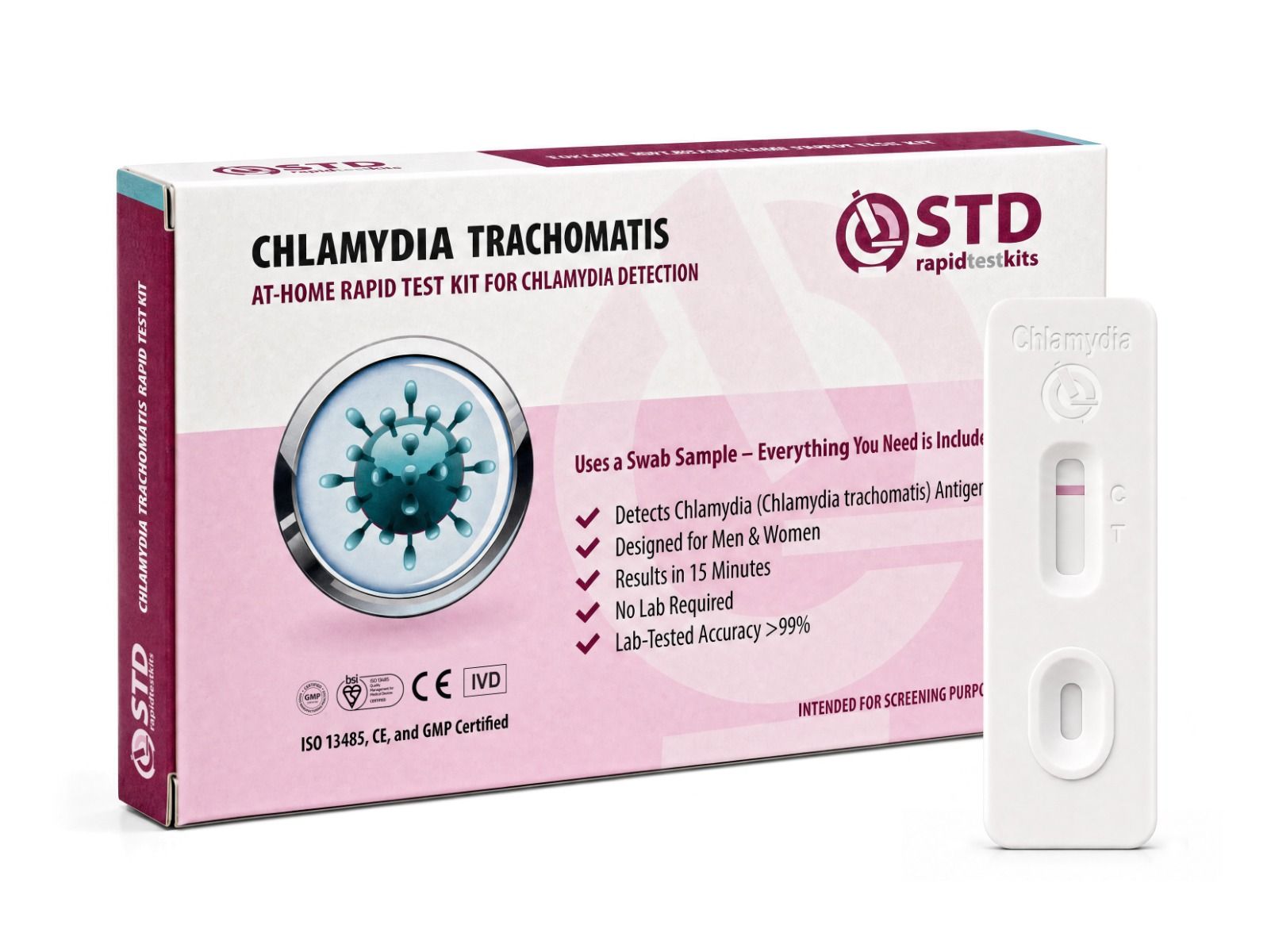
Rapid STI tests are easy to use, private, and faster than any clinic visit. They're not the same as lab-based testing, though, and the difference is mostly a question of detection chemistry and sample handling.
Home rapid tests use lateral-flow immunoassay chemistry, the same general technology behind home pregnancy tests and rapid COVID tests. They're a genuine screening tool with documented performance, not a clinic replacement. When the question is "do I need to take this further?", a positive rapid result or persistent symptoms despite a negative one are both signals to follow up with a clinic-based NAAT. The World Health Organization notes that rapid diagnostic tests for infections including syphilis and HIV are central to testing in resource-limited settings, while molecular testing is recommended where laboratory capacity exists.
Here's how the three main approaches compare:
| Test type | Speed | Sensitivity | Best use |
|---|---|---|---|
| At-home rapid (lateral-flow) | 10 to 20 minutes | Moderate to high when used after the proper window | Initial screening or fast answer at home; positive results worth confirming |
| Mail-in lab test | 1 to 5 days after mailing | High (lab NAAT or ELISA chemistry) | Comprehensive screening when speed isn't the priority |
| Clinic-based test | Same day to one week | Very high (lab NAAT, often with reflex confirmation) | Persistent symptoms, complex case, or follow-up after a rapid positive |

When Your Partner Tested Positive and You Didn't
This is one of the more emotionally loaded situations in sexual health. Your partner gets a positive result, you test soon after, and yours comes back negative. The mind goes immediately to suspicion. Most of the time the explanation is medical rather than personal.
A few medically straightforward reasons the mismatch can happen:
- You tested before your own window closed. Their infection had time to register; yours hadn't yet.
- Transmission didn't occur in this exposure. Even unprotected sex with a positive partner doesn't guarantee the infection passed, especially for viruses like HPV where the immune system clears most exposures.
- Your test was genuinely negative because you're genuinely not infected.
- Your test missed it. This is the case retesting addresses.
The right next step in this scenario is usually a combination panel that covers more than one possibility, then a retest two to three weeks later if the first round was negative.
When your partner has a confirmed chlamydia or gonorrhea diagnosis and the exposure was recent, most clinicians will recommend treating you as well, even if your own initial test came back negative. Empiric partner treatment is standard practice for these two infections because it prevents ping-pong reinfection and accounts for the timing limits of any single test.
When It's Not an STI at All
A lot of what feels like an STI isn't one. Genital symptoms have many causes, and the assumption that any irritation or unusual discharge points to a sexually transmitted infection misses a long list of common alternatives.
When a test result says negative but the symptoms haven't moved, the right next step is usually a clinical evaluation, not another rapid strip. A clinician can examine, swab, and culture to figure out what's actually causing the symptoms, including the conditions in the list below that no rapid test will catch.
Common culprits that mimic STI symptoms:
- Bacterial vaginosis (BV): a shift in vaginal bacteria that causes a thin gray-white discharge with a fishy odor. Not technically an STI, though sex can trigger it.
- Yeast infections (candidiasis): itching, swelling, and thick white discharge, often after antibiotics or with hormonal shifts.
- Urinary tract infections (UTIs): burning urination, urgency, and pelvic discomfort, frequently mistaken for chlamydia.
- Allergic or irritant contact reactions: condoms (especially latex), lubes, soaps, detergents, or sex toys can all trigger redness, itching, and swelling.
- Dermatologic conditions: lichen sclerosus, vulvodynia, and contact dermatitis can mimic herpes or HPV closely enough to confuse even experienced clinicians without examination.
How to Take Control After a Negative Test
Whether the result was reassuring or unsettling, there are practical steps that turn a single test into a real plan.
If you're not sure which test to run next or whether a single-infection or combo panel makes more sense, the practical rule is to test for what the symptoms or exposure most directly point at, then add a combo panel if more than one infection is plausible. Here are the steps that turn a negative result into useful information:
- Note when you tested, which infections were in the panel, and what kind of test it was (lateral-flow rapid, NAAT, or antibody).
- Track when symptoms started and how they've changed.
- Schedule a follow-up test for any infection where the first test ran before the window closed.
- Talk to current and recent partners and compare testing timelines, especially if anyone has symptoms.
- Use barrier protection until retesting confirms results for both of you, particularly if a partner had a positive result.
You Deserve Answers, Not Assumptions
A negative STI test should bring peace of mind, and most of the time it does. When it doesn't, the reason is usually something specific and addressable: testing during the window period, the wrong test for the situation, a different infection, or a non-STI condition that mimics the same symptoms. None of those are a moral problem. All of them have a known fix involving better timing, a wider panel, or an in-person clinical look.
If your last test left more questions than answers, the next test is rarely a wasted move. Pick the right window, pick a panel that matches the exposure, and run it.
Three steps to take next
- Retest after the correct window for the infection you're worried about. Match the retest date to the slowest window that applies to your exposure.
- Expand the panel if your symptoms don't fit what you originally tested for. A combo panel catches the infections a single-target kit can miss.
- See a clinician for in-person evaluation if symptoms persist past two weeks. Examination, swab, and culture can identify what no rapid strip will catch.
Frequently Asked Questions
- Can a negative STI test result really be wrong?
- It can be, in three specific situations: you tested before the infection's window period closed, you tested for the wrong infection, or sample collection was imperfect. Outside those, modern STI tests run on the right sample at the right time are highly reliable. The timing problem is by far the most common of the three.
- What should I do if I still have symptoms after a negative result?
- Treat the symptoms as their own data point. Ask first whether the original test ran inside the window period for the infection you tested for. If yes, retest at the proper window. If no, consider what wasn't in the panel: bacterial vaginosis, yeast infection, UTI, and herpes (especially in the first 12 to 16 weeks) are all common reasons symptoms persist past a negative result. If two weeks pass with no improvement, see a clinician.
- How long should I wait before retesting?
- The slowest window in the mix sets your retest date. If HSV-2 is in play, that means 12 to 16 weeks. Chlamydia and gonorrhea become reliable at 14 days post-exposure. HIV on a lab fourth-generation antigen/antibody test, four to six weeks (longer for rapid finger-stick versions). Syphilis, six to 12 weeks. Match the retest to the slowest window that applies to your exposure.
- Why do at-home rapid tests sometimes miss infections that a lab catches?
- At-home rapid tests use lateral-flow immunoassay chemistry, the same general technology behind home pregnancy tests. They're fast and useful but generally less sensitive than lab-based NAATs at the earliest detectable levels. That's a tradeoff for speed and privacy, not a failure. A positive rapid result is worth confirming with a lab test, and a negative rapid result with ongoing symptoms is worth following up the same way.
- Can I test negative and still pass an STI to someone else?
- Unfortunately yes, if your test ran during the window period or returned a false negative for another reason. The infection can be active and transmissible before any test can find it. This is why public health guidance often advises testing, waiting, and retesting before transitioning to condomless sex with a partner, especially after a new exposure.
- Can stress or anxiety cause STI-like symptoms?
- Stress can absolutely produce or amplify physical sensations: tingling, mild itching, urinary urgency, or generalized discomfort. That said, ruling out the medical causes first is the right order of operations. Don't dismiss your own symptoms by labeling them anxiety until you've checked the infections and non-STI conditions that produce the same signals.
- What does a faint line on a rapid test mean?
- Any visible test line, even a faint one, should be treated as positive until a confirmatory lab test says otherwise. Faint lines often mean low levels of the marker the test is looking for, which can happen in early infection. Retest in a few days, or move directly to a lab NAAT for confirmation. Don't try to interpret a faint line outside the manufacturer's read window or hours after the test ran.
- Is it possible to have herpes and still test negative?
- Yes. Herpes testing is genuinely difficult. Blood antibody tests can take up to 12 to 16 weeks to become reliably positive after a new infection, and a swab test only works if there's an active lesion to swab. Some people never develop detectable antibodies on the most common assays. If your symptoms strongly suggest herpes, a negative blood test in the first few weeks doesn't rule it out; a clinician can swab any active lesion for PCR confirmation.
How we sourced this article: This guide is built from current screening and testing guidance from the U.S. Centers for Disease Control and Prevention, the U.K. National Health Service, and the World Health Organization, cross-checked against the technical limits of at-home lateral-flow and lab-based NAAT testing. It is editorial reference content from a medical writer with clinical review, not personal medical advice. For symptoms that concern you, see a licensed clinician.
- U.S. Centers for Disease Control and Prevention. Screening recommendations by population and risk category, including the chlamydia and gonorrhea three-month retest interval after treatment.
- U.S. Centers for Disease Control and Prevention. HIV testing overview, including window periods for lab fourth-generation antigen/antibody, rapid finger-stick antigen/antibody, and nucleic acid testing.
- U.S. Centers for Disease Control and Prevention. Genital herpes testing guidance, including the antibody seroconversion window of up to 16 weeks.
- U.S. Centers for Disease Control and Prevention. STI treatment guidelines hub identifying NAAT as the most sensitive test for chlamydia and gonorrhea.
- U.K. National Health Service. Overview of sexually transmitted infections and their symptoms.
- World Health Organization. Sexually transmitted infections (STIs) fact sheet, covering rapid diagnostic tests in resource-limited settings and molecular testing where laboratory capacity exists.
