
Published: October 2025 | Last updated: May 2026 | Editorial review and quality control: Martina N.
So, can you test for HPV at home?
Yes, if you have a cervix. A self-collected vaginal swab can be mailed to a lab for HPV DNA testing (self-collection FDA-cleared since 2024) or read at home on a rapid strip in about 15 minutes. Both are screening tools rather than diagnoses. There is no routine at-home HPV test for men, and HPV is rarely part of a general STI panel.
HPV testing at home is real, but the version that exists is not the version most people picture. For people with a cervix, a self-collected vaginal swab sent to a certified lab is now a validated way to screen for high-risk HPV, and a small set of rapid lateral-flow home kits cover the same sample with a faster, read-it-yourself result. For men, there is no routine at-home HPV screening test, in a clinic or in the mail. And most general STI panels leave HPV out entirely, because HPV screening is built around long-term cervical cancer prevention rather than catching a recent exposure.
If you landed here after a worrying encounter or a partner's positive result, here is the reassuring part first: most people who encounter HPV never develop any health problem from it, and the immune system clears the large majority of infections on its own. The rest of this guide walks through what each kind of test does, who it fits, when testing is meaningful, what the accuracy numbers really say, and what to do if a result comes back positive.
Key Takeaways
- At-home HPV testing is real for people with a cervix: a self-collected vaginal swab sent to a certified lab (self-collection FDA-cleared in 2024) or a rapid lateral-flow home kit. There is no routine HPV screening test for men, at home or in a clinic.
- HPV screening is preventive, not reactive. It tracks long-term cervical cancer risk on age-based intervals, so testing the morning after sex usually tells you nothing useful.
What HPV Actually Is
HPV, short for human papillomavirus, is not a single virus. It is a family of more than 200 related viruses, around 40 of which infect the genital area. Some types cause genital warts. Others are labeled high-risk because, when an infection lingers for many years, they can lead to cervical, anal, oropharyngeal, vulvar, vaginal, or penile cancers. The vast majority of sexually active adults will encounter at least one HPV type in their lives, and most will never know it happened.
The virus spreads through skin-to-skin sexual contact, not only through penetrative sex. Condoms lower the risk but do not remove it, because they leave some skin uncovered. According to the CDC's HPV fact sheet, most new infections in healthy immune systems clear on their own within one to two years. Because most infections clear, screening is built to detect persistence rather than mere presence.
HPV also tends to be silent: no itching, no discharge, no burning, no pain. People often go years between an exposure and the first hint that anything is happening, which is why screening matters even when nothing feels wrong.
Low-risk strains (most commonly types 6 and 11) cause genital warts but rarely cause cancer. High-risk strains (most importantly types 16 and 18) cause the large majority of HPV-related cancers when an infection persists for years. Home HPV screening targets the high-risk group, because that is the group screening is designed to catch early.
In most cases (9 out of 10), HPV goes away on its own within two years without health problems. When HPV does not go away, it can cause health problems like genital warts and cancer.
HPV Test vs Pap Smear vs General STI Panel
Three things get blurred together: an HPV test, a Pap smear, and a general STI panel. They overlap, but they answer different questions.
An HPV test looks for high-risk strains, usually by detecting viral DNA in cervical or self-collected vaginal cells. It does not screen for the low-risk strains behind genital warts, it does not analyze blood, and it cannot tell you how long an infection has been there. A Pap smear looks instead for abnormal cervical cells, the changes that high-risk HPV can eventually cause. Co-testing runs both together. A general STI panel covers active infections like chlamydia, gonorrhea, HIV, syphilis, hepatitis B and C, and herpes, and usually leaves HPV out.
This guide is published by STD Rapid Test Kits, which sells at-home STI testing kits, including a rapid HPV self-test; the aim here is to flag which tool fits a given concern, not to push a sale. HPV needs its own dedicated test rather than riding along on a general panel, but if you want a broad sweep of the fast-moving infections, our at-home STI test kits bundle several at once.
| Test Type | What It Detects | Sample Type | Purpose |
|---|---|---|---|
| HPV test | High-risk HPV DNA | Cervical or self-collected vaginal cells | Flags the strains linked to cervical cancer risk |
| Pap smear | Abnormal cervical cells | Cervical cells (clinician-collected) | Detects early cellular changes |
| Co-testing | High-risk HPV DNA plus cell changes | Cervical cells | Most comprehensive cervical screening |
| General STI panel | Common STIs, not HPV | Blood or genital swab | Detects active infections like HIV, syphilis, chlamydia, gonorrhea |
What At-Home HPV Tests Actually Exist
The category genuinely shifted in 2024. In May 2024, the FDA cleared self-collection of vaginal samples for high-risk HPV testing on the Roche cobas and BD Onclarity laboratory platforms, the same assays clinicians have used for years (National Cancer Institute, on the FDA's 2024 clearance). That first step covered self-collection inside a healthcare setting, such as a clinic or pharmacy. In May 2025, the FDA went further and approved an at-home self-collection device, Teal Health's Teal Wand, for cervical cancer screening (The ASCO Post, on the FDA's 2025 approval), opening true at-home cervical screening for people who can get a prescription through telehealth.
The first format is the mail-in lab model: you collect a vaginal sample in your own bathroom, seal it, and ship it to a certified laboratory that runs molecular (usually PCR-based) testing for high-risk HPV DNA. The American Cancer Society now lists self-collection, at home or while supervised, as a screening option (American Cancer Society, HPV and HPV testing).
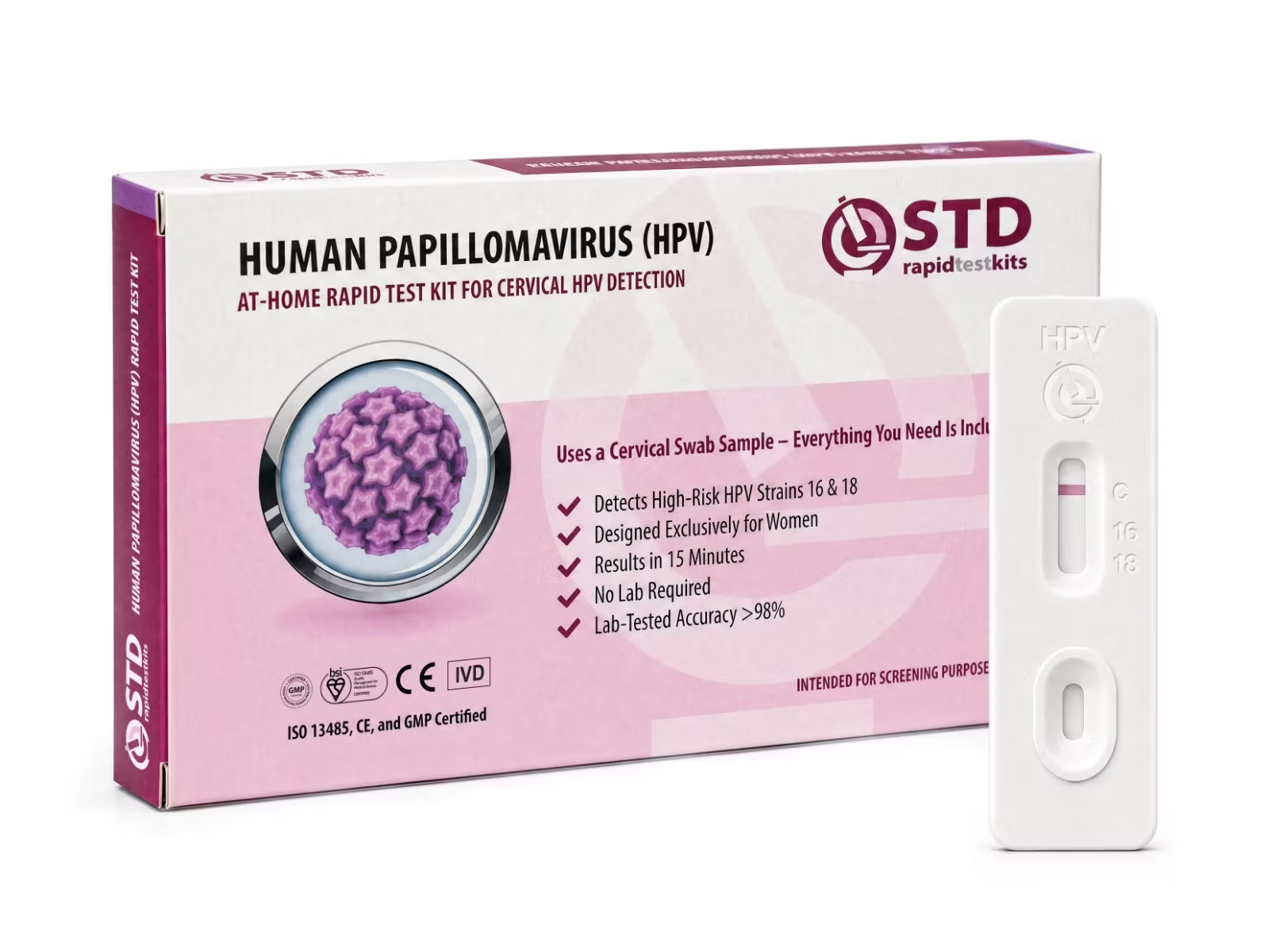
The second format is the rapid lateral-flow home kit, a swab and a cassette read on the bathroom counter in about 15 minutes, similar in format to a rapid pregnancy or COVID test. Our women's HPV swab sits here; the chemistry differs from lab PCR, trading some analytical sensitivity for speed and privacy, so any positive is worth confirming at a lab. Every validated at-home HPV product uses a vaginal self-swab and is designed for female anatomy. The third format is a multi-infection mail-in panel that bundles several STIs, which includes HPV only when the panel is built around a vaginal sample.
Three Ways to Test for HPV at Home
| Feature | Mail-in lab (PCR) | Rapid lateral-flow | Multi-STI mail-in panel |
|---|---|---|---|
| Sample | Vaginal self-swab | Vaginal self-swab | Vaginal swab + sometimes fingerstick blood |
| Where it's read | Certified lab | At home, about 15 minutes | Certified lab |
| Turnaround | 3 to 10 days | About 15 minutes | 5 to 10 days |
| FDA status | Self-collection cleared 2024 (clinic/pharmacy); at-home device approved 2025 | Screening tool, no prescription | Varies by panel; HPV included only if built on a vaginal sample |
| Best for | Closest to clinician-collected screening | Private check between scheduled screenings | One broader sweep after a worrying exposure |
Lab PCR is the most analytically sensitive; rapid lateral-flow trades some sensitivity for speed and privacy.
How Accurate Are At-Home HPV Tests?
Accuracy is two numbers, not one. Sensitivity is how well a test catches HPV when it is present. Specificity is how well it rules HPV out when it is absent. Both shift with collection technique, sample quality, and the chemistry of the assay.
For lab-processed mail-in tests, self-collected vaginal samples have shown sensitivity for high-risk HPV comparable to clinician-collected cervical samples when the same validated molecular assay is used. The World Health Organization's cervical cancer fact sheet now supports HPV DNA testing, including self-sampling, as a primary screening method. How well fully unsupervised at-home collection matches clinician collection is still being studied formally, including through the National Cancer Institute's SHIP trial (Self-Collection for HPV Testing to Improve Cervical Cancer Prevention), launched in 2024.
Rapid lateral-flow home kits are screening tools. They give a fast read on whether high-risk strains show up in the sample, but lateral-flow chemistry is less analytically sensitive than laboratory PCR, which remains the gold standard for definitive HPV detection. The practical takeaway: a negative rapid result, in someone screening on the right interval, is reassuring, and a positive rapid result is worth confirming with a lab molecular test before any next step. No test is perfect: false negatives can happen when viral load is very low or the swab misses the relevant cells, and false positives when a transient infection that would have cleared on its own gets picked up. Every major screening guideline schedules repeat testing at set intervals to absorb exactly those misses.
What Shapes an At-Home HPV Test's Accuracy
- Collection technique: improper swabbing can reduce detection, so follow the kit's insertion and rotation steps fully.
- Timing after exposure: a brand-new infection may not yet be established in cervical cells, so test on a screening interval rather than the morning after sex.
- Test format: lab PCR is more analytically sensitive than rapid lateral-flow, so use lateral-flow for a fast screen and a lab molecular test to confirm a positive.
- Natural clearance: many infections resolve on their own, so a single result matters less than what repeat screening shows over time.
Who Should Use One, and When a Clinic Is the Better Call
An at-home HPV test makes the most sense for cervix-bearing adults roughly 25 to 65 who are due for screening, or who want a private check between scheduled screenings, and who might otherwise skip clinical care because of access, cost, dysphoria, or past trauma. That autonomy matters. Cervical cancer screening rates in the United States have fallen for more than a decade, with the steepest drops among younger adults, the uninsured, and rural communities, and at-home options are one way to reach people who never make it to a clinic.
The fit narrows in a few situations. If you have a recent abnormal Pap or HPV result on file, you are already on a clinical follow-up path (often colposcopy, sometimes biopsy), and a reassuring home result there can mislead. New bleeding, pelvic pain, or bleeding after sex are clinical symptoms, not screening findings, and they need direct evaluation. People who are immunocompromised, including those living with HIV or on long-term immunosuppression, face higher odds of HPV persisting, so a clinician should steer the schedule. And if reading 'high-risk HPV detected' alone would send you spiraling, book the test through a telehealth service or clinic that pairs the result with a counselor.
Good fit: cervix-bearing, ages 25 to 65, due or between screenings, prefer privacy, no recent abnormal result.
Choose a clinic first: a recent abnormal Pap or HPV result already in follow-up; new bleeding, pelvic pain, or bleeding after sex; immunocompromised status; or you want a clinician walking you through the result in real time.
Where an At-Home Rapid HPV Kit Fits Best
If you are cervix-bearing, generally healthy, and want a 15-minute private read on whether high-risk HPV is currently detectable, a rapid lateral-flow kit is the simplest of the home options. It fits screening between scheduled Pap or HPV co-test visits, an anxious check after a new partner, or a month when getting to a clinic just is not going to happen. It is not the tool when a Pap is overdue, a previous result was abnormal, or a clinician has already started monitoring you; those situations call for the lab-processed route. Our kit is validated for vaginal self-swab only, so male readers who want an HPV test should see a clinic.
HPV Testing for Men: The Honest Answer
The question stings, but the answer is clear: there is no FDA-cleared routine HPV screening test for men, at home or in a clinic. A few specialty situations call for anal Pap testing in higher-risk groups, but that is targeted screening done by a provider, not a tool for the general male population.
The gap is not an oversight; it follows the evidence. Cervical cancer screening saves lives because there is a well-mapped path from persistent high-risk HPV to cell changes to cancer, and screening catches the middle step early. The equivalent path for penile and oropharyngeal cancers in men has not been characterized the same way, and routine screening has not been shown to improve outcomes in average-risk men, so it is not recommended.
The practical move is to focus on what works. HPV vaccination is one of the most effective cancer-prevention tools available, recommended routinely through age 26 and through shared clinical decision-making to age 45 (CDC HPV information). Anyone with persistent oral, throat, anal, or genital symptoms, such as lumps, sores, weeks-long hoarseness, or unexplained anal bleeding, should see a clinician for direct evaluation.
There is no at-home or in-clinic routine HPV screening test for men, so the practical focus is prevention and prompt evaluation. HPV vaccination is recommended routinely through age 26 and through shared clinical decision-making to age 45. Persistent oral, throat, anal, or genital symptoms (lumps, sores, weeks-long hoarseness, or unexplained anal bleeding) warrant a clinician's evaluation.
Does HPV Show Up on a Regular STD Test?
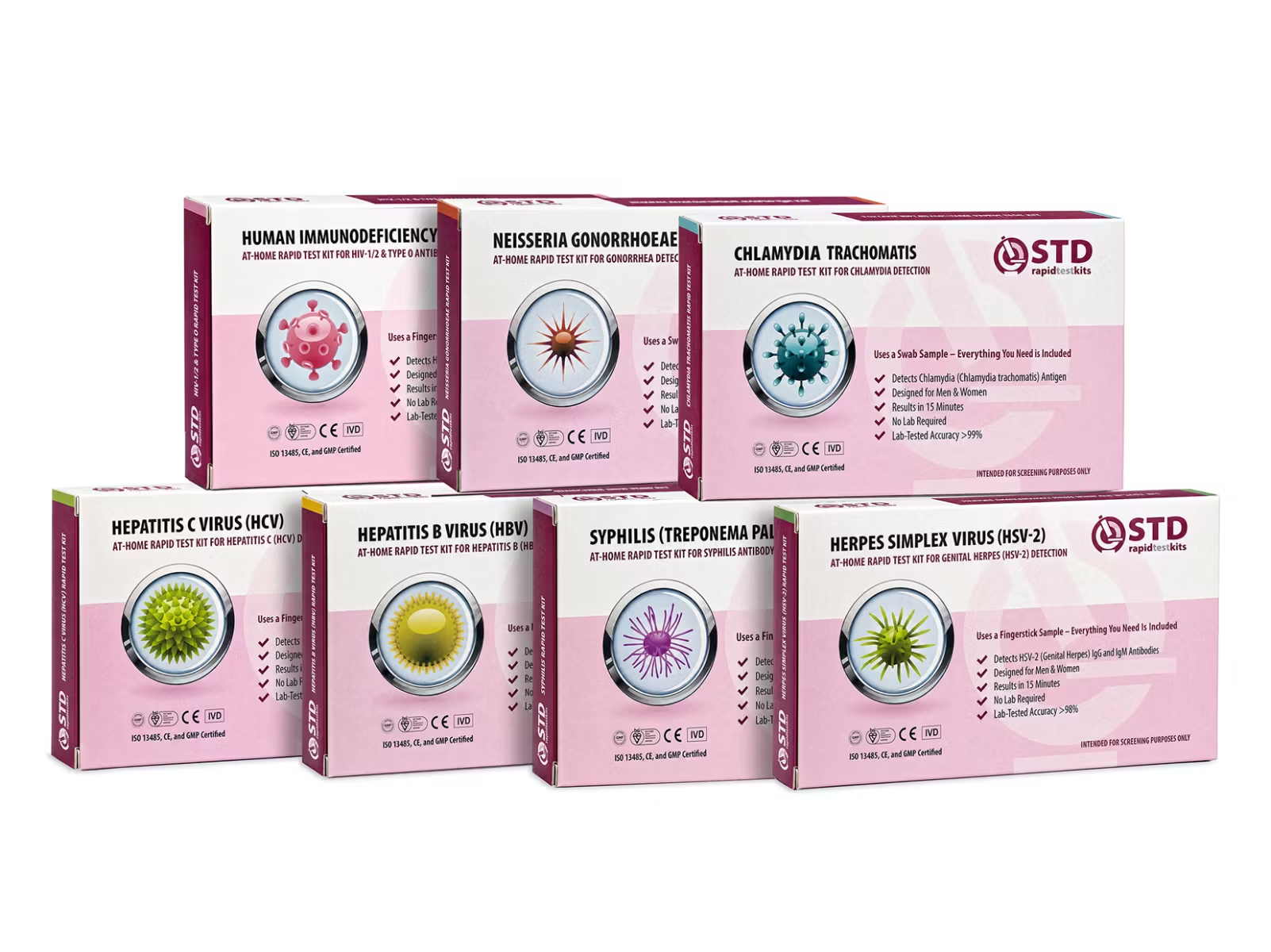
Usually not. A typical multi-infection home kit covers chlamydia, gonorrhea, HIV, syphilis, hepatitis B and C, and herpes. HPV is rarely on the list, which surprises people who assume a 'full panel' means everything.
HPV is so widespread that finding a single transient infection in a non-cervical sample would not change what a clinician does next, and the screening logic that makes HPV testing useful, catching a persistent high-risk infection before it changes cervical cells, applies only to people with a cervix on a specific age-based schedule. Folding HPV into a general panel would hand out false reassurance for non-cervical samples and overtest nearly everyone with a cervix who is not yet due.
When Should You Test for HPV?
This is where anxiety spikes. Maybe a condom broke, maybe a partner mentioned a past HPV diagnosis, maybe the thought arrived at 1 a.m. and refused to leave. The urge to test the next morning is human, and it does not map onto how HPV behaves.
HPV is slow. Unlike chlamydia or gonorrhea, where a swab within days or weeks can pick up an active infection, HPV needs weeks to months to establish a detectable infection in cervical cells, and most new infections clear before they ever become persistent. A meaningful at-home screening result is more likely around six weeks after an exposure, and even then a single negative does not rule out infection for good. Screening guidelines therefore hang on age and screening history rather than on any one encounter. The widely used U.S. schedule, drawn from the CDC's cervical cancer screening page and the U.S. Preventive Services Task Force, looks like this:
| Age Group | Recommended Screening | Frequency | Why |
|---|---|---|---|
| Under 21 | No routine screening | Not applicable | HPV is common and usually clears on its own at this age |
| 21 to 29 | Pap (cytology) alone | Every 3 years | Catches early cell changes; HPV testing alone is less informative here |
| 30 to 65 | HPV test alone, Pap alone, or co-testing | HPV every 5 years; Pap every 3 years; co-test every 5 years | Persistent high-risk HPV is the actionable signal in this group |
| Over 65 | May stop screening | Case by case | Risk drops with a documented history of normal results |
If You're Vaccinated, Do You Still Need to Test?
The HPV vaccine is one of the strongest cancer-prevention tools available. The current 9-valent vaccine protects against nine HPV types, including the high-risk strains behind most cervical cancers, and per the CDC it is recommended routinely through age 26 and through shared clinical decision-making up to age 45.
It does not cover every high-risk strain, though, and it cannot clear an infection that was already present before the shots. Vaccinated people with a cervix are therefore advised to stay on the same age-based screening schedule, since a strain the vaccine never covered can still reach cells it was never meant to guard.
Think of vaccination as the seatbelt and screening as the dashboard light: the vaccine lowers your risk from the strains it covers, and screening still catches a problem early enough to act on if one of the strains it misses slips through.
What Happens If a Result Comes Back Positive
This is the moment people dread: the portal update, the word 'positive.' A positive high-risk HPV result is not a cancer diagnosis. It means the virus was detectable at the time of the test, and a clinician will recommend a follow-up step based on your age, history, and which strain showed up. The common follow-ups are a repeat HPV test in about 12 months, a Pap smear, or a colposcopy, a closer in-clinic look at the cervix with a magnifying instrument. Surgery, biopsy, or treatment only enter the picture if those steps find specific cell changes.
The factor that matters most is persistence, not the single positive. Most high-risk HPV infections resolve quietly over one to two years; the ones that linger across multiple screening cycles are the ones that warrant closer attention, and screening exists to catch that pattern while changes are still reversible. If the positive came from a rapid lateral-flow kit, the first step is confirmation with a clinician-ordered laboratory HPV test before drawing any conclusions, because lateral-flow false positives do happen.
Step 1: Treat a single positive as information, not a diagnosis. Your clinician sets the follow-up based on age, screening history, and the strain detected.
Step 2: Expect one of three common next steps: a repeat HPV test in about 12 months, a Pap smear, or a colposcopy.
Step 3: Biopsy or treatment comes only if those steps find specific cell changes. A positive from a rapid home kit should be confirmed with a lab HPV test first.
Talking to Partners About a Positive Result
HPV is an awkward disclosure, mostly because the virus is so common and so quiet. Most sexually active adults encounter it, most never know they had it, and most clear it without treatment, which makes 'who gave it to whom' a question with no clean answer in the majority of cases. The point of telling a partner is not to assign blame; it is to give them information they can use.
If your partner has a cervix and has not had a Pap or HPV test recently, your result is a useful nudge to schedule one. If your partner does not have a cervix and has receptive oral or anal sex, they may want to ask a clinician about throat or anal screening depending on their risk. And if the relationship is over with no ongoing risk, you do not owe anyone a phone call: there is no legal duty to disclose HPV in the United States, and no public-health benefit to contacting past partners you no longer see.
'I tested positive for HPV. I'm following up with a clinician. I wanted you to have the information.'
Three sentences is enough. No apology, no over-explanation, and no attempt to map a timeline you cannot map. The person on the other end can ask follow-up questions if they want; if they don't, the conversation is done.
Oral, Anal, and HPV Beyond the Cervix
No FDA-cleared at-home HPV test exists for people without a cervix, and we do not sell one. The screening pipeline built for cervical HPV, with self-collection options, lab partnerships, and follow-up protocols, has no equivalent for oral or anal HPV in anyone.
That gap does not mean oral and anal HPV do not matter. HPV can colonize the throat and the anal canal, and high-risk strains account for a meaningful share of oropharyngeal and anal cancers, both of which the CDC tracks as growing categories. Here too, the 9-valent HPV vaccine does the heavy lifting against the high-risk strains driving cervical, anal, and oropharyngeal cancers. Where there is no screening program, evaluation for oral or anal HPV is a clinic conversation, sometimes involving a clinician-collected swab, anal cytology in higher-risk groups, or an ear-nose-and-throat referral when symptoms persist.
Per the <a href="https://www.cancer.gov/about-cancer/causes-prevention/risk/infectious-agents/hpv-and-cancer" target="_blank" rel="noopener noreferrer">U.S. National Cancer Institute</a>, HPV causes virtually all cervical cancers, over 90% of anal cancers, 75% of vaginal cancers, 70% of oropharyngeal cancers, 69% of vulvar cancers, and 63% of penile cancers. Those figures explain why HPV prevention, through vaccination plus age-appropriate screening, is a population-wide priority rather than a cervical-cancer concern alone.
The Myths, and the Shame
A lot of fear around HPV runs on partial information, and on a sense of shame that the medical facts do not support. Cancer is a loaded word, sex is a loaded subject, and putting them in one sentence makes people shut down. A common first reaction to a positive result is feeling marked or contaminated, even though the reality is far less dramatic.
That reaction is shaped by stigma, not science. Screening exists because guidelines expect exposure to be common, not because they assume anyone was reckless. Testing, at home or in a clinic, is maintenance, in the same category as checking blood pressure or cholesterol. There is no moral weight attached to viral DNA in a cervical sample. The most useful thing anyone can do after the first wave of feeling is shift the question from 'what does this say about me?' to 'what is the follow-up plan?' The three myths below are the ones that keep people awake, and each is worth correcting directly.
Common HPV Myths, Corrected
Myth: A positive HPV test means a partner cheated.
Fact: HPV can stay dormant for years, so a current positive can reflect an exposure from before your relationship began. A test result does not timestamp when the virus arrived or from whom.
Myth: No symptoms means no HPV.
Fact: Most HPV infections cause no itching, discharge, or pain at all. Silent infection is the default, which is the entire reason age-based screening exists.
Myth: HPV is rare, or only happens to people who are reckless.
Fact: HPV is the most common STI, and the CDC notes people can get it even with a single lifetime partner. Having it says nothing about character, hygiene, or sexual history.
Privacy, and Where HPV Testing Is Heading
For some people, clinic screening is straightforward. For others it sits behind real barriers: medical trauma, anxiety, distance, a work schedule with no room for a long midday appointment, or a small community where a visit to the local clinic gets noticed. Self-collected testing removes several of those at once. The kit arrives in plain packaging, collection happens privately, and results return through a secure portal. The WHO supports HPV DNA self-sampling specifically because it reaches people who would otherwise skip screening.
The direction of travel is encouraging. Faster, more sensitive point-of-care HPV-DNA tests are in development, and national programs in Australia, the Netherlands, and the UK are expanding self-sampling. With the FDA's 2024 self-collection clearance and the 2025 at-home device approval opening the same path in the United States, the distance between what is possible in a clinic and what is possible at home keeps shrinking.
Building a Rational, Not Reactive, Plan
The searches that bring people to a page like this ('HPV test for men at home,' 'self-collected HPV test,' 'is at-home HPV testing accurate') are usually searches for a sense of control. A rational plan supplies that without requiring a catastrophe. If you have a cervix, follow the age-based screening schedule consistently, at a clinic or with a validated home test. Get the HPV vaccine if you are eligible and have not yet. Use condoms to lower transmission risk with new partners, knowing they reduce rather than remove it. Treat persistent symptoms by seeing a clinician instead of waiting them out, and talk to partners directly rather than guessing.
If a 2 a.m. search brought you here looking for certainty, here is the short version: home HPV testing is real for people with a cervix, it is not a routine option for men, it is rarely part of a general panel, and a positive result starts a defined follow-up plan that usually ends in monitoring, not treatment.
Should You Test for HPV at Home? A Quick Decision Aid
Do you have new bleeding, pelvic pain, bleeding after sex, or a recent abnormal Pap or HPV result already in follow-up?
Yes: See a clinician rather than starting with a home test. Those are clinical findings or an active follow-up path that direct care should handle, where a reassuring home result can mislead.
Are you a cervix-bearing adult roughly 25 to 65 who is due for screening, or who wants a private check between scheduled screenings?
Yes: An at-home HPV test is a reasonable fit. Choose lab-processed self-collection (closest to a clinician-collected sample) or a rapid lateral-flow kit (fastest, best between visits).
Is a recent exposure the main thing driving your worry right now?
Yes: Screen now for the faster-moving infections (HIV, syphilis, chlamydia, gonorrhea, herpes, hepatitis) and fold HPV into your next age-appropriate screening interval rather than testing the morning after.
No: Stay on your age-based screening schedule, and get the HPV vaccine if you are in the eligible age range and have not yet.
Guidance only; a clinician can advise based on your specific situation.
Frequently asked questions
- If I have no symptoms, why test for HPV?
- Because HPV is usually silent. The high-risk strains that matter for cervical cancer screening do not cause itching, discharge, or pain. Screening is not built to chase symptoms; it is built to catch a persistent infection before it changes cells, which is the window where action helps most. Feeling fine is not evidence that nothing is happening.
- If I test positive, does that mean a partner cheated?
- No. HPV can stay undetected for years, so a current result reflects what is present now, not when the virus arrived or from whom. People in long-term monogamous relationships can test positive based on exposures from before the relationship began. A positive tells you the virus is here; it says nothing about a partner's behavior.
- Why can't men just swab and test at home too?
- The screening pathway that makes cervical HPV testing useful has no proven equivalent for men. Cervical screening catches a well-mapped middle step between persistent infection and cancer, and that step has not been characterized the same way for penile or oropharyngeal cancers, so routine screening has not been shown to improve outcomes in average-risk men. The practical move for men is vaccination plus prompt evaluation of any persistent symptoms.
- How reliable is an at-home HPV test?
- Lab-processed self-collected samples have shown sensitivity comparable to clinician-collected samples on validated molecular assays, which is what the FDA's 2024 self-collection clearance was built on. Rapid lateral-flow home kits are useful screening tools but are less analytically sensitive than lab PCR, so a positive is worth confirming with a clinician-ordered molecular test. In both formats, the reliability comes from the test chemistry, not the location where you collect the sample.
- If I'm vaccinated, do I still need to screen?
- Yes, if you have a cervix. The vaccine protects against the strains behind most cervical cancers but not every high-risk type, and it cannot clear an infection that predates the shots. Vaccinated people are still advised to follow the same age-based screening schedule. Vaccination lowers risk sharply; screening catches what slips through.
- How soon after a new partner can I test for HPV?
- HPV develops slowly, usually over weeks to months, and most single-exposure infections clear before they ever become detectable, so a test the morning after rarely tells you anything useful. A meaningful at-home screening result is more likely around six weeks after exposure, and a single negative still does not rule out infection for good. If a recent exposure is driving the worry, screen first for the faster-moving infections (HIV, chlamydia, gonorrhea, syphilis) and fold HPV into your next age-appropriate interval.
- Can I get HPV from oral sex?
- Yes. HPV can colonize the throat, mouth, and tonsils, and HPV-linked oropharyngeal cancers are a recognized and growing category. There is no routine at-home or clinic screening for oral HPV in people without symptoms. Vaccination and barrier use are the main prevention tools, and persistent throat symptoms (a lump, painful swallowing, or hoarseness lasting more than a few weeks) deserve a clinician's evaluation.
- Will insurance cover an at-home HPV test?
- Sometimes. Tests ordered through a telehealth provider, a primary care clinic, or a partnered lab may be billed to insurance as part of cervical cancer screening, especially under Affordable Care Act preventive-care rules. Direct-to-consumer rapid kits bought without a clinician's involvement are usually out of pocket. If cost is the deciding factor, calling your plan and asking specifically about HPV self-collection coverage is worth ten minutes.
- U.S. Centers for Disease Control and Prevention. About Genital HPV Infection: transmission, natural clearance, and the verbatim 9-out-of-10 / within-two-years clearance figure quoted in this article.
- U.S. Centers for Disease Control and Prevention. Cervical Cancer Screening: age-based screening intervals and recommended modalities.
- World Health Organization. Cervical cancer fact sheet: support for HPV DNA testing, including self-sampling, as a primary cervical screening method.
- U.S. National Cancer Institute. Analysis of the FDA's May 2024 clearance of HPV self-collection in healthcare settings on the Roche cobas and BD Onclarity platforms, including the SHIP trial on at-home self-collection accuracy.
- U.S. Preventive Services Task Force. Cervical cancer screening recommendation, including cytology every 3 years for ages 21 to 29 and primary high-risk HPV testing every 5 years for ages 30 to 65.
- U.S. National Cancer Institute. HPV and Cancer: the per-cancer attribution figures cited here (virtually all cervical, over 90% of anal, 75% of vaginal, 70% of oropharyngeal, 69% of vulvar, 63% of penile cancers).
- American Cancer Society. HPV and HPV Testing: how high-risk HPV detection is used in cervical cancer screening, including self-collection as a screening option.
- The ASCO Post (American Society of Clinical Oncology). Coverage of the FDA's May 2025 approval of Teal Health's Teal Wand, an at-home vaginal self-collection device for cervical cancer screening.
