







Quick Answer: You can have an STD without symptoms, and many infections stay silent for weeks, months, or even years. Waiting to test increases the risk of complications and unknowingly passing it to others. Testing, not symptoms, is the only way to know.
This Is Where Most People Get It Wrong
There’s a belief that feels logical: if something is wrong with your body, you’ll notice it. That’s how most illnesses work, right? Fever, pain, discomfort, your body sends signals. So when nothing shows up, it feels safe to assume everything is okay.
STDs don’t play by those rules. Many of the most common infections are designed, biologically, to stay quiet. They replicate, spread, and persist without triggering obvious warning signs. That’s not rare. That’s actually the norm.
One patient once put it bluntly: “I kept waiting for something to feel off. It never did. That’s why I didn’t test.” That delay is exactly how infections go unnoticed for months.
The absence of symptoms is not reassurance. It’s uncertainty disguised as comfort.
The Silent Majority: How Often STDs Show No Symptoms
If you’re thinking, “Okay, but how common is this really?”, it’s more common than most people expect.
Here’s what the data shows when it comes to asymptomatic infections:
| STD | Estimated Asymptomatic Cases | What That Means |
|---|---|---|
| Chlamydia | Up to 70–80% (women) | Most people never notice symptoms |
| Gonorrhea | Up to 50%+ | Especially silent in throat or rectum |
| Herpes | Majority undiagnosed | Symptoms often mild or mistaken |
| HIV | Early stage often unnoticed | Can go years without clear signs |
That means a huge percentage of people walking around with these infections feel completely fine. No warning. No clue. And often, no urgency to test.
Another person described it this way: “I thought STDs always came with symptoms. I didn’t realize silence was the symptom.”

People are also reading: Silent Spread: The Overlooked STD Crisis in Queer and Trans Communities
What’s Actually Happening in Your Body (Even When You Feel Fine)
Just because you don’t feel anything doesn’t mean nothing is happening. In fact, the opposite is often true.
When an STD enters the body, it starts interacting with your cells almost immediately. Some infections stay localized, while others spread through tissues or even the bloodstream. The immune system may respond, but not always in ways you can feel.
For example, Chlamydia can quietly move upward into the reproductive system. Gonorrhea can settle in the throat without causing any soreness. Herpes can shed virus particles even when there are no visible sores.
That’s the part people don’t hear enough about: transmission doesn’t require symptoms. You don’t need to “look infected” to pass something on.
“I only found out because my partner tested positive. I had zero symptoms. None.”
Silence doesn’t stop spread, it often enables it.
Waiting Feels Safer Than It Is
Delaying testing rarely feels like a risky decision in the moment. It feels practical. Logical, even. You tell yourself you’ll go “if something shows up.” You wait for a reason.
But here’s what waiting actually does:
| Time Passed | What May Be Happening | Risk Level |
|---|---|---|
| 1–2 weeks | Infection establishes itself | Low to moderate |
| 1–3 months | Possible spread to other areas | Moderate |
| 3+ months | Increased complication risk | High |
| Long-term | Fertility issues, chronic infection | Very high |
What makes this tricky is that none of these stages guarantee symptoms. You could move from early infection to complications without ever feeling a clear shift.
So the question isn’t just “Do I feel anything?” It’s “What could be happening that I can’t feel?”
That’s a very different, and much more important, question.
You Don’t Need Symptoms to Take Action
Testing isn’t supposed to be reactive. It’s supposed to be preventive. That’s a shift a lot of people don’t make until after a scare.
If there’s been any kind of exposure, new partner, unprotected sex, oral contact, even a situation that just feels uncertain, that alone is enough reason to test. Not panic. Just test.
This is where access matters. Walking into a clinic isn’t always easy. Timing, privacy, cost, it all adds friction. That’s why a lot of people delay longer than they intended.
There’s another option that removes that delay. You can check from home, on your own timeline, without waiting for symptoms to justify it.
STD Rapid Test Kits offer discreet, doctor-trusted testing you can do privately. If you’re not sure, that’s exactly when testing matters most, not least.
Because the goal isn’t to confirm something is wrong. It’s to confirm that you’re okay, or catch something early enough to handle it easily.
When Silence Turns Into Consequences
There’s a moment that hits differently when someone finally gets tested after waiting. It’s not always dramatic. Sometimes it’s quiet, almost anticlimactic. A result on a screen. A line on a test. A message from a clinic.
And then comes the realization: this has been here longer than you thought.
One patient explained it like this: “I didn’t feel anything, so I assumed nothing was wrong. But when I tested positive, the first thing I thought was, how long has this been in my body?”
That’s the part people don’t talk about enough. Not just the infection, but the time it had to quietly develop.
Untreated Chlamydia and Gonorrhea can move into the reproductive system and lead to pelvic inflammatory disease. In some cases, that can affect fertility. HIV can progress silently for years before symptoms appear, which is why early detection changes everything about treatment outcomes.
None of this is about fear, it’s about timing. The earlier something is caught, the simpler it is to manage. The longer it sits unnoticed, the more complicated it can become.
Check Your STD Status in Minutes
Test at Home with Remedium6-in-1 STD Rapid Test Kit

 For Men & Women
 Results in Minutes
 No Lab Needed
 Private & Discreet
Order Now $119.00 $294.00
For all 6 tests
The Window Period: Why Timing Matters More Than Symptoms
Here’s where things get even more confusing: even if you decide to test, timing still matters. Every STD has what’s called a “window period”, the time between exposure and when a test can reliably detect the infection.
This is why someone can test too early, get a negative result, and assume they’re in the clear when they’re not. It’s not that the infection isn’t there, it’s that it hasn’t reached detectable levels yet.
Understanding this helps remove a lot of false reassurance. A negative test immediately after exposure doesn’t always mean “no infection.” It may just mean “too early to tell.”
| STD | Earliest Detection | Best Time to Test |
|---|---|---|
| Chlamydia | 1–2 weeks | 2–3 weeks |
| Gonorrhea | 1 week | 2 weeks |
| Syphilis | 3 weeks | 4–6 weeks |
| HIV | 10–14 days (RNA) | 3–6 weeks |
| Herpes | 2–12 days (symptoms) | 4+ weeks (blood test) |
This is why testing isn’t a one-time decision, it’s a timing strategy. Sometimes it means testing now, and then again later to confirm.
It also explains why waiting for symptoms doesn’t work. Symptoms don’t follow a schedule. Testing does.
“But I Would Know If Something Was Wrong… Right?”
This question comes up constantly, and it’s completely understandable. We learn to trust our bodies. And most of the time, that’s a good instinct.
But with STDs, the signals are often subtle, inconsistent, or completely absent. Some people experience symptoms so mild they dismiss them. Others never experience anything noticeable at all.
One person described it like this: “Looking back, maybe there were signs, but nothing that made me think ‘STD.’ It just felt like normal body stuff.”
That’s the gray area where most missed diagnoses happen. Not because people are careless, but because nothing felt urgent enough to act on.
And that’s exactly why relying on symptoms creates a false safety net. It feels like a system you can trust, but it’s not built for this.
Testing Isn’t About Panic, It’s About Clarity
There’s a difference between reacting out of fear and acting out of awareness. STD testing falls into the second category.
You don’t need to feel sick to take care of your health. You don’t need visible symptoms to justify getting answers. Testing is just information, and having that information changes everything.
If the result is negative, you get peace of mind that’s actually grounded in evidence. If it’s positive, you catch it early, when treatment is simpler, faster, and more effective.
This is where taking action early shifts the entire experience. Instead of uncertainty stretching out for weeks or months, you get a clear answer and a path forward.
And if you’re not ready for a clinic visit, there are ways to handle this privately.
This at-home combo STD test kit allows you to screen for multiple common infections discreetly. No waiting rooms. No awkward conversations. Just answers.
Because at the end of the day, the goal isn’t to assume the worst, it’s to stop guessing.
People are also reading: Chlamydia Rapid Test Instructions: What Each Line Really Means
The Real Risk Isn’t Just You, It’s the Chain Reaction
One of the hardest parts about asymptomatic STDs is that they don’t stay isolated. Even if you feel fine, even if nothing seems off, the infection doesn’t pause. It continues moving, through your body, and potentially to other people.
This is where things get complicated emotionally. Because no one sets out to pass something on. Most people assume they’re safe because they feel normal. That assumption is incredibly common, and it’s exactly why silent transmission happens so often.
“I would never knowingly put someone at risk. But I didn’t know. That’s what bothered me the most.”
Infections like Herpes can be transmitted through skin-to-skin contact even when there are no visible sores. Chlamydia and Gonorrhea can spread during oral, vaginal, or anal sex without any noticeable symptoms in either partner.
So the question shifts. It’s no longer just “Do I feel okay?” It becomes “Am I sure?”
And when the answer is “I don’t know,” testing becomes less about fear, and more about responsibility, clarity, and care for both yourself and anyone you’re intimate with.
What Testing Actually Looks Like (It’s Simpler Than You Think)
A lot of people delay testing not because they don’t care, but because they imagine it being complicated, invasive, or uncomfortable. That assumption alone is enough to push it off for weeks.
But testing today is far more accessible than most people realize. Depending on the infection, it can involve a simple urine sample, a swab, or a small finger-prick blood test.
There’s no single “STD test” that covers everything in every situation, which is why combo testing is often recommended, especially when there are no symptoms guiding you toward one specific infection.
At-home testing has made this even easier. You can collect your sample privately, follow clear instructions, and get results without stepping into a clinic. For a lot of people, that removes the biggest barrier: hesitation.
Because when testing becomes easy, the decision becomes easier too.
So… Is It Ever Safe to Wait?
This is the question people are really asking when they search things like “do I need an STD test if I feel fine?” It’s not just about health, it’s about whether waiting feels reasonable.
And the honest answer is this: waiting is only safe if you’re truly outside of any risk window. That means no recent exposure, no new partners, and no uncertainty. For most people, that’s not the situation they’re in when the question comes up.
If there’s even a small doubt, something that makes you pause, even briefly, that’s already your signal. Not panic. Just a nudge toward clarity.
Because the risk of testing is low. The risk of waiting is unknown. And unknown is where most people get stuck.
Check Your STD Status in Minutes
Test at Home with Remedium7-in-1 STD Test Kit
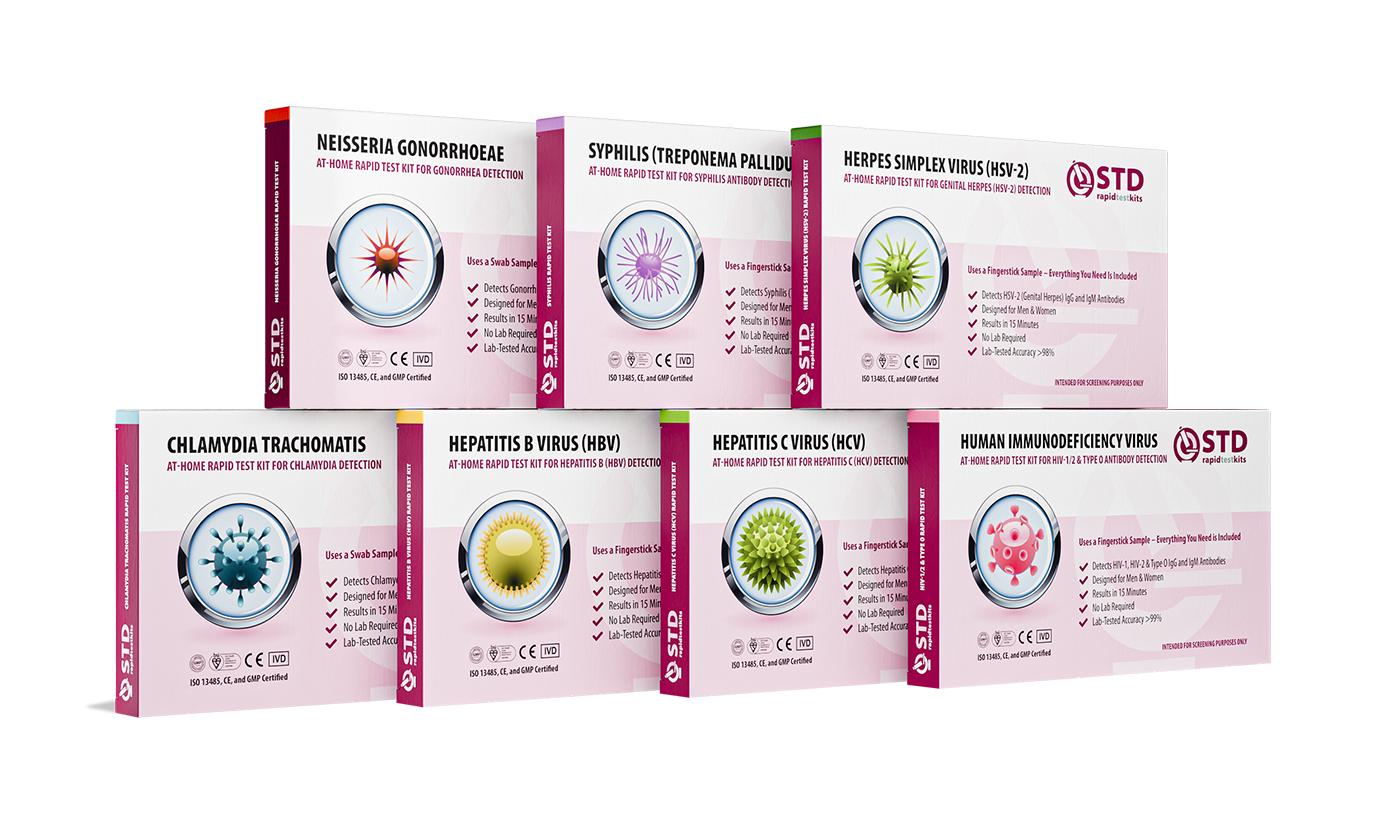 For Men & WomenResults in MinutesNo Lab NeededPrivate & Discreet
Order Now $129.00 $343.00
For all 7 tests
What Taking Action Actually Looks Like (Without Overthinking It)
You don’t need to map out every possible scenario or analyze every detail of a past encounter. That spiral doesn’t lead to clarity, it just creates more hesitation.
Instead, think of testing as a simple checkpoint. Not a judgment. Not a crisis. Just a way to reset your baseline and know where you stand.
If the timing lines up with testing windows, take the test. If it’s too early, plan the right time and follow through. That’s it. No overcomplication required.
And if privacy, convenience, or timing have been keeping you from doing it, getting rid of those problems changes everything.
Explore at-home STD testing options here and take control of the process on your own terms. No waiting for symptoms. No guessing. Just clear answers.
Because peace of mind shouldn’t depend on whether your body decides to send a signal.
FAQs
1. Wait… you can actually have an STD and feel completely normal?
Yeah, this is the part that catches people off guard. You can go about your day, feel totally fine, and still have something like chlamydia or gonorrhea in your body. No pain, no weird symptoms, nothing obvious. That’s why so many people only find out by accident, or because a partner tells them to get tested.
2. How long could something like that go unnoticed?
Longer than most people are comfortable hearing. Weeks, months, sometimes even years depending on the infection. It’s not sitting there doing nothing either, it can slowly spread or affect your body in ways you don’t feel right away.
3. If I don’t have symptoms, am I still contagious?
Unfortunately, yes. This is how a lot of transmission happens, people genuinely think they’re in the clear. Infections like herpes can shed from the skin without visible sores, and others like chlamydia don’t need symptoms at all to pass on.
4. Be honest, do I really need to get tested if I feel fine?
If there’s even a small “maybe” in your head, then yeah, it’s worth testing. Not because something is definitely wrong, but because guessing doesn’t give you real answers. Testing does. It’s less about fear and more about closing that mental loop.
5. Which STDs are the sneaky ones that don’t show symptoms?
Chlamydia is probably the biggest one, especially in women. Gonorrhea can be quiet too, especially in the throat. Herpes often gets missed because symptoms can be mild or mistaken for something else. Even early HIV can feel like nothing at all.
6. If I test and it comes back negative, can I trust that?
Yes, most of the time, but the timing is important. The infection might not show up yet if you test too soon after being exposed. That's the window period, which is why some people test twice: once early and once at the right time to be sure.
7. If you feel totally fine, how often do you actually need to test?
It depends on your situation, but a good rule is every few months if you have new or multiple partners. Some people treat it like routine maintenance, like checking in with their health instead of waiting for something to go wrong.
8. Is it actually risky to just wait and see if something shows up?
That’s the trap. Waiting feels reasonable because nothing feels urgent, but that’s exactly how infections stick around longer than they should. By the time symptoms appear (if they ever do), the infection may have already progressed.
9. I’m not into clinic visits… what are my options?
You’re definitely not alone there. A lot of people like to test at home because it's private and not too stressful. You can take your time, follow the steps, and get answers without having to explain anything to anyone in person.
10. If I test positive but feel fine, what happens next?
First, take a breath. A lot of STDs are very treatable, especially when caught early. You’ll either take medication or get guidance on next steps, and you’ll know what you’re dealing with instead of guessing. And honestly, that clarity tends to feel better than the uncertainty that came before it.
You Deserve Clarity, Not Guesswork
Feeling fine can be reassuring, but it’s not proof of anything. That’s the tricky part about asymptomatic STDs. They don’t interrupt your day. They don’t announce themselves. They just exist quietly in the background while you keep moving forward.
The goal isn’t to panic every time there’s a “what if.” It’s to replace uncertainty with something solid. If there’s been any exposure, test. If timing is off, wait for the right window and test again. Each step isn’t overreacting, it’s just tightening the gap between guessing and knowing.
Don’t sit in that gray area longer than you have to. If there’s even a small question in your mind, start with a private screen like the Combo STD Home Test Kit. No waiting rooms. No assumptions. Just answers you can actually use.
How We Sourced This Article: This guide combines peer-reviewed research, clinical advice on STD screening and asymptomatic infection patterns, and real-world insights into behavior. We reviewed data on silent transmission, window periods, and long-term outcomes from untreated infections to ensure accuracy while keeping the information grounded in how people actually experience testing decisions. Only trusted medical authorities and published research informed the clinical guidance presented here.
Sources
1. Centers for Disease Control and Prevention – STD Screening Recommendations
2. World Health Organization – Sexually Transmitted Infections Fact Sheet
3. Planned Parenthood – STD Overview and Testing
4. Mayo Clinic – Sexually Transmitted Diseases Overview
5. NHS – Sexually Transmitted Infections (STIs)
6. Centers for Disease Control and Prevention – Chlamydia Fact Sheet
7. Centers for Disease Control and Prevention – Gonorrhea Fact Sheet
About the Author
Dr. F. David, MD is a board-certified specialist in infectious diseases who works on ways to prevent, diagnose, and find STIs early. His work focuses on sexual health education that is practical and free of stigma, so that people can make decisions without fear or confusion.
Reviewed by: Board-Certified Infectious Disease Specialist | Last medically reviewed: March 2026
This article is only for informational purposes and should not be used instead of professional medical advice, diagnosis, or treatment.


