
Published: December 2025 | Last updated: May 2026 | Editorial review and quality control: Martina N.
Can fingering or a hand job give you an STD?
Yes, but the risk is much lower than from penetrative sex, and it varies sharply by pathogen. HPV is the most plausible route via skin-to-skin transfer. Herpes is possible during active shedding or asymptomatic viral release. Chlamydia, gonorrhea, and trichomoniasis are rarely documented this way. HIV is effectively zero from manual sex alone.
If you've landed here after a sexual encounter and a flicker of worry, you're asking a fair question. Could fingering, or a hand job for that matter, really give me an STI? Especially if the nails involved were not exactly spotless? The honest answer takes more than a one-line yes or no.
Manual sex sits in a low-risk category compared to unprotected penetrative sex. Hand jobs are at the bottom of the risk ladder; fingering a notch above. Low is not the same as zero, though. A small handful of infections genuinely can move from one person to another on hands and under fingernails. Most of the time they don't. Knowing which ones do, and what changes the odds, is how you decide whether what just happened needs a test or just needs you to wash your hands and move on.
This piece walks through what is plausible (HPV, herpes), what is mostly theoretical (chlamydia, gonorrhea, trichomoniasis), and what is effectively impossible (HIV from a finger). It also covers the small habits that flatten the small risks that do exist, and the testing windows that tell you when an at-home or clinic check is worth booking.
Key Takeaways
- Fingering and hand jobs are lower-risk than penetrative sex but not risk-free. HPV is the most plausible STI to transmit via hands; herpes is possible; chlamydia, gonorrhea, and trichomoniasis are rarely documented this way; HIV essentially never transmits through manual sex.
- Clean, short nails and washed hands reduce mechanical injury and non-STI bacterial transfer. They don't fully prevent virus transmission, since HPV particles can be present on fingers and under nails even when hands look clean.
What "manual sex" actually covers
When sexual-health guidance talks about manual sex, it covers a wider range of contact than most people picture. The umbrella includes external clitoral or labial stimulation, vaginal penetration with one or more fingers, anal penetration with a finger, manual stimulation of a penis (the classic hand job), and the same acts performed on a partner or on oneself.
This distinction matters because different contact patterns expose different tissue. A hand job is hand-on-skin, the lowest-friction, lowest-fluid version of partnered sex. Fingering brings hands into direct contact with mucous membranes and picks up fresh fluid. Small skin injuries on hands (hangnails, paper cuts, dry-skin cracks, fresh manicure micro-tears) are extremely common and matter for both versions. The vaginal and anal linings are mucous membranes; they are more permeable than the skin on a finger and more vulnerable to microscopic tears. Tiny cuts or scrapes from a sharp nail edge create direct entry points. Even without cuts, mucosal contact lets some viruses transfer when they are present on the contacting surface.
A second piece of the picture is that manual sex rarely happens in isolation. People often combine it with kissing, oral sex, or penetrative sex in the same encounter. If you are trying to decide which act in a session might have transmitted something, the honest answer is usually "any of them, weighted by how risky each one is on its own." That does not mean every encounter needs panic-level analysis. It means a single positive test result a few weeks later won't tell you exactly which moment did it.
For the rest of this article, "fingering" means any contact pattern above involving a hand and someone's genitals or anus, regardless of who is giving or receiving. "Hand job" specifically refers to manual stimulation of external genitals without penetration.
The skin on a finger is tough and largely impermeable to most STI pathogens. The outer layer (the stratum corneum) is dense, dry, and inhospitable to most STI pathogens, HIV included. The vaginal and anal linings are mucous membranes: thinner, more permeable, and more easily disrupted. That asymmetry is why the same hand can carry STI-relevant material without itself becoming infected, and why even small nail-edge tears matter for what your tissue receives.
How STIs actually move through manual sex
Sexually transmitted pathogens fall into three broad transmission groups, and which group an infection belongs to determines whether hand-based contact matters. The CDC's STI overview organizes the landscape this way, and it makes the risk picture for manual sex much easier to reason about.
Skin-to-skin viruses and parasites spread when one person's affected skin touches another person's skin or mucous membrane. This group includes herpes simplex (HSV-1 and HSV-2), human papillomavirus (HPV), the bacterium that causes syphilis when a chancre is present, molluscum contagiosum, and pubic lice. Hands and fingers are absolutely a possible vehicle if they touch infected skin and then touch a partner's genitals, mouth, or eyes.
Mucosal bacterial infections like chlamydia and gonorrhea live in genital fluids and on mucosal surfaces. They need to be deposited onto another mucosal surface to establish infection. Fingers can carry fresh fluid from one place to another, which is the theoretical concern with fingering, but the bacteria do not survive long on dry skin, and the dose required for infection usually needs direct contact.
Bloodborne infections such as HIV, hepatitis B, and hepatitis C need infected blood (or for HIV, certain genital fluids) to enter the bloodstream of the other person. Intact skin is an excellent barrier. The realistic route during fingering would be fresh blood or fluid meeting a fresh, deep cut or open sore on a finger. The CDC's HIV basics are clear that HIV is not transmitted through casual contact with intact skin.
Three transmission categories at a glance
- Skin-to-skin viruses and parasites (HPV, HSV-1, HSV-2, syphilis chancres, molluscum, pubic lice). Hands can be a vehicle when they touch infected skin and then touch a partner's genitals, mouth, or eyes.
- Mucosal bacterial infections (chlamydia, gonorrhea) and trichomoniasis. Need fresh fluid landing on a receptive mucous membrane to establish infection; rare via fingers because conditions are wrong for these bugs.
- Bloodborne infections (HIV, hepatitis B, hepatitis C). Need infected blood or specific genital fluids meeting a fresh wound on a finger or a mucosal break; effectively absent in everyday fingering.
Hand jobs vs fingering: where the small differences live
The two acts sit on the same ladder, but they're not on the same rung. A hand job is hand-on-skin, which keeps the risk picture short. Fingering adds direct mucosal contact and fresh fluid into the equation, which is where the (still small) risk gap between them comes from.
For a hand job, the realistic concerns are short:
- Herpes (HSV-1 or HSV-2) can transfer if a partner has an active genital lesion or is shedding virus asymptomatically and the giver's hand has a small break in the skin. A separate condition called herpetic whitlow describes HSV infection on a finger or thumb, usually picked up from contact with another person's HSV lesion.
- HPV can pass through skin-to-skin contact in the genital region. Cohort studies have detected HPV DNA on the hands of people whose partners had genital HPV, although clinically meaningful transmission this way is considered uncommon compared with penetrative sex.
- Syphilis spreads through contact with a chancre, a typically painless ulcer that appears at the site of infection. If a hand touches an active chancre, the bacterium can transfer to a small break in the giver's skin. Chancres are short-lived, often missed, and highly infectious while present.
- Pubic lice and molluscum contagiosum can move from genital skin to fingers, and from fingers to other body sites. Neither is dangerous, but both are itchy and embarrassing.
For fingering, add bacterial vaginosis and trichomoniasis (which can move between vaginas if fingers carry fresh fluid quickly from one partner to the other in the same encounter), plus the slightly-less-theoretical risk for chlamydia and gonorrhea because the mucosal landing surface is right there. Herpes and HPV risk is broadly similar to a hand job, with the added factor that mucosal contact gives the virus a more receptive landing surface than dry skin. The pathogen-by-pathogen sections below cover the details.
A hand job stays at hand-on-skin contact, which keeps the realistic concerns to herpes, HPV, syphilis chancres, pubic lice, and molluscum routes. Fingering adds direct mucosal contact and fresh fluid, which slightly raises the bacterial (chlamydia, gonorrhea) and trichomoniasis risk without changing the herpes and HPV picture much. Both acts stay well below penetrative sex on the overall risk ladder.
The short answer by pathogen
Across mainstream public-health guidance, manual sex sits in the low-risk band for most sexually transmitted infections. The NHS and the CDC both draw the same broad lines: unprotected penetrative sex carries the highest risk, and non-penetrative manual contact carries meaningfully less. That ranking holds even with imperfect hand hygiene, because most STIs need specific conditions to transmit that a finger does not naturally provide.
The summary by pathogen:
- HPV (human papillomavirus): the one STI where fingers genuinely matter. Skin-to-skin contact is the primary transmission route, and the virus can be present on fingers and under fingernails of an infected person. Documented hand-mediated transmission is real, even if less common than direct genital contact.
- HSV (herpes simplex virus): possible but uncommon via fingers. Requires either active viral shedding on the giver's hand or recent contact with a lesion, plus enough contact for the virus to transfer.
- Chlamydia and gonorrhea: theoretical via fingers, very rarely documented. These bacteria do not survive long outside the body and need direct mucosa-to-mucosa contact to establish infection efficiently.
- Trichomoniasis: same low theoretical level as chlamydia and gonorrhea, with the added possibility of vagina-to-vagina fluid transfer when fingers move quickly from one partner to another in the same encounter.
- HIV: effectively zero risk from manual sex. HIV does not survive well on dry skin, and the route from a finger to a bloodstream is so improbable that public-health bodies do not list fingering as a meaningful transmission mode.
- Syphilis: low theoretical risk via fingers; possible only if there is an open primary chancre at the contact site and a small break on the giver's skin.
- Hepatitis B and C: very low via fingering alone; usually require blood-to-blood contact.
- Pubic lice and molluscum contagiosum: possible via hand contact with infested or affected skin. Neither is dangerous; both are itchy and embarrassing.
The table below puts hand jobs and fingering side by side for each infection.
| Infection | Hand job risk | Fingering risk | What raises the risk |
|---|---|---|---|
| Herpes (HSV-1, HSV-2) | Low | Low to moderate | Active sore or asymptomatic shedding plus broken skin on the giver's hand |
| HPV | Low | Low | Visible warts or recent infection on either side |
| Syphilis | Low | Low | Active chancre in contact with broken skin |
| Chlamydia | Very low | Low | Fresh fluid moved between mucosal surfaces |
| Gonorrhea | Very low | Low | Fresh fluid moved between mucosal surfaces |
| Trichomoniasis | Very low | Low | Vagina-to-vagina fluid transfer in the same encounter |
| HIV | Very low (negligible) | Very low | Deep, fresh cut on finger plus fresh blood or genital fluid |
| Hepatitis B / C | Very low | Very low | Fresh blood contact with broken skin |
| Pubic lice / molluscum | Possible | Possible | Direct contact with infested or affected skin |
HPV via fingers: the one STI where this really matters
The Human Papillomavirus is the most common STI in the United States. According to the CDC, nearly all sexually active people will acquire some form of HPV during their lifetime if unvaccinated. Most infections clear on their own within one to two years, but persistent infection with high-risk strains is the leading cause of cervical cancer and contributes to anal, oropharyngeal, and penile cancers.
What makes HPV unusual among STIs is its transmission mode. The virus lives in skin cells, not in body fluids the way HIV or chlamydia do. Direct skin-to-skin contact with an infected area is the primary route. That is why condoms reduce HPV risk without eliminating it: condoms do not cover the entire genital and pubic area, and HPV can be present on any of that skin.
For fingering specifically, this is the mechanism that pulls the activity out of the "completely safe" bucket. Research has documented HPV DNA on the fingertips and under the fingernails of people with genital HPV. Hand-to-genital transfer is a plausible transmission route, though it appears less efficient than direct genital-to-genital contact. If a partner has a genital HPV infection (whether or not they know it), the virus can plausibly reach your genital area via their fingers, via your fingers after touching them, or via a shared sex toy.
A few habits follow from this:
- Hand hygiene matters more for HPV than for most other STIs in this conversation. Washing hands before and after genital contact reduces, though does not eliminate, the viral load that could transfer.
- Self-fingering is not a fully sterile activity if you have any prior or current HPV exposure on your hands. This is a small consideration for most people, never a reason for alarm.
- HPV vaccination is the most effective single intervention against the strains that cause cancer. The CDC recommends routine vaccination through age 26 and shared clinical decision-making for unvaccinated adults through age 45.
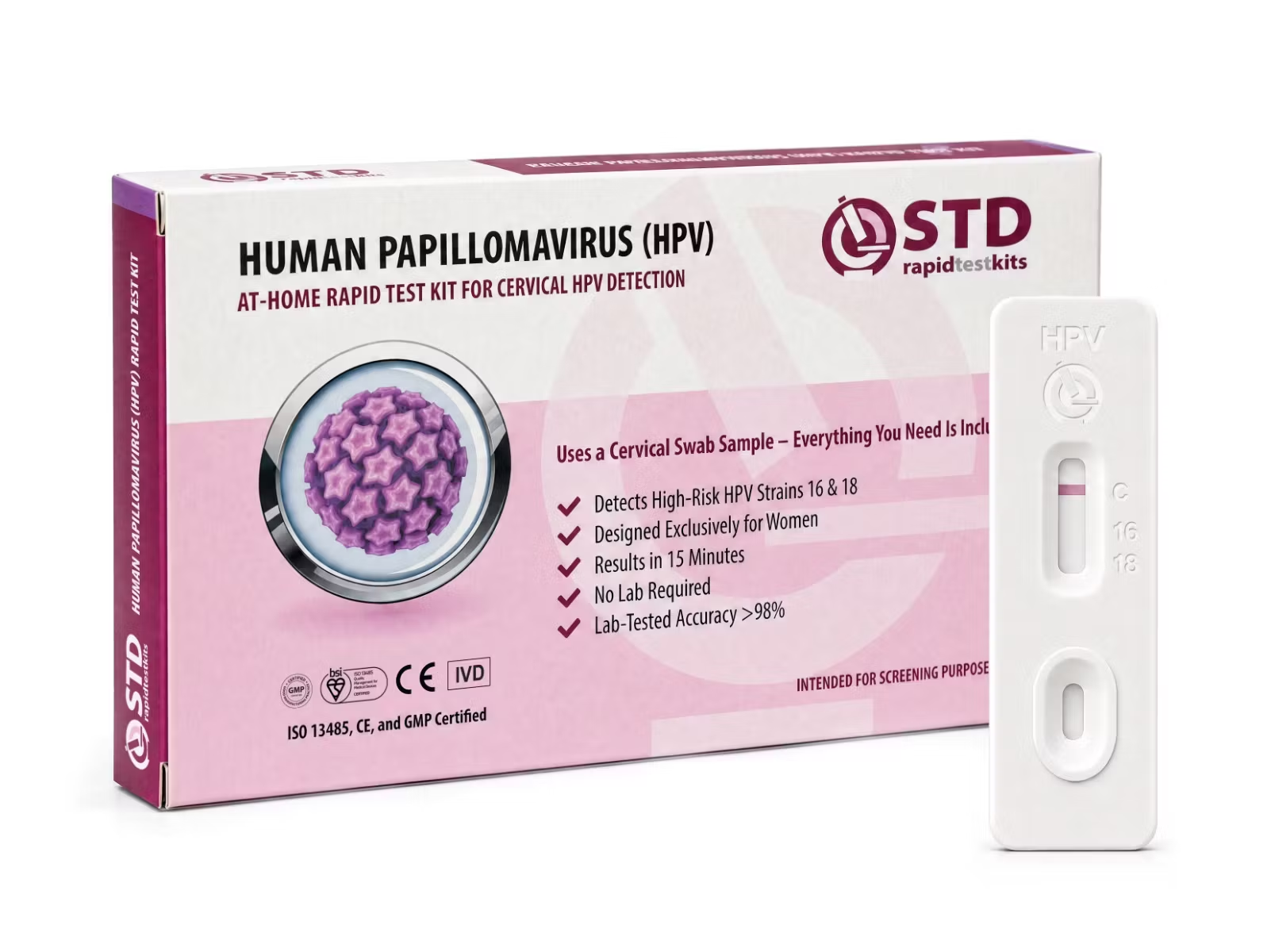
Testing for HPV at home uses a vaginal self-swab that detects high-risk strains. This article is published by stdrapidtestkits.com, which sells at-home STI test kits; we recommend products only when they fit the reader's concern, not on commercial grounds. Our at-home HPV rapid test is validated for vaginal sampling only. Male readers concerned about HPV exposure should see a clinic for evaluation; no validated male home-test for HPV is currently on the market.
Our at-home HPV rapid test uses a vaginal self-swab and is validated for women only. If you are a male reader who has had a possible HPV exposure, see a clinician for assessment; there is no validated male home-test for HPV that we are aware of.
Herpes via fingers
Herpes simplex virus comes in two main types. HSV-1 has historically been associated with oral cold sores; HSV-2 with genital infections. The distinction has blurred over the past two decades because both types can infect either anatomical site through contact. According to the WHO herpes simplex virus fact sheet, about 64 percent of the world's population under 50 carries HSV-1, often acquired in childhood, and a smaller though significant share carries HSV-2.
Herpes transmits through direct contact with infected skin, mucous membranes, or body fluids during active viral shedding. Shedding can also happen without any visible sore, which is why a meaningful share of transmissions occur during asymptomatic periods when the carrier has no idea they are contagious in the moment; the MedlinePlus genital herpes overview describes this same pattern ("the virus can spread even when sores are not present").
For fingering, the relevant scenarios look like this:
- Hand-to-genital transfer when the giver has an active outbreak elsewhere on their body and recently touched the lesion. A cold sore on the lip touched a few minutes before fingering, for example, is a plausible if uncommon transmission scenario.
- Genital-to-finger-to-genital transfer between two people, where one partner has genital HSV (with or without symptoms) and the same hand then touches the second partner shortly afterwards.
- Self-inoculation from one's own genitals to another body site, including via hands that touched a lesion. This is the mechanism behind herpetic whitlow, a herpes infection of the finger itself.
The risk is meaningfully lower than for direct genital-to-genital contact during an outbreak, though it is not zero. Peer-reviewed sexual-health journals have published case reports of finger-mediated HSV transmission, especially in scenarios involving active oral or genital lesions.
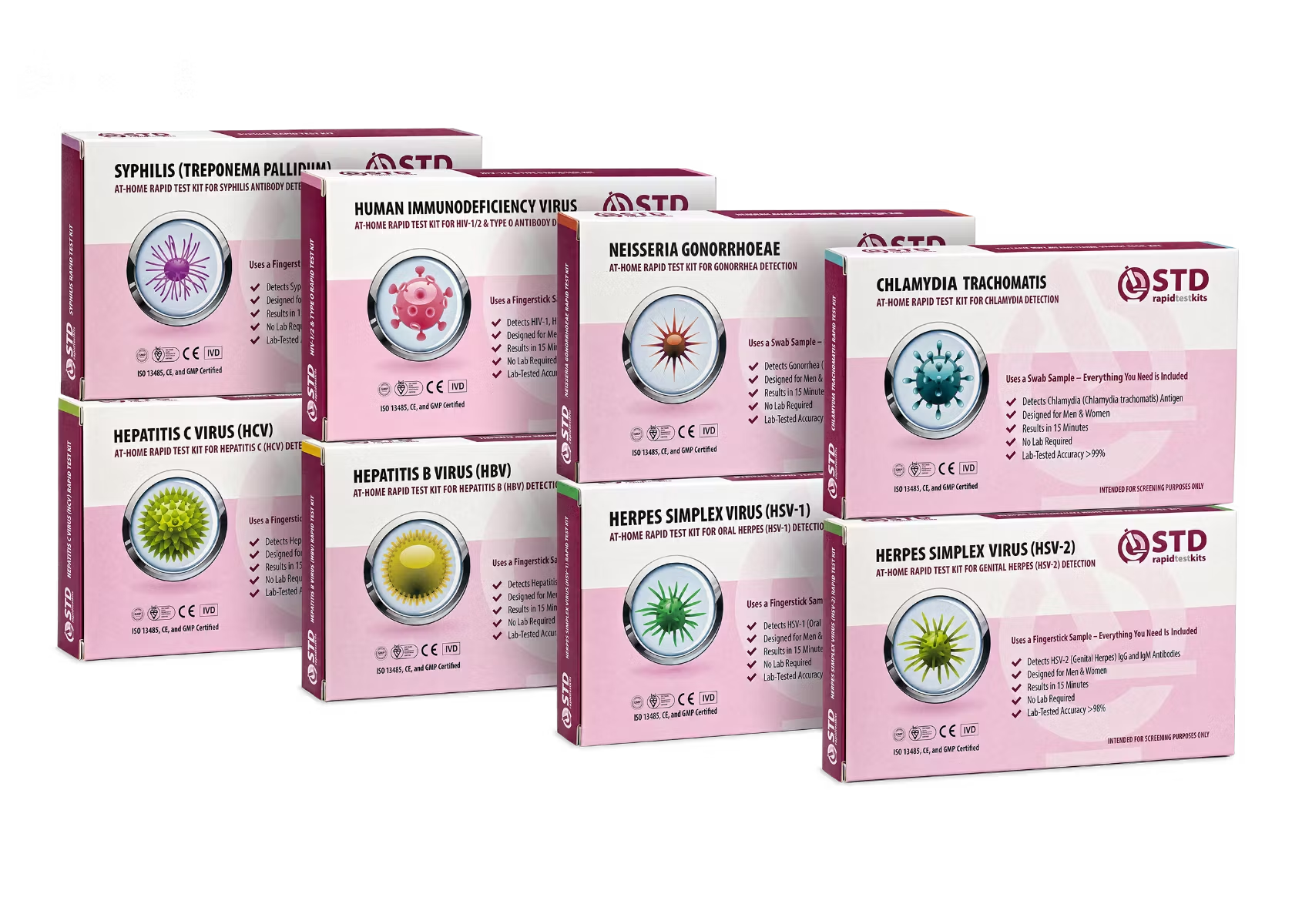
Testing for HSV at home uses a fingerstick blood antibody test. A positive result indicates past exposure and seroconversion; it does not diagnose an active outbreak on its own. HSV antibody blood tests need roughly 12 weeks after exposure to become reliably positive, because seroconversion can take that long. Testing earlier risks a false-negative because antibodies have not yet built up. Our HSV-2 home test detects HSV-2 antibodies; we also offer a separate HSV-1 test and a combined panel that covers both types. If you have an active lesion you want identified right now, a clinic visit for a swab and PCR test is the right tool, since blood antibody tests answer the question of past exposure rather than diagnosing a specific sore.
If a finger or thumb develops painful clustered blisters one to two weeks after sexual contact, especially around a hangnail or cuticle, see a clinician promptly. Herpetic whitlow is HSV infection of the finger and looks like a spreading bacterial infection, but the treatment is antiviral, not antibiotic. Misdiagnosis as a paronychia (a bacterial nail-fold infection) is common, and an antibiotic course will not help.
Chlamydia, gonorrhea, and trichomoniasis via fingers
Chlamydia, gonorrhea, and trichomoniasis (technically a protozoan parasite, though it patterns with the bacterial group for transmission) are the three STIs that show up most often in screening guidelines for sexually active people. The CDC reports millions of new cases per year for the first two combined, with younger adults disproportionately affected.
Untreated chlamydia and gonorrhea are the two bacterial STIs most associated with long-term reproductive consequences: pelvic inflammatory disease and fallopian-tube scarring in women, epididymitis in men. A single treated infection rarely causes permanent damage; the risk accumulates with repeated undetected episodes, which is the core argument for periodic screening even after low-risk exposures like fingering.
Unlike HPV and herpes, these pathogens do not survive well on dry skin or fingernails. They need a wet mucosal surface to establish infection, and they fade quickly when exposed on an open surface like a hand. Public-health bodies do not list fingering as a notable transmission route for any of the three, because the conditions a finger provides are wrong for these bugs.
Even so, occasional transmission has been documented. The plausible-but-uncommon scenario:
- A finger or hand with fresh genital fluid on it from an infected partner.
- Direct, immediate contact with a second partner's mucosal surface (vagina, anus, urethra).
- Microscopic abrasions or favorable tissue conditions on the receiving side.
Even when those conditions align, transmission efficiency is low compared to penetrative sex. A round of fingering after a hand has been washed, or after several minutes of air exposure, drops the theoretical risk close to zero.
Bacterial vaginosis (BV) and yeast infections also come up in conversations about fingering and "dirty hands." Technically neither is an STI: they are imbalances of the existing vaginal microbiome that can be triggered by anything that disrupts pH or flora, including introducing new bacteria from skin or saliva. One specific scenario worth flagging: anal fingering can introduce gut bacteria to the urinary tract or vagina if the same finger is then used for vaginal contact. Anal-to-vaginal finger transfer without washing between regions is a documented trigger for urinary-tract infections and bacterial vaginosis; worth a hand wash even though it is not an STI transmission route.
Testing for chlamydia and gonorrhea at home uses a self-collected swab (vaginal for women, penile for men). The CDC's gold-standard test in labs is a nucleic-acid amplification test (NAAT); home rapid tests use lateral-flow chemistry on the same swab sample, which is meaningfully different technology with screening utility rather than full diagnostic equivalence to a lab NAAT. A positive home result is worth confirming with a lab test and treating; a negative result during the right testing window is reassuring but not absolute.
For chlamydia or gonorrhea to transmit via a finger, three things typically need to align at once: fresh genital fluid on the hand from an infected partner, immediate contact with a second mucosal surface (vagina, anus, urethra) before the fluid dries, and microscopic tissue abrasions at the receiving site to give the bacteria a foothold. All three rarely combine in practice, which is why public-health bodies do not list fingering as a notable transmission route for either infection.
HIV via fingers: effectively zero
HIV transmission via fingering is, for practical purposes, not a documented route. HIV's biology makes this clear, and the explanation is worth knowing if this is a fear that has been sitting with you.
HIV is a fragile virus outside the body. It does not survive well on dry skin, does not survive long exposure to air, and does not penetrate intact skin. The outer layer of healthy skin, called the stratum corneum, is dense, dry, and inhospitable to most STI pathogens, HIV included. The routes that account for nearly all transmissions in the U.S., per the CDC's transmission risk categories, are unprotected vaginal or anal sex, sharing injection drug equipment, and (much less commonly today) mother-to-child during birth or breastfeeding.
For HIV to transmit via a finger, all of the following would need to hold:
- Fresh, infectious bodily fluid (blood, semen, vaginal fluid, rectal fluid) on the hand.
- A break in the receiving partner's mucosal surface or a fresh wound on the giving hand.
- Contact happening within a short enough window that the virus is still viable.
- High enough viral load in the fluid to actually establish infection.
In real-world conditions, these alignment requirements almost never combine in a fingering scenario. The CDC's own categorization of HIV transmission risks consistently lists manual sexual activity as not a meaningful route.
If your only exposure of concern is fingering, HIV testing is not necessary on the basis of that act alone. If the same encounter included unprotected oral, vaginal, or anal sex, then a window-period HIV test is appropriate. Fourth-generation antigen-antibody HIV tests detect most infections by about 45 days post-exposure, with conclusive results by 90 days for older test generations.
The CDC does not list manual sexual activity as a meaningful route of HIV transmission. If fingering was the only contact in your encounter, an HIV test is not indicated by that act alone. If the same encounter also included unprotected oral, vaginal, or anal sex, a fourth-generation HIV test is reliable by about 45 days post-exposure, with conclusive results by 90 days.
What dirty vs clean nails really change
The original framing of the question, "Can fingering with dirty nails give me an STD?", assumes that the dirt itself is the transmission vector. What clean nails change is more limited than the question suggests.
Most STI pathogens that can be transmitted via fingering (HPV, HSV) are present whether nails look clean or dirty. They live in skin cells and viral particles you cannot see. A freshly washed, neatly trimmed finger from someone with a current HPV infection still carries some HPV risk. A visibly grimy finger from someone with no STI exposure carries roughly zero STI risk, though it may carry non-STI bacteria that can disrupt vaginal pH.
What clean, short nails do change:
- Mechanical injury risk. Long or jagged nails cause microscopic tears in vaginal or anal mucosa. Those tears are entry points for any pathogen that happens to be present. Trimmed, smooth nails roughly eliminate this category of small wound.
- Bacterial transfer from environmental sources. Hands pick up a normal load of skin and environmental bacteria over the course of a day. Most are harmless. Some, when introduced into the vaginal canal in quantity, can trigger BV or yeast overgrowth. Handwashing reduces this load.
- Nail-bed reservoirs. Under-the-nail spaces hold more material than the rest of the finger and are harder to clean. For HPV specifically, viral DNA has been documented under fingernails of infected people. Trimming nails short reduces the under-nail surface area.
So the answer to "do clean nails matter?" is yes, but in a more limited sense than the question implies. They matter for reducing mechanical injury and lowering the non-STI infection load. They do not fully cancel out the small viral transmission risks that exist regardless of how clean a hand looks.
Short, smoothly filed nails with intact cuticles and no visible debris under the free edge accomplish two things at once: they remove the rough edges that cause microscopic mucosal tears, and they cut the under-nail surface area where everyday bacteria and (in HPV-positive people) viral DNA can sit. They do not sterilize the hand, and they do not pull viruses out of skin cells. Treat clean nails as a useful baseline, not as full STI prevention.
How to reduce the small risks that do exist
Mainstream public-health guidance converges on a short set of habits worth pulling together. None of them are heavy lifts. Most are already part of standard sexual-health advice; the value of seeing them collected is recognizing that one hygiene protocol covers most of the small risks discussed in this article.
- Check your hands before and after. Look for hangnails, fresh paper cuts, eczema patches, or post-manicure micro-tears. Visible breaks in skin are the single biggest variable that turns very-low-risk into low-risk.
- Wash hands with soap before and after genital contact, for at least 20 seconds. Plain soap and water is enough; skip scented sanitizer near genitals (the alcohol stings broken mucosa and offers no STI advantage over washing).
- Keep fingernails short and smoothly filed. A nail file after trimming removes the rough edges that cause microscopic tears.
- Don't move from anus to vagina without washing in between. Classic source of BV and UTI episodes after sex; unrelated to STIs but worth flagging.
- Use finger cots or disposable nitrile gloves when either partner has long nails, fresh cuts, visible symptoms, or a known active infection.
- Treat shared sex toys as fingers-extended. Wash with soap and water between uses, especially between partners; do not move a toy from anal to vaginal use without cleaning.
- Avoid contact with a partner's active cold sore or genital lesion, and ideally wait until any outbreak has fully resolved.
- Talk before, not after. Asking a new partner about recent STI testing is uncomfortable for about 30 seconds and then becomes normal.
- Get vaccinated against HPV if you are in the eligible age range. The single most effective lifetime intervention against HPV-related cancer.
When testing makes sense after a manual-sex exposure
The decision to test depends on what infection you are worried about and what the realistic transmission window looks like. A blanket "test after every encounter" recommendation is not useful; specific test choices make sense for specific exposures. Window periods (the time between exposure and a reliable test result) matter because testing too early produces false negatives.
- HPV: there is no same-day or short-window screening test for the virus itself in most clinical pathways. The most useful checkpoint is keeping up with cervical screening on schedule (every three to five years for most adults, with HPV co-testing increasingly the default per CDC guidance). An at-home HPV swab can detect current high-risk strains in vaginal sampling.
- Herpes: a blood antibody test makes sense roughly 12 weeks after the suspected exposure, since seroconversion can take that long. A swab of an active sore can confirm herpes immediately, but no swab can rule it out if no sore is present.
- Chlamydia and gonorrhea: detectable from roughly one to two weeks after exposure with laboratory NAAT testing. Rapid lateral-flow swabs at home work best after a similar window. The CDC suggests retesting at three months for everyone diagnosed, because reinfection is common.
- HIV: as discussed earlier, fingering alone is not an indication to test. If the same encounter included unprotected oral, vaginal, or anal sex, fourth-generation antigen-antibody tests give reliable results by 45 days post-exposure, with conclusive results at 90 days. Rapid antibody-only home tests are most reliable from about 12 weeks per the CDC.
- Syphilis: a blood test about three weeks after a suspected exposure begins to be reliable, with a conclusive window at 90 days.
- Hepatitis B and C: antibody tests are typically reliable from about six weeks to six months.
If the concern is "I had a manual-sex encounter with someone whose status I do not know, and I want a single broad answer," the practical move is a combined screening at the 6-to-12-week mark. Earlier testing is reasonable only if specific symptoms appear: sores, discharge, painful urination, finger blisters, or unexplained flu-like illness within a few weeks of exposure.
A note on test technology: at-home rapid kits use lateral-flow chemistry, which is quick and private but less analytically sensitive than the NAAT and antigen-antibody platforms used in labs. A negative home rapid result in the right testing window is reassuring; if symptoms persist after a negative result, a clinic confirmation with a NAAT or laboratory antigen-antibody test is the right next step. Combination panels are worth considering when an encounter has involved multiple risk modes.
| Infection | Earliest reliable test | Conclusive window | Test type |
|---|---|---|---|
| HPV | Routine cervical screening on schedule | Ongoing | Vaginal swab |
| Herpes (HSV antibody) | About 12 weeks | 12 weeks | Fingerstick blood |
| Chlamydia | 1 to 2 weeks | 2 weeks | Self-collected swab |
| Gonorrhea | 1 to 2 weeks | 2 weeks | Self-collected swab |
| HIV (4th-generation) | About 45 days | 90 days | Lab antigen-antibody |
| HIV (rapid antibody-only) | About 12 weeks | 12 weeks | Fingerstick blood |
| Syphilis | About 3 weeks | 90 days | Blood antibody |
| Hepatitis B / C | About 6 weeks | 6 months | Blood antibody |
If you are past the planning stage and worried right now
Sometimes the question that brought you to this article is not really "what is the risk?" It is "I had a sexual experience yesterday and I am spinning. What do I do?"
A few things help.
First, the 24-hour window after a sexual encounter is almost never long enough for any of the STIs in this article to produce real symptoms. Itchiness, redness, or a sense of "feeling off" within hours of fingering is more likely to be irritation, normal post-sex sensitivity, or your nervous system running anxious loops than an infection. Most STIs have window periods of weeks, never hours.
Second, you can plan a testing checkpoint without waiting to see if symptoms appear. The window-period guidance above gives you concrete days to mark on a calendar. The act of having a plan reduces the open-loop anxiety that drives the spiral.
Third, if you are spiraling for more than a few days and the rational reassurance is not landing, that is a sign your worry is anxiety-shaped rather than evidence-shaped. The information is here; if it is not reducing your worry, a brief conversation with a primary-care provider or sexual-health counselor will cover what an article cannot.
What to do next: matching concern to test
Do you have an active sore, unusual discharge, painful urination, or finger blisters right now?
Yes: See a clinician for a swab and PCR test of the lesion or symptomatic site. Swabs of active sores diagnose a current infection faster than home antibody tests.
Did the same encounter also include unprotected oral, vaginal, or anal sex?
Yes: Plan a combined screening panel at the 6-to-12-week mark. Book a fourth-generation HIV test at about 45 days post-exposure for the earliest reliable read.
Was fingering the only contact, with a partner whose status you do not know?
Yes: Test for chlamydia and gonorrhea from 1 to 2 weeks post-exposure with a self-collected swab. For HSV-2 baseline, take a fingerstick blood antibody test at 12 weeks. Keep cervical screening on schedule for HPV.
No: If fingering was your only contact and you and your partner have recent negative tests, no new testing is required on the basis of that act. Keep up with routine annual STI screening if you are sexually active.
Guidance only. A clinician can advise on your specific situation.
HPV is so common that nearly every person who is sexually active will get HPV at some time in their life if they don't get the HPV vaccine.
Frequently Asked Questions
- Can I get HIV from a hand job or fingering?
- No HIV test is indicated if manual sex was your only exposure. The CDC does not classify manual sexual activity as a meaningful HIV transmission route, and the alignment of conditions required for finger-mediated transmission (fresh infectious fluid on the hand, a deep open wound on either side, and immediate mucosal contact before the fluid dries) essentially never occurs in practice. If the same encounter also included unprotected oral, vaginal, or anal sex, a fourth-generation HIV test at 45 days post-exposure is the right tool.
- Do I need to test if I only did manual sex and nothing else?
- Only if a known-positive partner has disclosed HPV or herpes, or if you develop specific symptoms within the relevant window for those infections. If a new partner whose recent test status you do not know was involved, testing roughly two to three months later is a reasonable baseline regardless of symptoms. Otherwise, manual sex by itself does not justify routine screening.
- Does washing my hands afterwards undo the risk?
- It reduces but does not eliminate the risk. Washing during the contact window (before the next mucosal exposure) helps. Washing after the fact does not pull a virus back out of your tissue if transmission has already happened. For HPV especially, a single wash is not a full reset.
- Can I infect myself by touching my partner and then myself?
- Yes, in principle, especially for skin-contact infections. Touching an active herpes sore or genital wart and then touching your own genitals or eyes can move the virus across. This is the autoinoculation route and is uncommon but documented for HSV in particular. A quick hand wash between touching a partner and touching yourself effectively eliminates this small risk.
- Can fingering give me bacterial vaginosis or a yeast infection?
- Yes; both are well-documented after fingering, especially with unwashed hands or with fingers that have been in the anal area before vaginal contact. Neither is an STI, but both are real symptomatic problems and respond to standard over-the-counter or prescribed treatment.
- What if my partner had a cold sore on their lip and then fingered me?
- The risk is lower than from direct oral-to-genital contact, though not zero. If tingling, burning, or visible blisters appear at the contact site within 2 to 14 days, a clinic swab and PCR can identify whether the lesion is HSV-1. For baseline serostatus, a fingerstick blood antibody test at 12 weeks post-exposure is the reliable tool. A single hand-to-genital contact with a cold-sore carrier is low-probability but worth monitoring.
- What about shared sex toys used during fingering?
- Sex toys are a separate transmission route and one the CDC explicitly mentions. Bacterial and viral pathogens can survive on toy surfaces for short periods. The simple risk-reduction rules: do not share toys between partners without washing or covering with a fresh condom, do not move a toy from anal to vaginal use without cleaning, and clean toys with soap and water (or the manufacturer-specified product) between uses.
- Are gloves or finger cots actually worth using?
- For most casual fingering between low-risk partners with healthy hands and recent negative tests, they are usually unnecessary. They become genuinely useful when one partner has a known active infection, when fingers have fresh cuts or hangnails, during menstrual or anal fingering, or in a new relationship before mutual STI testing has happened. They are cheap, effective, and remove the entire hand-hygiene worry in one step.
- Can I get herpes on my finger?
- Yes, though it is uncommon outside specific risk groups. The condition is called herpetic whitlow and is most often documented in healthcare workers, dental staff, parents of young children, and infants who suck their thumbs, populations with frequent contact with other people's oral or genital secretions plus a higher chance of small skin breaks on the hand. For one-off sexual contact between adults with intact skin, the practical risk is low. If you develop painful clustered blisters on a finger one to two weeks after a contact event, see a clinician within a day or two; early antiviral treatment shortens the outbreak.
- Can I get pregnant from fingering?
- Pregnancy from fingering is extremely unlikely. Sperm needs to enter the vagina to reach an egg, and a finger does not carry enough viable sperm to make pregnancy plausible unless there is fresh ejaculate on the hand and that hand is then inserted vaginally within a very short window. The real-world risk in normal circumstances is close to zero. If this scenario specifically describes your concern, emergency contraception is available without prescription in most jurisdictions and is effective within 72 to 120 hours of the event.
- U.S. Centers for Disease Control and Prevention. STD information, transmission overview, and screening guidance for chlamydia, gonorrhea, syphilis, and trichomoniasis.
- U.S. Centers for Disease Control and Prevention. HPV fact sheet for adults: transmission, lifetime prevalence, cancer associations, and vaccination guidance through age 26 with shared clinical decision-making through 45.
- U.S. Centers for Disease Control and Prevention. HIV transmission risk categories, dry-skin survival, and clinically meaningful exposure routes, including the negligible classification of manual sexual activity.
- World Health Organization. Herpes simplex virus fact sheet: HSV-1 and HSV-2 prevalence, transmission routes, and clinical presentation.
- U.S. National Library of Medicine, MedlinePlus. Genital herpes overview: transmission, asymptomatic viral shedding ("the virus can spread even when sores are not present"), and diagnostic methods.
- U.K. National Health Service. Sexually transmitted infections (STIs): symptoms, transmission, and testing pathways.
