Published: September 2025 | Last updated: May 2026 | Editorial review and quality control: Martina N.
Pulling out is one of the oldest “just in case” strategies in the playbook. It feels intentional. It feels like a boundary. And for a long time, plenty of people have been told, or have quietly assumed, that as long as nothing finishes, nothing transmits.
That assumption doesn’t hold up. Withdrawal is a contraception method, not an infection-prevention method. Pre-ejaculate, the small amount of fluid that exits the penis before orgasm, can carry live pathogens for several common sexually transmitted infections. And many of the infections people worry about most don’t need any fluid at all to spread; skin contact and friction do the work on their own.
If you’re reading this because something happened recently and you want a clear answer, here it is: yes, pulling out can still expose you to STIs. The rest of this article walks through what to do about that, starting with what’s actually in pre-cum and ending with how to test, what windows to wait, and how to bring it up with a partner without making it a confrontation.
Key Takeaways
- Pre-ejaculate can carry chlamydia, gonorrhea, HIV, and trichomoniasis. Herpes and HPV transmit through skin contact alone, no fluid required.
- Pulling out reduces some pregnancy risk; it does not reduce STI risk. If exposure is on your mind, the right move is to test on the right window, not to wait for symptoms.
Why pulling out doesn’t stop STIs
Withdrawal is most often discussed as a backup form of birth control. Even in that role, public-health bodies are clear that it has a high failure rate compared with condoms or hormonal contraception. As a strategy against infection, it has an even bigger problem: it was never designed for that job.
Sexually transmitted infections don’t need ejaculation to move between people. They need access to mucous membranes, tiny breaks in the skin, or skin-to-skin contact in the genital area. According to the U.S. Centers for Disease Control and Prevention, STIs spread through vaginal, anal, and oral contact, and several spread through close genital contact even without penetration. Pulling out interrupts ejaculation. It does not interrupt any of those routes.
That gap matters because pre-ejaculate is already in play before the moment most people think of as “sex.” From the first contact onward, fluid and skin are doing what they do, and pathogens travel with them when they’re present.
Withdrawal interrupts ejaculation. STI transmission happens through fluid contact, mucous-membrane contact, and skin-to-skin contact in the genital area. Pulling out does not prevent any of those routes.
What’s actually in pre-ejaculate
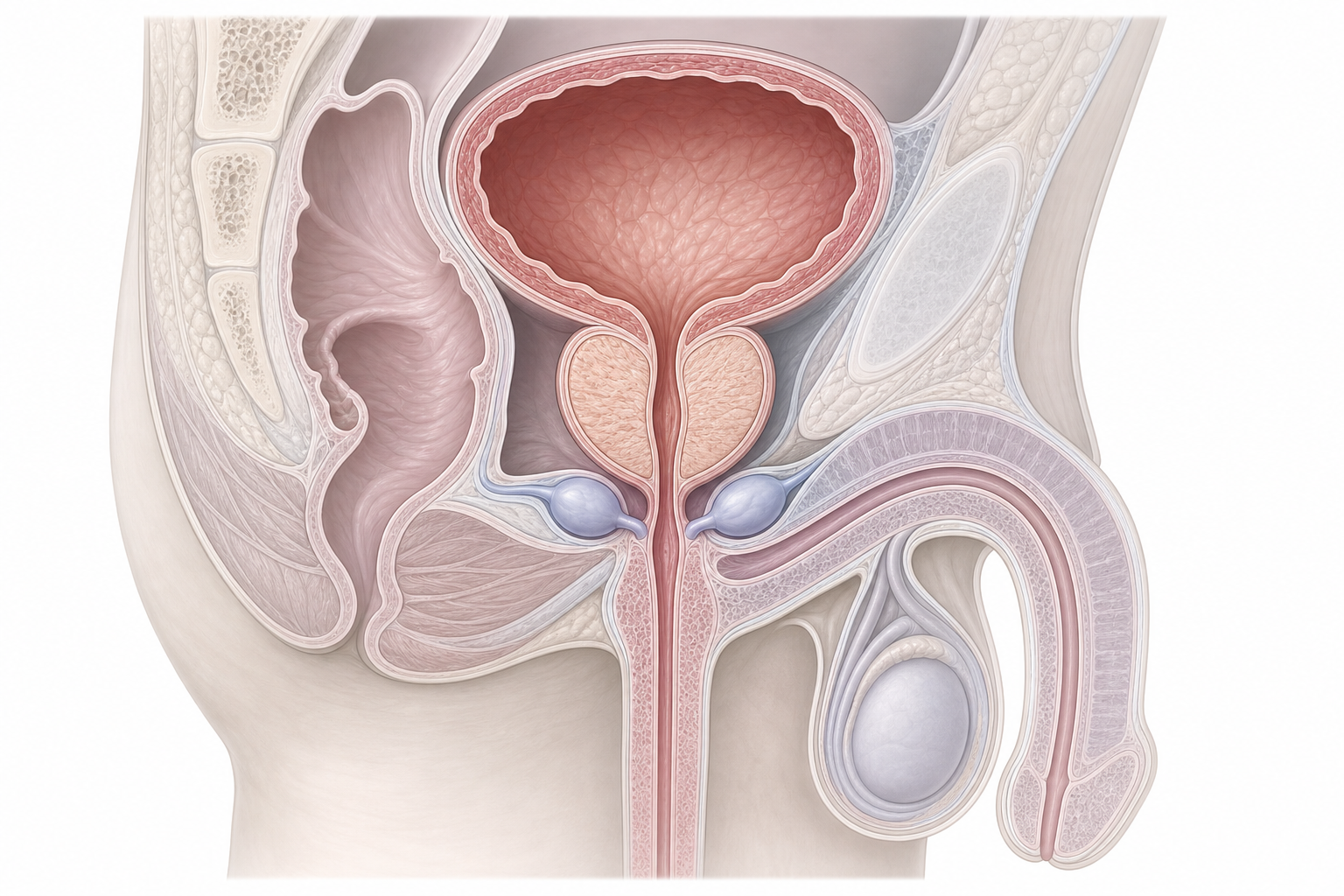
Pre-ejaculate, sometimes called pre-cum, is a clear fluid produced mainly by the bulbourethral glands (also called Cowper’s glands), small structures that sit just below the prostate. Its job is to lubricate the urethra and neutralize residual acidity from urine before semen passes through. It is not, on its own, supposed to carry sperm.
What it can carry is pathogens. The CDC notes that pre-ejaculate can contain HIV, typically at lower concentrations than semen, and that bacterial STIs such as chlamydia and gonorrhea can be present in genital secretions before ejaculation. Trichomoniasis, a parasitic infection, can also be transmitted through these secretions.
Then there are the infections that don’t care about fluid at all. Herpes simplex (HSV-1 and HSV-2) and human papillomavirus (HPV) move through skin-to-skin contact in the genital area, including during asymptomatic viral shedding. Pulling out cannot prevent that; only barrier protection over the contact area meaningfully reduces it, and even barriers don’t fully cover the skin involved.
| Infection | Can be present in pre-ejaculate? | Transmits without ejaculation? |
|---|---|---|
| Chlamydia | Yes | Yes |
| Gonorrhea | Yes | Yes |
| HIV | Yes (lower titer than semen) | Yes |
| Trichomoniasis | Likely | Yes |
| Herpes (HSV-1, HSV-2) | Skin contact is the main route | Yes |
| HPV | Skin contact is the main route | Yes |
| Syphilis | Through contact with a chancre or rash | Yes |
What surveillance data tells us about pre-cum exposure
Public-health surveillance is one of the more useful lenses here, because it captures what actually happens at the population level rather than what people assume. The picture is consistent across CDC, NHS, and WHO reporting: a large share of new infections turn up in people who report “careful” sex, including outercourse and withdrawal, and a large share of infected people have no symptoms when they test.
The CDC reports that young people aged 15 to 24 account for a substantial portion of new STI diagnoses each year, despite making up a much smaller share of the sexually active population. Misconceptions about what counts as “safe” practice are part of the reason. The UK’s NHS notes that several STIs, including herpes and syphilis, can pass when genital areas touch even without penetration.
None of that is meant to be alarming. It’s context. If you have been relying on pulling out, especially without ever testing, the data simply says you have not been protected from infection in the way you may have thought you were. That can be addressed by testing once, on the right window, rather than living with permanent uncertainty.
People aged 15 to 24 account for a disproportionate share of new STI diagnoses in the U.S. each year, despite being a smaller fraction of the sexually active population. Reliance on withdrawal as if it were infection prevention, rather than only pregnancy prevention, contributes to the gap.
When to test after pulling out
Maybe it’s been two days. Maybe it’s been a week. The first thing to know is that testing too early is the most common reason readers end up with a falsely reassuring negative. Each STI has a window period: the time between exposure and when a test can reliably detect infection. A test taken inside that window may miss an infection that’s actually present.
The good news is that the windows for the most common bacterial STIs are short. The longer windows belong to viral infections like HIV and herpes, where antibody-based tests need time before seroconversion is detectable. The table below summarizes typical earliest and recommended windows from current public-health guidance.
| Infection | Earliest reasonable test | Recommended testing window |
|---|---|---|
| Chlamydia | Around 7 days | 14 days post-exposure |
| Gonorrhea | Around 7 days | 14 days post-exposure |
| Trichomoniasis | 5 to 7 days | Around 2 weeks |
| HIV (4th-gen Ag/Ab) | Around 18 to 21 days | 45 days, with confirmation at 12 weeks |
| Syphilis | 3 weeks | 6 to 12 weeks |
| Herpes (HSV antibody blood test) | 10 to 14 days if symptomatic | 12 to 16 weeks for asymptomatic seroconversion |
| HPV | No routine screening test for men | Cervical screening for women on standard intervals |
How accurate are at-home STD tests after pre-cum exposure?
If you’re comparing options, accuracy depends on three things: when you test relative to the window period, what sample type the test uses, and the underlying test technology. There are three broad paths most people consider after a pre-cum exposure: rapid at-home tests, mail-in lab kits, and clinic visits.
It’s worth being precise here. At-home rapid tests, including the ones sold on this site, are lateral-flow immunoassays. They work the same way a home pregnancy test does: a sample passes through a strip and binds to antibodies that produce a colored line if the target analyte is present. Laboratory testing for chlamydia and gonorrhea is typically a NAAT (nucleic acid amplification test), a different and more sensitive technology. The two are complementary. A positive on a rapid test is worth confirming at a clinic; a negative on a rapid test, taken after the correct window, is reassuring but does not match the analytical sensitivity of a lab NAAT.
| Method | Result speed | Privacy | Sample type |
|---|---|---|---|
| At-home rapid test (lateral flow) | 10 to 20 minutes | High | Self-collected swab or fingerstick blood |
| Mail-in lab kit (NAAT) | 1 to 5 days after the lab receives it | High | Self-collected swab or blood spot |
| Clinic-based testing | Same day to several days | Lower (chart record) | Clinic-collected swab, urine, or blood |
Where pre-ejaculate actually comes from
One reason pre-cum gets misunderstood is that very few people learn its anatomy in school. Most sex education focuses on ejaculation, sperm, and pregnancy. The pre-ejaculate part of the picture is treated as a footnote, if it’s mentioned at all.
The fluid is produced primarily by the bulbourethral glands, also known as Cowper’s glands. They sit just below the prostate, on either side of the urethra. When a person becomes sexually aroused, those glands secrete a clear, slightly viscous fluid into the urethra. That’s pre-ejaculate. It exits the tip of the penis as arousal continues, often without the person noticing.
The clinical relevance is straightforward. If a person has an active genital infection, that infection’s pathogens may be present in the urethra at the time pre-ejaculate is being secreted. The fluid effectively carries them out.
Why pulling out is still so popular, even though it doesn’t prevent STIs
If withdrawal isn’t protective against infection, why does it remain such a common fallback? Part of the reason is education, part is psychology. School-based sex education in many regions still treats pregnancy prevention and STI prevention as the same conversation, when they’re actually two different problems with two different toolkits. People walk out with strategies for one and assume they cover the other.
There’s also a comfort factor. Pulling out feels intentional. It feels like a choice, an active form of care, in a way that going completely unprotected doesn’t. That sense of having done something can crowd out the question of whether the something done actually addresses the risk that’s on the table.
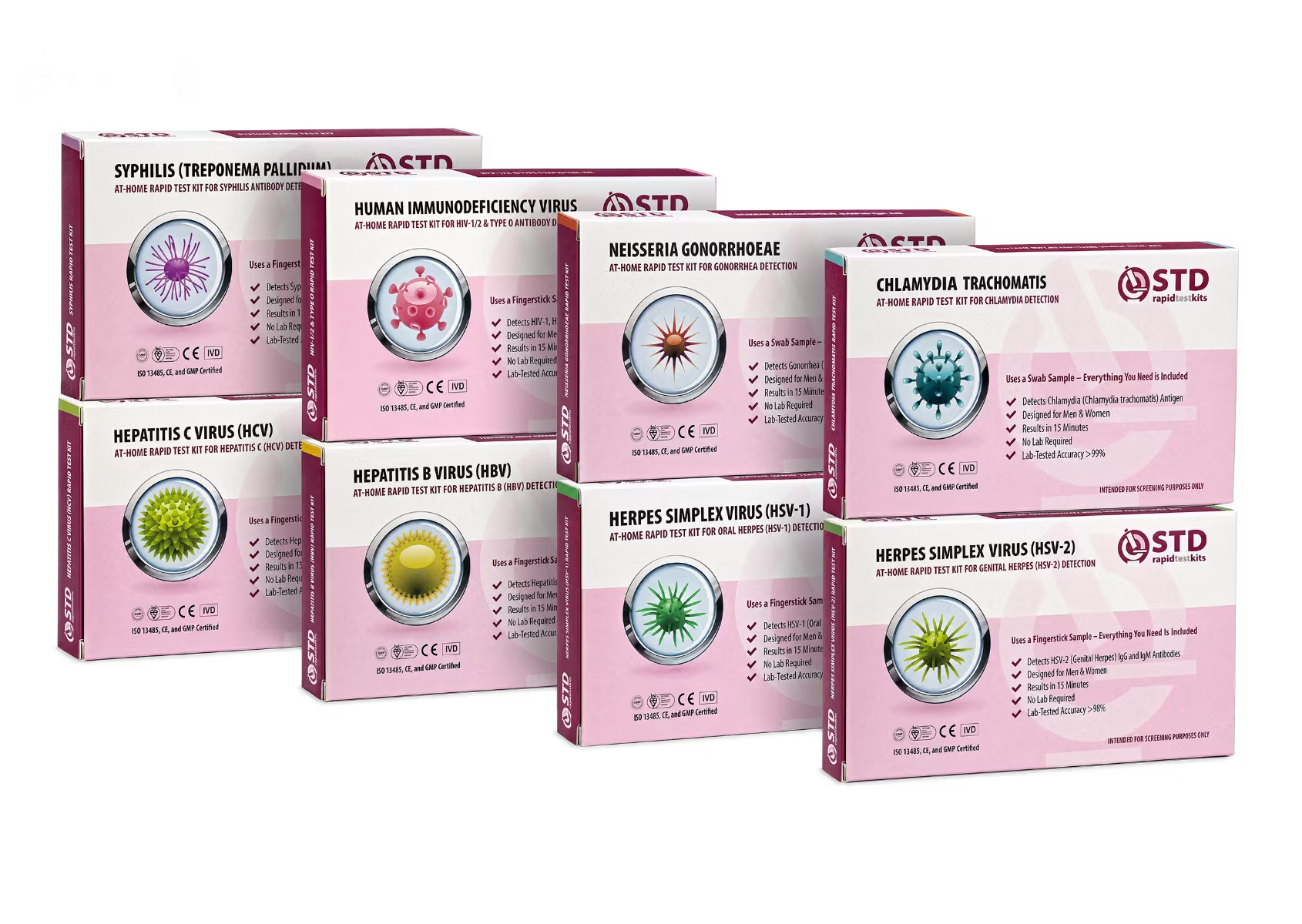
The way out of that pattern isn’t to pile guilt on top of an already imperfect situation. It’s information. If pulling out has been part of your last few months, an at-home screen for the most common STIs is a low-cost way to convert uncertainty into a known result. The 8-in-1 panel below covers the bacterial and viral infections most relevant after a pre-cum exposure.
The reality of asymptomatic infections
Most STIs do not announce themselves. The World Health Organization notes that the majority of STIs are asymptomatic or produce only mild symptoms that go unrecognized, particularly in their early stages. That is true for chlamydia, where most infections in men and women cause no obvious symptoms; for trichomoniasis, where the majority of infections in people with a vulva are silent; and for HPV, where most infections clear without ever producing a visible wart or detectable lesion.
The implication is uncomfortable but useful: feeling fine is not the same as being uninfected. The only reliable way to know is to test, on a sensible interval, regardless of whether you have noticed anything. For most sexually active adults with new or multiple partners, the CDC recommends at least annual screening for chlamydia and gonorrhea, and a baseline HIV test with intervals depending on individual risk.
If a clinic visit feels like a barrier (cost, time, embarrassment, scheduling), an at-home kit is a reasonable substitute for routine screening. It does not replace clinic-based confirmation if a result is positive, but it removes most of the friction that keeps people from testing in the first place.
Chlamydia is asymptomatic in the majority of infected people. Trichomoniasis is silent in around 70 percent of women who carry it. Most HPV infections clear without ever producing a visible wart. Without testing, an infection can remain undetected and transmissible for months.
What if you already tested negative?
A negative result is reassuring only if it was taken at the right time. The most common pattern this site sees in user questions is testing inside the window period, getting a negative, and then wondering whether to retest. The answer almost always depends on which infection you tested for and how many days had passed.
If you tested on day 5 after a pre-cum exposure, that’s genuinely too early for chlamydia or gonorrhea on most rapid platforms; a follow-up test at the 14-day mark is reasonable. If you tested for HIV inside three weeks on a 4th-generation Ag/Ab platform, a confirmation test at 45 days, with a final at 12 weeks for full reassurance, lines up with current CDC guidance. For HSV antibody testing, the window stretches further: most clinicians count seroconversion as detectable from 12 to 16 weeks after exposure.
None of this is overkill. A second test at the right window is what closes the loop on an early negative. An early negative tells you to retest at the full window, and that’s what makes the result definitive.
When to retest after an early negative
- If you tested before day 14 for chlamydia or gonorrhea, retest at the 14-day mark.
- If you tested before 45 days for HIV on a 4th-generation Ag/Ab platform, schedule a confirmation at 45 days and a final test at 12 weeks.
- If you tested for HSV antibodies inside 12 weeks, retest at 12 to 16 weeks for asymptomatic seroconversion.
How to bring this up with a partner
The conversation tends to be the harder part. Many people put off testing because they don’t want to imply distrust, or because they aren’t sure how to raise the topic without making the encounter feel transactional. A few framings work better than others.
The first is to make it about both of you, not about an accusation. “I was reading that pulling out doesn’t cover STIs the way I assumed it did. I want to test, and I’d like to do it together if you’re open to that.” That phrasing centers shared risk and shared action, which is closer to how STI exposure actually works.
The second is to be specific about timing. “I’d like to test in two weeks, since most of the rapid tests need at least that long to be accurate” gives a partner a concrete plan rather than an open-ended ask. The 6-in-1 combination kit below is a common choice when two people want to screen together for the most common bacterial and viral infections in one go.
What happens if a test comes back positive?
A positive result is information you can act on. STIs are common, and most are highly treatable. Chlamydia, gonorrhea, syphilis, and trichomoniasis are bacterial or parasitic and resolve with a course of antibiotics or antiparasitics, typically prescribed after a confirmatory test. Hepatitis B has a vaccine and effective antiviral treatment if it becomes chronic. Hepatitis C is now curable for most people with direct-acting antiviral therapy. HIV is managed with antiretroviral therapy that, taken consistently, brings viral load to undetectable levels and effectively eliminates onward sexual transmission. Herpes is managed with antivirals and, for most people, is a manageable rather than disabling diagnosis.
The two practical steps after a positive result are confirmation and partner notification. A reactive at-home rapid test is a screen, and the next step is clinic confirmation with a NAAT or other lab-grade test before treatment begins. Then notify recent partners so they can test and, if needed, get treated. Anonymous notification services exist for people who don’t want to make the call themselves.
Anyone who is sexually active can get an STI. Many people with STIs do not know they have one because they have no symptoms.
Knowledge over assumptions
Pulling out feels like the responsible choice in a moment when full protection wasn’t available. As a way to reduce some pregnancy risk, it has a measurable effect. As a way to reduce STI risk, it does not. Pre-ejaculate can carry pathogens, skin contact carries others, and the silence of an asymptomatic infection isn’t evidence that nothing happened.
The good news is that the rest of the loop is short. Testing at the right window, confirming at a clinic if anything comes back reactive, and giving a partner specifics rather than vague reassurance are the steps that close the loop. Repeat the screen on a sensible interval if you have new or multiple partners. None of this requires a clinic visit on day one, and all of it turns an open question into a known answer, which is what most readers actually came here for.
Frequently asked questions
- Can you actually get chlamydia from pre-cum?
- Yes. Chlamydia bacteria can be present in the urethra of an infected person, and pre-ejaculate flowing through the urethra can carry them out. Transmission can occur the moment that fluid contacts vaginal, anal, or oral tissue, regardless of whether ejaculation followed. The CDC lists genital secretions before ejaculation as a recognized route for bacterial STIs.
- If I didn’t feel anything, doesn’t that mean I’m fine?
- No. Most STIs are asymptomatic or produce only mild symptoms in their early stages, particularly chlamydia, gonorrhea, and trichomoniasis. The absence of pain, discharge, or visible bumps is not evidence of being uninfected. The only reliable way to know is to test on the appropriate window for the infection you’re worried about.
- I pulled out. Why would I still need to get tested?
- Because pulling out is a contraception strategy, not an infection-prevention strategy. STIs transmit through fluid contact, mucous-membrane contact, and skin-to-skin contact in the genital area. Withdrawal interrupts ejaculation; it does not interrupt any of those routes. If you have not been tested since your most recent new partner, it’s worth doing once.
- What’s the best time to test after pre-cum exposure?
- Wait two weeks for chlamydia and gonorrhea, which covers most rapid-test windows. HIV needs closer to six weeks on a 4th-generation Ag/Ab test, with a 12-week confirmation for full reassurance. Herpes antibody tests lag the most: allow 12 to 16 weeks before treating a negative as definitive. If anxiety is high, an early test at week one is fine as a check-in, as long as you follow up at the recommended window.
- My partner says they’re “clean.” Is that enough?
- Self-report is meaningful but it isn’t a test result. Many STIs run silent for months or longer, so a partner can be honest about feeling fine and still be infected. The substantive answer is a recent test, ideally within the last few months and after any new partners. Either of you can order an at-home kit and screen together.
- If my test comes back negative, am I in the clear?
- Only if the test was taken after the recommended window for the infection in question. An early negative inside the window can be a false reassurance. For peace of mind, retest at the end of the longest relevant window, especially for HIV and herpes where seroconversion takes longer.
- Do at-home tests really work?
- Used correctly and on the right window, lateral-flow rapid tests provide reliable screening results for the most common STIs. They are not as analytically sensitive as laboratory NAAT testing, so a positive should be confirmed at a clinic. A negative on a properly timed rapid test is reasonable reassurance for routine screening purposes.
- Should I keep testing if I’m in a monogamous relationship?
- Once you’ve both tested at the end of the relevant windows from any prior partners, ongoing screening becomes optional in a closed monogamous relationship. Many clinicians still suggest annual screening for sexually active adults as a baseline, partly because dormant infections like HSV can become detectable later, and partly because life changes. Less often than during a more open period, but not necessarily zero.
How we sourced this article: We combined current guidance from leading public-health authorities, including the U.S. CDC, the UK’s NHS, the WHO, and NIH MedlinePlus, with the published clinical literature on pre-ejaculate composition and STI transmission. Where specific numbers vary by source, we either cited the most authoritative figure or rephrased the claim to what is genuinely supported. We do not provide clinical diagnosis or individual medical advice; for symptoms that concern you, see a licensed clinician.
- U.S. Centers for Disease Control and Prevention. Sexually Transmitted Infections: overview, transmission routes, and prevention guidance.
- U.S. Centers for Disease Control and Prevention. HIV: transmission routes, presence in pre-ejaculate and semen, and testing windows.
- World Health Organization. Sexually transmitted infections: epidemiology, asymptomatic carriage, and global burden.
- UK National Health Service. Sex activities and STI risk, including non-penetrative contact and skin-to-skin transmission of herpes and syphilis.
- NIH MedlinePlus. Sexually transmitted infections overview, including transmission, testing, and treatment of common STIs.
- UK National Health Service. Sexually transmitted infections (STIs): conditions overview, symptoms, and screening.
