
Published: October 2025 | Last updated: May 2026 | Editorial review and quality control: Martina N.
Can you get an STD from bestiality?
No. Chlamydia, gonorrhea, syphilis, HIV, herpes, and HPV are human-adapted infections that do not transmit through sexual contact with animals. The realistic post-exposure concern is a small set of zoonotic infections, such as brucellosis, leptospirosis, and rabies, which need a clinician rather than an at-home STI kit.
Bestiality, defined as sexual contact between a human and an animal, is illegal in most U.S. states and across most of Europe under animal-cruelty statutes. Animals cannot give informed consent, and the act causes documented physical and psychological harm. People who ask whether disease transmission is possible after this kind of contact usually have one of two questions in mind. The first is whether a person can actually catch a classic sexually transmitted infection (chlamydia, gonorrhea, or HIV, for example) from an animal. The second is what other infections might cross over during close intimate animal contact.
The short version is reassuring on the first question and specific on the second. Classic STDs are species-specific to humans and do not transmit through sexual contact with animals. A small set of zoonotic infections (brucellosis, leptospirosis, Q fever, rabies, certain gastrointestinal organisms) are real concerns that can transfer through close animal contact, and those need a clinician's evaluation rather than an at-home STI kit. The longer version below covers the biology, the testing logic, the legal context, and the support resources for the several audiences who land on this question: people processing a recent exposure, survivors of childhood or coercive abuse who still carry the fear that something was passed at the time, and people in veterinary, livestock, or rural work where unusual close-contact exposures sometimes happen.
Key Takeaways
- Classic STDs (chlamydia, gonorrhea, syphilis, HIV, HPV, herpes) are species-specific to humans and do not transmit through sexual contact with animals. The realistic post-exposure concern is zoonotic infection, not STI transmission.
- Zoonotic pathogens such as brucellosis, leptospirosis, Q fever, rabies, and several gastrointestinal organisms can cross between species through bites, mucosal contact, or contaminated body fluids. These need a clinician, not an at-home STI test.
What zoonosis means, and why "STD" is the wrong question
A zoonotic infection is one that naturally transmits between vertebrate animals and humans. Rabies, brucellosis, salmonellosis, and avian influenza are well-known examples (MedlinePlus: animal diseases and your health). A sexually transmitted infection (STI), by contrast, is a pathogen that has evolved to spread between humans through sexual contact. The two categories sit in different parts of the public-health map: one tracks pathogens that spill over from animals, the other tracks pathogens adapted to spread between people.
The CDC frames zoonoses through its One Health program, which treats human, animal, and environmental health as connected (CDC One Health). The program emphasizes that a majority of known human infectious diseases can spread from animals, and that most newly emerging diseases originate from animal reservoirs. That broad category includes bacteria, viruses, and parasites that move between species through bites, scratches, contaminated food or water, respiratory droplets, and, in a small number of cases, mucosal contact.
What zoonosis is not, however, is a category that contains the classic STDs. Chlamydia trachomatis, Neisseria gonorrhoeae, Treponema pallidum (the cause of syphilis), and human immunodeficiency virus have all evolved to live in human tissue and to spread between humans. Their animal relatives exist (Chlamydia psittaci infects birds; simian immunodeficiency virus circulates in nonhuman primates), but they are different organisms with different host ranges and different clinical syndromes.

Which zoonotic diseases pose the most realistic risk from animal contact
Several zoonotic pathogens can transfer through close contact with animals (their blood, urine, feces, saliva, or mucous membranes). None are STDs in the human-to-human sense. They are infections that animals carry which can spill over to people. The list below covers the ones most relevant to a concern about close or intimate animal contact, drawn from CDC and WHO documentation.
- Brucellosis. A bacterial infection caused by Brucella species, typically contracted through unpasteurized dairy, raw meat, or direct contact with infected birthing fluids in livestock. Symptoms include fever, sweating, joint pain, and fatigue, often lasting weeks to months (CDC Brucellosis).
- Leptospirosis. A bacterial infection from Leptospira shed in animal urine, especially from rodents, dogs, and livestock. Transmission happens through contact between contaminated water or urine and broken skin or mucous membranes. Symptoms range from flu-like illness to liver and kidney involvement.
- Q fever. Caused by Coxiella burnetii, typically spread through inhalation of dust contaminated by livestock birthing fluids or, in rare cases, by direct contact. Symptoms resemble a flu with high fever and pneumonia.
- Rabies. A nearly always fatal viral encephalitis transmitted through the saliva of an infected mammal, almost always via a bite. Mucous membrane exposure to fresh saliva is a theoretical route documented in rare case reports, though it is not the usual path. If a bite has occurred, post-exposure prophylaxis at an emergency department is time-critical (CDC Rabies).
- Campylobacteriosis and salmonellosis. Bacterial gastroenteritis acquired through fecal-oral routes. Pets, especially reptiles, poultry, and puppies, are common reservoirs. Symptoms are diarrhea, abdominal cramps, and fever.
- Giardiasis and cryptosporidiosis. Parasitic gastrointestinal infections transmitted through fecal-oral exposure to contaminated water, surfaces, or hands. Both can pass between species.
- Psittacosis. Caused by Chlamydia psittaci, a different organism from the chlamydia that causes the human STI. Transmission is via inhaled dried droppings or respiratory secretions from infected birds, particularly parrots and pigeons.
Most of these transmission routes are oral, respiratory, or skin-to-broken-skin, not genital. The actionable health response after a worrying exposure is a primary care assessment covering fever, GI symptoms, joint pain, and bite wounds. A sexual-health workup is the wrong starting point for most of these pathogens.
| Infection | Type | How it typically transmits | STI-like symptoms? |
|---|---|---|---|
| Brucellosis | Bacterial (Brucella spp.) | Contact with infected animal fluids; raw dairy; rare mucosal transmission | Yes: fever, sweats, joint pain, sometimes genital pain |
| Leptospirosis | Bacterial (Leptospira) | Animal urine and broken skin or mucous membranes; contaminated water | Sometimes: fever, muscle pain, liver or kidney symptoms |
| Q fever | Bacterial (Coxiella burnetii) | Inhaled dust from livestock birthing fluids; rare direct contact | Sometimes: high fever, flu-like illness, pneumonia |
| Campylobacteriosis | Bacterial (Campylobacter) | Fecal-oral route; undercooked meat; close contact with infected animals | Sometimes: diarrhea, cramping, fever |
| Salmonellosis | Bacterial (Salmonella) | Fecal-oral; close contact with reptiles, poultry, livestock | Sometimes: diarrhea, fever, cramping |
| Giardiasis | Parasitic (Giardia) | Fecal-oral route; contaminated water; intimate fecal contact | Sometimes: GI upset, fatigue, bloating |
| Cryptosporidiosis | Parasitic (Cryptosporidium) | Fecal-oral route; contaminated water; intimate fecal contact | Sometimes: watery diarrhea, GI distress |
| Rabies | Viral | Saliva via bite or mucosal exposure | No, but uniformly fatal once symptoms appear; treat exposures urgently |
Why classic STDs do not transmit through animal contact
The pathogens that cause chlamydia, gonorrhea, syphilis, trichomoniasis, HPV, hepatitis B, and HIV are all adapted to human hosts. Their entry, replication, and onward transmission depend on receptors, immune evasion strategies, and tissue environments that are species-specific. Their proteins are tuned to bind human cell-surface receptors, their genetics evolved to evade human immune responses, and they replicate in human mucosal tissue while failing to survive in other host environments. That adaptation is a matter of biology: the cell-surface receptors and immune-evasion tricks a human pathogen depends on are absent in a dog, horse, or farm animal.
HIV is the most common worry in this category, and the reassurance is clear. Domestic animals such as dogs, cats, horses, and farm species do not carry HIV. They have their own viruses, none of which infect humans. The same logic applies to gonorrhea (Neisseria gonorrhoeae is human-only) and to syphilis (Treponema pallidum has subspecies in animals, such as Treponema paraluiscuniculi in rabbits, but the human venereal subspecies does not regularly cross over).
Naming overlaps can confuse readers. Chlamydia psittaci, which causes psittacosis in birds and rarely in humans, is genetically distinct from Chlamydia trachomatis, the organism behind the sexually transmitted infection. They share a genus name. They do not share host range or clinical syndrome. The same is true for several other genus-level overlaps in microbiology, which is why looking at the species name and the documented clinical syndrome matters more than the family name.
HIV itself evolved from simian immunodeficiency virus (SIV) through cross-species transmission events traced to the early twentieth century, jumps that occurred through blood contact during bushmeat hunting and that have not been observed in modern intimate animal contact (CDC HIV).
Animal exposure is not a credible HIV transmission route. If you also had recent human sexual contact you are anxious about, a fourth-generation HIV antigen-antibody test taken between 18 and 45 days after that contact gives a definitive answer for the human-contact side of the risk.
What testing actually makes sense after a concerning exposure
There is no published protocol specifically for post-bestiality testing, because the medical literature treats this category as a rarity rather than something requiring its own pathway. What does exist is solid guidance for zoonotic exposure and for sexual-health follow-up after any unusual contact. The right testing plan depends on what kind of exposure happened, what symptoms you do or do not have, and how long ago the event occurred.
For zoonotic infection concerns, see a clinician. Most of the zoonotic pathogens described above are tested through blood work, stool sampling, urine, or wound culture, all of which require a clinic, primary care office, or urgent care visit. At-home rapid tests do not cover zoonotic infections. If you have a bite wound, fever, joint pain, persistent diarrhea, or any sign of systemic illness in the days or weeks after exposure, that is the visit to make. Physicians are bound by confidentiality and have heard a wide range of histories.
For sexual-health concerns related to human partners, screening still makes sense. If the worrying exposure event overlapped with any recent human sexual contact, the standard CDC-aligned screen covers the high-prevalence STIs: chlamydia, gonorrhea, syphilis, HIV, and hepatitis B and C. An at-home STI test panel can screen for those common human infections, with any reactive result confirmed at a lab. Window periods vary. Chlamydia and gonorrhea become detectable on a swab from around two weeks after exposure. HIV becomes detectable from roughly 18 to 45 days on a fourth-generation antigen-antibody assay (CDC HIV). Syphilis becomes detectable from around three to six weeks on standard serology, and the NHS notes that some STIs can take up to seven weeks to show on a test (NHS: sexually transmitted infections).
For an exposure years ago without symptoms since, the testing question shifts. Late presentation of brucellosis is rare in people without ongoing animal exposure, and most parasitic infections clear or become detectable in the years that follow. A baseline full STI panel, with stool studies if any GI symptoms have ever appeared, usually closes the loop. Many people who test in that situation do so primarily for peace of mind, and a documented negative result delivers exactly the answer they came for.
Disclosure: this site sells the at-home rapid test kits described below. The testing guidance above applies whether you use our kits or any other.
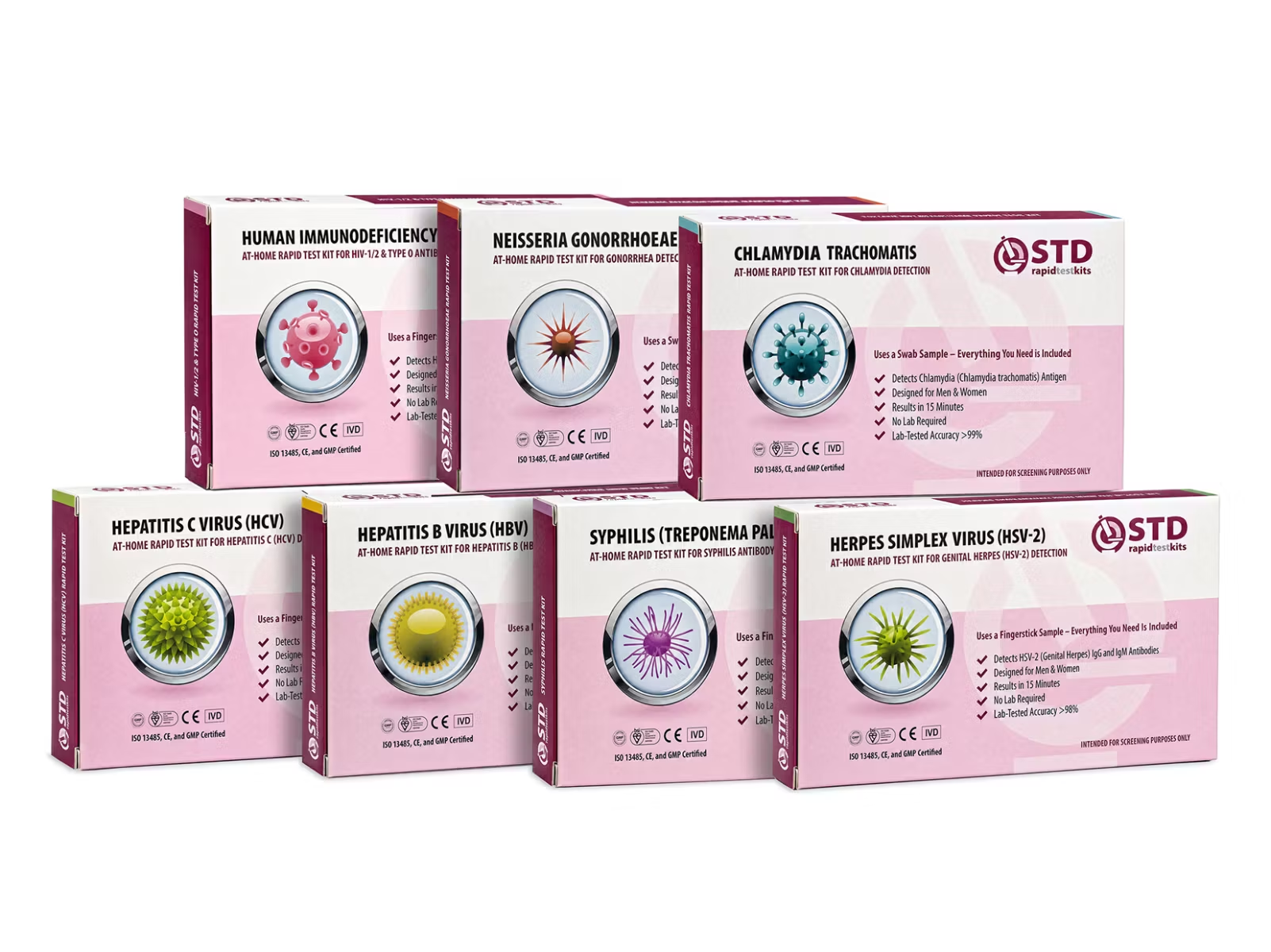
What an at-home rapid test can and can't do for this question
An at-home rapid test is built for a defined list of human STIs: chlamydia, gonorrhea, syphilis, HIV, herpes simplex, hepatitis B and C, trichomoniasis, and HPV depending on the kit. It cannot test for brucellosis, giardiasis, cryptosporidiosis, campylobacteriosis, rabies, or any of the other zoonotic conditions covered above. The chemistry is different, the antigens are different, and the validated sample types are different.
That has two practical consequences. First, a negative result on a human STI panel does not rule out a zoonotic infection. If symptoms persist after an animal exposure and the standard panel is clean, that result is useful, though incomplete. A clinician's workup with targeted bloodwork or stool studies is the right next step.
Second, a clear human STI panel can quiet a particular kind of anxiety. People who came of age fearing HIV or herpes from an unusual exposure often need that specific reassurance even after a clinician has told them the human-STI route from animals is not real. The lab evidence on a personal report card lands differently than a statistic in a textbook. There is no harm in running the panel, as long as expectations are calibrated: it answers the human-STI question, not the zoonosis question.
Our at-home rapid kits are lateral-flow immunoassays. They use the same sample type as laboratory NAATs (self-collected swabs for chlamydia and gonorrhea, fingerstick blood for HIV and syphilis), though the chemistry is different from lab molecular tests. Most return a result in roughly 15 to 20 minutes. A positive result is a screening signal, not a confirmation, and a follow-up confirmatory test at a clinical lab is the right next step. A negative result inside the proper window is reassuring. We do not sell tests for brucellosis, rabies, Q fever, leptospirosis, or other zoonotic infections; those require a clinic visit.
At-home rapid kits test for human STIs only. A negative result does not rule out brucellosis, leptospirosis, rabies, or other zoonotic infections. Those require a clinician and targeted lab work (blood cultures, stool studies, wound culture, or serology depending on the suspected pathogen).
Privacy, cost, and choosing how to test
For many readers, the biggest barrier to testing after this kind of exposure is not the price of a test. It is visibility. A clinic check-in, a pharmacy pickup, a lab requisition with a stigmatizing diagnosis code: each step is a place where someone else might see what is happening. Discretion is often the difference between getting tested and putting it off.
At-home rapid kits are built for that need. Shipping arrives in plain packaging, sample collection happens in private, and results stay with the person who tested. The cost is a flat upfront price with no clinic visit, no copay, and no insurance claim that later surfaces on a shared statement. The trade-off is analytical sensitivity: at-home rapid kits use lateral-flow chemistry, which is less sensitive than the NAAT or PCR testing a laboratory runs, especially for asymptomatic infections. They work well as a first-line screen, and a reactive result is worth confirming with a lab.
Mail-in lab tests sit between the two: the sample is collected at home, processed with laboratory chemistry, and reported through a portal in two to three business days. An in-person clinic or telehealth visit remains the right route when symptoms exist, when empirical treatment may be needed, or when a suspected zoonotic infection has to be worked up with blood cultures or stool studies. The table below sets the three side by side.
How to Test: At-Home, Mail-In, or Clinic
| Feature | At-home rapid test | Mail-in lab test | Clinic or telehealth |
|---|---|---|---|
| Privacy | Very high: no clinic, plain packaging | High: self-collected, mailed in | Lower (chart, insurance) to moderate (cash-pay) |
| Result turnaround | About 15 minutes | 2 to 3 business days after the lab receives it | Same-day to about a week |
| Sample | Self-collected swab or fingerstick blood | Self-collected, mailed to a lab | Clinician-collected or venous draw |
| Analytical sensitivity | Good first-line screen (lateral-flow) | Higher (lab NAAT or PCR) | Highest, plus a physical exam |
| Best fit | Fast, private screening and reassurance | Asymptomatic infections needing higher sensitivity | Symptoms, treatment, or a zoonotic workup |
At-home rapid kits answer the human-STI question fastest and most privately; a clinic stays the right call for symptoms or a suspected zoonotic infection.
How to bring this up with a clinician without shutting down
The hardest part of getting medical help after this kind of exposure is the conversation itself. The condensed version of what to say is short and clinical: "I had an unusual or non-consensual exposure to animal fluids, and I want to rule out anything infectious." That sentence does not include the social context, the legal context, or any personal history. It contains the information the clinician needs to choose tests, and nothing else.
Most clinicians have encountered patients with histories more complicated than the patient feared, and many are trained in trauma-informed care. The reaction that people imagine (visible judgment, a phone call to the authorities, a chart note that follows them forever) is uncommon in routine adult primary care or sexual-health clinics. Mandatory reporting laws in the United States generally trigger for ongoing animal cruelty or for child abuse situations, not for disclosing a past adult event.
If walking into an in-person clinic feels unsafe emotionally, telehealth is a reasonable alternative for the initial conversation. A video visit with a clinician outside the patient's immediate community can lower the perceived cost of disclosure. Telehealth providers can order labs at a local draw site, prescribe empirical treatment where appropriate, and refer to a trauma-informed therapist if the conversation surfaces other concerns.
The clinician will need a rough timeline of the exposure (days, weeks, months, or years ago), a list of current symptoms, and an honest answer about any other recent sexual exposures with human partners, because those are statistically more likely to be the cause of any new STI symptoms. The clinician will not need the explicit details of the act; the workup proceeds from exposure category and symptom pattern.
"I had an unusual or non-consensual exposure to animal fluids, and I want to rule out anything infectious."
That single sentence gives the clinician the exposure category and the goal. No social or legal context is required. Anything else they need will come from their own questions about symptoms and timeline.
When the contact was coercion, abuse, or not your choice
A significant share of people who type this kind of question into a search bar are not asking about a choice they made. They are asking about something that was done to them, often during childhood, often as part of a broader pattern of abuse, sometimes in coercive partnerships or high-control religious or cult settings. The medical and emotional landscape for this group is different and worth addressing directly.
Trauma-related health anxiety is a documented pattern. After any sexual abuse, the body's threat system stays activated for a long time, and ordinary symptoms (yeast infections, urinary irritation, normal cyclical discharge, IBS-pattern gut symptoms) can register as evidence that something is permanently wrong. Clinicians who work with survivors recognize the shape of this anxiety and routinely test to rule things out as a way of helping the threat system stand down. A clear test result is one meaningful step in the larger work of trauma recovery, even when the underlying trauma itself requires its own care over time.
If a survivor has never had a full STI panel since the events, getting one is reasonable, regardless of how many years have passed. Most STIs that were transmissible during the original exposure would have shown up clinically long ago, and a documented "all clear" is often more useful than any number of clinician reassurances. If the panel returns negative and symptoms persist, the more likely explanations are functional (anxiety-driven, microbiome shifts after stress, IBS, pelvic-floor dysfunction) than infectious, and the workup shifts accordingly.
What does not help is silence with no support. RAINN's National Sexual Assault Hotline is one entry point for survivors of any sexual abuse, including abuse involving animals. Trauma-informed therapists trained in EMDR, somatic experiencing, or trauma-focused cognitive behavioral therapy have well-studied approaches for this exact pattern.
RAINN National Sexual Assault Hotline: 1-800-656-HOPE (4673). Free, confidential, and available 24/7 for survivors of any sexual abuse, including abuse involving animals. Online chat is also available through the RAINN website.
SAMHSA National Helpline: 1-800-662-4357. Free, confidential, 24-hour referrals to local mental-health and substance-use services. Useful when compulsive sexual behavior or co-occurring mental-health issues are part of the picture.
The harm beyond infection: animal welfare and the law
Public-health reasoning about disease risk is not the only reason to take this question seriously. Animals cannot consent. They cannot communicate distress in a language that meets a legal or ethical threshold for agreement. Veterinary and animal-welfare research documents physical injury, chronic stress responses, and behavioral changes in animals exposed to this kind of contact. Every major animal-welfare organization, including the World Organisation for Animal Health, treats bestiality as a form of animal cruelty.
The legal picture in the United States reflects that consensus. As of recent years, nearly every U.S. state criminalizes bestiality, with the few remaining states either prosecuting under general animal cruelty statutes or actively legislating to add specific bans. Federal law does not contain a standalone statute against bestiality outside the Uniform Code of Military Justice, where it remains a punishable offense for service members. Penalties at the state level range from misdemeanor fines to felony imprisonment, and convictions can carry sex-offender registration in some jurisdictions.
Outside the U.S., bestiality is criminalized in the United Kingdom, most of the European Union, Canada, Australia, and many other jurisdictions. Where it is not specifically criminalized, it is generally still prosecutable under broader animal-welfare statutes when injury or distress to the animal can be shown. Two situations warrant separate framing: when the contact happened during childhood as part of abuse, the person who experienced the abuse is a survivor, not a perpetrator; and when the contact happened under coercion in an abusive partnership or high-control religious or cult setting, the same is true.
- United States: Criminalized in nearly every state. Penalties range from misdemeanor fines to felony imprisonment, with sex-offender registration in some jurisdictions.
- Military: Punishable offense under the Uniform Code of Military Justice.
- United Kingdom, European Union, Canada, Australia: Criminalized; prosecuted under animal-cruelty or specific statutes.
- When clinicians typically must report: reasonable belief an animal is currently being harmed, or a minor is involved. Disclosing a past adult event to obtain medical care is generally not, by itself, a mandatory-reporting trigger.
- Reporting an animal at risk: Local humane society, ASPCA (U.S.), or RSPCA (U.K.).
When to go straight to medical care, and where to get support
Some scenarios skip the at-home screening step entirely and warrant an in-person visit, sometimes urgently. The most important of these is a bite from any mammal where rabies status is uncertain. Rabies post-exposure prophylaxis is time-critical; an emergency department or urgent care can assess the wound, administer immunoglobulin and the vaccine series if indicated, and document the event for follow-up. Do not wait to see if symptoms develop, because once rabies symptoms appear the disease is fatal in essentially all cases (WHO: rabies fact sheet; CDC Rabies).
Other red flags that justify a same-week clinic visit include persistent high fever, drenching night sweats, joint or back pain that does not improve, unexplained weight loss, jaundice, persistent diarrhea lasting more than a few days, or any neurological symptoms. Any of these can point to a zoonotic infection (brucellosis, leptospirosis, Q fever) or to another systemic illness that needs prompt evaluation.
A separate set of red flags is mental-health rather than infectious. A compulsive sexual interest in animals (sometimes labeled zoophilia in clinical literature) can be a marker for a paraphilic disorder, untreated trauma, or co-occurring mental-health issues. Specialized therapy is available and confidential, and reaching out is not the same as being reported. Therapists trained in paraphilic disorders and compulsive sexual behavior can be located through the American Association of Sexuality Educators, Counselors and Therapists (AASECT) and similar professional bodies.
If a positive screening result comes back, that is a signal to confirm with a lab, not a final diagnosis. Most common STIs are highly treatable. Chlamydia, gonorrhea, and trichomoniasis are cured by short antibiotic courses. Syphilis is cured by penicillin. Hepatitis C is curable with direct-acting antiviral therapy. HIV is managed indefinitely with daily medication, and people on effective treatment with sustained viral suppression do not transmit the virus to sexual partners (the U=U finding, supported by the PARTNER and Opposites Attract studies and reflected in current CDC and WHO guidance). After a confirmed positive, public-health departments in most U.S. states offer anonymous partner-notification services to help let recent human partners know they may want to test. If you are aware of an animal being subjected to abuse, contacting the local humane society, the ASPCA in the U.S., or the RSPCA in the U.K. is the practical route; these organizations coordinate with law enforcement when needed.
What should you do after a concerning animal exposure?
Were you bitten, or did fresh animal saliva reach broken skin or a mucous membrane?
Yes: Go to an emergency department or urgent care now. Rabies post-exposure prophylaxis is time-critical, and the disease is fatal in essentially all cases once symptoms appear.
Do you have fever, joint pain, persistent diarrhea, or other systemic symptoms in the days or weeks since the exposure?
Yes: See a clinician for a targeted zoonotic workup (blood cultures, stool studies, or serology depending on the suspected pathogen). At-home STI kits do not detect brucellosis, leptospirosis, or other zoonoses.
Did the exposure overlap with recent human sexual contact you are worried about?
Yes: Run a human-STI panel at the correct window: about 14 days for chlamydia and gonorrhea, 18 to 45 days for HIV, and 3 to 6 weeks for syphilis. Confirm any reactive result at a lab.
No: If the contact was non-consensual or happened in childhood, call RAINN at 1-800-656-HOPE for confidential support. A baseline STI panel for peace of mind is reasonable whenever you are ready.
Guidance only. A healthcare provider can advise based on your specific situation.
Frequently Asked Questions
- Can you actually catch a typical STD like chlamydia or HIV from sexual contact with an animal?
- No. The pathogens behind chlamydia, gonorrhea, syphilis, HIV, HPV, herpes, and trichomoniasis are human-adapted organisms that do not circulate in domestic animals or livestock. Animal-related disease risk is a separate category called zoonotic infection (brucellosis, leptospirosis, Q fever, rabies, certain gastrointestinal organisms). If you are anxious specifically about HIV after any exposure, a fourth-generation HIV test at 18 to 45 days will give you a definitive answer for the human-contact side of the risk.
- Which zoonotic infections pose the most realistic risk after close animal contact?
- The most documented are brucellosis (fever, joint pain, sweating, often after livestock contact), leptospirosis (transmitted through animal urine and broken skin or mucous membranes), Q fever, rabies (almost always bite-transmitted, but a true emergency if a bite occurred), and gastrointestinal pathogens such as Campylobacter, Salmonella, Giardia, and Cryptosporidium. None of these are tested at home. All are evaluated by a clinician with targeted blood work, urine, or stool sampling.
- I had this kind of exposure years ago and never tested. Is it too late?
- No, testing now is still worthwhile. Any infection from a past exposure event would typically have caused symptoms by this point, but a clean lab result gives you documented evidence that a verbal reassurance cannot. Run a standard STI panel and, if you have had any persistent GI symptoms, add a stool study. The combination closes most of the open question.
- Will a clinician report me to the police if I tell them about this?
- Mandatory reporting in most U.S. jurisdictions is triggered by ongoing animal cruelty or by child abuse, not by disclosing a past adult event to obtain medical care. Many clinicians are trained in trauma-informed care and focus on testing and treatment. The legal risk attaches to ongoing behavior rather than to seeking medical care.
- I was forced into something involving an animal during childhood. What do I do now?
- You are a survivor of abuse. A baseline STI panel rules out the human-STI question. A trauma-informed therapist trained in EMDR, somatic experiencing, or trauma-focused cognitive behavioral therapy has well-studied approaches for the specific pattern of health anxiety this kind of trauma can create. RAINN (1-800-656-HOPE) is one entry point if you need someone to talk to first.
- If I was bitten by an animal during a concerning exposure event, what should I do?
- Go to an emergency department or urgent care immediately. Rabies post-exposure prophylaxis (a rabies vaccine series plus immunoglobulin) is most effective when started within hours to a few days of the bite. Once rabies symptoms appear, the disease is almost universally fatal. The clinician will assess the wound, decide on prophylaxis based on the animal involved and local rabies epidemiology, and update tetanus coverage if needed.
- Do at-home STI test kits detect zoonotic infections like brucellosis or rabies?
- No. At-home rapid kits are designed to detect human-to-human sexually transmitted infections (HIV, syphilis, chlamydia, gonorrhea, hepatitis B and C, herpes, trichomoniasis, HPV in some product lines). They use lateral-flow immunoassay chemistry tuned to those specific human pathogens. Brucellosis, rabies, Q fever, leptospirosis, and similar zoonoses require laboratory blood work, urine, stool, or wound cultures ordered by a clinician.
- How soon after a worrying human sexual exposure should I take an at-home STI test?
- The earliest reliable window is roughly two weeks for chlamydia and gonorrhea on a swab test. For HIV, fourth-generation antigen-antibody assays reach high sensitivity from about 18 days post-exposure, with the full window extending to 45 days. Syphilis serology reaches useful sensitivity from around three weeks and is considered reliable by six weeks; if your first test falls in the three-to-four-week range, a repeat at six weeks is good practice. Testing inside the recommended window matters because biomarkers need time to reach detectable levels.
- U.S. Centers for Disease Control and Prevention. One Health overview describing the connection between human, animal, and environmental health and the role of animal reservoirs in emerging infectious diseases.
- MedlinePlus (U.S. National Library of Medicine, NIH). Animal diseases and your health: definition of zoonoses and how diseases pass from animals to people.
- U.S. Centers for Disease Control and Prevention. Rabies transmission routes and post-exposure prophylaxis guidance.
- World Health Organization. Rabies fact sheet, including the finding that rabies is fatal in essentially all cases once clinical symptoms appear, and the role of prompt post-exposure prophylaxis.
- U.S. Centers for Disease Control and Prevention. HIV basics, transmission routes, host species range, window-period guidance, and treatment-as-prevention (U=U) findings.
- UK National Health Service. Sexually transmitted infections: symptoms, testing, and the note that some STIs can take up to seven weeks to show on a test.
