

Published: November 2025 | Last updated: April 2026 | Editorial review and quality control: Martina N.
Bestiality, the older term for sexual contact between a human and an animal, sits at the intersection of public health, animal welfare, and law. Many older internet articles list the same human sexually transmitted infections (chlamydia, gonorrhea, syphilis) as risks of the practice. That list is largely wrong. The bacteria that cause those classic STIs are human-restricted and don't transmit from animal partners. The real medical concerns belong to a different category: zoonotic infections that genuinely cross between species, plus bloodborne pathogen exposure if blood-to-blood contact occurred. This article walks through what is and isn't transmissible, what testing makes sense, and when to seek emergency care.
Can you actually get an STD from bestiality?
Mostly no. The bacteria responsible for human chlamydia, gonorrhea, and syphilis are human-restricted and don't transmit from animals. What you can catch are zoonotic infections (leptospirosis, brucellosis, herpes B virus from macaques, capnocytophaga from dog or cat saliva) and any bloodborne pathogen circulating in human blood if blood-to-blood contact occurred (HIV, hepatitis B, hepatitis C, syphilis through that indirect route). After an exposure event involving injury or blood, see a clinician within 72 hours for post-exposure assessment, then follow up with testing through the standard window periods.
Key Takeaways
- Most classic human STIs don't transmit from animal partners; the bacteria responsible (Chlamydia trachomatis, Neisseria gonorrhoeae, Treponema pallidum) are human-restricted.
- The actual risks are zoonotic infections (leptospirosis, brucellosis, herpes B virus from macaques, capnocytophaga) and bloodborne exposure (HIV, hepatitis B, hepatitis C) if blood contact occurred.
What "bestiality" and "zoophilia" actually mean
"Bestiality" is the older legal and historical term for sexual contact between a human and an animal. "Zoophilia" is the broader psychological and clinical term, covering both sexual contact and a persistent attraction to animals as sexual partners. The two words are often used interchangeably in news coverage, but clinicians and researchers usually reserve "zoophilia" for the persistent attraction pattern and "bestiality" for the act itself.
Reliable prevalence data is hard to come by because the practice is illegal or heavily stigmatized in most countries. Older studies (most famously the Kinsey reports from the 1940s and 1950s) reported small minority figures in rural populations, but the methodology has been criticized and modern surveys are sparse. Treat any specific percentage you read online with caution; the academic literature simply doesn't have a recent, well-powered figure to cite.
Definitional distinctions
- Bestiality describes the act itself; zoophilia describes a persistent attraction to animals as sexual partners.
- The two terms are used interchangeably in news coverage but clinically refer to different things.
- Modern prevalence data is sparse. Older small-study figures (Kinsey 1940s and 1950s) are widely cited online but methodologically weak.
Health risks at a glance: what's real and what's overstated
Three broad categories cover almost every health risk associated with bestiality, plus one that overlaps the others. Sorting them out matters because each calls for a different response.
The first risk people worry about, classic human sexually transmitted infections, is mostly overstated. The bacteria responsible for human chlamydia, gonorrhea, and syphilis don't infect animals in a way that transmits back to humans. Older articles that list these as bestiality risks are recycling a misconception with no basis in current public-health guidance.
The genuinely concerning category is zoonotic infections. Animals carry organisms that cross to humans through saliva, urine, blood, mucosal contact, and broken skin. Leptospirosis, brucellosis, capnocytophaga, herpes B virus from macaques, toxoplasmosis, and rabies all sit here. Most aren't acquired through sexual contact specifically; they're acquired through any close contact involving body fluids or bites.
The third real risk is bloodborne pathogen exposure, but the route is indirect. If blood-to-blood or blood-to-mucosa contact occurred during the act because of tearing, abrasion, or a bite, any human bloodborne pathogen the human participant carries can transmit. That includes HIV, hepatitis B, hepatitis C, and syphilis through that route.
Overlapping all three is physical injury (tearing, abrasion, bite wounds) and secondary bacterial infection of any wound. These don't always rise to the level of an "infection" diagnosis, but they're common after this kind of contact and worth taking seriously.
Classic human STIs: mostly overstated, because the bacteria are human-restricted. Zoonotic infections: the real risk, transmitted through animal body fluids, bites, and mucosal contact. Bloodborne pathogens: a real risk through the indirect route of any blood-to-blood contact during the act, regardless of the immediate partner.
Classic human STIs and bestiality: the medical reality
This section walks through each of the classic human STIs and explains why they don't transmit from animals (with one important caveat at the end).
Chlamydia. Human chlamydia is caused by Chlamydia trachomatis, a pathogen restricted to humans. A different species, Chlamydia psittaci, lives in birds and can cause psittacosis in humans, but psittacosis is a respiratory illness acquired by inhaling contaminated dust or droplets. It is not a sexually transmitted infection and doesn't behave like one (no genital lesions, no genitourinary syndrome). The U.S. Centers for Disease Control and Prevention's clinical guidelines describe transmission of human chlamydia as occurring between humans through sexual contact, not through animals.
Gonorrhea. Caused by Neisseria gonorrhoeae, which is essentially a human-restricted pathogen. Animals do carry related Neisseria species, but these don't cause human gonorrhea. There is no documented case of gonorrhea transmission from an animal sexual partner.
Syphilis. Caused by Treponema pallidum subspecies pallidum. Other treponemes infect rabbits, cattle, and primates and can cause animal disease, but they don't cause human syphilis on contact, and there's no documented sexual-contact transmission from animals to humans for any of them.
HIV. HIV evolved from simian immunodeficiency virus (SIV) through cross-species transmission events that occurred decades ago, but contemporary HIV is a human virus that infects humans. There is no documented case of someone acquiring HIV directly from an animal in modern times, and routine bestiality with most species poses no HIV risk from the animal itself. The risk pathway involves blood from the human partner, not the animal.
Herpes simplex (HSV-1, HSV-2). Human-restricted. Animal herpesviruses exist (and one, herpes B virus from macaques, is genuinely dangerous to humans; covered in the next section), but garden-variety HSV-1 and HSV-2 don't transmit from animals.
The caveat. If the human partner was infected with any of the above and blood-to-blood or mucosa-to-mucosa contact occurred during the act, transmission is possible through the same routes that operate in human-to-human sex. Transmission still requires human blood or human mucosa in the picture; the animal partner is only the proximate point of contact.
| Classic STI | Causative pathogen | Human-restricted? | Transmits from animals? |
|---|---|---|---|
| Chlamydia | Chlamydia trachomatis | Yes | No |
| Gonorrhea | Neisseria gonorrhoeae | Yes | No |
| Syphilis | Treponema pallidum subsp. pallidum | Yes | No |
| HIV | Human Immunodeficiency Virus (HIV-1, HIV-2) | Yes (today) | No (modern era) |
| HSV-1 / HSV-2 | Herpes simplex virus types 1 and 2 | Yes | No |
Zoonotic diseases worth knowing about
These are the actual disease risks of close contact with animal body fluids, secretions, or tissue. None are "STIs" in the classical sense, but all transmit through the kinds of contact that bestiality involves. The CDC's zoonotic diseases overview reports that more than 6 of every 10 known infectious diseases in people can spread from animals; the list below covers the ones most commonly raised in this context.
Leptospirosis. A bacterial infection caused by Leptospira spirochetes, transmitted through contact with the urine (or urine-contaminated water and soil) of infected animals, most commonly rats, dogs, and livestock. Symptoms range from mild fever to severe kidney and liver damage (Weil's disease). The infection enters through broken skin, eyes, nose, or mouth. The CDC leptospirosis page reports an incubation window of 2 to 30 days, with most cases appearing within two weeks; symptoms to watch for include fever, headache, muscle pain, vomiting, jaundice, and red eyes.
Brucellosis. A bacterial infection commonly carried by cattle, goats, sheep, pigs, and dogs. Transmitted through contact with infected animal birth products, milk, or genital secretions. Causes a relapsing fever syndrome, joint pain, and in chronic cases endocarditis or neurological complications. The CDC brucellosis page describes the full clinical course; treatment requires weeks of combination antibiotics.
Capnocytophaga. A bacterium found in the saliva of dogs and cats. Most exposures cause nothing, but in immunocompromised people (and occasionally in healthy people) it can cause severe sepsis. Bites or saliva contact with broken skin should be cleaned thoroughly and watched for fever, chills, vomiting, or rapid progression of any wound.
Herpes B virus (Macacine alphaherpesvirus 1). Carried by macaque monkeys, in whom it's typically asymptomatic. In humans, it can cause severe brain damage or death without immediate treatment, per the CDC's B virus material. Transmission has been documented through bites, scratches, and mucosal exposure to macaque body fluids. Any high-risk macaque exposure is a medical emergency requiring immediate post-exposure antiviral prophylaxis.
Toxoplasmosis. Caused by the parasite Toxoplasma gondii, primarily transmitted by contact with infected cat feces (and undercooked meat). Most healthy adults clear the infection with no symptoms, but it's serious for pregnant people (causing congenital infection in the fetus) and for the immunocompromised.
Rabies. Always worth mentioning when animal bites are part of the picture. Any unprovoked bite from a dog, bat, raccoon, fox, or skunk requires post-exposure prophylaxis evaluation. Rabies is fatal once symptoms develop.
Other plausible exposures. Echinococcosis (tapeworm cysts from dogs in endemic areas), MRSA (livestock-associated strains), Q fever (from livestock), ringworm (a fungal infection, not a worm), and a long tail of less-common bacterial and fungal organisms.
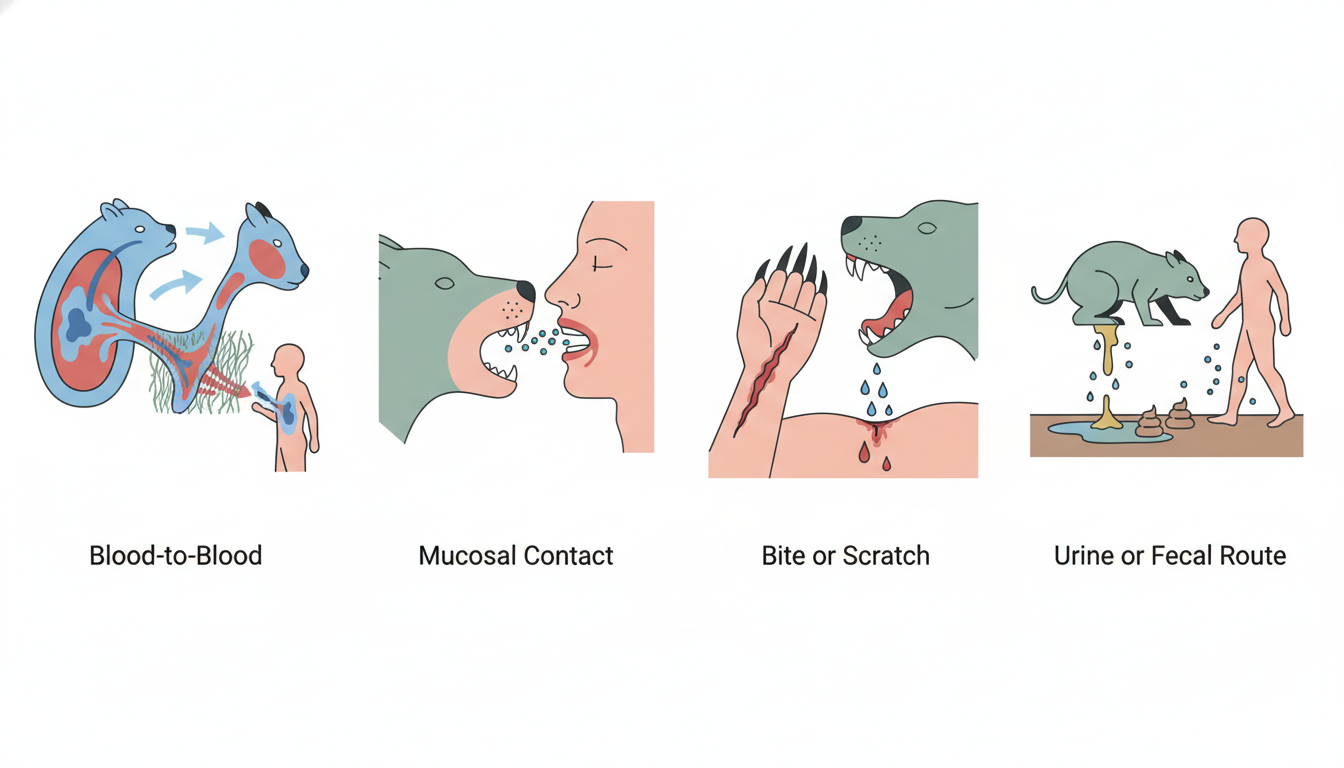
Bloodborne pathogens: HIV, hepatitis B, hepatitis C
This is where careful thinking matters most. Animals are not a meaningful source of HIV, hepatitis B, or hepatitis C. These are human pathogens. But sex acts that involve blood exposure (because of tearing, abrasion, or a bite) can still expose you to bloodborne pathogens already circulating in human blood that ends up on or in any wound during the encounter.
The relevant scenarios:
- Multiple human partners present. If the act occurred in a group context with other humans participating, the standard human-to-human bloodborne pathogen risks apply. Test as you would after any exposure with an unknown-status human partner.
- The animal had biological material from another human on it. Rare but possible. The same logic applies, including the risk that bloodborne pathogens move through any blood-to-blood contact regardless of the immediate sexual partner.
- Significant tissue injury or bleeding. Any open wound that came into contact with blood from any source carries some bloodborne risk.
For the relevant infections:
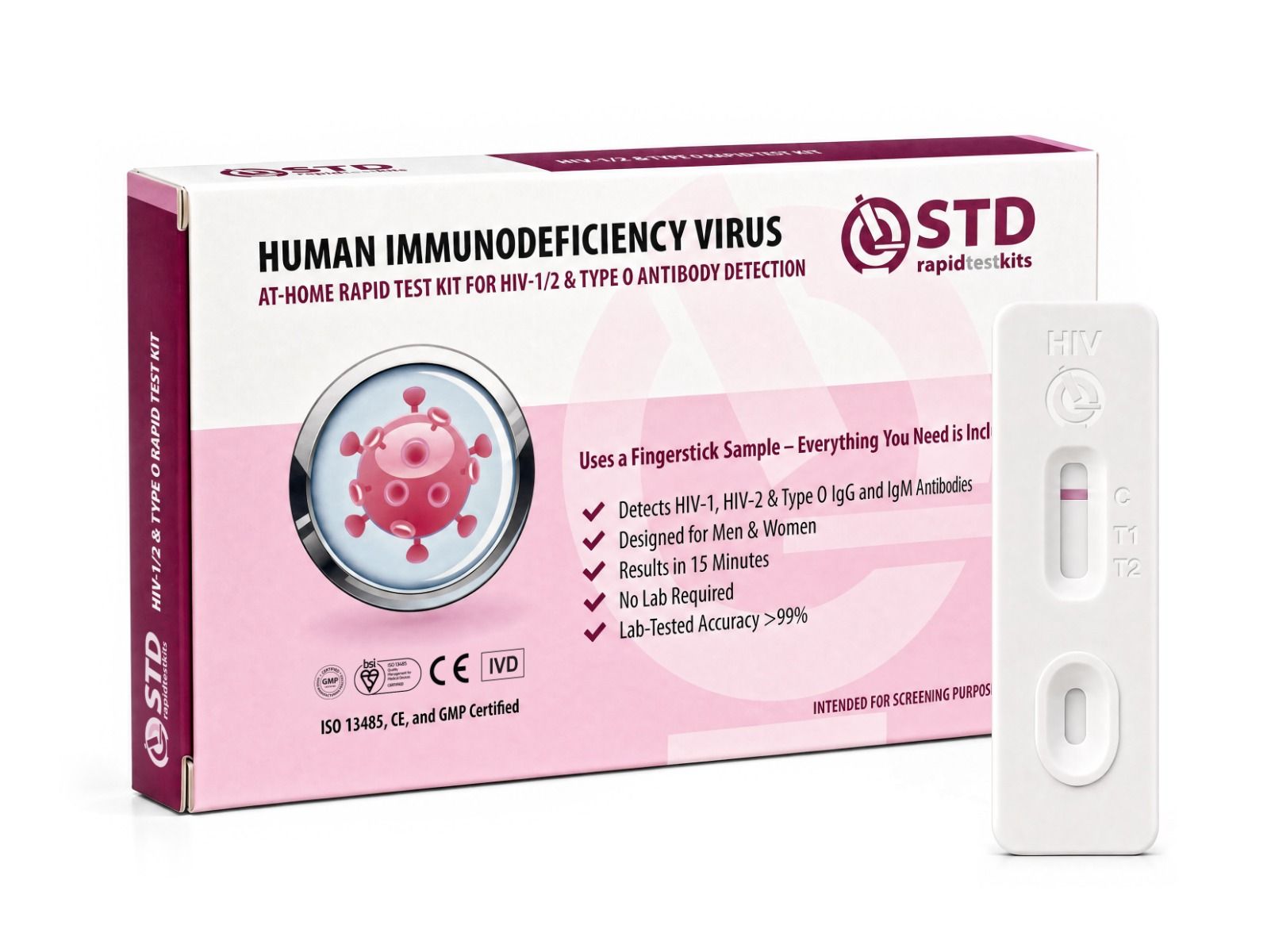
- HIV. Per the CDC's HIV transmission information, post-exposure prophylaxis (PEP) should be started within 72 hours of a high-risk exposure to be effective. Lab-based fourth-generation antigen-antibody tests reach reliable detection around 45 days; our at-home antibody-only kit has a longer window, with the product labeling citing a 2-to-12-week range and a reliable negative read at 12 weeks.
- Hepatitis B. Per the CDC hepatitis program, post-exposure vaccination and hepatitis B immune globulin can prevent infection if given within days of exposure. Surface antigen testing detects active infection within weeks.
- Hepatitis C. No vaccine, no post-exposure prophylaxis, but highly curable if caught and treated. Antibody testing reaches reliable sensitivity by about 90 days post-exposure.
- Syphilis. Treponemal antibody tests reach reliable sensitivity within 4 to 6 weeks of exposure.
If any of these scenarios applies to you, see a clinician within 72 hours. Don't wait for window periods to pass before getting medical advice; some interventions are time-sensitive.
Bacterial infections, tissue injury, and UTI risk
Outside of the named zoonotic diseases and bloodborne pathogens, the most common medical consequence of an animal sexual encounter is mechanical injury and secondary bacterial infection. Animal genital and oral microbiomes contain bacterial species that don't naturally inhabit human tissue. Introduction into the urethra, vagina, or rectum can cause:
- Bacterial urinary tract infection from non-typical uropathogens (E. coli is human-shared, but many other species are animal-skewed).
- Bacterial vaginosis or non-specific vaginitis from disrupted vaginal flora plus introduced foreign bacteria.
- Proctitis or rectal mucosal infection.
- Cellulitis or abscess at any site of broken skin or bite wound.
- In rare cases, sepsis if bacteria reach the bloodstream through an open injury, especially in immunocompromised people.
Tissue injury alone (tearing, abrasion, bruising) heals with the same care as any other genitourinary or rectal injury, but the wound creates a transient route for bloodborne pathogens until it closes, which is part of why post-exposure timing matters.
Burning during urination, pelvic or abdominal pain, unusual discharge, foul odor, fever, chills, redness or swelling around any wound, or rapidly worsening pain at an injury site. These need clinical care; at-home STI tests don't detect non-STI bacterial infections.
When to test, what to test for
Post-exposure testing breaks into two phases: an early clinician visit and follow-up testing through the relevant window periods.
Within 72 hours. See a clinician (urgent care, sexual-health clinic, or emergency department depending on injury severity). Reasons:
- HIV PEP is most effective when started within 72 hours of a high-risk exposure.
- Hepatitis B post-exposure vaccination and immune globulin work when started early.
- Rabies post-exposure prophylaxis is required after any high-risk animal bite and is time-sensitive.
- Wound care, tetanus update, and prophylactic antibiotics for bites or significant tissue injury.
- Documentation, in case the exposure has legal dimensions (animal cruelty cases, custody, etc.).
Through the window periods. Once the urgent window has passed, schedule testing for the specific pathogens that fit the exposure event. The standard windows for at-home rapid lateral-flow tests:
- HIV (antibody-only rapid test): reliable from approximately 12 weeks per the labeled 2-to-12-week window. Lab-based fourth-generation antigen-antibody assays reach reliable detection earlier (around 45 days), and lab NAATs detect HIV RNA earlier still (around 10 days post-exposure in clinical settings).
- Hepatitis B surface antigen: detectable within 4 to 10 weeks of exposure; full serology completes the picture.
- Hepatitis C antibody: 4 to 10 weeks for early detection, with reliable sensitivity by about 90 days.
- Syphilis treponemal antibody: 4 to 6 weeks.
- Chlamydia and gonorrhea swabs: detectable within 1 to 3 weeks of exposure (animal-source transmission of these is essentially nil; testing makes sense only if other human partners were involved or there are symptoms).
For zoonotic infections (leptospirosis, brucellosis, herpes B virus), there is no equivalent at-home test. Diagnosis is clinical and lab-based: blood cultures, PCR, or serology ordered by a clinician based on symptoms and exposure history. If you develop fever, severe headache, joint pain, jaundice, or any systemic symptom in the weeks after exposure, mention the exposure history to the treating clinician so the right tests get ordered.
Disclosure: this article is published by stdrapidtestkits.com, which sells at-home STI testing kits. We recommend products based on fit-for-purpose for the reader's concern, not commercial benefit. The tests we sell are rapid lateral-flow screening assays, not laboratory NAATs; a positive result is worth confirming with lab testing through a clinician.

When to seek emergency medical care
Some signs warrant the emergency department immediately, not next-day urgent care:
- Significant bleeding from any tear or wound that doesn't slow with direct pressure within 10 minutes.
- Bite wound from a primate (especially a macaque) or any wild animal capable of carrying rabies.
- Rapidly progressing pain, redness, or swelling at a wound site (concern for cellulitis or necrotizing infection).
- Fever above 38.5°C (101°F) within 24 to 72 hours of exposure, particularly with chills, vomiting, confusion, or low blood pressure (concern for sepsis, especially with capnocytophaga).
- Severe abdominal or pelvic pain, vaginal or rectal bleeding beyond a brief minor injury.
- Confusion, severe headache, or neurological symptoms in the days to weeks after exposure (concern for encephalitis, including herpes B virus).
The conversation with the clinician is easier than it sounds. Emergency physicians are trained to handle exposure histories without judgment, and the medical decisions don't depend on you justifying or explaining the act, only on documenting what kind of contact occurred and what kind of pathogen exposure that creates.
Any bite, scratch, or mucosal contact with a macaque monkey requires immediate emergency department evaluation for herpes B virus post-exposure prophylaxis. Untreated B virus infection in humans can cause severe brain damage or death, per CDC guidance. Wash the wound thoroughly with soap and water (the CDC recommends 15 minutes of irrigation) and go straight to the emergency department.
Animal welfare: why this matters beyond human health
Animals can't consent to sex with a human in any meaningful sense. They don't share the cognitive frameworks of consent, refusal, or sexual relationship that the concept presumes. Most animal welfare frameworks (the U.S. Federal Animal Welfare Act, the U.K. Animal Welfare Act, similar legislation across the EU and Canada) treat human-animal sexual contact as a form of animal cruelty regardless of whether visible injury occurred, because the act exposes the animal to physical risk, psychological distress, and exploitation it cannot meaningfully avoid.
Documented physical harms to animals include genital and rectal tearing, urinary tract infections, secondary bacterial infections, behavioral changes consistent with chronic stress, and in cases involving repeat or sustained contact, signs of learned helplessness. Veterinary case reports describe injuries severe enough to require surgical repair or euthanasia.
The animal welfare argument is independent of the public-health argument. Even in the rare case where a human contracts no disease, the animal can still be harmed. This is why most modern animal cruelty statutes treat the act as a per se offense rather than requiring proof of "harm" the way some older statutes did.
The U.S. Federal Animal Welfare Act and the U.K. Animal Welfare Act 2006 are the cornerstone statutes treating human-animal sexual contact as cruelty regardless of visible injury. Most EU member states and Canada use parallel legislation. Many of these laws were updated in the 2010s and 2020s to close loopholes that previously required proof of "harm."
Legal status: country and state by state
Bestiality is illegal across most of the developed world, but the specifics vary. Below is a summary of the broad picture; for any practical question, verify the current law in the specific jurisdiction by checking its animal cruelty or sexual offenses statute.
United States. Bestiality is now criminalized in the large majority of states, mostly through dedicated statutes added between 2000 and 2024. A handful of states historically had statutory gaps (Wyoming, New Mexico, West Virginia, Hawaii, and Kentucky have all been cited at various points), but most have since closed them. Where dedicated statutes don't exist, animal cruelty statutes typically apply. Federal law criminalizes the production and distribution of bestiality content (sometimes called "obscenity" or "animal crush" content) under multiple obscenity and animal protection statutes.
United Kingdom. Illegal under the Sexual Offences Act 2003 (sections covering intercourse with an animal). Penalties include up to two years' imprisonment.
Canada. Illegal under section 160 of the Criminal Code, with penalties including imprisonment and required sex offender registration in many cases.
European Union. Most member states (Germany, France, the Netherlands, Belgium, Sweden, Denmark, etc.) prohibit it through animal welfare or sexual offenses legislation. A few smaller jurisdictions still have legal gaps, though enforcement under general animal cruelty law is the norm.
Other regions. Australia, New Zealand, most of South America, and most of East Asia (Japan and South Korea included) prohibit it. Coverage in some African and South Asian countries is patchy and changes frequently. Sexual orientation does not change legality; the act is criminalized regardless of the gender of the human or the species of the animal.
| Jurisdiction | Governing statute | Maximum penalty |
|---|---|---|
| United States (federal) | 18 U.S.C. obscenity and animal crush statutes (covering production/distribution of bestiality content) | Up to 7 years |
| United States (state) | Most states have dedicated bestiality statutes; remaining states apply animal cruelty laws | Varies; felony in most states |
| United Kingdom | Sexual Offences Act 2003 (intercourse with an animal) | Up to 2 years' imprisonment |
| Canada | Criminal Code section 160 (bestiality) | Up to 10 years; sex offender registration |
| Germany | Animal Welfare Act, Section 3 (since 2013 amendment) | Fines and prohibition on animal contact |
| Australia (most states) | State criminal codes / animal welfare acts | Varies; commonly up to 7 years |
What to do if you're worried after exposure
A practical sequence:
- Within hours. Wash any wound for at least 5 to 15 minutes with soap and water. For mucosal exposure (eyes, mouth), rinse thoroughly with clean water. Document what kind of animal, what kind of contact, and what time it occurred.
- Within 72 hours. See a clinician. Urgent care or a sexual-health clinic is fine for low-risk scenarios; the emergency department is the right call if a bite, significant injury, or systemic symptoms have developed. Bring the documentation. Ask specifically about HIV PEP, hepatitis B post-exposure vaccination, rabies post-exposure prophylaxis (if relevant species), and wound care.
- At 4 to 6 weeks. First testing window. Syphilis treponemal antibody, early HIV testing where lab-based antigen-antibody assays are available, hepatitis B surface antigen. A clinic visit with phlebotomy is the most thorough route; at-home rapid panels are an option when clinic access is difficult.
- At 90 days through 12 weeks. Final reliable window for at-home antibody-only rapid HIV tests, hepatitis C antibody, and the second confirmatory round of any earlier negative tests.
- If symptoms develop at any point. Don't wait for the next scheduled test. Fever, headache, joint pain, jaundice, unusual rashes, severe fatigue, or any neurological symptom in the weeks following exposure should trigger an immediate clinician visit with the exposure history disclosed.
The single most useful thing you can do is be specific and honest with the treating clinician. Medical decisions are made on the basis of what kind of contact occurred and what pathogen exposure that creates. The social or legal framing of the act doesn't change which tests get ordered or which prophylactic medications are appropriate.
Scientists estimate that more than 6 out of every 10 known infectious diseases in people can be spread from animals, and 3 out of every 4 new or emerging infectious diseases in people come from animals.
Frequently asked questions
- Can you get human chlamydia or gonorrhea from an animal?
- No. The bacteria that cause human chlamydia (Chlamydia trachomatis) and gonorrhea (Neisseria gonorrhoeae) are human-restricted. Older articles listing these as bestiality risks are repeating a misconception. Related bacteria exist in animals, but they don't cause the human STI syndromes.
- What are the actual disease risks?
- Zoonotic infections (leptospirosis from urine, brucellosis from livestock secretions, herpes B virus from macaques, capnocytophaga from dog or cat saliva, toxoplasmosis from cat feces) and bloodborne pathogens via any blood-to-blood or blood-to-mucosa contact (HIV, hepatitis B, hepatitis C, and syphilis through that route). Tissue injury and secondary bacterial infection are common.
- Should I get HIV PEP after an exposure?
- Possibly. PEP is recommended after a high-risk exposure to bloodborne pathogens and must be started within 72 hours to be effective. For most animal-only contact without blood exposure, HIV PEP isn't typically indicated because the animal isn't an HIV source. For mixed exposures involving humans or significant blood contact, see a clinician within 72 hours to assess.
- How long do I have to wait before STI testing is reliable?
- Window periods depend on the pathogen and the test type. For at-home rapid lateral-flow tests, reliable detection generally takes approximately 12 weeks for HIV (antibody-only rapid test), 4 to 10 weeks for hepatitis B surface antigen, around 90 days for hepatitis C antibody, and 4 to 6 weeks for syphilis. Lab-based fourth-generation antigen-antibody assays detect HIV around 45 days, and lab NAATs can detect some infections earlier still.
- Is bestiality legal anywhere in the United States?
- Almost everywhere it's now criminalized, mostly through dedicated state statutes added between 2000 and the present. A handful of states have closed historic gaps in the last several years; even where dedicated statutes don't exist, animal cruelty laws apply. Federal law also criminalizes production and distribution of bestiality content. Verify the current law in your jurisdiction for any practical question.
- What's the most dangerous zoonotic infection to know about?
- Herpes B virus (Macacine alphaherpesvirus 1) from macaque monkeys, by case severity. Most macaques carry it asymptomatically, but human infection causes encephalitis that without immediate antiviral treatment can lead to severe brain damage or death. Any macaque bite, scratch, or mucosal exposure is a medical emergency requiring immediate post-exposure antiviral prophylaxis.
- Can at-home rapid tests detect zoonotic infections like leptospirosis or brucellosis?
- No. At-home rapid panels test for human bloodborne and bacterial STIs. Zoonotic infections require clinical evaluation: blood cultures, PCR, or serology ordered by a clinician based on symptoms and exposure history. If you develop fever, joint pain, jaundice, or systemic symptoms in the weeks after exposure, see a clinician and disclose the exposure history.
- What should I tell the clinician?
- Be specific and matter-of-fact about what kind of contact occurred (bite, mucosal contact, blood exposure), what kind of animal, and when. Medical decisions depend on the exposure mechanics, not the social or legal framing. Emergency physicians and sexual-health clinicians are trained to handle exposure histories without judgment.
- U.S. Centers for Disease Control and Prevention. Overview of zoonotic diseases, transmission categories, and the statistic that more than 6 of every 10 known infectious diseases in people can spread from animals.
- U.S. Centers for Disease Control and Prevention. HIV transmission routes, post-exposure prophylaxis (PEP) guidance, and testing window periods.
- U.S. Centers for Disease Control and Prevention. Hepatitis B and hepatitis C transmission routes, post-exposure prophylaxis, and testing window guidance.
- U.S. Centers for Disease Control and Prevention. Leptospirosis transmission routes, clinical presentation, and 2-to-30-day incubation period.
- U.S. Centers for Disease Control and Prevention. Brucellosis transmission, recurring fever syndrome, and treatment overview.
- World Health Organization. Zoonoses fact sheet on cross-species disease transmission.
