
Published: August 2025 | Last updated: May 2026 | Editorial review and quality control: Martina N.
Fidelity is not a vaccine. Bacteria, viruses, and parasites do not check wedding rings or church attendance before they replicate. Someone who has only ever been with one partner can still carry an infection picked up years before the relationship began, can be exposed through skin-to-skin contact that was never penetrative, and can stay symptom-free long enough to unknowingly pass that infection forward. None of that is a moral failing. It is biology, and the only honest way to know what is happening inside your body is to test.
This piece is for the reader who is scared, ashamed, or stuck in the long pause between a worrying symptom and a phone call to a clinic. We will walk through what current public-health guidance actually says about how sexually transmitted infections travel inside committed relationships, what the CDC, WHO, and NHS recommend for screening, and how at-home testing makes the next step feel less like a public confession and more like ordinary self-care.
Key Takeaways
- Long-term faithfulness does not erase exposures from before the relationship. HSV-1, HSV-2, HPV, chlamydia, and hepatitis B and C can stay quiet for months or years before a first symptom appears.
- Most people with genital herpes do not know they have it, according to the CDC. Testing, not visible symptoms, is what answers the question.
"But I'm Married. How Could This Happen?"
The first reaction to a strange spot, a new burn, or an itch that will not settle is almost never logical. It is panic, then suspicion, then guilt. Within hours, a person can move from "what is that?" to "did my partner cheat?" to "what will the church say?" without ever pausing to ask the most useful question: when could either of us actually have been exposed, and to what?
The answer often goes back further than the relationship. The CDC reports that most people with genital herpes do not know they are infected, because the virus can sit in nerve cells for years between outbreaks and the first visible sore can be triggered by something as ordinary as stress, a cold, or a hormonal shift in pregnancy. A young adult who had one partner at twenty-two and married someone else at twenty-eight may discover an infection at thirty-five and assume the worst about their spouse, when the timeline points back to a relationship long predating the wedding.
Other infections behave the same way. The CDC's overview of chlamydia notes that the bacterium often produces no symptoms at all and can quietly persist for months. Syphilis cycles through stages, including a long latent phase where the body shows no outward sign while the spirochete continues its slow damage. HPV is so common that nearly every sexually active adult is exposed to at least one strain at some point in life. None of those facts require infidelity to explain a positive test inside a faithful marriage.
Can a faithful couple still test positive for an STD?
Yes. Sexually transmitted infections can lie dormant for months or years, and several spread through skin-to-skin contact rather than penetrative sex. A positive result inside a faithful marriage usually points to an exposure that predates the relationship, a non-sexual route of transmission (for hepatitis B, for example), or a strain like HPV that almost every sexually active adult eventually encounters. The next step is for both partners to test and to bring any positive home result to a clinician for confirmation and treatment.
How Past Lives Travel With Us
Most adults arrive in their current relationship with a complete sexual history written into their immune system. Antibodies, latent viruses, and quiet bacterial colonies are part of that record. Some of it gets cleared by the body on its own. Some of it stays. The honest framing for sexual health in a faithful marriage is that you are managing two histories, not one.
Take HPV, the most common sexually transmitted infection in the United States. The CDC's HPV overview describes most infections as cleared by the immune system within one to two years, with most adults exposed at some point in life. A few high-risk strains can persist and contribute to cervical, anal, and oropharyngeal cancers years later. Couples who first met as teenagers, married, and never strayed can still have HPV in their shared history because exposure happened before the relationship started.
HPV is the most common sexually transmitted infection in the United States. Most infections clear on their own within one to two years. Some high-risk strains can persist for decades without producing symptoms, which is why a positive HPV finding inside a faithful marriage almost always traces back to an exposure that predates the relationship.
The Long Latency of HSV and Hepatitis
Herpes works on a similar timeline to HPV. After the initial infection, HSV-1 and HSV-2 retreat to nerve ganglia and reactivate at unpredictable intervals. Many people experience their first noticeable outbreak years after the actual transmission event, and triggers like illness, stress, immunosuppressive medication, or pregnancy can pull a quiet virus into visible disease. Couples who have been together for fifteen years and never had a sore are not somehow protected from a future first outbreak.
Hepatitis B and C have an even longer latency. The WHO STI fact sheet notes that hepatitis B can spread sexually as well as through blood and from parent to child, and many infections become chronic before the carrier ever feels ill. A faithful spouse who got a tattoo at nineteen, shared a razor in a college dorm, or was born to a mother with chronic hepatitis B may carry the virus for decades without knowing.
HSV-1 and HSV-2 retreat to nerve ganglia after initial infection and can reactivate years later. Common triggers include illness, stress, immunosuppressive medication, and pregnancy. Hepatitis B and C can stay clinically silent for decades before producing liver symptoms, which is why screening is the only reliable way to detect either virus inside a long-standing relationship.
Why Symptoms Stay Quiet in "Safe" Relationships
The biology of asymptomatic infection is the part that most surprises faithful couples. There is a common assumption that something obvious would have shown up by now, that fifteen years of marriage are themselves proof of two healthy bodies. The data on screening say the opposite. Many of the most common sexually transmitted infections produce no reliable symptoms at all in their carriers.
The NHS overview of STIs notes that many infections, including chlamydia, produce no symptoms at all, which makes routine screening the only reliable detection method. When symptoms do appear, they often look like ordinary urinary irritation or a vaginal discharge that someone might attribute to a yeast infection or a stressful week. Gonorrhea behaves similarly, especially at pharyngeal or rectal sites that rarely produce noticeable signs.
Trichomoniasis can mimic a yeast infection or a routine change in discharge for years. Mycoplasma genitalium often presents as nothing at all, or as a vague pelvic discomfort that gets blamed on cycle changes. Even syphilis, which is famous for its rash and chancre, has long latent periods where a body that looks completely well is still carrying the spirochete.
For a couple committed to each other, the practical takeaway is that absence of symptoms is not absence of infection. Routine screening at sensible intervals, which the CDC's STI screening guidance covers in detail, is how clinicians catch these infections before complications appear.
Stigma Is the Real Diagnosis That Delays Care
The most damaging thing about an STI scare in a faith community is rarely the infection itself. It is the months of avoidance that come before the test. People sit with a symptom, attribute it to stress or laundry detergent, pray about it, scroll for reassurance at midnight, and wait. By the time they finally test, an early-stage infection has had time to climb from the cervix to the fallopian tubes, or from the throat to the bloodstream.
Public-health researchers describe this pattern as testing latency, and the cost shows up in long-term outcomes. Untreated chlamydia in women is a leading driver of pelvic inflammatory disease and tubal infertility. Untreated syphilis can quietly damage the cardiovascular and central nervous systems for years before producing the symptoms that finally bring someone to a clinic. Untreated hepatitis B and C drift toward cirrhosis and liver cancer.
None of this is unique to religious communities. Stigma slows testing in secular contexts too. But faith spaces sometimes carry a particular weight: the fear that getting tested implies a failure, that it announces an accusation against a spouse, that it invites a sermon-shaped lecture from someone who heard about the appointment in passing. People stay quiet to protect a marriage and a reputation, and the infection keeps working.
Reframing testing as ordinary preventive care, the same kind of routine checkup as a mammogram, blood-pressure reading, or dental cleaning, takes the moral charge out of the conversation.
Untreated chlamydia is a leading cause of pelvic inflammatory disease and tubal-factor infertility. Untreated syphilis can damage the heart and nervous system over years. Untreated hepatitis B or C raises the risk of cirrhosis and liver cancer. Earlier testing means earlier, simpler treatment for every one of these.
Faith Leaders Reframing Sexual Health
The most effective public-health work inside religious communities has come from leaders who refused to treat sexual health and faith as opposing forces. When a pastor describes regular screening as stewardship of the body, when an imam links partner testing to honoring a marriage, when a rabbi normalizes asking a doctor a hard question, congregants tend to follow.
The shift is practical rather than theological. Programs that pair churches with local health departments to host on-site screening events report higher uptake among people who otherwise avoid clinics. Counseling models that train clergy to refer congregants confidentially, without follow-up sermons or accountability sharing, give people permission to act on a worry instead of hiding from it. Educators working with faith-based audiences emphasize a small but powerful framing: testing is a way of caring for a partner, not a way of accusing one.
Couples who have lived through a positive result describe the same arc. The diagnosis is the part that hurts in the moment. The longer-term wound is the secrecy. When both partners learn the result together, decide on treatment together, and talk to a clinician together, the marriage often emerges sturdier than it was before.
What Honest Testing Looks Like
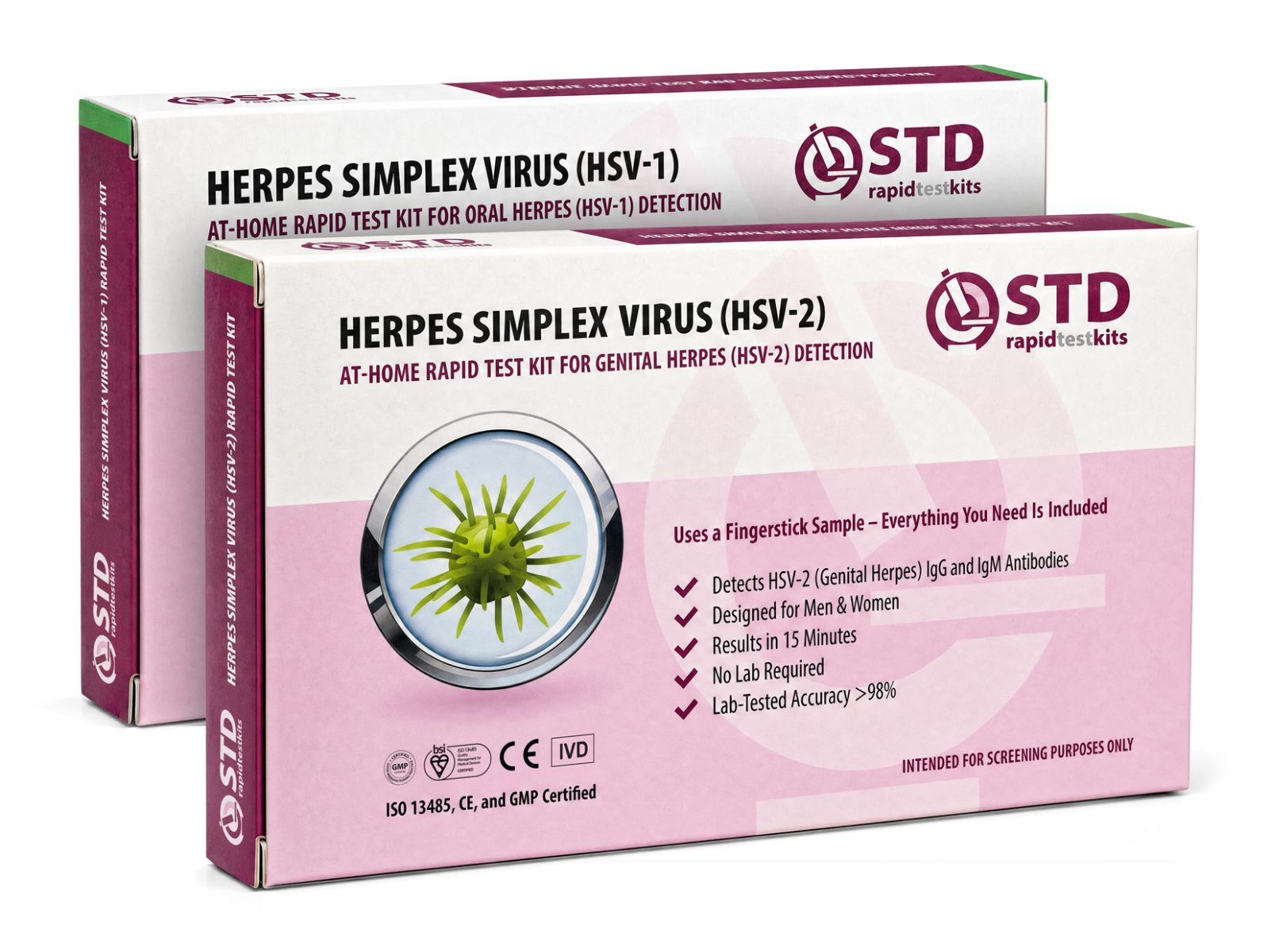
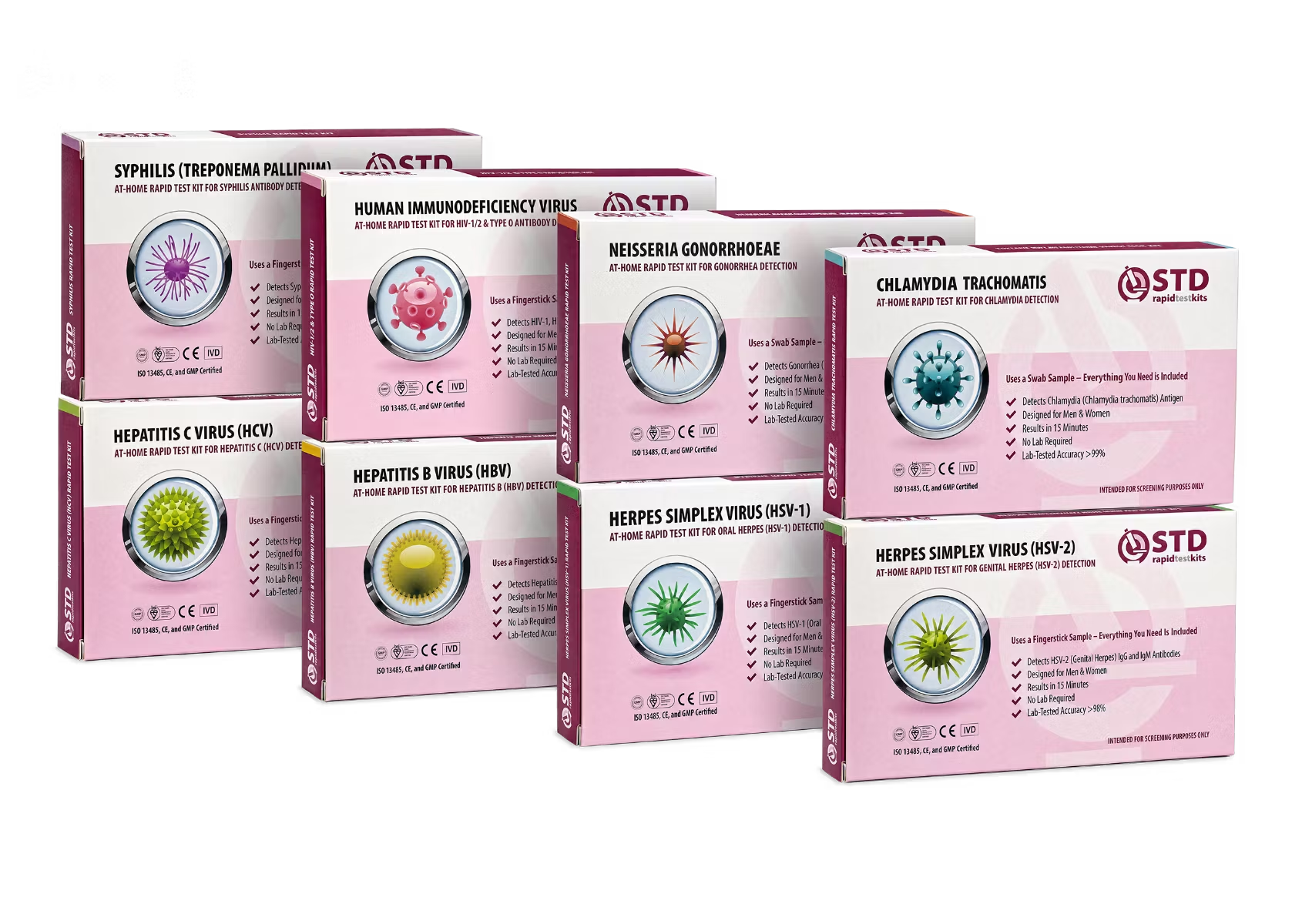
Modern home testing has changed the equation for couples who want privacy. The same lateral-flow chemistry that clinics use for rapid screening now ships in discreet packaging to a home address. A user collects either a fingerstick blood drop (for blood-based tests like HIV, syphilis, hepatitis B, hepatitis C, and herpes antibodies) or a self-collected swab (for chlamydia, gonorrhea, and the women-only trichomoniasis and HPV kits), runs the cassette per the instructions, and reads the result in roughly fifteen minutes.
A few honest caveats are worth holding in mind. At-home rapid lateral-flow tests are screening tools, not laboratory NAAT or PCR. Their sensitivity is meaningful for screening, but a positive home result is best confirmed in a clinical setting so that a clinician can prescribe the right treatment. Each infection also has a window period during which the immune system has not yet produced detectable antibodies; testing too soon after a possible exposure can produce a falsely reassuring negative.
For couples in faith communities, the privacy benefit is the part that often unlocks action. Nobody at the church reception desk, nobody in the clinic waiting room, nobody at the pharmacy counter sees the box arrive or the result appear. A couple can sit together at home, run two kits, talk about what each line means, and decide what comes next.

Talking to Your Partner Without Burning the Marriage Down
The hardest conversation is rarely the one with the clinician. It is the one across the kitchen table. A spouse who hears "I want us to get tested" can react in any direction: relief, anger, suspicion, exhaustion. The trick is to lead with biology, not with accusation.
Useful framings include: "I read that some infections can lie dormant for years from before either of us met, and I would feel better knowing where we stand"; "I am noticing something that might be a symptom and I want to rule things out before I worry myself sick"; or simply, "I think regular STI testing should be part of how we take care of each other, the way we go to the dentist." None of those statements imply infidelity. All of them open a door.
If a positive result does come back, the script changes but the spirit stays the same. Most STIs are highly treatable. Bacterial infections like chlamydia, gonorrhea, and syphilis are cured with appropriate antibiotics. Hepatitis C now has direct-acting antivirals with cure rates above 95 percent in most populations, according to the WHO hepatitis C fact sheet. HIV is managed with daily medication that can keep viral load undetectable, and people with an undetectable viral load do not transmit HIV to sexual partners, per the CDC's guidance on HIV treatment. Herpes outbreaks are suppressed and made less contagious with daily antivirals.
Faith, Honesty, and the Body You Were Given
Across very different traditions, sacred texts and prayer practices return to a small set of ideas: the body is worth caring for, honesty matters in close relationships, and shame is a poor guide to action. Modern STI testing fits all three. It is care, it is candor, and it is one of the cleanest ways to refuse a culture of silence that has caused real harm in real congregations.
If you have been carrying a worry through prayer, through Sunday services, through quiet midnight searches, that worry deserves a factual answer. Testing gives you one.
Most people with genital herpes have no symptoms or have very mild symptoms. Because of this, most people do not know they have a herpes infection.
FAQs
- Can I really get an STD if I have only ever been with my spouse?
- Yes, and that is one of the most under-discussed facts in sexual health. Either partner can carry an infection from before the marriage that stayed dormant for years, several STIs spread through skin-to-skin contact rather than penetrative sex, and hepatitis B in particular can travel through non-sexual routes like shared razors or vertical transmission at birth. A positive test inside a faithful marriage is most often a biology question, not a fidelity question.
- Does a positive test always mean someone cheated?
- No. The most common explanation for a new positive in a faithful couple is a long-dormant infection from before the relationship, especially HPV, HSV-1, or HSV-2. Less commonly, hepatitis B can come from non-sexual exposure. The honest move after a positive result is a clinical conversation about timing and exposure routes, not an accusation.
- Can a virgin have an STD?
- Yes. HSV-1 (oral herpes) is most often acquired in childhood through non-sexual contact and can later cause genital infection through oral sex. Hepatitis B can transmit at birth or through shared personal-care items. HPV can occasionally spread through close skin-to-skin contact. None of these require what most people would call sexual experience.
- Does prayer or fasting heal herpes, HPV, or chlamydia?
- Faith practices can support the emotional load of an illness and they sit alongside medicine in many traditions. They do not replace the biology. Bacterial infections like chlamydia, gonorrhea, and syphilis need antibiotics. Viral infections like HSV and HIV are managed with antivirals. HPV is monitored, with vaccination available for prevention and procedures available if precancerous changes appear.
- How private are at-home STI tests?
- Discreet packaging, no clinic waiting room, and a result that you read at home are the design priorities for at-home tests. Nobody at a church, workplace, or pharmacy counter sees the result. The privacy is one of the strongest reasons to use them when stigma would otherwise delay testing.
- Which STIs do home rapid tests actually cover?
- Most rapid lateral-flow home tests cover HIV, syphilis, hepatitis B, hepatitis C, HSV-1, HSV-2, chlamydia, and gonorrhea. HPV and trichomoniasis home rapid kits are validated for vaginal self-swab in women only on this site. Combination kits bundle several of these into one box with mixed sample types. Pharyngeal (throat), rectal, and urine NAAT testing are clinic services and not part of the home rapid line.
- How soon after a possible exposure should I test?
- Window periods vary by infection. Chlamydia and gonorrhea become detectable within one to two weeks. Syphilis antibody tests are generally reliable from three to six weeks after exposure. Fourth-generation antigen/antibody rapid tests for HIV (the finger-prick format) have a window period of 18 to 90 days per CDC guidance, with most infections detectable by 45 days and twelve weeks giving full reassurance. A negative HIV result earlier than 45 days needs to be confirmed with a follow-up test at the longer window. Herpes antibody tests typically need twelve weeks or more to seroconvert. When in doubt, test now and re-test at the appropriate window for that specific infection.
- What do I do if my home test result is positive?
- Take a breath. A home rapid test is a screening tool. Call a clinician, share the result, and arrange a confirmatory laboratory test plus a treatment conversation. Most STIs are highly treatable, and many are curable. Tell your current partner so they can test as well; that conversation is best framed as shared healthcare, not as an accusation.
- U.S. Centers for Disease Control and Prevention. About Genital Herpes, including the figure that most people with genital herpes do not know they are infected.
- U.S. Centers for Disease Control and Prevention. About HPV, including population-level prevalence and clearance timelines.
- U.S. Centers for Disease Control and Prevention. About Chlamydia, including its high rate of asymptomatic infection.
- U.S. Centers for Disease Control and Prevention. Sexually Transmitted Infections (STI) overview and screening guidance.
- World Health Organization. Sexually transmitted infections (STIs) fact sheet, covering global epidemiology and transmission routes for hepatitis B and other STIs.
- World Health Organization. Hepatitis C fact sheet, including the cure rates achieved with direct-acting antivirals.
