
Published: August 2025 | Last updated: May 2026 | Editorial review and quality control: Martina N.
Can virgins get STDs?
Yes. Virginity is a social idea, not a medical one. STIs spread through contact with skin, mucous membranes, and bodily fluids, with or without penetration. Non-penetrative routes include oral sex, genital skin-to-skin contact, kissing a partner with a cold sore, and shared sex toys. Most cause no early symptoms, so testing is the only reliable way to know.
The question is a red flag for how sex education has failed most readers, not for anything you did. People who call themselves virgins do test positive for sexually transmitted infections, and the reasons are biological rather than behavioral. Pathogens move through skin contact, mucous membranes, and bodily fluids, and most of the common ones do not need penetration to pass from one person to another. Public-health agencies have said this plainly for years: STIs usually spread during vaginal, oral, or anal sex, but some also spread through skin-to-skin contact alone (MedlinePlus: sexually transmitted infections).
Whether you are trying to understand a result you did not see coming, planning a first sexual experience, or supporting someone who is, the goal here is calm, specific information you can act on. Where the right test for your situation is something we do not sell, you will see that said plainly rather than papered over.
Key Takeaways
- STIs spread through skin, fluid, or mucous-membrane contact. Penetration is not required, and testing is the only reliable way to know your status.
- HPV, herpes, and oral chlamydia or gonorrhea often cause no symptoms for weeks or longer. Testing, not how you feel, is the reliable signal.
Why “virgin” isn’t a medical category
Doctors do not diagnose virginity. There is no exam, blood test, or imaging study that can confirm or deny it. The word means different things in different cultures, families, and friend groups. For some people it ends with vaginal-penile sex. For others, any kind of penetration. For still others, it is whatever they have not yet done. The fuzziness of the definition is the problem: if you use it as a shorthand for “low risk,” you are using a label your body does not recognize.
What matters medically is exposure. The skin around your mouth, your genitals, and your anus contains mucous membranes that pathogens can cross. Saliva, semen, vaginal fluid, pre-ejaculate, and blood can carry bacteria or viruses. Tiny breaks in skin (think razor nicks, cold sores, irritation from new lubricant) lower the barrier even further. None of that biology asks whether you have had a partner before. It only asks whether contact happened.
This is also why many sexual-health clinicians have stopped asking patients “are you sexually active?” as a yes-or-no. The phrase erases everything that happens before or instead of intercourse, including oral sex, manual stimulation, genital rubbing, and shared toys. A more useful question, and one you can ask yourself, is what kind of contact has my body had with another person’s body, and where.
A sexual-health clinician’s relevant question is what kind of physical contact has occurred and where, not whether the patient considers themselves sexually active. Describing what you have done (oral, manual, skin-to-skin) gives the clinician information they can use; the word “virgin” does not.
How STDs move between people
Different infections favor different routes. Some spread through fluids, others through direct skin-to-skin contact, and a few through both. More than 30 bacteria, viruses, and parasites are known to spread through sexual contact, including skin-to-skin and oral routes that do not require penetration (WHO: STIs fact sheet). Understanding which route is which helps you understand why virginity does not protect you.
Oral sex is one of the most under-discussed transmission routes. Gonorrhea, chlamydia, syphilis, herpes, and HPV can all pass through mouth-to-genital or genital-to-mouth contact (CDC: about STI risk and oral sex). Throat infections from oral sex are often silent. A persistent sore throat that does not respond to typical viral remedies is one of the few outward clues.
Skin-to-skin contact drives most HPV and herpes transmission. HPV spreads when infected skin touches uninfected skin, even when the person carrying it has no signs or symptoms (CDC: about genital HPV infection). That includes genital rubbing while clothed, naked grinding, and contact with thigh or pubic skin outside the area a condom covers. Herpes simplex behaves similarly: HSV-1 and HSV-2 can pass during direct contact with the affected area, and the skin can shed virus even when no sore is visible (CDC: about genital herpes).
Kissing can spread oral HSV-1, the virus that causes cold sores. It is commonly picked up in childhood from a kiss by a relative or friend with an active sore. Through oral sex, HSV-1 can also cause genital herpes in someone whose first sexual contact is non-penetrative.
Shared sex toys can transfer chlamydia, gonorrhea, trichomoniasis, HPV, and HIV when they pass between partners without cleaning or a fresh condom. Bacteria and viable virus can survive on toy surfaces for at least short periods. Hepatitis B also belongs in this conversation because it spreads through blood-to-blood contact (shared razors, toothbrushes, unsterilized piercing or tattoo equipment) and from parent to newborn at birth, not only through penetrative sex.
Manual stimulation (fingering, hand jobs) is generally lower risk, but transmission is still possible if there are open cuts, hangnails, or visible fluids in contact with mucous membranes.
HIV specifically. Non-penetrative HIV transmission is uncommon but not impossible, and the fear around it deserves a real answer rather than a brush-off. Oral sex carries very low risk overall. That risk rises when the person performing oral sex on an HIV-positive partner has bleeding gums, mouth sores, or recent dental work, because those break the protective barrier. The larger non-penetrative pathways are shared blood-contact items (razors, unsterilized piercing or tattoo equipment) and contact with visible blood through broken skin. According to CDC testing guidance, a 4th-generation antigen/antibody lab test can usually detect HIV 18 to 45 days after exposure, while rapid finger-stick antigen/antibody tests detect it at 18 to 90 days (CDC: HIV testing).
| Activity | STIs that can spread | How transmission happens |
|---|---|---|
| Oral sex (giving or receiving) | Gonorrhea, chlamydia, herpes, syphilis, HPV | Mouth-to-genital or genital-to-mouth contact moves bacteria or virus through mucous membranes |
| Genital rubbing or “dry humping” | Herpes, HPV | Skin-to-skin contact, including through thin underwear or on exposed thighs and pubic skin |
| Shared sex toys | Chlamydia, gonorrhea, trichomoniasis, HPV, HIV | Without cleaning or a fresh condom, fluids and viable virus transfer between partners |
| Deep kissing | HSV-1 (oral herpes), rarely syphilis if a chancre is in the mouth | Saliva exchange and direct contact with active sores or shedding skin |
| Manual stimulation (fingering, hand jobs) | Herpes, HPV, occasionally chlamydia or gonorrhea | Lower risk, but possible when open cuts, sores, or visible fluids contact mucous membranes |
What early symptoms can look like
Most sore throats, genital irritation, and small skin bumps in people who have had only non-penetrative contact are not STI-related; the trouble is that when an STI does appear, it often mimics exactly those common benign causes. The body does not produce different symptoms for a “type” of sex. What matters is which organism reached which tissue. A few patterns are worth knowing because they are easy to miss when you are not expecting them.
Pharyngeal (throat) gonorrhea or chlamydia. Most cases of gonorrhea or chlamydia in the throat are asymptomatic. When symptoms do appear, they look like a stubborn sore throat: scratchy, sometimes with mild swelling or white patches on the tonsils, often dismissed as a viral cold. Throat infection is commonly noted among people whose only exposures have been oral, which is one reason throat screening is recommended after that kind of contact.
Genital herpes from oral contact. Tingling, itching, or a cluster of small fluid-filled blisters around the base of the penis, the labia, the inner thighs, or the perineum. The first outbreak can come with flu-like symptoms (fever, body aches, swollen groin lymph nodes) and is often more severe than later recurrences. HSV-1 transmitted from oral contact can cause genital herpes, and increasingly does so in younger adults.
HPV warts or no symptoms at all. Most HPV infections clear without symptoms or notice. When warts appear, they tend to be painless, soft, cauliflower-textured bumps on the genitals or perianal skin. The high-risk strains linked to cancer almost never cause visible symptoms; they are caught through screening or follow-up after an abnormal Pap or HPV test.
Chlamydia or gonorrhea in the urethra. A vague burning or “off” feeling during urination, sometimes a small amount of unusual discharge. Symptoms can be mild enough to write off as soap irritation or dehydration. Many urethral gonorrhea cases in men produce noticeable symptoms; most chlamydial infections at any site do not.
What does not usually happen is dramatic, immediate fallout. STIs are quiet diseases, and many cause no symptoms at all, so you can carry one without knowing (NHS: sexually transmitted infections). Direct contact between two people’s mucous membranes or skin starts the clock, regardless of whether anyone called it sex.
Signs worth noticing after non-penetrative contact
Most of these have ordinary, non-STI causes too. Having one or more does not confirm an infection; only a test can do that.
- A sore throat that lingers and does not respond to the usual cold remedies (possible throat gonorrhea or chlamydia) Common
- Tingling, itching, or a cluster of small fluid-filled blisters near the genitals, inner thighs, or perineum (possible herpes outbreak) Common
- Painless, soft, cauliflower-textured bumps on genital or perianal skin (possible HPV warts) Less common
- A vague burning or “off” feeling during urination, sometimes with a little unusual discharge (possible urethral chlamydia or gonorrhea) Less common
- No symptoms at all, even with an active infection, which is the most common scenario of all Common
The silent-infection problem
One reason “I’m a virgin, I can’t have an STI” persists is that most early infections feel like nothing at all. Chlamydia is famously quiet, especially in people with vaginas, where it can sit in the cervix or throat for months without producing symptoms. HPV often clears on its own without anyone knowing it was there, and when it persists, the early cellular changes are detectable only through screening. Genital herpes can flare once and then disappear for months, mimicking razor burn or a yeast infection.
That silence is exactly how transmission keeps happening. Someone passes an infection without knowing they have it. Their partner picks it up, again without symptoms, and assumes any later signs cannot be sexually transmitted because nothing about their experience matched the textbook description. Add the cultural belief that virginity is a shield, and the loop closes.
Untreated infections do not stay quiet forever. None of what follows is meant to scare anyone. It explains why an at-home STI test kit or a clinic screen is the standard answer, even when nothing feels wrong.
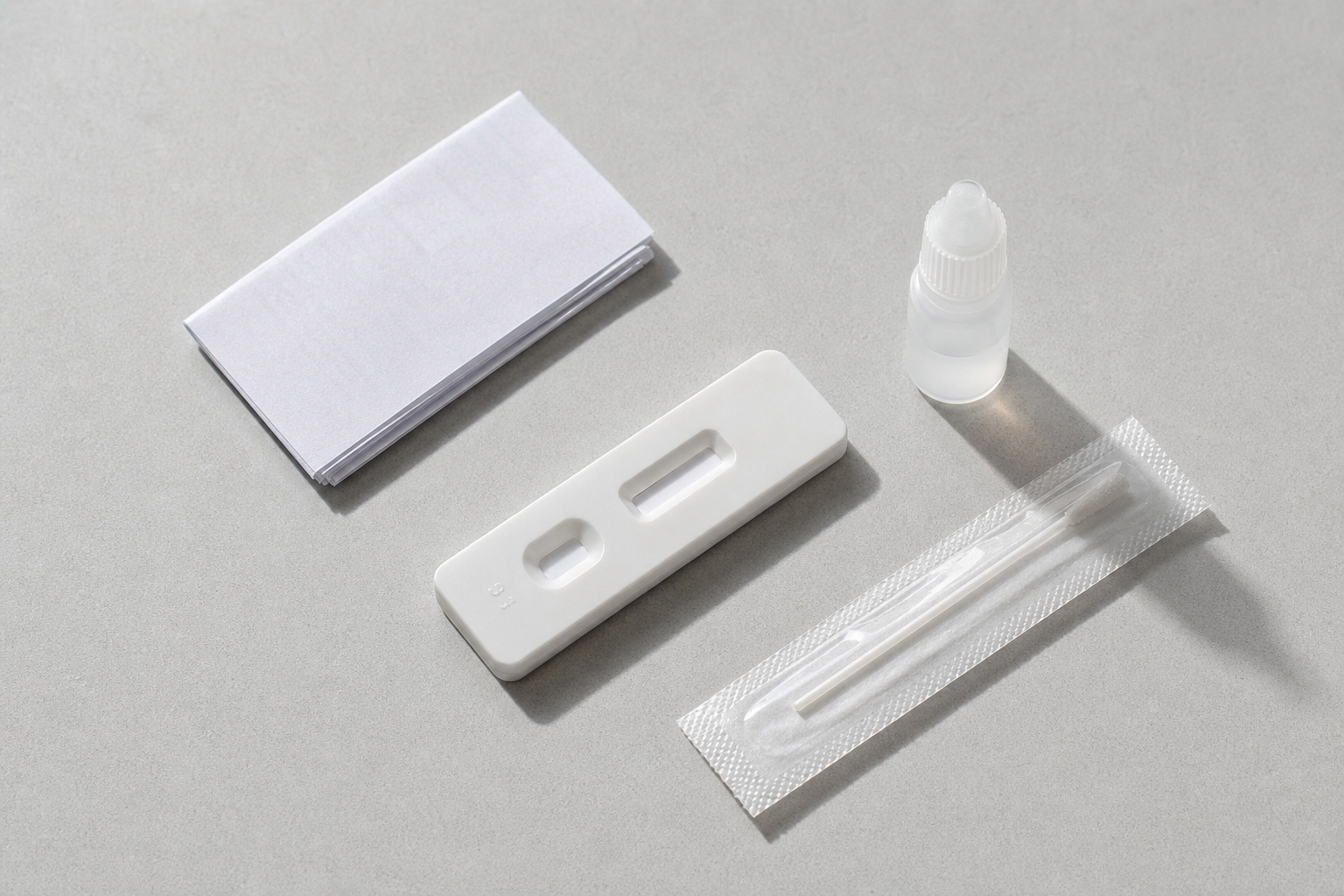
Three long-term consequences explain why screening is the standard answer, even after non-penetrative contact:
- PID and infertility. Untreated chlamydia or gonorrhea can rise into the uterus, fallopian tubes, and ovaries, causing pelvic inflammatory disease and leaving scarring that is a leading preventable cause of infertility.
- HPV-driven cancer. Persistent high-risk HPV strains drive cervical, anal, and oropharyngeal (throat and mouth) cell changes that can become cancer over years, which is why screening and vaccination matter long before symptoms.
- Late-stage syphilis. Untreated syphilis progresses through stages and can damage the cardiovascular and nervous systems decades after the original exposure.
Kissing, cold sores, and the herpes question
Of all the contact a reader who calls themselves a virgin may have had, kissing is the most universal, and it carries one real STI risk that deserves its own section. Oral HSV-1, the virus that causes cold sores, transmits through saliva and direct contact with the mouth area, including when no sore is visible. The virus sheds intermittently from the mouth even between flare-ups (CDC: about genital herpes), which is why a partner who “never gets cold sores anymore” can still pass it on.
Most people who carry HSV-1 picked it up as a child from a kiss by a family member or close adult, not from a romantic partner. The virus then stays in the body for life, with or without recurrent outbreaks. For a reader who has never had penetrative sex, an HSV-1 antibody-positive result is most often a record of that childhood exposure, not a hidden sexual history.
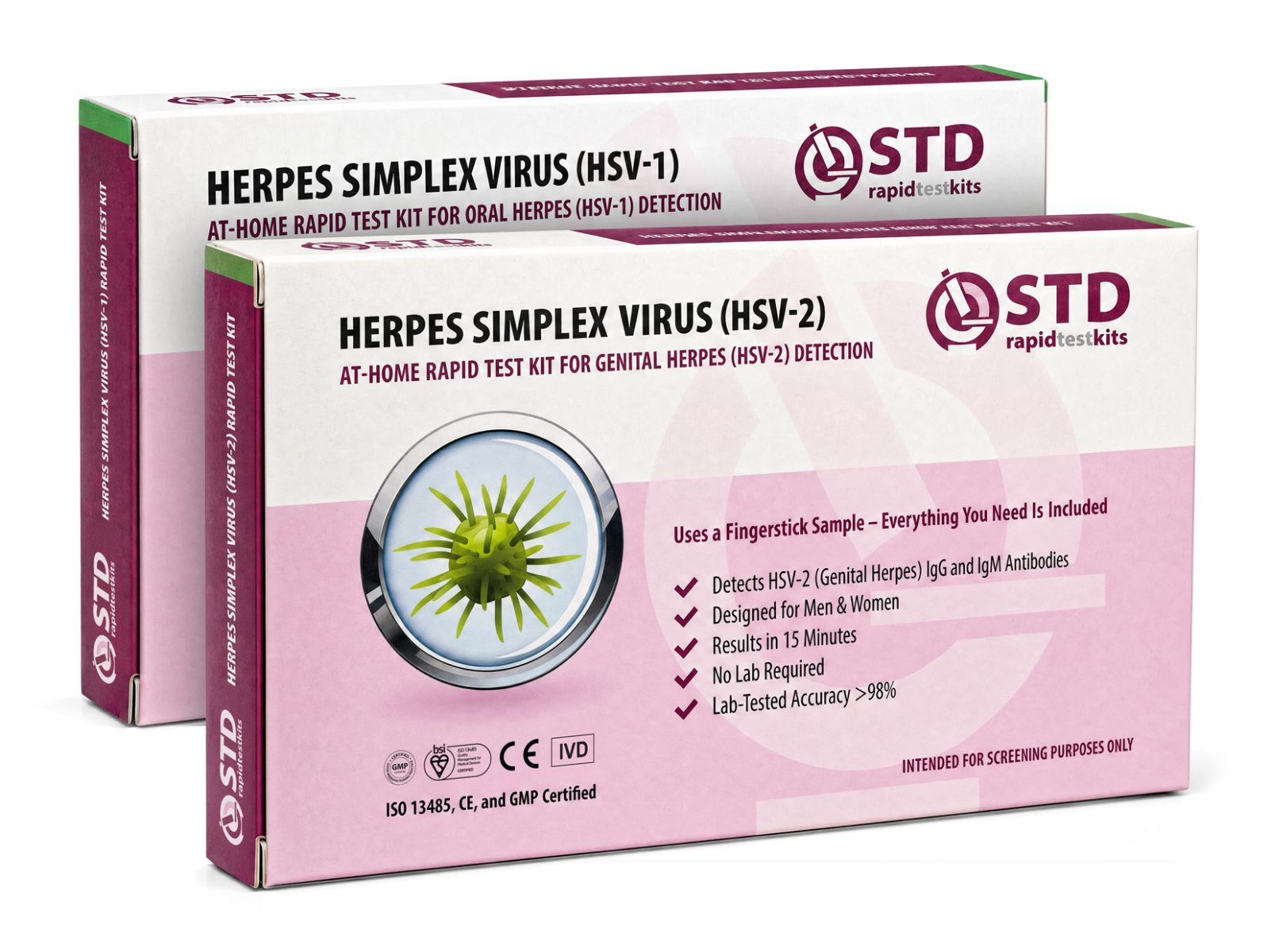
Two complications matter. First, oral HSV-1 can transmit to a partner’s genitals through oral sex, producing genital herpes in someone whose first sexual contact was non-penetrative. This is now a meaningful share of new genital herpes cases in younger adults. Second, a blood antibody test cannot tell you when seroconversion happened; a positive result indicates exposure, and the timing requires clinical context. In the interest of full disclosure, this site publishes this guide and also sells at-home rapid test kits; the recommendations here are matched to the kind of contact you had, not to what we happen to stock. If you want a baseline before scaling up intimacy with a new partner, a herpes blood panel runs at home in about 15 minutes from a fingerstick. The CDC notes that after exposure it can take up to 16 weeks or more for current antibody tests to detect HSV infection, so timing the test matters (CDC: herpes testing).
Window periods matter more than the calendar
Every infection has a window period: the time between exposure and the moment a test can reliably detect it. Test too early and you can get a false negative even though you are infected. Test after the window closes and a positive result reflects a real exposure, even if the contact happened months ago. This is also why some people are stunned by a positive result years into a relationship. The infection may pre-date the relationship entirely.
The table below summarizes typical windows for the STIs most likely to show up in someone who has not had penetrative sex. These figures describe laboratory and rapid testing in general; specific assays vary, so check each kit’s instructions for use, and confirm any positive home result with a clinical lab when possible. The hepatitis B and hepatitis C ranges follow CDC testing guidance for each infection (CDC: hepatitis B; CDC: hepatitis C).
| Infection | Typical window before a test detects it | Common non-penetrative exposure |
|---|---|---|
| Herpes (HSV-1 or HSV-2) | Per CDC herpes testing guidance, current antibody tests may take up to 16 weeks or more after exposure to detect infection. Sores can appear 2 to 12 days post-exposure | Kissing, oral sex, genital skin-to-skin contact |
| Chlamydia | Roughly 1 to 2 weeks (about 14 days) | Oral sex, shared toys, contact with pre-ejaculate |
| Gonorrhea | Roughly 1 to 2 weeks (about 14 days) | Oral sex, finger-to-genital contact when fluids are present |
| HPV | Weeks to months; many are detected only via cellular screening or visible warts | Skin-to-skin contact, oral sex, genital rubbing |
| Syphilis | Around 3 weeks for a chancre; antibody tests reliable by 12 weeks | Oral sex, genital rubbing, kissing if an oral chancre is present |
| HIV (antigen/antibody) | Per CDC: 4th-generation lab antigen/antibody test detects at 18 to 45 days; rapid finger-stick antigen/antibody at 18 to 90 days | Generally lower risk from non-penetrative contact, but possible with shared toys, blood, or open sores |
| Hepatitis B and C | Hep B surface antigen typically detectable at 4 to 10 weeks; Hep C antibody at 8 to 11 weeks | Shared blood-contact items, perinatal transmission |
What to do if you tested positive and you still call yourself a virgin
First, breathe. A positive result tells you a pathogen was detected. It does not tell you that you lied about your history, that you were reckless, or that you did anything wrong. It tells you that contact happened, somewhere, sometime, and your body picked something up. That information is useful, even if it arrives wrapped in shame you do not need to carry.
Second, confirm the result. Was it a rapid lateral-flow home test or a laboratory assay? Was it antibody-based, or did it look for the pathogen directly? Different test types have different windows and different false-positive rates. A positive screening result is worth confirming with a laboratory nucleic acid amplification test (NAAT) or, in the case of HIV, a confirmatory immunoassay. The two technologies are complementary: rapid tests deliver fast, private answers, and lab tests provide the analytical sensitivity to confirm them.
Third, treat what the lab confirms, starting with bacterial infections. Chlamydia, gonorrhea, syphilis, and trichomoniasis respond to antibiotics, with most cases of chlamydia and gonorrhea cleared with a single appointment’s worth of medication (CDC: STI treatment guidelines).
For viral infections, treatment looks different. Herpes does not have a cure, but daily suppressive therapy reduces outbreaks and lowers the chance of transmitting it to a partner. HPV often clears on its own, with persistent strains tracked through cervical screening or removed if warts appear. Hepatitis B has a vaccine and antiviral options; hepatitis C is now curable with direct-acting antivirals in most cases.
Fourth, tell recent partners. Notification is uncomfortable, and it is also the single most effective way to prevent reinfecting yourself and to limit ongoing transmission. Most state and local health departments offer anonymous partner-notification services: you give them the contact info, they reach out without using your name. If anonymous routing feels too bureaucratic, a direct text usually goes better than people expect.
Fifth, talk to a clinician without burying details. Doctors and nurses ask about sexual history because it shapes which tests, treatments, and follow-ups they recommend. Telling a clinician “we did not have sex but we did X, Y, and Z” is more useful than “I am a virgin,” because the second sentence can stop the conversation before the relevant question gets asked.
Rapid lateral-flow home kits are screening tools: they use the same swab or fingerstick sample type as a lab test and return a result in roughly 15 minutes. A laboratory NAAT for chlamydia, gonorrhea, or trichomoniasis, or a confirmatory immunoassay for HIV, has higher analytical sensitivity and is the appropriate next step after a positive screen. Use the rapid test for speed and privacy; use the lab test to confirm.
Prevention that fits where you are
Prevention does not require a specific relationship status. It requires matching protection to the kind of contact you are having or expect to have.
Vaccinate early. The HPV vaccine is most effective when given before exposure, which is why ACIP recommends routine vaccination through age 26 and shared clinical decision-making for adults aged 27 through 45 (CDC: HPV vaccination). The hepatitis B vaccine, given in infancy or as a catch-up series, protects against another infection that can spread sexually and through blood contact. Neither vaccine assumes you have had intercourse. Both work whether you have or not.
Use barriers when there is contact. Condoms reduce, but do not eliminate, transmission of infections that spread through skin areas the condom does not cover, including HPV and herpes. Dental dams (or a condom cut lengthwise) reduce the risk of pharyngeal STIs during oral sex on a vulva or anus. A fresh condom on a shared sex toy stops most cross-contamination. None of these are awkward to bring up if you frame them the way you would any other care decision.
Test on a rhythm that fits your life. The CDC recommends at least annual chlamydia and gonorrhea screening for sexually active women under 25, and for anyone with new or multiple partners (CDC: STI treatment and screening guidelines). For people in stable relationships with no concerning exposure, annual is fine. For people with frequent new partners or known exposure events, every three to six months is more useful.
Talk specifically. “We didn’t have sex” means very different things to different people. Saying what you did, and asking the same of a partner, is the only way to make the conversation accurate. That includes asking about cold sores, recent symptoms, and last test date. A partner who refuses to discuss past testing or current symptoms is giving you information worth taking seriously before any further contact.
Consider PrEP if HIV is on your radar. Pre-exposure prophylaxis is a daily pill or injectable formulation that prevents HIV in people without it. For someone with regular contact involving a partner whose HIV status is unknown or positive, PrEP is one of the highest-leverage prevention tools available.
Sexually transmitted infections can be passed from one person to another through vaginal, anal, and oral sex. Some STIs can also be passed through close skin-to-skin contact and sharing sex toys.
Where to test, even if you have not had sex
If you have had any of the contact described in this article, testing is appropriate. The route you choose depends on privacy, cost, what tissue was exposed, and how soon you need an answer.
Sexual-health clinics and primary-care offices can run a full panel, including blood draws and self-collected or clinician-collected swabs of the throat, genitals, and rectum. Many clinics offer same-day or next-day appointments, and some Title X funded clinics provide low-cost or free testing for younger patients. School and college health centers usually offer screening, and the visit does not generate a record outside the patient’s own files. For symptoms that look unusual or do not improve, or for throat and rectal exposure, a clinic is the right tool.
At-home rapid testing is a strong starting point for the common case: no symptoms, a recent non-penetrative exposure, and a preference for privacy and a fast result. The simplest decision rule is to pick the test that matches the tissue that was exposed. For genital contact (rubbing, shared toys, oral-to-genital), an at-home chlamydia and gonorrhea swab covers the genital site, paired with a fingerstick blood panel for systemic infections. For systemic exposure, a fingerstick blood panel covers HIV, syphilis, hepatitis B, and hepatitis C at the appropriate window. For throat or rectal exposure, book a clinic visit, because pharyngeal and rectal swabs are not part of our at-home lineup and the wrong sample type returns a falsely reassuring negative.
Our trichomoniasis and HPV at-home kits are validated for vaginal self-swab only; male readers needing a trich or HPV screen should see a clinic. The combination kit below covers any-gender markers. A positive home result is worth confirming with a clinical laboratory NAAT (for chlamydia, gonorrhea, or trichomoniasis) or a confirmatory immunoassay (for HIV).
Match the test to the tissue that was exposed
| What was exposed | Best at-home match | When a clinic is the right move |
|---|---|---|
| Genital area (rubbing, shared toys, oral-to-genital) | Self-collected genital swab plus a fingerstick blood panel for systemic infections | Symptoms that look unusual, do not fit a textbook pattern, or do not improve after treatment |
| Throat (oral sex performed) | Fingerstick blood panel covers HIV and syphilis from this encounter | Throat-swab testing for pharyngeal gonorrhea or chlamydia is clinic-only; we do not sell a pharyngeal swab |
| Skin-to-skin contact (kissing with sores, genital rubbing) | Fingerstick blood panel for HSV antibodies and syphilis once the window has passed | An active visible lesion: a clinic swab and PCR are more accurate than antibody testing for an early outbreak |
| Rectal area (receptive anal contact) | Fingerstick blood panel covers HIV, syphilis, hepatitis B, and hepatitis C | Rectal-swab testing is clinic-only; we do not sell a rectal-swab kit |
At-home kits are well suited to genital swab and bloodwork screening; throat and rectal swabs belong at a clinic.

Frequently asked questions
- Can I really get an STI from kissing alone?
- Yes, though the list is short. Oral HSV-1 (the virus that causes cold sores) is the most common kissing-transmitted infection, and you can pick it up even if the partner has no visible sore at the moment, because the virus sheds intermittently. In rare cases, syphilis can also pass through kissing if a chancre is present in or around the mouth.
- I have only had oral sex. Should I test?
- Yes. Oral sex can transmit gonorrhea, chlamydia, syphilis, herpes, and HPV. Throat infections in particular are often symptom-free. A genital and a pharyngeal screen together give you a clearer picture, and the pharyngeal swab is best done at a clinic since most home kits are designed for genital self-collection.
- There was no ejaculation. Am I safe?
- Lower risk, but not zero. Pre-ejaculate can carry HIV and other STIs in lower concentrations. Saliva can transmit gonorrhea and (rarely) HSV. Skin-to-skin contact transmits HSV and HPV regardless of fluid exchange. Whether ejaculation happened is one variable; whether mucous membranes or skin made contact is another.
- My partner says they are a virgin too. Are we both safe?
- Not automatically. Either of you could carry oral HSV-1 from a non-sexual childhood exposure, HPV from previous skin-to-skin contact, or hepatitis B from perinatal transmission or shared blood-contact items like razors. The honest move is for both partners to do a baseline screen before scaling up intimacy, and to talk specifically about cold sores, past contact, and current symptoms.
- How long after a possible exposure should I wait to test?
- It depends on the infection. Chlamydia and gonorrhea are reliably detectable about 1 to 2 weeks after exposure. Per CDC HIV testing guidance, a 4th-generation antigen/antibody lab test can usually detect HIV at 18 to 45 days, with rapid finger-stick antigen/antibody tests detecting at 18 to 90 days. Per CDC herpes testing guidance, current antibody tests may take up to 16 weeks or more after exposure to detect HSV infection. Syphilis antibodies are usually detectable by 12 weeks. If you cannot wait the full window, you can still test now to rule in an existing infection, then retest at the outer edge of the window if the first result is negative but you remain concerned.
- I feel completely fine. Do I still need to test?
- Yes, if you have had any of the contact described above. Most chlamydia, oral gonorrhea, HPV, and early herpes infections cause no symptoms. Symptoms are not a reliable signal of infection or non-infection. The only way to convert “I feel fine” into accurate information is a test.
- Does the HPV vaccine still help if I have not had sex yet?
- Yes, and the timing is as good as it gets. Pre-exposure vaccination is exactly what the series was designed for, since the vaccine teaches your immune system to recognize HPV strains before any potential exposure. For adults 27 through 45, a conversation with your provider about personal HPV risk helps decide whether catch-up vaccination adds meaningful benefit in your situation.
- Why don’t you sell a throat-swab kit?
- Pharyngeal screening for gonorrhea and chlamydia is most accurate as a clinic-collected swab analyzed by lab NAAT. Reliable at-home throat options exist as mail-in lab tests, not as rapid lateral-flow kits. We say so plainly because shipping the wrong sample type would hand you a falsely reassuring negative. Our genital swabs and fingerstick blood tests are well matched to their sample types; a throat concern belongs at a clinic.
- What if a clinic dismisses my concern because I count as a virgin?
- If oral, rubbing, or shared-toy exposure happened, you have a clinical reason to test, and you can ask the clinician to note in your record why they declined. If the conversation stalls, an at-home rapid kit gives you the same screening result for the relevant infections without the friction. Save the clinic for confirmation if anything comes back positive.
- I tested positive after only non-penetrative contact. Now what?
- Confirm the result with a clinic-administered diagnostic, especially for HIV, syphilis, and HSV. Get treated if it is bacterial; manage with antivirals if it is viral. Notify recent partners directly or through your local health department’s anonymous partner-services program. The path from positive test to handled situation is well-established for every common STI; treat it as a sequence of steps.
- U.S. Centers for Disease Control and Prevention. About STI risk and oral sex, covering pharyngeal gonorrhea, chlamydia, syphilis, herpes, HPV, and HIV transmission through oral contact.
- U.S. Centers for Disease Control and Prevention. Herpes testing and transmission: HSV-1 and HSV-2 spread, asymptomatic shedding, and the up-to-16-weeks-or-more antibody-detection window cited in this article.
- U.S. Centers for Disease Control and Prevention. STI treatment guidelines: clinical reference for screening recommendations, including at least annual chlamydia and gonorrhea screening for sexually active women under 25, plus diagnosis and treatment across STIs.
- World Health Organization. Sexually transmitted infections (STIs) fact sheet, documenting that more than 30 pathogens spread through vaginal, anal, and oral sex, plus global epidemiology.
- UK National Health Service. Sexually transmitted infections overview, source for the point that many STIs cause no symptoms and can be carried unknowingly.
- MedlinePlus (U.S. National Library of Medicine). Sexually transmitted infections, source for transmission through oral and skin-to-skin contact beyond intercourse.
