Published: September 2025 | Last updated: May 2026 | Editorial review and quality control: Martina N.
Dormant sexually transmitted infections do not disappear from the body. They settle into specific cells, held in check by your immune system and a layer of cellular switches that keep viral genes quiet. When something disturbs that balance, an unusually stressful month, a hard flu, a course of immune-suppressing medication, or a major hormonal shift, the infection can wake up. Often it does so in the same body region where it first appeared, with symptoms that are milder than the original outbreak.
This guide walks through which STIs go dormant, what triggers reactivation, what a flare-up actually looks like, how to tell reactivation apart from a brand-new infection, and when retesting is the right next step.
Key Takeaways
- Sustained stress, acute illness, hormonal shifts, and immune-suppressing medication can reactivate dormant herpes, HPV, HIV, and syphilis.
- Reactivation usually shows up in the same body region as the original infection, with milder symptoms that resolve faster than the first episode.
How Dormant STIs Stay Hidden
Dormancy is not the same as being cured. The pathogen is still inside you. It is just quiet, with very low or no replication, and your immune system, sometimes alongside antiviral medication, keeps it that way.
Each infection has its own hiding strategy:
- Herpes simplex virus (HSV-1 and HSV-2) retreats into sensory nerve cells called ganglia after the first outbreak resolves. The virus stays present for life and can reactivate periodically, traveling back down the nerve to produce new sores in the same anatomical region (WHO herpes simplex virus fact sheet).
- HPV persists in the basal layer of skin or mucosal cells. Most infections clear within one to two years thanks to immune control. Some persist quietly and can re-emerge as warts or cervical cell changes when immunity drops or hormones shift (CDC HPV information).
- HIV integrates its genetic material into the DNA of long-lived immune cells, forming a latent reservoir that current antiretroviral therapy (ART) cannot fully eliminate. People on stable ART suppress the virus to undetectable levels, but stopping ART allows the reservoir to rebound within weeks (HIV.gov federal HIV information).
- Syphilis can enter a latent stage after the early symptoms resolve. The bacterium Treponema pallidum persists in tissues without symptoms, sometimes for years, and can progress to late-stage disease affecting the heart, brain, or other organs if it is not adequately treated (NHS syphilis information).
The cellular machinery that keeps these infections quiet is a mix of immune surveillance and epigenetic control. Methylation patterns and histone modifications act as off-switches, locking viral genes in a silent state. As long as those switches stay closed and immune cells continue their watch, the infection holds steady. When the chemistry around the viral DNA loosens, even slightly, expression of viral proteins can resume and replication can restart.
Treatment matters here too. ART for HIV, suppressive antivirals for HSV, and adequate antibiotic treatment for syphilis all reduce the chance of reactivation or progression. Continued immune and pharmacologic pressure holds dormancy in place, so the absence of symptoms should never be read as a signal to stop treatment.
HSV settles into sensory nerve ganglia. HPV stays in the basal layer of skin and mucosal cells. HIV integrates into the DNA of long-lived immune cells. Syphilis lives in deep tissue. The hiding site shapes which symptoms appear on reactivation and where they show up in the body.
Why Stress Lowers Your Immune Defenses
Your immune system runs as a network of cells, signals, and feedback loops that respond constantly to what your body is going through. Long-running stress changes that network in measurable ways.
Chronic psychological stress raises cortisol, the hormone that prepares the body for sustained threat. Elevated cortisol over weeks and months suppresses several arms of immunity, including the T-cells responsible for keeping latent viruses in check. Sleep deprivation, untreated anxiety, grief, and burnout all push cortisol in the same direction. The result is a slower, less effective response to anything the immune system was previously holding down.
Acute stressors matter too. A bad case of flu, a course of corticosteroids prescribed for an inflammatory condition, sunburn over the affected nerve area, or even dental work near the trigeminal nerve are all associated with HSV reactivation in clinical observation. The pattern is consistent across these examples: when the immune system shifts focus or capacity drops, surveillance over latent infections weakens enough for the virus to express itself again.
The molecular layer matters too. Stress-related signals can alter the chemistry around viral DNA, loosening the epigenetic locks that keep latent genes silent. Once the silencing weakens, the virus has more room to express its proteins and start replicating, which can produce visible symptoms within hours or days.
The takeaway is simple: any prolonged drag on the immune system, whether mental, physical, or chemical, can tip a fragile balance. People who manage stress, sleep regularly, and treat underlying chronic conditions tend to report fewer flare-ups per year than people running on chronic depletion.
Can stress alone reactivate a dormant STI?
Yes, in specific cases. Sustained stress raises cortisol and lowers T-cell surveillance, which can let HSV slip out of latency. HPV lesion recurrence and HIV viral rebound also track with immune status, though HIV rebound is mostly driven by interrupted ART rather than stress alone. In practice, stress rarely acts in isolation; it usually combines with sleep loss, illness, hormonal change, or interrupted treatment to push reactivation over the threshold.

How Long Can an STI Stay Dormant?
Dormancy length varies widely between infections and between individuals. The table below summarizes typical patterns based on CDC, WHO, and NHS guidance. Some people experience flare-ups within weeks of the original infection. Others stay symptom-free for decades before something tips the balance.
For HSV specifically, recurrent flares often become less frequent over time, though late reactivation has been reported in older adults during periods of severe illness or immune suppression. With HPV, the virus can remain undetectable on routine screening for years before a hormonal change, immune drop, or pregnancy renders it visible again. For syphilis, the latent stage can extend ten years or more before late-stage symptoms appear, which is one of the reasons routine syphilis screening matters even in people without recent exposure.
| Infection | Typical Dormant Period | Reactivation Pattern |
|---|---|---|
| Herpes (HSV-1 / HSV-2) | Days to years between flares | Recurs in the same nerve region as the original outbreak; flare frequency tends to decrease over time |
| HPV | Months to decades | Can produce warts or cervical cell changes years after the initial infection, often after a hormonal or immune shift |
| HIV | Years on ART; lifelong without treatment | Latent reservoir is suppressed by ART; viral load can rebound within weeks if ART is interrupted |
| Syphilis | Months to decades | Latent stage can progress to tertiary syphilis with cardiac, neurological, or organ damage if left untreated |
What Triggers an STI to Reactivate
Reactivation is not random. It tracks with measurable changes in immune capacity, hormonal balance, or local tissue stress. The most commonly documented triggers fall into a few categories.
Psychological stress. Long stretches of high-cortisol stress, the kind that comes with grief, burnout, divorce, or sustained anxiety, lower T-cell surveillance enough that HSV flares become more likely. Many people with recurrent herpes report flares clustering around exam periods, deaths in the family, job loss, or major life changes.
Physical stressors. Fevers, sunburn near the affected nerve area, dental procedures, and trauma to the skin can act as local triggers. Nerve irritation may push HSV out of latency in the same anatomical region. Severe illness anywhere in the body can also free up latent infections by drawing immune resources elsewhere.
Hormonal shifts. Some women report flares around menstruation, ovulation, after switching hormonal contraceptives, or during pregnancy. Estrogen and progesterone modulate immune cell activity, and large shifts in either can subtly weaken viral suppression. Pregnancy in particular shifts maternal immunity to tolerate the fetus, which has been linked to HPV recurrence and herpes flares in some patients.
Immune-suppressing medication. Corticosteroids, chemotherapy, biologics for autoimmune disease, and post-transplant medication all reduce immune function and increase reactivation risk. People starting these treatments are typically screened for latent infections beforehand, and prophylactic antiviral or antibiotic coverage is often prescribed.
Other infections. A common cold, a urinary tract infection, or any acute illness can pull immune resources away from chronic surveillance. Layered with poor sleep, heavy alcohol use, or a stretch of inadequate nutrition, that diversion is sometimes enough to allow a latent virus to express itself.
Treatment interruption. For HIV, missed ART doses are the leading cause of viral rebound. For HSV in people on daily suppressive therapy, stopping the medication often allows flares to return at the previous baseline frequency. Adherence is one of the most modifiable risk factors here.
None of these triggers guarantee reactivation. They raise the probability, especially when several happen at once.
- Psychological stress: chronic high cortisol from grief, burnout, sustained anxiety
- Physical stressors: fever, sunburn, dental work, skin trauma
- Hormonal shifts: menstruation, contraceptive change, pregnancy
- Immune-suppressing medication: corticosteroids, chemotherapy, biologics, post-transplant drugs
- Co-existing infections: cold, flu, UTI, any acute illness
- Treatment interruption: missed ART or suppressive antiviral doses
What Reactivation Looks Like in Real Life
Reactivation does not always feel dramatic. Many people miss it the first time it happens because the symptoms are milder than the original infection. Three patterns capture most cases.
The familiar tingling. Someone with a herpes diagnosis from years ago wakes up with a faint burning or itching at the same spot on the inner thigh where the original outbreak appeared. The skin looks normal at first. Within twenty-four hours, two or three small clear blisters develop. The flare lasts five to seven days and resolves without scarring. This is classic recurrent HSV-2: same nerve region, faster healing than the first episode, often preceded by a prodrome of tingling, itching, or aching that lets the person recognize what is starting (NHS genital herpes information).
A screening result that surprises. A woman who had a normal Pap smear five years ago is screened during pregnancy and the result shows high-grade cervical cell changes. She is told this likely reflects HPV that was previously dormant. Pregnancy-related immune shifts have allowed cellular changes to develop. The clinical response is colposcopy and follow-up, not panic. HPV-related cervical change is monitored over time, and most progressions are slow enough that routine screening catches them before they become invasive.
Late symptoms after years of silence. A man treated for primary syphilis in his twenties begins to experience subtle memory and balance problems in his late forties. Spinal fluid testing confirms neurosyphilis. The infection had moved through latent stages for two decades before producing late-stage symptoms. This pattern is preventable with adequate early treatment and routine screening, but it does happen, especially when initial treatment was incomplete or follow-up testing was missed.
Each of these patterns is recognizable to clinicians. The body region, the speed of healing, and the comparison to the first episode usually tell them whether something has reactivated or whether they are looking at a new exposure. For the person experiencing the flare, panic does not help. The most useful response is to track what was different in the weeks before symptoms (sleep quality, recent illness, hormonal changes, treatment lapses) and bring that context into the testing or clinic visit.
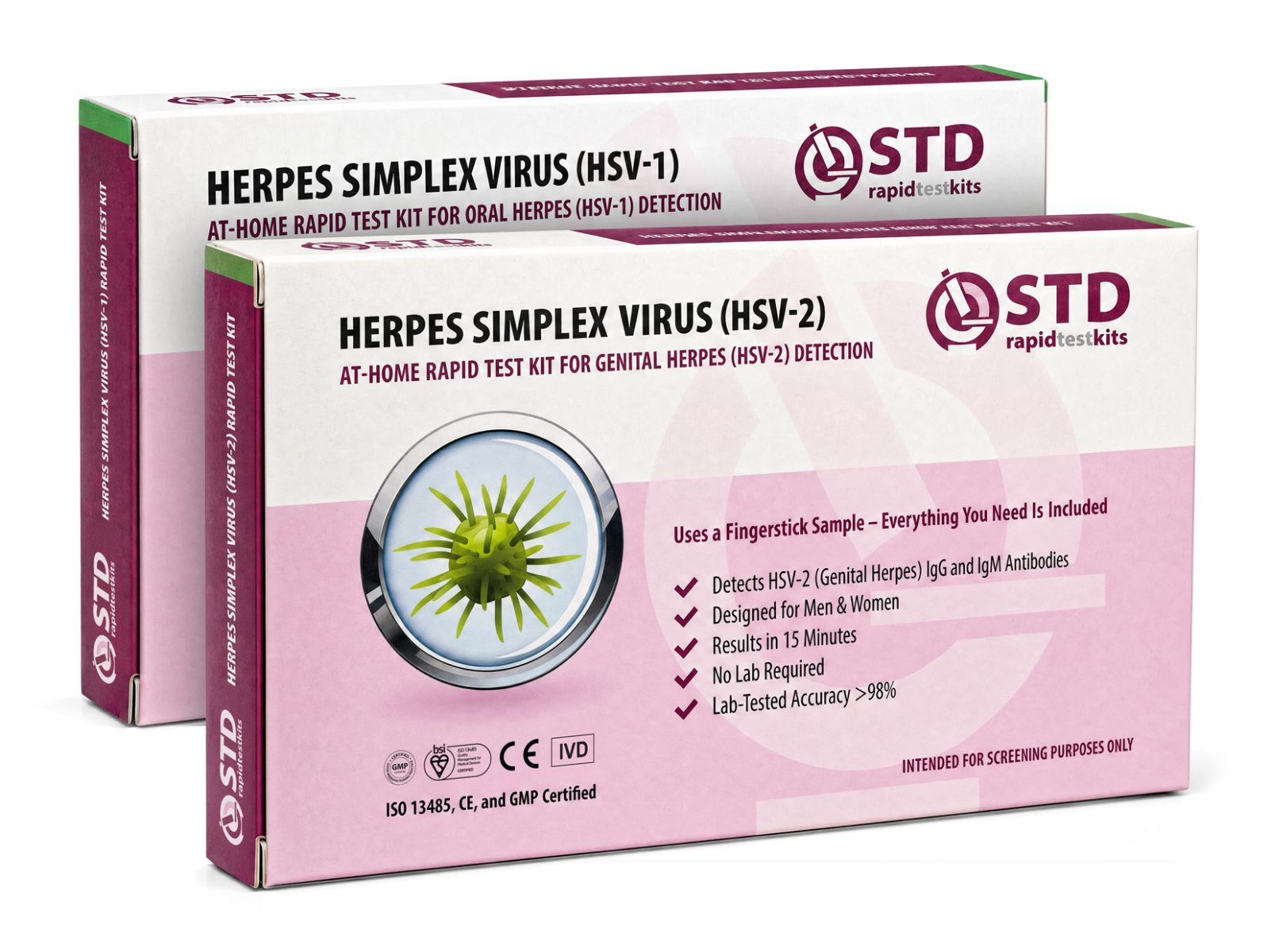
This article is published by stdrapidtestkits.com, which sells at-home STI testing kits. We recommend the kits below because they fit the specific concerns this article covers. A positive at-home rapid result should always be confirmed with a clinic-based test before treatment or partner-notification decisions.
Reactivation vs Reinfection: How to Tell Them Apart
If you had an STI in the past and symptoms come back, two questions matter: is this the same infection waking up, or did you catch something new from a recent partner? The answer changes how you treat it and how you talk to a partner about timing and risk.
Reactivation usually shows up in the same anatomical region as the original infection, with milder symptoms that resolve faster than the first episode. Your immune system already has memory of the pathogen, so the response is partial and the flare is shorter. Reinfection is more often a fresh-feeling presentation, sometimes in a different body site, and follows the standard incubation window for that infection.
Distinguishing the two is not always clean. A herpes flare in the same nerve region as a known prior outbreak strongly suggests reactivation. Symptoms in a new anatomical site after a new partner suggests a new exposure. PCR-based testing during the active flare gives the most accurate read; ask your clinician about NAAT (nucleic acid amplification testing, a highly sensitive lab method that detects viral DNA at very low concentrations) options if the distinction matters for treatment, partner notification, or relationship decisions.
| Feature | Reactivation | Reinfection |
|---|---|---|
| Body location | Same area as the original outbreak | Can appear in any anatomical site |
| Symptom severity | Often milder, resolves faster | Resembles a fresh first infection |
| Time after exposure | No new exposure required | Follows the standard incubation window |
| Test result pattern | May be falsely negative if shedding is low | Likely positive on PCR or NAAT during the symptomatic window |
When and How to Test for a Reactivated STI
The most accurate test results come from sampling during active symptoms. When sores, discharge, burning, or unusual irritation are present, viral DNA or bacterial material is at its highest concentration in tissue, which makes detection most reliable. For HSV, lesion swabs analyzed by PCR are the most sensitive method during a flare. They detect viral DNA even in early or atypical lesions where culture would miss the virus. For syphilis, blood antibody testing using RPR (rapid plasma reagin) and treponemal tests, the two complementary markers that confirm syphilis, tracks the infection over time and remains useful even outside an active flare.
What if symptoms have already faded by the time you can act? You have a few options:
- Wait and re-evaluate. If symptoms recur, swab during the next flare. Many recurrences happen within weeks or months of each other, so the next opportunity is often closer than people expect.
- Antibody testing. For HSV-2, syphilis, and HIV, blood-based antibody tests can confirm prior exposure even after symptoms resolve. They will not pinpoint the timing of the most recent flare, but they tell you whether the infection is present at all.
- Routine screening. If you are sexually active, screen at the intervals your clinician recommends. CDC guidance for adults at any risk includes annual HIV testing and routine syphilis testing for those at increased risk (CDC STD information).
The hardest case is the gray zone, where symptoms are mild, ambiguous, or already resolved. If you have been exposed to a partner with a recent diagnosis, retest at the appropriate window for that infection even if you feel normal. Several STIs shed quietly without visible signs, especially HSV and HPV. A positive antibody result confirms the infection is present but cannot pinpoint when the most recent flare occurred; for timing clarity, lesion PCR during an active episode is more informative.
If clinic access is difficult, at-home test kits offer a convenient first step. They are screening tools that use lateral-flow chemistry: a positive result should be confirmed with a clinical test, and a negative result during the window period does not rule out infection. The combo kits below cover the infections most often involved in dormancy and reactivation conversations.

How to Lower the Risk of STI Reactivation
Reactivation cannot always be prevented, but the chances can be reduced. The targets line up with the triggers: stress, sleep, hormonal stability, treatment adherence, and routine screening.
Manage chronic stress. Sleep, regular exercise, and social support are not soft recommendations for sexual health. They directly affect cortisol levels and T-cell function. People who maintain consistent sleep and reduce sustained stress report fewer HSV flares per year than people running on chronic depletion.
Stay current on treatment. If you are HIV-positive, ART adherence is the single most effective tool for keeping the virus suppressed. Missed doses for even short periods can allow viral rebound. For people with frequent or severe HSV flares, daily suppressive therapy with valacyclovir or acyclovir reduces flare frequency and lowers the risk of transmission to a partner. Talk with your clinician about whether continuous or episodic therapy fits your situation.
Address co-existing conditions. Diabetes, malnutrition, untreated thyroid disease, and chronic inflammatory conditions all weaken immune surveillance. Routine primary care that keeps these conditions under control reduces the background risk of STI reactivation in addition to the obvious health benefits.
Track patterns. If your flares are linked to your menstrual cycle, hormonal contraceptive changes, or specific physical triggers like sunburn, knowing the pattern lets you anticipate and pre-emptively use suppressive therapy if your clinician recommends it. A simple symptom diary makes this easier than relying on memory alone.
Get vaccinated where possible. The HPV vaccine prevents the high-risk HPV strains responsible for most cervical and anogenital cancers. Per ACIP guidance, routine vaccination is recommended through age 26, with shared clinical decision-making through age 45 (CDC HPV information). Hepatitis B vaccination prevents another infection that can become chronic.
Test consistently. Routine screening at intervals appropriate for your situation catches silent reactivation early, when treatment is simpler and complications are easier to prevent.
Reactivation reflects the biology of these infections. Living with a dormant STI is common, manageable, and compatible with healthy relationships when both partners share clear information and act on it.

There is no cure for genital herpes. Daily suppressive medication can lower the chance of passing the infection to your partner.
FAQs
- Can stress alone reactivate a dormant STI?
- Stress rarely acts alone, but sustained stress can lower immune surveillance enough to allow latent viruses like HSV to reactivate. The trigger usually combines with sleep loss, illness, or hormonal changes. In people on stable HIV treatment, stress alone does not cause viral rebound; missed ART doses do. The practical takeaway is that stress is one risk factor among several, and reducing the others reduces overall flare risk.
- How long can an STI stay dormant?
- It depends on the infection. Herpes can stay quiet for weeks to years between flares. HPV can persist for months to decades, sometimes appearing only at mid-life screening. Syphilis can remain in latent stages for many years before causing late-stage symptoms. HIV requires lifelong management because the latent reservoir does not clear with current treatment.
- What does a herpes flare-up feel like before sores appear?
- Many people notice a prodrome of tingling, itching, burning, or mild aching in the same area where past outbreaks occurred. The skin often looks normal at this stage. Prodromal symptoms usually appear hours to one or two days before visible blisters and are a good time to start antiviral medication if your clinician has prescribed it.
- Can I transmit an STI when I have no visible symptoms?
- Yes, especially with HSV and HPV. Both viruses can shed asymptomatically, meaning the virus is present on skin or mucosa without sores or warts. Daily suppressive therapy for HSV reduces but does not eliminate transmission risk. Consistent condom use reduces but does not fully prevent transmission. For HIV, an undetectable viral load on stable ART means the virus is not transmitted sexually.
- Could returning symptoms be a new infection rather than reactivation?
- Both are possible, and timing helps distinguish them. A flare in the same body region as a previous outbreak, with milder and faster-healing symptoms, points toward reactivation. A fresh-feeling presentation in a new anatomical site after a new partner points toward a new exposure. The most reliable confirmation is PCR or NAAT testing during an active flare, and the distinction matters for partner notification and treatment planning.
- Do flare-ups always need treatment?
- Not always. Mild herpes flares often resolve on their own within five to seven days. Antiviral medication shortens flare duration and is useful for severe or frequent recurrences. For HPV-related cell changes, monitoring or specific procedures may be needed depending on severity. For syphilis, any positive test result requires medical evaluation regardless of symptom presence.
- Will an at-home test detect a reactivated infection?
- At-home rapid kits use lateral-flow chemistry similar to many clinic-based screens. They detect antibodies for blood-based tests or pathogen presence for swab-based tests. During an active flare with visible lesions, swab-based PCR done in a clinic is more sensitive than at-home rapid tests. At-home tests are most useful for screening, ruling out other infections, or as a starting point before a clinic visit.
- Should I tell a partner about a flare-up?
- Yes. Honest conversation lets your partner make informed decisions about timing of sex, testing, and barrier methods during a flare. It also supports trust and helps both people avoid surprises. If the conversation feels difficult, frame it as a health update rather than a confession; many partners respond well to clarity and care.
You Deserve Clear Answers, Not Guesswork
STI reactivation is part of the biological dance between your body and an infection that has been quiet for a while. Sometimes the balance tips. What matters most is what you do next: notice the pattern, test when symptoms are active, talk with a clinician about suppressive options, and keep your partner informed.
If symptoms are showing up again, or if a partner has been diagnosed and you want to know where you stand, an at-home rapid test is a reasonable first step. Confirm any positive result with a clinical test, and remember that a negative result inside the window period does not rule out infection. Clarity is the goal; the testing tools are just the way to get there.
Three practical next steps
- Test during active symptoms when possible. Lesion swabs analyzed by PCR are the most sensitive method during an HSV flare, and viral or bacterial material is at its highest concentration when symptoms are visible.
- Confirm any positive at-home rapid test with a clinic-based test before making treatment or partner-notification decisions, and confirm a negative result with a follow-up test if it falls inside the window period for that infection.
- Ask your clinician about daily suppressive antiviral therapy if HSV flares are frequent or severe, and about ART adherence support if you are managing HIV; both directly reduce reactivation risk.
How We Sourced This Article: Our article was constructed based on current advice from the most prominent public health and medical organizations, then translated into plain language for the situations readers actually face. We drew primarily on CDC, WHO, and NHS guidance for the clinical facts about latency, reactivation, and testing, and we cite the relevant root pages so you can read the source material yourself. This is editorial summary writing, not clinical advice; for symptoms that concern you, see a licensed provider.
- U.S. Centers for Disease Control and Prevention. Sexually transmitted diseases information hub covering screening recommendations, latent infections, and treatment guidelines.
- U.S. Centers for Disease Control and Prevention. Human papillomavirus information including persistence, vaccination, and cervical screening guidance.
- World Health Organization. Herpes simplex virus fact sheet covering global epidemiology, latency, and reactivation patterns.
- HIV.gov. Federal information hub on HIV, including the latent reservoir and the role of antiretroviral therapy in suppressing rebound.
- U.K. National Health Service. Genital herpes overview including recurrence patterns and treatment options.
- U.K. National Health Service. Syphilis overview including latent and late-stage disease and the importance of complete treatment.
