Can Soap Ruin an STD Swab Test? What You Need to Know
Why timing matters more than cleanliness before a swab test



- Soap does not cure or remove an STI. Used on the test area minutes before a swab, however, it can temporarily lower how much organism the test recovers, which raises the risk of a false negative on a screening-level rapid test.
- If you washed close to testing and got a negative result while still having symptoms or a clear exposure, wait 24 to 48 hours, avoid soap on the test area in that window, and retest (or seek a clinic-based confirmatory test).
Published: August 2025 | Last updated: May 2026 | Editorial review and quality control: Martina N.
You finished the swab. You're waiting for the result, and your brain replays the morning: the shower, the soap, the rush out the door. A specific worry surfaces. Should you have washed before testing?
It is one of the most common questions people raise after at-home STI testing. Washing feels responsible, even careful. The logic seems airtight: a clean body should give a cleaner result. Swab-based testing, though, runs on a different set of rules than everyday hygiene, and the timing of soap matters more than most people expect.
This article walks through what swabs are actually trying to detect, when soap (and a handful of other small pre-test habits) can blunt that signal, what to do if you already washed before testing, and when retesting is the right call rather than overreacting.
What a Swab Test Is Actually Looking For
Swab tests do not look for visible dirt or symptoms. They look for microscopic evidence: bacteria such as Chlamydia trachomatis and Neisseria gonorrhoeae, viral particles like herpes simplex virus during shedding, or, in lab-processed kits, fragments of DNA or RNA. These organisms live on mucosal surfaces inside the vagina, urethra, throat, or rectum, in concentrations that vary by infection stage and individual.
Washing the area, especially with soap, does not sterilize the body. It can, in the moments after a wash, temporarily reduce the concentration of organisms or surface material that a swab is trying to recover. The infection is not going anywhere. The sample, at that exact timepoint, simply has less to pick up.
Imagine wiping fingerprints off a surface right before someone tries to dust for them. The person was still there. The evidence is just harder to recover from that surface at that moment.
| Test Target | What It Means | Effect of Recent Soap Use |
|---|---|---|
| Bacteria (e.g., chlamydia, gonorrhea) | Living organisms on tissue surfaces | May temporarily reduce detectable surface load |
| Viruses (e.g., herpes during shedding) | Active viral particles on skin or mucosa | May disrupt local surface presence |
| DNA/RNA fragments (lab NAAT) | Genetic traces of infection | Less affected, but extreme dilution still possible |
| Cellular material (some assays) | Host cells carrying infection markers | May be reduced after aggressive scrubbing |
So Can Soap Ruin Your Test?
"Ruin" is a strong word. In specific situations, soap can interfere enough to push a borderline result toward a false negative, especially with a low-level or very early infection where the organism load is already on the low end of what a rapid test can detect.
The conditions matter: how recently the wash happened, how aggressive the cleaning was, what type of soap was used, and where on the body the test is being collected. A shower a few hours before testing is generally fine. A direct scrub with antibacterial soap on the testing area minutes before swabbing is where accuracy can drop. Public-health agencies and clinics that handle specimen collection routinely advise patients not to scrub the genital area in the hour or two before a swab, and the same logic applies at home where you control the timing yourself.
- Recency. A wash 12 hours before a swab is essentially irrelevant; a wash 12 minutes before is the highest-risk window.
- Aggressiveness. Plain rinsing is gentler than scrubbing, and scrubbing is gentler than douching.
- Soap type. Antibacterial and intimate washes are more disruptive than plain soap and water.
- Test location. Vaginal, urethral, and pharyngeal sites are more sensitive to recent washing than fingerstick blood tests, which are essentially unaffected.
Where Soap Matters Most (and Where It Doesn't)
Not all swab tests are equally sensitive to recent washing. The location of the sample changes everything, because each anatomical site has its own microbial environment, mucosal characteristics, and clinical sample-collection technique. A self-collected vaginal swab samples a fundamentally different surface than a fingerstick blood draw or a clinic-collected pharyngeal swab.
The takeaway from the table below: soap does not cure or remove an infection. It can, however, reduce surface concentrations enough to affect a screening-level rapid test if the wash happened right before the swab. Blood-based tests, by contrast, are basically unaffected by surface washing because the analyte they measure (antibodies, antigens) is circulating internally and reached through a fingerstick.
| Test Type | Impact of Soap on Sensitivity | Why It Matters |
|---|---|---|
| Vaginal Swab (self-collected) | High | Soap and intimate washes can disrupt the natural microbial environment |
| Pharyngeal/Oral Swab (clinic) | Moderate | Brushing, mouthwash, eating, drinking can lower detectable organisms |
| Urethral Swab | Moderate to High | Recent washing and urination can both dilute the surface sample |
| Rectal Swab (clinic) | Moderate | Aggressive cleaning can alter detectable surface presence |
| Fingerstick Blood (HIV, syphilis, hepatitis, HSV) | Negligible | Bloodborne markers are not affected by washing the skin |
Can soap ruin an STD swab test?
Yes, in narrow conditions. Soap used on the test area within an hour or two of swab collection can lower detectable bacterial or viral load, especially for vaginal, oral, and urethral swabs. It does not cure the infection; it just makes that one specific sample less sensitive. If you washed close to testing and your result is negative despite a clear exposure or persisting symptoms, retest after 24 to 48 hours of normal hygiene (no aggressive scrubbing of the test area), or follow up with a clinic-based NAAT for the relevant infection.
The Real Risk: False Negatives That Feel Like Relief
A false negative often registers as relief in the moment. You exhale, move on, and stop thinking about it. Days later, when symptoms persist or a partner's result comes back positive, that initial relief can look very different.
The infection did not disappear; it simply was not detected at that specific sampling moment. Anyone testing after a clear exposure or while symptoms persist should treat a single negative result as a snapshot, not a final verdict, particularly when timing or preparation may have shifted the signal. According to the CDC's STI screening guidance, repeat testing is recommended when symptoms continue or when a partner is diagnosed, regardless of an earlier negative.
Many sexually transmitted infections do not cause symptoms. Getting tested is the only way to know for sure if you have an STI.
If You Already Washed, Here's What to Do Next
First, the panic does not help. Washing does not automatically invalidate a test. It introduces a variable that may, in some scenarios, lower sensitivity at that single timepoint.
If the test comes back negative and the situation that prompted testing still feels unresolved (recent exposure, ongoing symptoms, a partner who notified you of a positive result), the safest move is a retest. Give the test area 24 to 48 hours without scrubbing or antibacterial products before swabbing again. The body's natural surface presence restores quickly, and a fresh sample at the right detection window is a more reliable signal.
If testing is still ahead of you, the rule is simple: avoid washing the specific test area in the hour or two before collection. Normal everyday hygiene is fine. Aggressive scrubbing in the minutes leading up to the swab is the part to skip.

Timing Matters More Than the Soap Itself
Soap is not a magic eraser, and it does not wipe out an active infection. What matters is timing: how close the cleaning happened relative to specimen collection. The same wash that is irrelevant at 12 hours out can be a real variable at 12 minutes out.
A shower the night before generally has no effect on a morning swab. An aggressive wash of the exact test area minutes before swabbing, especially with antibacterial or pH-shifting products, is where the signal can shift. This is why specimen-collection instructions often include guidance about avoiding urination, douching, brushing teeth, or eating right before certain swabs. The reasoning is biological: preserve what the test needs to see at the moment the swab touches tissue.
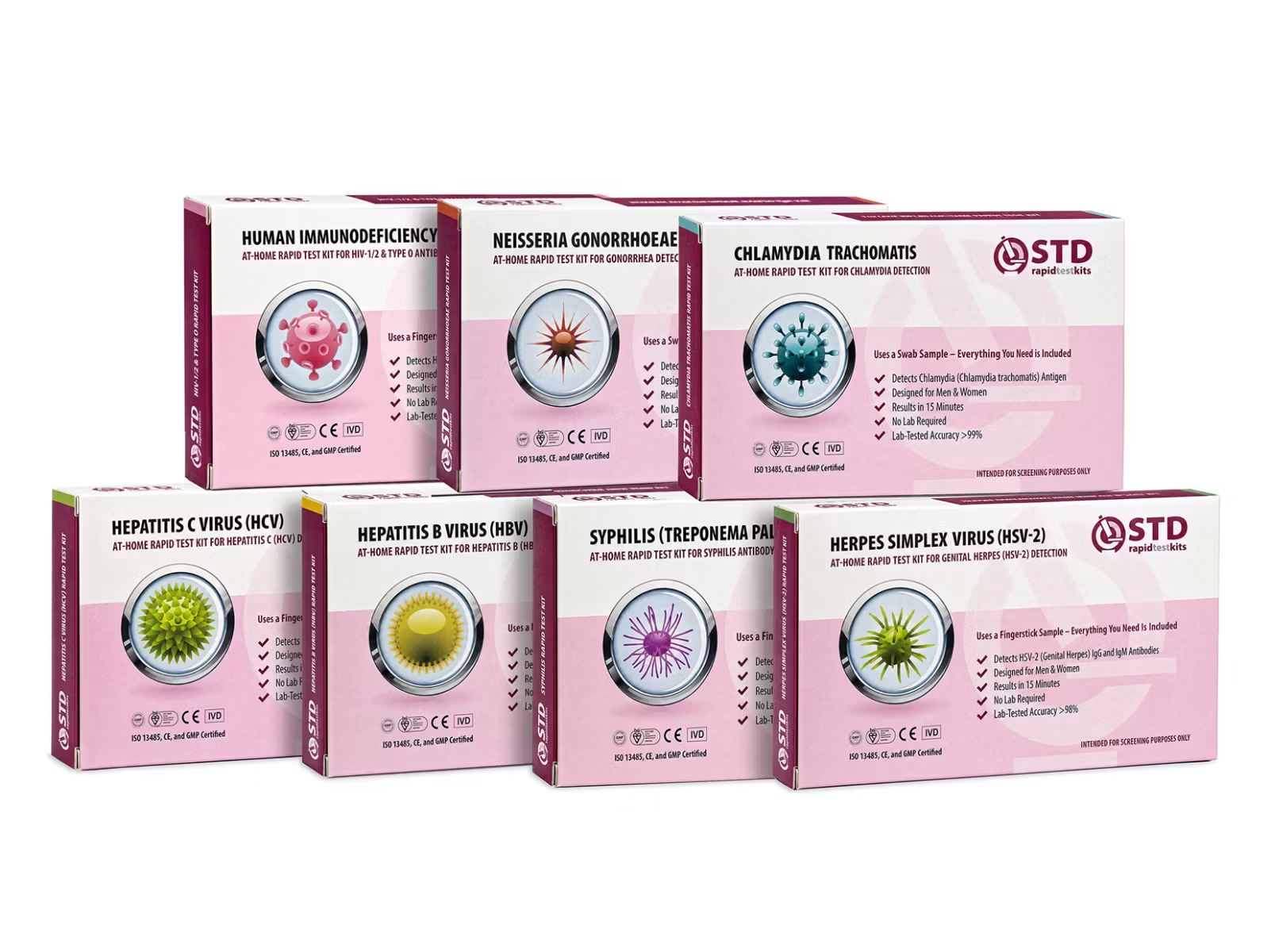
Disclosure: stdrapidtestkits.com sells rapid at-home STI test kits. The 7-in-1 panel below is one option that bundles both swab and fingerstick blood components, with prep instructions covering the timing windows discussed above.
| Timing of Washing | Impact on Test | Recommendation |
|---|---|---|
| 12 to 24 hours before | Minimal impact | Generally safe; no extra precautions needed |
| 6 to 12 hours before | Low impact | Fine for most kits; avoid antibacterial wash of the test area |
| 2 to 6 hours before | Low to moderate impact | Avoid soap or scrubbing on the specific test area if possible |
| Immediately before (under 1 hour) | Highest risk of interference | Delay testing if possible; rinse with plain water only if needed |
The Overlooked Culprit: Antibacterial and "Intimate" Soaps
Not all soaps behave the same way. Plain soap and water rinses surface debris. Antibacterial soaps are designed to actively reduce surface microbes; that is the entire claim on the label.
"Intimate washes," marketed for pH balance or odor control, can shift the vaginal microbial environment, which already maintains a delicate balance of lactobacilli and other organisms. Standard gynecology references discourage routine douching for separate health reasons, and the NHS overview of sexually transmitted infections provides the general STI-screening context for understanding how these surface-altering products can also reduce what is available for sampling. For the test area in the hours before a swab, the safest products are plain water or nothing at all.
- Plain water rinse. Minimal effect on the surface microbial picture; generally fine close to testing.
- Plain soap and water. Removes surface debris; mild reduction in surface organisms if used directly on the test area minutes before swabbing.
- Antibacterial soap. Designed to actively reduce skin and mucosal microbes; higher risk of suppressing what the swab is trying to detect.
- Intimate wash or douche. Shifts the vaginal microbial environment and can blunt detection for hours; the most disruptive of the four in the pre-test window.
Oral Swabs, Toothbrushing, and Mouthwash: Same Problem, Different Area
Our at-home rapid kits cover genital and vaginal swab samples plus fingerstick blood tests; they do not include pharyngeal (throat) swabs. For an actual oral STI test (throat gonorrhea or throat chlamydia, for example), the right path is a clinic-administered pharyngeal swab processed by lab NAAT. The biology is still worth understanding, because the same principle that applies to genital swabs applies when a clinician collects a throat sample.
The throat has its own microbial environment, and surface organisms can be temporarily reduced by brushing, mouthwash, eating, or even drinking certain liquids. Standard pharyngeal-swab protocols typically recommend avoiding food, drink, brushing, and mouthwash for at least 30 to 60 minutes before sampling. The reasoning is the same as for genital swabs: preserve the surface signal long enough for the swab to capture a representative sample.
Before a clinic-collected throat swab for gonorrhea or chlamydia, skip food, drink, toothbrushing, and mouthwash for at least 30 to 60 minutes. The same principle applies to oral swab self-collection if your provider gives you a kit: the surface needs to carry whatever is naturally present at sampling, not the post-mouthwash version of it.
What Changes Between At-Home and Clinic Tests
The science of the test itself does not change. The variables you control do. In a clinic, a trained technician or clinician collects the specimen and typically prompts the patient about pre-test timing (when you last urinated, when you last washed, whether you ate or brushed before a throat swab). At home, those decisions are entirely yours to manage.
At-home rapid kits work as a screening tool when used as directed. Their accuracy depends on proper collection: when you wash, how recently you urinated, and how you handle the swab from collection through running the test. Small details shift sensitivity on the margin, particularly for early-stage or low-organism-burden infections where the analytical sensitivity of a lateral-flow rapid test is already most stretched. Rapid lateral-flow chemistry is not the same technology as a laboratory NAAT, and a positive at-home result (or a high-suspicion negative) is worth confirming with a lab NAAT when possible.
Clinic vs. at-home: who manages the prep timing
- In a clinic, the technician or clinician prompts the patient about pre-test variables (last urination, last shower, food or drink before a throat swab) and the kit packaging is opened on site.
- At home, every prep-window decision sits with the tester, which is why kit instructions about washing, urination, and food and drink timing carry more weight on the result.
- Both paths use the same underlying biology; the difference is purely procedural, and reading the prep instructions before opening the kit is the single highest-yield habit for at-home testers.
Other Easy Ways People Accidentally Affect a Swab Result
Soap gets most of the airtime, but it is not the only pre-test habit that can interfere. A handful of everyday actions can quietly lower detectable load if they happen close to specimen collection.
Most of these come from trying to be "clean," "prepared," or just going about a normal routine. No one is trying to sabotage their result; it happens because the pre-test rules are not widely known and not always spelled out clearly on kit packaging. None of the habits in the table below automatically invalidate a test, but they can stack the odds against detection if the infection is early-stage or low-grade. A negative result after stacking two or three of these (washing, urinating, eating before an oral swab) deserves a second look more than a negative after careful prep.
| Habit | Why It Matters | Better Approach |
|---|---|---|
| Urinating right before a urethral or vaginal swab | Flushes bacteria out of the urethra and surface tissue | Avoid urinating for 1 to 2 hours before the swab |
| Douching | Disrupts the vaginal microbial environment | Avoid completely in the 24 hours before testing |
| Using lubricants, creams, or topical products on the test area | Can dilute, coat, or alter the sample surface | Skip on the test area before swab collection |
| Brushing teeth, eating, or using mouthwash before a throat swab | Reduces detectable oral surface organisms | Wait at least 30 to 60 minutes after these |
| Recent antibiotic use | Suppresses infection levels and can mask a current STI | Test after the antibiotic course completes when possible, and confirm with a clinic-based test |
When You Should Seriously Consider Retesting
Not every result needs a second look. Some absolutely do. If recent washing happened alongside other variables, particularly a clear exposure, ongoing symptoms, or a partner who has tested positive, a single negative result deserves verification.
Retesting after 24 to 48 hours of normal hygiene (no aggressive scrubbing of the test area in that window) gives the body time to restore its baseline surface presence and gives the next swab a fairer chance at detection. For higher-risk situations, a clinic-administered NAAT remains the gold-standard confirmatory test, regardless of what an at-home rapid screen showed. The WHO STI fact sheet notes that confirmed diagnosis often requires laboratory testing, particularly when initial screening results conflict with clinical signs.
- Clear exposure plus a negative. If you tested too soon, with imperfect prep, or both, a single negative is a snapshot, not a verdict.
- Symptoms that have not resolved. Persistent discharge, sores, pelvic or testicular pain, or urinary symptoms after a negative result are reason to retest or seek a clinic-based NAAT.
- A partner's positive result. Public-health guidance recommends repeat testing for the named partner regardless of an earlier negative; treat it as the trigger, not as a debate.
How to Get the Most Accurate Result Next Time
There is nothing extreme about this. You do not need to change your routine. The only piece that matters is the window in the hour or two before specimen collection. Treat that window as the test window itself.
Here is the short version. No purity rules, no extremes. The goal is a sample that represents what the body carries at baseline, not a freshly-scrubbed version of it.
- Give the test area a buffer. Avoid soap, antibacterial wash, scrubbing, or intimate washes on the specific site for at least 1 to 2 hours before swabbing.
- Pause habits that flush or rinse. Avoid urinating for 1 to 2 hours before a urethral or vaginal swab. For a pharyngeal swab, skip brushing, mouthwash, food, and drink for 30 to 60 minutes.
- Read the kit instructions. Each test has its own prep window. The details inside the box matter more than general advice.
- Repeat if the result and the situation do not match. A negative result during persistent symptoms, after a clear exposure, or with a partner's positive result is reason enough to retest after the prep window resets.
This Question Is Not Really About Soap
At the surface, the question sounds technical: can soap ruin a swab test? Underneath, the worry is about control in a situation that already feels exposed. Testing brings up real anxiety. When something as small as a shower feels like it might have undone the effort, it lands harder than the science alone would suggest.
One imperfect step does not erase the responsibility of showing up. The test happened. Paying attention to small prep details (when you washed, when you urinated, whether you brushed before an oral swab) is exactly what makes the next test more accurate if one is needed. If the prep timing was off, the practical next step is a retest with the right buffer window, not a debate about whether testing was worth it.
Skip soap on the specific test area for the hour or two before swabbing. If your prep window was off and the result is negative while symptoms or exposure are still on your mind, give the test area 24 to 48 hours of normal hygiene and retest, or book a clinic-based NAAT.
Frequently Asked Questions
- Did showering before my swab test ruin it?
- A shower more than 1 to 2 hours before testing rarely affects results. The risk is direct scrubbing of the test area minutes before collection, which can temporarily lower how much organism the swab recovers. If you scrubbed the test area right before swabbing and the result is negative while symptoms or a recent exposure are still on your mind, consider retesting after 24 to 48 hours of normal hygiene.
- How long should I wait after washing before doing a swab?
- A practical buffer is at least 1 to 2 hours of no soap or scrubbing on the specific test area before sampling. For sensitive sites, many kits recommend more: avoid douching for at least 24 hours, and skip antibacterial or intimate washes on the area for several hours before swabbing.
- Does soap kill STI bacteria or just hide them from a test?
- Soap does not cure an STI. Antibacterial soap can reduce surface microbes for a short time, but the infection itself stays in the body (often deeper in the mucosa than soap can reach). A test taken right after aggressive washing may simply have less detectable material at the surface than a test taken at baseline.
- I brushed my teeth before an oral swab. Did that affect the result?
- The same principle applies: brushing, mouthwash, eating, or drinking right before a throat swab can lower detectable organisms on oral mucosal surfaces. Most pharyngeal-swab protocols recommend avoiding food, drink, brushing, and mouthwash for at least 30 to 60 minutes before sampling. Note that our at-home rapid kits do not include pharyngeal swabs; a throat-specific test is collected at a clinic.
- What is worse before a urethral swab, washing or urinating?
- Both can interfere in different ways. Washing reduces surface organisms; urinating flushes bacteria out of the urethra. For urethral swabs specifically, the more common pre-test instruction is to avoid urinating for 1 to 2 hours before sampling, because urine flushing has a more direct effect on what the swab can collect.
- If a swab comes back negative but I still have symptoms, should I trust the result?
- Not by itself. A negative result during persistent symptoms, after a clear exposure, or alongside a partner who has tested positive deserves a second test, especially if pre-test prep (recent washing, urination, or eating before an oral swab) may have shifted the signal. A retest after the right buffer window, or a clinic-administered NAAT for the relevant infection, is the right call.
- Are antibacterial soaps worse than regular soaps before a test?
- For sensitivity of the test, yes. Antibacterial soaps are designed to reduce microbes on the skin or mucosa, which is the exact material the swab is trying to sample. Plain soap rinses surface debris but is less aggressive at reducing organisms. For the test area in the hours before sampling, the safest move is plain water or nothing at all.
- What is the safest move if I am unsure my swab was accurate?
- Retest with cleaner timing. Wait 24 to 48 hours, skip soap, intimate washes, and antibacterial products on the test area in that window, and follow each kit's prep instructions exactly. For high-suspicion situations (clear exposure, persistent symptoms, or a partner's positive result), a clinic-based NAAT remains the gold-standard confirmation.
How we sourced this article: This guide combines current CDC, WHO, and NHS testing guidance with clinical literature on specimen collection, pre-analytic variables, and the limits of lateral-flow rapid testing versus laboratory NAAT. We focused on sample-timing variables (washing, urination, food and drink before pharyngeal sampling) that real-world testers encounter most often, and on the practical decisions that follow a result when the prep window may have been imperfect.
- U.S. Centers for Disease Control and Prevention. STI prevention, screening, and testing guidance for general audiences.
- World Health Organization. Sexually transmitted infections fact sheet covering global testing, diagnosis, and treatment guidance.
- NHS. Sexually transmitted infections overview covering testing approaches, symptoms, and follow-up.
- MedlinePlus (U.S. National Library of Medicine). Sexually transmitted diseases reference covering testing and prevention.
- U.S. Centers for Disease Control and Prevention. STI treatment guidelines, including screening and testing recommendations.