Published: December 2025 | Last updated: May 2026 | Editorial review and quality control: Martina N.
Can you actually catch an STD from a towel?
For the common bacterial and viral STIs (HIV, chlamydia, gonorrhea, syphilis, herpes), no. They die within seconds to minutes on dry fabric, with no documented fomite transmission route. The narrow exceptions are pubic lice (which survive 24 to 48 hours off a host), scabies mites (2 to 3 days), and trichomoniasis, which can briefly persist on damp cloth.
The fear lands fast. You used a hotel towel, borrowed a friend's washcloth, or slept in a hostel bed, and now you are wondering whether you might have just exposed yourself to something serious. For most readers landing on this article, the short, calm answer is the one worth hearing first: the everyday sexually transmitted infections people worry about (HIV, chlamydia, gonorrhea, syphilis, and the common herpes viruses) do not survive on dry fabric long enough to infect a new person. They are fragile organisms that need warm, moist, living tissue to replicate, and a towel hanging in a bathroom is the wrong environment.
The right answer is not zero risk for everything. A narrow group of pathogens, mostly parasites, can persist on damp cloth long enough to find a new host under specific conditions. The rest of this guide walks through which infections those are, what realistic exposure scenarios look like, why a shared bed worries people far more than it should, and where your hygiene and testing attention is better spent than on surface paranoia.
Key Takeaways
- Bacterial and viral STIs like HIV, chlamydia, gonorrhea, syphilis, and herpes are fragile outside the body and do not survive in any practically infectious way on dry towels or bedding.
- Pubic lice (24 to 48 hours off-host) and scabies mites (2 to 3 days) are documented exceptions that can spread through shared fabric; trichomoniasis can briefly survive on damp cloth under specific conditions.
Why Fabric Is Hostile Territory for Most STIs
The organisms behind common sexually transmitted infections evolved to live inside the human body, mostly in mucous membranes, blood, or genital secretions. Outside that environment, they dry out, meet oxygen levels some cannot tolerate, lose access to the host cells they need to replicate, and sit at ambient temperatures and pH values nothing like the inside of a urethra or a cervical canal.
The biology of fragile pathogens
Take HIV as the example readers ask about most. Outside a human host, HIV degrades rapidly. The U.S. Centers for Disease Control and Prevention has stated for decades that HIV cannot survive long outside the body and cannot be transmitted through casual contact with surfaces (CDC HIV basics). The same logic applies to Neisseria gonorrhoeae, the bacterium behind gonorrhea, which is famously fragile and dies within seconds to minutes once exposed to dry air. Chlamydia trachomatis is a similar story; it is an obligate intracellular bacterium, which means it can only replicate inside a living host cell. A towel offers nothing it can use.
Why textiles are a particularly poor reservoir
Fabrics make a poor reservoir because they are porous and absorbent. Hard, non-porous surfaces like countertops or glass preserve some pathogens slightly longer than fabric, which wicks moisture away and exposes organisms to drying air faster. Add the temperature swings that come with a towel draped over a bathroom hook, and you get an environment that shortens already short survival times. By the time you pick up the towel, there is essentially nothing alive on it that can establish an infection in your body, even if you happened to put it directly on a mucosal surface.
How STIs Actually Transmit (and Why That Matters Here)
To understand why beds and towels are mostly off the hook, it helps to look at how these infections normally spread. More than 30 different bacteria, viruses, and parasites are known to pass through sexual contact (WHO STI fact sheet), and they all evolved to live in warm, moist mucosal tissue: the genital tract, the rectum, the throat, the cervix. They are highly adapted to that ecosystem and poorly adapted to anything else.
The standard transmission routes documented by the CDC are direct mucous-membrane contact during vaginal, anal, or oral sex; skin-to-skin contact in the genital area for HSV and HPV; blood-to-blood contact for HIV, hepatitis B, and hepatitis C; and mother-to-child transmission during pregnancy or childbirth. Two features stand out across all of these: the contact is direct, and the pathogen never has to survive a long, dry, oxygen-rich detour through the outside world.
Fomite transmission, the technical term for picking up an infection from an inanimate object like a towel, doorknob, or toilet seat, requires the pathogen to survive that detour. For most STI organisms, the detour is fatal. They dry out, they oxidize, and their fragile membranes collapse before they ever reach a viable host.
STI pathogens need both at once: direct contact with mucosal tissue, broken skin, or blood, and a host environment that is warm and moist enough for them to stay viable. A folded sheet or a dry towel fails on both counts, which is why surface-to-person transmission is the rare exception rather than the rule.
Survival Times for the Infections People Worry About
Each pathogen has its own survival profile, and this is where the science gets specific. The summary below draws on virology and microbiology data referenced by CDC, NHS, and WHO across their public-facing fact sheets.
Bacteria like Chlamydia trachomatis and Neisseria gonorrhoeae are particularly fragile. Chlamydia is an obligate intracellular organism, which means it can only replicate inside human cells; the moment it leaves a cell and hits dry air, it begins to die. Gonorrhea bacteria can persist for a few hours on warm, moist surfaces in laboratory conditions, but practical transmission via household items has not been documented in epidemiological surveillance.
Viruses behave a bit differently. HIV is rapidly inactivated by air drying, with no real-world cases of transmission via shared bedding or bathroom items. HSV-1 and HSV-2 can survive a few hours on damp, warm surfaces but require direct contact with a mucosal surface or open skin to infect, which makes a folded towel a poor delivery vehicle. HPV is the durable outlier: it can persist on surfaces for hours to days and is theoretically more capable of fomite transmission, but real-world cases involve clinical settings (shared exam equipment) far more than home laundry.
Protozoa like Trichomonas vaginalis sit between the bacteria and the parasites. Trichomonas is the only sexually transmitted infection where fomite transmission via damp shared items has been described in any meaningful way, though even here the cases are uncommon and the conditions specific.
The table below summarizes the survival ranges and the realistic risk profile for each pathogen.
| Pathogen | Approx. survival on dry surfaces | Realistic risk from beds and towels |
|---|---|---|
| HIV | Minutes; rapidly inactivated by air drying | Effectively none |
| Chlamydia trachomatis | Minutes; obligate intracellular organism | Effectively none |
| Neisseria gonorrhoeae (gonorrhea) | Minutes to a few hours | Negligible |
| Treponema pallidum (syphilis) | Minutes; very fragile outside the body | Effectively none |
| HSV-1 / HSV-2 (herpes) | A few hours on warm, moist surfaces | Very low |
| HPV | Hours to days on surfaces | Low; documented mostly in clinical settings |
| Trichomonas vaginalis | Brief survival on damp items only | Low but plausible from damp shared items |
| Sarcoptes scabiei (scabies mite) | Up to two to three days off the host | Real transmission route |
| Pthirus pubis (pubic louse) | 24 to 48 hours off the host | Real transmission route |
The Three Real Exceptions: Lice, Scabies, and One Protozoan
If the previous section closed the door on the standard STI roster, three pathogens hold it open just enough to be worth understanding. These are not the headline infections most people fear, but they are the reason the shared-fabric concern is not pure myth.
Pubic lice (Pthirus pubis)
Pubic lice are wingless insects that live on coarse human body hair, mostly in the pubic region but occasionally on the chest, legs, armpits, or facial hair. Adult lice die within 24 to 48 hours without a human blood meal, which is long enough for transfer through recently used bedding, shared clothing, or towels in close contact with an infested person (CDC pubic lice overview). Washing bedding and clothes in hot water (at least 60°C, about 140°F) followed by hot drying kills them. Symptoms develop within 1 to 3 weeks: intense itching in the affected area, small bluish or gray marks where lice have fed, and nits (eggs) visible as tiny attachments at the base of hair shafts. Over-the-counter permethrin cream or pyrethrin shampoos treat most cases at home.
Scabies (Sarcoptes scabiei)
Scabies is caused by a microscopic eight-legged mite that burrows into the upper skin layers and lays eggs there. Adult mites can survive 2 to 3 days off a human host on bedding, clothing, or upholstered furniture (CDC scabies overview). The CDC notes that scabies usually spreads by direct, prolonged skin-to-skin contact, and that it can also spread by sharing clothing, towels, and bedding. Outbreaks cluster in close-contact living environments: nursing homes, prisons, military barracks, college dormitories, and shared households where laundry overlaps. Scabies is not technically classified as a sexually transmitted infection, but it spreads readily during sexual contact and is treated alongside STIs in many clinics for that reason. The hallmark symptom is intense itching that is worse at night, along with a fine rash and sometimes visible burrow tracks on the wrists, between the fingers, around the waist, or in skin folds. First-time symptoms typically appear 4 to 6 weeks after contact, which is part of why scabies outbreaks tend to spread before anyone realizes what is happening.
Trichomoniasis (Trichomonas vaginalis)
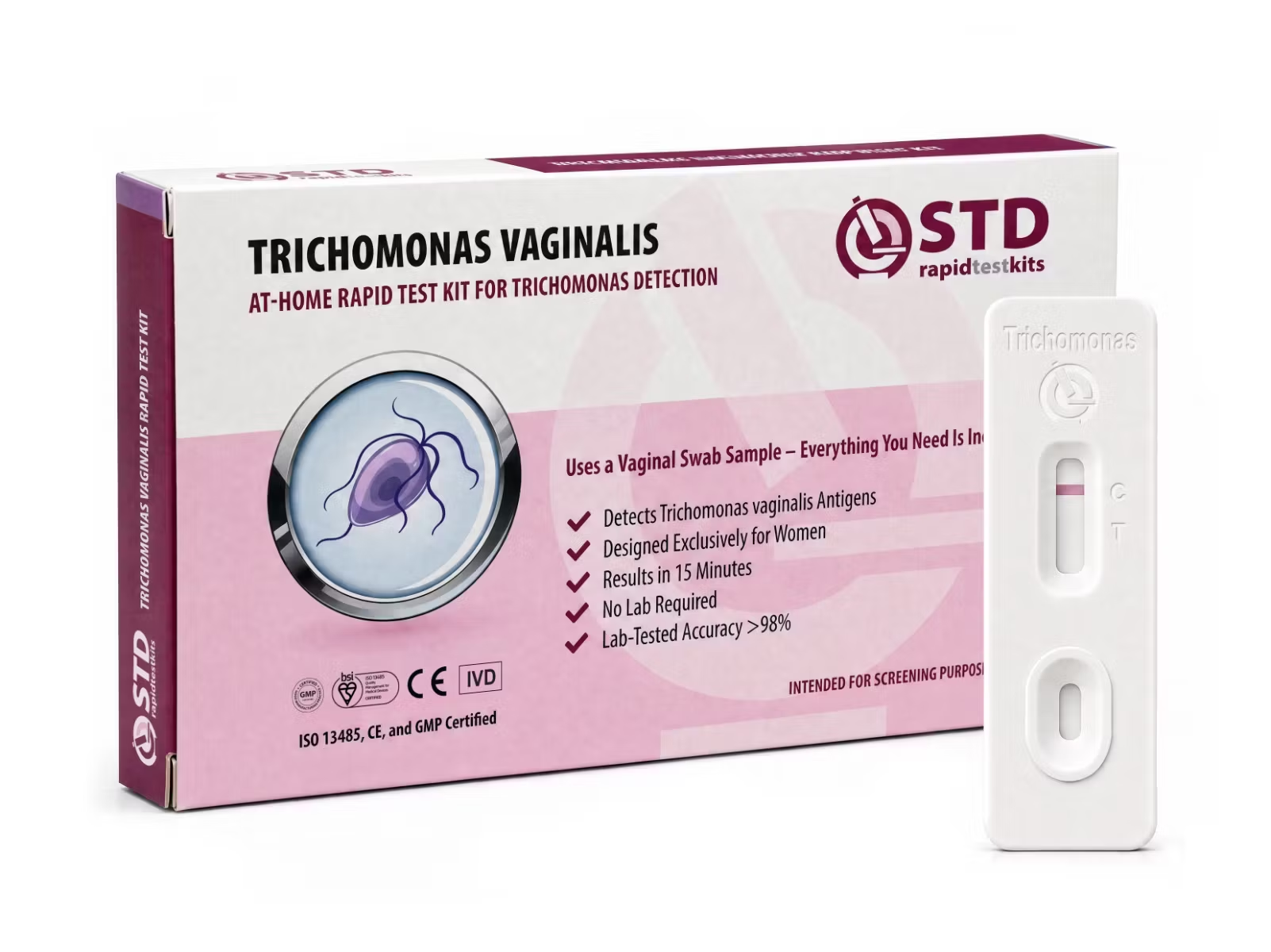
Trichomoniasis is caused by a single-celled flagellated protozoan parasite, and it is the most common curable STI worldwide. The CDC's sexually transmitted infections overview notes that most infected people have no symptoms (about 70 percent are asymptomatic), which is part of why it spreads quietly. Almost all transmission happens through sexual contact, but laboratory studies show the organism can survive briefly on damp surfaces, including washcloths, under the right humidity. Public-health guidance treats non-sexual transmission as rare but biologically plausible when very damp washcloths or shared bath items pass between two people within a short window. Sharing a dry bed sheet presents no practical risk. The reassuring part is that trichomoniasis is easy to treat, usually with a single oral dose of metronidazole or tinidazole. This guide is published by stdrapidtestkits.com, which sells at-home STI testing kits, and recommendations here are based on fit for your concern rather than commercial benefit. Our at-home trichomoniasis rapid test is a self-collected vaginal swab validated for female anatomy only. People with penile anatomy who want to rule out trichomoniasis should see a clinic, where urine or urethral testing is the standard.
Sharing a Bed: Why the Contact Matters More Than the Mattress
Plenty of people who search this question are really asking about a bed, not a towel. You stayed in a hotel, crashed at a friend's place, or woke up in someone else's sheets, and the worry attached itself to the bedding. Here is the part that often gets lost: when a shared bed feels risky, the risk-defining factor is almost always the direct contact that happened there, and the bed itself is incidental.
If you spent the night in someone else's bed and were sexually active, the relevant exposure is the sex, not the sheets. Kissing, skin-to-skin genital contact, and shared body fluids are the routes worth thinking about. The bed is the location; the contact is the source of any infection risk. That distinction changes what you do next, because testing decisions and timing windows depend entirely on what kind of contact occurred, not on where you slept.
The same logic applies to a hotel stay with no sexual contact. Hotels run linens through industrial hot-water laundry between guests, which inactivates everything on the surface-pathogen list. Anxiety about the hotel mattress is usually misplaced anxiety about a recent sexual encounter or a relationship-trust concern, and pinning down that real exposure is what tells you whether to test and when.
Anchor any testing decision to what actually happened, not to where you slept. A shared bed with no sexual contact carries no realistic STI risk, while unprotected sex carries the same risk in any bed. Identify the real exposure event, then decide what to test for and when.
When Your Itch Is Probably Not What You Think
A common reason readers reach for "can I catch an STD from a towel" searches is that they noticed itching, redness, or irritation after using a shared towel and panicked. In most cases, the symptom is far more likely to come from something benign than from an STI.
The most common non-STI culprits include:
- Fungal infections: jock itch (tinea cruris), athlete's foot (tinea pedis), and yeast overgrowth thrive in warm, damp environments and transfer between people through shared towels and gym surfaces far more easily than any STI.
- Contact dermatitis: residue from laundry detergent, fabric softener, or fragrance can cause itching, redness, or hives, especially on freshly washed sheets at a hotel or a friend's home.
- Heat rash and friction: tight clothing, humid weather, and repetitive friction from cycling or exercise cause skin irritation in the same regions where readers worry about STIs.
- Yeast infection (candidiasis): in people with vaginas, yeast overgrowth produces itching and discharge that has nothing to do with an STI and is not caught from a towel.
If symptoms persist beyond a few days, worsen, or come with sores, discharge, fever, or pain, the right step is a clinical evaluation or an at-home STI screen, not a deep dive into linen forensics. A clinician can usually distinguish between fungal, dermatologic, and STI causes within a single visit.
Practical Hygiene That Reduces Real Risk
If towels and bedding are not the realistic vector for the big-name STIs, what should your hygiene attention go to instead? A small list of habits reduces real risk without tipping into anxiety:
- Wash bedding and towels routinely in hot water (at least 60°C, about 140°F) and dry on the hot setting, which kills lice, mites, and most environmental microbes.
- Use your own personal towel at the gym, the pool, or in shared housing, even though the STI risk from shared towels is low. Fungal infections like jock itch and athlete's foot are the more realistic concern in those settings.
- Skip wet swaps. A damp washcloth handed directly to another person, especially in a humid bathroom, is the one scenario where the idea of fabric transmission has any teeth. It is still rare, but it is the case to avoid.
- Do not share razors or other personal damp items with someone whose health status you do not know. Shared razors carry the most documented surface-transmission concern for blood-borne hepatitis B and C.
- Treat any flagged infection completely. If a partner or housemate has been diagnosed with lice, scabies, or trichomoniasis, follow the laundry and decontamination steps the diagnosing clinician recommends. That usually means a hot wash cycle plus 72 hours of sealed-bag isolation for items that cannot be washed, plus simultaneous treatment of all close household contacts to prevent reinfection (NHS scabies guidance).
- Use barriers (condoms, dental dams) for sexual contact with new or untested partners. This is by far the highest-impact intervention available for sexually transmitted infections, and it dwarfs any concern about bedding.
- Get vaccinated against hepatitis B (universal infant series, with adult catch-up available) and HPV (routine vaccination through age 26 per ACIP guidance, with shared clinical decision-making through age 45). The HPV vaccine alone does more for HPV risk reduction than any change in laundry practices.
Notice what is not on that list: scrubbing every hotel toilet seat, bringing your own sheets to a friend's guest room, avoiding hostels, or refusing to use the gym shower. None of those reduce STI risk, because the underlying threat was never there to begin with, and they divert attention from the habits that actually reduce real transmission risk.
If you focus on three habits, make them these: wash bedding and towels in hot water (at least 60°C, about 140°F) and dry on high heat, keep razors and damp personal items to yourself, and use condoms or dental dams with new or untested partners. Barrier use with new partners cuts real STI risk far more than any laundry change.
When At-Home Testing Earns Its Place
If you came to this article because you are worried about a recent exposure, the meaningful question is not whether you touched a borrowed pillowcase. The meaningful question is whether you have had sexual contact (vaginal, anal, oral) where infection might plausibly have been transmitted. Public-health guidance is consistent that the strongest protection comes from getting tested before sex with a new partner and using condoms every time (MedlinePlus STI prevention).
Situations that genuinely call for a screen include:
- A new sexual partner whose recent test status is unknown.
- A condom failure or unprotected encounter with a partner of unknown status.
- A partner notification, where someone told you they tested positive and you may have been exposed.
- Symptoms that point toward an STI, like unusual discharge, sores, pelvic or testicular pain, painful urination, or rashes in the genital area.
- A general baseline screen, recommended annually for sexually active adults under 25 and for higher-risk groups at any age, per CDC guidance (CDC STI screening recommendations).
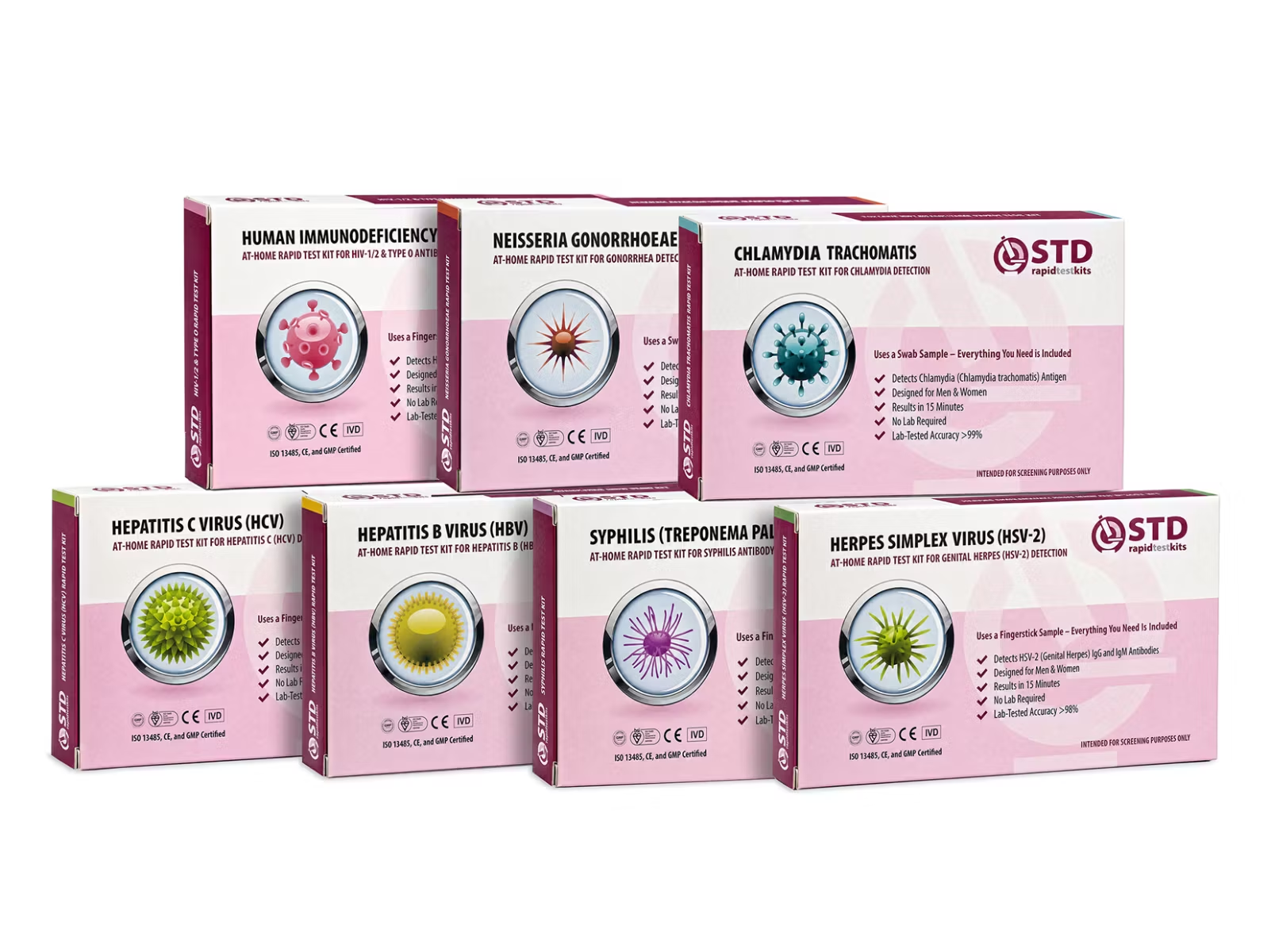
At-home rapid kits make the practical part of screening less of a barrier. They use lateral-flow chemistry, which means a quick result at home (typically within 15 to 20 minutes for blood-based tests, similar for swab-based tests). They are useful for routine screening, post-exposure check-ins, and reassurance when the alternative is doing nothing for weeks. Lab-based NAAT testing remains the higher-sensitivity option when a definitive answer matters most; the two technologies are complementary rather than equivalent, and a positive at-home result is worth confirming with a clinic.
Window periods to plan around
Testing too early after a true exposure produces false-negative results. The conservative timing for the most common infections is roughly 14 days for chlamydia and gonorrhea, 14 to 90 days for HIV depending on assay generation, around 12 weeks for HSV antibody seroconversion, and roughly 3 to 6 weeks for initial syphilis detection with retesting recommended at 3 months if an earlier result is negative. If you test early and the result is negative, retest at the recommended interval before you treat the question as closed. If you test positive on a rapid kit, the next step is a confirmatory test through a clinic; CDC guidance covers the appropriate confirmatory pathway for each infection type.
STIs pass from one person to another through vaginal, oral, and anal sex. They also can spread through intimate physical contact like heavy petting, though this is not very common.
The Bottom Line
The headline STIs that drive most of the worry (HIV, chlamydia, gonorrhea, syphilis, the herpes viruses) do not realistically spread through a towel, a bedspread, a toilet seat, or a doorknob. The pathogens that cause them are fragile, fall apart quickly outside the human body, and have no documented fomite transmission route in normal everyday settings.
The infections that can spread through fabric (pubic lice, scabies, occasionally trichomoniasis) are the narrow exception. The conditions required are specific: a recently used damp fabric, close timing, and direct contact with a susceptible body surface. Those infections are treatable, often with over-the-counter or short-course prescription therapy, and the right response is identifying the cause and getting the matching treatment rather than overhauling your hygiene routine.
If your worry is sexual rather than fabric-based, that is when at-home or clinic-based testing earns its place. Screen on a regular cadence if you have new or multiple partners, retest at the full window after a specific exposure, and confirm any positive rapid result through a clinic before starting treatment.
Bottom-Line Summary
- Common bacterial and viral STIs do not survive on dry fabric in any practically infectious way; fomite transmission is not documented.
- Pubic lice (24 to 48 hours), scabies mites (2 to 3 days), and rarely trichomoniasis (a few hours on damp cloth) are the narrow fabric-related exceptions.
- Direct sexual contact with a new or unknown-status partner is the meaningful exposure to screen for, not the hotel towel, the shared bed, or the borrowed washcloth.
Should You Test, or Just Do the Laundry?
Has a partner or housemate been diagnosed with scabies or pubic lice?
Yes: Hot-wash all shared bedding and towels at 60°C (140°F), seal anything that cannot be washed in a bag for 72 hours, and treat all close household contacts at the same time to prevent reinfection.
Did you have sexual contact (vaginal, anal, or oral) with a new or unknown-status partner, or have a condom failure or partner notification?
Yes: Plan to test. Use an at-home rapid kit for a fast screen at the right window, and confirm any positive result with a clinic before starting treatment.
Is your only concern a shared towel, a hotel bed, or a toilet seat, with no sexual contact?
Yes: No STI test is needed for surface contact alone. Routine hot laundry covers the rare parasite exceptions.
No: If you are unsure what the exposure was, a baseline at-home screen plus a conversation with a clinician is a reasonable next step.
General guidance only. A clinician can advise based on your specific situation.
Frequently Asked Questions
- Can I really get an STD from a towel?
- Only two parasite infections have documented towel-to-person transmission routes: pubic lice and scabies. Everything else on the standard STI list (HIV, chlamydia, gonorrhea, syphilis, herpes) breaks down within seconds to minutes on dry fabric, and there are no epidemiological cases of fomite transmission for those pathogens. Trichomoniasis is a narrow edge case that requires a freshly damp cloth exchanged within a short window.
- Can you get an STD from a shared or hotel bed?
- For the common STIs, no. The pathogens behind HIV, chlamydia, gonorrhea, syphilis, and herpes die quickly on dry bedding and need direct contact to infect, and hotel linens are washed at commercial water temperatures that inactivate anything that could matter. Scabies and pubic lice are the realistic exceptions, and even then they usually need prolonged skin contact with an infested previous occupant or poorly laundered linens. If you shared a bed and had sexual contact, that contact is the exposure to think about, not the sheets.
- How long do STIs survive on fabric or other surfaces?
- Most STI-causing bacteria and viruses die within seconds to minutes once exposed to air on a dry surface. Pubic lice can persist 24 to 48 hours off a host, scabies mites up to 2 to 3 days, and Trichomonas vaginalis a few hours on damp surfaces under the right humidity. HPV is the most environmentally durable virus, surviving hours to days, though real-world fomite cases come almost entirely from clinical settings rather than home laundry.
- Can chlamydia or gonorrhea live on a towel?
- Functionally, no. Chlamydia is an obligate intracellular organism that dies within minutes of leaving a host cell, and gonorrhea bacteria desiccate quickly on dry textiles. Population-level surveillance has not identified shared towels as a meaningful transmission route for either. The path that matters for both is direct mucous-membrane contact during sex.
- Can you get HIV from a shared bed?
- No. HIV is rapidly inactivated by air drying and has never been documented to transmit through bedding, towels, toilet seats, or shared bathing items. The exposures that matter for HIV are unprotected sex, shared injection equipment, mother-to-child transmission, and rare needle-stick injuries in clinical settings.
- Can I get herpes from a shared towel?
- Practically, no. HSV-1 and HSV-2 survive only minutes to a few hours on warm, damp surfaces and require skin-to-skin or mucosal contact for transmission. Even shared towels handed off immediately after use have not been documented as a real-world transmission route.
- How do I clean bedding if a partner had scabies or pubic lice?
- Wash everything that touched their skin in the previous 72 hours in hot water (at least 60°C, about 140°F) and dry on high heat. Items that cannot be hot-washed can be sealed in a plastic bag for 72 hours, which exceeds the survival window for both organisms. Vacuum mattresses and upholstered furniture once, and treat all close household contacts at the same time to prevent reinfection.
- When should I test for an STI?
- The trigger for testing is sexual contact with a new or unknown-status partner, a condom failure, a partner notification, or STI-consistent symptoms, not a shared towel, a hotel bed, or a toilet seat. Timing matters too: chlamydia and gonorrhea need at least 14 days post-exposure, HIV 14 to 90 days depending on test type, syphilis 3 to 6 weeks, and HSV antibody tests around 12 weeks. Test early for a baseline, then retest at the full window if the first result is negative. If your only symptom is itching after a shared towel, look first at fungal causes, detergent dermatitis, or yeast before assuming an STI.
- U.S. Centers for Disease Control and Prevention. Sexually transmitted infections overview, including how STIs spread, trichomoniasis context, and standard screening recommendations.
- U.S. Centers for Disease Control and Prevention. Scabies (Sarcoptes scabiei) overview, including survival of mites off a host and the close-contact settings where outbreaks occur.
- U.S. Centers for Disease Control and Prevention. Pubic lice (Pthirus pubis) overview, stating that adult lice die within 24 to 48 hours off a host and that they can occasionally spread via clothing and bedding.
- NHS. Scabies overview, including symptoms, household decontamination, and simultaneous treatment of close contacts.
- World Health Organization. Sexually transmitted infections fact sheet, covering the more than 30 pathogens spread through sexual contact and global guidance on transmission and prevention.
- MedlinePlus (U.S. National Library of Medicine, NIH). Sexually transmitted infections, including transmission routes and prevention through testing and condom use.
