
Published: September 2025 | Last updated: May 2026 | Editorial review and quality control: Martina N.
Burning when you pee is one of those symptoms that can send your mind racing. The first thought is often a sexually transmitted infection. The more common cause is much simpler: dehydration. Concentrated urine is salty, acidic, and full of waste compounds that can irritate the urethral lining as it passes through. That irritation produces a stinging sensation closely resembling the early signs of chlamydia, gonorrhea, or a urinary tract infection.
This guide walks through how to read your body's signals. We cover what dehydration does to urine chemistry, which symptoms point toward an infection rather than fluid imbalance, and when an at-home test becomes the right next step. None of this replaces seeing a clinician for symptoms that concern you, but it can help you decide whether to drink a few glasses of water and wait, or order a test today.
Why Concentrated Urine Burns When You're Low on Water
Your kidneys filter roughly 180 liters of plasma every day. Most of that fluid is reabsorbed back into circulation, with the rest leaving the body as urine. When you are well hydrated, urine is about 95% water and 5% dissolved waste: urea, uric acid, creatinine, mineral salts, and ammonia byproducts. At that dilution, urine passes through the urethra without trouble.
When fluid intake drops, the kidneys hold onto more water. The same waste compounds remain in the body, only now they are packed into a smaller volume of fluid. Urine becomes darker, more acidic, and chemically harsher on the soft mucosal tissue lining the urethra. The result is the stinging or burning sensation people often describe as feeling like fire or like passing acid.
This pattern shows up in predictable situations: after a long-haul flight, a hot day spent outdoors, a hangover, an intense workout, or several hours of focused work where drinking gets forgotten. Coffee, alcohol, and high-sodium meals all accelerate fluid loss, so it doesn't always take serious dehydration to trigger the symptom.
The MedlinePlus encyclopedia entry on painful urination, the clinical term for which is dysuria, defines the symptom as any pain, discomfort, or burning sensation when passing urine. Urgent care offices regularly see this presentation and frequently send patients home with the advice to rehydrate and reassess in a few hours, particularly when no other infection-suggestive signs are present.
Key Takeaways
- Dehydration concentrates urine into a stronger mix of acids and waste compounds, which can irritate the urethra and produce burning that closely resembles early STI symptoms.
- Burning that persists beyond 48 hours, follows unprotected sex, or appears alongside discharge or sores deserves an STI test rather than more water.
Why Dehydration Symptoms Get Mistaken for an STI
The reason dehydration confuses people is that the body has a limited vocabulary for irritation. Whether the urethra is being inflamed by concentrated urine or by a bacterial infection like chlamydia, the local nerves transmit a similar message: pain, stinging, and discomfort. Early-stage symptoms of an STI and mid-day dehydration can feel surprisingly close to each other in the moment.
Searches like "burning when I pee but no STD" and "dehydration burning urination" reflect this overlap directly. People typing those phrases are trying to map a body sensation back to its underlying cause, and the answer isn't always obvious from the sensation alone.
The body responds to almost any urethral irritation with the same three signals: inflammation, sensitivity, and a measurable urge to urinate more often. Bacterial infections trigger that response because the bacteria release toxins and provoke an immune reaction. Concentrated urine triggers it because the chemistry of the urine itself becomes irritating.
Context matters more than the sensation itself. The same burning can mean different things on a Saturday morning after a hot weekend versus the third day after unprotected sex with a new partner.
| Symptom | Common With Dehydration | Possible With STIs | What the Body Is Responding To |
|---|---|---|---|
| Burning during urination | Yes | Yes | Irritated urethral lining |
| Dark yellow urine | Very common | Rare | Concentrated waste products |
| Strong urine smell | Common | Sometimes | Higher concentration of ammonia compounds |
| Pelvic discomfort | Occasional | Possible | Inflammation or active infection |
| Genital irritation | Possible (dryness) | Possible (lesions, discharge) | Local tissue inflammation |
| Unusual discharge | No | Common | Active bacterial or viral infection |
The Clues Your Body Gives When It's Dehydration
When dehydration is the actual cause of burning urination, it rarely arrives alone. The body usually flags low fluid status with several signals that develop together over the course of a day and resolve together once water intake returns to normal.
The most reliable clue is urine color. Pale straw yellow is the target. Dark yellow or amber means the kidneys are conserving water, and that concentrated stream is what's irritating your urethra. The Cleveland Clinic dehydration overview lists urine color as the simplest at-home indicator clinicians use.
A stronger smell is the second clue. Concentrated urine carries a higher load of ammonia compounds, which produces the sharper odor people often notice when they haven't been drinking enough.
The third cluster of signs sits outside the bathroom: dry mouth, slight headache, mild fatigue, dizziness on standing up too quickly, and feeling thirstier than usual. When burning urination shows up alongside any combination of these, dehydration moves to the top of the list of likely causes.
The encouraging part is how quickly the body corrects itself. Within several hours of drinking water consistently, urine becomes lighter, the smell fades, and the urethral burning sensation usually disappears. If a few glasses of water and a couple of bathroom trips bring the symptom down significantly, fluid imbalance was almost certainly the issue.
How quickly does dehydration burning go away once I drink water?
Usually within four to six hours of consistent fluid intake. Urine color lightens first, then the urethral irritation calms down as the chemical load drops. If you've been drinking steadily for half a day and the burning is unchanged, dehydration is unlikely to be the only cause and an infection becomes more plausible.
When Burning Points to an STI Instead
Infections behave differently from chemical irritation. Bacteria like Neisseria gonorrhoeae or Chlamydia trachomatis colonize the cells lining the urethra, cervix, or rectum, and the body's immune response to that colonization is what produces the symptoms. The pattern over time looks different from dehydration in three ways.
Persistence is the clearest tell. Dehydration burning fades within hours of rehydration. STI-related burning either stays at the same intensity or worsens over the following days. Drinking more water might dilute the urine and reduce the chemical sting briefly, but the underlying inflammation continues unaddressed.
Company comes next. Sexually transmitted infections often produce additional signs that dehydration almost never causes: unusual discharge, a low-grade fever, pelvic or testicular ache, sores or visible skin changes on the genitals, or pain during sex. Each of these has its own diagnostic value and points away from a fluid-balance problem.
Timing relative to a possible exposure is the third signal. CDC guidance on chlamydia notes that when symptoms occur, they may not appear until several weeks after sex with an infected partner, and most chlamydia infections produce no symptoms at all. CDC guidance on gonorrhea describes a similar pattern of frequent asymptomatic infection. If burning urination appears in the days to weeks after unprotected sex, especially with a new partner, the link to infection becomes far more plausible than coincidental dehydration.
A urinary tract infection can also look like an STI in the early hours. UTI symptoms typically include a strong, frequent urge to urinate, cloudy or strong-smelling urine, and a low pelvic ache or pressure, without the recent-sexual-exposure timing pattern that chlamydia and gonorrhea follow. UTIs are usually treated with a short antibiotic course; persistent or recurrent episodes deserve a clinician's review.
One useful reference point from the CDC pages above: most people with chlamydia have no symptoms at all, and even when symptoms do occur they can be mild enough to mistake for something else.
| Warning Sign | Why It Matters | Common With Which STI |
|---|---|---|
| Unusual genital discharge | Indicates infection of reproductive tissues | Chlamydia, Gonorrhea, Trichomoniasis |
| Persistent pelvic pain | Inflammation in reproductive organs | Chlamydia, Gonorrhea |
| Testicular discomfort | Possible epididymal infection | Chlamydia, Gonorrhea |
| Genital sores or lesions | Skin infection rather than urinary irritation | Herpes, Syphilis |
| Symptoms lasting more than 48 hours | Persistent irritation suggests active infection | Various STIs |
| Onset days to weeks after unprotected sex | Matches typical incubation patterns | Chlamydia, Gonorrhea |
Why Hydration Matters for Sexual Health
Water plays a quiet but important role in protecting both the urinary and reproductive systems. Adequate hydration helps flush bacteria out of the urinary tract before they have a chance to multiply. The bladder lining stays better protected. Mucosal surfaces throughout the reproductive tract stay more resilient.
When hydration drops, that protective balance shifts. Concentrated urine exposes urethral tissue to stronger acids and waste products over a longer period. The vaginal and penile tissues, both mucosal, also depend on systemic hydration to maintain their natural moisture. Dryness after sex, mild itching, or temporary irritation are all common when fluid intake has been low.
Hydration flushes bacteria from the bladder before they multiply, maintains mucosal resilience in the reproductive tract, and dilutes the chemical load in urine. It does not prevent or treat an active STI.
When Testing Becomes the Smart Move
This site sells the rapid at-home STI tests referenced below. The principle most clinicians follow is straightforward: if a symptom persists, doesn't fit a clean explanation, or follows a possible exposure, testing removes the guesswork faster than waiting does. The cost of a test is low. The cost of an untreated chlamydia or gonorrhea infection includes potential pelvic inflammatory disease, epididymitis, and downstream fertility complications, all of which are discussed in the CDC STI Treatment Guidelines.
The threshold for testing comes down to three patterns:
- Burning that lasts more than 48 hours despite normal hydration.
- Burning that appears within three weeks of unprotected sex with a new partner.
- Burning that arrives alongside any second symptom: discharge, sores, pelvic pain, testicular pain, or fever.
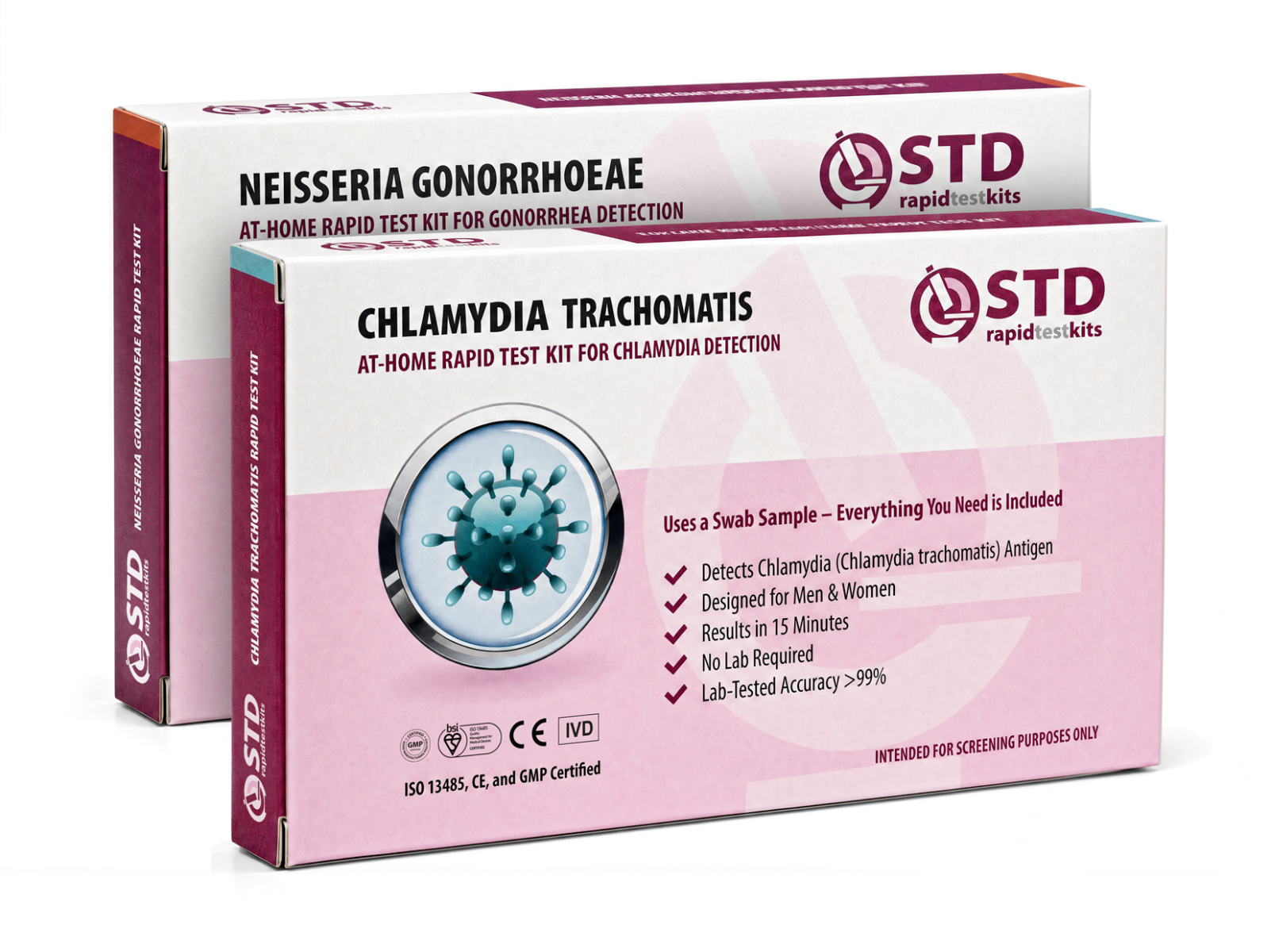
At-home rapid tests have made this step much lower-friction than it used to be. The chlamydia and gonorrhea kits on this site are lateral-flow tests using a self-collected genital swab, with results visible in about fifteen minutes. They are screening tests, not lab-grade NAATs, so a positive result should be confirmed by a clinician. They are well-suited to answer the question "is this an infection?" without scheduling a clinic visit.
For readers whose primary worry is HIV rather than chlamydia or gonorrhea, the context is different. Per-act transmission risk from a single sexual exposure is low for most contact types per CDC guidance, with the highest risks tied to receptive anal sex and shared needles. HIV cannot be detected the day after exposure: antibody-based rapid blood tests typically need around three to twelve weeks to become reliable, while fourth-generation lab tests can detect HIV roughly two to six weeks after exposure. A blood-based rapid test, not a swab, is the right tool for HIV.
For people unsure which infection to test for, combination kits cover several at once. The choice depends on what was at stake during the possible exposure: a single-partner contact might warrant testing for chlamydia and gonorrhea, while a broader-risk situation may justify a 6-in-1 or 8-in-1 panel that adds HIV, syphilis, and hepatitis B.
What Happens Inside the Body During an STI
Sexually transmitted infections produce symptoms through a different biological mechanism than dehydration. Bacteria or viruses invade the tissues lining the reproductive tract, and the body's immune system mounts a response. That immune activity is what produces most of the visible symptoms.
Chlamydia and gonorrhea both target the columnar epithelial cells lining the urethra, cervix, and rectum. The bacteria attach to these cells, replicate inside them, and trigger an inflammatory response. White blood cells flood the area. Affected tissue swells. The combination produces the burning, discharge, and swelling people associate with these infections.
Herpes simplex viruses follow a different pattern, infecting nerve cells and producing characteristic vesicular lesions on skin or mucous membranes. Syphilis works in stages, starting with a single painless ulcer at the site of infection. Each STI has its own biological signature, which is why specific testing matters more than blanket symptom-matching.
Bacterial STIs require antibiotics. Viral STIs are managed long-term with antivirals or vaccines, depending on the virus.
Chlamydia often has no symptoms, but it can cause serious health problems, even without symptoms. If symptoms occur, they may not appear until several weeks after having sex with a partner who has chlamydia.
Simple Hydration Habits That Protect the Urinary Tract
Most people don't think about hydration until the body starts complaining. Burning urination, headaches, fatigue, and darker urine often arrive together as the first signals of running low. The urinary tract depends on consistent fluid flow to flush waste compounds and bacteria out of the bladder before they accumulate.
A few simple habits keep that flow steady:
- Drink fluids throughout the day, not just when thirst hits. Thirst is a lagging indicator of dehydration, so by the time you feel it the kidneys have already been conserving water for a while.
- Match intake to output. Plain water is the most efficient option. Coffee, tea, sports drinks, and soup all count toward total fluids, though caffeine and alcohol push fluid the other way and need to be offset.
- Pay attention to high-loss situations: long flights, hot weather, intense workouts, hangovers, and travel days. These are the moments when urinary burning is most likely to appear unexpectedly.
- Check urine color once or twice a day. Pale straw means hydrated. Dark amber means catch up before the day continues.
Hydration doesn't prevent infections, but it reduces the chemical irritation that makes urethral tissue more vulnerable to opportunistic bacteria in the first place.
How to Read Symptoms Without Spiraling
When genital or urinary symptoms appear, anxiety often gets there before facts do. The brain is wired to consider the most threatening explanation first, especially around sexual health, where social and emotional weight sit on top of the medical question. Recognizing this tendency is half the battle.
Start with timing. Did the symptom show up after a long day with little water, a hot weekend, or a hangover? Dehydration is in play. Did it show up one to three weeks after unprotected sex with a new partner, with no obvious dehydration trigger? An infection rises higher on the list.
Look at duration next. Most dehydration-related symptoms resolve in hours once fluid intake returns to normal. Infection symptoms tend to stay or worsen over days.
Then check the company the symptom keeps. A single symptom in isolation could be many things. The same symptom alongside discharge, sores, fever, or pelvic ache is far more likely to be an infection.
When the filters point clearly to dehydration, drinking water and waiting a day is the proportionate response. When they point clearly to an infection, or simply do not resolve neatly, testing is the proportionate response. Sitting with uncertainty for weeks while symptoms quietly persist is the path that helps no one.
Clarity Beats Guesswork
The body has a limited vocabulary for distress, so a single symptom like burning urination can mean many different things. Dehydration is the most common cause. Friction, soap, and minor mechanical irritation are also frequent. Infections are real possibilities, though rarely the most likely explanation in isolation.
The right next step depends on context. If the symptom fits a dehydration story (light fluid intake, predictable trigger, quick fade after rehydration), water and a little patience usually settle it. If the story doesn't fit, or the symptom hangs around, testing replaces uncertainty with information. At-home rapid tests cover the most common screen-relevant infections in fifteen minutes, privately, without scheduling a clinic visit. Combination at-home STI kits cover several of the most relevant infections in one panel.
Sexual health sits inside overall health. Asking the question and getting the answer is straightforward responsible behavior.
FAQs
- I barely drank water today and now it burns when I pee. Could dehydration really cause that on its own?
- Yes, especially if you have also had coffee, alcohol, or a salty meal. Concentrated urine is acidic and chemically irritating to the urethra. Drink a few glasses of water over the next couple of hours and see if the burning fades. If it does, fluid balance was the cause.
- Does burning urination always mean I have an STI?
- No. Burning urination shows up with dehydration, urinary tract infections, friction from sex, soap or spermicide irritation, kidney stones, and bacterial STIs like chlamydia or gonorrhea. The cause depends on the surrounding context: how dehydrated you were, what you did recently, whether other symptoms are present.
- How fast should dehydration burning improve once I rehydrate?
- If it has not improved after half a day of steady drinking, infection is more likely than fluid imbalance and a test makes sense. Typical dehydration burning eases inside four to six hours as urine dilutes and the chemical load on the urethral lining drops, with color lightening before the burn fully resolves.
- What symptoms suggest it is actually an STI rather than dehydration?
- A few patterns shift the suspicion toward infection: discharge, pelvic or testicular pain, sores or visible lesions on the genitals, low-grade fever, persistence beyond 48 hours, or onset within three weeks of unprotected sex. Any of these moves an STI test from optional to recommended.
- I had sex recently and now I'm feeling burning. Is it time to test?
- Don't panic, but don't dismiss it either. Check the basics first: hydration, friction, soap or laundry residue. If the timing fits an exposure and the symptom doesn't fade within a couple of days, testing answers the question faster than waiting. For chlamydia and gonorrhea, a swab test becomes informative around two weeks after exposure.
- Could it be a UTI rather than an STI?
- Often yes. UTI symptoms typically include a strong, frequent urge to urinate, cloudy or strong-smelling urine, and pressure low in the abdomen, without the recent-sexual-exposure timing pattern of chlamydia or gonorrhea. UTIs respond to a short antibiotic course, so a clinician visit or a UTI dipstick can sort it out quickly.
- Can dehydration also cause genital dryness or irritation, not just urinary burning?
- Yes. Both vaginal and penile tissues are mucosal and depend on overall hydration. When fluid intake drops, these tissues can feel drier and more sensitive, especially after sex or vigorous exercise. The discomfort is usually mild and resolves with consistent rehydration.
- If the burning goes away after I drink water, do I still need to test?
- If you have had no recent sexual exposure and the symptom clears within hours, testing is optional. If there was a possible exposure in the last few weeks, testing remains worthwhile even when the immediate symptom resolves, because many STIs cause intermittent or mild early symptoms that are easy to dismiss.
- U.S. Centers for Disease Control and Prevention. STI Treatment Guidelines, covering diagnosis, treatment, and complications of chlamydia, gonorrhea, and other bacterial STIs.
- U.S. Centers for Disease Control and Prevention. About Chlamydia: symptoms, asymptomatic infection, and complications.
- U.S. Centers for Disease Control and Prevention. About Gonorrhea: signs and symptoms in women, men, and rectal infections.
- U.S. Centers for Disease Control and Prevention. HIV section landing page covering transmission, testing windows, prevention, and risk by exposure type.
- Cleveland Clinic. Dehydration overview covering causes, urine-color indicators, and self-management.
- MedlinePlus, U.S. National Library of Medicine. Painful urination (dysuria) encyclopedia entry covering definition and common causes.
