
Published: November 2025 | Last updated: May 2026 | Editorial review and quality control: Martina N.
What antibiotic kills chlamydia the fastest?
Doxycycline 100 mg twice a day for 7 days is the CDC's first-line treatment for non-pregnant adults. It cleared close to 100 percent of rectal infections versus about 74 percent for single-dose azithromycin (Dombrowski trial, cited by the CDC). Symptoms ease in 48 to 72 hours. Azithromycin 1 g stays preferred in pregnancy.
Doxycycline kills chlamydia most effectively, with one important caveat: the speed of a cure and the speed of symptom relief are different milestones. Symptoms usually fade inside 48 to 72 hours on either of the two main regimens, but microbiologic cure, meaning the bacteria are fully cleared and you are no longer contagious, takes the full seven-day doxycycline course or about a week after the single-dose alternative. The U.S. Centers for Disease Control and Prevention now treats doxycycline 100 mg by mouth, twice a day, for seven days as the first-line cure for genital, anorectal, and pharyngeal chlamydia in non-pregnant adolescents and adults (CDC 2021 STI Treatment Guidelines, chlamydia). In the head-to-head randomized trial the CDC cites for that recommendation (Dombrowski et al.), doxycycline cleared close to 100 percent of rectal infections, compared with about 74 percent for a single 1-gram dose of azithromycin.
Key takeaways
- Doxycycline 100 mg twice daily for 7 days is the CDC's first-line treatment. In the trial the CDC cites (Dombrowski et al.), doxycycline cleared close to 100 percent of rectal infections, versus about 74 percent for single-dose azithromycin, which stays the preferred option in pregnancy.
- Symptoms usually start improving in 48 to 72 hours, but a real cure takes the full course. Abstain from sex for 7 days after single-dose azithromycin or until you finish the 7-day doxycycline course, and re-screen at 3 months to catch the reinfections behind most repeat positives.
Chlamydia at a glance, before we talk about pills
Chlamydia trachomatis is the most commonly reported bacterial sexually transmitted infection in the United States. The CDC's most recent surveillance year recorded just over 1.5 million U.S. cases (CDC STI Surveillance, annual report), and the World Health Organization estimated 128.5 million new infections among adults aged 15 to 49 worldwide in 2020 (WHO chlamydia fact sheet). Most infections produce no detectable symptoms in the person carrying them, which is why screening matters even when nothing feels wrong.
The longer chlamydia goes untreated, the more it ascends from the cervix into the uterus and fallopian tubes in women, or through the urethra toward the epididymis in men. The serious complications are largely preventable by catching and treating the infection early: pelvic inflammatory disease (PID), ectopic pregnancy, and tubal-factor infertility in women, and epididymitis with possible infertility in men (CDC chlamydia overview, complications). PID can be subtle, with low-grade fever, mild lower-abdominal pain, or abnormal bleeding, and many cases are only recognized later, during a fertility workup.
Because most chlamydia infections cause no symptoms, you cannot rely on feeling unwell to know whether you have been exposed. The CDC's screening recommendations and the 3-month post-treatment re-screen exist precisely because silent infection is so common, both in the person who tested positive and in their partners.
Why doxycycline became the first-line treatment
For most of the 2010s, a single 1-gram dose of azithromycin was the workhorse for uncomplicated chlamydia. It was simple, could be observed in clinic, and cleared urogenital infection in the high 90s. The CDC's 2021 update changed that. The single largest piece of evidence was the randomized trial by Dombrowski and colleagues, which enrolled men with rectal chlamydia and compared doxycycline 100 mg twice daily for 7 days against azithromycin 1 g as a single dose. Doxycycline cleared close to 100 percent of evaluable rectal infections; azithromycin cleared about 74 percent. Several supporting studies pointed the same direction at the rectal site, and the CDC folded those findings into its guideline revision (CDC 2021 STI Treatment Guidelines). Doxycycline is now first-line for genital, anorectal, and pharyngeal chlamydia in non-pregnant adolescents and adults, with azithromycin kept as an alternative for situations where the seven-day course is not realistic.
Rectal chlamydia is common in men who have sex with men and also occurs in women who report receptive anal sex. For asymptomatic rectal infection, where there is no symptom to flag a treatment that did not work, the roughly 26-point cure-rate gap in the trial means many infections would be left behind under single-dose therapy. Doxycycline is a tetracycline antibiotic that blocks bacterial protein synthesis, and across seven days it builds up in rectal mucosal tissue to concentrations a single azithromycin dose does not reach.
Genital chlamydia: doxycycline and azithromycin both clear the great majority of cases in published comparisons, with doxycycline in the range of roughly 97 to 100 percent when the full course is finished (<a href="https://www.cdc.gov/std/treatment-guidelines/chlamydia.htm" target="_blank" rel="noopener noreferrer">CDC 2021 STI Treatment Guidelines</a>).
Rectal chlamydia: doxycycline cleared close to 100 percent in the primary randomized comparison (Dombrowski et al.), while azithromycin reached about 74 percent. That single-site gap is the reason the CDC moved doxycycline to first-line in 2021.
How fast each antibiotic works
"Fast" can mean two different things, and the two answers diverge. If fast means the time from picking up the prescription to having the antibiotic in your body, azithromycin wins, because the dose is over in seconds. If fast means the time from the first pill to the bacteria being reliably cleared, the two drugs are roughly comparable for genital infection, and doxycycline wins clearly for rectal infection. By the most useful definition, the antibiotic that fully clears the infection on the first try, doxycycline has the edge in current data.
The table below summarizes typical regimens and timelines from the CDC's current recommendations. Two patterns are worth holding onto. Symptom relief and microbiologic cure run on different clocks: people often feel better in two to three days, but the abstinence guidance is keyed to finishing the course, not to how you feel. And while the difference in time-to-relief between regimens is small, the rectal-site cure-rate gap is where the choice of drug changes outcomes.
| Antibiotic | Standard regimen | Cure rate | Time to symptom relief | Best use |
|---|---|---|---|---|
| Doxycycline | 100 mg twice daily for 7 days | Roughly 97 to 100% genital; close to 100% rectal (Dombrowski trial) | 48 to 72 hours | First-line for non-pregnant adults; preferred for rectal infection |
| Azithromycin | 1 g single oral dose | High for genital infection; about 74% rectal (Dombrowski trial) | 48 to 72 hours | Pregnancy; cases where 7-day adherence is unrealistic |
| Levofloxacin | 500 mg once daily for 7 days | Effective but limited data; see CDC guidelines | 3 to 4 days | Allergy or intolerance to first-line agents |
| Erythromycin | 500 mg four times daily for 7 days | Older option, more side effects; see CDC guidelines | 3 to 5 days | Backup, including some pregnancy and neonatal cases |
Symptom relief comes before a real cure
Most people with symptomatic chlamydia, meaning discharge, burning during urination, pelvic discomfort, or light bleeding, feel meaningfully better within 48 to 72 hours of the first dose, on either antibiotic. That improvement reflects falling inflammation and a dropping bacterial load, not a finished cure, so the CDC ties its abstinence guidance to finishing the course rather than to how you feel.
Trajectories vary. Some people see discharge ease within a day or two, with a small amount lingering for several more days, which is usually normal recovery rather than failure. Most uncomplicated genital cases clear fully by day 5 to 7. Symptoms that ease and then return after a few days point more often to reinfection from an untreated partner than to the drug failing, and less commonly to an untreated infection at a second site.
From first pill to all-clear
- Day 0 First dose
The antibiotic reaches infected tissue within hours and bacterial growth starts to slow.
- Day 2 Symptoms ease
Most people notice less discharge, burning, or pelvic discomfort by day 2 to 3.
- Day 5 Outward signs fade
Visible signs of infection are usually gone by about day 5.
- Day 7 Course complete
Finish the 7-day doxycycline course; the no-sex window also ends 7 days after single-dose azithromycin.
- Day 90 Re-screen
The CDC recommends retesting about 3 months later to catch reinfection.
Symptom relief arrives days before full clearance, which is why the CDC anchors its guidance to the 7-day mark rather than to how you feel.
Doxycycline: how to take it and what to expect
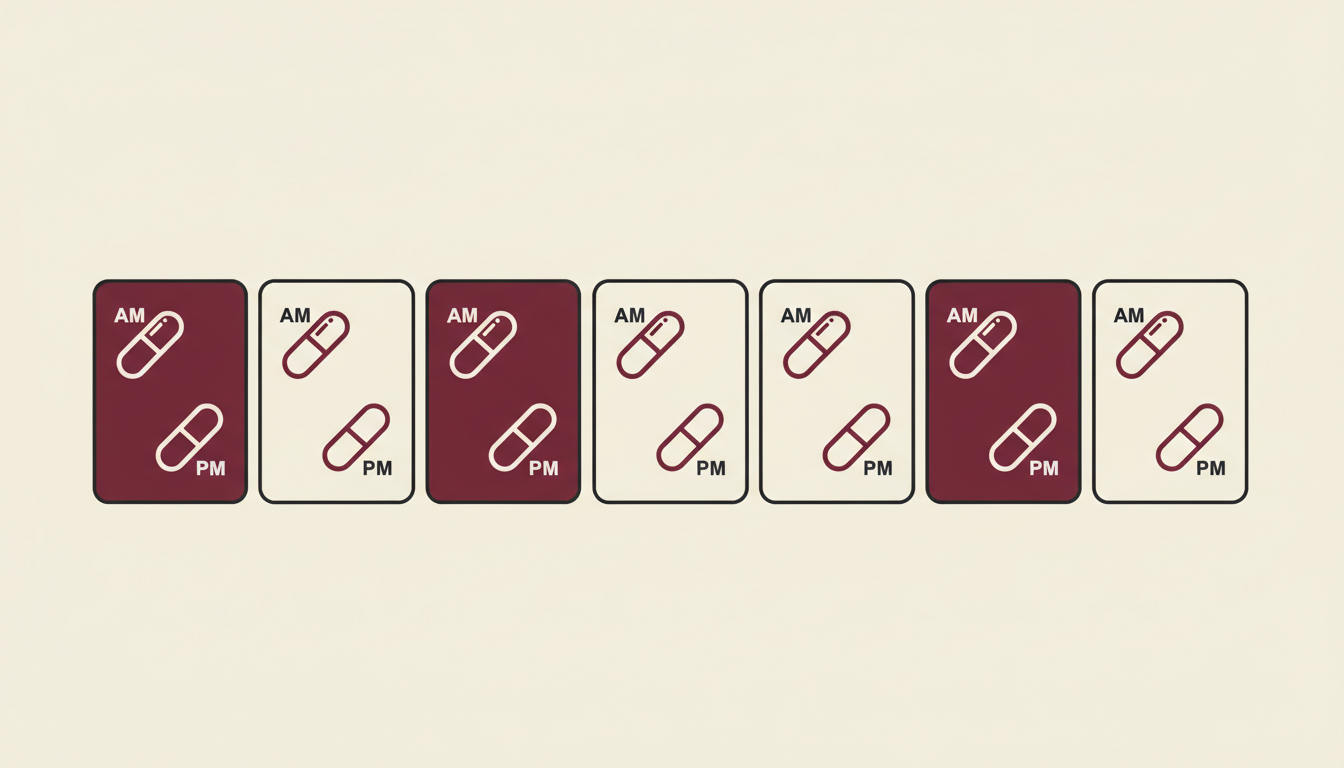
Doxycycline 100 mg by mouth twice a day, ideally every twelve hours, for 7 consecutive days. A few practical points keep it working and cut down on side effects.
Take each dose with a full glass of water and stay upright, sitting or standing, for at least 30 minutes afterward. Doxycycline tablets and capsules can lodge in the esophagus and cause real irritation if you lie down right after taking one. This is the side effect most likely to cause problems and the most preventable.
Space the doses away from dairy, calcium supplements, iron, antacids, and bismuth (Pepto-Bismol). These bind doxycycline in the gut and lower how much you absorb. A two-hour gap on either side is enough, so you do not have to skip dairy entirely.
Photosensitivity is real. Doxycycline makes skin burn more easily from sunlight or tanning beds, sometimes as a rash, itching, or redness that can be harder to see on brown or black skin. Plan for sunscreen, long sleeves, or a hat on days you are outdoors during the course (NHS doxycycline medicine guide, side effects). The same guide notes doxycycline is not used in children under 8 or during pregnancy and breastfeeding, because tetracyclines can affect developing teeth and bone.
Other common side effects include nausea, mild diarrhea, and occasional yeast overgrowth (vaginal candidiasis or oral thrush). Severe abdominal pain, persistent vomiting, or chest pain on swallowing are reasons to call your provider.
Do not stop early because you feel better. The 7-day course is calibrated to reach a cure threshold, and quitting at day 4 or 5 is the most common reason a treated infection hangs on.
Azithromycin: when single-dose still makes sense
Azithromycin 1 gram by mouth, taken as a single observed dose, is still a valid alternative. The CDC moved it from first-line to alternative for routine genital chlamydia, but it stays recommended in two specific situations: pregnancy, where doxycycline is contraindicated and azithromycin is first-line, and cases where finishing a seven-day course is genuinely doubtful. A treated infection beats an untreated one, and a single dose swallowed in front of the prescriber is sometimes the right call.
The mechanism differs from doxycycline. Azithromycin is a macrolide, a class that blocks bacterial protein assembly, and its long tissue half-life is what makes single-dose therapy possible at all. The rectal-site drop in cure rates is partly pharmacokinetic: macrolides concentrate inside cells, which can leave bacterial reservoirs in the rectal mucosa relatively under-treated by one dose.
The side-effect profile is generally lighter than a seven-day antibiotic course, with mild stomach upset the most common complaint. Rare effects include QT-interval prolongation, a heart-rhythm effect that can cause an irregular heartbeat in people with underlying conduction problems, so mention any history of arrhythmia to your provider. There is no photosensitivity warning and no esophagitis risk.
If you can reliably take a daily pill for a week, and especially if rectal infection is known or suspected, the seven-day doxycycline course is the better-evidenced choice.
The Dombrowski randomized trial and supporting studies show single-dose azithromycin clears only about 74 percent of rectal Chlamydia trachomatis infections, versus close to 100 percent for doxycycline. If receptive anal sex is part of your exposure history, ask your provider for the 7-day doxycycline regimen even if a single-dose option is offered.
Site of infection matters more than most people realize
Chlamydia can settle in the urogenital tract, the rectum, and the pharynx (throat). The same bacterium behaves differently at each site, because the local immune environment, the tissue type, and the antibiotic levels the drug reaches all differ. The CDC's screening guidance now recommends testing at every anatomic site that matches a person's reported sexual behavior, not genital sampling alone.
Pharyngeal chlamydia is less common and harder to study, but the same direction holds, and doxycycline is preferred there too given the thin data on macrolide performance at that site. Pharyngeal infection is not screened by default in most populations, but it should be tested when someone's history suggests oral exposure. If you have had receptive oral sex with a partner who later tested positive, ask the clinician to swab the throat as well as the genital site.
Which regimen fits which site
| Infection site | Doxycycline (7-day) | Azithromycin (single dose) |
|---|---|---|
| Urogenital (genital) | First-line | Performs well; preferred in pregnancy |
| Rectal | Preferred, close to 100% cure | Inadequate, about 74% cure |
| Pharyngeal (throat) | Preferred | Not preferred; data are sparse |
Test every site that matches your exposure history; a genital-only swab can miss a rectal or throat infection.
Alternatives for allergies and resistance
For people who cannot take doxycycline or azithromycin, the CDC lists several alternative regimens for non-pregnant adults.
Levofloxacin 500 mg by mouth once daily for 7 days is the most common second-tier choice. It is a fluoroquinolone, a broad-spectrum class with good absorption and a manageable side-effect profile, though fluoroquinolones carry a class warning about tendon inflammation and rupture and are generally avoided in people under 18 unless there is no alternative.
Erythromycin base 500 mg four times daily for 7 days, or erythromycin ethylsuccinate 800 mg four times daily for 7 days, is an older macrolide option. It works, but the four-times-daily dosing and frequent nausea and cramping make it harder to finish reliably.
Ofloxacin 300 mg twice daily for 7 days is rarely used in the U.S. now, though it appears in some international guidelines.
Several alternative chlamydia regimens interact with everyday medications. Fluoroquinolones can interact with antacids, iron, calcium, and certain heart-rhythm drugs. Erythromycin is a strong CYP3A4 inhibitor, an enzyme system in the liver that processes many common medicines, and it can raise blood levels of statins, some antihistamines, and several antidepressants. Giving your provider a complete medication list before the prescription is written prevents most of these problems.
Pregnancy: a special case for treatment selection
Doxycycline is contraindicated during pregnancy and breastfeeding, because tetracyclines cross the placenta and can affect fetal bone and tooth development. The treatment choice in pregnancy is therefore different.
The CDC's preferred regimen for chlamydia in pregnancy is azithromycin 1 gram by mouth in a single dose. It is the same agent used as an alternative in non-pregnant adults and has an established safety record in pregnancy. Amoxicillin 500 mg by mouth three times daily for 7 days is the listed alternative when azithromycin is not tolerated.
A test of cure is recommended in pregnancy specifically, about 3 to 4 weeks after finishing treatment, because the stakes for the fetus and newborn make confirmation worth the small false-positive risk from leftover bacterial DNA. A re-screen at 3 months is recommended on top of that test of cure (CDC 2021 STI Treatment Guidelines, chlamydia in pregnancy).
Side effects of azithromycin or amoxicillin in pregnancy and breastfeeding mirror those in other adults: stomach upset, mild diarrhea, occasional vaginal yeast overgrowth, and rare allergic reactions (NHS chlamydia overview). Severe symptoms warrant a call to the clinician.
A newborn with chlamydial conjunctivitis or chlamydial pneumonia, passed from an infected mother during delivery, is treated with oral erythromycin 50 mg per kilogram per day in four divided doses for 14 days. Antibiotic eye ointment alone is not enough for a confirmed newborn infection.
If you are pregnant, possibly pregnant, or breastfeeding, your provider will use azithromycin or amoxicillin instead of doxycycline. Tetracyclines, including doxycycline, can affect fetal bone and tooth development and are not appropriate during these stages.
What to do after finishing antibiotics
The week after the course is when treatment either holds or quietly fails. A few rules cover most of it.
Do not have any kind of sex (vaginal, oral, or anal) for 7 days after a single-dose 1-gram azithromycin, or until you complete the full 7-day doxycycline course. The guidance is keyed to finishing the course, not to how soon symptoms fade. Unprotected sex during the wait is the most common cause of so-called treatment failure that turns out to be reinfection.
Both partners need to complete treatment before resuming sex. Treating one partner and not the other almost guarantees reinfection within a few weeks.
Go easy on alcohol during the doxycycline course. The interaction is nowhere near as dramatic as the metronidazole-alcohol reaction, but heavy drinking can speed doxycycline's clearance and lower its effective level. Light to moderate use is generally fine.
Finish every dose, even if you feel completely normal by day three; the seven days are calibrated to clear the infection fully, not just to ease symptoms.
1. Wait 7 days after single-dose azithromycin, or until you finish the full 7-day doxycycline course, before any sexual contact.
2. Confirm that you and any current partner have both completed treatment before resuming sex.
3. Go easy on alcohol during the course to keep doxycycline levels effective.
4. Finish every prescribed dose, even after symptoms clear.
5. Re-screen at 3 months, however confident you feel.
When chlamydia seems not to go away
Persistent or recurrent chlamydia after a documented course has four main explanations, listed below from most to least common. If symptoms last beyond 2 to 3 weeks after a completed course, go back to the provider, who may retest, swab additional sites, and check the original regimen against the infection's likely source before changing the antibiotic.
Why chlamydia can seem to linger
- Reinfection from an untreated partner is by far the most common cause. A single encounter inside the 7-day window can reintroduce the bacteria, so a positive retest three months later is usually fresh reinfection rather than a failed course.
- An incomplete course. Skipping doxycycline doses, vomiting soon after a dose, or stopping early can leave a residual infection; a classic sign is symptoms easing by day 3 and returning by day 6 or 7.
- A missed anatomic site. Genital-only sampling can miss rectal or pharyngeal infection, especially after single-dose azithromycin.
- True antibiotic resistance, which is still rare. It is suspected only after the first three are ruled out, and confirming it takes lab testing most clinics do not run routinely.
When to call your provider
Most chlamydia cases resolve on the correct antibiotic. Call your provider if you notice any of the following.
Signs that warrant a call
Having one of these does not mean treatment failed, but each is a reason to check in rather than wait.
- Discharge, pelvic pain, or testicular pain that lasts past 2 to 3 weeks of completed treatment Common
- New or worsening lower-abdominal pain, fever, or unusual vaginal bleeding, which can signal pelvic inflammatory disease Less common
- Symptoms that ease and then return after a few days Common
- A positive result at the 3-month re-screen Less common
- A recent chlamydia diagnosis while pregnant, which needs a test of cure Less common
Partner notification and expedited partner therapy
Telling sexual partners is the part of chlamydia treatment most people dread, and it is also the part with the biggest public-health and personal payoff. The CDC recommends notifying every sexual partner from the 60 days before symptoms started or before the positive test was collected, whichever is longer, or the most recent partner if there was no contact in the past 60 days.
Most state and county health departments offer anonymous notification services that contact partners on your behalf without revealing your identity, often at no cost.
Expedited partner therapy (EPT) is a separate option: in states that permit it, the provider who treats you can also prescribe for a partner without seeing them in clinic. EPT is legal in most U.S. states for heterosexual chlamydia partner management, and the CDC's clinical guidance hub tracks current EPT resources and state-by-state legal status (CDC STI clinical guidance, partner services). EPT is not the right fit for partners who would benefit from their own clinic visit, such as anyone with symptoms, anyone who could be pregnant, or anyone whose own infection history is unknown, but for asymptomatic exposed partners it sharply raises the rate of partner treatment and cuts reinfection.
If notifying partners feels impossible, that reaction is normal and not a reason to skip it.
EPT is generally appropriate for asymptomatic heterosexual partners exposed to chlamydia who cannot easily get to in-person care.
EPT is generally not appropriate for partners with symptoms, partners who could be pregnant, partners whose own STI history is unknown, or in states where EPT is not legally permitted. Those partners are better served by their own clinical evaluation, including testing for co-infections.
Re-testing: why and when
Disclosure: stdrapidtestkits.com sells at-home rapid chlamydia tests, and the 3-month re-screen described here is a natural fit for one. We recommend products based on fit for your concern, not commercial benefit.
A test of cure, meaning a retest right after finishing antibiotics, is not recommended for non-pregnant adults treated with a CDC-recommended regimen. The standard nucleic acid amplification test can pick up dead bacterial DNA for weeks after a successful cure and return a misleading positive.
What is recommended for everyone treated for chlamydia is a re-screen 3 months after treatment. The reason is reinfection, not treatment failure. The CDC describes reinfection as common after treatment, usually from an untreated partner or a new exposure rather than the original course failing (CDC 2021 STI Treatment Guidelines, chlamydia follow-up). The 3-month re-screen catches these early, before they can progress to PID in women or epididymitis in men.
Pregnancy is the exception, with a test of cure about 3 to 4 weeks after treatment plus the 3-month re-screen. If a clinic visit is logistically hard, an at-home rapid chlamydia swab is a reasonable way to handle that 3-month check.
Doxycycline 100 mg orally 2 times/day for 7 days is the recommended treatment for chlamydial infection in nonpregnant persons. Men and women who have been treated for chlamydia should be retested approximately 3 months after treatment, regardless of whether they believe their sex partners were treated.
Common myths about chlamydia treatment
A few persistent myths cause real harm.
Cranberry juice does not treat chlamydia. Cranberry has some evidence for preventing urinary tract infections; chlamydia is a different organism and is unaffected by it. Antibiotics are the only effective treatment, given either as a single dose or a 7-day course (MedlinePlus, chlamydia infections).
Most infections cause nothing noticeable, yet untreated asymptomatic chlamydia still scars reproductive tissue and can still pass to a partner (CDC chlamydia overview).
Treatment matters for men too, not only women. Men with untreated chlamydia can develop epididymitis, which can hurt fertility, and can pass the infection back to a treated partner.
Over-the-counter UTI products do not treat chlamydia. Phenazopyridine (Azo, Uristat) numbs urinary discomfort but does nothing to the organism. Taking it instead of a prescribed antibiotic delays real treatment and can mask symptoms long enough for the infection to ascend.
Co-infection with gonorrhea is common enough that most clinics test and treat for both at once, so if your test covered only chlamydia, a parallel gonorrhea test fills the gap.
Your next step after a chlamydia diagnosis
Are you still taking your antibiotic, or within 7 days of a single azithromycin dose?
Yes: Finish every dose and avoid all sexual contact until the 7-day window is up and your partner has been treated too.
Have symptoms lasted more than 2 to 3 weeks after a completed course, or returned after easing?
Yes: Contact your provider for re-evaluation; they may retest and swab additional sites before changing the antibiotic.
Are you pregnant, or did a 3-month re-screen come back positive?
Yes: See your provider promptly: pregnancy needs a test of cure 3 to 4 weeks after treatment, and a positive re-screen needs re-treatment and partner follow-up.
No: Set a reminder to re-screen about 3 months after treatment, even if you feel completely better.
Guidance only; your provider can advise for your specific situation.
FAQs
- Which antibiotic works faster for chlamydia: azithromycin or doxycycline?
- For genital infection both clear it well and most people feel better in 2 to 3 days. For rectal infection the gap is clinically significant: doxycycline reaches close to 100 percent cure in trials, versus about 74 percent for single-dose azithromycin. Azithromycin is faster to take, but doxycycline over 7 days is the better-evidenced regimen overall. If your exposure included receptive anal sex, ask specifically for the doxycycline course.
- How soon after starting antibiotics am I no longer contagious?
- The CDC's guidance is to abstain from sex for 7 days after a single-dose 1-gram azithromycin, or until you finish the full 7-day doxycycline course. Symptom relief alone is not the cutoff. Resume sex only after both you and your partner have completed treatment.
- Can chlamydia clear in 24 hours?
- No. Even with the correct antibiotic, full clearance takes several days. Symptoms usually start to ease in 48 to 72 hours, but the CDC asks you to wait 7 days before resuming sex no matter which antibiotic you took.
- What if my partner refuses to get treated?
- Avoid sex with them until they are treated. Untreated partners are the single biggest driver of recurrent chlamydia. In many U.S. states, expedited partner therapy lets your clinician prescribe for a partner without an in-person visit, so ask whether that is available where you live. If the conversation has stalled, state and local health departments often run anonymous partner-notification programs.
- What if I miss a dose of doxycycline?
- Take the missed dose as soon as you remember, unless it is almost time for the next one, in which case skip it. Do not double up. If you miss more than two doses across the seven days, contact your prescriber, because extra days of treatment may be needed.
- Will I need a re-test after I finish antibiotics?
- Not right away. A re-screen at 3 months is recommended for everyone, because reinfection is common and an immediate test of cure can stay positive from leftover DNA. Pregnant patients are the exception and should have a test of cure 3 to 4 weeks after treatment plus the 3-month re-screen.
- Can I drink alcohol on doxycycline?
- Light to moderate drinking is generally tolerated. Heavy drinking can speed clearance of the antibiotic and worsen stomach side effects, so cutting back during the seven-day course is the safer choice. Alcohol does not interact with doxycycline the way it does with metronidazole.
- Is doxycycline the same as the antibiotic used for acne?
- Yes, the active ingredient is identical. The chlamydia regimen (100 mg twice daily for 7 days) is shorter and uses higher per-dose levels than the long-term low-dose acne regimen, but the same photosensitivity warning and medication interactions apply to both.
- U.S. Centers for Disease Control and Prevention. 2021 STI Treatment Guidelines, chlamydial infections. First-line and alternative regimens, abstinence guidance, partner management, and follow-up testing. Cites the Dombrowski randomized comparison of doxycycline versus single-dose azithromycin at the rectal site.
- U.S. Centers for Disease Control and Prevention. About Chlamydia. Transmission and complications including pelvic inflammatory disease, ectopic pregnancy, and infertility.
- U.S. Centers for Disease Control and Prevention. STI Surveillance, annual report. U.S. chlamydia case counts and trend data.
- U.S. Centers for Disease Control and Prevention. STI clinical guidance hub for healthcare providers, including expedited partner therapy resources and legal status.
- World Health Organization. Chlamydia fact sheet. Global incidence (128.5 million new infections in 2020) and asymptomatic-infection statistics.
- National Health Service (UK). Doxycycline medicine guide, side effects including photosensitivity and who can and cannot take it.
- National Health Service (UK). Chlamydia overview, symptoms, treatment, and follow-up advice for non-pregnant and pregnant patients.
- MedlinePlus, U.S. National Library of Medicine. Chlamydia Infections. Patient-facing overview confirming chlamydia is curable with a single dose or a 7-day course of antibiotics.
