Living in a time when everything is literally a click away, the medical field moves with the times. Such advancement is the ability to conduct discreet, in-house testing for Human Immunodeficiency Virus, or HIV. This series of articles endeavors to undertake an in-depth view of the process, symptomatology involved in HIV, and the importance of undertaking the test-is all in simple English and SEO-friendly.
07 October 2024
5 min read
2481
Table of Contents
Debunking the Home Testing for HIV
HIV 101: Understanding HIV and AIDS
Who Should Get an HIV Test?
Recognizing Symptoms of HIV
Treatment for HIV
When to Get Tested for HIV
Understanding Your HIV Test Results
How Does At-Home HIV Testing Work?
Accuracy of At-Home HIV Tests
Debunking the Home Testing for HIV
The at-home HIV testing represents a revolution in the field of personal health and disease testing. It provides the person with the convenience and privacy of determining whether or not one is exposed to HIV within their households. Referred to as the 4th generation HIV test, this novel test targets two significant biomarkers: the Immunoglobulin G, IgG antibodies, and the p24 antigen. This test features ease of use, besides being very quick; a user will be able to know about his or her exposure to HIV1/HIV2 within 10 minutes of conducting the test.
Human Immunodeficiency Virus, or more specifically, HIV, is a notorious virus that usually emanates with the exposure of an individual to infected bodily fluids, for example, blood or through sexual intercourse without protection. It attacks and progressively cripples immune cells, thus weakening one's immune system. Aggressive and without the right treatment, this virus could progress over time into a grim and life-threatening condition called Acquired Immune Deficiency Syndrome, or AIDS for short, where the body is no longer able to fight off diseases and infections.
Who Should Get an HIV Test?
CDC recommendations include testing everyone for HIV at least once in their lifetime, regardless of age, race, sexual orientation, or other sociodemographic characteristics. Indeed, this is a recommendation of pertinence, since it is estimated that 40,000 new diagnoses of HIV occur annually in the USA alone, and approximately 13% of infected individuals report not knowing their status. It underlines the critical role of testing in the fight against the spread of the virus and timely treatment for the infected.
Recognizing Symptoms of HIV
Symptoms of HIV infection are sometimes very sneaky. Early symptoms, like fever, headache, sore throat, swollen lymph nodes, rash, and fatigue, can resemble other illnesses. They may show up several weeks after someone becomes infected with HIV. The early symptoms usually go away within a month and after that, a person could feel well for a long time.
Left untreated, though, HIV can progress to AIDS, whose unmistakable signs and symptoms include severe fatigue, sudden weight loss, relentless night sweats, lingering chills or fever, lymph-swollen nodes for weeks at a time, chronic diarrhea, headaches that won't improve, and unusual, sometimes life-threatening infections.
Treatment for HIV
Though there is, unfortunately, no definite cure for HIV as of now, the advancements in medical science have been able to come up with the effectiveness of medication regimes that can reduce the damage caused by this virus substantially by reducing its quantity in your blood. Knowing one's HIV-positive status unlocks all the available health care support, from the chance to speak with a board-certified health provider at no additional cost, to make sure they get advice and treatment.
When to Get Tested for HIV
Testing is recommended for all sexually active people, and for everyone between the ages of 18 to 65. You should get tested if: You have had more than one or a new sex partner, you share needles or equipment to inject drugs, you have had another sexually transmitted infection since your last HIV test, you have symptoms of an STI, or you have been exposed to an STI. If you have hepatitis or TB, conditions that can occur with HIV, then testing may be necessary.
As a blanket measure, the CDC guidelines recommend that all persons between 15 and 65 years of age be tested at least once in their lifetime so that early detection and management of the disease may be possible.
Understanding Your HIV Test Results
Understanding your test results will be important for follow-on health action. The HIV antibody/antigen test is designed to detect whether you have come into contact with HIV. Generally, although HIV antibodies may take as long as 23-90 days to detect post-exposure, this is a combination test that detects the presence of the HIV p24 antigens, which become detectable sooner than the antibodies; hence, it can also detect HIV as early as 18-90 days post-exposure.
How Does At-Home HIV Testing Work?
Testing for HIV from home uses the established ELISA method, more importantly known as the fourth-generation antibody antigen test. These tests also boast high sensitivity and specificity for the detection of HIV. However, there is this "window period"-an aspect of time between a possible exposure to the virus and the virus' presence being detectable in one's body. Generally speaking, an infection with HIV can be positively detected 18-45 days from exposure with a 4th generation test.
By contrast, the rapid HIV tests give results in 15–30 minutes, which perhaps might be very tempting since one gets the results quickly; however, these have a lower sensitivity, hence yielding more false negatives.
The procedure for self-testing of HIV at home is very simple and straightforward, as will be outlined below:
Buy the self-testing HIV kit.
Using the kit, collect your sample based on the instructions in the package. It only needs a few drops of your blood from the finger.
Wait just 10 minutes for your HIV test result.
Accuracy of At-Home HIV Tests
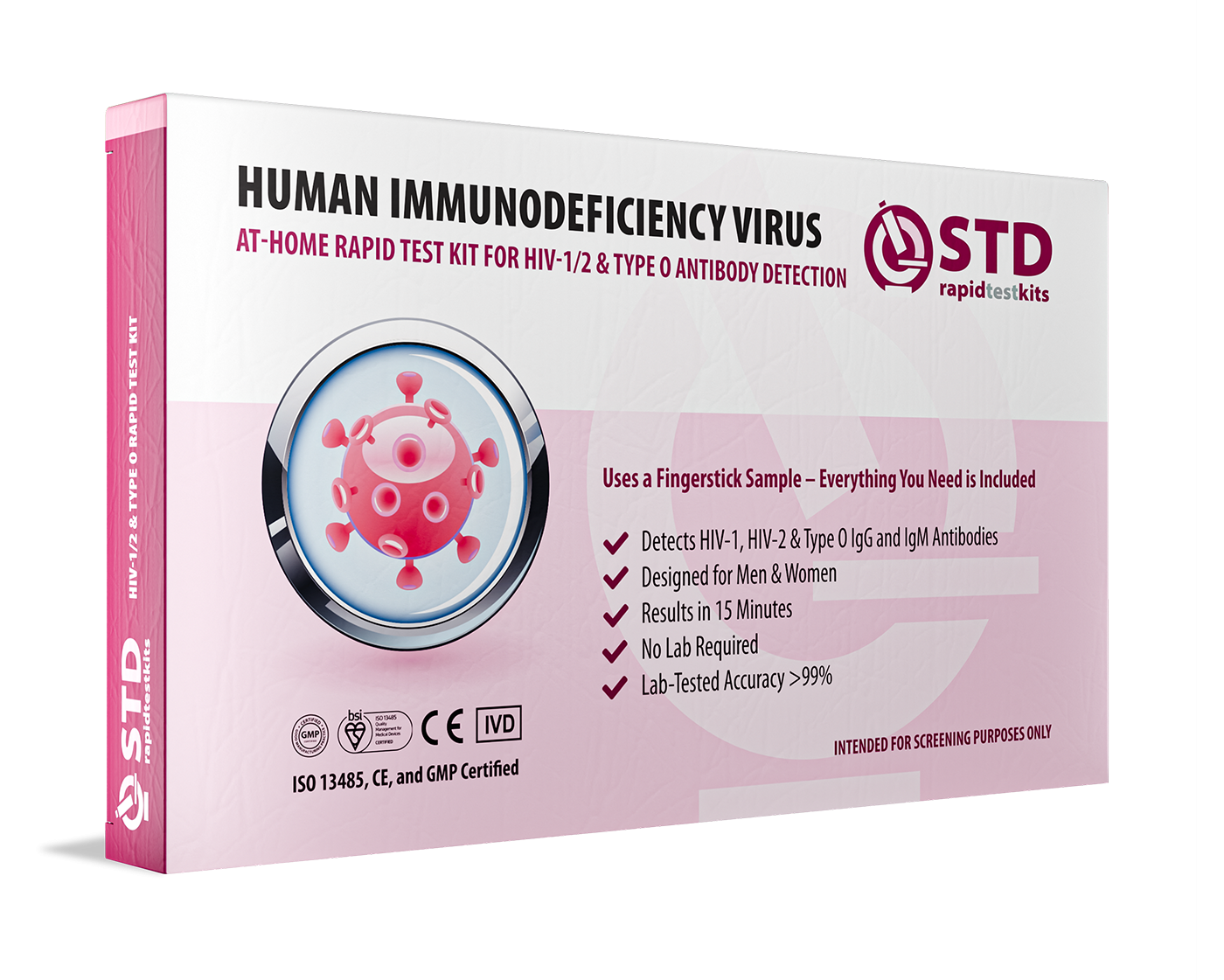
The at-home test by STDRapidtestkits.com is very reliable, with proven accuracy above 99% for testing for HIV. Such a high degree of accuracy further speaks to the convenience and importance of testing at home in promoting better health and offering improved rates of HIV diagnosis.







 For Men & Women
 Results in Minutes
 No Lab Needed
 Private & Discreet


