






Quick Answer: Chlamydia test kits you can use at home usually cost between $29 and $179, but if you need to retest, pay for lab fees, or have a telehealth consultation, the total cost could go up to $250 or more. The price depends on the kind of test, how fast it is, and how private it is.
Why Prices Range So Widely (And Why That Matters)
Let’s start with a scenario. Devon, 22, lives in a college town and panicked after their ex casually mentioned having “a minor STD thing a few months back.” Devon went online, found a $27 test kit, and grabbed it on impulse. It arrived two days later, no instructions beyond a tiny folded pamphlet. Devon peed in the included cup, dipped a cassette, waited fifteen minutes, and saw...nothing. No control line. No result. No refund either.
This isn’t unusual. The chlamydia test market is saturated with options, from flimsy cassettes sold through third-party sellers to clinical-grade kits requiring mail-in samples and laboratory processing. Some tests are real medical devices with FDA clearance or CE marking. Others are mass-manufactured for markets where oversight is looser and instructions are lost in translation.
So why do some kits cost $25 and others $200? It comes down to test type, shipping and lab costs, whether telehealth or prescription support is bundled, and whether you're buying peace of mind or just a maybe. The reality is this: chlamydia is a silent infection. If you’re testing because of symptoms or a known exposure, you need more than a maybe. You need a test that works.
Table 1: Comparing Chlamydia Test Types by Cost and Accuracy
| Test Type | Typical Price | Accuracy Range | Requires Lab? | Notes |
|---|---|---|---|---|
| Rapid self-test cassette (urine or swab) | $25–$50 | 60–80% | No | Results in minutes but prone to user error |
| Mail-in lab test (chlamydia only) | $69–$129 | 95–99% | Yes | Sample mailed to certified lab; results in 2–5 days |
| Multi-STI mail-in panel (incl. chlamydia) | $139–$249 | 95–99% | Yes | Tests for 3–8 STIs; better value if at risk for more than one |
| Clinic-grade rapid chlamydia test (professional use) | $400–$650 | 97–99% | No | Usually not sold for home use; listed online for clinics |
Table 1: Most consumer kits fall in the $69–$179 range. Tests under $40 often lack regulatory clearance or produce unclear results.
Let’s Talk About the $25 Test You Saw on Amazon
Yes, those tests exist. But so do knockoff designer bags and counterfeit vitamins. A rapid chlamydia test selling for under $30 often skips FDA clearance and may not meet sensitivity standards. Some people use test strips that were originally made for use in clinics and then were repackaged without supervision. Some companies may send samples without clear instructions, which can confuse users and lead to mistakes. If there’s no visible control line, there’s no way to trust the result. And if that result gives you false reassurance, it could lead to unknowing transmission.
For some people, a $25 test feels better than nothing, and that’s a real dilemma. But be wary: some of these kits appear to work by showing nothing at all. They promise silence, not science. A test that fails silently isn't just useless, it’s dangerous. If you're going to test from home, your result should mean something. That’s worth more than $25.
If money is tight, you may be better off using a free local clinic or online program that mails tests discreetly. Several nonprofits now offer mail-in chlamydia tests at no cost, especially for people under 25 or without insurance. Some even partner with health departments and cover lab processing fully. And unlike budget kits, these programs don’t vanish when something goes wrong.
People are also reading: Painful Peeing, No Infection: When It’s Not a UTI
What You’re Really Paying For: Lab, Privacy, and Peace of Mind
Cost isn’t just about the box that shows up in your mailbox. When you pay $129 for a test, what you’re often getting is:
A professional-grade sample collection kit with accurate instructions. Prepaid shipping and processing by a CLIA-certified lab. Results reviewed by a licensed clinician. Optional telehealth consults if your result is positive. A customer service rep who responds when your label smudges or your sample leaks. Peace of mind that the test was done right, and that someone will help you if it wasn’t.
Compare that to a kit that costs less than a nice dinner. It might arrive in a plain pouch with instructions photocopied six generations deep. No lab. No support. Just you, your urine, and a test strip hoping for the best. When the risk is your health, your future fertility, and possibly your partner’s safety, saving $50 doesn’t always save you anything.
It’s not about shaming those who can’t afford more. It’s about understanding the trade-offs before you click “buy now.” If you're going for convenience, go for quality too. The most expensive part of an STI isn't always the test, it’s the one you skip, or the result you trust when you shouldn’t.
More insights ahead, next, we’ll break down hidden fees, insurance loopholes, and why a test that looks cheap at first glance can cost more in the long run.
Check Your STD Status in Minutes
Test at Home with Remedium7-in-1 STD Test Kit

 For Men & Women
 Results in Minutes
 No Lab Needed
 Private & Discreet
Order Now $129.00 $343.00
For all 7 tests
Why That $79 Test Kit Ends Up Costing You $200
Kayla thought she was being responsible. After a one-night stand where the condom stayed in place but left her uneasy, she ordered a $79 test kit that promised “lab accuracy from home.” She mailed her sample the next morning and waited. Five days later, the email came: “We could not process your sample. Please reorder.” When she contacted support, they told her the lab required a new test. That was another $79, and another week of anxiety. She ended up paying $158 for a single chlamydia result.
This kind of pricing creep is more common than you’d think. While base prices are often clear, what’s not included can quietly stack up. Some kits don’t include prepaid shipping. Others charge for result interpretation or telehealth if you test positive. And if your sample is lost, leaked, or considered “insufficient volume,” you’ll likely have to buy a whole new kit. No discounts. No do-overs.
It’s also common for combo panels to surface costs retroactively. A $149 STI kit might test you for eight infections, but only give full breakdowns for three unless you pay a “detailed report” fee. Or it might include telehealth in theory, but only after a 10-day scheduling window and another form of ID verification. If you're dealing with symptoms now, delays and upsells can feel like punishment.
Table 2: Hidden Costs That Inflate Your At-Home Test Bill
| Possible Add-On | Typical Cost | When It’s Charged |
|---|---|---|
| Shipping (if not included) | $7–$15 | Some kits require buyer to pay return postage |
| Retest (lost sample or unclear result) | $50–$129 | Often required if sample is insufficient or mishandled |
| Telehealth consult | $25–$75 | Sometimes optional, sometimes required for prescriptions |
| Detailed results breakdown | $15–$30 | Hidden fee in some multi-STI panel kits |
| Prescription service (if positive) | $29–$79 | Required for antibiotics in some U.S. states |
Table 2: Add-ons can push your total cost much higher than the kit price listed on the product page.
Insurance, FSA/HSA, and Sliding Scale Clinics
If you’re covered by insurance, the irony is that a $129 kit might not be reimbursable, while a $400 urgent care visit could be. Many at-home test brands don’t directly bill insurers, though they may provide receipts you can submit. Success varies. If you're using an FSA or HSA card, some major platforms (like Everlywell or LetsGetChecked) qualify. But you’ll need to check your provider’s list and verify what’s covered. Certain purchases require a physician’s note, even if the product is listed as “eligible.”
And if you’re uninsured? Don’t assume mail-order is your only path. Many state and local health departments offer discreet testing programs that cover chlamydia, gonorrhea, and HIV. These kits can be ordered online and sent free to qualifying users, usually under 25 or at elevated risk. They’re often funded by Title X or public health grants, which means the tests are real, processed in real labs, and come with real support if your results come back positive.
For example, California’s “TakeMeHome” program, Washington’s “I Know Mine,” and other state-funded initiatives let users order tests by mail with no upfront cost. The packaging is discreet. The turnaround is quick. And the follow-up care is built in. This isn’t charity, it’s strategy. Chlamydia is preventable, treatable, and common enough that states would rather help you now than pay for complications later.
So if you're holding back because of money, don’t let sticker shock make the decision for you. There may be more options than meet the eye. You just have to know where to look.
Does Paying More Actually Get You a Better Test?
Not always. Price can reflect quality, but it can also reflect branding. Some companies package the same lab processing with sleeker boxes and bigger marketing budgets. What you want to look for isn’t just price, it’s what’s inside. Are the samples processed in a CLIA-certified lab? Is the test FDA-approved, or CE-marked for international use? Does the website offer real contact info, or just a chatbot and a Gmail address?
There’s also emotional value in paying more, especially when what you’re buying is clarity. If you’ve ever spiraled while waiting for a test result, you know what it’s like to want answers now. Rapid kits can feel like a shortcut, but they often sacrifice sensitivity for speed. Lab-based tests may take 2–5 days, but they tend to catch more cases and are less prone to user error. That’s not hype, it’s how PCR and NAAT technology work. These are the same kinds of tests used in clinics, just adapted for home collection.
So yes, spending $139 instead of $29 might mean you sleep better for a week. But the best test is the one you trust to tell you the truth, and that you feel confident acting on. That’s priceless.
Retesting Realities: When One Test Isn’t Enough
Imagine this: you took a chlamydia test after a risky weekend hookup. It came back negative. Relief floods in. You go back to life. But two weeks later, you start feeling a dull ache during urination. You wonder, did I test too early? Was that kit even reliable? Now you’re staring at the same website, debating whether to order again, this time hoping for more certainty.
This happens all the time. Chlamydia has a window period, meaning there’s a delay between exposure and when the infection becomes detectable. If you test too soon (under 7 days), especially with a rapid kit, you risk a false negative. That’s why many brands recommend retesting if symptoms persist, or if your exposure was recent. The catch? Most don’t offer a discount for a second test. You’re paying full price twice. And if the second test is positive, you may now face telehealth fees and medication costs on top.
The takeaway? Timing matters. Accuracy matters. And clarity costs. If you're testing within a week of exposure, know that a negative result doesn’t always mean you're in the clear. Plan for a potential retest 14 days after the incident, especially if symptoms show up or if your first kit was low-cost and limited in scope. Budgeting for two tests isn’t a failure. It’s planning ahead.
If you're in this limbo zone right now, peace of mind is one test away. You can look into things like the Combo STD Home Test Kit, which lets you find out if you have chlamydia or gonorrhea in one discreet package. It has been tested in a lab and is CLIA-certified. If you test positive, you can get help. It's not enough to just know; you also need to know what to do next.
People are also reading: Why Am I Waking Up With Discharge? 7 Things It Could Be
Table 3: Sample Test Kit Price Comparison (Top-Searched Kits – 2026)
| Brand/Kit | Test Type | Price | Includes Lab Analysis? | Turnaround Time |
|---|---|---|---|---|
| STD Rapid Test Kits – Chlamydia | Rapid cassette (urine) | $29 | No | 15 minutes |
| LetsGetChecked – Chlamydia & Gonorrhea | Mail-in lab PCR | $99–$129 | Yes | 2–5 business days |
| Everlywell – STD Panel (incl. Chlamydia) | Mail-in lab NAAT | $149–$199 | Yes | 2–4 business days |
| myLAB Box – Chlamydia Test | Mail-in lab NAAT | $89 | Yes | 1–3 business days |
| Amazon/Third Party (varies) | Rapid test (unknown brand) | $19–$40 | No | Unreliable |
Table 3: Pricing updated for 2026. Always check for lab certification and what’s included in the base price before ordering.
Order Now $119.00 $294.00 Check Your STD Status in Minutes
Test at Home with Remedium
6-in-1 STD Test Kit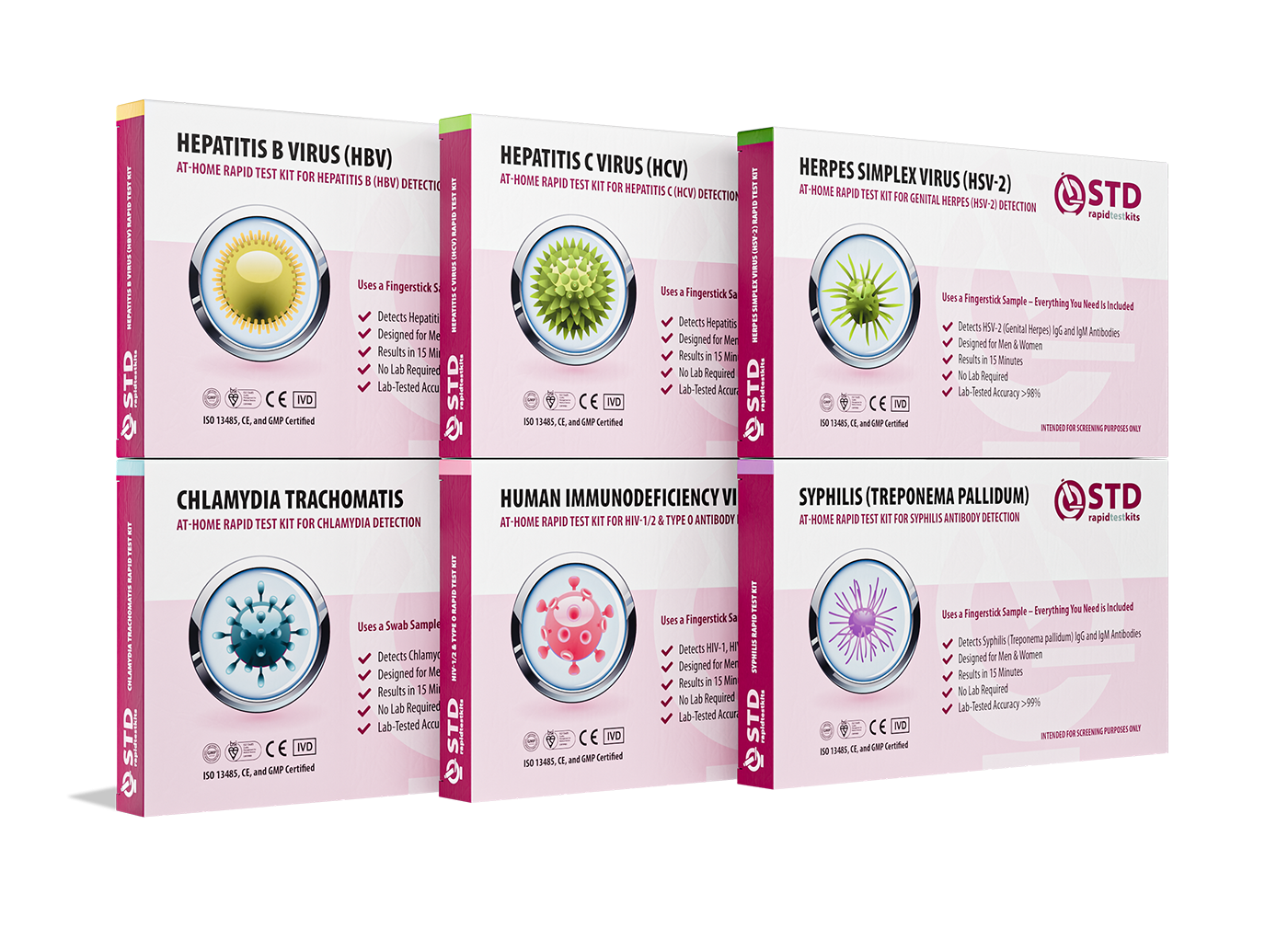 For Men & WomenResults in MinutesNo Lab NeededPrivate & Discreet
For all 6 tests
Privacy, Packaging, and Why It Feels Risky Anyway
You wouldn’t think a small brown box could carry so much emotional weight. But when you're ordering an STD test, especially one for chlamydia, that package isn’t just a delivery, it’s a decision. A declaration. A what-if. The fear of someone in your house seeing it. The anxiety of neighbors noticing your mail. Even when the packaging is discreet, and most kits are, it still feels like a risk.
That’s why privacy features matter. The best test brands know that the emotional cost of testing can be just as heavy as the financial one. Look for companies that ship in plain envelopes, without brand names or medical codes. Some even allow delivery to PO boxes or pickup lockers. Others offer digital result portals you can lock behind a PIN or facial recognition. It might sound extreme, but when you're dealing with sexual health, control over who knows, and when, is empowering.
And let’s be honest: testing for chlamydia still carries stigma, even though it's one of the most common and easily treated STIs. If a discreet kit helps you get tested without shame or delay, it’s doing more than diagnostics. It’s giving you back control. That’s worth investing in.
FAQs
1. Can I really trust a $29 chlamydia test?
Short answer? Sometimes, but you’ve got to read the fine print. Some of those ultra-cheap kits are just flimsy test cassettes with no lab backing, no support, and no refund if something goes wrong. Think of it like buying sushi from a gas station, it might work out, but is it worth the gamble?
2. Why do some chlamydia test kits cost more than $150?
You’re not just paying for a piece of plastic, you’re paying for lab analysis, shipping, privacy, and sometimes even a built-in doctor consult. It's like ordering a full meal instead of a snack. You get to the same place, but the experience is very different. If you're dealing with real symptoms or recent exposure, the higher-end kits often come with real follow-up care and certified lab testing. This can make a big difference.
3. Is there a catch with “free” testing programs?
Not really. In fact, some of the most trustworthy tests come from state-funded or nonprofit programs. They’re discreet, legit, and designed for people under 25 or without insurance. You might have to answer a few screening questions, but they won’t ask for your entire life story. And yes, they really do send you the kit for free.
4. What if I test negative but still feel... off?
You’re not imagining things. A single test result doesn’t always tell the whole story, especially if you tested during the window period (usually the first 7–14 days after exposure). If you’ve got weird symptoms or your gut says something’s wrong, retest in a week or two. Bodies are complicated. Tests catch most things, but not everything right away.
5. Will anyone know I ordered a chlamydia test?
Only if you tell them, or if they’re snooping your mail like it’s the 1950s. Most test kits come in plain, unmarked packaging. No bold “STD TEST INSIDE” labels. Some brands even let you ship to lockers or PO boxes if that makes you feel safer. This is your business, not your neighbor’s.
6. What happens if I test positive?
First of all, breathe. Chlamydia is common, treatable, and doesn’t mean anything about your worth or your decisions. Most at-home kits that include lab analysis will offer a telehealth consult or link you to treatment. If not, a quick call to a local clinic or urgent care can get you antibiotics fast. What matters most is not ignoring it. You've already done the hard part, now just finish the loop.
7. Is testing at home really as accurate as going to a clinic?
In many cases, yes. Mail-in kits that use NAAT or PCR, the same methods as clinics, are about as accurate as it gets. But DIY test strips without a lab? That’s where things get shaky. If your kit doesn't involve a lab and feels more like a pregnancy test, take the result with a grain of salt, especially if it’s negative and you're still feeling off.
8. Can I use my FSA or HSA card to buy a test kit?
Most of the time, yes. Brands like Everlywell and LetsGetChecked usually qualify, and some others do too. Just make sure the seller is legit and offers an itemized receipt. It's one of the few times you can use your health savings card for peace of mind, and it's way better than spending it on tongue depressors or knee braces.
9. Do I need to test again after treatment?
Usually, yes, especially if you’re not 100% sure your partner got treated too. Most doctors recommend retesting 3 months after treatment to make sure it’s gone and hasn’t come back. It's not paranoia, it’s just smart. Chlamydia likes to sneak back in when no one’s looking.
10. What if I can't afford to test right now?
You’re not alone. Testing can feel out of reach, especially with inflated online prices. Look into free mail-in options from your state health department, or call your local clinic and ask about sliding scale services. Getting tested shouldn’t be a luxury, it should be basic healthcare. And it’s okay to ask for help.
You Deserve Answers, Not Assumptions
When it comes to testing for chlamydia at home, the price you see on the product page is rarely the whole story. The real cost can be higher than expected because of hidden shipping fees, retests, optional consultations, and the emotional weight of getting it wrong. But it can also be more accessible than you think, especially if you know where to look, what to avoid, and when to trust a second opinion.
Testing isn’t about catching you in a mistake. It's about keeping you safe, informed, and in charge of your own health. The goal is the same no matter how much you spend: to get clear and take action if you need to. Don’t let price confusion or shame keep you in the dark.
Still deciding? STD Rapid Test Kits offers discreet, affordable chlamydia testing options you can trust, delivered with no judgment, and no unnecessary markups.
How We Sourced This Article: We combined current guidance from leading medical organizations with peer-reviewed research and lived-experience reporting to make this guide practical, compassionate, and accurate.
Sources
1. CDC – Chlamydia - STD Facts
2. GoodRx – Best At-Home STI Tests
3. Getting Tested for STIs | STI
4. Chlamydia trachomatis - Diagnosis and treatment
6. Chlamydial Infections - STI Treatment Guidelines
7. Testing for STIs at home? Yes, it’s possible—and popular
8. At-home specimen self-collection as an additional testing strategy
10. Can I take an STD test at home?
About the Author
Dr. F. David, MD is a board-certified infectious disease specialist focused on STI prevention, diagnosis, and treatment. He blends clinical precision with a no-nonsense, sex-positive approach and is committed to expanding access for readers in both urban and off-grid settings.
Reviewed by: Vanessa Grant, RN, MPH | Last medically reviewed: January 2026
This article is for informational purposes and does not replace medical advice.


