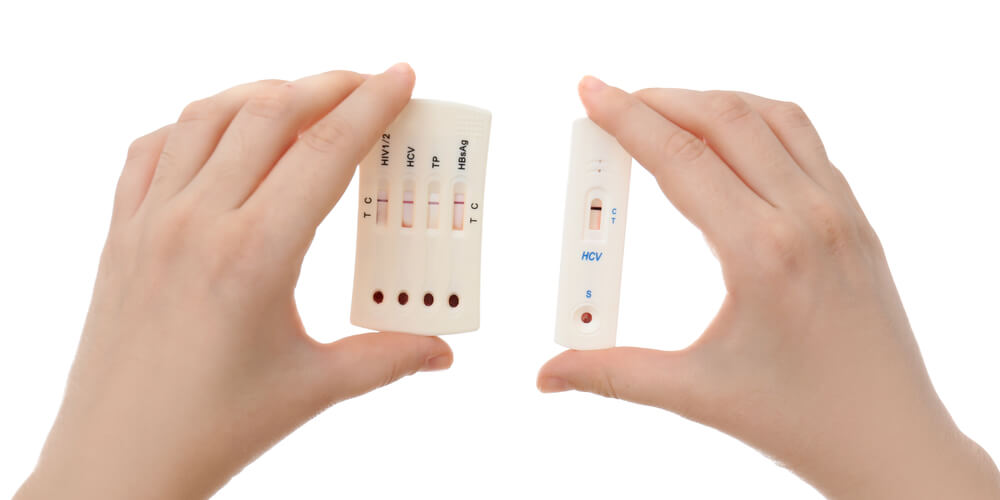
Published: October 2025 | Last updated: May 2026 | Editorial review and quality control: Martina N.
There is a pattern that plays out constantly in clinics, in dating-app messages, and in quiet conversations after a new partner. Someone shares a negative test result. Both people exhale. The conversation moves on. The result feels final.
The real picture is messier. A negative test is a snapshot of one moment, taken with one specific test, looking for a specific set of infections at the body sites that were actually sampled. Outside that snapshot, very little is guaranteed.
This article walks through what a negative result genuinely proves, when it proves close to nothing, and how to build a testing routine that delivers reliable answers instead of false comfort.
Can a negative STD test still be wrong?
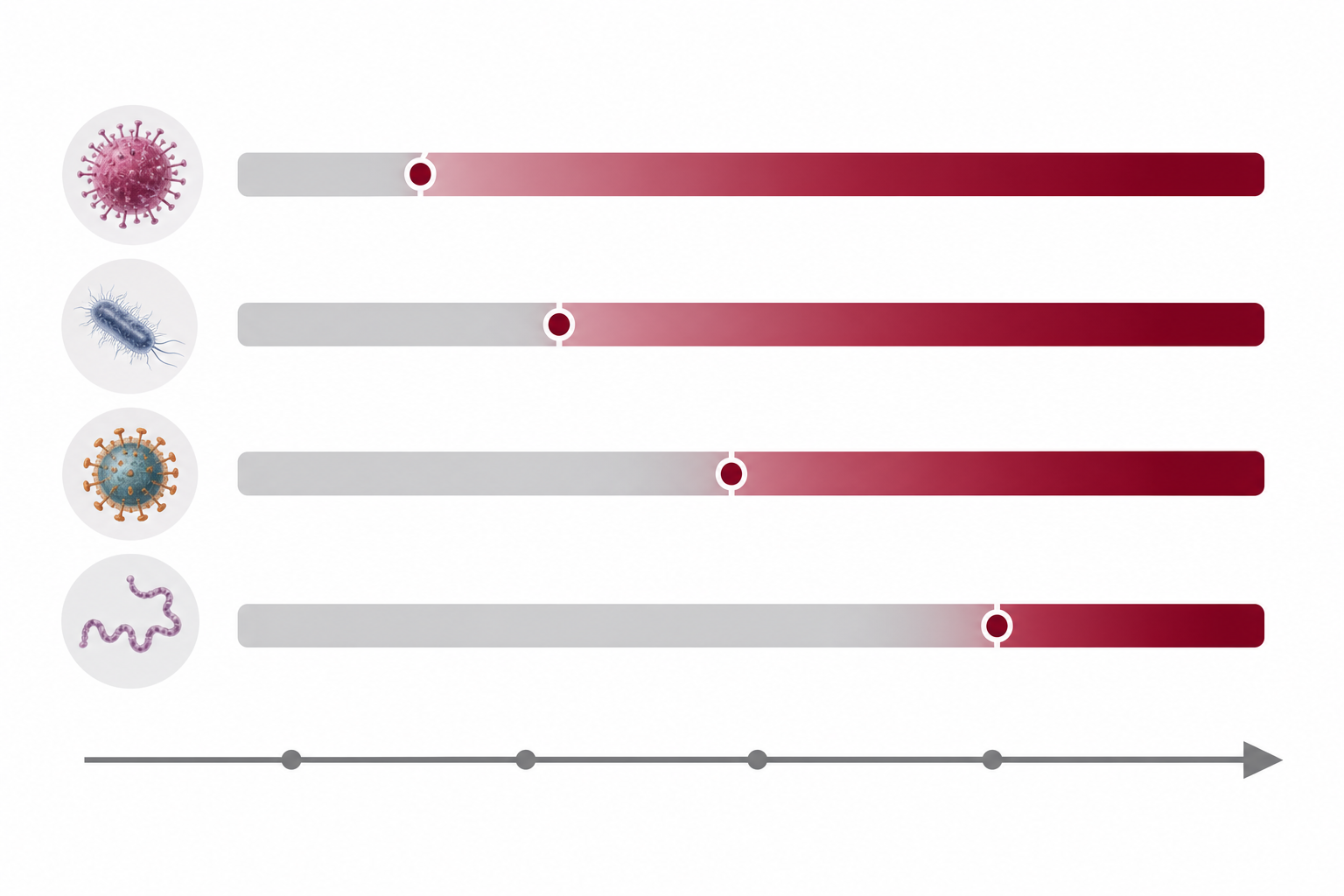
Yes, and it happens more often than people realize. The most common reason is the window period, the time gap between exposure and the point at which a test can reliably detect an infection. Window periods range from roughly two weeks for chlamydia and gonorrhea to around 23 to 90 days for HIV antibody tests, and up to about 12 weeks for syphilis. A test taken inside that window can read negative while an infection is quietly developing. Sample-site mismatch, incomplete panels, and reinfection after the test are the other regular causes.
Key Takeaways
- Window periods vary by infection: chlamydia and gonorrhea swabs become reliable around two weeks, HIV antibody tests can take 23 to 90 days, and syphilis typically takes 3 to 6 weeks with confirmation at 12 weeks.
- A negative result only covers the specific infections the test was designed to detect at the specific body sites that were sampled. Throat and rectal infections are routinely missed by standard genital screens.
The Window Period: Why Timing Decides Everything
Every STD test relies on the body, or the pathogen itself, producing something measurable. For antibody tests, the immune system has to mount a response. For antigen tests, there has to be enough viral protein in circulation. For swab-based pathogen detection, there has to be enough bacterial DNA at the sampled site. None of that is instant after exposure. The interval between infection and detectability is the window period, and ignoring it is the single most common reason a negative result turns out to be wrong.
Approximate windows for the infections people test for most often:
- Chlamydia and gonorrhea: roughly 1 to 2 weeks. Detectable bacterial DNA accumulates fairly quickly at the infection site, but very early swabs can miss low-burden infections.
- HIV: varies sharply by test generation. Fourth-generation laboratory antigen/antibody tests can pick up infection from about 18 to 45 days. Antibody-only rapid tests, including most fingerstick at-home kits, generally take 23 to 90 days post-exposure to become reliably positive (CDC HIV testing guidance).
- Syphilis: antibodies are usually detectable 3 to 6 weeks after infection, though some cases take up to 12 weeks. The primary chancre may appear and resolve before serology turns positive, which makes timing especially confusing.
- Hepatitis B: the surface antigen (HBsAg) typically becomes detectable about 4 weeks post-exposure, with most cases positive by 6 weeks (CDC hepatitis information).
- Hepatitis C: antibody seroconversion usually occurs 4 to 10 weeks after exposure, with most cases detectable by 11 weeks.
- Herpes (HSV-2): blood antibody tests need roughly 6 to 12 weeks for reliable seroconversion. Some people take longer, and a small minority never seroconvert at all.
A test taken three days after a worrying encounter is, in almost every case, too early. A negative result at that point is not a clean bill of health. It is a signal that the body and the test have not yet had time to talk to each other. Wait the recommended window, then test, and where there is real concern, retest at the longer end of the range to confirm.
False Negatives: Five Specific Reasons a Test Can Miss
Window-period timing is the most common reason for a false negative, but it is not the only one. Several mechanisms can produce a negative result on a real infection, and they tend to compound rather than substitute for each other.
- Site-specific testing was skipped. A genital swab cannot detect a pharyngeal or rectal infection. People who have had oral sex with a partner carrying gonorrhea or chlamydia can develop a throat infection that a vaginal or penile swab will never see. The same applies to receptive anal exposure and rectal infection. CDC STI guidance includes extragenital site sampling for higher-risk groups for exactly this reason (CDC STI guidance).
- Sample collection was incomplete. Swab depth, swab rotation, and the timing of insertion all influence how much pathogen DNA reaches the cassette. A swab that is too shallow, too brief, or taken from the wrong area can miss a real infection.
- The wrong infection was tested for. A standard "STD test" at a clinic often defaults to chlamydia, gonorrhea, syphilis, and HIV. Trichomoniasis, herpes, hepatitis B and C, and HPV are not always included unless specifically requested. People walk out with a negative panel for what they thought was a comprehensive screen.
- The test technology has limits. At-home rapid tests use lateral-flow chemistry, which is excellent for accessibility and speed but generally less analytically sensitive than laboratory NAAT (nucleic acid amplification testing) for low-burden early infections. A positive on a rapid test is meaningful; a negative is best confirmed with a lab follow-up if symptoms or risk persist.
- Treatment was incomplete or interrupted. Someone treated for chlamydia who tests negative immediately after antibiotics can still harbor residual organisms, or be reinfected, especially if the partner was untreated. A negative test taken mid-treatment is not a cure confirmation.
None of these are exotic. They are the everyday reasons that careful, well-meaning people end up with results that do not reflect their real status.
If your concern is timing, retest after the longest applicable window for the infection you are worried about. If it is site coverage, request a throat or rectal swab at a clinic in addition to any genital screen. If it is panel scope, ask which specific infections were included in your last test, and request the ones that were skipped. If reinfection is the worry, confirm both partners completed treatment and abstained for at least seven days.
What Site Was Sampled? (And What Home Tests Actually Cover)
The same infection can live in the throat, the genitals, or the rectum independently. A genital swab tells you nothing about a throat infection. A throat swab tells you nothing about a rectal infection. CDC recommends that people who have had oral or anal sex with a new or untreated partner consider site-specific sampling at those sites, not only at the genitals (CDC STI guidance).
At-home rapid tests cover a defined scope. Here is where they are strong and where they fall short.
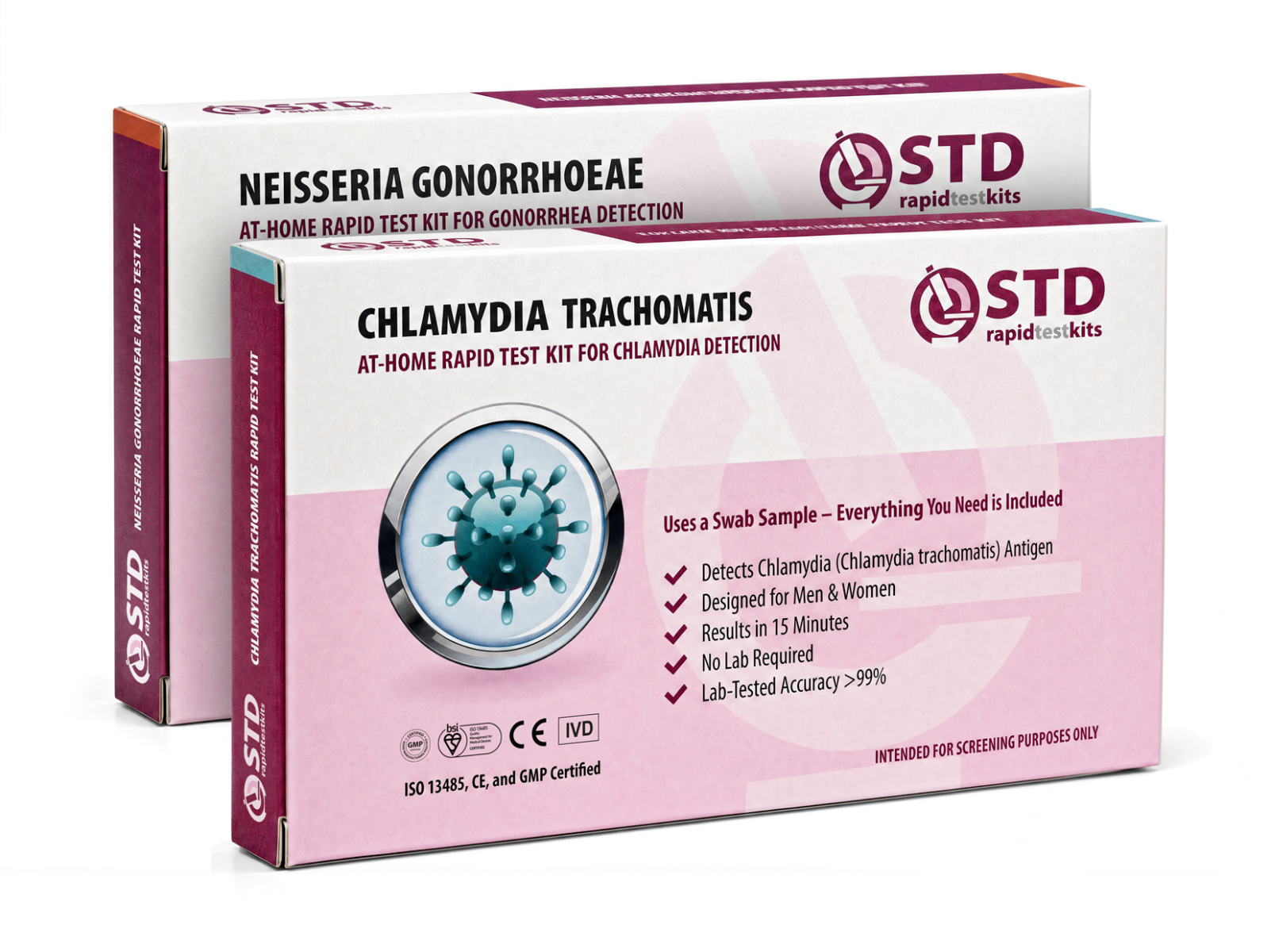
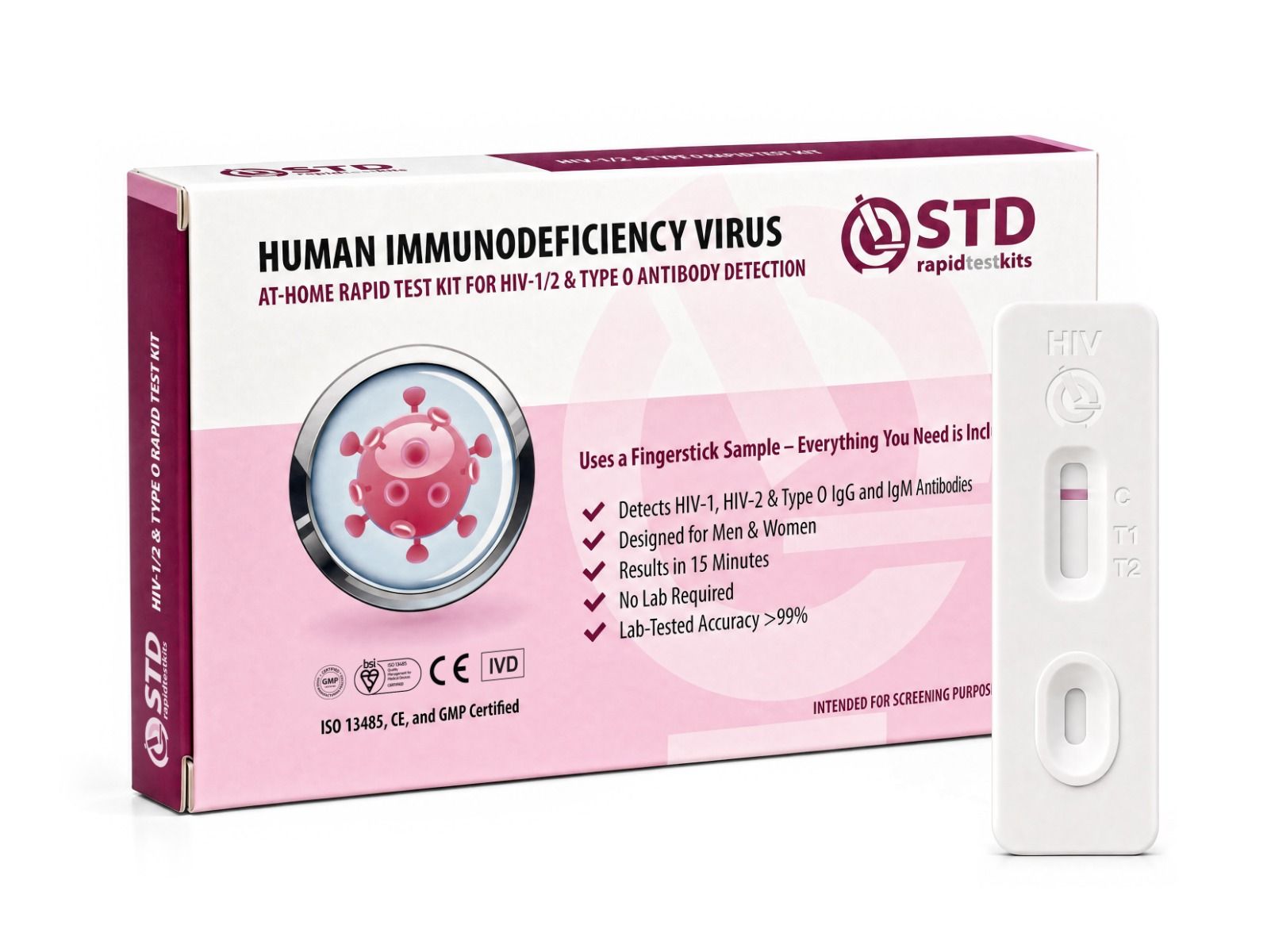
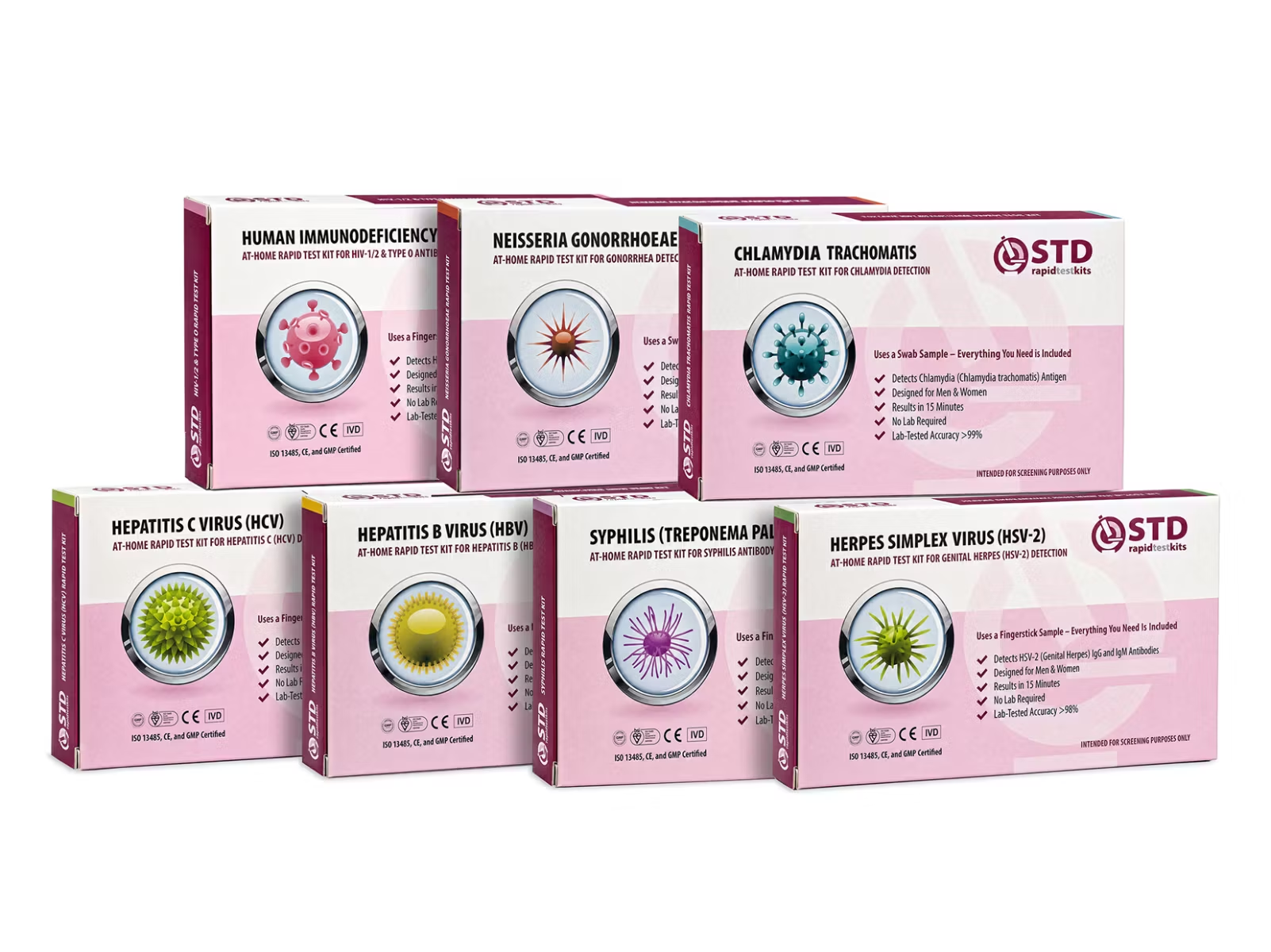
What our home test kits cover. The genital swab kits we sell (chlamydia, gonorrhea, trichomoniasis for women, HPV for women) are validated for self-collected genital sampling. The blood-based tests (HIV, syphilis, hepatitis B, hepatitis C, herpes) work from a fingerstick blood draw. These are useful, fast, and private. For most exposures involving genital contact or systemic infection risk, they are a reasonable first screen.
What our home test kits do not cover. We do not sell pharyngeal (throat) swab tests or rectal swab tests at home. If your concern is specifically about an oral or anal exposure, the right test is a throat or rectal swab processed by a lab using nucleic acid amplification, and that requires a clinic visit. Choosing a genital swab as a substitute will not catch a pharyngeal or rectal infection.
Our trichomoniasis and HPV swab kits are also validated for vaginal self-swab only. A male reader concerned about either of those should see a clinic; we do not currently offer a male-compatible at-home version of those two tests.
For most genital-contact or systemic-risk exposures, a home kit is a fast, private first screen worth taking. Knowing exactly what your kit covers, and what it does not, is what makes the negative result meaningful.
Reinfection: Negative Today Does Not Mean Negative Tomorrow
A negative result describes one moment. Sex is not one moment, and reinfection is one of the most under-discussed reasons people end up confused about a status they thought was settled.
Reinfection is particularly common with chlamydia and gonorrhea. CDC follow-up data have repeatedly shown that a meaningful proportion of treated patients are reinfected within 3 to 12 months, almost always from an untreated partner or a new exposure (CDC STI category hub). You get treated, your partner does not, you have sex again, and reinfection follows. Test results from before the new exposure say nothing about your status after it.
The seven-day rule matters here too. After starting antibiotics for chlamydia or gonorrhea, both partners should abstain from sex for at least seven days, both should complete the full antibiotic course, and both should be retested where guidance recommends test-of-cure. Skipping any step opens a clear path to ping-pong reinfection.
The interpersonal version of this problem is uglier. Someone tests positive, the partner protests they have been monogamous, and accusations follow. Sometimes the answer is infidelity. Sometimes it is biology: a partner who tested before their own window had closed, an extragenital infection that was never sampled, or a slow seroconversion that finally turned positive.
All sexually active women younger than 25 years should be screened for chlamydia and gonorrhea every year. Women 25 years and older with risk factors such as new or multiple sex partners should also be screened every year.
Hookup Culture and the Screenshot Negotiation
"Send me your test" has become a routine pre-sex exchange. The screenshot of a recent negative result is presented as a kind of biometric pass: I am safe, you are safe, we proceed. As social rituals go, it is genuinely better than no conversation at all. But the ritual frequently bypasses the parts that decide whether the result actually means anything.
Things a typical screenshot does not show:
- How long after the last partner the test was taken (was it inside the window period?)
- Which infections were in the panel (was herpes included? trichomoniasis? hepatitis?)
- Which body sites were sampled (was a throat swab taken? a rectal swab?)
- Whether there has been any sexual activity between the test and now
- Whether the partner being tested already had a treatment history that requires test-of-cure
The result a screenshot reports can be entirely accurate and still tell you almost nothing about today's risk if any of the above is missing. That is not paranoia, it is pattern recognition. Two people swap clean screenshots, ditch the condom, and end up surprised by a positive a few weeks later because one screenshot was from a test taken five days after a different new partner. The numbers were correct on the day they were generated; the situation had moved on.
The functional version of this conversation is not "show me the result." It is "when did you test, what did it cover, and have you slept with anyone since?"
Building a Testing Routine That Doesn't Lie to You
The point of all of the above is not to make testing feel hopeless. Plenty of people manage active sexual lives and get reliably accurate information from regular testing. The pattern that works is a routine, not a reaction.
What that routine looks like in practice:
- Test on a schedule, not just on suspicion. Every 3 to 6 months if you are sexually active with new or multiple partners, more frequently if you fall into a higher-risk group. CDC recommends testing at least annually for sexually active people and more often for people with multiple partners or in MSM populations (CDC STI guidance).
- Wait the right window. If you are testing because of a specific worrying encounter, time the test to the longest applicable window for the infection you are most concerned about. Two weeks for chlamydia and gonorrhea, six weeks for early HIV and syphilis screening, twelve weeks for HIV and syphilis confirmation, and longer for hepatitis if exposure risk was significant.
- Pick the right panel for the right exposure. Oral or anal exposure means asking your clinic for site-specific swabs in addition to a genital screen. At home, that means knowing your at-home kit only covers what it is validated for, and supplementing with a clinic visit when you need throat or rectal coverage.
- Treat partners and time the abstinence right. Seven days minimum after starting treatment for chlamydia or gonorrhea, with the partner treated in parallel. A negative test taken any earlier than that is not a green light.
- Test together when you are deciding to drop barriers. Coordinated testing on the same timeline is the only honest version of "we are both clean." Each person tests after their own window has closed, with no new partners in between, and the panel covers the infections that matter for both partners.
Done this way, testing is a tool with known limits instead of a talisman. A negative result becomes specific information: tested on this date, for these infections, at these sites, given this exposure history.
What to Do With a Negative Result
A negative result is real information. It is not the only information, and on its own it is rarely enough to justify a sweeping decision. The most useful sentence to attach to a negative result is the boring one: "I tested on this date, for these specific infections, at these specific body sites, after this exposure history, with this kind of test." That sentence is honest. It is also the foundation for any sensible next step, including the choice to retest, to add a clinic visit for sites a home kit cannot cover, or to coordinate testing with a partner before dropping protection.
The word "clean" carries a weight it cannot earn. Replace it with timing, scope, and recency, and the negative result starts doing the job people hoped it was doing all along.
Three things to do with a negative result
- Note the date, the specific infections that were tested, and the body sites that were actually sampled. Save it where you can find it later.
- Retest after the longest applicable window if the exposure was recent or the test type has a long window (HIV antibody, syphilis, hepatitis).
- Coordinate testing with your partner on the same timeline before dropping condoms or other barriers, and confirm both panels covered the infections each partner could be carrying.
Frequently Asked Questions
- How long after sex should I wait to test for STDs?
- It depends on the infection. Chlamydia and gonorrhea swabs are reliable from about 14 days post-exposure. HIV fingerstick antibody-only tests (including most at-home kits) need 23 to 90 days. Fourth-generation lab antigen/antibody tests shorten that window to 18 to 45 days. Syphilis takes 3 to 6 weeks for early antibodies and up to 12 weeks to confirm. Hepatitis B becomes detectable around 4 to 6 weeks; hepatitis C around 8 to 11 weeks. If unsure, test at the shorter window and again at the longer one.
- What does "clean" actually mean on a test result?
- Strictly speaking, nothing universal. "Clean" implies a moral and biological all-clear, but a negative result only confirms that the specific infections in the panel were not detected at the body sites that were sampled, on the day of the test, given the test's sensitivity. A more honest formulation is: "I tested negative for these infections at these sites on this date." That sentence is precise, useful, and free of the stigma that "clean" carries.
- Can I trust my partner's recent negative test?
- Trust the result for what it actually says. Then ask three questions: when was the test taken, what infections were in the panel, and have they had any sexual activity between then and now. A negative from before a new partner says nothing about current status. A panel that did not include the infection you are most concerned about is silent on that infection. Both questions are reasonable and not invasive.
- Why don't all clinics test for everything automatically?
- Cost, time, and clinical guidelines. Standard panels usually cover chlamydia, gonorrhea, syphilis, and HIV. Trichomoniasis, herpes, hepatitis, and HPV are often added only on request or when there is a specific symptom or risk factor. Throat and rectal swabs are also usually requested explicitly. If you want a comprehensive screen, ask for it directly and tell the clinician what kind of exposure you are concerned about.
- Is at-home testing as accurate as a clinic test?
- At-home rapid kits use lateral-flow chemistry, which is excellent for accessibility and speed but generally less analytically sensitive than the laboratory NAAT (nucleic acid amplification) tests used in clinics. A positive at-home result is meaningful and worth confirming with a lab follow-up. A negative inside the window period or with a low-burden infection is the scenario where lab testing has the edge. The two are complementary screening tools, not substitutes.
- Do I need to retest if I got treated and felt better?
- For chlamydia and gonorrhea, current CDC guidance recommends a test-of-cure for some cases (pregnancy, persistent symptoms, pharyngeal gonorrhea) and a follow-up screen at about 3 months for most patients because reinfection is common. Both partners need to be treated and to abstain for at least 7 days after starting antibiotics. "Felt better" is not a cure confirmation; the data from a follow-up test is.
- Can a negative test rule out an oral or anal infection?
- Only if a throat or rectal sample was taken. A genital swab cannot detect a pharyngeal or rectal chlamydia or gonorrhea infection; the bacteria are at a different site. CDC recommends extragenital sampling for people who have had oral or anal sex with an untreated partner. Our at-home kits do not include throat or rectal swabs. For those exposures, see a clinic that performs site-specific NAAT.
- Is it safe to stop using condoms if both partners just tested negative?
- Only when four conditions are met: both partners tested after their respective windows closed, both panels covered the infections each partner could be carrying, neither partner has had an outside sexual contact since the test, and both stay monogamous (or agree to a regular retesting schedule if not). Drop any one of those conditions and the negative results stop guaranteeing today's status. Coordinated testing on the same timeline is the honest version of this decision.
- U.S. Centers for Disease Control and Prevention. Sexually transmitted infections, screening recommendations, and population-level guidance.
- U.S. Centers for Disease Control and Prevention. HIV testing window periods, test generations, and testing intervals.
- World Health Organization. Sexually transmitted infections fact sheet.
- National Health Service (UK). Sexually transmitted infections, testing options, and partner notification guidance.
- U.S. Centers for Disease Control and Prevention. Hepatitis B and C testing windows and screening recommendations.
