
Published: August 2025 | Last updated: April 2026 | Editorial review and quality control: Martina N.
The phone call from the clinic does not match the story you tell yourself about your body. You have not had vaginal sex. You have not had anal sex. Maybe you have not even had oral sex. The result still says HSV. So how did this happen, and what does the test result actually mean?
This guide walks through the biology that makes a herpes diagnosis possible without intercourse, the difference between HSV-1 and HSV-2, why most carriers never know they are carrying anything, and what an at-home or clinic test is actually measuring. The goal is calm information, not alarm. Most people who test positive go on to live ordinary, intimate, fulfilling lives once the initial shock passes.
Can you really get herpes without having sex?
Yes. HSV-1 and HSV-2 transmit through direct skin or mucous-membrane contact, which means kissing, oral sex, genital rubbing without penetration, and shared sex toys can all pass the virus along, sometimes from a partner who has no symptoms. Globally, an estimated 64% of people under 50 carry HSV-1 and around 13% of adults aged 15 to 49 carry HSV-2, per the <a href="https://www.who.int/news-room/fact-sheets/detail/herpes-simplex-virus" target="_blank" rel="noopener">WHO HSV fact sheet</a>. A positive antibody test confirms past exposure to the virus; it does not tell you when, where, or from whom.
Key Takeaways
- Herpes spreads through direct skin and mucous-membrane contact, which is why penetrative sex is not required for transmission and why kissing, oral, and genital rubbing all carry risk.
- Most HSV carriers never know they are infected; a positive antibody test confirms past exposure, and confirmation testing plus clinician guidance is the right next step.
How HSV moves through skin and mucous membranes
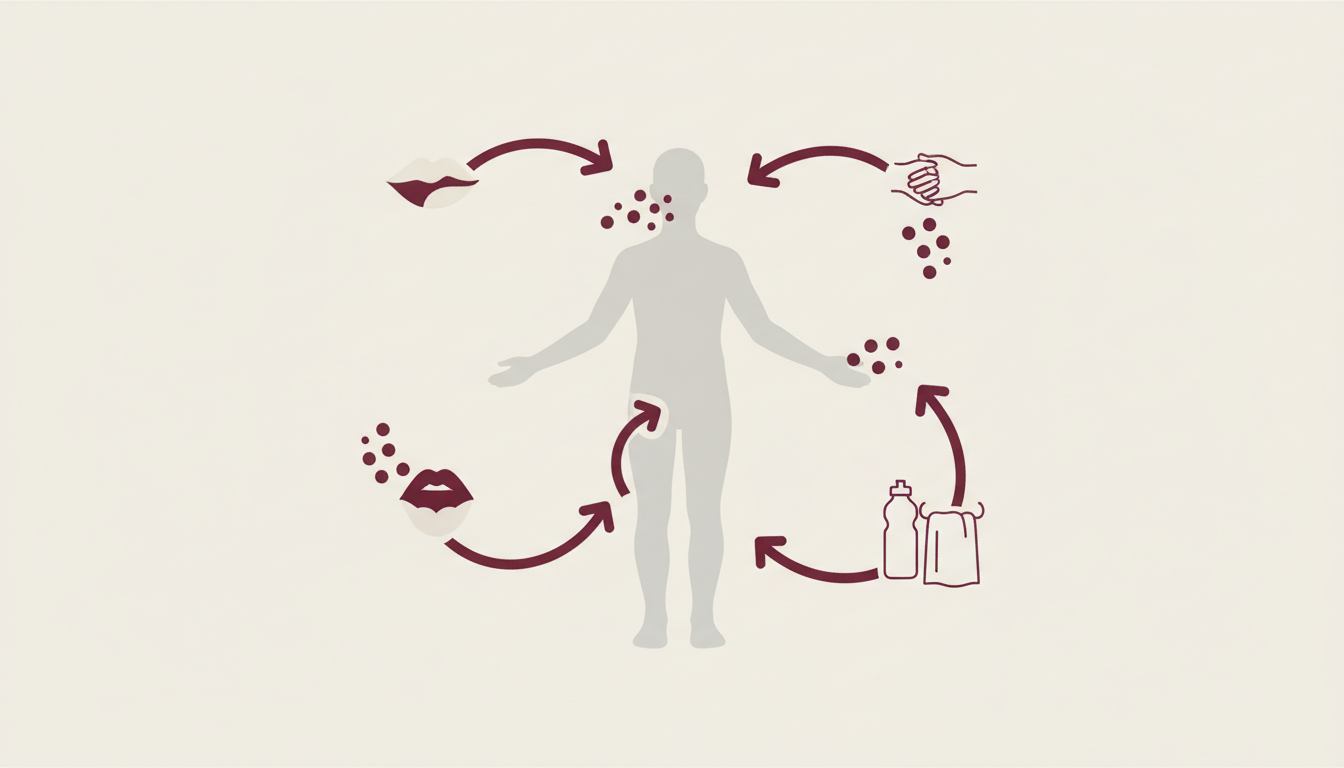
Herpes simplex virus does not need a body fluid corridor the way HIV does. It needs contact between an infected surface and a receptive surface. Receptive surfaces include the lips and mouth lining, the inside of the cheek, the tonsillar area, the head and shaft of the penis, the vulva, the vaginal canal, the cervix, the perianal skin, and the eye. Microscopic breaks in skin, often invisible to either partner, give the virus a route into nerve cells where it then establishes a long-term home.
Practically, this means HSV can transmit during:
- Kissing on the lips when one partner has an active or shedding HSV-1 oral infection
- Oral sex in either direction, transferring HSV-1 from mouth to genitals or HSV-2 from genitals to mouth
- Genital-to-genital rubbing without penetration (sometimes called outercourse or frottage)
- Hand-to-genital contact when fingers carry virus from a sore
- Shared sex toys used without cleaning between partners
- Skin-to-skin sports contact in rare cases (the wrestling-related pattern called herpes gladiatorum)
Penetration raises the probability of transmission per encounter because friction creates more microabrasions, but it is not a requirement. Fomite spread, meaning herpes from toilet seats, towels, or shared drinks, is extremely rare because the virus does not survive long outside the body, per the NHS genital herpes overview.
HSV does not survive long outside the body, so casual surface and water contact poses negligible real-world risk:
- Toilet seats and bathroom fixtures
- Hot tubs, swimming pools, and chlorinated water
- Shared towels in normal household use
- Eating utensils and drinking glasses, except in the narrow case of immediate use after someone with an active oral lesion
- Doorknobs, gym equipment, public seating, and other hard surfaces
What “virginity” does not protect you from
Virginity is a cultural framework, not a biomedical one. The virus does not check whether you have decided you are still a virgin. Many people who consider themselves sexually inexperienced have engaged in oral sex, mutual masturbation, or genital frottage, all of which can transmit HSV under the contact conditions described above.
There is also a route most sex-ed curricula skip entirely: childhood exposure. Oral HSV-1 antibody seroprevalence (the share of the population with detectable antibodies) climbs across childhood as kids encounter the virus through normal household contact, including kisses on the lips from a parent or grandparent during a cold sore episode, shared utensils, or shared drinks. By adulthood, an estimated 64% of people under 50 globally carry HSV-1 antibodies, per the WHO HSV fact sheet. Most acquired the virus before any sexual experience.
That is why the question “how did I get this if I have never had sex” often has a perfectly mundane answer that has nothing to do with anyone’s sexual history.
HSV-1 and HSV-2: same family, different patterns
Two related viruses, similar enough to confuse, different enough to matter for testing and counseling.
HSV-1 historically settled in the oral region and produced the cold sores most people associate with childhood or stress. Per the WHO HSV fact sheet, HSV-1 can also, less commonly, be transmitted to the genital area through oral-genital contact and cause genital herpes.
HSV-2 historically settled in the genital region and drives most recurrent genital outbreaks. It can also infect oral tissue, although oral HSV-2 is less common.
Both viruses establish lifelong latency in nerve ganglia after the initial infection. The body does not clear them. Reactivation happens intermittently, sometimes triggered by illness, hormonal shifts, friction, sun exposure on the lips, or stress. Recurrence patterns, average annual outbreak rates, and per-act transmission risk all differ between HSV-1 and HSV-2 at the same anatomic site. A type-specific antibody test, the kind that reports HSV-1 and HSV-2 separately, gives more useful information for counseling and partner discussions than a generic herpes screen.
Editorial disclosure: stdrapidtestkits.com sells the at-home rapid lateral-flow herpes tests featured below; we recommend products based on fit-for-purpose for the reader’s concern, not commercial benefit.
| Feature | HSV-1 | HSV-2 |
|---|---|---|
| Typical anatomical site | Oral and perioral (cold sores) | Genital and perigenital |
| Most common acquisition route | Childhood household kissing or shared utensils | Sexual or intimate skin-to-skin contact |
| Cross-anatomic infection | Possible at the genital site via oral-genital contact | Possible at the oral site, though less common |
| Recurrence pattern at the genital site | Lower recurrence than HSV-2 at the same site | Higher recurrence than HSV-1 at the same site |
Asymptomatic shedding and the people who never know
The most disorienting part of an HSV diagnosis without a remembered sexual encounter is realizing how silent this virus can be. Per the CDC herpes overview, most people with genital herpes have no symptoms or have very mild symptoms that go unnoticed or are mistaken for another skin condition, which means most carriers do not know they have a herpes infection.
Beyond the absence of symptoms, there is a second silent piece called asymptomatic viral shedding. The virus surfaces on skin or in mucous secretions intermittently between outbreaks, with no visible sore and often no sensation at all. This is why the reassurance “I would have noticed and warned you” is unreliable.
Most people who have genital herpes have no symptoms or have very mild symptoms that go unnoticed or are mistaken for another skin condition.
Symptoms that get mistaken for something else
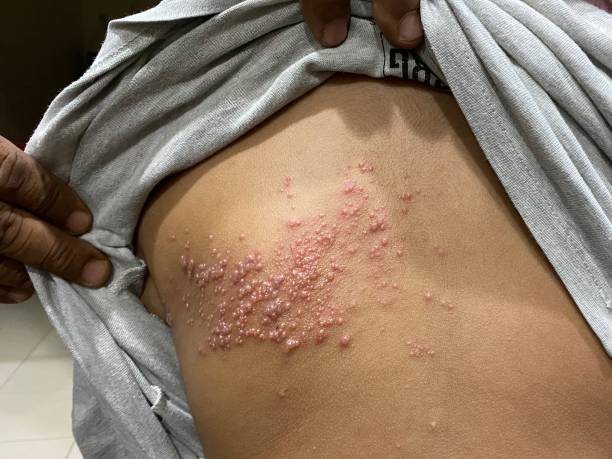
The textbook image of herpes is a tight cluster of small fluid-filled blisters that crust over within a week. That presentation does happen, especially during a primary infection in someone with no prior HSV exposure. It is not the most common presentation overall.
More common subtle patterns include:
- A single small fissure or paper-cut-like crack in the genital skin or vulva
- Localized redness or itching that gets attributed to shaving, friction, or new underwear
- A small patch of irritation that resembles ingrown hair or razor bumps
- Burning during urination from a urethral lesion you cannot see
- Mild swollen lymph nodes in the groin during a primary outbreak
- Vaginal discomfort that gets diagnosed and treated as a yeast infection
- Low-grade flu-like symptoms (mild fever, body aches) during the first outbreak only
The time from exposure to a first outbreak is highly variable. Per the NHS genital herpes overview, symptoms might not appear for weeks or even years after infection. A meaningful fraction of newly infected people never develop a recognized first outbreak at all.
Some clinicians under-test for HSV when the patient says they have not had penetrative sex, or when the visible irritation looks like a yeast infection or shaving bump. If you feel something is being missed, you can specifically request a type-specific HSV-1 / HSV-2 IgG blood test, or a PCR swab if there is an active visible lesion. Both are standard tests; both can be ordered without an unusual reason.
Childhood exposure and other non-sexual routes
For HSV-1, childhood acquisition through normal household contact is the most common route. A parent, grandparent, sibling, or caregiver with an active cold sore who kisses a child on the lips can transmit oral HSV-1, often before the child can remember it happening. The same route operates through shared utensils, drinking glasses, and lip balm, especially among young children who do not yet practice careful hygiene.
Other non-sexual or sex-adjacent routes carry small but documented risk:
- Wrestling and other close-contact sports in the pattern called herpes gladiatorum
- Auto-inoculation, where someone touches their own active lesion and then touches their eye, transferring virus to a new site
- Vertical transmission from a person with active lesions to a newborn during vaginal delivery (a clinically managed scenario with established prevention protocols)
- Shared razors, very rarely, when used immediately after someone with an active lesion
Toilet seats, hot tubs, swimming pools, and shared towels do not meaningfully transmit HSV. The virus does not survive long enough on hard surfaces or in chlorinated water to bridge a typical real-world exposure window.
If you have HSV-1 antibodies, the most likely source is the kind of normal household kissing or shared-utensil contact that almost everyone experienced before puberty. A positive HSV-1 result on a blood test is not, by itself, evidence of recent or past sexual exposure of any kind, and a partner you have only kissed could plausibly have transmitted it during a quiet shedding episode they did not feel.
Testing options: what they are, when they work
HSV testing falls into two main families, with overlap between clinic and at-home options.
Lesion-based PCR or NAAT. A clinician swabs an active sore and the lab amplifies viral DNA. This is the most accurate test during an outbreak because it detects the virus directly and tells you which type. It only works when there is a visible lesion to swab, and it is performed at a clinic or sexual-health center.
Type-specific IgG antibody blood testing. A blood sample (lab venipuncture or fingerstick) is tested for antibodies to HSV-1 and HSV-2 separately. Antibodies take time to develop. Per CDC herpes testing guidance, after exposure it can take up to 16 weeks or more for current tests to detect infection. Tested earlier than that, a negative result can be a false negative.
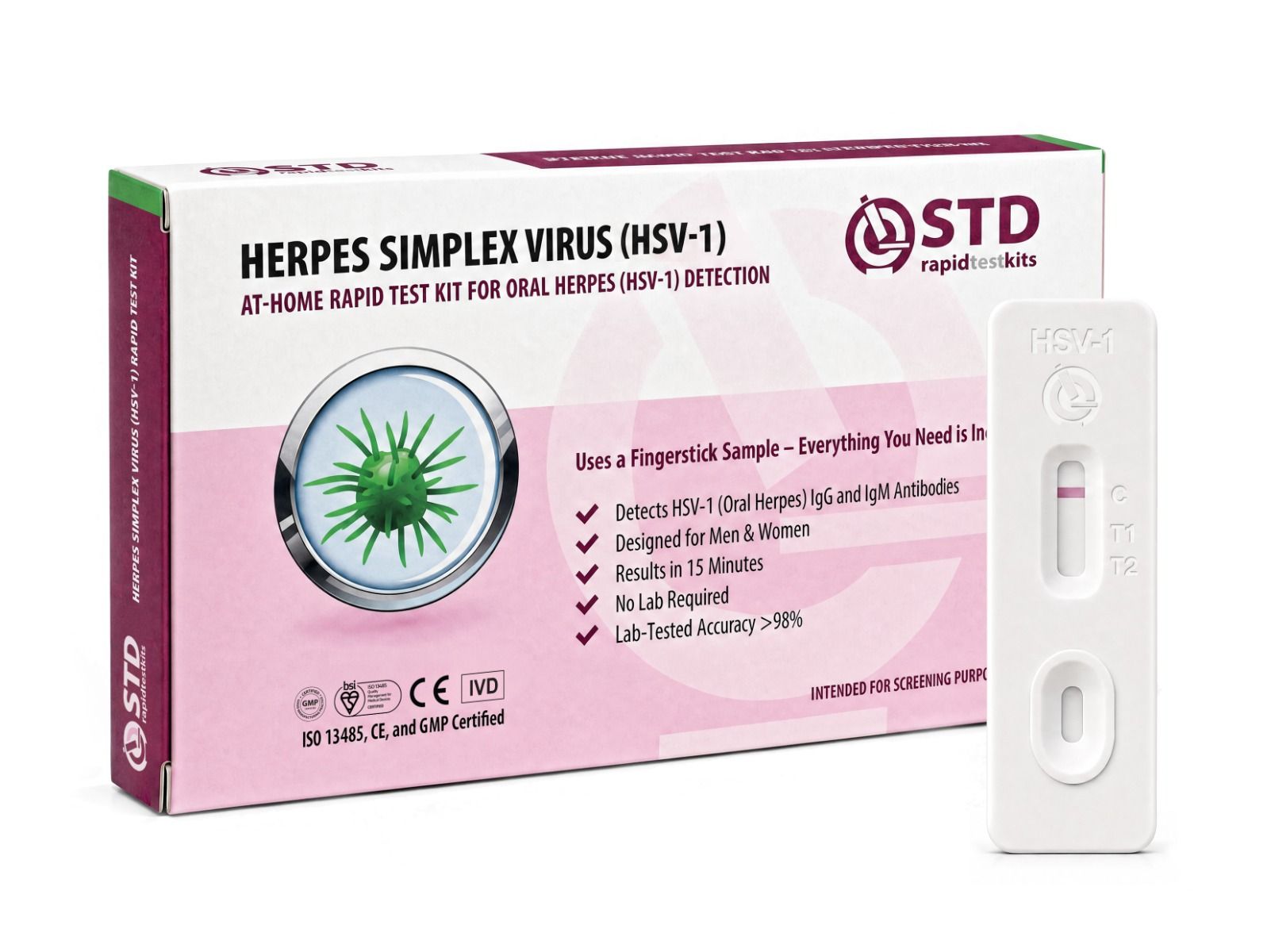
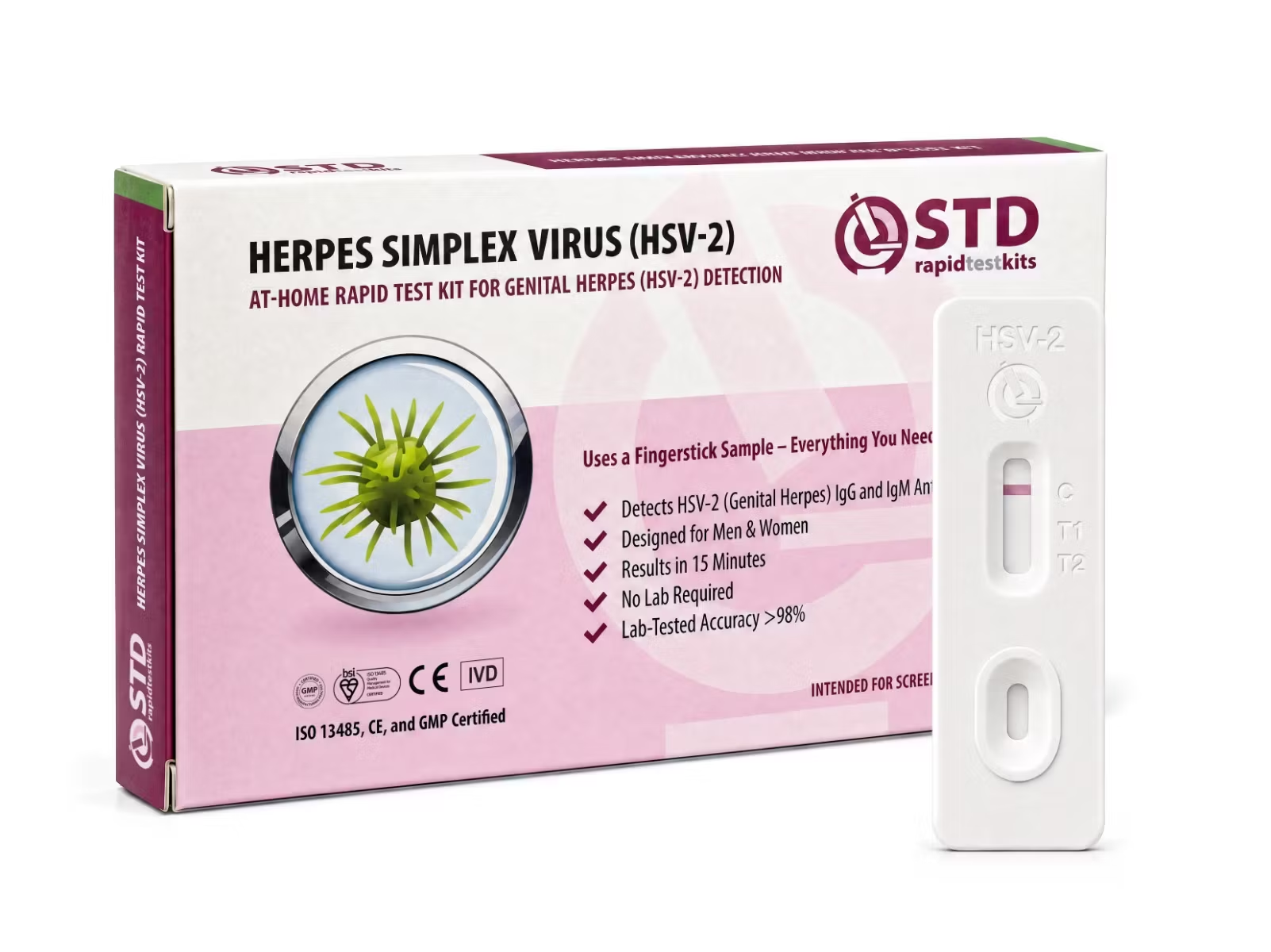
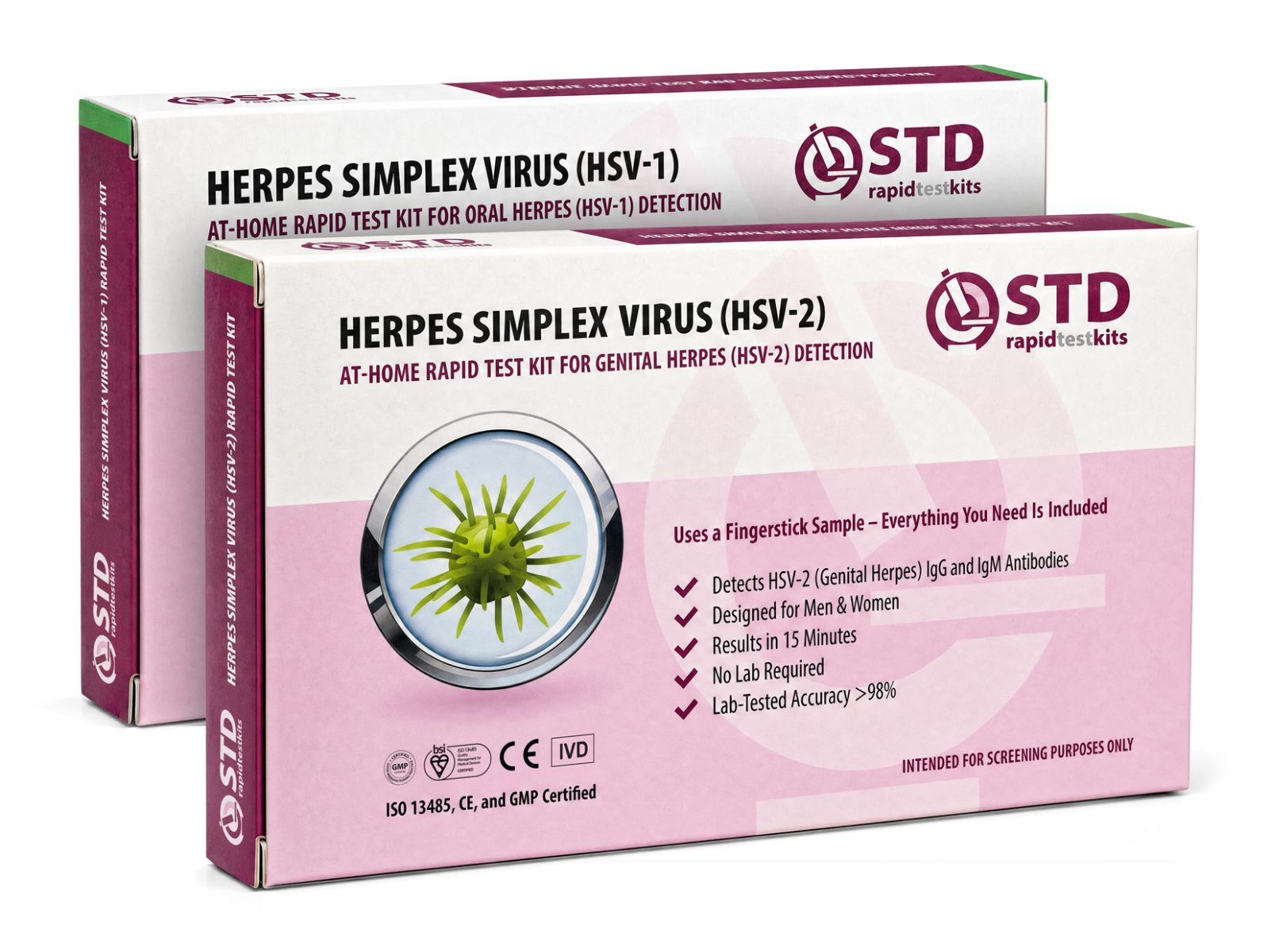
At-home rapid tests use lateral-flow IgG antibody chemistry on a fingerstick blood sample. They screen for past exposure, return a result in minutes, and do not require a lab visit. They are screening tests, not confirmatory laboratory assays. A positive at-home result is worth confirming through a clinician, particularly because false positives can occur in low-prevalence populations.
| Test method | What it detects | Best timing | Where you get it |
|---|---|---|---|
| Lesion swab (PCR / NAAT) | Active HSV DNA in a sore | During an active outbreak | Clinic or sexual-health center |
| Type-specific IgG blood test (lab) | HSV-1 and HSV-2 antibodies, separately | Up to 16 weeks or more after exposure for reliable read | Lab order through a clinician |
| At-home rapid lateral-flow blood test | HSV-1 and HSV-2 antibodies | Up to 16 weeks or more after exposure for reliable read | Home, fingerstick sample |
What a positive test means and what it does not
A positive HSV antibody test confirms one thing: at some point in your life, your immune system encountered this virus and produced antibodies against it. From that single fact, several other facts do not follow.
It does not tell you where on your body the virus established latency. HSV-1 antibodies in particular cannot distinguish oral from genital infection. It does not tell you when you were exposed. The exposure could be from last year or from a kiss in elementary school. It does not tell you who exposed you, and a positive result on its own is not evidence of recent infidelity by anyone. It does not tell you whether you are currently shedding or symptomatic.
What a positive result does mean: you can transmit the virus to others through skin and mucous-membrane contact, especially during shedding episodes. Daily antiviral suppression with valacyclovir, acyclovir, or famciclovir reduces outbreak frequency and lowers transmission risk. Per the CDC STI treatment guidelines, suppressive therapy reduces the frequency of genital herpes recurrences by 70 to 80% in patients with frequent recurrences, and daily valacyclovir 500 mg has been shown to decrease the rate of HSV-2 transmission in serodiscordant heterosexual couples.
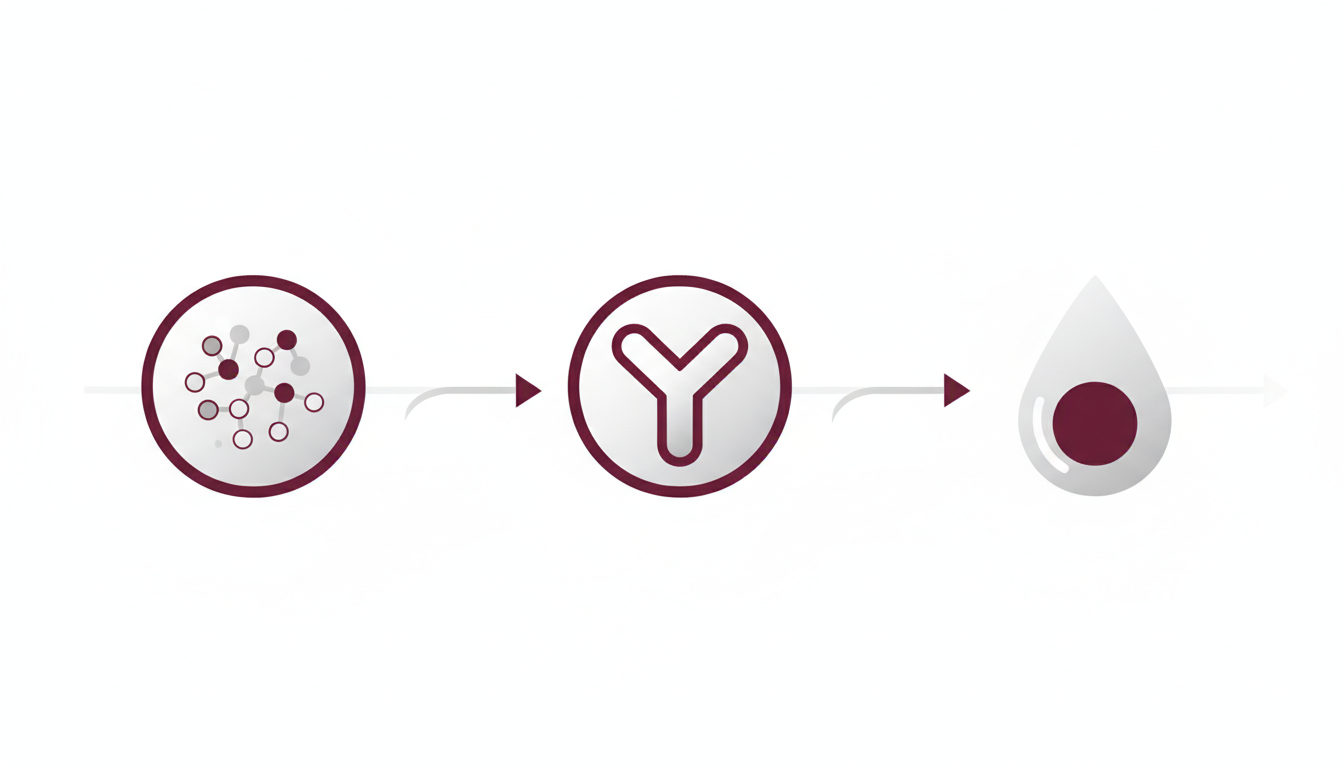
If your at-home test is positive, the calm sequence is: confirm the result through a clinician (lab IgG retest or PCR if there is a lesion), discuss type-specific implications, decide together whether daily suppressive therapy makes sense for your situation, and plan disclosure conversations with current and future partners. None of those steps are emergencies; all of them benefit from a few days of breathing room before acting.
Disclosure, dating, and life after diagnosis
For most carriers, the virus itself is manageable; the harder conversation is disclosure, often colored by stigma the diagnosis does not actually deserve. Public-health counseling literature shows that most partners respond better than people fear, especially when the conversation happens calmly and with accurate information.
Practical points many clinicians and counselors emphasize:
- Disclose before sexual intimacy, not after. The early-conversation framing reads as honesty, not confession.
- Lead with facts: which type, how often you get outbreaks (or that you do not), whether you take suppressive therapy.
- Bring a credible source if helpful, such as the CDC herpes overview, so the partner can read alongside you instead of hearing only your account.
- Use barrier methods consistently and avoid sex during prodromal sensations (the tingling or itching that often precedes an outbreak) or visible outbreaks.
- Talk with a clinician about daily antiviral suppression if you have a regular partner who has tested negative.
Pregnancy adds specific protocols around third-trimester antiviral suppression and delivery planning, which a prenatal provider will manage. Serodiscordant relationships (where one partner carries the virus and the other does not) are common and manageable with the combination of suppressive therapy, barriers, and avoiding sex during outbreaks.

When to see a clinician beyond at-home testing
At-home antibody screening is useful for the question “have I been exposed.” It is not the right tool for several other questions. A clinician visit is the appropriate next step when:
- You have an active visible lesion. A direct PCR swab during an outbreak is more informative than any antibody test.
- An at-home result returned positive and you want laboratory confirmation before changing anything about your sexual or reproductive life.
- You are pregnant or planning to be. Prenatal HSV care is its own protocol and should not run on home tests alone.
- A partner has tested positive and you want a baseline test plus counseling on prevention.
- Recurrent outbreaks are affecting your daily life or causing significant pain, in which case daily suppressive therapy (often a low-cost generic) can change the experience entirely.
- Any neurological symptoms appear alongside the rash, including severe persistent headache, neck stiffness, weakness, or vision changes. These are uncommon but warrant urgent evaluation.
Sexual-health clinics, primary-care providers, OB-GYNs, and dermatologists all manage HSV care. Telehealth services increasingly offer prescription antiviral treatment without an in-person visit, useful when access is otherwise limited.
Triage: how soon to call
- Same-day evaluation: any neurological symptom alongside the rash, including severe persistent headache, neck stiffness, weakness, or vision change. These are uncommon but urgent.
- Within a week: a positive at-home test you want lab-confirmed, an active visible lesion you want PCR-swabbed, pregnancy or active pregnancy planning, or recurrent outbreaks that are affecting daily life.
- Routine appointment: a partner has tested positive and you want a baseline screen plus prevention counseling, or you simply want to discuss daily suppressive therapy options.
Frequently Asked Questions
- Can you really get herpes without having sex?
- Yes, and for many people the source was childhood, not sex at all. HSV-1 spreads easily through household kisses and shared utensils, often before any sexual experience. HSV-2 can spread during genital rubbing or oral sex even when a partner has no visible symptoms. Neither route requires penetration.
- Is kissing alone really enough to transmit herpes?
- Yes for HSV-1. If a partner is shedding HSV-1 around the lips or mouth, even without a visible cold sore, a kiss can transmit the virus. Most adults who carry HSV-1 acquired it during childhood through household kisses or shared utensils, often years before any sexual experience.
- Can I have genital herpes if I have only ever had oral sex?
- Yes. HSV-1 from a partner’s mouth can transmit to your genitals during oral sex, and HSV-2 transmission is also possible if the partner has genital HSV-2. The WHO HSV fact sheet describes oral-to-genital HSV-1 as a less common but documented route to genital herpes.
- What about toilet seats, towels, or shared drinks?
- Fomite transmission is extremely rare. The virus does not survive long outside the body, and typical surface contact does not transfer enough viable virus to establish infection. Direct skin contact with a person carrying the virus is the route to focus on.
- How early after exposure can a herpes test detect the virus?
- It depends on the test. A PCR swab of an active lesion works during the outbreak itself, so timing follows the outbreak window. A blood antibody test needs time for the immune response to build. Per CDC herpes testing guidance, after exposure it can take up to 16 weeks or more for current tests to detect infection. A negative blood test before that window can be falsely reassuring.
- If my test is positive but I have no symptoms, am I really infected?
- Yes, but the practical implications are manageable. Most people who carry HSV are asymptomatic for long stretches and may never develop a recognizable outbreak. You can still transmit the virus during shedding, which is why disclosure with new partners and discussion of suppressive therapy with a clinician matters.
- Does a positive herpes test mean my partner cheated?
- Not necessarily, and often not at all. The virus can stay latent for years without symptoms, antibodies may date back to childhood for HSV-1, and a positive test does not pinpoint when exposure happened. Treat the result as new information about your body, not as evidence about anyone’s recent behavior.
- Is herpes curable, and what does treatment actually do?
- There is no cure that clears the virus from the body, but daily antiviral suppression with valacyclovir, acyclovir, or famciclovir reduces outbreak frequency and transmission risk. Per CDC STI treatment guidelines, suppressive therapy lowers genital herpes recurrence frequency by 70 to 80% in patients with frequent outbreaks, and valacyclovir reduces HSV-2 transmission in serodiscordant heterosexual couples.
- U.S. Centers for Disease Control and Prevention. Herpes overview, including transmission routes and the share of carriers who have no symptoms or whose symptoms are mistaken for other conditions.
- World Health Organization. Herpes simplex virus fact sheet, including global HSV-1 and HSV-2 prevalence figures and oral-to-genital transmission patterns.
- NHS. Genital herpes overview, including transmission routes, the variable timing of first symptoms, and treatment options.
- U.S. Centers for Disease Control and Prevention. Herpes testing guidance, including the up-to-16-weeks-or-more reliable testing window for current antibody tests.
- U.S. Centers for Disease Control and Prevention. Sexually Transmitted Infections Treatment Guidelines: Genital Herpes, including suppressive antiviral therapy effects on recurrence frequency (70 to 80% reduction) and HSV-2 transmission to serodiscordant partners.
