
Published: November 2025 | Last updated: April 2026 | Editorial review and quality control: Martina N.
Sex toys sit outside the standard "did you have unprotected sex" checklist, which is part of why toy-route transmission is so easy to miss and so confusing when it happens. The answer lies in what survives on surfaces, what material the toy is made of, and the handful of routine choices most people skip without realizing the risk.
This guide covers what is realistic about sex toy transmission and what is overstated, why solo play is not always zero risk, how toy material affects everything, what cleaning actually works, and when to test. The goal is calm specifics, not panic. Most people who use toys carefully are fine. The people who get blindsided usually share a few common gaps in their routine, and those gaps are fixable in seconds.
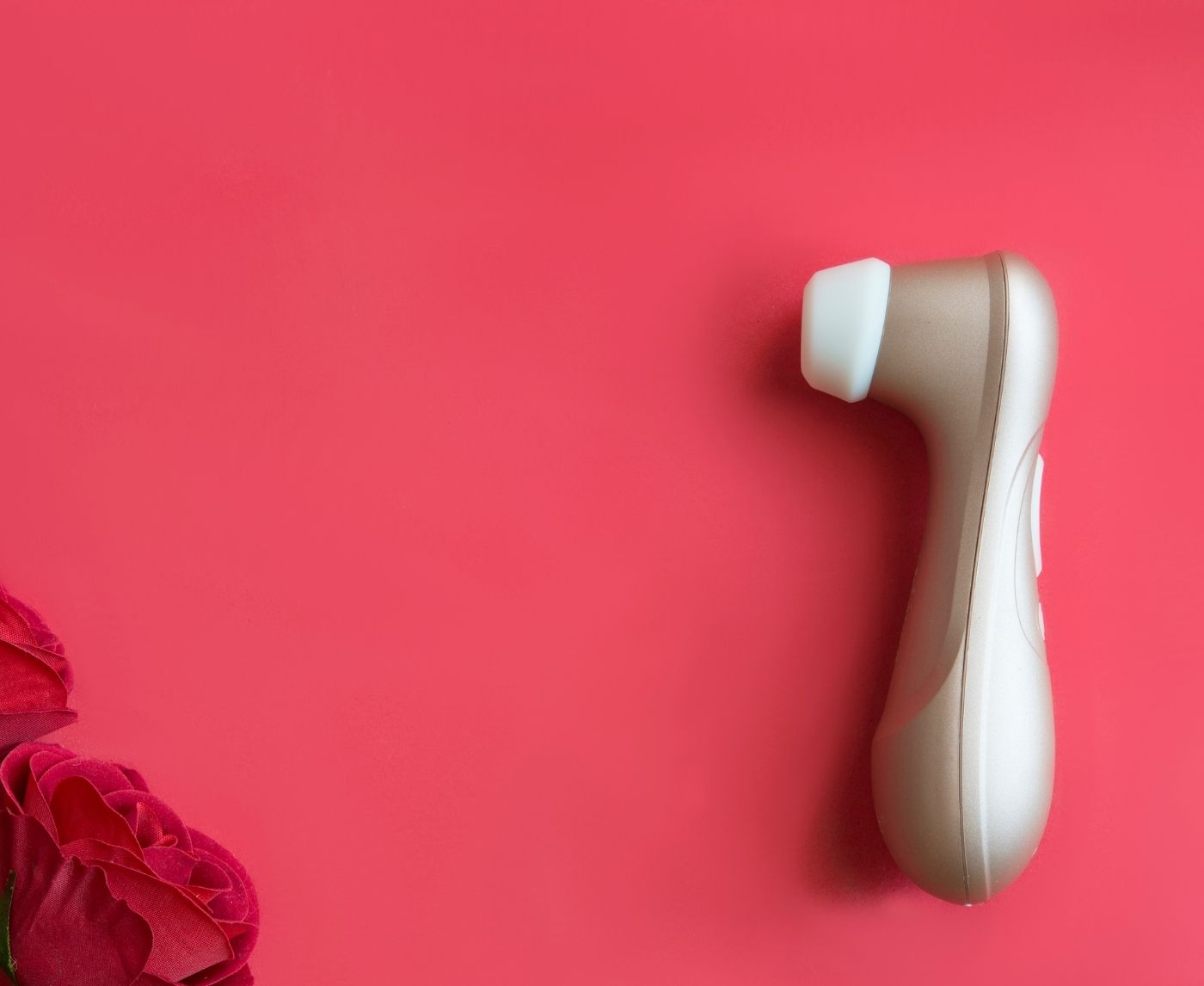
Can you get an STD from a vibrator or other sex toy?
Yes, but the risk depends on what infection, what material, how recently the toy was used, and whether it was cleaned. Bacterial infections like chlamydia and gonorrhea are fragile outside the body and need fairly immediate transfer. HPV is the most resilient and has been detected on vibrators after cleaning. Trichomoniasis can survive briefly on damp surfaces. Self-reinfection and cross-site transfer (anal to vaginal on the same toy) are real even during solo play. Cover toys with a fresh condom when switching bodies or sites, and wash with soap and water immediately after use.
Key Takeaways
- HPV is the most surface-resilient STI and can persist on toys after a basic soap-and-water wash. Most other STIs need quick transfer or shared, uncleaned toys.
- The single biggest risk is not sharing with strangers. It is moving one toy between body sites (anal to vaginal, partner to partner) without a fresh condom or proper cleaning.
How STIs actually travel on a sex toy
Most sexually transmitted infections need a living host. Outside the body, on a hard or rubbery surface, exposed to air and a falling temperature, most pathogens start dying within minutes. That is the encouraging half of the picture. The other half is that "most" is not "all," and the time between two uses of the same toy can be very short.
Three things determine whether a toy can move an infection from one place to another: how long the pathogen survives on surfaces, what the surface itself is made of, and whether moisture is involved. Bacterial infections like chlamydia and gonorrhea are notoriously fragile outside the human body. Per the CDC's 2021 STI Treatment Guidelines, neither survives well in the environment, which is why fomite transmission (transmission through inanimate objects) is uncommon for these two. Even an uncommon route is not a zero route, especially when a still-wet toy moves directly from one partner to another with no interval at all.
Non-enveloped viruses behave differently. HPV in particular is a non-enveloped DNA virus, and that structural feature makes it more durable on surfaces. Laboratory studies have detected HPV DNA on vibrators even after cleaning with soap and water, which is the single most cited piece of evidence behind toy-transmission concern. Detecting DNA is not the same as detecting infectious virus; the persistence pattern is real and worth noting, though it falls short of proof of active infectivity. Herpes simplex virus survives outside the body for shorter periods, generally minutes to a few hours on damp or porous surfaces, and is transmitted primarily through skin-to-skin contact rather than fomites. Trichomonas vaginalis, the parasite behind trichomoniasis, can stay viable on damp surfaces briefly. Fomite transmission of trichomoniasis is documented in the clinical literature, with shared sex toys among the named potential routes, though it is considered rare compared with direct sexual contact.
| Infection | Surface survival on toys | Realistic toy risk |
|---|---|---|
| Chlamydia | Minutes outside the body; longer if wet and warm | Low for stored toys; meaningful only with immediate transfer between bodies |
| Gonorrhea | Minutes to a few hours on damp surfaces | Low for stored toys; meaningful with immediate transfer or anal-to-vaginal on the same toy |
| HPV | Detected on toys after cleaning; persists on dry surfaces for days in lab studies | Highest of the listed infections; the main reason cleaning protocols matter |
| Herpes (HSV-1, HSV-2) | Minutes to a few hours on damp surfaces | Low to moderate; mostly relevant during a partner's active outbreak |
| Trichomoniasis | Up to about 45 minutes on damp surfaces per fomite literature | Moderate when toys are shared between vaginal users without cleaning |
| HIV | Inactivates rapidly outside the body | Very low via toys; bloodstream contact is the relevant route |
Solo play is not automatically zero-risk
A common assumption that gets people in trouble is that a toy used only by one person, in one home, cannot move infections. The two situations where solo play does carry real risk are cross-site transfer and self-reinfection. Moving a toy from anal to vaginal use without cleaning or changing a condom can shift gut bacteria into a place where it tends to cause urinary tract infections or bacterial vaginosis, and less commonly transmit a sexually acquired pathogen that was already present in one site. NHS guidance on sex toy hygiene recommends washing between uses and using a fresh condom each time a toy switches users, and the same logic applies to switching between body sites on the same person.
Self-reinfection matters most for recurrent viral infections. People living with HSV or HPV can theoretically reintroduce viral particles from a recently used toy back to a vulnerable site, particularly during or right after a flare. Bacterial vaginosis recurrence can also follow a pattern where a toy used during one flare reseeds the imbalance during the next session. None of this means a single missed wash will ruin you. It does mean that someone who keeps having recurrences, while doing everything else right, should look hard at toy hygiene as one possible vector.
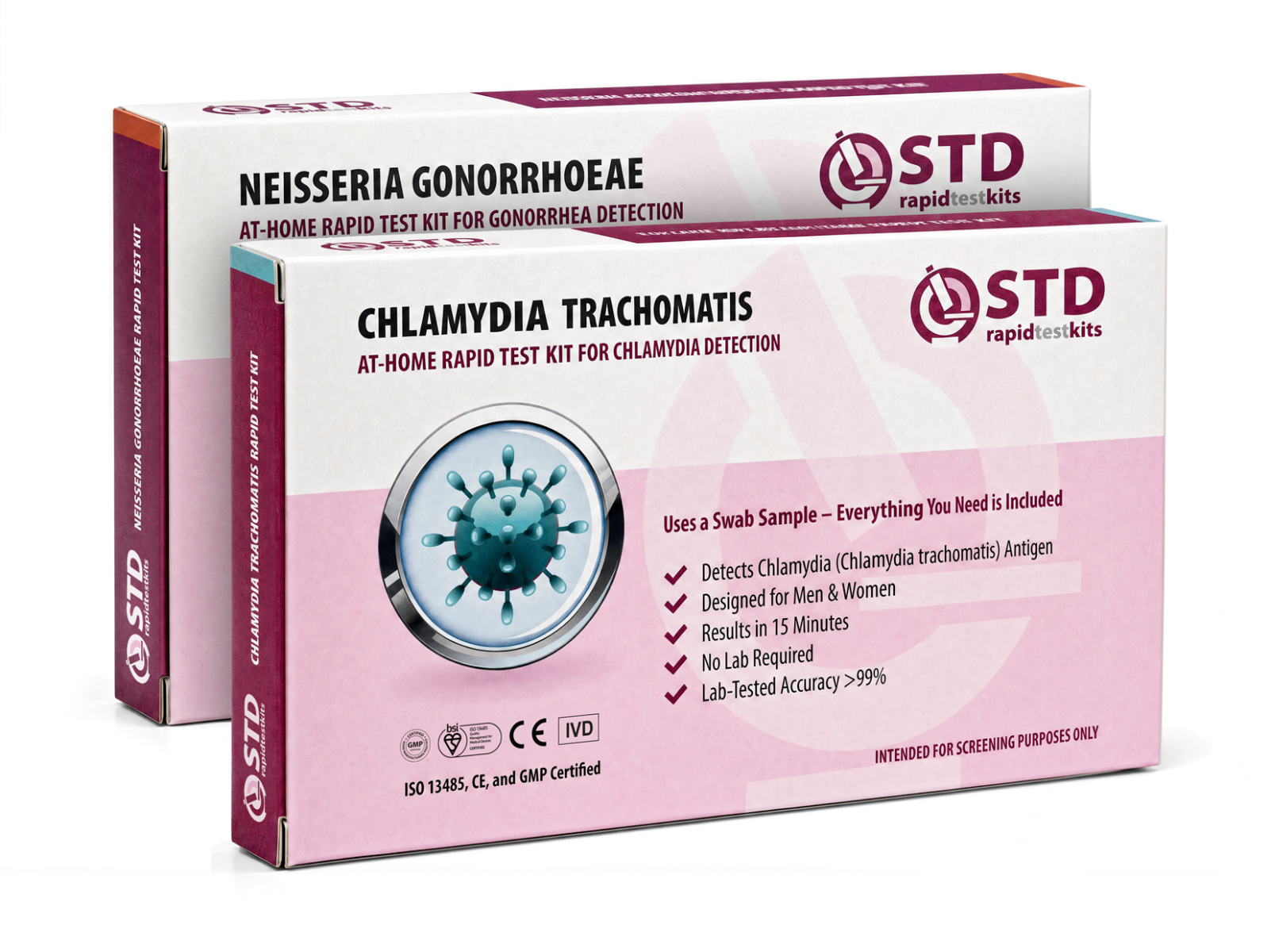
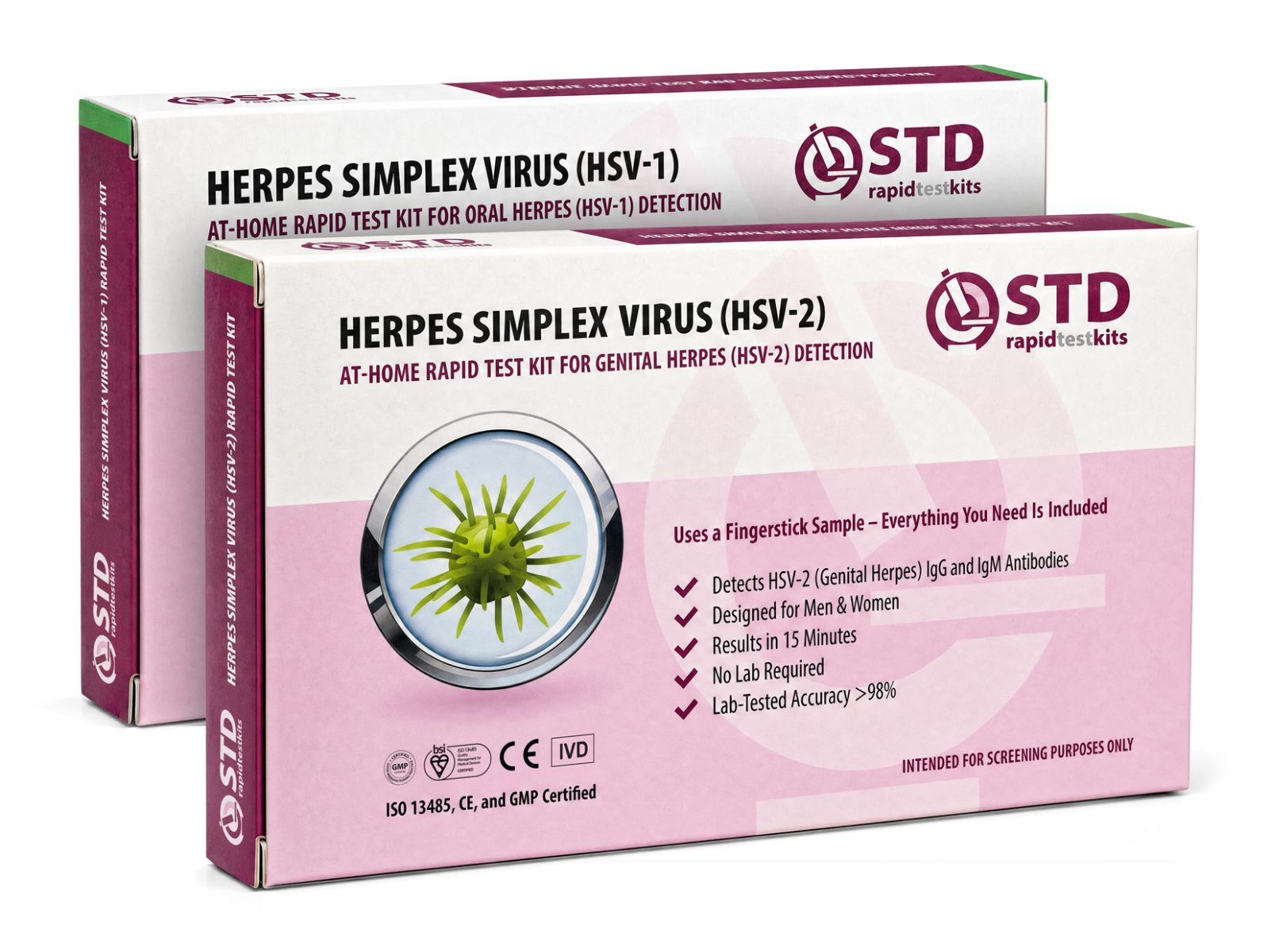
stdrapidtestkits.com publishes this article and sells at-home rapid STI test kits, including swab-based kits for chlamydia, gonorrhea, trichomoniasis, and HPV (the trich and HPV kits are validated for vaginal self-swab only) and fingerstick blood kits for HIV, syphilis, hepatitis B and C, and herpes antibodies. We recommend products based on what fits the reader's concern, not commercial benefit.
Toy material decides almost everything
What the toy is made of sets the ceiling on how clean it can ever be. Non-porous materials can be properly disinfected. Porous materials cannot. The sex toy industry is largely unregulated, so a $20 vibrator and a $120 vibrator can look almost identical and behave very differently when bacteria meet their surfaces.
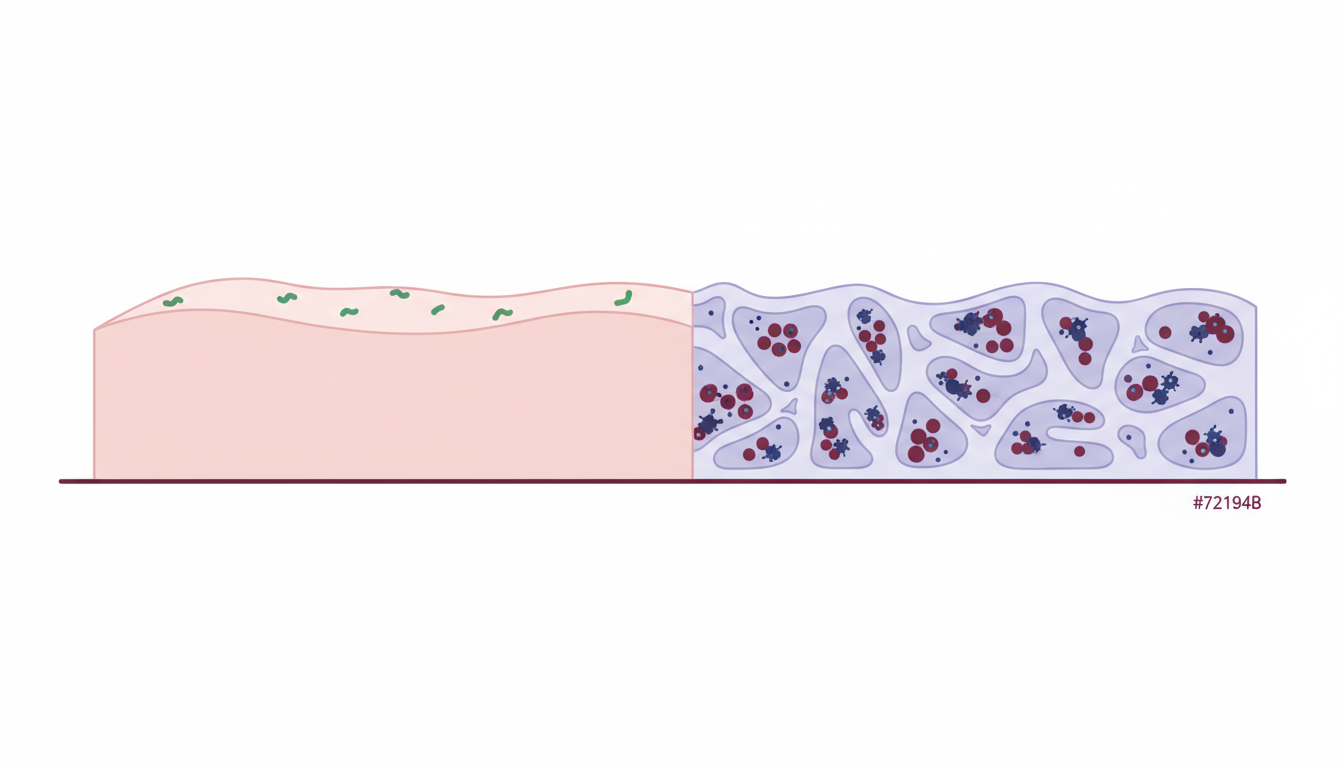
Under a microscope, the difference between medical-grade silicone and jelly rubber is the difference between a smooth countertop and a sponge. Soap and water can clean a counter. They cannot fully clean a sponge.
| Material | Porous? | Can be sterilized? | Risk of holding pathogens |
|---|---|---|---|
| Medical-grade silicone | No | Yes (boil briefly if motor allows; bleach solution; toy cleaner) | Low |
| Borosilicate glass | No | Yes (boil; top-rack dishwasher with no detergent) | Very low |
| Stainless steel | No | Yes (boil; bleach-safe) | Very low |
| Hard plastic (ABS) | No | Yes (soap and water; isopropyl alcohol on surface) | Low |
| Jelly rubber, TPE, TPR | Yes | No, only surface cleaning | High |
| CyberSkin and other "realistic" blends | Yes | No, harsh cleaners degrade the material | Very high |
The cleaning step most people skip
A rinse under warm water is not cleaning. It rearranges fluid on the toy, but it does not deactivate viruses or kill bacteria meaningfully. The cleaning protocol that holds up across NHS, CDC-adjacent, and manufacturer guidance is straightforward and takes under a minute.
For non-porous toys, wash with mild unscented soap and warm water immediately after each use, paying attention to seams, ridges, and base joints where fluid collects. Rinse thoroughly. Air dry on a clean cloth, not back into a fabric pouch while wet. For deeper cleaning between partners or between sessions, use one of the disinfection options listed below.
Porous toys (jelly, TPE, CyberSkin, anything that smells faintly of plastic when warm) cannot be sterilized without destroying the toy. The realistic options are surface-cleaning with mild soap and accepting limits, or covering the toy with a fresh latex or polyurethane condom for every single use. If a porous toy has been used internally with a partner, the safest position is to retire it and replace with a non-porous version. Storage matters too. A toy stored damp in a sealed pouch is a small incubator, so let toys fully dry before storing, and prefer breathable cotton bags or open trays over zip-locked plastic.
Disinfection options for non-porous toys
- A few minutes in boiling water (for fully waterproof toys with no electronics, or for the silicone heads of detachable toys).
- Top rack of a dishwasher with no detergent, on a high-heat cycle.
- A 10 percent bleach solution applied for 10 minutes, followed by a thorough rinse.
- A commercial toy cleaner formulated for non-porous medical-grade materials.
Sharing toys without sharing infections
A fresh latex or polyurethane condom, replaced each time the toy switches bodies or sites, is the simplest barrier approach. Roll on a new condom every time the toy switches bodies, switches sites, or switches direction (anal to vaginal, for instance). This is the same logic as condoms during partnered sex, applied to the object that is acting as the in-between, and it is the only realistic harm reduction for porous toys that someone is unwilling to retire.
For non-porous toys, the alternative is full disinfection between users. "Full" means more than a wipe with a sex-toy-cleaner spray, which is fine for routine maintenance but not equivalent to bleach, boiling, or dishwasher heat. If you are mid-session and don't want to break the moment to disinfect, the condom-swap approach is faster and equally effective. When toys are passed between partners during the same session, put a condom on, swap the condom on the next pass, and continue; do not rely on a quick rinse. When the same toy moves from anal to vaginal use, either change the condom or set the toy aside, wash with soap and water (or a quick wipe with a clean cloth and toy cleaner), and only then switch sites. Anal-to-vaginal cross-contamination is one of the most common sources of UTIs and bacterial vaginosis even when no STI is in the picture.
Sharing sex toys has risks, including getting and passing on STIs such as chlamydia, syphilis and herpes.
The lube bottle is part of the picture
Lube hygiene rarely makes it into the conversation, but a shared bottle is its own small fomite story. If the bottle nozzle touches a toy, a body part, or a partner's body and then goes back into the bottle, the contents pick up a passenger. Pump dispensers and squeeze tubes that never make contact with skin or toys are the cleaner format. If you only have a flip-top, dispense onto a clean fingertip first, then transfer. Dedicate one lube container per person in shared situations, the same logic that applies to toothbrushes, and keep the cap closed when the bottle is not in active use, away from heat and direct sunlight. Some lubes degrade in ways that disturb vaginal pH and make irritation more likely, which can increase susceptibility to infections that are circulating.
Lube and toy material also interact in ways that matter for which barrier you can rely on. Silicone-based lubes degrade silicone toys over time. Water-based lubes are compatible with virtually everything but dry out faster. Oil-based lubes break down latex condoms, which is the issue if the condom is the barrier you are relying on between toy and body.
| Lube type | Toy material compatibility | Latex condom safe? |
|---|---|---|
| Water-based | Compatible with all toy materials | Yes |
| Silicone-based | Glass, steel, ABS, jelly; degrades silicone toys over time | Yes |
| Oil-based | Glass, steel, ABS only | No, breaks down latex |
When to test after toy play
The trigger to test is not whether the play "counted as sex." It is whether something happened that could have introduced a pathogen and whether enough time has passed for a test to be informative. Most rapid STI tests have a window period, the gap between exposure and reliable detection. The table below summarises rough guidance based on the CDC treatment guidelines and widely cited clinical assay literature.
Two situations should accelerate testing: any new symptom (unusual discharge, burning, sores, itching, pelvic pain) and any partner who tells you they tested positive. You can carry and transmit these infections without any symptoms, particularly with chlamydia and HPV, so a clean-feeling body is not a substitute for a test. The CDC recommends annual chlamydia and gonorrhea screening for sexually active women under 25 and for older women with risk factors.
| Infection | Reliable detection window | Test format |
|---|---|---|
| Chlamydia / Gonorrhea | 1 to 2 weeks post-exposure | NAAT (lab) or rapid lateral-flow swab |
| Trichomoniasis | 1 to 4 weeks post-exposure | NAAT or rapid lateral-flow swab |
| Herpes (HSV) | 12 weeks or longer for IgG seroconversion (per widely cited assay guidance) | Antibody blood test (fingerstick or lab) |
| HIV | 18 to 45 days post-exposure depending on assay | Fourth-generation antigen-antibody |
| HPV | Driven by cervical screening cycle, not exposure timing | HR-HPV PCR or Pap (clinical setting) |
What to do if you have already had an exposure
Stop using the toy in question until it has been disinfected (non-porous) or replaced (porous). From there, identify which infections the exposure plausibly involved based on what you know about the partner or the toy's history, and pick a test that covers them. Wait for the appropriate window listed in the table above. If symptoms are present, test now and retest at the window if the first result is negative.
The emotional piece deserves naming: a toy-route infection is not a moral failure or evidence of betrayal. Toys hold residue longer than relationships sometimes do, which is the actual mechanism behind most of the "but we both tested negative" stories.
Action checklist after a possible exposure
- Set the toy aside until you can disinfect (non-porous) or replace it (porous).
- Note when the exposure happened so you can match the test window for each likely infection.
- Test now if symptoms are present, then retest at the appropriate window if the first result is negative.
FAQs
- I only used my own toy, by myself. Can I really get an STI from that?
- From a toy you have used only solo and that has never been shared, the risk of acquiring a new STI is essentially zero. The realistic risks during solo play are cross-site transfer (anal to vaginal on the same toy without cleaning, which can cause UTIs and bacterial vaginosis) and self-reinfection if you already have a recurrent viral infection like HSV or HPV and the toy was used during a previous flare without disinfection.
- How long do STIs actually survive on a sex toy?
- It depends on the pathogen. HPV is the most surface-resilient and has been detected on vibrators even after soap-and-water cleaning. Trichomoniasis can survive about 45 minutes on damp surfaces. Herpes lasts minutes to a few hours outside the body. Chlamydia and gonorrhea are fragile and typically need fairly immediate transfer between bodies. HIV inactivates quickly outside the body and is not a meaningful toy-route risk.
- Is soap and water enough to clean a sex toy?
- For a non-porous toy used solo and not switching body sites, soap and warm water immediately after use is reasonable for routine cleaning. For toys shared between partners or used between anal and vaginal sites, soap and water alone is not enough. Either use a fresh condom on the toy or fully disinfect it (boiling for waterproof toys, dishwasher top rack with no detergent, a 10 percent bleach solution followed by a thorough rinse, or a commercial toy cleaner).
- What is the safest material if I want to minimize this risk entirely?
- Medical-grade silicone, borosilicate glass, and stainless steel are the three non-porous options that can be fully sterilized. They cost more upfront and last for years. Jelly rubber, TPE, TPR, and CyberSkin cannot be fully cleaned because their porous structure traps fluid in microscopic channels that soap and water cannot reach.
- My partner and I both tested negative. Could the toy still give one of us something?
- Yes, in two scenarios. One: a previous partner used the toy and left residue that was not fully removed by basic cleaning, particularly with HPV which persists on surfaces. Two: one of you has an asymptomatic infection that the test you took did not screen for or that was outside its window period. If symptoms appeared after toy use despite both of you testing negative, retest at the appropriate window for the suspected infection.
- Do I need to put a condom on a toy I am only using solo?
- Generally no, with two exceptions. If you are switching the toy between anal and vaginal use in a single session, a fresh condom is much faster than washing in between. And if you have an active outbreak of a recurrent infection like HSV, a condom plus thorough disinfection of the toy after the outbreak resolves can reduce the chance of self-reinfection at a different site.
- Can lube actually spread infections?
- Indirectly, yes. If the bottle nozzle contacts a toy or a body and then goes back into the bottle, the contents become potentially contaminated. The fix is straightforward: dispense onto a clean finger first, never let the nozzle touch anything in active use, keep one bottle per person in shared situations, and store closed away from heat. Some lubes also disturb vaginal pH, which can increase susceptibility to infection rather than transmit one directly.
- How often should I test if I use toys regularly with one partner?
- For a monogamous couple where both partners tested at the start of the relationship and neither has had outside exposures, the standard CDC screening recommendations apply: annual chlamydia and gonorrhea screening for sexually active women under 25, periodic HIV testing as part of routine care, and HPV screening as part of cervical cancer screening on the schedule your provider recommends. For people sharing toys outside a closed relationship, every 3 to 6 months is more appropriate, and any time symptoms appear is the right time to test now rather than waiting.
The bottom line
Sex toys are a meaningful but manageable route of STI transmission. The combination that creates almost all of the real risk is a porous toy plus shared use plus inadequate cleaning. Strip out any one of those three (a non-porous toy, a fresh condom barrier when switching, or actual disinfection between uses) and the risk drops sharply. The technology of the toy and the hygiene routine around it matter more than how often you use it or how many partners you have.
- U.S. Centers for Disease Control and Prevention. Sexually Transmitted Infections Treatment Guidelines, 2021. Reference for chlamydia and gonorrhea environmental survival, screening intervals, and asymptomatic infection rates.
- U.S. Centers for Disease Control and Prevention. Trichomoniasis topic page. Reference for general epidemiology, symptoms, and screening guidance for trichomoniasis.
- U.S. Centers for Disease Control and Prevention. HPV topic page. Reference for HPV transmission and prevention, including the role of HPV vaccination and cervical screening.
- U.S. Centers for Disease Control and Prevention. Genital herpes (HSV-1, HSV-2) topic page. Reference for herpes transmission routes, symptoms, and testing.
- National Health Service (UK). Sexual activities and risk: information on sex toys, sharing, condom use, and cleaning between partners or sites.
- World Health Organization. Sexually transmitted infections (STIs) fact sheet. Reference for global STI epidemiology and transmission overview.
