

Published: July 2025 | Last updated: April 2026 | Editorial review and quality control: Martina N.
The smell is what brings most people in. They have already tried a yeast cream, sometimes two rounds of bacterial vaginosis treatment, switched soaps, dropped the scented liners. Nothing held. The odor faded for a week, then sharpened again right after sex or during a period. If that pattern sounds familiar, the odds are high that what you are dealing with is not yeast and not BV. It is trichomoniasis, the most common non-viral sexually transmitted infection in the world according to the World Health Organization, and one of the easiest infections to overlook because most people who carry it have no symptoms at all.
This article walks through what the smell actually means, why doctors miss trich so often, how to test for it without an awkward clinic visit, and what treatment looks like once the diagnosis is made. Reassurance up front: this is treatable, the cure rate with prescription antibiotics is consistently high, and you almost certainly did nothing wrong to get it.
Why does my discharge smell fishy or metallic?
A persistent fishy, metallic, or musty vaginal odor that sharpens after sex or during your period is one of the most reliable signs of trichomoniasis, a parasitic STI the <a href="https://www.cdc.gov/trichomoniasis/about/index.html">CDC</a> estimates affected more than 2 million people in the United States in 2018. About 70 percent of cases have no symptoms, which is why trich gets misdiagnosed as bacterial vaginosis or yeast infection more often than any other vaginal infection. It is curable with one course of metronidazole or tinidazole, but both you and any recent sexual partner have to take it at the same time, otherwise reinfection is the rule. If the smell is mild and only shows up occasionally rather than persistently, a normal post-sex pH shift or a minor BV episode is more likely than trich; the distinguishing signal is odor that keeps returning even after treatment.
Key Takeaways
- A persistent fishy or metallic odor that sharpens after sex is the most distinguishing trichomoniasis symptom, and it is misdiagnosed as BV or yeast more often than any other vaginal infection.
- Trich is curable with one prescription course of metronidazole or tinidazole, but reinfection is the rule unless every recent partner is treated at the same time.
What Trichomoniasis Actually Is
Trichomoniasis (pronounced trick-oh-moe-NEYE-uh-sis) is caused by Trichomonas vaginalis, a single-celled flagellated parasite that lives in the lower genital tract of people with vaginas and the urethra of people with penises. The CDC estimated more than two million trichomoniasis infections in the United States in 2018, and the World Health Organization reports approximately 156 million new cases worldwide in 2020, making it the most common non-viral sexually transmitted infection globally.
The catch: roughly 70 percent of people who have trich never develop symptoms, per the CDC. That is the central problem with this infection. It can move quietly between partners for months or even years before one person notices anything is off. When symptoms do appear, they typically look like:
- A fishy, musty, or metallic vaginal odor that often worsens after sex or during menstruation
- Thin, frothy discharge that may turn yellow, green, or gray
- Itching, burning, or soreness in or around the vagina or vulva
- Pain or discomfort during sex or urination
- Light spotting or post-coital bleeding in some cases
Most of these overlap with bacterial vaginosis and yeast infection, and many readers cycle through one or two rounds of yeast cream or BV antibiotics before a trich-specific test gets ordered.
About 70 percent of trichomoniasis cases produce no noticeable symptoms at all, per the CDC. The parasite can move quietly between partners for months or years before one person finally develops odor or discharge, which is why a positive result rarely points cleanly at one recent encounter.
Why It Smells the Way It Does
The odor is not random. T. vaginalis disrupts the vaginal microbiome by reducing populations of protective Lactobacillus bacteria, the same shift that drives bacterial vaginosis. With less Lactobacillus, vaginal pH rises above the normal range of 3.5 to 4.5. The newly alkaline environment lets anaerobic bacteria release volatile amines, including putrescine and cadaverine, the same compounds responsible for the smell of decomposing tissue. That is the source of the fishy or rotten quality people describe.
The smell sharpens after sex because semen has a pH of roughly 7.2 to 8.0, well above vaginal pH even at baseline. When semen contacts an already alkaline vagina, the amines volatilize faster and the odor intensifies. The same effect happens during your period because menstrual blood is also relatively alkaline.
What sets trich apart from BV in many cases is the discharge itself. BV typically produces a thin gray-white discharge with relatively mild irritation. Trich more often produces a frothy, almost bubbly yellow-green discharge with measurable inflammation, which is sometimes visible on speculum exam as the "strawberry cervix" finding clinicians use as a diagnostic tell. Yeast presents differently again: thick white cottage-cheese discharge, intense itching, no significant odor.
Healthy vaginal pH: 3.5 to 4.5 (slightly acidic).
Semen pH: 7.2 to 8.0 (alkaline).
Trich-disrupted vaginal pH: often above 4.5.
Contact with semen accelerates that volatilization, which is why the smell intensifies after sex.
Trich vs. BV vs. Yeast: A Side-by-Side
Symptom overlap is the reason so many people cycle through three or four wrong treatments before getting a correct diagnosis. The practical comparison:
| Condition | Discharge | Odor | Other Symptoms |
|---|---|---|---|
| Trichomoniasis | Thin, frothy, yellow or green | Fishy or metallic, stronger after sex | Itching, burning, pain with sex |
| Bacterial Vaginosis (BV) | Thin, gray-white | Fishy, especially after sex | Mild irritation, often no itching |
| Yeast Infection | Thick, white, cottage-cheese-like | Usually none, sometimes bread-like | Intense itching, swelling, no odor |

How You Get It (Even Without Penetration)
Trichomoniasis spreads through direct genital-to-genital contact. The most common transmission routes are:
- Vaginal sex (the dominant transmission route)
- Sharing sex toys without barriers or proper cleaning between uses
- Genital rubbing or grinding without penetration
- Vulva-to-vulva contact between partners with vaginas
It does not spread through toilet seats, towels, or shared bathwater. The parasite cannot survive long outside the body. It also does not transmit reliably through oral sex, since the parasite does not colonize the mouth or throat well, and casual contact or kissing is not a transmission risk.
People with penises usually carry trich asymptomatically. Some notice mild urethritis (slight burning during urination, occasional clear discharge), but most do not. That is why trich is the textbook example of a "ping-pong" infection: a symptomatic partner gets treated, has unprotected sex with their untreated partner, and reinfects within weeks unless both partners complete antibiotics during the same window.
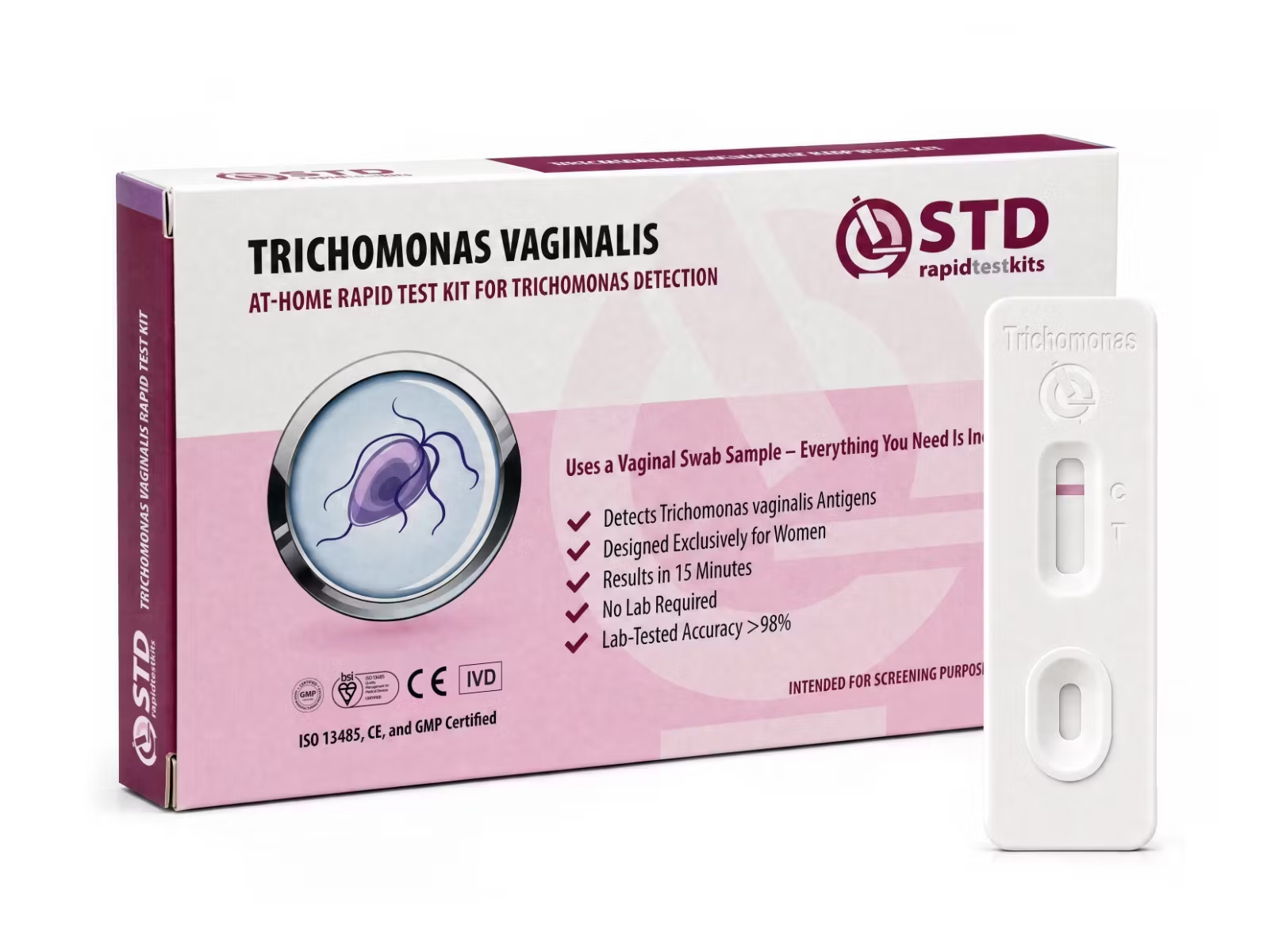
This article is published by stdrapidtestkits.com, which sells at-home STI testing kits. Our rapid trichomoniasis self-test is a vaginal swab, validated for female anatomy only. We do not currently offer a male-compatible at-home trich test. Male partners should test through a clinic NAAT, which is widely available and inexpensive.
Why Symptoms Disappear and Come Back
Trich does not run on a steady symptom timeline. Many people notice odor and discharge flares around their period, after sex, or during stretches of stress when immune function dips. Between flares, things may feel close to normal, which often leads people to assume the infection cleared on its own.
It did not. Trichomoniasis does not self-resolve. The parasite persists in the genital tract until antibiotics clear it. What looks like remission is usually just a quieter phase where symptoms drop below your awareness threshold while transmission continues. The only exit from that cycle is testing and treatment, for both partners.
Recurrent BV and recurrent yeast do happen, and the symptoms can look identical from the outside. A trich-specific NAAT or rapid swab is the appropriate next step once the second or third round of yeast or BV medication has not held.
The most common flare windows are: the first few days after a new sexual encounter, the week leading into your period, the period itself, and stretches of high stress or poor sleep when immune defenses dip. A quiet stretch between flares does not mean the infection is gone.
How to Actually Get Tested
Most annual STI screenings do not include trichomoniasis by default. The standard panel typically covers chlamydia, gonorrhea, HIV, and syphilis. If you want a trich result, you usually have to ask for it specifically, or test outside the standard panel. Three options:
- NAAT (nucleic acid amplification test) at a clinic. NAAT on a vaginal swab is the current laboratory gold standard for trichomoniasis diagnosis, per the CDC STI Treatment Guidelines. Most STI clinics, Planned Parenthood locations, and many primary-care offices run NAAT on request.
- At-home rapid antigen swab kits. These use a self-collected vaginal swab and lateral-flow chemistry to deliver a result in roughly 15 minutes. They are convenient, private, and accurate enough to act as first-line screening. The trade-off compared to lab NAAT is somewhat lower analytical sensitivity, especially in early or low-burden infections, so a negative home result paired with persistent symptoms is worth confirming with lab NAAT.
- Wet-mount microscopy. Some clinics still run a saline wet-prep and look for motile trichomonads under a microscope. It is fast and cheap, but it misses roughly half of true infections and the parasite stops moving quickly after the slide is prepared. If a clinician offers wet mount and nothing else, ask whether they can run NAAT instead or in addition.
If your discharge has smelled off through two rounds of yeast or BV treatment, escalate to NAAT or a rapid trich-specific kit. Stop guessing.
Test hierarchy: NAAT is most sensitive, rapid swab is fastest and most private, wet-mount is a last resort that misses about half of cases.
Escalation trigger: two or more rounds of yeast or BV treatment that did not hold, or a negative rapid result paired with persistent odor and discharge. Both are reasons to ask for a clinic NAAT.
What to ask for: a vaginal-swab NAAT specifically for Trichomonas vaginalis, since the standard panel may not include it.
Treatment: One Pill, but Both Partners Need It
Trichomoniasis is curable. The CDC STI Treatment Guidelines recommend two oral antibiotics:
- Metronidazole at 500 mg taken twice daily for seven days (the preferred regimen for women) or as a single 2 g dose
- Tinidazole as a single 2 g dose
For people with vaginas, the seven-day metronidazole course has higher cure rates than the single-dose regimen. Both partners should be treated at the same time, even if one has no symptoms. Avoid sex until seven days after both partners finish their course. Avoid alcohol during treatment and for 24 hours after metronidazole or 72 hours after tinidazole, since the combination causes severe nausea and vomiting (a disulfiram-like reaction).
The CDC also recommends retesting at three months after treatment because reinfection is common, particularly when one partner did not get treated.
About 70% of people with the infection do not have any signs or symptoms. When trich does cause symptoms, they can range from mild irritation to severe inflammation.
Talking to a Partner Without Making It a Fight
Trichomoniasis can sit silently in a partner for months or years before anyone notices anything. Internalize that before the conversation: a positive trich test does not prove recent infidelity. It proves someone in the equation has been carrying the parasite, possibly for a long time, and the balance finally tipped enough for symptoms to show.
A few openings that tend to land:
- "I just got a positive trich result. It is treatable, but you need to get treated too, otherwise we will keep passing it back."
- "My doctor flagged this one. It can hide in people for years without any symptoms, so it is not about who got it from where. We just both need the meds."
- "Here is what I learned. Trich does not always cause symptoms, especially in people with penises, so this is normal couples-stuff to handle, not a betrayal thing."
The framing matters. People who hear "you gave me an STI" tend to defend; people who hear "we both need treatment so this stops bouncing" tend to cooperate.
Lead with we, not you. A positive trich result does not prove recent infidelity, so opening with shared responsibility lands better than accusation.
Name the cure. Saying upfront that one course of metronidazole or tinidazole clears it defuses panic faster than the diagnosis itself.
Sync the timing. Both partners need to finish antibiotics and wait seven days before resuming sex, otherwise the infection bounces back within weeks.
Why Untreated Trich Is More Than an Odor Problem
Beyond the discomfort, untreated trichomoniasis is associated with measurable health risks:
- Increased HIV transmission risk. Trich-driven inflammation makes vaginal and urethral tissue more vulnerable to HIV acquisition, and people living with HIV who also have trich shed more virus, per the CDC. Treating trich is one of the more cost-effective ways to reduce HIV transmission risk in high-prevalence settings.
- Adverse pregnancy outcomes. Trich during pregnancy is linked to preterm delivery and low birth weight.
- Pelvic inflammatory disease risk. Trich is less commonly associated with PID than chlamydia or gonorrhea, but lower-tract infection can ascend in some cases, particularly when other infections are present at the same time.
- Increased susceptibility to other STIs. The disrupted microbiome and inflamed tissue make co-infections easier to acquire and harder to clear.
This is why "wait and see" is the wrong move. Test, treat, and retest at three months.
Untreated trichomoniasis during pregnancy is associated with preterm delivery and low birth weight (per the <a href="https://www.cdc.gov/trichomoniasis/about/index.html">CDC</a>). If you are pregnant and notice the discharge or odor symptoms above, ask your obstetric provider for a trich-specific test rather than empiric BV or yeast treatment.
Preventing Reinfection
After treatment, the goal is staying clear without becoming paranoid about every shift in your body. The basics:
- Use external or internal condoms during vaginal sex, especially with new partners
- Use barriers (condoms or dental dams) on shared sex toys, or wash toys with soap and warm water between users
- Get a full STI screen, including a trich-specific test, after every new partner
- Skip douching. Douching disrupts vaginal flora and increases susceptibility to BV and trich, not the reverse
- Note your own baseline. Pay attention to changes in discharge texture, odor, or pH; deviations from your normal are the signal worth tracking
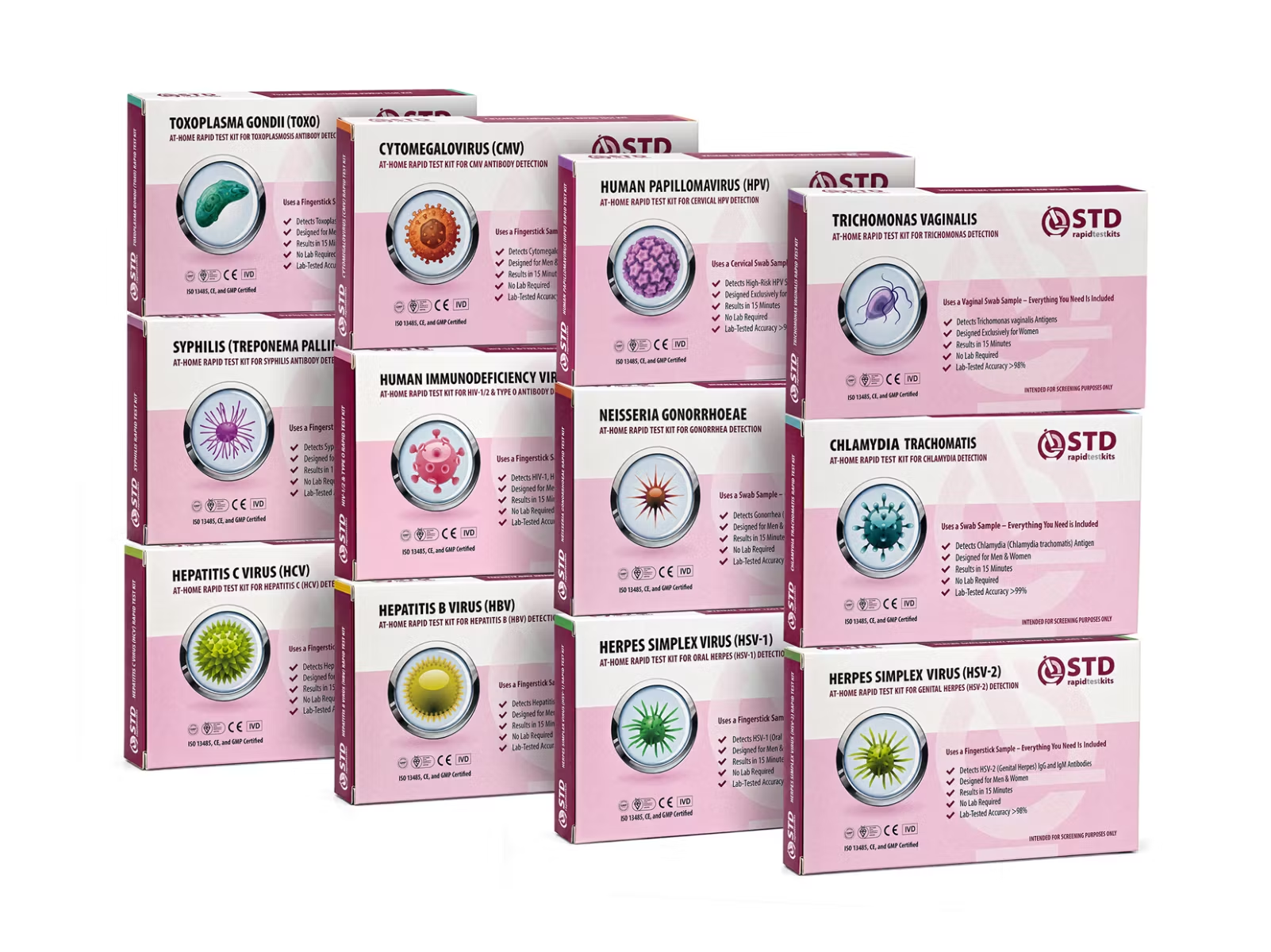
If you want a broader screen alongside trich, the kits that combine multiple infections (chlamydia, gonorrhea, HIV, syphilis, hepatitis, plus trich and HPV for female anatomy) cover the most common vaginal-health concerns in a single order.
Frequently Asked Questions
- Does a fishy smell always mean I have trichomoniasis?
- No. Bacterial vaginosis also causes a fishy odor, and natural pH shifts after sex or during your period can produce milder versions of the same smell. What pushes trich up the list is when the odor is persistent, sharpens noticeably after sex, and is paired with frothy yellow-green discharge or vulvar irritation. Testing is the only way to be sure.
- Can men carry trichomoniasis without knowing?
- Yes, and this is why reinfection is so common. Most men with trich have no symptoms or only very mild urethritis. They can pass the parasite to a partner during vaginal sex without ever realizing they had it. Concurrent partner treatment is the only way to break the cycle.
- How long can trichomoniasis go undetected?
- Months to years. Without treatment the parasite persists indefinitely in the genital tract. Symptoms can flare and quiet for months at a time. People sometimes discover trich years into a long-term relationship; that is biology catching up, not proof of recent infidelity.
- Will trichomoniasis go away on its own?
- No. Trich does not self-resolve. Symptoms may temporarily disappear, but the infection remains and can be passed to others. Prescription antibiotics (metronidazole or tinidazole) are required for cure.
- How do I tell trich from BV from yeast at home?
- Use the discharge-and-odor pattern as a starting point. Yeast tends toward thick white cottage-cheese discharge with intense itching and no smell. BV is thin and gray-white with a fishy odor. Trich is frothy and yellow-green with a stronger fishy or metallic smell that sharpens after sex. The patterns overlap, so confirm with a test before starting any prescription treatment.
- Can I test for trichomoniasis at home?
- Yes. Rapid lateral-flow self-tests use a self-collected vaginal swab and deliver a result in about 15 minutes. They are validated for female anatomy. A positive home result is worth confirming with a clinic NAAT before starting prescription antibiotics; a negative result with persistent symptoms also warrants follow-up NAAT.
- Is trichomoniasis linked to HIV risk?
- Yes. The CDC notes that the genital inflammation caused by trich makes both HIV acquisition and HIV transmission more likely. That is one reason public-health groups push trich screening even though most cases are asymptomatic; treating trich measurably reduces HIV risk in high-prevalence settings.
- Can trichomoniasis come back after treatment?
- Yes, though a second positive usually means re-exposure rather than treatment failure. The seven-day metronidazole course has a higher cure rate than the single 2 g dose; if you took the single-dose option and symptoms returned, ask your provider about switching regimens. Retest at three months regardless of which treatment you used.
- U.S. Centers for Disease Control and Prevention. About Trichomoniasis, including the 2018 U.S. prevalence estimate of more than 2 million infections, the 70 percent asymptomatic rate, transmission routes, the pregnancy outcomes (preterm delivery and low birth weight), and the HIV-cofactor inflammation note.
- World Health Organization. Trichomoniasis fact sheet, including the global estimate of approximately 156 million new cases in 2020 and the classification as the most common non-viral sexually transmitted infection worldwide.
- U.S. Centers for Disease Control and Prevention. STI Treatment Guidelines, the authoritative CDC document for diagnostic methods (NAAT on vaginal swab as the trich diagnostic gold standard), the metronidazole 500 mg twice-daily seven-day regimen and tinidazole 2 g single-dose regimen, the alcohol-interaction window, and the three-month retest recommendation.
- NHS (UK). Trichomoniasis overview, including diagnostic approach, treatment with metronidazole, and partner-notification recommendations.
- Planned Parenthood. Trichomoniasis patient education, including transmission, asymptomatic carrier patterns, and treatment access.
