
Published: November 2025 | Last updated: May 2026 | Editorial review and quality control: Martina N.
STI risk isn't randomly distributed across the population. Some people will pick up multiple infections over their adult lives; others, with broadly similar levels of sexual activity, won't. The gap between those two outcomes comes down to a fairly short list of factors: how often protection gets used, how many partners are in the picture, what those partners know about their own status, biological vulnerability at certain ages, and how the rest of life (alcohol use, healthcare access, the comfort of talking openly) shapes day-to-day choices.
None of this is about blame. The CDC counts more than 2.4 million chlamydia, gonorrhea, and syphilis diagnoses in a recent surveillance year, and those infections concentrate in specific age and behavior patterns rather than spreading evenly across everyone (CDC STI surveillance). Understanding where you actually sit on that risk map is what makes prevention practical. This article walks through the factors that genuinely raise risk, the misconceptions that drive avoidable exposure, and the handful of changes that move the needle most. We publish at stdrapidtestkits.com and sell at-home STI testing kits; the recommendations below reflect what fits a given reader's situation, not commercial padding.
Key Takeaways
- STI risk concentrates around a small set of patterns: inconsistent protection, untested partners, drinking before sex, and age-related biology in people under 25. Each lever is changeable.
- Most STIs cause no symptoms in the early weeks. Regular testing (annually if low-risk, every 3 to 6 months with multiple partners) is the only reliable way to know your status.
What raises STI risk in practice
The risk factors below have the strongest evidence behind them in U.S. epidemiology data. Most are changeable through habits or testing patterns; the ones that aren't (age, biology) are at least predictable, so people in higher-risk windows can compensate with more frequent screening.
Inconsistent or skipped protection
Condoms reduce transmission substantially for STIs that move through bodily fluids: chlamydia, gonorrhea, trichomoniasis, HIV, and to a meaningful extent hepatitis B and syphilis. They don't prevent every infection. HPV, herpes (both HSV-1 and HSV-2), and syphilis chancres can still transmit through skin-to-skin contact in areas a condom doesn't cover. The CDC describes consistent and correct condom use as highly effective against fluid-borne STIs (CDC STI prevention).
The practical issue is rarely whether someone owns condoms. It's whether they're used every single time. Skipping protection "just this once" with a new partner is the most common pattern behind avoidable transmission. Substituting assumptions ("they look fine", "we've been seeing each other a few weeks", "I'd know if they had something") for evidence is the second.
Number of recent partners
The relationship is essentially arithmetic. Each new sexual partner is another chance to encounter an undiagnosed infection somewhere in their own network. The math doesn't scale perfectly linearly, because partner-specific factors (their testing history, their own partner count, the type of sex involved) matter. The underlying trend, though, is consistent across decades of epidemiology: more concurrent or recent partners means higher cumulative exposure.
CDC surveillance attributes a disproportionate share of new chlamydia and gonorrhea diagnoses to networks of people in their late teens and twenties with multiple partners in the past year, often where none of them has had a recent screening (CDC STI surveillance). The intervention that helps most is everyone in a network knowing their status before fluids are exchanged.
Age and biological vulnerability
People aged 15 to 24 account for roughly half of new STI diagnoses in the United States each year, despite making up around a quarter of the sexually active population (CDC STI surveillance). Two things drive that gap.
The first is biological. In younger women, the cervical epithelium hasn't fully matured. A layer of cells called the columnar epithelium of the transformation zone is more readily colonized by chlamydia and gonorrhea than the squamous tissue that replaces it in adulthood. This is an anatomical fact of cervical development, nothing more.
The second is behavioral and structural. People under 25 are less likely to schedule routine STI screening, less likely to have a stable primary-care relationship, and more likely to feel embarrassed asking for tests. Infections that would be caught at an annual checkup in someone older instead circulate through a partner network undiagnosed.

Drinking, drugs, and split-second decisions
Alcohol and recreational drugs lower the threshold for risky choices in ways that show up consistently in the behavioral-health literature. Heavy drinking before sex is associated with lower condom use, with the effect strongest for casual encounters and newly-formed pairings (CDC STI prevention).
Alcohol shifts the calculation toward "we'll be fine" instead of toward putting on a condom, asking about testing, or postponing until tomorrow. For people who tend to have casual sex after drinking, the evidence-based fix is keeping condoms within physical reach of where the drinking happens. The decision becomes one of geography rather than memory.
STIs that hide for months or years
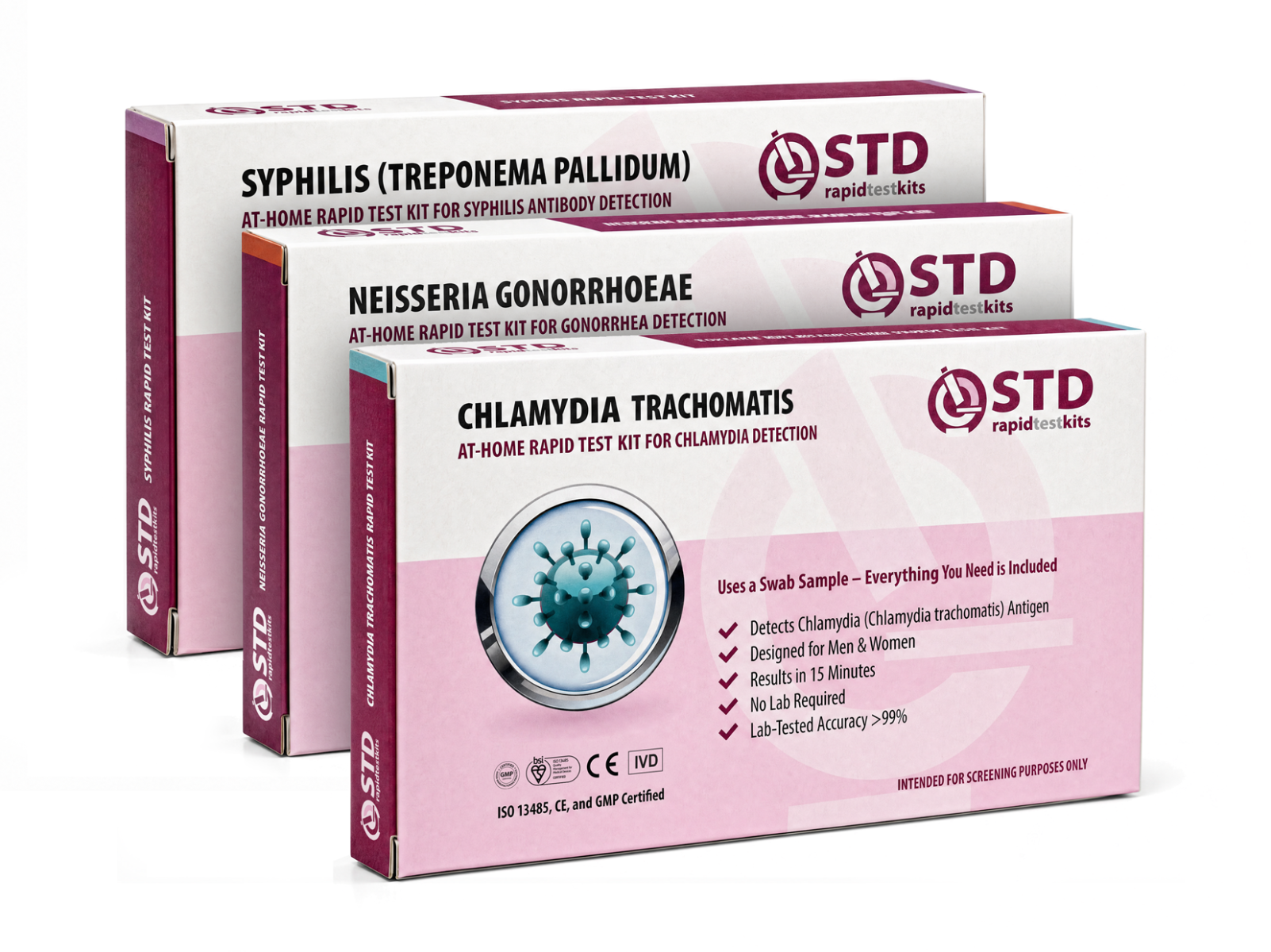
One of the underlying reasons some people accumulate multiple STIs is that several of the common ones cause no early symptoms. They sit in the body, sometimes shed during sex, and only get diagnosed by chance: a routine pap smear, a partner's diagnosis, a screening that was scheduled for something else entirely.
The CDC describes chlamydia as asymptomatic in around 70% of women and 50% of men, gonorrhea as similarly silent in the majority of throat and rectal infections, and HPV as essentially symptom-free for the vast majority of people who carry it (CDC STI overview). Herpes simplex virus type 2 commonly produces a single mild outbreak that gets mistaken for an ingrown hair or chafing; after that, the virus can shed asymptomatically from the genital area for years.
The practical consequence: any partner who hasn't been tested recently might genuinely believe they're STI-free without that belief being grounded in evidence.
Untreated chlamydia and gonorrhea can progress to pelvic inflammatory disease (PID), the leading preventable cause of tubal factor infertility in women. PID typically produces mild or no symptoms until reproductive damage has already occurred, which is one reason annual screening matters even when nothing feels wrong.
Having one STI raises the odds of getting another
Co-infection is well-documented in the epidemiology literature. The clearest example is herpes and HIV. Genital herpes lesions create a port of entry through which HIV can pass more efficiently, and the World Health Organization estimates that people with HSV-2 face roughly a three-fold higher risk of acquiring HIV during unprotected sex with an HIV-positive partner (WHO herpes fact sheet).
The same logic generalizes. Chlamydia and gonorrhea co-occur often enough that the CDC recommends testing for both whenever one is suspected. Syphilis raises HIV transmission risk through similar lesion-based pathways. Anyone diagnosed with one bacterial STI should be screened across the full panel rather than just retested for the index infection.
Access, stigma, and structural factors
STI rates in the United States are not evenly distributed across geography or income. People in rural areas with fewer clinics, in states with limited Medicaid expansion, in communities where talking about sex feels socially costly, and in populations facing discrimination from healthcare providers all face higher cumulative risk. The causes are structural rather than biological: fewer screening opportunities, longer gaps between tests, and infections that travel further through a network before being caught.
This matters at the individual level because the same person can be in a higher-risk environment one year (a new city, no doctor lined up, fewer resources) and a lower-risk one the next. Adjusting screening frequency to match circumstance is more useful than picking one cadence and sticking with it for life.
The monogamy assumption
A long-running point of confusion: monogamy doesn't make a relationship STI-free unless both partners tested before becoming sexually exclusive, and tested for the appropriate panel. People bring infections forward from earlier relationships, sometimes for years before symptoms or a routine screen flag them. Couples who skip the pre-exclusivity test and rely on the assumption of safety often find out the hard way, during a pregnancy workup, a fertility evaluation, or a routine pap.
This stays true even when both partners have been entirely faithful since becoming exclusive; the infection was already present, just undiagnosed.
Many people who have a sexually transmitted infection do not know they have one. Routine screening of sexually active adults, regardless of symptoms, is one of the most effective tools for reducing the spread of STIs.
Common misconceptions that drive risk
Most avoidable STI exposures trace back to a small set of beliefs that sound reasonable on the surface but aren't accurate.
"You can tell by looking"
Visual judgment doesn't work for STIs. Chlamydia, gonorrhea, HPV, early-stage syphilis, asymptomatic HSV-2, and acute HIV all produce zero externally visible signs in most cases. The notion that an STI announces itself with obvious discharge, a rash, or a sore is decades out of date. A partner can look exactly as healthy as anyone else and still be shedding an infection.
"One partner means I'm safe"
Only true if both of you tested before becoming exclusive. Otherwise, an STI either of you brought forward into the relationship can spread once or twice and then sit quietly. A common case: years of monogamous fidelity, with an HPV infection contracted from someone earlier, only flagged by a routine cervical screen.
"Oral or anal sex is risk-free"
Pregnancy is not the only thing sex can transmit. Pharyngeal gonorrhea, oral HSV-1 (and increasingly HSV-2), oral HPV implicated in head and neck cancers, and syphilis chancres on the lips or in the mouth all transmit through oral sex. Rectal chlamydia, rectal gonorrhea, and HIV transmit efficiently through unprotected anal sex; per-act HIV risk for receptive anal intercourse is the highest of any common sexual activity in CDC modeling (CDC HIV resources).

More misconceptions worth retiring
"Once I've had it, I'm immune"
Bacterial STIs don't work that way. Chlamydia, gonorrhea, syphilis, and trichomoniasis can be caught again as soon as you're re-exposed. The CDC reports that up to roughly 20% of people treated for chlamydia who continue the same behavioral patterns are re-infected within a year (CDC STI surveillance). The immune response to most bacterial STIs is weak and short-lived; treatment cures the current infection but offers no protection against the next exposure.
Viral STIs (HPV, HSV, HIV) behave differently. HPV often clears naturally over a year or two, leaving partial type-specific immunity to that strain. HSV stays in the body for life but typically doesn't reactivate to severe outbreaks after the first year or two for most people. HIV doesn't clear at all; lifelong antiretroviral therapy keeps viral load undetectable, which both preserves health and (per the CDC's U=U guidance) prevents sexual transmission.
"Condoms are 100% effective"
Condoms are highly effective at preventing fluid-borne STIs but not perfect, and they're less effective against skin-to-skin transmission (HPV, herpes, syphilis chancres outside the covered area). Real-world effectiveness is lower than laboratory perfect-use numbers because of slippage, breakage, and inconsistent application. Non-barrier birth control (IUDs, implants, pills, injections, patches) provides zero STI protection. Worth flagging, because the cultural shorthand "protected sex" sometimes blurs the two.
"Home test kits aren't accurate"
The technology matters here. Modern lateral-flow rapid kits used at home are highly sensitive when the appropriate window period has passed, but they aren't identical to laboratory NAAT testing. Home rapid kits screen efficiently; lab NAAT confirms. Any positive home result should be confirmed at a clinic before starting treatment, the same recommendation that applies to home pregnancy and COVID rapid tests.
Quick reference
- Bacterial STIs (chlamydia, gonorrhea, syphilis, trichomoniasis) can be caught again immediately after treatment. The immune response is weak and short-lived.
- Condoms reduce fluid-borne STI transmission substantially but do not protect against skin-to-skin routes such as HPV and HSV.
How to reduce your risk in practice
Risk reduction is a few changeable habits stacked together. The items below reflect roughly how much each move shifts the needle for an average sexually active adult, in descending order of impact.
Test on a schedule that fits your life
Most STIs are silent in the early weeks. Testing on a schedule (rather than only when something feels off) is the only reliable way to know your status. The CDC's general screening cadence appears below, and many providers will tailor it to your specific situation.
Use protection consistently, not perfectly
Consistent condom use, every time and with every partner whose status you haven't confirmed, is the largest single lever. The phrase that matters is "every time." Using condoms with most partners but skipping the new one undoes most of the protection. Internal condoms and dental dams cover situations where external condoms aren't a fit. Water- or silicone-based lubricant reduces breakage.
For people at substantial HIV risk, pre-exposure prophylaxis (PrEP) is well-supported by the CDC for daily or event-based use and reduces sexual HIV acquisition by around 99% when taken as prescribed (CDC HIV prevention).
Get the vaccines you're eligible for
Two STIs have vaccines available now: HPV and hepatitis B. The HPV vaccine (Gardasil 9) is recommended routinely for everyone through age 26, and through age 45 in shared clinical decision-making with a provider per current ACIP guidance. It prevents the nine HPV strains responsible for the vast majority of cervical, anal, throat, and other HPV-related cancers, plus most genital warts (CDC HPV resources).
Hepatitis B vaccination is part of routine childhood immunizations now, but many adults vaccinated before the schedule changed are not fully protected. A three-dose adult series works well. Adults at higher risk (multiple partners, healthcare workers, people who inject drugs) should confirm their status with a provider.
Have the conversation before the sex, not afterward
The most uncomfortable but most evidence-supported intervention is asking new partners about their testing history before becoming intimate. It doesn't have to feel like an interrogation. The conversation can sit naturally alongside discussions of contraception, comfort, and what each of you is looking for.
Phrasing that works for many people: "When were you last tested, and what did they screen for?" or "I'd like for both of us to get tested before we stop using condoms together." A partner who refuses the conversation or treats the question as offensive is signaling something worth paying attention to.
Cut alcohol and drugs at the decision points
Total abstinence isn't required. The point is that decisions made three drinks in are the ones where protection most reliably gets skipped. Keeping condoms accessible (in a bag, in a bedside drawer, in a wallet that gets checked before going out) means the decision is already made before the moment arrives.
- Annually if you have one regular partner and limited outside exposure.
- Every 3 to 6 months if you have multiple partners or any partner whose status you don't know.
- Right after any unprotected encounter with a new or untested partner, once the appropriate window period for each infection has passed.
- Before becoming sexually exclusive with a new partner, so the relationship starts with shared baseline data.
Frequently asked questions
- What is the most common STI in the United States?
- HPV is the most common STI overall; the CDC estimates that roughly 80% of sexually active adults are infected with at least one HPV strain at some point, though most clear the virus naturally within a year or two (<a href="https://www.cdc.gov/hpv/" target="_blank" rel="noopener">CDC HPV resources</a>). Chlamydia is the most commonly reported bacterial STI, with around 1.6 million U.S. cases in recent CDC surveillance data.
- Can I catch an STI from oral sex?
- Gonorrhea, chlamydia, syphilis, HSV-1, HSV-2, and HPV can all transmit during oral sex. Pharyngeal gonorrhea in particular is a growing public-health concern, because it usually causes no symptoms and is showing rising resistance to first-line antibiotics.
- How soon after exposure should I test?
- Window periods vary by infection. Chlamydia and gonorrhea can be detected at 1 to 2 weeks. Syphilis typically shows on blood tests at 3 to 6 weeks. HIV fourth-generation antigen-antibody tests detect most infections by 4 to 6 weeks, with confirmation retesting at 3 months. Hepatitis B and C typically show within 2 to 6 months.
- Can a single encounter actually transmit an STI?
- A single encounter can transmit any common STI. Per-act transmission probabilities vary widely (a fraction of a percent for HIV via vaginal sex, higher for some bacterial infections), but "only once" is not a safety floor.
- Do all STIs cause symptoms?
- Testing is the only reliable way to know your status. Many of the most common infections (gonorrhea, HPV, acute HIV, asymptomatic HSV-2) produce no noticeable symptoms in most early cases, and a person can transmit the infection for months or longer without realising it. Waiting for a sign before testing means a partner network can keep circulating something nobody knows is there.
- Are home STI test kits as accurate as clinic tests?
- For screening purposes, yes (sensitive enough to catch most infections once the appropriate window period has passed). The practical difference is that lab NAAT handles low-viral-load samples with higher analytical sensitivity. Use a home kit for routine screening and the privacy it offers; confirm any positive result with a clinic test before starting treatment.
- Can I still have sex if I have an STI?
- It depends on the infection and on an honest conversation. Bacterial STIs (chlamydia, gonorrhea, syphilis, trichomoniasis) require completing antibiotic treatment and a follow-up clear test before unprotected sex. Viral STIs (HSV, HIV, HPV) require ongoing partner conversations, consistent protection, and in HIV's case, antiretroviral therapy that keeps viral load undetectable (which prevents sexual transmission per the CDC's U=U guidance).
- What should I do if I test positive?
- Most STIs are curable or manageable. The steps in order: confirm the result with a clinic NAAT (for bacterial infections) or an appropriate confirmatory test for viral infections. Get treatment. Notify recent partners so they can be tested and treated. Schedule a follow-up test about 3 months later to confirm clearance and screen for any re-exposure. Providers are not judging you; this is routine medical care.
- U.S. Centers for Disease Control and Prevention. STI surveillance data, including total annual diagnoses and age-distribution statistics for new chlamydia, gonorrhea, and syphilis cases in the United States.
- U.S. Centers for Disease Control and Prevention. Sexually Transmitted Infections (STIs) overview, including asymptomatic infection prevalence, screening recommendations, and condom-use guidance.
- U.S. Centers for Disease Control and Prevention. HIV prevention resources, including PrEP guidance and per-act transmission risk modeling.
- U.S. Centers for Disease Control and Prevention. HPV vaccination and cancer-prevention resources, including current ACIP age recommendations and HPV prevalence estimates.
- World Health Organization. Herpes simplex virus fact sheet, including co-infection risk data for HSV-2 and HIV.
- NHS. Sexually transmitted infections (STIs) overview, used as a plain-language cross-reference for transmission and presentation patterns.
