Published: October 2025 | Last updated: May 2026 | Editorial review and quality control: Martina N.
How often should you get tested for STDs if you have no symptoms?
At least once a year for any sexually active adult. Every 3 to 6 months with multiple or new partners. After a specific exposure, test for chlamydia and gonorrhea at 2 to 3 weeks; follow up for HIV and syphilis at 6 to 12 weeks.
You feel perfectly healthy, and yet you might be carrying chlamydia, gonorrhea, HIV, or HPV without a single warning sign. That is the most common pattern in adult STI infections. Public-health agencies recommend testing on a schedule rather than testing only when something feels off, because waiting for symptoms misses the majority of cases.
This guide covers how often to test, how soon after a possible exposure, and how to read the testing-window math so the result you get actually means something. It combines what the CDC, U.S. Preventive Services Task Force, World Health Organization, and NHS recommend with the practical timing decisions most people face after a new partner, a condom failure, or a quiet worry that has been sitting too long.
Key Takeaways
- The CDC recommends at least once-yearly HIV testing for everyone aged 13 to 64, plus annual chlamydia and gonorrhea screening for sexually active women under 25 and for anyone with new or multiple partners.
- Most STIs are silent. Chlamydia, HPV, HSV-2, and early HIV often produce no symptoms at all, which is why screening on a schedule matters more than waiting for warning signs.
Why no symptoms doesn't mean no infection
The defining feature of most STIs is silence. The CDC's STI overview states plainly: "Many STIs have no symptoms or may only cause mild symptoms, so people can have an infection but not know it." Chlamydia is a textbook example; many people carry it without warning signs, and women are especially likely to have no symptoms at all. HPV, the most common STI in the United States, almost never causes symptoms in its early years even when it is already producing cellular changes in the cervix. Acute HIV produces a vague flu-like illness that most people attribute to a cold. Syphilis enters a latent stage within a few months of the initial chancre, where it can stay invisible for years before causing systemic damage.
Asymptomatic does not mean inactive. The pathogen is still replicating, the person can usually still transmit it to a partner, and complications can still develop. Chlamydia trachomatis colonizes the cervix or urethra without producing the kind of inflammation that triggers obvious pain or discharge. Gonorrhea in the throat or rectum is typically silent, even when the same infection in the urethra would cause noticeable burning. HSV-2 sheds intermittently from skin without producing visible lesions in most carriers. About 70% of people with trichomoniasis have no signs or symptoms at all, per the CDC. None of this is unusual; it is how these pathogens evolved to keep spreading.
The clinical cost of an undetected infection is concrete. Untreated chlamydia and gonorrhea cause pelvic inflammatory disease, tubal infertility, and ectopic pregnancy in women, and epididymitis and reactive arthritis in men. Untreated syphilis can progress to neurosyphilis. Untreated HIV destroys CD4 cells continuously even when the person feels fine. Treatment for all of these is straightforward when caught early, which is why public-health agencies emphasize regular screening over symptom-driven testing.
Pathogens like chlamydia, gonorrhea, and HSV-2 evolved to replicate and transmit without triggering the inflammation that causes noticeable symptoms. The infection is active and transmissible even when the person feels completely well, which is why population-level screening catches these infections while symptom-watching does not.
Which infections are most often silent
Some infections are far more likely to be asymptomatic than others. The table below summarizes how often each common STI presents without symptoms, based on current CDC fact sheets and the World Health Organization's STI overview, alongside the gold-standard lab test for each. Use it as a quick reference before deciding what to screen for.
| Infection | How often asymptomatic | Most reliable lab test |
|---|---|---|
| Chlamydia | Often silent; many people with the infection do not know they have it (CDC) | NAAT (urine or vaginal/cervical swab) |
| Gonorrhea | Often silent in throat and rectal infections; may cause symptoms at genital sites | NAAT (urine or swab from infected site) |
| Trichomoniasis | About 70% of cases produce no symptoms (CDC) | NAAT or rapid antigen test |
| Syphilis (early) | Primary chancre is often painless or in a hidden location and goes unnoticed | Treponemal antibody blood test |
| HIV | Acute infection often subclinical; chronic phase silent for years without treatment | 4th-generation Ag/Ab blood test |
| HSV-2 | Most carriers do not recognize outbreaks; shedding occurs without visible lesions | Type-specific IgG antibody blood test |
| HPV | Almost always asymptomatic in early infection; detected by screening, not symptoms | High-risk HPV DNA cervical swab (women) |
How often to test, by your real risk
The CDC's screening guidance is risk-based. Sexually active women under 25 should be screened for chlamydia and gonorrhea every year. Sexually active men who have sex with men should be screened for HIV, syphilis, chlamydia, and gonorrhea at least annually, and every 3 to 6 months when partner counts are higher. Anyone aged 13 to 64 should have at least one HIV test in their lifetime, with yearly testing if there are ongoing risk factors (CDC HIV testing guidance). Pregnant people are screened for HIV, syphilis, hepatitis B, and chlamydia at the first prenatal visit, with repeat tests in the third trimester for those at higher risk. The full CDC screening recommendations table covers additional categories.
The U.S. Preventive Services Task Force supports this with a Grade B recommendation for chlamydia and gonorrhea screening in sexually active women aged 24 and younger, plus older women at increased risk (USPSTF recommendation). A Grade B means solid evidence shows screening reduces complications.
An at-home combo test kit makes that annual baseline panel practical without scheduling a clinic appointment. The table below translates CDC guidelines into the situations most people actually face. Treat it as a default rather than a rule; clinicians often recommend more frequent testing when anything in your sexual life has shifted recently.
| Your situation | Suggested testing frequency | Why |
|---|---|---|
| Long-term monogamous, both partners screened at the start | Once a year as a baseline | Catches anything missed at the initial test, plus any silent infection from before the relationship |
| New partner in the past 6 months | Test 2 to 3 weeks in; retest at 12 weeks for HIV and syphilis | Bacterial STIs become detectable within 2 weeks; HIV and syphilis can take longer to seroconvert |
| Multiple partners or open relationship | Every 3 to 6 months | Shorter intervals catch silent infections before they spread further |
| Sex without barriers, regularly | Every 3 months for HIV, gonorrhea, chlamydia; annual for syphilis and HSV-2 | Direct exposure raises baseline risk for every infection |
| Known partner with a positive result, or symptoms | Test now, retest after the relevant window | Early test sets a baseline; retest at the right window confirms clearance or detection |
| On PrEP or living with HIV | Every 3 to 6 months for the full STI panel | Built into routine PrEP and HIV care; high catch rate for asymptomatic infections |
Window periods: testing too soon vs the right time
A test result is only as accurate as its timing. The window period is the gap between exposure and when a test can reliably detect the infection. Testing inside the window can return a false negative even when an infection is present, and a false negative is worse than no test at all because it produces false reassurance.
Tests that look for the pathogen's DNA or RNA (NAATs for chlamydia and gonorrhea) become reliable once the organism has multiplied to detectable levels at the sample site. Antibody tests (for HIV, syphilis, HSV-2) become reliable once your immune system has produced enough antibody for the assay to register. Combination antigen-antibody tests, like the 4th-generation HIV lab test, shorten the window because they pick up viral antigen before antibody seroconversion finishes. The CDC notes that 4th-generation lab tests can usually detect HIV 18 to 45 days after exposure, while rapid fingerstick antibody tests need 23 to 90 days (CDC).
The chart below shows how these windows compare on a shared time axis. Bacterial STIs reach reliable detection within about two weeks. Blood-based antibody tests for HIV, syphilis, and HSV-2 need weeks to months. For infections not shown (trichomoniasis: 5 days to 4 weeks; hepatitis B: 3 to 6 weeks; hepatitis C: 8 to 11 weeks for antibody, earlier for RNA), the same principle applies: test at the longer end of the range for the most reliable result.
What to do after a specific exposure
The most common reason people search for STI testing advice is a single specific event: a broken condom, a partner who turned out to have an infection, or an encounter that did not feel right. The right response depends on how recent the exposure is.
The most time-sensitive step is HIV post-exposure prophylaxis (PEP). If the exposure was high-risk (anal sex, needle sharing, or a known HIV-positive partner who is not virally suppressed), contact a clinic or emergency department within 72 hours. PEP can prevent HIV infection, but its effectiveness drops sharply after that window. For bacterial STIs, testing becomes progressively more reliable over the first two weeks; for blood-based antibody tests (HIV, syphilis, HSV-2), full reliability takes weeks to months. The timeline below shows the action sequence from exposure through definitive confirmation.
If you cannot remember the last time you tested, that is usually long enough ago to make testing worthwhile. The same applies to any new partner, the end of a relationship where exclusivity was not certain, or any condom failure. None of these require symptoms to justify a test.
This article is published by stdrapidtestkits.com, which sells at-home STI testing kits. We recommend products based on fit-for-purpose for the reader's concern, not commercial benefit.
Post-Exposure Testing Action Sequence
- Day 0 Exposure
Day zero. Clock starts for testing windows and PEP eligibility.
- Day 3 PEP deadline
Last chance for HIV post-exposure prophylaxis. Contact a clinic or emergency department immediately if the exposure was high-risk.
- Day 14 Chlamydia and gonorrhea reliable
Swab tests reach high reliability for bacterial STIs. The best single-test window for chlamydia and gonorrhea.
- Day 45 HIV 4th-gen reliable
4th-generation antigen-antibody lab tests are reliable for HIV by day 45. Syphilis antibody tests are also becoming reliable.
- Day 84 Definitive confirmation
12-week follow-up closes the antibody window for HIV (rapid and lab) and syphilis. The definitive check after a concerning exposure.
PEP is the only time-critical intervention. After that, testing reliability increases with patience.
At-home rapid tests, mail-in lab kits, and clinic visits
Lab-based nucleic acid amplification testing (NAAT) is what the CDC calls the gold standard for chlamydia and gonorrhea. A clinic or mail-in lab runs your sample through PCR-grade amplification and reports the result a few days later. NAATs detect tiny amounts of pathogen DNA and are the most analytically sensitive technology available.
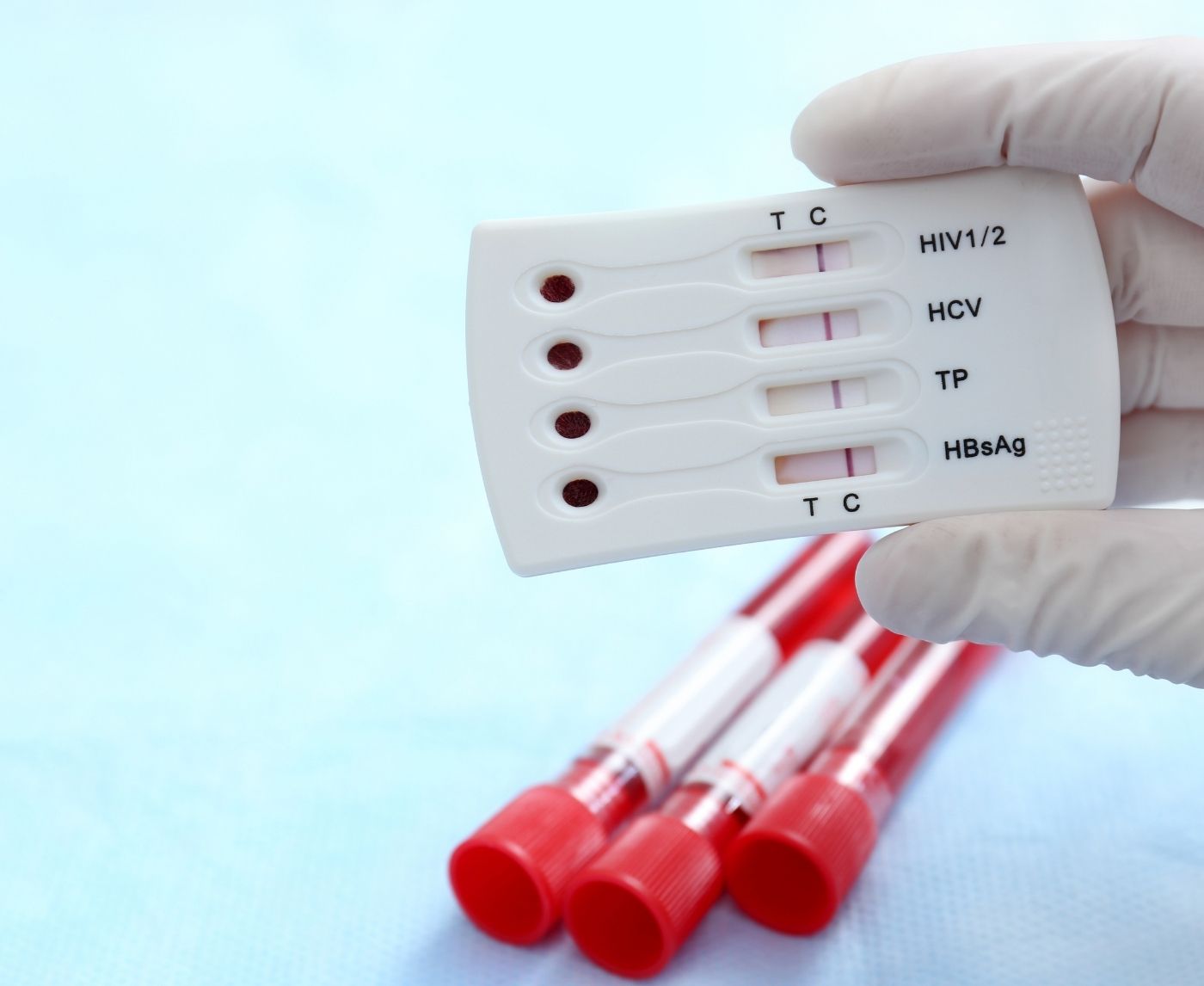
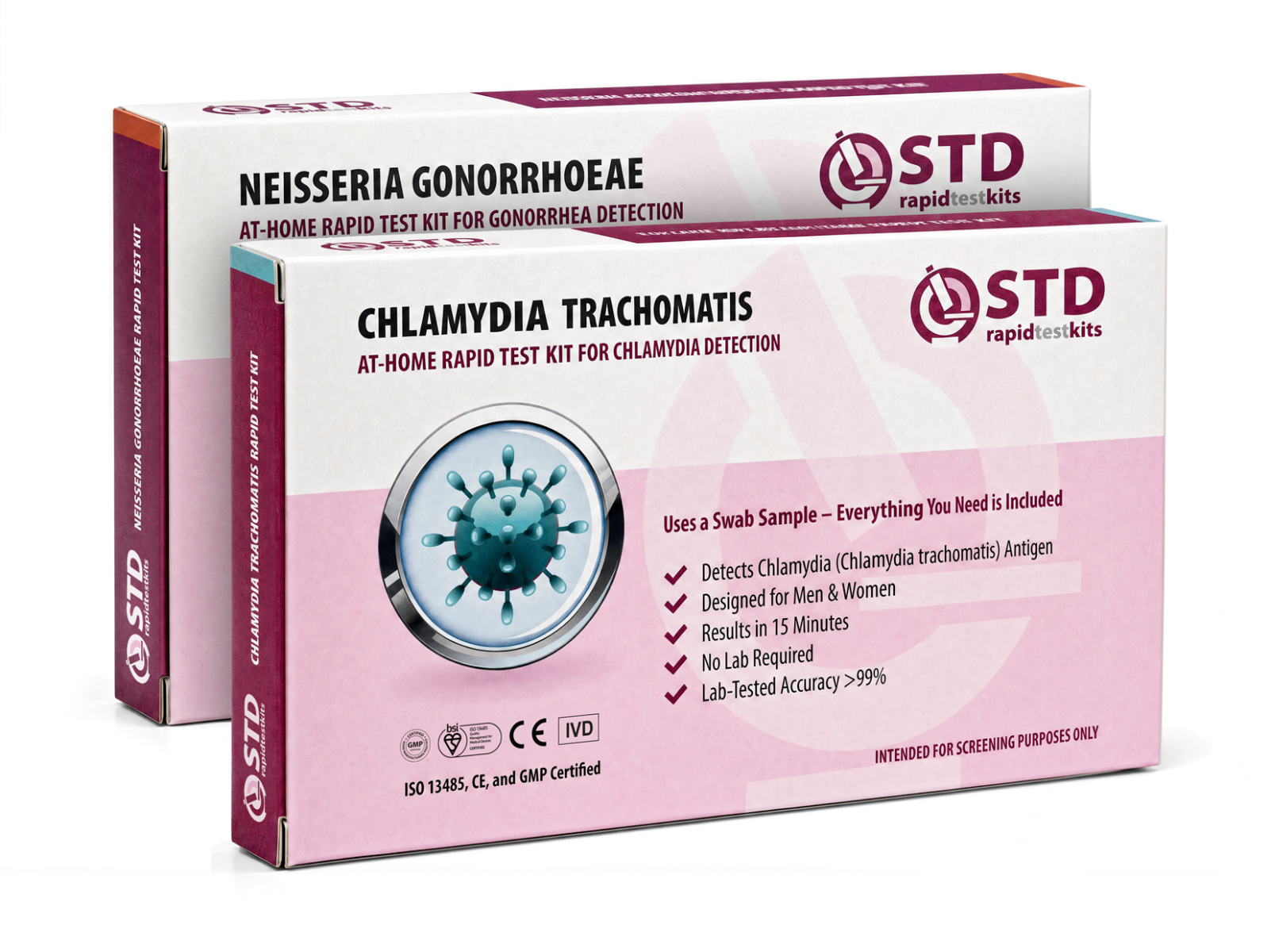
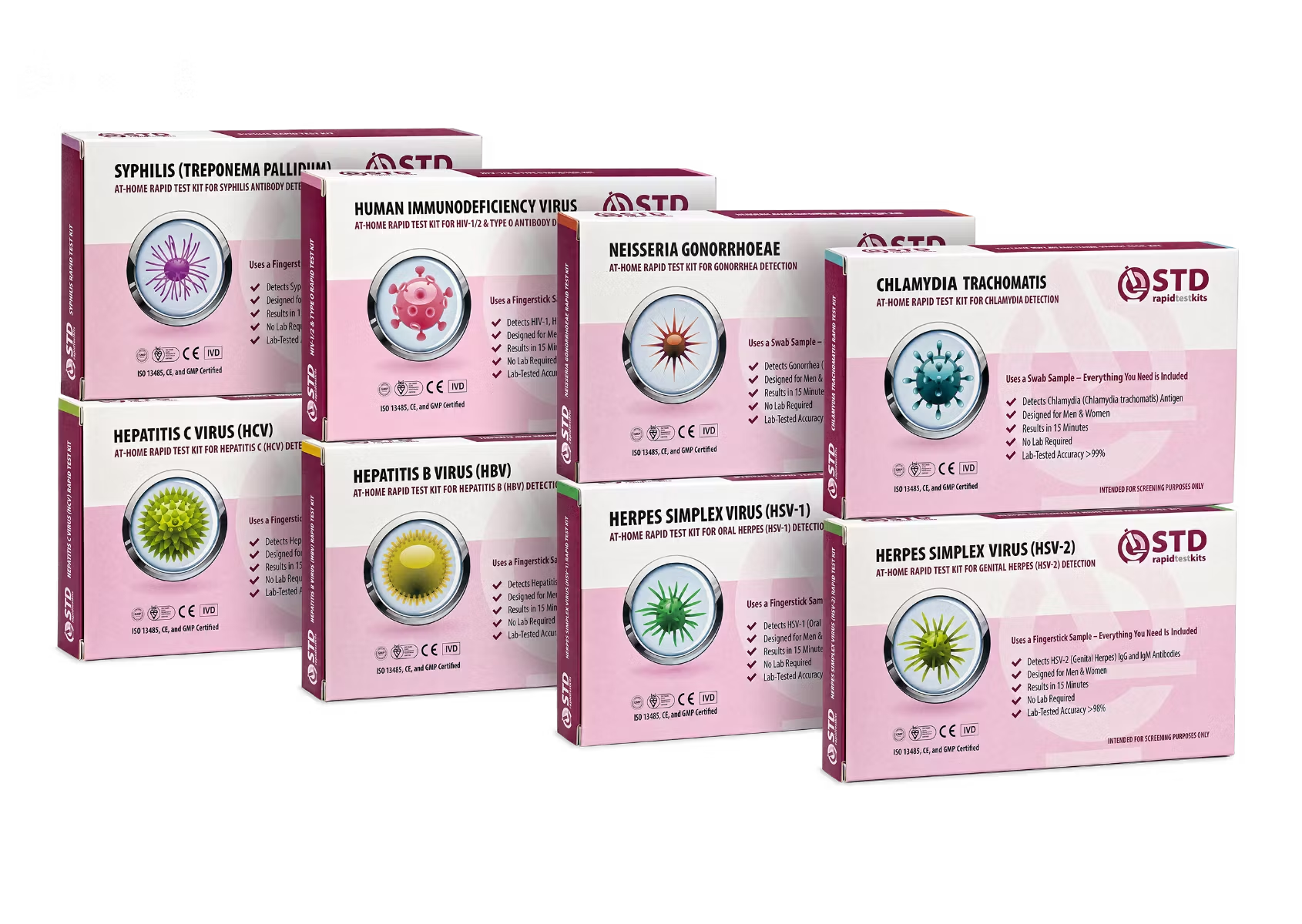
At-home rapid tests, including the kind sold on this site, are lateral-flow immunoassays. You collect a sample (a self-administered swab for chlamydia, gonorrhea, trichomoniasis, or HPV; a fingerstick blood drop for HIV, syphilis, hepatitis, or HSV), apply it to a cassette with a buffer solution, and read a result line within roughly 15 minutes. The chemistry is similar to a home pregnancy test or a COVID-19 rapid antigen test. Rapid lateral-flow tests are not NAATs; they are a different and complementary technology with high sensitivity that is generally lower than lab NAAT, particularly in early infection or asymptomatic carriage.
The strengths of at-home rapid testing sit in access and cost. A flat upfront price with no clinic visit, no copay, no separate lab fee, no insurance needed, and no insurance explanation-of-benefits that a policyholder might later see. The test arrives in discreet packaging and produces a result the same evening. For routine screening (catching infections that would otherwise go untested because the person felt fine and never went in), at-home kits fill the gap that clinic scheduling, cost, and embarrassment leave open.
A negative rapid test taken inside the proper window provides reasonable reassurance for most adults. A positive rapid test should be confirmed with a clinic-grade NAAT before starting treatment. If you have access to a clinic or mail-in NAAT kit and the timing is right, that is the most analytically sensitive route. If access, privacy, cost, or speed is the deciding factor, an at-home rapid test used after the correct window period catches the great majority of clinically meaningful infections, and any positive can be followed up with a confirmatory lab test.
At-Home Rapid Test vs Mail-In Lab vs Clinic Visit
| Feature | At-home rapid test | Mail-in lab NAAT | Clinic visit |
|---|---|---|---|
| Speed | 10 to 20 minutes | 2 to 5 days | Same day to 1 week |
| Analytical sensitivity | High (lateral-flow) | Very high (NAAT/PCR) | Very high (NAAT/PCR) |
| Privacy | Very high; no records or billing | High; mail delivery | Lower (medical records, billing) |
| Cost | Flat price, no copay or lab fee | Lab fee; insurance variable | Office visit plus lab fee |
| Best for | Screening and routine checks | Confirming positives or full-panel screening | Symptoms, complications, follow-up care |
At-home rapid kits and lab NAATs are complementary: rapid screens catch infections that would otherwise go untested; lab NAATs confirm positives and handle complex cases.
Routine schedule vs event-based testing: use both
The two testing patterns answer different questions. Routine testing on a fixed schedule (annual, semi-annual, or quarterly depending on risk) catches silent infections that arrived without a memorable trigger. It is the screening logic public-health agencies use because it works at population scale. Event-based testing reacts to a specific concern: a new partner, a condom failure, a partner notification call. It catches the infection from a known event.
Most sexually active adults benefit from both. A routine yearly panel as a baseline, plus event-based testing whenever a specific risk situation comes up. Treat it the way you would a dental cleaning or an annual physical: schedule it in advance rather than waiting for a scare to prompt it. The NHS reinforces this approach, noting that many STIs have no symptoms and that regular testing at a sexual health clinic is the only way to be sure of your status.
Routine testing catches silent infections that arrived without a memorable trigger. Event-based testing closes the window after a specific exposure. Most sexually active adults benefit from both running in parallel: an annual baseline panel plus a targeted test whenever a new risk situation comes up.
Retesting after treatment
Successful treatment of a bacterial STI does not confer immunity. Reinfection from an untreated partner is the most common reason a previously treated person tests positive again, and it accounts for a large share of the year-to-year persistence of chlamydia and gonorrhea. The CDC recommends that anyone treated for chlamydia or gonorrhea repeat testing at about 3 months to check for reinfection, regardless of whether the partner was also treated (CDC STI Treatment Guidelines).
For HIV, an early-window negative test should be confirmed at 12 weeks if the exposure was real (rapid antibody tests have a technical outer boundary of 90 days; a 12-week follow-up covers nearly all seroconversions). For HSV-2, blood antibody testing earlier than 12 to 16 weeks can miss recent seroconversion. For trichomoniasis, retesting at 3 weeks post-treatment is recommended for women if symptoms continue, because reinfection rates run high.
Retest Timing at a Glance
- Chlamydia and gonorrhea: retest about 3 months after treatment to check for reinfection, regardless of partner treatment status.
- HIV: confirmatory test at 12 weeks if the initial early-window result was negative.
- HSV-2 (blood antibody): retest at 12 to 16 weeks after exposure if the initial test was taken before seroconversion could complete.
- Trichomoniasis: retest at 3 weeks post-treatment for women if symptoms continue, as reinfection rates are high.
If you test positive without symptoms
A positive screening result with no symptoms is more common than people expect, and it is the screening system working as intended. Catching an infection before it produces symptoms means catching it before complications develop, before partners are unknowingly exposed, and (for HIV) before the immune system has been quietly depleted. The next steps are practical: confirm the result if it was a rapid screening test, start the relevant treatment, and notify partners. Most state and local health departments offer anonymous partner-notification tools for the conversations that feel impossible.
Treatment specifics depend on which infection it is, per the CDC STI Treatment Guidelines:
- Chlamydia or gonorrhea: a course of antibiotics. Current CDC guidance favors doxycycline for chlamydia and a ceftriaxone injection for gonorrhea. Recent partners need to be informed and treated. Retesting at three months is recommended to check for reinfection.
- Syphilis: penicillin remains the first-line treatment, with the dose and number of injections depending on stage. Follow-up blood tests at 6 and 12 months track the response to therapy.
- HIV: immediate referral for confirmatory testing and antiretroviral therapy. Modern treatment is highly effective, and an undetectable viral load means the person cannot sexually transmit the virus, a principle known as Undetectable = Untransmittable (U=U).
- HSV-2: the infection is lifelong but manageable with daily suppressive antivirals, which reduce outbreaks and lower transmission risk to partners.
- HPV: most infections clear on their own within two years; high-risk types are followed with cervical screening and, if needed, treatment of pre-cancerous lesions. Routine vaccination is recommended through age 26, with shared clinical decision-making through age 45 per guidance from the Advisory Committee on Immunization Practices (ACIP).
Most county health departments offer free or low-cost STI clinics, and several states run anonymous partner-notification services. Most STIs are curable. The ones that are not (HIV, HSV-2, HPV) are manageable with current therapies.
A positive at-home rapid result is a screening signal, not a final diagnosis. Clinic-grade NAATs and laboratory antibody confirmations are more analytically sensitive, so they distinguish a true positive from the rare false positive that any rapid assay can produce. Confirmation usually comes packaged with a treatment plan and partner-notification support, which makes a clinic visit the next step worth taking even when you feel completely well.
Common myths about silent STIs
Three misconceptions come up repeatedly in sexual-health conversations. Each one has the same root cause: human intuition for whether "something is wrong" is a poor instrument for asymptomatic infectious disease.
Myths vs Facts About Asymptomatic STIs
Myth: If I had an STI, I would know. My body would tell me something was wrong.
Fact: The opposite is closer to the truth. Chlamydia, throat gonorrhea, early HIV, and HSV-2 are usually quiet. People learn they carry one of these infections most often through routine screening or partner notification, not through symptoms severe enough to prompt a clinic visit.
Myth: A negative test today means I am clear forever.
Fact: A negative test is a snapshot of the period the test could reliably detect. It does not cover any exposures that occurred too recently to have crossed the window period, and it does not predict the future. New exposure risk after a negative result means another test at the right window.
Myth: Asymptomatic means non-contagious. If I have no symptoms, I cannot pass anything to a partner.
Fact: Many STIs spread efficiently between people who have no symptoms. HSV-2 sheds intermittently without visible lesions. People living with untreated HIV are infectious throughout the chronic asymptomatic phase. Chlamydia, gonorrhea, syphilis, and HPV all transmit between asymptomatic carriers.
Most people who have an STI have no symptoms or only mild symptoms that may not be noticed. Therefore, the only way to know if you have an STI is to get tested.
Should You Get Tested Now?
Have you had a new sexual partner, unprotected sex, or a condom failure in the past 3 months?
Yes: Test now. Chlamydia and gonorrhea swab tests are most reliable from day 14 post-exposure. For HIV and syphilis, plan a follow-up at 12 weeks to close the antibody window.
Has it been more than a year since your last full STI screening panel?
Yes: Schedule a routine baseline panel. Annual screening catches silent infections that arrived without a noticeable exposure event.
Did a previous rapid test return a positive or reactive result that has not been confirmed at a clinic?
Yes: See a clinician for confirmatory NAAT or laboratory antibody testing before starting treatment. Confirmation comes with a treatment plan and partner-notification support.
No: Set a recurring testing interval based on your risk level from the frequency table above, and retest whenever a new exposure occurs.
This is guidance only. A healthcare provider can advise based on your specific situation.
FAQs
- Can I really have an STI without any symptoms?
- Yes, and silent infection is the dominant pattern rather than the exception. Many people with chlamydia notice nothing at all. HPV, HSV-2, and early HIV follow the same quiet pattern. National screening programs exist precisely because population-level data shows symptoms cannot be relied on as a trigger to test. Only a lab or rapid test confirms current status.
- How long after sex can I test for chlamydia and gonorrhea?
- Both are detectable from about 5 to 7 days post-exposure, but reliability is much higher at 14 days or later. If you test before day 14 and get a negative result, schedule a retest at the 2 to 3 week mark to close the window.
- How long after sex can I test for HIV?
- A 4th-generation antigen-antibody lab test can usually detect HIV 18 to 45 days after exposure. Rapid fingerstick antibody tests have a longer window of 23 to 90 days. After a real risk exposure, plan a confirmatory test at 12 weeks even if an earlier test was negative.
- Can I pass an STI to a partner if I have no symptoms?
- Yes. HSV-2 sheds from skin without lesions in most carriers. People with chronic untreated HIV remain infectious. Chlamydia, gonorrhea, syphilis, and HPV all transmit between people who do not know they are infected. Routine screening exists specifically to catch these infections in people who feel fine.
- What is the difference between a NAAT and an at-home rapid test?
- NAATs (nucleic acid amplification tests) detect the pathogen's DNA or RNA directly and are the most sensitive lab tests for chlamydia, gonorrhea, and trichomoniasis. At-home rapid tests are lateral-flow immunoassays that detect either the pathogen's antigens or your body's antibody response (for HIV, syphilis, HSV-2, hepatitis). Lateral-flow tests are faster and accessible from home but generally less sensitive than NAATs. Both have a place in screening; they are complementary technologies.
- How often should I test if I am in a monogamous relationship?
- Many sexual-health guidelines suggest at least one baseline screen, particularly at the start of a new relationship. People often carry asymptomatic infections from previous partners without knowing it. If both partners had a clean panel before the relationship and have stayed exclusive, an annual baseline test is reasonable. Mutual screening before becoming exclusive treats testing as a routine health step rather than a sign of distrust.
- Do I need to retest after treatment?
- Yes. The CDC recommends retesting for chlamydia and gonorrhea about 3 months after treatment, because reinfection from an untreated partner is the most common cause of a repeat positive. For HIV, a 12-week confirmatory test closes the window after an early negative. For trichomoniasis, retest at 3 weeks post-treatment if symptoms persist.
- I am worried but embarrassed about asking my doctor. Is at-home testing okay as a starting point?
- It is a reasonable starting point, particularly if the alternative is no testing at all. At-home rapid kits ship in plain packaging, can be used in private, and produce a result the same day. A negative result inside the right window provides reassurance. A positive result should be confirmed at a clinic before starting treatment, and most STI clinics treat results from any source as a reason to do confirmatory testing without judgment.
- U.S. Centers for Disease Control and Prevention. About Sexually Transmitted Infections. Overview noting that many STIs produce no symptoms or only mild symptoms, and that testing is the only reliable way to know infection status.
- U.S. Centers for Disease Control and Prevention. STI Treatment Guidelines: Screening Recommendations. Age- and risk-group-specific testing intervals for chlamydia, gonorrhea, HIV, syphilis, and other STIs.
- U.S. Centers for Disease Control and Prevention. HIV Testing. Window periods by test type: 4th-generation antigen-antibody (18 to 45 days), rapid antibody (23 to 90 days). Universal testing recommendation for ages 13 to 64.
- U.S. Centers for Disease Control and Prevention. STI Treatment Guidelines (2021) hub. Reference for current first-line regimens (doxycycline for chlamydia, ceftriaxone for gonorrhea, penicillin for syphilis) and 3-month retest guidance after treatment.
- U.S. Preventive Services Task Force. Chlamydia and Gonorrhea: Screening. Grade B recommendation for screening sexually active women aged 24 and younger, plus older women at increased risk.
- World Health Organization. Sexually Transmitted Infections (STIs) Fact Sheet. Global prevalence data (374 million new curable STI infections in 2020), the public-health rationale for routine screening, and the statement that the majority of STIs are asymptomatic.
- National Health Service (UK). Sexually Transmitted Infections (STIs) overview. Guidance that many STIs have no symptoms and that regular testing at a sexual health clinic is the only way to know infection status.
- U.S. Centers for Disease Control and Prevention. About Trichomoniasis. Source for the statistic that about 70% of people with trichomoniasis have no signs or symptoms.
