What to Say If You Gave Someone an STD: Disclosure Scripts and Tools
You tested positive. Now you are staring at a contact list and wondering what to type. This guide walks through who needs to know, when to tell them, the scripts that work for current partners, recent hookups, and exes, and the public-health channels that exist for the conversations you cannot make face to face.




- Tell every partner from the relevant lookback window so they can test and treat early. Most STIs are silent in early infection, so a partner who feels fine is exactly the partner who needs the heads up.
- Method matters less than the message arriving. Direct text, phone, or anonymous notification through a public-health partner-services program all count. Pick the one you will actually do.
Published: November 2025 | Last updated: April 2026 | Editorial review and quality control: Martina N.
The hardest part of a positive STI result is rarely the medication. It is the contact list. You are sitting with a diagnosis, a treatment plan that probably runs a week or two, and a list of people who deserve to hear this from you before they hear it from a clinic, a Pap smear callback, or worse, no one at all. This guide is the calm, practical version of that conversation: who to tell, when, in what words, and what to do when direct contact is not safe or possible.
Who do I have to tell, and what do I actually say?
Tell every partner who could have been exposed inside your infection's lookback window. For chlamydia, gonorrhea, and trichomoniasis that is roughly the past 60 days; for syphilis it ranges from 90 days to 1 year by stage; for HIV it is 12 months at minimum and often longer. Lead with facts ("I tested positive for X, you may want to get tested"), skip blame, and offer the next step. If direct contact feels unsafe or impossible, your local or state health department's partner-services program will pass an anonymous notification on your behalf at no cost.
Key Takeaways
- Tell every partner from the relevant lookback window so they can test and treat early. Most STIs are silent in early infection, so a partner who feels fine is exactly the partner who needs the heads up.
- Method matters less than the message arriving. Direct text, phone, or anonymous notification through a public-health partner-services program all count. Pick the one you will actually do.
Why this conversation matters, even when it feels late
Disclosure is a harm-reduction step, giving someone the information they need to protect their health. Most people who pass an STI on did not know they had one, which is exactly why every public-health framework treats partner notification as a routine clinical step rather than a moral judgment. The CDC's STI overview notes that most chlamydia infections cause no symptoms at all and are caught only on routine screening, and the same is true of a substantial share of gonorrhea, trichomoniasis, and early HIV cases. That silent spread continues until someone in the chain learns their status and tells the people they may have exposed.
Acting now, instead of next week, matters medically. Untreated chlamydia and gonorrhea can move into the upper reproductive tract and trigger pelvic inflammatory disease, which is a leading cause of tubal-factor infertility in people with uteruses. Untreated syphilis can stay quiet for years and then reach the heart, brain, and nervous system. Untreated HIV is dramatically harder to manage when caught late, and the same exposure event that produced your diagnosis may have produced theirs, with treatment outcomes that depend on early detection.
It is also worth saying plainly: you did not necessarily do anything wrong. Asymptomatic spread is real, the testing windows leave real gaps, and very few transmissions involve someone knowingly passing an infection on. The honest text you are about to send is the protective behavior the public-health system wants more of, not less.
Figuring out who to tell: the lookback math
You do not need to call every partner you have ever had. You need to call the ones who could have been exposed inside the relevant lookback window for your specific infection. The CDC's STI Treatment Guidelines use different windows for different infections because the time between exposure and detectability (the window period) and the time an untreated infection stays transmissible vary a lot. The table below summarizes the standard windows; your clinician may extend them if your symptom history suggests a longer asymptomatic phase.
If you cannot remember exactly when your symptoms started, or you never had any, count back from your test date. When you are unsure whether a particular partner falls inside the window, err toward telling them rather than leaving them in the dark. A short message to a person who turns out to be uninfected costs nothing. The opposite mistake costs the next partner they sleep with.
| Infection | Standard lookback window | What this means in practice |
|---|---|---|
| Chlamydia | 60 days before test or symptom onset | Notify every sex partner from the past two months. |
| Gonorrhea | 60 days before test or symptom onset | Same as chlamydia; the two are commonly co-infected. |
| Trichomoniasis | 60 days before diagnosis | Per CDC guidance for current and recent partners. |
| Syphilis (primary) | 90 days before diagnosis | Includes the incubation period before any sore appears. |
| Syphilis (secondary) | Up to 6 months | Symptoms can appear weeks to months after exposure. |
| Syphilis (early latent) | Up to 1 year | Window is widened because the infection has been undetected longer. |
| HIV | 12 months at minimum | Extend back to your last documented negative test if it is older than 12 months. |
| Genital herpes (HSV-1 / HSV-2) | Ongoing | Tell current partners; discuss with future partners. |
| HPV | Ongoing | Tell current and recent partners; many people clear it but some strains persist. |
Timing: too soon vs too late
Drafting a message in the first hour after a positive result usually backfires. You are scared, you may be angry, and you have not yet had a chance to confirm what your treatment looks like or get clear answers to the questions a partner is going to ask. Most clinicians suggest a short pause, ideally less than 72 hours, so you can settle your own information and approach the conversation calmly rather than from panic.
That pause is not permission to delay indefinitely. The longer you wait, the more chance there is that a partner who is still infected passes it on to someone else, or develops complications that early treatment would have prevented. If you are weeks or months past your diagnosis and have not told someone yet, do not wait for the perfect moment. Better awkward and late than not at all, and most people respond better to a delayed message than to silence.
| Your situation | Recommended timing | Why |
|---|---|---|
| Fresh diagnosis, current partner | Within 24 to 72 hours | Pause to absorb your own results, then tell them before they hear it elsewhere. |
| Fresh diagnosis, recent hookup or ex | Within a week | Gives them time to test inside the relevant window if exposure is recent. |
| Diagnosis weeks or months old, never told | As soon as possible today | Do not wait for a script that feels right. Send a short, factual message now. |
| Possible exposure but no confirmed positive | After your own confirmatory test | Avoid alarming someone over a result that has not yet been confirmed. |
| Direct contact unsafe or impossible | Use anonymous notification immediately | Public-health tools work the same day; see the table further down. |
What to actually say: scripts by relationship type
Clarity and care matter more than eloquence. The version that lands best in real life is short, factual, and free of self-defense. Pick the script closest to your situation, edit one or two lines into your own voice, and send. The longer you spend wordsmithing, the more likely you are to overthink the conversation into a paragraph that reads like a confession instead of a heads-up.
Current partner or spouse. This is the version that hurts most to write and matters most to send. Lead with the fact, acknowledge that you have feelings about it, and invite the conversation rather than closing it down. Try: "I want to tell you something important. I just got my test results back and tested positive for [infection]. I am still figuring out what this means for both of us, and I want us to talk through it together. You should get tested too. I can come with you, or you can go alone, whichever you prefer."
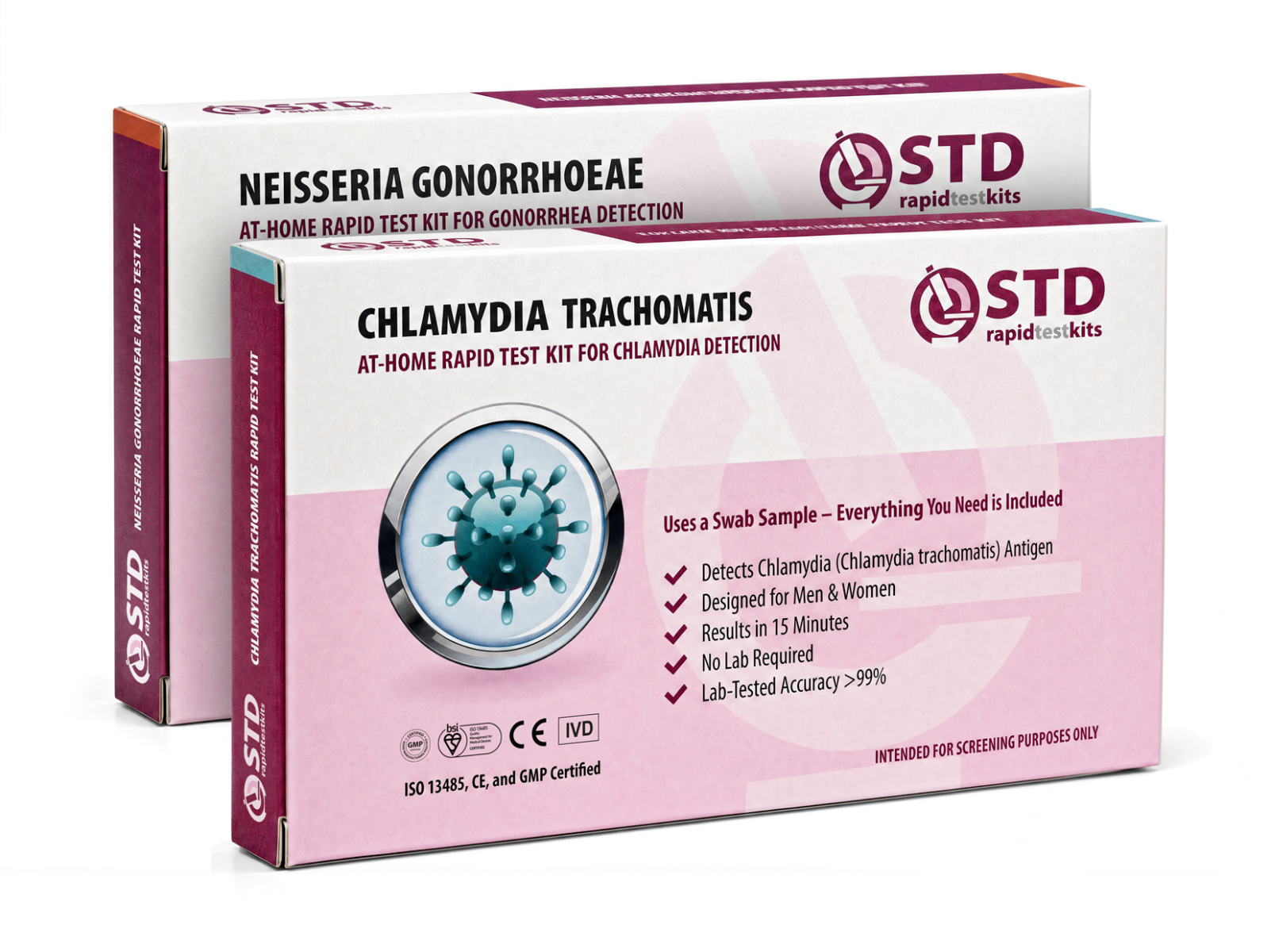
Recent hookup or casual partner. You do not owe a relationship inventory. A short, respectful message is enough, and usually better received than a long one. Try: "Hey, this is awkward but worth saying. I just tested positive for [infection] and we were together inside the window where it could have been passed on. Please get tested. Most clinics do this for free or low cost, and there are at-home tests if a clinic visit is hard."
Ex-partner you are not in contact with. The hardest version, because there is no relationship infrastructure to land in. Keep it minimal and explicitly time-bounded so they know you are not opening a longer thread. Try: "This is out of the blue and I am sorry for that. I just tested positive for [infection]. We were together during the window when I could have been infected, so you may want to get tested. I will not message again about this; I just wanted you to know."
If saying the infection name out loud feels like more than you can manage, "I tested positive for an STI and you may have been exposed; please consider getting tested" is a complete, honest sentence. The recipient can ask follow-up questions if they want details, and you can answer those at your own pace.
Speculation about who infected whom. You almost certainly do not know, and the message is not the place to litigate it.
Apologies that read as self-defense. "I had no idea" is fine; "I would never have done this on purpose" turns the conversation toward your innocence instead of their next step.
Detailed clinical explanations. Link them to a reputable resource if they want depth. The first message just needs the facts and the action.
Anonymous notification: when direct contact is not safe or possible
Sometimes you cannot text the person. They blocked you, you no longer have their number, you fear retaliation, the relationship ended badly, or it was a one-time encounter where you never exchanged real names. Local and state health-department partner-services programs exist for exactly this scenario, and most will do the notification on your behalf at no cost. Public-health programs use these channels for thousands of routine notifications every year, and reaching out to one is a standard option for anyone who cannot make direct contact.
The mechanics are simple. You contact your local sexual-health or STD clinic, or the partner-services line of your state or county health department, and tell them you have tested positive and have partners you cannot or do not want to contact directly. A trained disease-intervention specialist will reach the partner in person, by phone, or by letter, tell them they may have been exposed and what infection to test for, and never reveal who named them. Many clinics also offer a same-visit option where the clinician who diagnosed you handles the notification at the time of treatment.
| Channel | How it works | Anonymous? |
|---|---|---|
| Local or state health department partner services | A trained disease-intervention specialist contacts your partners on your behalf, in person, by phone, or by letter, after you provide whatever contact details you have. | Yes; the specialist does not reveal who named the partner. |
| Sexual-health or STD clinic notification | The clinician who diagnosed you offers to do the notification for you, often the same day as your visit. | Yes; same medical-confidentiality protections as the rest of the visit. |
| Expedited partner therapy (where legal) | Your provider gives you medication or a prescription to pass to a partner who cannot get to a clinic, used most often for chlamydia and gonorrhea. | Partial; the partner knows you brought it but the clinic is not named. |
| Direct anonymous text or call | You send the message yourself from a number or email the recipient will not recognize, with the infection named. | Depends on how identifiable your contact details are. |

When the reaction is bad
You cannot script their response, and you do not get to choose it. Some partners will say thank you. Some will go silent. Some will be furious, accuse you of cheating, or share your status with mutual friends or social media. None of those reactions are fair, and only the last one (sharing your private health information without consent) crosses into something worth raising with your local health department or, in extreme cases, a lawyer. The rest are theirs to feel and process, not yours to manage.
If they ask point-blank "did you give this to me," the most accurate answer is usually some version of: "I do not know. The timelines for most STIs are messy enough that figuring it out almost never works, and what matters right now is that you get tested and treated." That answer is honest, refuses the blame frame, and redirects them toward the action that actually helps. If they keep pushing, you can simply repeat it; you are not obligated to invent a certainty you do not have.
One important exception: if you fear physical retaliation from a current or former partner, do not disclose directly. Use anonymous notification through your local or state health department's partner-services program, and let trained staff handle the conversation on your behalf. Your physical safety comes before any disclosure script, and public-health services exist precisely so that domestic-violence concerns do not become a reason people stay silent about exposures.
Gratitude or quiet acknowledgement. Thank them back, share the testing-window guidance below, and leave the door open without pushing.
Silence or a block. Treat silence as a complete response. You delivered the information; what they do with it is their decision.
Anger or accusation. Stay factual. Repeat that the timelines do not allow a clean determination of who infected whom and that the priority right now is testing. Disengage if it turns hostile.
Sharing your status without consent. Document what was shared and where. Your state health department's HIPAA or privacy office can advise on next steps; in extreme cases a defamation or privacy attorney is worth a call.
When you do not know who exposed whom
This is the situation most people are actually in, even when they think they are sure. STI timelines are messy. You can be infected in one encounter and test positive months later, after the asymptomatic phase finally produces enough antibodies or antigens for a test to detect. Your partner can be infected before you and discover it after, simply because they happened to test sooner. Many couples test positive on the same day without ever being able to determine who was carrying the infection first. Trying to assign causation almost never works, and it almost always makes the conversation worse for both people.
The honest framing is that the loop you can actually close has three steps, and none of them require knowing the source. Tell the people who could have been exposed. Get yourself treated. Use barrier protection or abstain until you and your current partners are cleared. Everything outside of that loop, including who slept with whom first, whose fault this was, and whose history is messier, is a story you are telling yourself rather than a public-health intervention.
Legal basics, without panic
A handful of US states have laws about knowingly transmitting certain STIs, with HIV being the most regulated and a few states extending similar provisions to syphilis, gonorrhea, or hepatitis. These laws generally require evidence of intent, ongoing concealment of a known status before sex, or both. The behavior the laws are trying to discourage is the opposite of what you are doing. Telling someone honestly and promptly, getting yourself treated, and offering them a path to testing is the protective response the legal framework is designed to encourage, not to punish.
If you are worried about specific legal exposure, your local health department's STI clinic is a good first call. Their conversations with you are confidential under the same medical-privacy protections that cover any clinic visit. They will not report you to law enforcement for routine STI exposures, and they can answer state-specific questions without you having to retain a lawyer. Some health departments will also act as the notifier on your behalf, which removes the most common legal worry of a he-said-she-said dispute about whether you actually told someone, and when.
Honest, prompt disclosure is the opposite of the behavior these laws target. The statutes are aimed at knowing concealment of a diagnosed infection before sex, not at the person who is doing the work of notifying partners after a positive test. State-specific questions are best answered confidentially by your local health department or sexual-health clinic before you assume the worst.
When to test (and retest) after a possible exposure
Whether you are the person disclosing or the person who just got the message, testing windows matter. A test taken too early can come back negative even when an infection is present, because antibodies, antigens, or organism-specific markers have not yet built up to detectable levels. Retesting at the right interval is how you avoid a false sense of clearance from a single early result. The CDC's testing guidance, summarized below, gives the standard windows for each common infection.
If you test inside the window and the result is negative, plan to retest at the recommended later point. If you test after the window and the result is positive, treat that as your starting point for your own notification cascade and do not delay starting treatment while you wait for additional confirmation. False positives on home rapid tests do exist, but they are rare, and a clinician can confirm with a follow-up lab assay if needed.
| Infection | Earliest reliable test | Best time to test | Retest needed? |
|---|---|---|---|
| Chlamydia | Around 7 days after exposure | 14 days or later | Yes if tested very early or if symptoms develop |
| Gonorrhea | Around 7 days after exposure | 14 days or later | Sometimes, especially if symptoms persist |
| Trichomoniasis | 1 to 4 weeks after exposure | 4 weeks | If symptoms develop after a negative early test |
| Syphilis | 3 to 6 weeks after exposure | 6 to 12 weeks | Yes; serology is most reliable at the 12-week mark |
| HIV (4th-generation Ag/Ab) | Around 18 to 45 days after exposure | 45 days | Yes; final confirmation typically at 90 days |
| HSV-2 antibody (blood) | 6 to 12 weeks after exposure | 12 weeks or later | Repeat at 16 weeks if initial result is negative and symptoms appeared |
| Hepatitis B and C | Around 6 to 9 weeks | 12 weeks or later | Yes; some cases require longer follow-up |

The aftermath: guilt, relief, and the next conversation
Most people describe the disclosure as worse in anticipation than in execution. The text takes thirty seconds to send. The wait for a reply is the hard part, and the reply, when it comes, is usually shorter and calmer than imagined. Even when the reaction is bad, the relief of having said the thing is real, and tends to stick around longer than the discomfort of the conversation itself.
Guilt is a normal response, and it is worth distinguishing from shame. Guilt is the feeling of "I did something I regret," which is honest and often productive; it points you toward action (telling someone, getting treated, changing how you have sex going forward). Shame is the feeling of "I am something bad," which is neither true nor useful, and which research on health behavior consistently links to more avoidance and less follow-through. If you are spiraling toward shame, talking it through with a therapist, a sexual-health hotline, or a peer-support community for your specific diagnosis tends to dissolve it faster than trying to reason your way out alone.
Online communities for specific diagnoses have moved a lot of people from acute shame to functional acceptance faster than any single conversation could. You are very, very far from the only person doing this. Millions of new STI infections occur in the United States every year, per CDC surveillance data, and a substantial share of the people behind those numbers are navigating the same disclosure conversations you are. The instinct that this only happens to other, somehow worse people is the most common, and the most wrong, reflex people bring into the moment.
Many STIs don't cause any symptoms, so you could have one and not know. If you have an STI (like herpes or HIV), tell your partner.
Bringing it together: the message you actually need to send
Strip the guilt away and the disclosure conversation is short. Identify the partners inside your infection's lookback window. Pick the closest script above, or write your own version in two or three sentences. Send it directly if you can and want to, or anonymously through your local health department's partner-services program if you cannot. Give them time to respond on their own pace, and do not let their reaction (good, bad, or none) become the measure of whether the message was worth sending.
If your own retest is still ahead of you, make a calendar entry for the right window and schedule it now while the urgency is still fresh. The sooner you and any current partners are confirmed clear, the sooner the loop closes.

Frequently asked questions
- Do I really have to tell every past partner?
- No. You only need to tell partners inside the relevant lookback window for your specific infection: roughly 60 days for chlamydia, gonorrhea, and trichomoniasis; 90 days to 1 year for syphilis depending on stage; 12 months or longer for HIV. Anyone outside the window is highly unlikely to have been exposed by you.
- What if I don't know who gave it to me?
- Notify every partner inside your lookback window regardless. STI timelines rarely resolve cleanly enough to trace a source, and spending energy on that question just delays the only step that actually changes outcomes: getting those people tested and, if needed, treated. The notification is the same whether the infection started with you or arrived from someone else.
- Is a text enough, or do I need to tell them in person?
- A text is enough. An in-person conversation can be valuable in a long-term relationship, but most disclosures, especially to recent hookups or exes, work better as a short, factual message. The recipient gets time to react privately and respond on their own pace. The information arriving is what matters; the medium is secondary.
- Can I tell them without revealing it was me?
- Yes. Local and state health-department partner-services programs will send an anonymous notification on your behalf, and many sexual-health clinics offer the same service at the time of diagnosis. The recipient learns they may have been exposed and what infection to test for. Your name and contact details are never shared. This is a legitimate option, not a workaround.
- What if we used a condom and they probably weren't exposed?
- Tell them anyway. Condoms reduce but do not eliminate transmission risk for most STIs, and they offer minimal protection against infections that spread through skin-to-skin contact outside the area covered, like herpes, HPV, and syphilis chancres. If you had any sexual contact during your infection's window, the partner deserves the chance to test.
- They reacted badly. What now?
- You did the right thing regardless of how they responded. You cannot control their reaction, and their anger or silence is not a measure of whether the disclosure was worth it. If they share your private health information without consent, that is a separate harm worth raising with your local health department or, in serious cases, a lawyer. If you fear physical retaliation, do not engage further; use anonymous notification or health-department services instead.
- Should I wait until I'm done with treatment before saying anything?
- No. The sooner the better, even if you are still in the middle of treatment yourself. A partner who is also infected benefits from starting treatment as early as possible, and waiting weeks for your own treatment to complete just delays theirs. "I am starting treatment now and wanted to let you know you may want to get tested too" is a complete, honest message.
- Can I get sued for giving someone an STI?
- Lawsuits are uncommon and almost always involve evidence of knowing concealment of a diagnosed infection, ongoing intent to conceal, or specific state criminal statutes (most often around HIV). Honest, prompt disclosure is the opposite of the behavior these laws and lawsuits target. If you have specific concerns, your local health department or a sexual-health clinic can answer state-specific questions confidentially.
- U.S. Centers for Disease Control and Prevention. About STIs: overview, asymptomatic transmission, and the U.S. surveillance framing of new infections per year.
- U.S. Centers for Disease Control and Prevention. Talk. Test. Treat. partner-notification guidance for individuals after an STI diagnosis. Source for this article's pull-quote.
- U.S. Centers for Disease Control and Prevention. Sexually Transmitted Infections Treatment Guidelines, 2021: lookback windows, testing intervals, and partner-services recommendations by infection.
- World Health Organization. Sexually transmitted infections: fact sheet covering global prevalence, asymptomatic transmission, and partner-notification framework.
- UK National Health Service. Sexually transmitted infections: testing windows, partner notification, and clinic referral pathways.
- U.S. Centers for Disease Control and Prevention. Clinical Guidance for STIs: expedited partner therapy, partner services, and duty-to-warn references used as background for the anonymous-notification section of this article.