

Published: November 2025 | Last updated: May 2026 | Editorial review and quality control: Martina N.
The morning after a one-night stand has a familiar rhythm. A quiet replay of what happened, then a creeping question about what the encounter could mean for your health. The honest answer is that one casual encounter is not a guaranteed infection, and most one-time encounters do not pass on an STI. What raises the actual risk is specific (no condom, certain sex acts, a partner whose status you do not know) and what you can do about it is also specific (a clear testing schedule, possible HIV PEP within 72 hours, a few protective habits the next time around).
The aim of this article is to give you the real per-act transmission numbers, the timing windows for each test, and what to do if any part of the exposure felt high-risk. Sexual-health regret is normal. Panic is rarely useful. Walking out of this page with a checklist is the better outcome. The CDC's most recent surveillance counted more than 2.4 million reported chlamydia, gonorrhea, and syphilis cases in the United States in a single year (CDC STI surveillance), so the question you are working through is one millions of adults face every year.
Key Takeaways
- One unprotected encounter is not a guaranteed infection. The CDC's published per-act HIV transmission risk for vaginal sex is roughly 4 to 8 per 10,000 acts; chlamydia and gonorrhea pass more easily but most one-time encounters still do not result in an infection.
- If you decide to test, the schedule matters more than the rush. Chlamydia and gonorrhea become reliably detectable around 1 to 2 weeks; fourth-generation HIV and syphilis around 4 to 6 weeks; antibody-only HIV at 12 weeks; HSV-2 formal rule-out at 16 weeks.
How risky is one one-night stand, really?
The risk of catching any STI from a single sexual encounter depends on three independent things: which infection you are talking about, what kind of sex actually happened, and whether the other person had something to pass on in the first place. None of those is fixed.
Start with the partner question. The likelihood that a single random adult partner has an undiagnosed STI sits in the low-single-digit percent range across the general population, and climbs higher in some regional or age subgroups. The CDC reports that adults aged 15 to 24 account for nearly half of all new chlamydia and gonorrhea diagnoses in the United States, despite making up a much smaller share of the sexually active adult population (CDC STI surveillance). For most one-night stands with a partner whose history is unknown, the prior probability that they currently have a detectable, transmissible STI is meaningfully above zero but well below 50 percent for any single infection.
Then comes the per-act transmission probability. Even when one partner does have an active infection, a single act does not guarantee that the other partner will catch it. The math here is more reassuring than the headline fear suggests, especially for HIV, where per-act transmission from a partner with unmanaged infection is in the fractions-of-a-percent range for most exposure types. Bacterial STIs such as chlamydia and gonorrhea pass much more efficiently per act, in some scenarios approaching a coin flip.
Combining those two pieces (the chance the partner had something, multiplied by the per-act transmission probability) gives a realistic personal risk that is much lower than worst-case fear, while still meaningfully above zero. Knowing the actual numbers is what lets you pick a sensible response instead of a reactive one.
What is the actual risk of catching an STI from a one-night stand?
Per-act transmission for the most common STIs from one unprotected vaginal encounter ranges from very low for HIV (about 4 to 8 per 10,000 acts) to high for gonorrhea (50 to 70 percent male-to-female). Most one-night stands do not result in an infection, but the realistic risk is not zero. The right response is a scheduled testing plan: chlamydia and gonorrhea at 2 weeks, fourth-generation HIV and syphilis at 6 weeks, full panel at 12 weeks. If the encounter included a high-risk HIV exposure within the past 72 hours, see a clinician or emergency department about post-exposure prophylaxis (PEP) without waiting for testing.
Which STIs to actually worry about and how easily they spread
The infections worth knowing about after a one-night stand fall into two groups. Bacterial STIs (chlamydia, gonorrhea, syphilis) are common, often silent, and curable with a short course of antibiotics when caught early. Viral STIs (HIV, HSV-1, HSV-2, hepatitis B, hepatitis C, HPV) are mostly manageable, mostly preventable through vaccination or treatment, and not all of them spread efficiently through one act.
The table below summarizes the per-act transmission probability for the most common scenarios. The figures come from CDC published estimates and the broader transmission-probability literature; ranges reflect that real-world numbers vary by viral load, mucosal health, and act details. Treat them as orders of magnitude, not as personal odds for your specific situation.
| Infection (exposure type) | Per-act transmission risk |
|---|---|
| HIV, receptive anal sex with an untreated positive partner | About 1.4% per act (138 per 10,000) |
| HIV, insertive anal sex with an untreated positive partner | About 0.11% per act (11 per 10,000) |
| HIV, receptive vaginal sex | About 0.08% per act (8 per 10,000) |
| HIV, insertive vaginal sex | About 0.04% per act (4 per 10,000) |
| HIV, receptive oral sex | Very low, near zero in published estimates |
| Gonorrhea, male-to-female (vaginal) | Roughly 50 to 70% per act |
| Gonorrhea, female-to-male (vaginal) | Roughly 20% per act |
| Chlamydia, vaginal sex (either direction) | Roughly 4 to 10% per act, higher in repeat exposures |
| Syphilis, contact with an active sore or rash | Roughly 30% per exposure |
| Genital herpes (HSV-2), unprotected vaginal sex with positive partner | Less than 1% per act on average; higher during outbreaks |
What raises or lowers the per-act risk
The numbers above are population averages. Several factors can shift the personal risk meaningfully higher or lower than the average for any given encounter.
Things that raise the per-act risk:
- No barrier protection. Condoms used correctly throughout the act significantly reduce HIV, chlamydia, gonorrhea, and trichomoniasis transmission per act, which is why the CDC lists correct condom use as a primary STI prevention method (CDC STI prevention).
- Receptive anal sex. The rectal lining is more fragile than vaginal mucosa, which raises the per-act HIV transmission probability roughly 17-fold over receptive vaginal sex.
- An active genital sore, ulcer, rash, or current outbreak on either partner. Visible breaks in the skin barrier dramatically raise transmission risk for almost every STI.
- An untreated existing STI on either partner. One untreated infection raises susceptibility to a second; HIV transmission, in particular, is several times more likely when the receiving partner has an inflammatory STI.
- High community prevalence. If the encounter happened in a population with above-average STI rates (which the CDC tracks by age, region, and sexual network), the prior probability of partner infection is higher.
- Heavy alcohol or drug use during the encounter. Behavioral, not biological: more chance of unprotected sex, less ability to negotiate barriers, less recall about what actually happened.
Things that lower the per-act risk:
- Correct condom or dental dam use throughout the act.
- A partner on suppressive HIV therapy with an undetectable viral load (the U=U principle: undetectable equals untransmittable, well-established for HIV).
- HPV vaccination, which protects against the highest-risk strains for cervical and oropharyngeal cancer.
- Hepatitis B vaccination, which gives durable protection against sexual transmission of HBV.
- HIV pre-exposure prophylaxis (PrEP) for people at ongoing higher risk; reduces sexual HIV acquisition by more than 99 percent when taken consistently.
If your partner had a visible cold sore, genital sore, ulcer, rash, or unexplained discharge during the encounter, the per-act transmission risk for several STIs (HSV, syphilis, HPV) goes up significantly. Mention this directly when you book testing or speak to a clinician, because it can change which tests are recommended and on what timeline. A visible primary syphilis chancre on a partner, for example, is a meaningful prompt to test for syphilis at 3 weeks rather than waiting the full 6.
Why most new STIs feel like nothing
One of the harder facts about sexual-health screening is that the majority of new STIs do not feel like an obvious infection. The CDC notes that chlamydia often causes no symptoms at all, which is why screening is the only reliable way to know your status (CDC chlamydia fact sheet). Gonorrhea follows a similar pattern. Many primary syphilis lesions go unnoticed because they are painless and located inside the vagina, the rectum, or the throat, where the person never sees them.
HIV's only early warning sign is the acute retroviral syndrome, which appears in roughly two-thirds of newly infected people 2 to 4 weeks after transmission. It looks like flu or mononucleosis: fever, sore throat, swollen lymph nodes, fatigue, and sometimes a maculopapular rash on the trunk. Most people do not connect those symptoms to a specific recent sexual exposure, which is part of why so many HIV diagnoses still happen years after the initial infection (CDC HIV testing overview).
Genital herpes is famously silent. The CDC reports that most people carrying HSV-2 do not know they have it; the agency estimated 572,000 new genital herpes infections among adults aged 14 to 49 in the United States in 2018 (CDC genital herpes overview). People who do have outbreaks often dismiss them as razor burn, ingrown hairs, or yeast irritation.
The implication for someone working through the aftermath of a one-night stand is direct: feeling fine in the days afterward is not evidence that nothing was passed on. It just means it is too early for symptoms to appear, or you are one of the many people who never develop them. The only way to know your status is to test on the right window for each infection.
Chlamydia and gonorrhea frequently produce no symptoms in either partner. Most adults living with HSV-2 do not realize they are carrying it. Primary syphilis sores are usually painless and easy to miss, especially when located inside the vagina, the rectum, or the throat. Acute HIV produces flu-like symptoms in around two-thirds of new infections, but the connection to a recent sexual exposure is easy to miss in the moment. The absence of symptoms in the first weeks after a one-night stand is not evidence that nothing was passed on.
When the testing windows open
Every STI has a window period: the gap between exposure and the point at which a test can reliably detect the infection. Testing too early gives a false sense of security, because a negative result before the window has opened does not rule the infection out.
The general timing for the most relevant infections after a one-night stand:
- Chlamydia and gonorrhea. Lab-based NAAT (nucleic acid amplification testing, the screening standard) becomes reliably positive at about 1 to 2 weeks post-exposure. At-home rapid lateral-flow swab tests are typically reliable from around day 14.
- Trichomoniasis. Detectable at about 1 to 4 weeks post-exposure.
- HIV (fourth-generation antibody/antigen test). Most infections are detected by 18 to 45 days. The CDC considers a negative test at 45 days adequate to rule out most exposures, with confirmatory testing at 90 days for certainty in the highest-risk scenarios (CDC HIV testing).
- HIV (antibody-only rapid test). Window is longer, typically 23 to 90 days.
- Syphilis. Serology reliably positive at 3 to 6 weeks, with formal rule-out at 90 days.
- Hepatitis B. Surface antigen detectable around 4 to 10 weeks, with formal rule-out at 6 months.
- Hepatitis C. Antibody test positive at 8 to 11 weeks for most people, formal rule-out at 6 months.
- Genital herpes (HSV-2). Blood antibody seroconversion at 4 to 12 weeks for most people; formal rule-out at 16 weeks.
The practical 2/6/12-week schedule
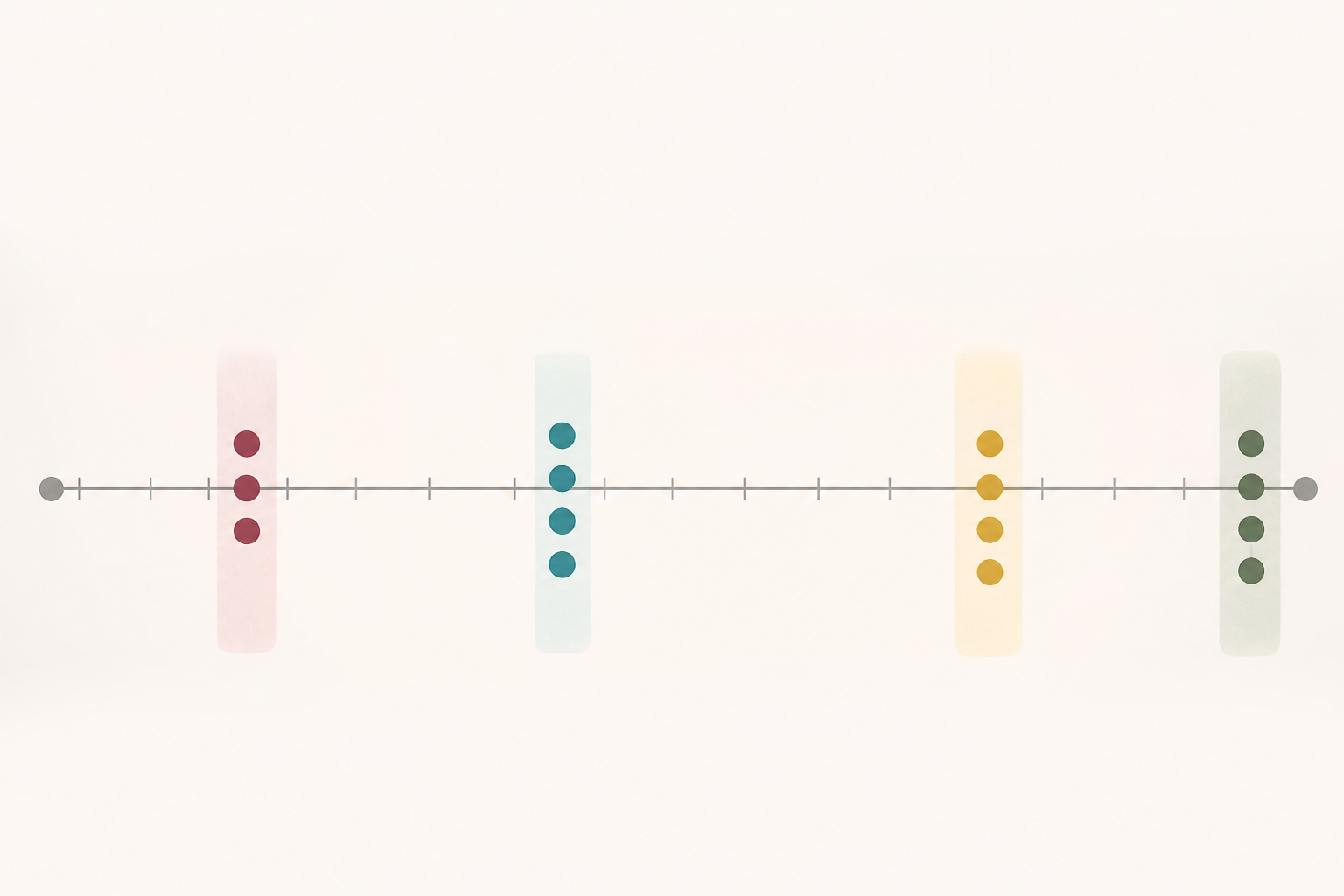
The schedule that covers most one-night-stand exposures is straightforward: a first round at 2 weeks (chlamydia, gonorrhea, trichomoniasis), a second round at 6 weeks (fourth-generation HIV, syphilis), and a final round at 12 weeks (the full panel including HSV-2 and any remaining viral antibody tests). For HIV alone, a clean fourth-generation test at 6 weeks is reassuring and a clean test at 12 weeks is essentially conclusive for typical exposures.
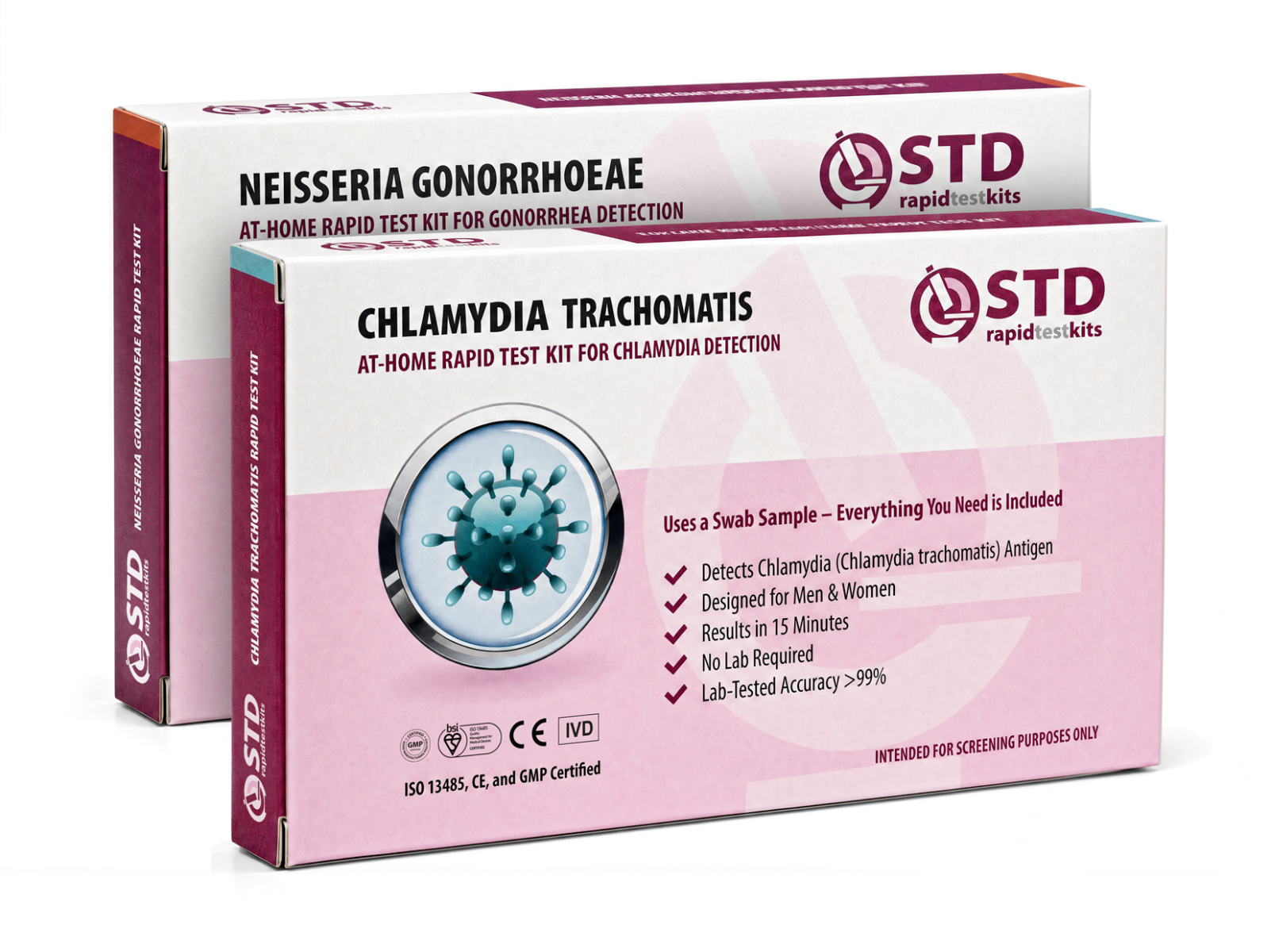
The 2-week milestone is where an at-home swab test for chlamydia and gonorrhea fits cleanly into the plan. Both bacterial infections are reliably detectable by then, and they are the two most commonly diagnosed STIs after a casual encounter, so checking them first means catching the highest-probability outcomes at the earliest possible point. The viral antibody and antigen tests come later in the schedule, once their longer window periods have opened.
Picking a test panel that fits your exposure
One quick note before this section: this site sells at-home rapid testing kits. The recommendations that follow link to our products where they fit the testing question, alongside guidance on when a clinic visit is the better step. The right panel depends on what kind of exposure happened and how much time has passed since the encounter.
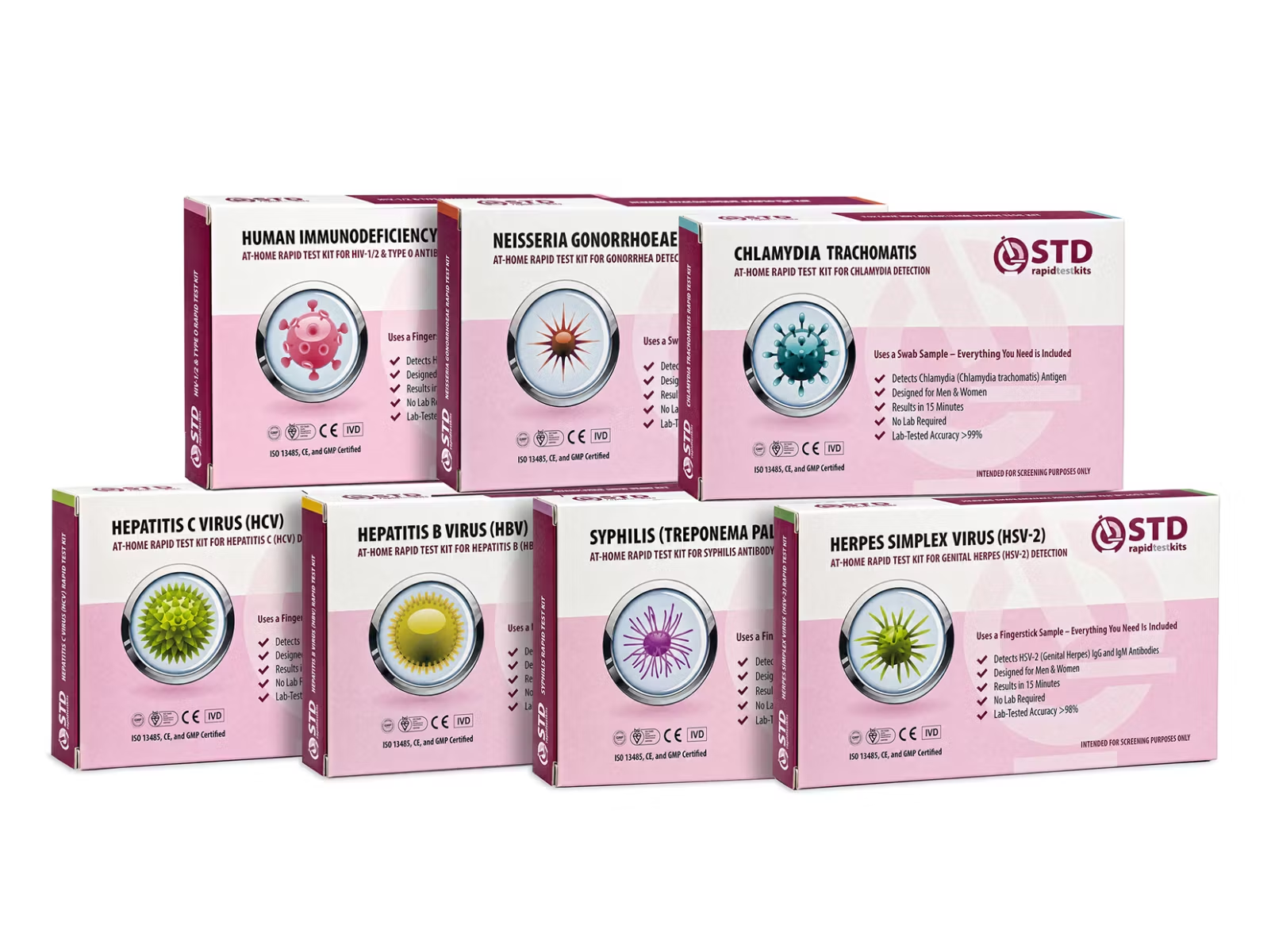
For a recent vaginal or anal exposure with no protection, a swab-based chlamydia and gonorrhea test at the 2-week mark catches the most common bacterial infections at the earliest reliable point. A broader 7-test panel including HIV, syphilis, hepatitis B, hepatitis C, and herpes is the right choice at the 6 to 12 week milestone, when the viral antibody windows have opened.
For oral-only exposure, the headline risk is gonorrhea and syphilis transmission to the throat. Pharyngeal swab testing is clinic-administered (we do not sell a throat-swab kit, and at-home swab kits are validated for genital sample types only), so a clinic visit is the right step for confirming or ruling out a throat infection. The fingerstick blood tests for HIV, syphilis, and hepatitis still apply and can be done at home.
A few things to keep in mind when choosing an at-home rapid kit. Our at-home rapid tests use lateral-flow chemistry, which is excellent for fast private screening and complements (rather than replaces) laboratory NAAT testing for chlamydia and gonorrhea, which remains the diagnostic gold standard. A positive at-home result is worth confirming with a clinician-ordered NAAT before starting treatment. Treat at-home testing as the first step in the workup, not the final word, especially on a positive.
If HIV exposure feels possible: the 72-hour PEP window
If the encounter included a high-risk HIV exposure (receptive anal sex without a condom with a partner of unknown or positive status, sex with a known HIV-positive partner who is not on suppressive treatment, a condom break during high-risk sex, or shared injection equipment), there is a time-limited prevention option that can dramatically reduce the chance of seroconverting.
Post-exposure prophylaxis (PEP) is a 28-day course of antiretroviral medication. Started within 72 hours of exposure, PEP can substantially lower the probability of HIV transmission compared to no intervention; the CDC's HIV prevention guidance recognizes PEP as an effective intervention when started promptly after a high-risk exposure (CDC HIV overview). Earlier is always better, and the strongest evidence is for starting within 24 hours of the exposure.
PEP is available from emergency departments, urgent care clinics, sexual-health clinics, and many primary care providers. It is not a substitute for condoms or PrEP for ongoing risk, but it is a real option for a single high-risk exposure. The medication is well-tolerated for most people, with the most common side effects being nausea and fatigue in the first few days, usually settling once the body adjusts.
If you are reading this within 72 hours of an exposure that fits the high-risk pattern, do not wait for at-home testing results. Testing is for confirming or ruling out an infection later; PEP is for preventing one now, while the window is still open. Call an ER or urgent care, or call your local health department for the nearest PEP-prescribing clinic.
The 72-hour clock starts at the moment of exposure, not when you remember to ask. If you are within that window after a high-risk exposure, treat it as urgent care. Most US emergency departments stock PEP and can start it the same visit. Cost varies by insurance and location; many state and city health departments cover or subsidize PEP for people without coverage.
Reducing risk on the next encounter
The best time to think about lowering STI risk is before the next encounter, not the morning after. A short, evidence-supported list of what actually moves the needle:
- External or internal condoms used correctly throughout the act. Cuts HIV transmission substantially and lowers chlamydia, gonorrhea, and trichomoniasis transmission per act. Carry your own; the most common failure is not having one available when needed.
- Dental dams for oral-genital contact. Often skipped, but the cheapest barrier for the throat-to-genitals transmission route. Cut a condom open if a dam is not available.
- Vaccination against HPV (routinely through age 26; ages 27 to 45 through shared clinical decision-making) and hepatitis B. Both are durable, well-tolerated, and free or low-cost through most insurance plans (CDC vaccination guidance for STIs).
- Daily PrEP for ongoing higher-risk patterns. Reduces sexual HIV acquisition by more than 99 percent when taken consistently. Typically prescribed for people with multiple recent partners, partners of unknown HIV status, or other ongoing risk factors.
- Honest conversation with new partners about recent testing. Imperfect, but the cheapest way to lower the prior probability that a partner has an undiagnosed infection.
- Routine testing every 3 to 12 months for sexually active adults with new partners. Catches asymptomatic infections early, when they are most easily treated and least likely to cause complications such as pelvic inflammatory disease, infertility, or onward transmission.
The single highest-leverage prevention step is using a condom from the start of the act to the end, not just during penetration. Pre-ejaculate can transmit several STIs, including HIV and chlamydia, and skin-to-skin contact before the condom goes on can still pass HSV and HPV. Putting the condom on as soon as genital contact begins is the version of correct use that the per-act effectiveness numbers assume.
How to talk to a new partner about testing
Bringing up STI testing with a new partner ranks high on the list of universally awkward conversations. It is also one of the highest-leverage things you can do for your own sexual health. The conversation does not need to feel like a clinical interview; a short, direct version works in most settings.
Examples that land without sounding accusatory:
- "I get tested every few months and last tested negative in [month]. When was your last screen?"
- "I want to use a condom tonight, are you good with that?"
- "This is going to sound clinical, but have you been screened recently? I have."
The goal is to normalize testing as part of being a sexually active adult. People who push back hard on a calm question about recent testing are giving you useful information about whether to proceed.
Sexually transmitted infections are common, and many people do not know they are infected. Annual screening is recommended for sexually active people in higher-risk groups, including young adults, men who have sex with men, and people with new or multiple partners.
Where the worry usually lands and where it shouldn't
Looking across the patterns of post-encounter sexual-health questions, two things repeat. The first is that the actual mathematical risk of catching a serious viral STI from a single one-night stand is much lower than most readers fear, especially with even minimal protection. The second is that the most common bacterial STIs are easier to catch per act, but they are also straightforward to detect, treat, and cure with a short course of antibiotics if found early. Neither is a reason for casual indifference; both are reasons for measured, scheduled testing instead of panic.
If the encounter was protected throughout, the realistic personal risk for the highest-fear infections (HIV, syphilis) is in the very-low percent range, and even bacterial infections are uncommon outcomes. If it was unprotected with a partner of unknown status, run the testing schedule above (2 weeks, 6 weeks, 12 weeks) and consider the PEP option if the exposure was high-risk and within 72 hours. If it included an act with elevated transmission risk (receptive anal sex, contact with a visible sore, sex while bleeding) treat it as a higher-priority testing situation, not a guarantee of infection.
One concrete step every reader benefits from after a one-night stand is a written reminder for the testing dates that actually matter. Open your calendar now and set reminders for two weeks, six weeks, and twelve weeks from the encounter date.
FAQs
- How long should I wait after a one-night stand before testing?
- Set reminders on your calendar at day 14, day 42, day 84, and day 112. Day 14 covers chlamydia and gonorrhea. Day 42 covers fourth-generation HIV and syphilis. Day 84 closes out antibody-only HIV. Day 112 (week 16) gives a formal rule-out for HSV-2. Testing earlier than these windows risks a false negative because the body has not yet produced enough of what each test detects.
- Can I get an STI from oral sex during a one-night stand?
- Yes. Oral sex carries lower per-act risk than vaginal or anal sex for most STIs but is not zero. Gonorrhea, chlamydia, syphilis, and HSV-1 (the cold-sore virus) all transmit through oral contact. Pharyngeal infections are usually asymptomatic and require a clinic-administered throat swab; at-home kits do not include this collection method.
- Does using a condom completely eliminate STI risk?
- A correctly used condom substantially reduces HIV transmission and meaningfully lowers chlamydia, gonorrhea, and trichomoniasis risk per act. It does not fully prevent infections that spread through skin-to-skin contact in areas the condom does not cover (HSV, HPV, and syphilis sores located outside the covered area). Condoms are highly effective, not absolute.
- Can I get HIV from a one-time encounter when neither of us had symptoms?
- Yes, in principle. Most people newly infected with HIV have no early symptoms or only a mild flu-like illness 2 to 4 weeks later. Per-act transmission is mathematically low for most exposure types, but a single unprotected encounter with a partner who has untreated HIV can still transmit the virus, especially during receptive anal sex. The only way to confirm or rule out HIV is to test on the recommended schedule.
- I had a one-night stand a few months ago and I feel fine. Do I still need to test?
- Yes, if you have not already. Most chlamydia and gonorrhea infections are silent. Many syphilis cases go unnoticed because the primary sore is painless and often hidden. A complete screen at 12 weeks post-exposure is the cleanest way to confirm you are clear, and is recommended even when you feel completely well.
- Should I tell my regular partner about a one-night stand before I get tested?
- That is a relationship question more than a clinical one. From a sexual-health standpoint, the priority is to use barriers with your regular partner until your testing is complete (typically 12 weeks after the exposure, with HSV-2 rule-out at 16 weeks). The CDC recommends partner notification for any positive result so they can also be tested and treated promptly.
- How accurate are at-home STI tests after one exposure?
- At-home rapid lateral-flow tests typically report high sensitivity and specificity when used after the correct window period, per manufacturer validation data. Used too early, before the window opens, sensitivity drops sharply because the body has not yet produced enough of what the test detects. Confirm any positive at-home result with a clinician-ordered laboratory test before starting treatment.
- What is the chance the other person had an STI at all?
- That depends entirely on the population. The CDC reports more than 2.4 million new chlamydia, gonorrhea, and syphilis cases each year in the United States, and many people with these infections do not know they have them. The realistic prior probability that a random unknown partner has an undiagnosed STI sits in the low-single-digit percent range for most adults but climbs higher in some age, regional, and sexual-network subgroups.
- U.S. Centers for Disease Control and Prevention. STI surveillance and prevalence data for the United States; annual case counts for chlamydia, gonorrhea, and syphilis.
- U.S. Centers for Disease Control and Prevention. HIV testing, transmission probabilities by exposure type, and post-exposure prophylaxis (PEP) overview.
- U.S. Centers for Disease Control and Prevention. Chlamydia fact sheet: transmission, symptoms, screening, and treatment.
- U.S. Centers for Disease Control and Prevention. STI prevention guidance: condoms, vaccinations (HPV, hepatitis B), and risk-reduction recommendations.
- U.S. Centers for Disease Control and Prevention. Syphilis fact sheet: disease stages, symptoms, transmission, and treatment.
- U.S. Centers for Disease Control and Prevention. Genital herpes overview: incidence of new HSV-2 infections in U.S. adults and transmission considerations.
